

Surf City Marathon Review and Tips
Are you looking for more details about the surf city marathon? If so, then welcome to RunDreamAchieve. It is awesome that you have arrived here to my site. My hope is that these running tips in this post and the fitness resources located here will be what you were looking for.
Be sure to subscribe to the RunDreamAchieve YouTube channel. My focus there is on making new videos there weekly to help runners like you surpass your training and racing goals.
As a Southern California oceanfront race, the Surf City Marathon has a draw that’s hard to match. But ocean views alone don’t determine whether a race fits your goals. Your decision may depend just as much on the course, entry fees, race-day logistics, and support along the way.
This review looks at what runners can expect from this running event and who may benefit most, whether you’re chasing a personal best or choosing your first marathon.
Build Your Complete Race-Day Setup
The right shoe helps, but faster racing comes from better training, pacing, recovery, fueling, and execution.
More Guides for This Shoe
Race dates, fees, course rules, and services can change each year, so check the official Surf City Marathon website for current details before you register. Start with the course itself, then weigh the costs and race-day experience against your own priorities. Be sure to book your Surf City Marathon hotels early to save on higher costs later.
Key Takeaways
- The Surf City Marathon offers a Pacific-side setting in Southern California, with marathon, half marathon, 5K, and Beach Mile options. Organizers describe the course as flat, fast, and scenic.
- For 2027, the marathon is scheduled for February 7, with a 6:30 a.m. start in Huntington Beach. Confirm details on the official marathon age before travel.
- Listed marathon registration pricing is currently $165, compared with a $280 full price. Check the official race website for current fees, entry terms, and whether a finisher medal is included.
- Race fit depends on more than scenery: weigh the course and entry cost against your pace goals, marathon experience, and race-day logistics.
Surf City Marathon review: the biggest strengths and trade-offs
The Surf City Marathon has a clear selling point: a February race weekend in Huntington Beach, a coastal Southern California destination, with the Pacific close to the course and several distances for different goals. That setting can make the event feel like a destination race, but ocean views don’t erase the demands of marathon day. Your experience will depend on weather, crowd tolerance, travel plans, and how well you pace a flat course.
What makes this Huntington Beach race stand out
The route follows Pacific Coast Highway and passes the Huntington Beach Pier, giving the race a coastal feel. It also winds through other parts of Huntington Beach, so the run isn’t beachfront throughout. The shoreline stretches offer the appeal of an oceanfront race and a memorable backdrop for a long effort.
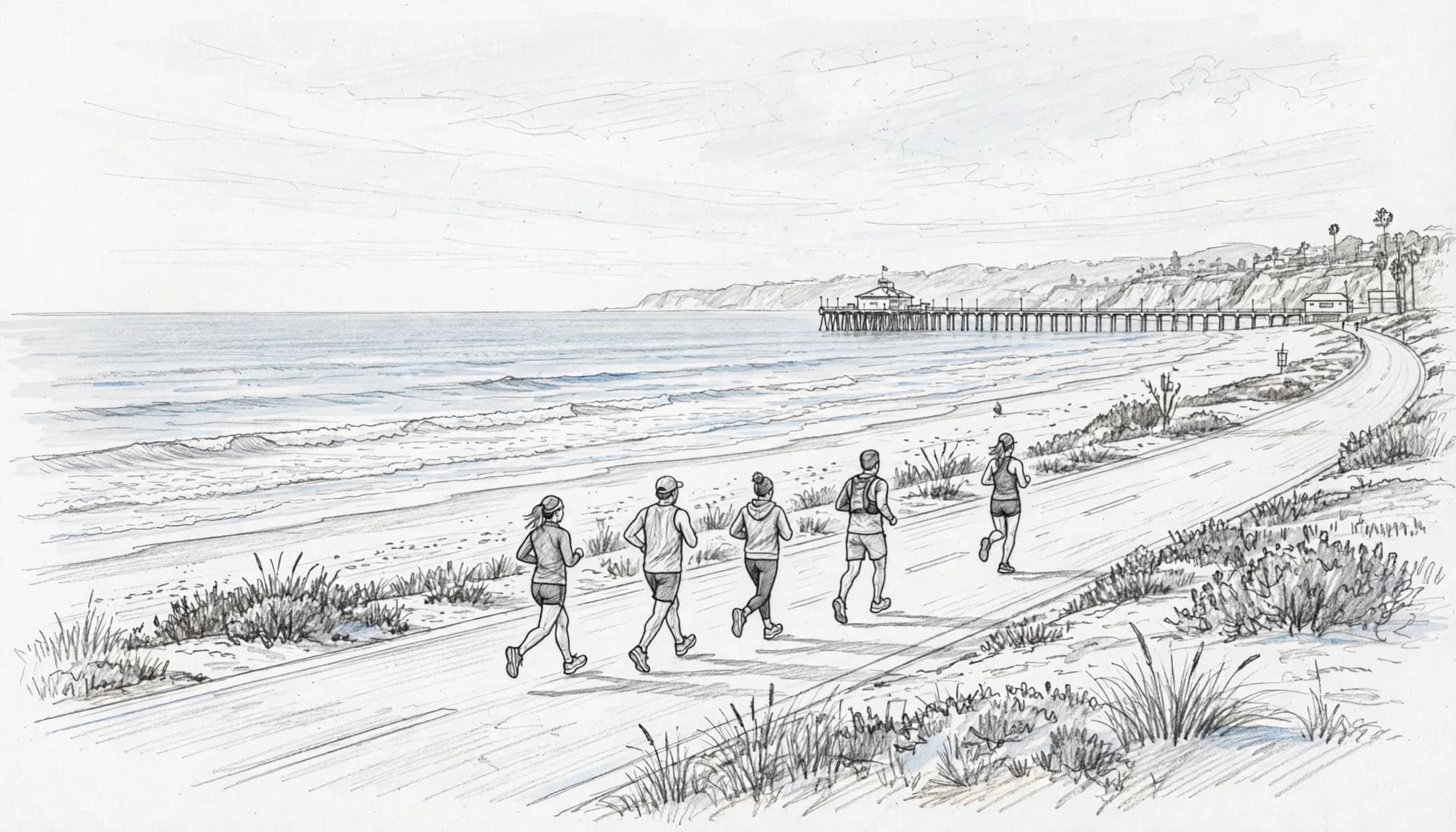
For the February 7, 2027 event, the official site lists a marathon, half marathon, 5K, and Beach Mile. That range lets a marathoner share the weekend with friends or family running shorter distances, while accompanying supporters can enjoy the race as a spectator event. Check the current Surf City race options before registering, since event offerings and details can change.
The large-weekend format also adds energy around the race. If you want a destination event with a coastal setting, multiple distance choices, and a chance to combine race day with a Huntington Beach visit, Surf City has a strong case. However, destination appeal comes with added costs. A destination weekend in Southern California can mean extra spending on lodging, transportation, and meals, especially if you travel with family.
Where the race may fall short
Coastal weather can be a mixed blessing. February may bring comfortable running conditions, but runners can also face cool air, sun exposure, wind, or changing conditions along the route. The open beachfront stretches offer little shade, so sunglasses, sunscreen, and a plan for changing weather can matter even on a cool morning.
Busy start and finish areas are another trade-off at a popular race weekend. Allow extra time for parking, access, and getting settled before the start, and review the event’s latest instructions before race morning. If you prefer a small race with easy logistics and plenty of quiet space, the scale may feel less appealing than the scenery.
A flat course can support steady pacing, yet it doesn’t make 26.2 miles easy. Long stretches without much elevation change can load the same muscles repeatedly, while wind or an early pace mistake can complicate the back half. First-time marathoners should focus on disciplined pacing and fueling, not assume the course will carry them to the finish. Experienced runners may value the flatter profile for a time goal, but should still prepare for exposed conditions.
Overall, the Surf City Marathon is a strong fit if the coastal setting and full race-weekend atmosphere matter to you. It is less compelling if you want low travel costs, a sheltered route, or a quiet local event. Compare the half marathon course details with your goals, then decide whether the setting justifies the extra logistics.
What to expect from the Surf City Marathon course
The Surf City Marathon has a coastal setting and a generally flat profile. That combination can suit runners aiming for an even effort or a fast finish. The official race page describes the 26.2-mile route as scenic and a Boston-Qualifying course. Routes, certification, and conditions can change, so verify current certification and qualifying status before relying on that designation. Before setting a pace goal, review the current Surf City Marathon course information and use its map to confirm turns, elevation, and distance details.
How the flat coastal route affects pacing
A flatter course can make it easier to settle into a steady rhythm, with fewer sustained climbs and descents. That consistency can help you follow a pace plan, but it also makes restraint important. Without hills to force a slowdown, it’s easy to start faster than your marathon fitness supports, especially when the early miles feel smooth.
Choose a goal pace based on training, not the course’s reputation. Begin at a controlled effort, check your pace once you’ve settled into the race, and avoid banking time early. Even small pace overshoots can add up over 26.2 miles and leave your legs struggling late.
Flat terrain still brings changes in effort. Wind can push against you or shift across exposed sections, while turns may interrupt your rhythm. Road conditions and congestion near the start or at busy points can also affect pace. If the crowd makes passing difficult, stay patient instead of weaving through runners and wasting energy.
Ocean views, exposure, and course support
The Pacific gives parts of the race an open, distinctly coastal feel, with the Huntington Beach area providing a memorable backdrop. However, views and exposure often come together: shoreline stretches may offer little shade, and sun or wind can affect how hard a given pace feels. February weather in Southern California can vary, so prepare for the forecast rather than assuming the ocean breeze will keep you comfortable.
Plan clothing and sun protection around the expected conditions, and practice your fueling and hydration strategy before race day. Course support matters too. Check the latest race map and participant guide for aid-station locations, available supplies, and any course changes; don’t rely on details from an earlier year. Knowing where support is located helps you plan when to drink or take fuel without disrupting your rhythm.
Crowd energy can lift your focus, particularly near busier areas, but support levels may vary along the route. Keep your pacing plan and fuel schedule in charge, even when spectators make it tempting to speed up. The course rewards runners who pair a measured opening pace with flexibility when wind, turns, or race-day traffic change the effort.
Choose Your Distance, Duration and Goal Time
Make three quick selections and open the exact plan built for your race target.
Looking for a Fully Personalized Training Plan?
The training plans above are an excellent choice if they match your goal. However, if you’d rather train with a plan built specifically around your current fitness, goal race, preferred training days, weekly mileage, and target finish time, our RDA Custom Training Plans provide a personalized solution. We also have running courses available for runners seeking to run faster from the mile to the marathon.
Why Choose a Custom Training Plan?
| Standard Training Plan | RDA Custom Training Plan |
|---|---|
| Follows a fixed schedule | Built around your schedule |
| Standard weekly mileage | Peak mileage customized for you |
| Fixed workout days | Train on the days you choose |
| Same structure for everyone | Designed around your current fitness |
| Static plan | Updated as your fitness improves |
| One-time purchase | Ongoing personalized coaching and support |
What You’ll Receive
- A training plan built specifically for your goal
- Personalized training paces
- Long runs, tempo runs, threshold workouts, interval sessions, recovery runs, and easy runs
- Peak weekly mileage matched to your experience level
- Flexible training schedule that fits your life
- Ongoing plan adjustments as your fitness improves
Ready to Train Smarter?
Stop guessing and start following a plan built specifically for you, your schedule, and your racing goals.
Race-day logistics, costs, and runner experience
A smooth Surf City Marathon weekend takes more than planning your race pace. Registration, lodging, transportation, and race-morning access can all affect your energy before the start, so confirm current details before booking or traveling.
Registration, race options, and what your entry includes
Compare the distances listed for your race year, then choose the one that fits your training and goals. The Surf City Marathon’s available events can change, so don’t assume a distance or benefit from a previous edition will return. The official Surf City Marathon website posts current event information and registration details.
Fees may change as registration periods advance, and entry types can have different terms. Compare current registration pricing, then review the checkout page for transfer or deferral rules, cancellation policies, and processing fees. Check exactly what your entry includes, as bib access, timing, a finisher medal, and other benefits may vary by event and year. Verify current post-race amenities too, including whether a beer garden is offered.
Confirm when and where packet pick-up takes place, and check the race expo schedule and location on the race website. Find out whether runners must collect their own bibs, what identification is required, and whether race-morning pickup is allowed. If you’re traveling from out of town, plan around the posted packet pick-up window. Check the race expo details before you travel rather than assuming you can collect everything on race morning.
Getting to the start and planning your stay
Huntington Beach traffic and event road closures can add time to a short drive, especially near the start and finish. Make a plan before race weekend, and review the event schedule and race’s parking and travel information for the latest access instructions.
- Travel: Allow extra time for airport transfers or driving through Southern California beach-area traffic. Check road-closure notices and don’t rely on your usual navigation route.
- Parking: Review the latest parking information, including available event lots, advance-purchase requirements, and opening times. If you plan to use a rideshare, confirm pickup and drop-off areas.
- Lodging: Compare hotels by race-area access, not just distance on a map. In Southern California, a nearby property may still require a detour on race morning, so ask about shuttle service and event traffic.
- Arrival: Work backward from the start time, allowing time to park, walk to the starting line, use the restroom, and reach your corral without rushing.
- Bag check: Confirm whether gear check is offered, what items are accepted, and where to drop off and retrieve your bag. If the service isn’t available or doesn’t fit your needs, leave warm layers and post-race essentials with a companion.
Finally, choose a post-race meeting point before you start. Phone service can be unreliable in a crowded finish area, and tired runners don’t need to search for their group. Agree on a clear landmark, confirm how you’ll return to your lodging, and keep recovery clothes, food, and transportation plans simple.
Who should run this marathon, and how to prepare
The Surf City Marathon may suit runners who value an ocean-side setting and want a course that supports steady pacing. Still, your choice should reflect your training, performance goals, and preferred race-day atmosphere, not scenery or course profile alone.
Is Surf City a good fit for your goals?
First-time marathoners may appreciate the generally flat route and destination setting, which can make race weekend feel special. The course may be easier to pace consistently than one with significant climbs, but 26.2 miles still demands patient training, practiced fueling, and realistic expectations. A flat profile doesn’t guarantee a personal best or an easy finish.
Time-focused runners may find the course well suited to an even effort, especially if their training supports a specific goal pace. However, wind, sun, crowding, and the repeated stress of flat running can all affect performance. Base your goal on recent workouts and long runs, then be ready to adjust your effort if conditions change.
If you want a scenic destination race, the Pacific backdrop and Huntington Beach setting may add appeal. Southern California can make for a memorable race weekend, too. Runners who prefer a small field, a sheltered route, or simpler logistics may be happier elsewhere. Consider what matters most on race day: coastal atmosphere, quiet surroundings, weather protection, or a course that suits your strengths. The best match is the event whose trade-offs you can accept, not simply the one with the most attractive profile.
How to train for a steady coastal marathon
Prepare for the demands you can control. Build your long runs gradually according to your training plan, and use some to practice your expected race-day pace and effort. A flat course can tempt you to lock into goal pace early, so rehearse starting conservatively and settling in only when your breathing and legs feel steady.
Practice fueling and hydration during long runs, using the products and timing you plan to follow on race day. Notice how your stomach responds as effort and distance increase; race morning is a poor time to test a new gel or drink. The Korey Stringer Institute’s marathon fueling and hydration guide offers practical guidance for first-time marathoners.
Rehearse your morning routine, too. Set an alarm, eat a familiar breakfast at your expected pre-race time, and test your clothing on early runs. Coastal weather can shift, so check the forecast close to race day and bring layers you can manage before the start. If the wind picks up, focus on effort rather than forcing your planned pace into a headwind. When conditions ease, return to your target gradually instead of trying to make up lost seconds all at once.
A useful plan includes a goal pace, a fueling schedule, and room to adapt. This gives first-timers structure, helps experienced runners stay disciplined, and keeps the scenery from distracting you from the work ahead.
Frequently Asked Questions
Race policies, course details, and schedules can change between editions. Before you commit to the Surf City Marathon, check the official race information for your event year and confirm any details that affect your training or travel plans.
Is the Surf City Marathon a Boston qualifier?
The race’s official website describes it as a Boston-qualifying event, but runners should confirm the course’s current certification and qualifying status for their race year. Check the official Surf City Marathon details and the Boston Athletic Association’s current requirements before setting a qualifying goal.
Can I switch from the marathon to a shorter race?
Distance changes depend on the event’s registration and transfer rules for that year. Review the official policy before registering or changing your plans, since availability, deadlines, fees, and eligibility can vary.
Does the Surf City Marathon offer pace groups?
Pace-group availability and target times may change from year to year. Check the current runner guide or race announcements before counting on a group, and prepare a personal pacing plan in case your target isn’t offered.
When should I register for the race?
Registration timing depends on demand, price tiers, and event capacity, so there may not be one fixed deadline. Check the official registration page early and revisit it if you’re waiting, since prices or availability may change as the event fills.
What should I check before booking travel?
Confirm the event date and start location, then review road closures, parking instructions, and current cancellation or deferral policies before paying for travel to Southern California. The official event schedule can help with race-weekend timing, but check for updates before booking nonrefundable flights or lodging.
Conclusion
The event is a strong choice for runners seeking a coastal race and destination weekend in Southern California. Its Pacific backdrop makes many miles memorable, and the generally flat course can suit runners aiming for a steady effort or a time goal. For those drawn to an oceanfront race, the scenery adds plenty of appeal.
The best experience still depends on preparation. Set a realistic pace, plan for sun and wind, and check current course, fee, and race-day details before making travel plans. If you value the scenery and feel comfortable managing those practical demands, the event is well worth considering. Approach the course with patience, and let the ocean views be a bonus rather than a reason to abandon your plan.


