

Sub 18 5k Calculator Guide
So, you’re looking to break the 18-minute mark for your 5k and seeking a sub 18 5K calculator? That’s a solid goal, and honestly, it’s totally doable with the right approach. It’s not just about showing up on race day and hoping for the best; it takes smart training, knowing your paces, and having a solid plan. I will be breaking down exactly what it takes to hit that sub-18 5k, from understanding the pace to crossing the finish line strong.
Key Takeaways
- To run a sub-18 minute 5k, you need to average a pace of 3 minutes and 36 seconds per kilometer, or about 5 minutes and 48 seconds per mile, for the entire race.
- Before aiming for 18 minutes, check your current fitness with tests like 5x1k repeats or a 2-mile time trial to see if you’re ready for the intensity.
- Building a strong aerobic base through consistent weekly mileage (around 50-70km) is crucial, alongside focused interval training, tempo runs, and a weekly long run.
- A good race day strategy involves a proper warm-up, controlling your pace in the first kilometer, staying steady through the middle, and giving it your all in the final stretch.
- Using a sub 18 5k calculator can help you understand target paces, predict race times based on training, and set appropriate speeds for your workouts.
Understanding The Sub 18 5k Pace
Breaking the 18-minute barrier for a 5k is a significant achievement. It means you’re running at a pace that most casual runners can’t sustain for even a mile. To hit this goal, you need to be consistently fast, and that requires a specific kind of training and race-day execution. It’s not just about having a good day; it’s about having put in the work beforehand.
The Benchmark Pace Per Kilometer
To finish a 5k in exactly 18 minutes, you need to average a pace of 3 minutes and 36 seconds for every single kilometer. That’s your target, your North Star for the entire race. This isn’t a pace you can afford to drift too far from. Every kilometer needs to be covered at or very close to this speed. It sounds simple, but holding that exact rhythm for 5 kilometers is where the real challenge lies.
Required Pace Per Mile
If you’re more accustomed to miles, the target pace translates to approximately 5 minutes and 47 seconds per mile. So, for each mile you cover, you’ll want to be hitting that 5:47 mark. This is the equivalent speed to the 3:36 per kilometer pace. Knowing both allows you to be flexible depending on the course and your personal preference for tracking your progress during the race.
What It Takes To Sustain The Speed
Sustaining a sub-18 5k pace is tough because it pushes your body’s limits. It’s not just about raw speed; it’s about your body’s ability to keep up that effort without breaking down. This means you need:
- Strong Aerobic Fitness: Your body needs to be efficient at delivering oxygen to your muscles.
- Lactate Threshold: You need to be able to clear lactic acid faster than it builds up, or at least manage it effectively, so your legs don’t burn out too quickly.
- Mental Toughness: When things get uncomfortable, and they will, you need the mental fortitude to keep pushing and stay focused on your pace.
Holding a pace that feels hard from the start requires more than just physical conditioning. It demands a mental game plan to push through discomfort and trust the training you’ve done. The goal is to make that challenging pace feel as controlled as possible for as long as possible.
Here’s a quick look at the paces needed:
| Distance | Target Time | Pace Per Kilometer | Pace Per Mile |
|---|---|---|---|
| 5 Kilometers | 18:00 | 3:36 | 5:47 |
| 3.1 Miles | 18:00 | 3:36 | 5:47 |
Assessing Your Readiness For An 18-Minute 5k
So, you’ve got your sights set on breaking the 18-minute barrier for the 5k. That’s a solid goal, and it means you’re aiming for a pace of roughly 3:36 per kilometer, or about 5:47 per mile. Before you dive headfirst into intense training, it’s a good idea to check if your current fitness level is actually ready for this kind of challenge. Jumping in too soon can lead to frustration, injury, or just plain burnout. We want to build you up smart, not break you down.
Fitness Benchmarks For The Goal
If your recent 5k times are hovering around the 18:30 to 19:30 mark, you’re probably in a good spot to start focusing on this goal. You’ve got a decent foundation, and now it’s about fine-tuning. Even if your personal best is a bit further off, don’t get discouraged. Sometimes, with the right training, runners surprise themselves. The key is to have a base level of fitness that can handle the demands of faster running.
The 5k Repeats Test
This test is a great way to see how you handle your goal pace. Head to a track or a flat, measured road. You’ll want to run five repetitions of 1 kilometer each. Between each kilometer repeat, take a recovery jog that lasts about 90 seconds to 2 minutes. Your target for each of these kilometer repeats is to run them in the 3:32 to 3:36 range. If you can complete all five repeats without slowing down too much, and you feel like you could have managed another one, that’s a really good sign you’re ready to tackle race pace.
The Two-Mile Time Trial
As an alternative, or maybe as a second check, you can try a two-mile time trial. Make sure you do a proper warm-up before you start this one. The goal here is to see if you can average around 11 minutes and 40 seconds to 11 minutes and 50 seconds for the two miles. If you finish feeling like you still had a little bit left in the tank, that’s another positive indicator that you’re prepared to chase that 18-minute 5k.
These kinds of tests aren’t just about seeing a number; they’re about understanding how your body responds to sustained effort at a challenging pace. They give you real-world feedback on your current capabilities and help you adjust your training plan accordingly.
Crafting Your Training Plan For Speed

Alright, so you’ve got the goal: break 18 minutes for a 5k. That’s a solid target, and it’s definitely achievable with the right approach to your training. It’s not just about running more; it’s about running smarter. We need to build a plan that sharpens your speed, improves your stamina, and gets your body ready to hold that tough pace.
Building A Solid Mileage Base
Before we even think about speed work, you need a good foundation. This means consistent running week after week. Don’t jump into super high mileage overnight, though. Gradually increase your total weekly distance. Think about adding a few miles here and there over several weeks. This base helps your body adapt to the demands of running and reduces the risk of getting hurt when you start adding faster running. It’s like building the foundation of a house – you can’t put up the walls and roof until that’s solid.
Prioritizing Interval Training
This is where the magic happens for speed. Interval training involves running short, fast bursts with recovery periods in between. The goal here is to get your body used to running at or even faster than your target 5k pace. You’ll want to schedule these workouts strategically, maybe once a week or every other week, depending on how your body is feeling. Don’t do them when you’re already wiped out from other hard efforts.
Here’s a sample structure for interval sessions:
- Warm-up: 10-15 minutes of easy jogging, followed by dynamic stretches like leg swings and high knees.
- Intervals: Run a set distance (e.g., 400m, 800m, 1000m) at your goal 5k pace or slightly faster.
- Recovery: Jog or walk for a specified period or distance between each interval. The key is to recover enough to hit the next interval hard, but not so much that you completely cool down.
- Cool-down: 10-15 minutes of easy jogging.
Incorporating Tempo And Threshold Runs
While intervals are great for pure speed, tempo and threshold runs build your lactate threshold. This is basically your body’s ability to clear out the byproducts of hard running. Improving this means you can hold a faster pace for longer before fatigue really sets in. A tempo run is typically a sustained effort at a comfortably hard pace – you can speak a few words, but not hold a full conversation. Threshold runs are a bit shorter and faster, pushing closer to your limit.
These runs teach your body to be more efficient at faster paces. They are the bridge between your easy runs and your all-out interval efforts, making that sub-18 pace feel more sustainable.
The Importance Of Long Runs
Wait, long runs for a 5k? Absolutely. While you’re not running a marathon, a weekly long run still plays a vital role. It builds aerobic capacity, strengthens your legs and connective tissues, and improves your mental toughness. Aim for a run that’s significantly longer than your typical daily run, but don’t go crazy. For a sub-18 5k goal, a long run that’s 6-8 miles (10-13 km) is usually plenty. It helps build that resilience needed for the final kilometers of a hard 5k race.
Race Day Strategy And Pacing
Alright, you’ve put in the work, and now it’s time to execute. Your race day plan is just as important as your training. Getting the pacing right from the gun can make or break your sub-18 attempt. It’s not just about being fit; it’s about being smart.
The Ideal Warm-Up Routine
To hit that 3:36 per kilometer pace right from the start, your body needs to be ready to go. Don’t just roll out of bed and onto the line. Start with about 10-15 minutes of easy jogging. This gets the blood flowing and loosens up those muscles. Then, add some dynamic stretches, think high knees, leg swings, maybe some walking lunges. These get your joints moving through their full range of motion. Finally, finish with 4-6 short bursts, called strides, at a pace faster than your goal pace. This wakes up your legs and gets them ready to fire when the race begins. You want to feel switched on, not sluggish.
Controlling The First Kilometer
This is where so many people go wrong. Going out too fast is the number one mistake in a race this short and intense. Your goal pace is 3:36 per kilometer (or 5:48 per mile). That first kilometer should feel smooth, maybe even a little bit easy. Don’t sprint it. If you hit that first split and it feels like you can hold it without too much strain, you’re pacing it perfectly. It’s a marathon, not a sprint… well, it’s a 5k, but you get the idea. Settle in.
Navigating The Middle Kilometers
The second and third kilometers are where the real work starts. This is where the discomfort creeps in. Focus on keeping your posture tall, your shoulders relaxed, and your stride quick and light. Try to maintain a consistent cadence – the rhythm of your steps. This helps prevent your form from falling apart when you start to fatigue. You can use other runners as markers. If someone is ahead, try to gradually reel them in. If someone is running with you, try to stay with them or even pull slightly ahead. Just keep that steady rhythm.
Executing A Strong Finish
With about 1.5 kilometers left, it’s time to start thinking about pushing harder. Break it down. From 1200 meters out, tell yourself to hold strong. When you get to the 400-meter mark, that’s when you start to really increase the effort. Then, over the final straight, empty the tank. Drive your arms, keep your eyes forward, and give it everything you’ve got. Remember all those hard workouts you did – this is what they were for. Every second counts in the final stretch.
Race day is your opportunity to show yourself what you’re capable of. Trust your training, stick to your plan, and believe in your ability to hit that sub-18 goal. It’s a mental game as much as a physical one, so stay focused and determined.
Mental Fortitude For The Sub 18 Challenge
Running a sub-18 minute 5k isn’t just about having fast legs; it’s a serious mental game too. When you’re pushing that hard, your brain will definitely try to talk you into slowing down. You’ve trained for this, so you need to be ready to tell that voice to take a hike.
Breaking the Race Into Manageable Sections
Don’t think about the whole 5k at once. That’s a lot. Instead, break it down. Think about it like this:
- Kilometer 1: Just get into a rhythm. Settle in, feel smooth, and don’t go out too hard. It should feel controlled.
- Kilometer 2: Lock into that pace. Stay smooth and resist the urge to speed up just because you feel okay. This is where you really commit.
- Kilometer 3: This is usually where it starts to feel tough. Remind yourself that it’s supposed to feel hard. You’re doing great.
- Kilometer 4: This is the grit kilometer. Everyone is hurting here. How you respond is what matters. Dig in.
- Kilometer 5: Nothing left to save. Empty the tank and drive for the finish line. Give it everything.
Focusing on one kilometer at a time makes the whole thing feel a lot less daunting.
Utilizing Short, Powerful Mantras
Sometimes, a simple phrase can be a game-changer when you’re feeling the burn. Pick something short and punchy that you can repeat. It can help drown out the negative thoughts. Try things like:
- “Strong and steady.”
- “Keep pushing.”
- “Hold the pace.”
Saying these in time with your stride can keep your mind focused and on track.
Mastering Breathing Techniques
When you get tired, your breathing can get ragged, and that makes everything feel harder. Try to control it. A simple technique is to breathe in for two steps and then out for two steps. This rhythm can help you stay more relaxed and prevent your body from tensing up. It’s a way to stay grounded when the effort is high.
Visualizing Success
Before the race, and even during training runs, take a moment to picture yourself running strong. Imagine hitting your target splits, maintaining good form, and crossing that finish line feeling like you gave it your all. See that clock showing a time under 18 minutes. This mental rehearsal can give you a big confidence boost when things get tough on race day. It’s like a practice run for your mind.
Leveraging A Sub 18 5k Calculator
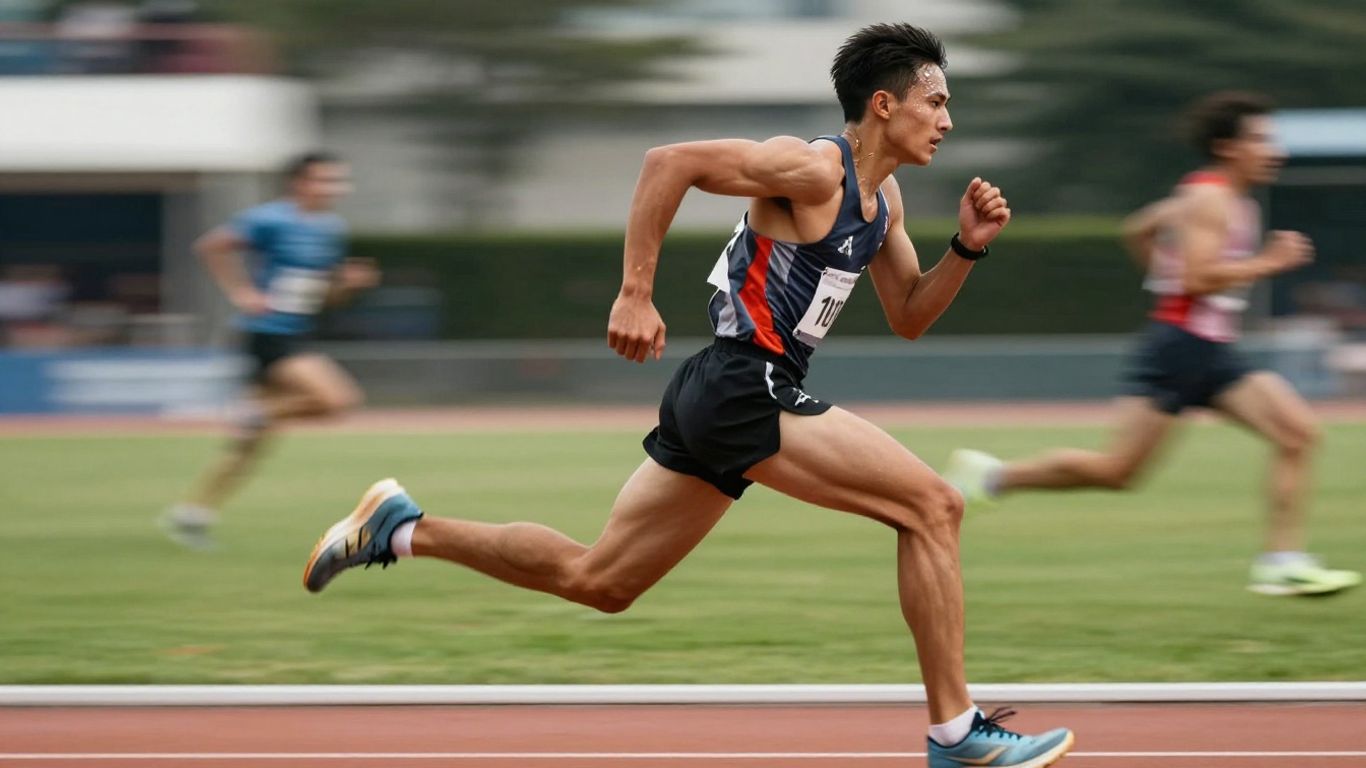
So, you’re aiming for that sub-18 5k. Awesome goal! But how do you actually figure out what pace you need, and more importantly, how do you train for it? That’s where a pace calculator becomes your best friend. It’s not just about knowing the magic number; it’s about translating that number into actionable training steps.
Think of a pace calculator as your personal coach, but in digital form. It takes your target time – in this case, 18 minutes for a 5k – and breaks it down into manageable chunks. You need to hit a specific pace per kilometer and per mile to achieve this. For an 18-minute 5k, that means averaging around 3:36 per kilometer or 5:48 per mile. A calculator shows you this clearly, so there’s no guesswork.
It also helps you understand what paces to aim for during different types of training. For example, your interval pace will be faster than your goal race pace, and your tempo run pace will be slightly slower. Knowing these specific numbers prevents you from going too hard or too easy in your workouts, making every session count.
Beyond just calculating the pace for your target time, these tools can also help you predict what you might run based on your current training paces. If you’re consistently hitting certain times for your interval sessions or tempo runs, you can plug those into a calculator to get an estimate of your potential 5k finish time. This is super useful for setting realistic goals and adjusting your training plan as you progress. It gives you a data-driven way to see if you’re on track or if you need to tweak something.
For instance, if you’re aiming for a sub-18 5k, but your calculator predicts a 18:30 based on your current training, you know you need to push a bit harder in your speed work or increase your weekly mileage. Conversely, if it predicts a 17:45, you might be able to hold back slightly in training to avoid burnout and focus on consistency. It’s all about using the information to train smarter, not just harder. You can find calculators that help you achieve a sub-17-minute 5K which can give you an idea of the pace differences.
Here’s a quick look at how different paces might break down for an 18-minute 5k goal:
| Workout Type | Target Pace (per km) | Target Pace (per mile) |
|---|---|---|
| Goal Race Pace | 3:36 | 5:48 |
| Intervals | 3:25 – 3:30 | 5:30 – 5:38 |
| Tempo Runs | 3:45 – 3:50 | 6:00 – 6:10 |
| Easy/Recovery | 4:30+ | 7:15+ |
Using a calculator helps you dial in these specific paces. It’s not just about running fast; it’s about running the right fast for each type of workout. This precision is what separates a good training plan from a great one. It helps you build the specific speed and endurance needed to hold that 3:36/km pace for the entire 5k distance.
A pace calculator is more than just a number generator; it’s a tool for informed training. It translates your ambitious time goal into concrete paces for every run, interval, and race effort. This clarity helps you structure your training effectively, monitor your progress, and make necessary adjustments along the way, ultimately increasing your chances of hitting that sub-18 mark.
Remember, consistency is key. Use the calculator to set your paces, stick to your training plan, and trust the process.
Ready to Hit That 18-Minute Mark?
So, you’ve got the pace charts, the training ideas, and a better handle on what it takes to run a sub-18 minute 5K. It’s not just about going fast on race day; it’s about the smart work you put in beforehand. Remember those target paces, the different types of runs, and how to mentally push through when it gets tough. This goal is definitely within reach with consistent effort and a solid plan. Now go out there, put it all together, and chase down that personal best.
Frequently Asked Questions
What does it actually mean to run an 18-minute 5K?
Running a 5K in 18 minutes means you’re super fast! You need to keep a pace of about 3 minutes and 36 seconds for every kilometer you run. That’s like running a mile in under 5 minutes and 48 seconds, and you have to do that five times in a row without slowing down much. It’s a big deal and shows you’re a really strong runner.
Am I ready to try for an 18-minute 5K?
If you can currently run a 5K in around 19 to 19 minutes and 30 seconds, you’re probably close! You already have good speed and endurance. If your time is a bit slower, don’t worry, with a solid training plan and dedication, many runners can reach this goal. Taking a fitness test, like running a few fast kilometers with short breaks, can also give you a good idea.
How fast do I need to run each mile or kilometer?
To finish a 5K (which is 5 kilometers or about 3.1 miles) in exactly 18 minutes, you need to run each kilometer at a pace of 3 minutes and 36 seconds. For miles, that’s about 5 minutes and 48 seconds per mile. You have to hold this speed for the entire race.
What kind of training is best for getting faster?
You need a mix of different training types. Running long, easy distances builds your stamina. Speed workouts, like running fast for short bursts (intervals) or running at a challenging but steady pace (tempo runs), help you get quicker. Don’t forget strength exercises and stretching to keep your body strong and prevent injuries.
How important is my mindset during the race?
Your mind is just as important as your legs! When you’re running that fast, it gets tough. It helps to break the race into smaller parts, like focusing on just the next kilometer. Having short, powerful phrases to repeat to yourself, like ‘stay strong,’ can also keep you going when you feel like slowing down.
Do I need to run a lot of miles each week?
While running more miles can help build a strong base, you don’t necessarily need to run super high mileage to hit 18 minutes. Many runners achieve this goal by running between 25 to 40 miles per week. The key is to have a balanced plan that includes different types of runs and to increase your mileage slowly and safely.


