

Stride Length Calculator Review
So, you’re hitting the pavement, trying to get faster looking for a stride length calculator, maybe just trying to not get hurt. It’s easy to think running is just about, well, running. But there’s more to it. Understanding how you move, how your feet hit the ground, and how long your steps are can make a big difference. That’s where tools like a stride length calculator come in. They help you see what’s really going on when you run, so you can make smart changes.
Key Takeaways
- Analyzing your running form helps prevent injuries and makes you a better runner.
- Advanced tech, like 3D motion capture, gives super detailed info about your run.
- Using a stride length calculator helps you figure out and adjust your stride for better efficiency.
- Making changes to your running can help you run faster, longer, and even make your shoes last.
- Getting personalized advice based on your run analysis helps you train smarter and pick the right gear.
Understanding Your Running Mechanics
Running might seem pretty straightforward – just put one foot in front of the other, right? Well, it’s actually a lot more involved than that. Your body is doing some pretty complex stuff with every single step you take. To really get better at running and, just as importantly, avoid getting hurt, you’ve got to pay attention to how you’re actually moving.
The Importance of Gait Analysis
Think of gait analysis as getting a detailed look under the hood of your running. It’s all about breaking down your movement to see what’s working well and what could use a little tweaking. Many common running injuries pop up because of how someone runs, not necessarily because of bad luck.
Identifying these patterns early means you can make changes before they turn into a nagging pain. It’s about fixing the root cause, not just the symptom. Getting a professional to look at your form can really help you figure out how to run with better technique. It’s a key step in preventing injuries and making your runs more enjoyable.
Build Your Running Performance System
Move from research to action with training, recovery, nutrition, pacing, and performance tools built for runners.
More Guides for This Runner Goal
Key Metrics for Runners
When we talk about analyzing your run, there are a few specific things we look at. These aren’t just random numbers; they tell us a story about your efficiency and potential for injury.
- Cadence: This is simply how many steps you take per minute. Most runners aim for around 170-180 steps per minute, but this can vary.
- Stride Length: How far your foot lands in front of your body. Too long, and you might be overstriding, which can cause braking forces.
- Vertical Oscillation: How much up-and-down movement there is in your run. Less is generally more efficient.
- Ground Contact Time: How long your foot is on the ground with each step. Shorter is usually better.
- Foot Strike: Where your foot first hits the ground (heel, midfoot, or forefoot).
Understanding these numbers gives you concrete data to work with. It’s not just a feeling; it’s measurable information that points towards specific adjustments.
Benefits of a Comprehensive Run Assessment
Getting a full picture of your running mechanics offers a lot more than just a quick tip. It’s an investment in your running future.
- Injury Prevention: This is a big one. By spotting awkward movements or imbalances, you can correct them before they lead to strains, sprains, or worse. It’s about running smarter, not just harder.
- Performance Boost: When your form is more efficient, you use less energy to cover the same distance. This means you can run faster, longer, or both, without feeling like you’re working twice as hard. You might even find you’re setting new personal bests without a huge increase in training volume.
- Better Body Awareness: The process makes you more attuned to how your body feels and moves while running. This awareness allows you to make small corrections on the fly, even when you’re out on a long run by yourself. You start to feel what good form is.
Ultimately, understanding your running mechanics is the first step toward becoming a more resilient and effective runner. It’s about working with your body, not against it. For some initial tips on improving your form, check out what certified run coaches suggest.
Leveraging Technology for Better Running

Running isn’t just about lacing up and hitting the pavement anymore. We’ve got some pretty neat tools now that can really show us what’s going on with our bodies when we run. It’s like having a super-powered coach who sees everything.
The Power of 3D Motion Capture
Forget just watching yourself on video. 3D motion capture systems are the real deal. They use special cameras and sensors to create a detailed, three-dimensional picture of your entire body as you move. This means we can see exactly how your joints are bending, how your feet are landing, and how your arms are swinging, all from every angle. This level of detail is what helps us spot those tiny inefficiencies that can lead to bigger problems down the road. It’s a far cry from just guessing what might be wrong.
How Advanced Software Enhances Analysis
All that 3D data needs to be processed, and that’s where the software comes in. Think of it as the brain that makes sense of all the captured movement. These programs can crunch the numbers incredibly fast, often in just seconds of running footage.
They highlight key metrics and can even visualize your gait in ways that are easy to understand, even if you’re not a biomechanics expert. This makes it simpler to see where you can make changes. The software can also compare your form to that of highly efficient runners, giving you a clear benchmark.
Real-Time Feedback for Immediate Improvement
What’s even cooler is that some of these systems can give you feedback as you’re running. Imagine a coach telling you to adjust your stride or arm swing right in the moment. This immediate feedback loop is fantastic for making quick corrections. It helps you feel what the right movement is like, making it easier to build better habits. This kind of instant adjustment can make a big difference in how you feel during and after your runs, and it’s a big part of getting a proper running stride analysis.
Here’s a quick look at what these technologies can measure:
- Joint Angles: How much your knees, hips, and ankles bend.
- Foot Strike: Where and how your foot first contacts the ground.
- Cadence: How many steps you take per minute.
- Vertical Oscillation: How much up-and-down movement there is in your run.
Using these advanced technologies takes the guesswork out of improving your running. It provides objective data that can guide specific adjustments, leading to more efficient movement and a reduced chance of injury. It’s about working smarter, not just harder.
Optimizing Your Stride Length Calculator Insights
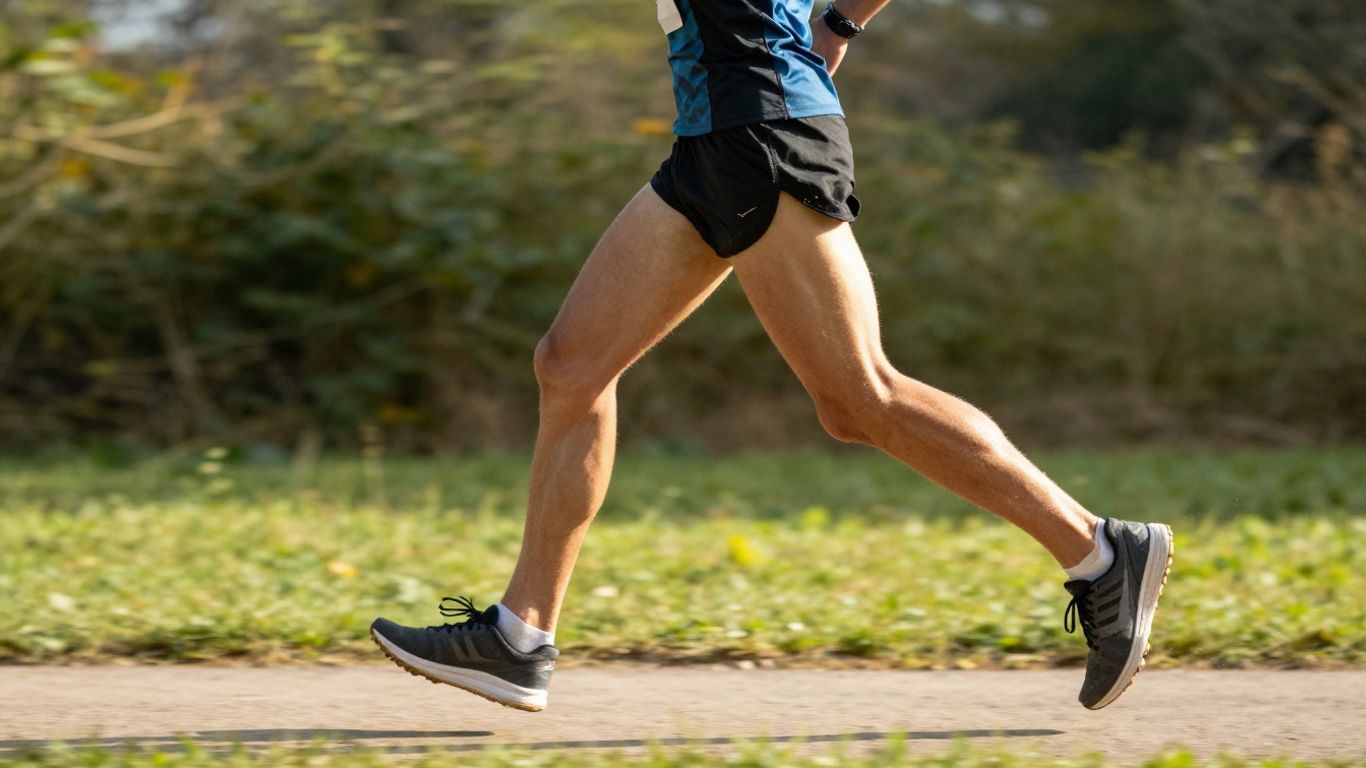
So you’ve used the stride length calculator and got your numbers. That’s great! But what do those numbers actually mean for you and your running? It’s not just about knowing the length; it’s about understanding how to use that information to run better and maybe even avoid that nagging ache you get after longer runs.
Calculating Your Stride Length Accurately
Getting the right number from the calculator is step one. This usually involves a few key pieces of information: your height, your leg length, and how fast you’re running (your pace). Some calculators might ask for more details, like your cadence (steps per minute).
The more accurate the input, the more useful the output will be. Think of it like baking – you need the right measurements for the cake to turn out right. If you’re using a watch that tracks cadence, that’s a big help. If not, you might have to do a quick manual count for a minute during a run to get a decent estimate. The goal is to get a reliable baseline measurement.
Interpreting Your Stride Length Data
Okay, you have your stride length. Now what? Generally, a longer stride can mean fewer steps to cover the same distance, which sounds good, right? But it’s not always that simple. A stride that’s too long for your body can actually cause you to overstride, landing with your foot way out in front of you. This acts like a brake, wastes energy, and can put extra stress on your knees and hips. On the flip side, a stride that’s too short might mean you’re taking a lot of quick, choppy steps, which can also be inefficient.
Here’s a quick look at what different stride lengths might suggest:
| Stride Length (meters) | Potential Interpretation |
|---|---|
| < 1.0 | Likely short, possibly choppy |
| 1.0 – 1.5 | Within a common range for many runners |
| > 1.5 | Potentially long, consider overstriding |
Remember, these are general guidelines. Your ideal stride length is unique to you.
Adjusting Your Stride for Efficiency
If your stride length isn’t quite where you want it, don’t worry, you can make changes. It’s not about forcing a huge difference overnight, which can lead to problems. Instead, focus on small, smart adjustments. If your stride is too long, try to focus on bringing your foot down more underneath your body rather than out in front. This often comes naturally if you increase your cadence slightly. If your stride feels too short, you might find that a slight increase in leg extension without overreaching can help.
Here are a few things to try:
- Focus on cadence: Aim for a slightly quicker turnover. Many runners find a cadence around 170-180 steps per minute works well, but your personal best might be different.
- Think about your landing: Try to land with your foot more directly beneath your hips, rather than way out in front.
- Gentle adjustments: Don’t try to drastically change your stride length. Small, consistent efforts are more effective and safer.
Making changes to your stride takes time and practice. It’s best to incorporate new habits gradually during your runs. Listen to your body; if something feels wrong or causes pain, ease back and reassess. The goal is to find a stride that feels natural, efficient, and comfortable for your body over distance.
By understanding and thoughtfully adjusting your stride length, you’re taking a big step towards running more efficiently and staying injury-free. It’s all about finding that sweet spot that works for your body.
Transforming Your Performance and Preventing Injuries
Reducing Pain Through Form Correction
Lots of runners deal with aches and pains, and often, it comes down to how they’re moving. It’s not always about pushing harder; sometimes, it’s about running smarter. When your stride isn’t quite right, certain parts of your body take on extra stress. Think about it: if your foot lands awkwardly or your hips don’t quite align, that impact has to go somewhere.
Over time, this can lead to nagging issues like shin splints, knee pain, or even hip bursitis. Getting a good look at your running form, maybe with something like a stride length calculator, can highlight these little inefficiencies. Fixing these subtle form issues can make a huge difference in how you feel after a run. It’s about making your body’s natural shock absorption system work better, so you can enjoy your miles without that constant worry of getting hurt.
Boosting Speed and Endurance
It might seem counterintuitive, but improving your form isn’t just about avoiding pain; it can actually make you faster and help you run longer. When your stride is more efficient, you’re not wasting energy. Every step counts, and if you’re using your muscles in a more effective way, you’ll find you can maintain a faster pace for longer.
This means better race times and the ability to tackle longer distances without hitting that dreaded wall. It’s like fine-tuning an engine; when all the parts work together smoothly, the whole machine runs better. A well-calculated stride length can be a key piece of that puzzle, helping you find that sweet spot where you’re moving with power and grace.
Extending the Life of Your Running Shoes
This one might surprise you, but your running form can actually impact how long your shoes last. When you run with an inefficient gait, you might be putting uneven pressure on your shoe soles. This can lead to premature wear and tear in specific spots, meaning you’ll need to replace your shoes sooner than you should.
Think about it, if you’re constantly overpronating or striking the ground in the same odd way, that part of the shoe is going to break down faster. By optimizing your stride and ensuring a more balanced foot strike, you’re not only helping your body but also getting more miles out of your footwear. It’s a win-win, really. Plus, understanding your gait can help you choose the right shoes in the first place, which is a whole other topic we’ll get into.
The goal isn’t to completely change who you are as a runner overnight. It’s about making small, smart adjustments that add up. Think of it as refining your technique rather than reinventing the wheel. These adjustments, guided by data from tools like a stride length calculator, help your body work with you, not against you, leading to a more enjoyable and sustainable running journey. You’ll feel the difference in your body and see it in your performance.
Personalized Training and Footwear Guidance
Tailored Training Strategies
So, you’ve got your stride length figured out, and maybe you’ve even tweaked it a bit. But what’s next? It’s all about making those changes stick and building on them. This is where personalized training comes in. Instead of just following some generic plan you found online, we’re talking about a plan built just for you. It looks at how you run, what your body needs, and what your goals are. Think of it like a custom suit versus an off-the-rack one, it just fits better and works better.
Your unique running mechanics, identified through detailed analysis, become the blueprint for your training. This means focusing on drills that address your specific weaknesses and building on your strengths. It’s about working smarter, not just harder. For instance, if your analysis shows a tendency to overstride, your training might include exercises to improve your cadence and mid-foot strike, rather than just logging more miles.
Choosing the Right Running Shoes
Picking out running shoes can feel like a guessing game sometimes, right? You walk into a store, and there are just so many options. But what if you could know, with pretty good certainty, which shoe is actually going to work best for your feet and your stride? That’s where footwear analysis comes into play. It’s not just about how your foot looks; it’s about how it moves when you’re actually running.
We look at things like your foot type, how strong your feet are, and your range of motion. Then, we see how your foot hits the ground when you run. All this information helps figure out if the shoes you’re wearing are helping or hurting you. Sometimes, a simple change in shoe type can make a big difference in how you feel and perform. It’s about finding that perfect match that supports your unique biomechanics and helps you run comfortably and efficiently.
Getting the right shoe can really change your running game, making those longer runs feel easier and reducing the chance of aches and pains. It’s a key part of making sure your body is set up for success on every run, whether you’re training for a marathon or just enjoying a jog in the park. Finding the right tempo running shoes can be a game-changer for speed work.
The Role of Footwear Analysis
Footwear analysis goes hand-in-hand with understanding your stride. It’s the practical application of all the data you’ve gathered about your running form. When we analyze your footwear, we’re not just looking at the brand or how cool they look. We’re examining how your shoes interact with your feet and the ground during your run.
This involves looking at:
- Foot Strike Pattern: How and where your foot lands on the ground.
- Arch Support Needs: Whether your arch needs more support or if you have a flexible, flatter foot.
- Cushioning Preferences: How much shock absorption you need based on your running surface and distance.
- Wear Patterns: The wear on your old shoes can tell us a lot about how you distribute pressure.
Understanding these details helps us recommend shoes that won’t just feel good but will actively support your biomechanics, potentially preventing common issues like shin splints or plantar fasciitis. It’s about making sure your gear is working for you, not against you.
This detailed look can even lead to specific recommendations for shoe models or types that align with your gait. It’s a vital step in creating a truly personalized running experience, ensuring that every piece of your running setup is optimized for your individual needs and goals.
The Future of Running Analysis
Data-Driven Decision Making for Specialists
Running specialists are starting to rely more and more on hard data to figure out what’s going on with a runner’s form. Instead of just watching and guessing, they’re using advanced systems that collect tons of information. This means they can pinpoint exactly where a runner might be having trouble, like a slight imbalance or a joint that’s not moving quite right.
It’s like having a super-powered microscope for your running mechanics. This detailed information helps them give much more specific advice, making sure the runner is doing the right things to improve.
Predictive Analysis for Injury Prevention
Imagine knowing if you’re likely to get hurt before it happens. That’s the idea behind predictive analysis in running. Sophisticated software looks at all the data from your gait analysis, things like how your foot lands, how much your knee bends, or how your hips move, and spots patterns that often lead to injuries.
It’s all about catching potential problems early. By identifying these risks, runners and their coaches can make small changes to form or training that can prevent a painful injury down the road. This means more consistent training and a longer, happier running life.
The Evolution of Gait Analysis Systems
Things are changing fast in how we analyze running. We’re moving beyond simple video recordings. New systems use multiple cameras and sensors to create a 3D picture of your movement. This gives an incredibly detailed look at how every part of your body works when you run. It captures things that are hard to see with the naked eye, like subtle rotational movements or tiny differences between your left and right sides. This level of detail is helping us understand running biomechanics better than ever before.
Here’s a quick look at what these advanced systems can track:
- Joint Angles: Precise measurements of how your knees, hips, and ankles bend and extend.
- Foot Strike Patterns: Detailed analysis of how and where your foot contacts the ground.
- Pelvic and Torso Rotation: Understanding how your upper body moves in relation to your lower body.
- Ground Reaction Forces: Measuring the forces your body experiences with each step.
The goal is to get a complete, three-dimensional understanding of how a runner moves. This allows for incredibly precise adjustments to form and training, leading to better performance and fewer injuries. It’s a big step up from just looking at a side-view video.
Keep Running Smarter
So, we’ve talked about how figuring out your stride length can really make a difference. It’s not just about running faster, but also about running without getting hurt. Think of it like this: knowing your stride helps you use your energy better and keeps your body happier.
Whether you’re training for a big race or just enjoy a weekend jog, taking a moment to understand your stride is a smart move. Give the stride length calculator a try, see what numbers you get, and start making small changes. You might be surprised at how much smoother and more enjoyable your runs become.
Frequently Asked Questions
What is a stride length calculator and how does it help runners?
A stride length calculator measures the distance you cover with each step when running. Knowing your stride length helps you understand your running form, improve your speed, and reduce the chance of getting hurt.
How can I measure my stride length accurately?
To measure your stride length, run a set distance and count your steps. Divide the total distance by the number of steps you took. For the best results, use tools like 3D motion capture or ask a running specialist for help.
Why is analyzing my running form important?
Looking at your running form helps you spot bad habits that might cause injuries or slow you down. By fixing these problems, you can run faster, feel less tired, and stay healthy longer.
How does technology like 3D motion capture improve running analysis?
3D motion capture uses special cameras and sensors to track your movements in detail. This technology gives you and your coach more information about your running style, showing things that are hard to see with the naked eye or a regular video.
Can changing my stride length really help me run better?
Yes! Adjusting your stride length can make your running more efficient. If your stride is too long or too short, you might waste energy or put extra stress on your body. Finding the right stride helps you run smoother and reduces the risk of injury.
How do I know if I’m wearing the right running shoes?
The right shoes depend on how your feet move and your running style. A running analysis, especially one that includes a look at your footwear, can help you pick shoes that support your feet and match your unique way of running.


