

Spartan Race Idaho: Epic Challenges & Race Tips
Combining a run with climbing, carries, and other obstacles gives a Spartan race a different feel from a standard trail race, and Idaho’s wide-open scenery makes the challenge even more appealing. But event locations and dates can change each year, so check whether Spartan has a race scheduled in Idaho before making plans. If the calendar doesn’t have a suitable Idaho event, a race in a nearby state may be a better fit.
The right choice depends on more than distance. You’ll also want to consider travel time, race-day logistics, and the preparation each format requires. Start by checking the current Spartan racing event calendar, then compare your options and build a plan for the course ahead. Be sure to check out the RunDreamAchieve YouTube channel for weekly running tips.
Key Takeaways
- Spartan Race Idaho dates and venues can change each season, so check the official Spartan race calendar before booking travel.
- If Idaho has no suitable event, compare nearby-state races by drive time, race format, and the total cost of getting there.
- Choose a distance and obstacle format that matches your current running base, then train on hills, grip strength, carries, and steady effort.
- Before race weekend, review venue updates and map out lodging, arrival time, parking, required gear, and a backup plan for weather.
Spartan Race Idaho: Find an Event That Fits Your Season
Spartan events can change locations and dates from year to year, so don’t build your season around a past Idaho race until you confirm it’s on the current calendar. Check the official listing first, then compare any available options by schedule, travel demands, and total cost.
Check the official calendar before you make plans
Start with Spartan’s official race calendar and search for Idaho. A race that took place in the state in a previous season isn’t proof that it will return. If no Idaho event appears, or the listing doesn’t suit your schedule, keep your plans flexible.
Before registering, open the event page and confirm the details that shape race day:
- Date and venue: Check the full event date and the specific venue, not just the city or state.
- Race format and start times: Make sure the distance and event type fit your goals. Review available start waves, since an early start can affect when you leave and whether you need to stay overnight.
- Age rules: Confirm eligibility requirements for the race and any age-group categories you’re considering.
- Parking and event updates: Look for parking instructions, arrival guidance, and notices about venue or schedule changes.
Details can shift after you first find an event. Revisit the listing before booking travel and again as race weekend approaches, especially if Spartan posts updated instructions.
Compare nearby races by total travel time
If Idaho has no suitable date, search the calendar for events in nearby states. Compare the actual trip, rather than choosing by state name alone. A race that looks close on a map may require a long drive to a remote venue, while a farther event may have more practical travel connections.
Estimate the time from your door to the venue, including stops and likely traffic. Then check whether the start wave means you can drive in that morning or need lodging the night before. Add the costs of fuel, a hotel, meals, and parking to see what the trip will really require.
The best option depends on the full race weekend. For example, a lower registration price may not offset an extra hotel night or a difficult pre-dawn drive. Compare the schedule and venue instructions for each event before deciding, and treat nearby races as options only when their current listings confirm they’re scheduled.
Understand registration costs and ticket details
Spartan registration prices can vary by event, race distance, ticket tier, and purchase date. Some prices change as registration windows advance, so waiting may affect what you pay or which start times remain available. Check the event page for current ticket options before you commit.
Read the checkout details closely. Confirm whether the displayed price includes fees, parking, spectator entry, or optional extras such as photos. These items may be separate, and they can raise the total cost for you or anyone accompanying you.
Finally, review the event’s transfer and refund terms before purchasing. Don’t assume you can move your ticket to another date or receive a refund if your plans change. Once you’ve checked the policies and confirmed the venue details, you can book travel with a clearer picture of the cost and race-day schedule.
Choose Your Distance, Duration and Goal Time
Make three quick selections and open the exact plan built for your race target.
Looking for a Fully Personalized Training Plan?
The training plans above are an excellent choice if they match your goal. However, if you’d rather train with a plan built specifically around your current fitness, goal race, preferred training days, weekly mileage, and target finish time, our RDA Custom Training Plans provide a personalized solution. We also have running courses available for runners seeking to run faster from the mile to the marathon.
Why Choose a Custom Training Plan?
| Standard Training Plan | RDA Custom Training Plan |
|---|---|
| Follows a fixed schedule | Built around your schedule |
| Standard weekly mileage | Peak mileage customized for you |
| Fixed workout days | Train on the days you choose |
| Same structure for everyone | Designed around your current fitness |
| Static plan | Updated as your fitness improves |
| One-time purchase | Ongoing personalized coaching and support |
What You’ll Receive
- A training plan built specifically for your goal
- Personalized training paces
- Long runs, tempo runs, threshold workouts, interval sessions, recovery runs, and easy runs
- Peak weekly mileage matched to your experience level
- Flexible training schedule that fits your life
- Ongoing plan adjustments as your fitness improves
Ready to Train Smarter?
Stop guessing and start following a plan built specifically for you, your schedule, and your racing goals.
Choose the Spartan Race Distance That Matches Your Experience
For a Spartan Race Idaho event, choose a format that fits your current fitness, obstacle experience, and available training time. A longer course may sound impressive, but the best first race is one you can prepare for and enjoy. Distances, obstacle counts, and event availability vary, so check the current listing before registering.
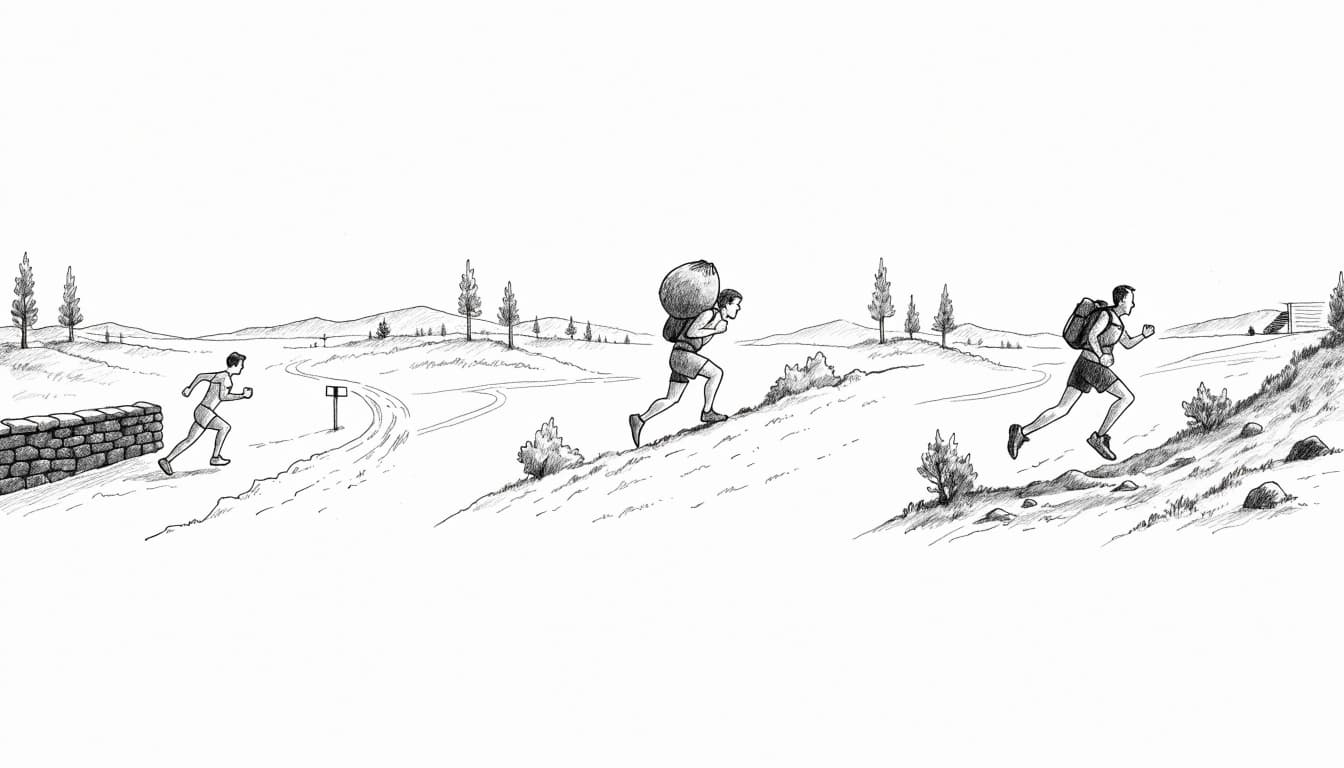
Start with a Sprint if you are new to obstacle racing
The Sprint is a shorter entry point, often around 5K, with a mix of running and obstacles. You still need to manage grip challenges, carries, climbs, and moments that test your problem-solving. However, the shorter course gives first-timers a chance to learn how race waves, transitions, and obstacles feel without committing to the longest event.
A recent running base helps, but you don’t need years of obstacle-race experience. Add hill work and grip-strength exercises to your training, and practice moving steadily after effort, such as carrying a load or climbing. That preparation can help you stay composed when your forearms tire or an obstacle takes more than one attempt.
Choose a Sprint if your main goal is to finish your first obstacle race, build confidence, or test whether you enjoy the format. Spartan’s race format overview explains how its common race types differ, while the event listing provides the details for a specific race.
Build up to a Super or Beast with a clear goal
A Super asks you to spend more time on your feet than a Sprint, while a Beast adds a larger endurance demand and more time under fatigue. Spartan lists typical formats and obstacle ranges in its race FAQ, but the exact course can change by event. Longer distance also means obstacles may feel harder late in the race, when your legs and grip have already taken a beating.
Before choosing, consider how many hours you can train each week and how comfortable you are running on uneven trails. A Super may suit someone who has a consistent running routine and wants a longer challenge. A Beast is a stronger choice for runners who can handle extended trail efforts and recover well between demanding sessions.
Your goal should guide the step up. If you want to improve your endurance, build several weeks of steady running and hill work first. If your training time is limited or you are still learning obstacle skills, a Sprint or Super can be a more sensible target than selecting a distance for its reputation.
Know what makes an Ultra or Stadion different
The Ultra is a major endurance commitment, commonly built around a 50K distance. It demands more than the ability to cover the miles: you’ll need sustained training, fueling practice, patience, and a recovery plan. Choose it when you have experience with long efforts and enough time to prepare, not simply because it is the longest option.
Stadion takes a different approach. Where offered, it brings obstacles into a stadium setting, often with stairs and repeated changes in direction instead of a long backcountry trail. Spartan describes Stadion as a stadium-based obstacle race, but each venue shapes the course differently.
Distance alone won’t tell you how a race will feel. Check the event page for terrain, obstacle details, format availability, and any course notes. Then match those demands to your training and experience, so your race choice gives you a clear, achievable goal.
Prepare for Idaho Conditions and Race-Day Logistics
An Idaho race weekend can look different depending on the venue. A high-desert course may bring dry air, open sun, and large temperature swings, while a mountain venue can add elevation, cooler mornings, and changing conditions. Since no two locations share the same forecast or terrain, check the event details and prepare for the specific site.
Pack for changing weather and a muddy finish
Check the forecast in the days before your Spartan Race Idaho event, then check it again the night before you leave. Conditions can shift, and a sunny afternoon may follow a chilly start. For regional context, NOAA’s U.S. Climate Normals show typical conditions by location, but race-week forecasts are more useful for packing.
Bring layers you can remove or add before the start, plus sun protection such as a cap and sunscreen. Dry air and strong sun can catch runners off guard, especially on exposed routes. Shoes with reliable traction help on uneven or slick ground, though the course surface depends on the venue. Pack a full change of clothes and a towel for the muddy finish, and check Spartan’s race-day packing checklist alongside the event’s current gear rules. Don’t assume every item is allowed or needed at every venue.
Plan your drive, arrival, and recovery
Map the venue before race weekend and review the event’s parking instructions. Some race sites sit outside town, and the final approach may take longer than a map suggests. Allow extra time for traffic, parking, walking to the event area, and check-in. Then confirm your assigned start time so you can set a realistic departure plan.
If the course is at a higher elevation than where you train, expect the effort to feel different and avoid rushing your warm-up. Pack food you know sits well, and bring water for the drive and the hours around your race. Follow event guidance on what you can carry on course.
Use this short checklist before leaving:
- Confirm the venue address, route, parking plan, and start time.
- Pack race layers, traction-ready shoes, sun protection, spare clothes, and a towel.
- Bring familiar food and enough water for travel and post-race recovery.
- Set aside clean clothes and a simple snack for after the finish.
Afterward, change out of wet or muddy gear, drink fluids, and eat a familiar meal or snack. A little walking and gentle mobility can help you cool down before the drive home.
Bring friends or family with a clear spectator plan
If friends or family plan to watch, check the event page for spectator tickets, allowed access areas, and parking arrangements before race day. Venue rules vary, and spectators may need a separate ticket. Share the meeting point and your start time so nobody has to search for each other across a large site.
Obstacle courses can spread over uneven terrain, so spectators may see only a few sections of the race. Some venues restrict access to particular areas or require walking between viewing points. Set expectations early, and agree on a meeting spot near the event area for after you finish.
Train for the Run, Obstacles, and Idaho’s Open Terrain
Prepare for the demands of the course, not just the distance on the event listing. Build your running gradually, add obstacle-specific strength, and practice staying steady when your legs are tired.
Build a steady running base before adding speed
Start with consistent easy runs at a pace that lets you speak in short sentences. Once that routine feels manageable, extend one run gradually rather than making every workout longer or faster. Beginners should give their bodies time to adjust, especially when adding hills or uneven ground.
When safe trails or hills are accessible, use them to prepare for changing footing and sustained climbs. If you train on flat roads, add gentle inclines or a treadmill hill session instead. Keep the effort controlled, and avoid stacking a hard hill workout beside a demanding strength day.
The goal is to keep moving after obstacles, not simply to run fast on fresh legs. Spartan’s four-week Sprint training plan also emphasizes building a running base alongside grip and functional strength.
Strengthen your grip and full-body endurance
Obstacle work asks your hands, legs, and trunk to keep working while you move. Add two manageable strength sessions each week, adjusting the load and volume to your experience. Carries build comfort under load; hangs and rows train grip and pulling strength. Step-ups, lunges, and crawling patterns develop the leg and whole-body endurance that helps on varied terrain.
Keep each movement controlled and leave room to recover. For example, begin with short carries and brief hangs, then add time or distance in small increments as your form stays solid. Spartan’s grip-strength exercise guide offers examples of the kind of hand and forearm demands obstacles can place on racers.
If you have access to an obstacle gym or safe practice structure, learn techniques there before race day. Avoid testing a risky climb or unfamiliar grip strategy for the first time on course. A failed attempt can cost energy, and fatigue makes poor decisions more likely.
Practice pacing, fueling, and recovery
Open terrain can make it tempting to push early, especially when the first stretch feels easy. Start at a pace you can sustain, then adjust for hills, obstacles, and changing footing. A controlled opening leaves more energy for later sections, when your grip and legs may already feel taxed.
During longer training sessions, test familiar foods and hydration so you know what sits well while moving. Follow the event’s rules for what you can carry and where you can access water or aid. Don’t introduce a new snack or hydration strategy on race morning.
In the final weeks, keep training consistent but don’t cram missed workouts into the calendar. Reduce the hardest sessions as race day approaches, while keeping a few easy runs and light movement in your routine. That taper gives fatigue time to ease without making the race feel unfamiliar. If a plan would help you organize runs, strength, and rest, RunDreamAchieve offers training plans and coaching; a structured plan is optional, but your schedule should still include recovery.
Frequently Asked Questions
A few details can shape your plans as much as distance and training. Check the event information that applies to your race, since schedules, rules, and ticket terms can vary.
Is there a Spartan Race in Idaho this year?
Spartan’s calendar changes each season, so a past Idaho event doesn’t confirm a race will return. Check the current Spartan race schedule before booking travel, and rely on the live listing rather than an older race page.
Can beginners take part in a Spartan Race?
Yes. Beginners can participate by choosing a manageable distance, preparing safely, and meeting the event’s age and participation rules. For a first race, focus on keeping a steady effort and finishing comfortably instead of chasing a fast time.
What happens if I cannot complete an obstacle?
The required penalty depends on the event, obstacle, and division, so don’t assume one rule applies to every race. Review the current rules before race day, then follow directions from course staff if you cannot complete an obstacle. Spartan’s obstacle guide can help you understand the challenges, but event instructions take priority.
Do I need trail-running experience for a Spartan race?
Trail experience helps, particularly when the course includes uneven ground, loose footing, or hills. However, terrain varies by venue. If trails are accessible and safe, practice on them before race day, and wear familiar shoes with good grip rather than testing a new pair on the course.
What should I bring to a Spartan race?
Bring your required ID and registration details, race clothes, familiar shoes, water, and food for before or after the event. Pack clean clothes for the trip home, especially if you expect to finish muddy or wet. Before you leave, check the event’s prohibited-items list so nothing you pack conflicts with venue rules.
Can I switch my race distance after registering?
That depends on the event’s change policy, deadline, and ticket terms, and fees may apply. Review your registration details first; if the instructions don’t clearly explain whether you can switch, contact Spartan support before making new plans.
Conclusion
A successful Spartan Race Idaho experience starts with choosing an event and distance that fit your schedule, fitness, and experience. Then build your preparation patiently, with steady running, obstacle-focused strength, and enough recovery to arrive ready for race day.
Because race dates and venues can change, check Spartan’s current calendar before making plans. Once you find the right event, sort out travel and lodging early, then follow the venue’s latest instructions. A clear plan gives you more time to focus on the course and the finish line. Take the first step toward a Spartan finish you can be proud of.


