

Spartan Race Georgia: Mud, Grit, Peach State Glory
Red clay grips your shoes as a steep Georgia climb rises ahead, and a teammate reaches back to help you over the next wall. That mix of trail running, obstacles, and teamwork is at the heart of a Spartan Race in Georgia.
Choosing a spartan race is easier when you know what each format demands and how local terrain and weather can affect your effort. This guide offers practical ways to choose a distance, prepare for race-day conditions, and plan your weekend, while keeping in mind that event locations, schedules, and details can change by season.
First, get familiar with what to expect on the course and how the different race formats compare. Be sure to check out the RunDreamAchieve YouTube channel for weekly running tips.
Key Takeaways
- Choose a Spartan Race Georgia distance that matches your current running base and obstacle experience, not just the challenge you hope to finish.
- Compare Spartan race formats and distances before registering, since each event type brings a different balance of mileage and obstacles.
- Train on hills and uneven ground, and add strength work for carries, grips, crawling, and repeated efforts under fatigue.
- Prepare for Georgia’s heat, humidity, and changing weather by practicing hydration and checking the forecast as race weekend approaches.
- Review event details before you travel, including the venue, start time, parking, gear rules, and any schedule updates.
What to expect at a Spartan Race in Georgia
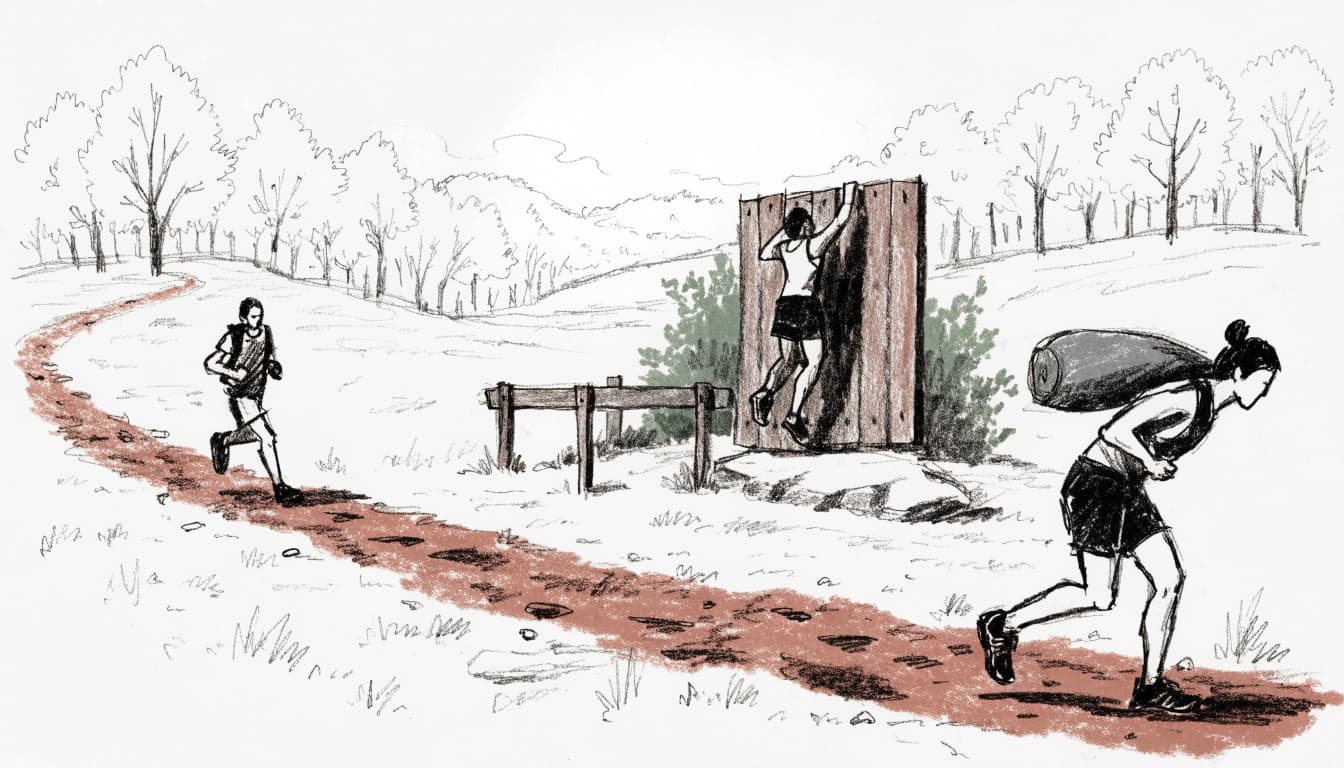
A Spartan Race in Georgia combines trail running with obstacles that interrupt your pace and test different kinds of strength. You might settle into a run, then switch quickly to climbing, crawling, carrying, or gripping before returning to the trail. The exact course depends on the event and year, so expect the terrain and obstacle sequence to vary.
How the obstacles and course work
Obstacles challenge more than running fitness. Wall climbs and rope climbs call for upper-body strength and coordination. Carries, such as a sandbag or bucket, load your legs and core while you keep moving. Crawls require you to get low and push through the ground, while grip obstacles ask you to hold, hang, or move across a structure. Spartan’s obstacle guide outlines common examples, though no single obstacle list applies to every Georgia event.
Between obstacles, you’ll run on off-road terrain. Depending on the venue and course, that can mean uneven ground, red clay, mud, hills, or a mix of surfaces. Don’t expect a steady road-race rhythm: an obstacle can slow you down, and your legs may feel different when you start running again after a carry or climb.
That repeated change of gears is a major part of the experience. You’ll need enough energy to keep moving, but also enough control to approach obstacles safely when you’re tired. Some racers handle each challenge on their own; others offer a hand or encouragement when someone nearby needs help. You can race individually while still benefiting from the shared effort around you.
The main Spartan race distances and formats
Spartan’s main formats include the Sprint, Super, and Beast, with longer options and shorter obstacle events available at some venues. The Sprint is the shortest of those three core distances, the Super adds more running and obstacles, and the Beast demands greater endurance over a much longer course. For current format descriptions, see Spartan’s race distance guide.
Distance affects more than the time you spend on the course. A longer event calls for a stronger aerobic base, more time on your feet, and practice sustaining effort after obstacles. A shorter race still requires preparation for repeated bursts of strength and the quick return to running. Kids’ races and other shorter formats can offer a different entry point when they appear on the event schedule.
Before you register, check the current listing for the specific Georgia event. Distances, obstacle counts, and available categories can change by venue and year, so don’t rely on a past course map or a format description alone. Choose the race that matches your current fitness and training time, then build your preparation around its published distance and demands.
Choose the right Spartan race and distance for your goals
The right Spartan Race Georgia event depends on more than how far you can run. Consider your trail experience, current strength, available training time, and what you want from race day. A first finish, a demanding personal test, and a day out with friends can each point to a different choice.
Pick a first race you can train for with confidence
If you’re new to obstacles or off-road running, a shorter race can be a smart first event. Spartan lists the Sprint at about 3 to 5 miles, the Super at 8 to 10 miles, and the Beast at 12 to 14 miles, though courses can vary. Check the current Spartan race distance guide and the Georgia event listing before you register.
A shorter course still asks for more than steady running. You’ll move over uneven trails, then shift into carries, climbs, crawls, and grip obstacles. As a result, a road runner may need time to get used to the terrain and the repeated changes in effort. Someone with strong obstacle skills but little running experience may need to build endurance before choosing a longer format.
Match the distance to the training you can realistically complete. If your schedule allows a few consistent sessions each week, focus on building an easy running base and adding hill work, loaded carries, and grip training. However, if you have more time and already handle longer trail outings well, a Super or Beast may suit your goal of a harder test. Choose a distance that leaves room to prepare without turning every week into a race against your calendar.
For a first finish, pick a course that feels challenging but manageable with steady preparation. You don’t need to prove your fitness by choosing the longest option. A confident Sprint finish can give you useful experience with obstacles and trail pacing before you decide whether to step up.
Choose Your Distance, Duration and Goal Time
Make three quick selections and open the exact plan built for your race target.
Looking for a Fully Personalized Training Plan?
The training plans above are an excellent choice if they match your goal. However, if you’d rather train with a plan built specifically around your current fitness, goal race, preferred training days, weekly mileage, and target finish time, our RDA Custom Training Plans provide a personalized solution. We also have running courses available for runners seeking to run faster from the mile to the marathon.
Why Choose a Custom Training Plan?
| Standard Training Plan | RDA Custom Training Plan |
|---|---|
| Follows a fixed schedule | Built around your schedule |
| Standard weekly mileage | Peak mileage customized for you |
| Fixed workout days | Train on the days you choose |
| Same structure for everyone | Designed around your current fitness |
| Static plan | Updated as your fitness improves |
| One-time purchase | Ongoing personalized coaching and support |
What You’ll Receive
- A training plan built specifically for your goal
- Personalized training paces
- Long runs, tempo runs, threshold workouts, interval sessions, recovery runs, and easy runs
- Peak weekly mileage matched to your experience level
- Flexible training schedule that fits your life
- Ongoing plan adjustments as your fitness improves
Ready to Train Smarter?
Stop guessing and start following a plan built specifically for you, your schedule, and your racing goals.
Decide whether to race solo, with friends, or competitively
Racing solo lets you set your own pace and make decisions without coordinating with a group. You can focus on managing effort, learning the obstacles, and responding to the course as it unfolds. Still, you’ll share the event atmosphere with other racers, and a quick word of encouragement can help when a climb or carry gets tough.
With friends, the day often feels more social. Teammates can encourage one another, wait at agreed points, and share the excitement of reaching the finish. Spartan’s Doubles team format is one option for racing alongside a partner. Even in a group, each racer remains responsible for meeting the event’s obstacle and race requirements, so don’t assume a teammate can complete them for you.
Competitive categories suit runners who want to race for placement and follow the event’s rules for that category. They bring a different focus than an open, social effort, so review the current registration details before choosing. Whether you go alone, with friends, or competitively, pick the format that fits your goal for the day.
Train for Georgia’s hills, trails, and changing weather
A strong Spartan Race Georgia training plan combines steady running with climbing, obstacle-focused strength, and recovery. You don’t need to copy the course in every workout. Instead, build fitness gradually and practice changing effort when the terrain or weather demands it.
Build trail fitness with hills and steady runs
Start with a weekly mix that fits your current running base: easy runs, one longer effort, and a hill or trail session. If you’re new to running, begin with short, comfortable outings and add time gradually. Runners with a solid base can include longer trail runs, but keep most sessions controlled rather than turning every workout into a test.
Hills train you to manage effort as the grade changes, while uneven footing asks for quick adjustments in balance and stride. As a result, varied trails can prepare you better than relying only on flat road miles. Choose a safe route with manageable climbs, then walk steep sections if needed. On descents, shorten your stride and stay in control, especially if the ground is loose or wet.
A hill session doesn’t need to be complicated. Warm up, run or hike a modest incline at a steady effort, then recover on the way down. Add repetitions or time only when your body handles the current workload well. A review of trail-running safety and preparation highlights the value of gradual training and strength work for the demands of uneven terrain.
Add strength and grip work for obstacle demands
Obstacle racing asks your legs, trunk, and grip to work when you’re already tired. Two short strength sessions each week can help you prepare without crowding out running. Use movements such as squats, lunges, step-ups, carries, rows, hangs, and core exercises. Start with body weight or light loads, then increase difficulty as your technique and recovery allow.
For example, step-ups and lunges build strength for repeated climbs, while carries challenge your posture and grip under load. Rows strengthen pulling muscles, and short hangs can help develop grip endurance. If a full hang feels too difficult, keep your feet supported or use a resistance band. Choose versions that let you move smoothly, without pain or strained form.
Practice basic obstacle skills when you have safe, suitable equipment. However, don’t try to imitate a high wall, rope climb, or rig at home without proper setup and supervision. Consistent strength work and sound technique matter more than attempting a difficult obstacle before you’re ready.
Practice hydration and heat-smart pacing
Georgia weather varies by season and venue. A warm, humid day can make a familiar pace feel harder, while rain may leave trails slick or muddy. Train in safe conditions when possible, but avoid chasing heat exposure or pushing through dangerous weather just to match race day.
Drink to thirst during training, and use longer outings to learn what feels comfortable for you. On race day, plan to use available aid stations rather than assuming you can carry or drink the same amount as another racer. The CDC’s guidance for athletes in hot weather recommends extra attention to hydration in heat. Avoid rigid, one-size-fits-all targets.
When humidity rises or footing turns muddy, slow down and shorten your stride. Walk a steep climb if it helps you control effort, and take care on slick descents. Build recovery into your week with easy days and rest, especially after longer runs or strength sessions. That steady approach gives you room to adapt while preparing for the varied demands of a Georgia course.
Plan registration, costs, travel, and race-day essentials
Turn the event listing into a weekend plan before you book travel or invite spectators. Spartan Race Georgia details can vary by venue and year, including the race date, start waves, fees, parking, and what registration covers. Use the current official Spartan race FAQ and event page for exact information, then save the key details where you can check them easily.
Compare registration fees and event-day expenses
Registration prices may change by race, wave, and how early you sign up. Early waves or advance registration may have different pricing than later options, while add-ons can raise the total. Before checkout, review the final amount and note what it includes.
Check for separate charges or requirements related to parking, spectator access, photos, processing, or other event services. Don’t rely on an old race recap or a price listed for another venue. Instead, compare the available wave times and categories on the current Georgia event page, then register for the option that fits your schedule and budget.
Travel can add as much as the race entry itself. Estimate lodging, meals, fuel or airfare, and local transportation before committing. If you’re traveling with a group, agree on how you’ll split shared costs, such as a hotel room or rental car.
Pack clothing, shoes, and a simple change-of-clothes kit
Choose secure, quick-drying clothes that won’t snag or shift while you run, crawl, and climb. Trail shoes with dependable traction can help on uneven or muddy ground, but comfort and fit matter more than a particular brand. Wear gear you’ve tested during training, not a new outfit or pair of shoes on race morning.
Pack a towel, clean clothes, water, and a bag for muddy gear. Keep your post-race outfit separate so you can change without digging through wet clothing. Before packing optional equipment or personal items for the course, read the event rules. Organizers may restrict what racers can carry or bring into certain areas.
A simple packing check before leaving home can prevent last-minute scrambles:
- Lay out race clothes and shoes, including socks you’ve tested.
- Pack a towel, a full change of clothes, water, and a bag for muddy gear.
- Check the event rules for permitted personal items and equipment.
Make arrival, parking, and spectator plans ahead of time
Before you leave, review the venue map, arrival window, parking instructions, wave time, and spectator rules. Check the event page again close to race weekend, since schedules or logistics can change. Save the address and any parking directions offline in case cell service is unreliable near the venue.
Build extra time into your travel plan for traffic, parking, walking to the festival area, and check-in. If you’re staying overnight, choose lodging based on the actual venue location and your wave time, not just the city name in the event listing. A convenient place to stay can make an early start less stressful.
Spectators should confirm whether they need a pass, where they can watch, and what they’re allowed to bring. Pick a clear meeting spot with family or teammates before the race, since crowds and limited service can make it hard to reconnect afterward. Finally, plan for cleanup: keep a bag and towel in the car, and avoid placing muddy gear directly on seats or hotel floors.
Frequently Asked Questions
A few details can affect your Spartan Race Georgia plans even after you choose a distance and start training. Use the event’s current information for decisions about dates, race rules, and last-minute changes.
Where is the next Spartan Race in Georgia?
Spartan event locations and dates can change from season to season, so an older race listing may no longer reflect the current schedule. Check the official Spartan event calendar, then open the specific Georgia race page to confirm the venue, schedule, and course information. Revisit the listing before making travel plans in case details change.
Can beginners take part in a Spartan Race?
Yes. Beginners can take part, but choosing a format that matches your current fitness and experience makes preparation more manageable. You’ll need to handle both running and obstacles, so build your training gradually and review the event’s requirements before registering. If you have a health concern or haven’t exercised recently, ask a qualified health professional what level of activity is appropriate for you.
Do I have to complete every obstacle?
Obstacle rules and penalties depend on the event and race category. Before race day, read the current athlete guide for the completion standards that apply to your entry, including what to do if you can’t finish an obstacle. Don’t rely on rules from a previous event or another category, since requirements may differ.
Can I change my race wave after registering?
Possibly, but changes depend on the event’s current policies, deadlines, and available space. Check your registration account to see whether a wave change is offered for your booking. If the option isn’t clear, contact event support before making travel arrangements around a new start time.
What should I do if race-day weather turns severe?
Event organizers make safety decisions based on conditions, and severe weather may delay, change, or cancel activities. Monitor official event messages before and during race day, since the schedule may change as conditions develop. Follow staff instructions on site rather than assuming the race will proceed at its planned time.
Conclusion
A successful Spartan Race Georgia weekend starts with a distance that fits your current fitness, steady training, and a clear plan for race day. Georgia’s trails and weather can change the feel of the course, so check the current event details before you register or travel.
Begin training at your own level, build your running and strength gradually, and arrive ready to adapt. Then take on the course one obstacle at a time, with your preparation guiding each step toward the finish.


