

Saucony Ride TR2 Review: Road-to-Trail Comfort
The Saucony Ride TR2 is built for runners who want one shoe that can handle pavement, gravel, and light trails without feeling clunky or overbuilt. If your runs often change surfaces mid-route, a true road-to-trail shoe can save you from having to pick between comfort and traction.
This review is for you if you want a daily trainer that feels smooth on the road, but still gives you enough grip and protection when the path turns rough. Hybrid running shoes matter because many routes aren’t cleanly paved or fully technical, they’re a mix of sidewalks, packed dirt, park paths, and the occasional loose stretch. For a broader look at how Saucony’s road and trail options compare, you can also check out these Saucony running shoe reviews.
The main question is simple, is the Saucony Ride TR2 a good choice for runners who split time between pavement, gravel, and light trails? That’s what this review gets into, with a close look at comfort, ride feel, traction, and where this shoe fits best. If you’ve been looking for a versatile option that can handle mixed terrain without asking you to change your stride, you’re in the right place.
What the Saucony Ride TR2 Is Built to Do
The Saucony Ride TR2 is made for runners who want one shoe to handle mixed routes without feeling bulky. It keeps the easy ride of a daily trainer, then adds enough grip and protection for dirt, crushed gravel, and park paths.
Build Your Complete Race-Day Setup
The right shoe helps, but faster racing comes from better training, pacing, recovery, fueling, and execution.
More Guides for This Shoe
That matters because many real runs are not pure road or pure trail. You might start on sidewalks, cut through a park, and finish on packed dirt or a light trail loop. A shoe built for that kind of route needs to stay smooth on pavement, but still give you more bite than a standard road shoe. For a broader look at this category, RunDNA has a helpful overview of road-to-trail shoes.
Why hybrid road and trail shoes matter
Mixed-surface running is common because most neighborhoods and parks are mixed surfaces. One loop can include asphalt, curbs, gravel shoulders, grass, and hard-packed dirt, all in the same mile.
A hybrid shoe makes that easier. You do not have to choose between a cushioned road shoe that feels slippery off-road and a rugged trail shoe that feels clunky on pavement. Instead, you get a middle ground that works for everyday training, easy adventure runs, and routes that change underfoot.
That balance also helps if you run in different places during the week. A shoe like the Ride TR2 can handle a morning road run, then keep going when the route shifts onto a park path or a short trail section.
Who will get the most from the Ride TR2
The Ride TR2 fits runners who want flexibility more than specialty. If you spend most of your time on roads but like to wander onto dirt paths, it makes a lot of sense. It also suits runners who want one shoe for a lot of different easy-effort runs.
This is a strong match for:
- Road runners who explore trails: You get enough grip for light off-road use without giving up a familiar road feel.
- Casual trail runners: If your trails are mild and not very technical, this shoe gives you a simple, comfortable option.
- Everyday runners with mixed routes: One shoe can cover neighborhood miles, park loops, and weekend paths.
If your runs stay on pavement most of the time, a standard daily trainer may feel simpler and lighter.
On the other hand, runners who tackle muddy trails, rocky climbs, or steep descents may want a more aggressive trail shoe. Those shoes usually have stronger lugs, more protection, and a firmer off-road focus. The Ride TR2 is built for variety, not extreme terrain.
First Impressions, Fit, and Comfort on the Run
The Saucony Ride TR2 makes a good first impression because it feels familiar right away, but with a bit more protection than a standard road shoe. The upper has enough structure to feel secure on mixed terrain, yet it doesn’t come across as stiff or fussy. That balance matters when you want a shoe that feels easy on the feet before the miles start stacking up.
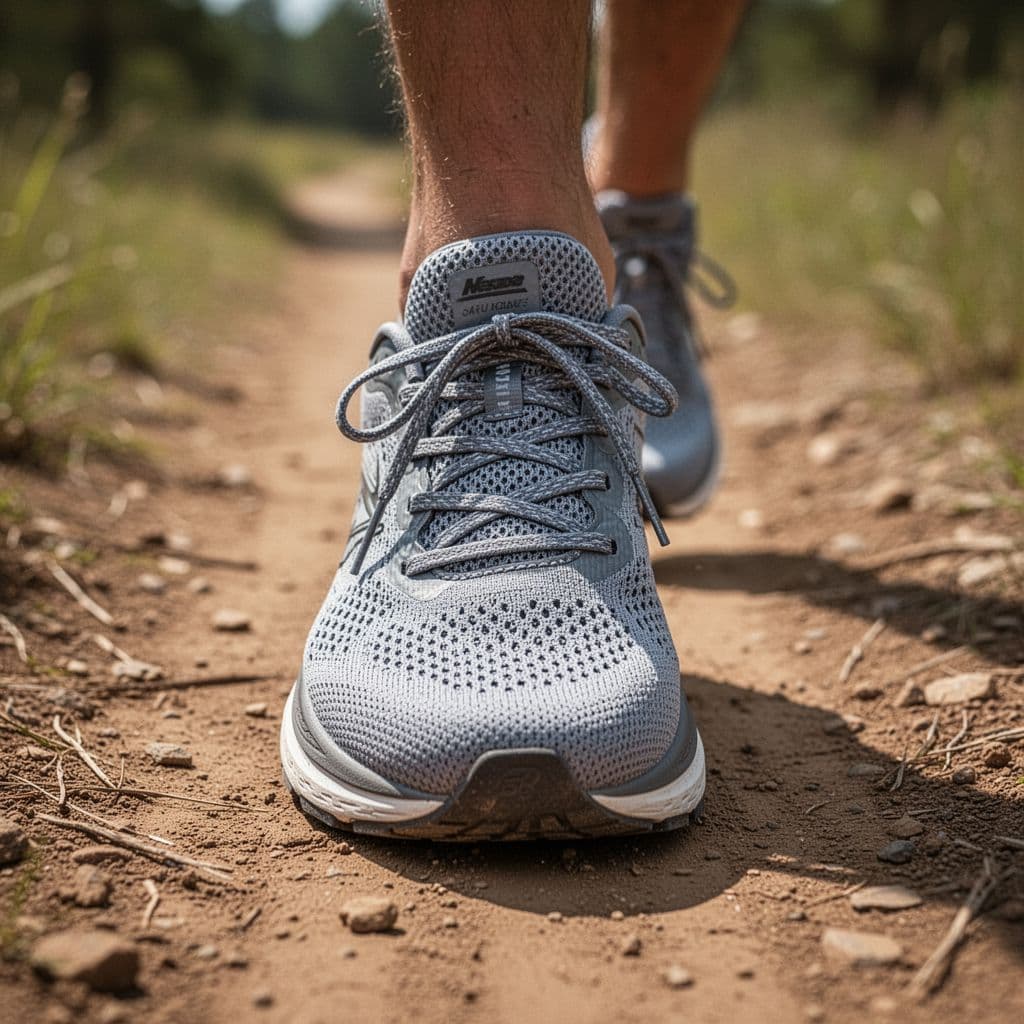
How the upper fits and secures the foot
The upper gives the Ride TR2 a locked-in feel without squeezing the foot. The heel holds well, the midfoot feels controlled, and the lacing system helps keep the shoe stable when the surface changes under you. That makes a difference on turns, hills, and any route where you move between pavement and dirt.
Up front, the toe box feels balanced rather than wide-open or narrow. You get enough room for natural toe spread, but not so much space that the foot slides around during longer efforts. For many runners, that middle-ground fit is exactly what makes the shoe easy to trust on daily runs.
The fit feels secure first, comfortable second, and that order works well for road-to-trail use.
If you prefer a more relaxed road-to-trail option, Saucony’s Blaze TR is another model worth comparing. The Ride TR2 feels a little more dialed-in through the upper, which helps when you want steadier foot control on uneven ground.
For runners with normal-width feet, the fit should feel natural and dependable. It’s also the kind of fit that tends to stay comfortable as the run goes on, because it avoids hot spots and excessive movement.
Comfort for daily training and longer miles
The comfort story improves the longer you wear the shoe. On a short test jog, the cushioning feels smooth and easy, but the real value shows up over daily training runs and longer mixed-surface outings. The underfoot feel stays friendly without going overly soft, so it doesn’t create that mushy sensation some runners dislike after a few miles.
That steady feel helps on easy runs, when you want a shoe that disappears underfoot. It also works for steady-paced runs, because the cushioning gives enough support without making the shoe feel sluggish. Over longer efforts, the upper and midsole work together to keep pressure points low, which is a big deal when your route includes both road and trail.
For a similar road-to-trail comparison, the Saucony Ride TR2 review from Live for the Outdoors notes the generous toe-box and true-to-size fit, both of which line up with longer-run comfort. That matches the feel here, especially if you like a shoe that stays comfortable as your feet warm up and swell a little.
The result is a shoe that suits:
- Easy runs when comfort matters most
- Steady runs when you want a stable, familiar platform
- Longer mixed-surface outings when fit and foot comfort start to matter more than first-mile feel
For runners building a rotation around one versatile trainer, the Ride TR2 gives you a comfortable fit story right away. It feels ready for regular use, not just a quick test lap.
Midsole Ride and Cushioning Feel on Road and Trail
The Saucony Ride TR2 aims for a middle ground that feels smooth on pavement and steady on light trails. It gives you a cushioned ride without turning soft or sloppy, so it works well when your route changes halfway through the run. That balance is the whole point of a road-to-trail shoe, and this one keeps the feel practical.
How the cushioning behaves on pavement
On pavement, the Ride TR2 feels smooth first and foremost. The midsole has enough softness to take the edge off harder roads, but it doesn’t sink underfoot the way some max-cushion shoes do. That makes it easy to settle into an easy pace without feeling like you’re working through extra foam.
The ride feels most like a daily trainer with a little more protection. It stays comfortable for relaxed miles, warm-ups, and regular training runs, yet it still gives a modest sense of ground contact. You know where the shoe is, and that helps it feel stable when you move through corners or shifts in pace.
For runners who want a road shoe feel with a bit more comfort, that middle zone works well. It is not a snappy tempo shoe, but it doesn’t feel dead either. The cushioning lands in the sweet spot for everyday mileage, where comfort matters more than speed.
The Ride TR2 feels more like a dependable cruiser than a soft recovery shoe.
That matters because road miles can get dull if a shoe feels too flat. The Ride TR2 keeps the stride moving without feeling harsh, so it suits runners who want an easy, repeatable ride. If you like the idea of a little extra cushion without losing the familiar feel of a trainer, this shoe makes sense.
What changes once the surface gets rougher
Once you move onto gravel, crushed paths, or packed dirt, the midsole starts showing its off-road side. The cushioning helps smooth out small bumps and scattered debris, so you don’t feel every pebble underfoot. That gives the shoe a more forgiving ride than a basic road shoe.
On mild uneven ground, the midsole feels controlled rather than overly soft. That is a big deal, because too much softness can make a shoe wobble when the surface shifts. The Ride TR2 keeps its shape well enough to feel predictable on short trail links, park loops, and gravel shoulders.
A few things stand out on rougher ground:
- Small rocks feel muted: The foam helps smooth out sharp little impacts.
- The platform stays steady: It does not feel tippy when the path gets slightly uneven.
- Foot protection feels adequate: You get enough cushion for light trail use without adding bulk.
The shoe still has clear limits, though. On more technical terrain, the ride can feel a bit too road-like. It handles mild dirt and gravel with ease, but aggressive trails need more protection and a firmer off-road setup. For mixed routes around town, it stays in control and feels easy to trust.
Responsiveness versus protection
The Ride TR2 leans more toward protection and comfort than quick rebound. It gives you a smooth, easy roll, but it doesn’t pop off the ground with a lot of energy return. That makes it feel calm and steady, which is exactly what many runners want in a daily mixed-terrain shoe.
If you run easy miles, that feel is a plus. The shoe softens the landing, keeps the step comfortable, and lets you settle into a rhythm without fighting the midsole. For longer runs, that protection helps your legs feel fresher, especially when your route includes hard pavement and rougher patches.
The tradeoff is obvious when you try to speed up. It can handle a moderate pace, but it doesn’t have a lively, springy personality. That is where a shoe like the Saucony Ride 18 may appeal more to pure road runners, since it keeps the daily-trainer feel while staying focused on pavement.
For the Ride TR2, the best use is everyday training where you want consistency. It feels best when:
- You run easy or moderate efforts.
- Your route changes surfaces often.
- You want comfort without losing control.
That balance makes the shoe easy to use across the week. It is comfortable enough for recovery runs, steady enough for regular mileage, and stable enough for mixed routes. If you want one shoe to do a lot of jobs, the Ride TR2’s midsole makes a strong case.
For runners who want a softer benchmark to compare against, Saucony’s Triumph 22 review gives helpful context on how a more cushioned road shoe changes the feel. Compared with that kind of setup, the Ride TR2 feels more grounded and more versatile off-road.
The bottom line is simple. The Saucony Ride TR2 gives you a cushioned ride that feels comfortable on pavement, calm on dirt, and steady when the ground gets less predictable. It is built for runners who want protection first, then a little extra give, and it handles that job well.
Outsole Grip and Trail Performance Where It Counts
The Saucony Ride TR2 keeps its outsole focused on the kind of running most people actually do, mixed routes with changing footing and only occasional rough patches. It grips best when the ground is dry or only a little loose, and that makes it a smart choice for runners who split time between road and light trail.
Where the traction feels strongest
The Ride TR2 feels most confident on pavement, hardpack, gravel, and dry dirt. On those surfaces, the outsole gives you enough bite to stay stable without feeling grabby or awkward on road miles. That matters because a hybrid shoe should move smoothly when you hit sidewalks, then stay composed when the route turns onto a park path.
On dry hardpack, the lugs help the shoe stay planted through turns and light climbs. Gravel shoulders and crushed paths also suit it well, since the outsole settles in without sliding around underfoot. The same goes for firm dirt trails, where the grip feels useful but not overbuilt.
The pattern works because it keeps the shoe versatile. You get enough traction for mixed terrain, yet the outsole does not fight the natural roll of the shoe on pavement. If you want a road-to-trail option that feels easy during everyday runs, that balance is exactly the point.
For runners comparing Saucony’s trail options, the Peregrine 14 review shows what a more aggressive outsole looks like when traction takes priority over road comfort.
What to expect on more technical trails
The Ride TR2 is not the shoe I would pick for mud, steep climbs, loose rocks, or highly technical trail work. Once the ground gets slick or deeply uneven, the outsole starts to show its limits. A more aggressive trail shoe with deeper lugs and a stronger grip pattern will handle those conditions better.
Wet ground is a mixed bag. Light moisture on packed dirt is manageable, but slippery rock and muddy sections need more bite than this shoe gives. On longer steep descents, the outsole also feels less secure than a true trail model, especially when the surface breaks apart under pressure.
That is where a shoe like the Saucony Peregrine 11 review makes more sense, because it is built for tougher trail days. The Ride TR2 stays in its lane, and that lane is moderate terrain, not rough mountain running.
If your runs stay close to roads, park trails, and dry dirt loops, the outsole does its job well. If you want one shoe for mixed daily mileage, the Saucony Ride TR2 gives you dependable grip without dragging road comfort down.
Is the Saucony Ride TR2 a Good Daily Trainer?
Yes, the Saucony Ride TR2 can work as a daily trainer, but it fits a specific kind of runner best. It handles easy miles, recovery runs, and mixed-surface routes with enough comfort to stay in regular rotation. If your weekly training includes pavement, park paths, gravel, and light dirt, this shoe makes daily use feel simple.
What it does well is stay consistent. The ride is calm, the grip is useful, and the shoe feels ready for repeat runs without asking much from you. For runners who want one pair that can handle a little bit of everything, that matters more than a flashy ride.
Best types of runs for this shoe
The Ride TR2 makes the most sense on runs where comfort and surface changes matter more than speed. It feels natural on easy road miles, because the cushioning stays smooth and the outsole doesn’t feel awkward on pavement. That makes it a good pick for everyday aerobic work.
It also fits well on park loops and fitness runs. If your regular route includes sidewalks, bike paths, grass edges, or packed dirt, the shoe keeps the transition smooth. You don’t have to think about changing shoes just because the route shifts.
These are the run styles that suit it best:
- Easy road miles when you want a soft, stable feel
- Recovery runs when your legs need a calm, forgiving ride
- Park loops with mixed pavement and dirt
- Travel runs when you don’t know what surfaces you’ll get
- Routes that change surfaces often and need steady grip
That flexibility is the big selling point. For weekly mileage, the Ride TR2 works well as a dependable go-to, especially if you prefer steady effort over fast turnover.
Where the shoe may fall short for daily use
The Ride TR2 is a good daily trainer, but it is not the best choice for every runner. If you want a faster shoe, it can feel a little muted. The midsole favors comfort and control, so it doesn’t give you the lively snap that helps on tempo days or quicker workouts.
It also offers limited trail protection compared with a true trail shoe. On rougher ground, you may want more aggressive lugs, a tougher upper, or extra underfoot shielding. For light trail use, it’s fine. For rocky or muddy routes, it starts to feel underdressed.
A few runners may also want a lighter shoe for daily miles. The Ride TR2 feels stable and dependable, but that comes with some weight. It won’t feel slow on easy runs, yet it doesn’t have the airy feel that some road trainers bring.
If your runs stay mostly on pavement, a pure road trainer may feel more natural day after day.
For runners comparing it to a more road-focused daily option, the Saucony Hurricane 24 review gives a useful point of reference for comfort and structure. The Ride TR2 is more versatile off-road, while the Hurricane line leans more toward support on the road.
The bottom line is clear, the Saucony Ride TR2 is a solid daily trainer for mixed routes and easy miles, but it is not the best fit for speed work or technical trails. If your training week is built around comfort, variety, and simple mileage, it can absolutely earn a regular spot in your rotation.
How It Compares to Other Hybrid Running Shoes
The Saucony Ride TR2 sits in a useful middle spot in the road-to-trail category. It feels more road-friendly than many hybrid shoes, but it still has enough grip and structure to leave the pavement without hesitation. That makes it easier to place than some mixed-terrain models that try to do too much at once.
For readers comparing options, the key is simple: the Ride TR2 is built for comfort first, traction second, and versatility all the way through. It is not the grippiest hybrid shoe, and it is not the softest road shoe. It just finds a nice balance for runners who split time across both surfaces.
Compared with a road-focused trainer
Against a pure road shoe, the Ride TR2 gives up a little smoothness and a little lightness, but it gives back usable grip and more confidence off pavement. A road trainer usually feels a bit cleaner underfoot on asphalt, with a more uniform cushioning feel and a softer transition on repeated road miles.
The Ride TR2 feels slightly firmer and more structured by comparison. That helps when you step onto gravel or packed dirt, because the outsole bites better and the platform feels steadier. On the downside, you may notice the tread more on long road stretches, and the ride is not quite as free-flowing as a standard daily trainer.
A road shoe usually wins if you:
- Run almost entirely on pavement
- Want the lightest, smoothest ride possible
- Care more about road mileage than off-road grip
The Ride TR2 makes more sense if your routes change often. It trades a bit of road polish for real mixed-surface usefulness, which is the whole reason to buy a hybrid shoe.
Compared with a true trail shoe
Compared with a true trail shoe, the Ride TR2 is easier on pavement and much smoother for daily use. It rolls naturally on roads, feels less aggressive underfoot, and does not ask you to work around deep lugs or a heavy trail build.
That said, a real trail shoe is better when the terrain gets rough. Steep climbs, mud, loose rock, and technical descents all call for stronger traction and more protection. The Ride TR2 can handle light dirt and moderate gravel, but it is not built for aggressive off-road use.
This is where the tradeoff becomes clear. A trail shoe gives you more security when the ground gets wild, while the Ride TR2 gives you more comfort when the run stays mixed and moderate. If you want one shoe for roads, park paths, and easy trails, the Ride TR2 fits well. If your routes lean hard into the backcountry, a dedicated trail model will feel more at home. For a broader look at the category, REI’s guide on road and trail-running shoes explains the main differences clearly.
Final Verdict: Who Should Buy the Saucony Ride TR2?
The Saucony Ride TR2 is a smart buy if your runs regularly move between pavement and light trail. It gives you enough grip for dirt, gravel, and park paths, while still feeling comfortable and familiar on the road. That mix makes it easy to recommend for runners who want one shoe to cover a lot of everyday miles.
Who should buy it
This shoe makes the most sense for runners who value versatility over specialization. If you run easy miles, recovery runs, neighborhood loops, or routes that shift onto dirt, the Ride TR2 fits that routine well. It also works for beginners who want a simple road-to-trail shoe without a steep learning curve.
It is a strong pick if you want:
- A comfortable daily trainer with extra grip
- A shoe for mixed-surface runs
- A road-friendly option that can handle light trails
- One pair that covers most easy training days
For runners who want a closer look at Saucony’s own positioning, the Saucony buyer’s guide helps explain where the Ride TR2 fits in the lineup.
Who should skip it
Skip the Ride TR2 if your runs are mostly on pavement and you want the lightest, smoothest road shoe possible. It also falls short for runners who spend serious time on muddy trails, rocky terrain, or steep descents. Those runners need a more aggressive trail shoe with stronger traction and more protection.
The Ride TR2 stands out because it stays practical. It is comfortable enough for daily mileage, stable enough for uneven ground, and simple enough that you do not have to think twice before grabbing it. If that matches your running week, this shoe is an easy yes.
Conclusion
The Saucony Ride TR2 does exactly what a good road-to-trail shoe should do, it keeps road comfort intact while adding enough grip for light off-road miles. That mix makes it a strong choice for runners who want one dependable shoe for pavement, gravel, and easy trails.
Its biggest strengths are the stable ride, comfortable fit, and versatile outsole. Its main weakness is simple, it does not have the bite or protection of a true trail shoe, so rough terrain is still outside its lane.
If your runs move between road and light trail often, the Ride TR2 is an easy, practical pick. It gives you one shoe that can handle both without making either side feel like a compromise.


