

Saucony Echelon 10 Tempo Review: Can It Pick Up?
When runners talk about the Saucony Echelon 10 tempo, they usually mean one thing, can this stable daily trainer hold up when the pace picks up? The Echelon line has a reputation for support, comfort, and steady mileage, so the speed question matters if you’re hoping for one shoe that can do more than easy runs.
That makes this review useful if you want a pair for daily training, long runs, and the occasional uptempo workout without switching shoes every day. It also matters if you care more about a smooth, dependable ride than a race-day feel, because that’s where the Echelon usually makes its case. For a closer look at the shoe’s base feel and support, see this Saucony Echelon 10 in-depth review.
The real test is simple, though, does the Echelon 10 feel calm and controlled when the effort turns firmer, or does it start to hold you back?
What the Saucony Echelon 10 is built to do
The Saucony Echelon 10 is built for runners who want comfort, room, and steady support first. It is a max-cushion, stability-friendly neutral shoe that aims to make easy miles feel smooth and controlled, not flashy. That matters, because a shoe like this has a clear job: protect your legs, hold a predictable line, and keep the ride calm when the miles stack up.
Build Your Complete Race-Day Setup
The right shoe helps, but faster racing comes from better training, pacing, recovery, fueling, and execution.
More Guides for This Shoe
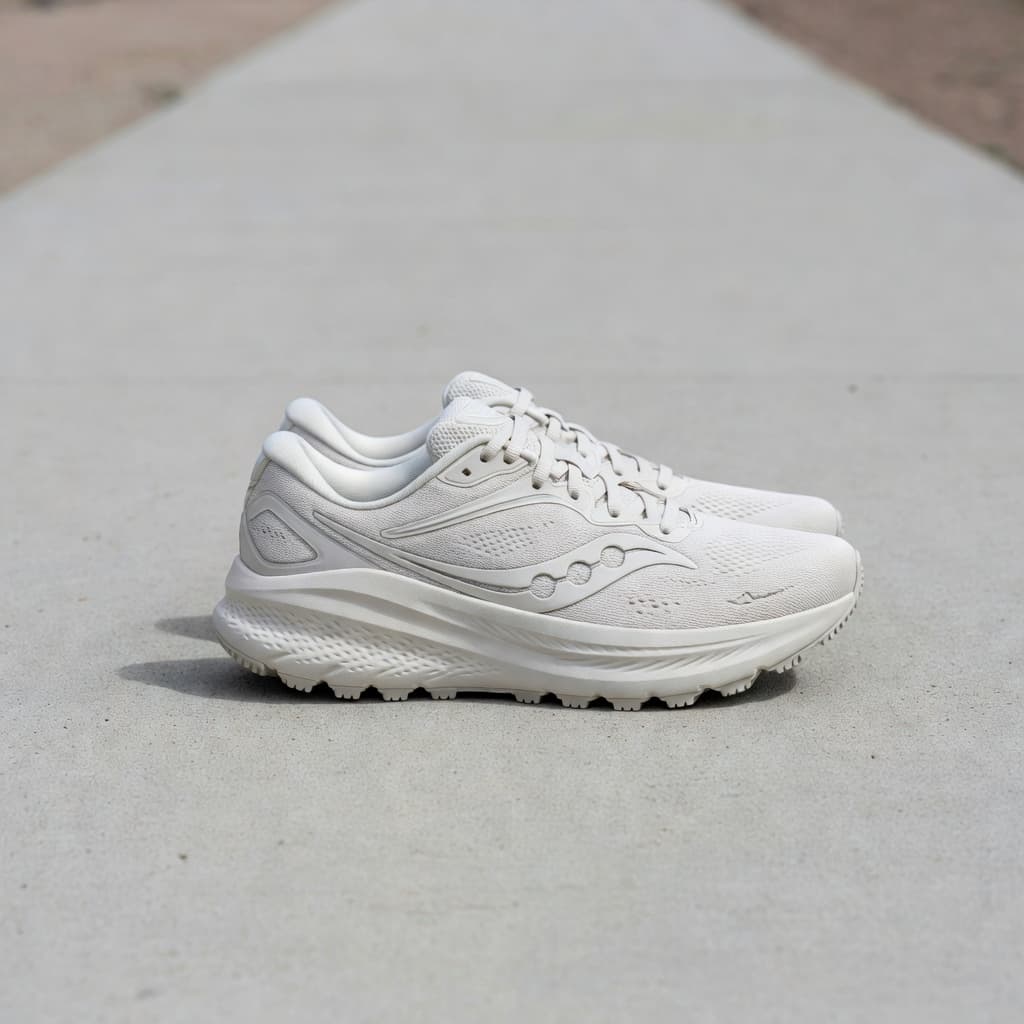 Saucony describes the Echelon 10 as a core running shoe for comfort and protection, with a broad, stable base and a straight shape that suits runners and walkers who want dependable support.Saucony’s Echelon 10 details back that up. In practice, that means the shoe is designed more for easy mileage, long runs, and all-day wear than for sharp speed work.
Who the Echelon 10 fits best
This shoe makes the most sense if you need a wider, more accommodating fit. Runners with broader feet often appreciate the extra room, and people who use orthotics usually like a shoe that leaves space without feeling sloppy.
It also suits runners who want a steady platform more than a tight, race-ready feel. If you like your shoes to disappear under you on recovery runs, the Echelon 10 fits that brief well.
A few runners who usually benefit most include:
- Wide-footed runners who need space in the toe box and midfoot
- Orthotic users who want a more open, insert-friendly fit
- Easy-day runners who value comfort over speed
- Long-run runners who want a stable shoe that stays predictable late in the run
If you want a closer look at how it performs across longer efforts, this Saucony Echelon 10 long-run review adds more context.
How its cushioning changes the ride
The cushioning in the Echelon 10 is soft enough to take the edge off road shock, which helps on easy days and longer runs. Your feet feel more protected, and your legs usually stay fresher when the pace is relaxed.
That same softness can also make the shoe feel less lively when you pick up the pace. The ride stays smooth, but it does not snap forward like a lighter trainer or a tempo shoe.
Soft cushioning helps the Echelon 10 feel friendly for mileage, but it also adds a bit of weight to the ride when speed enters the picture.
So if you want one shoe for recovery runs, daily cruising, and long aerobic sessions, it makes sense. If you want a shoe that feels eager at faster paces, the Echelon 10 may ask for a little more effort.
Why the platform matters for stability
The Echelon 10’s base is a big part of its identity. A wider, more stable platform helps the shoe feel planted, especially when your stride gets tired or your form gets a little messy late in a run.
That kind of support can build confidence. You do not have to fight the shoe, and you do not feel like you are balancing on a narrow edge. Even though it is not built as a racer, that controlled feel can still matter when you want to run relaxed but steady.
In short, the Echelon 10 is built to keep things calm. It supports easy mileage first, then gives you enough structure and cushion to handle longer efforts without feeling harsh underfoot.
Can the Saucony Echelon 10 tempo up when the pace changes?
Yes, but only to a point. The Saucony Echelon 10 tempo works best when the pace change is controlled, not sharp. If you ask it to handle moderate uptempo running, steady progression work, or marathon-pace blocks, it can get the job done without feeling awkward. If you want a shoe that feels snappy the moment you open your stride, this is not that shoe.
The Echelon 10 keeps its strengths when the pace rises a little. The platform stays stable, the landing feels secure, and the ride stays smooth enough to support longer efforts. That makes it a practical option for runners who want one pair that can cover easy miles and some faster work without a full shoe rotation.
The best part of the Echelon 10 at faster paces is how calm it feels underfoot. The shoe gives you a broad, steady landing zone, so each step feels planted even when your breathing gets harder. That matters during tempo runs, because you want your focus on rhythm, not on fighting the shoe.
Its cushioning also helps on longer efforts. Instead of feeling harsh or flat, the ride stays comfortable enough for sustained work. If you settle into a moderate pace, the shoe can feel like a stable cruiser, especially for runners who like a consistent stride.
It also transitions well enough for steady running. The toe-off is not explosive, but it is smooth, and that can be enough for controlled pickups. For some runners, that smoothness is more useful than raw pop.
Where it starts to feel less lively
The limits show up once you ask for real snap. The Echelon 10 has more weight than a typical tempo trainer, and you feel that when cadence climbs. Faster turnover takes more effort, so the shoe can feel a bit muted if you try to run aggressively.
Energy return is another part of the story. The midsole feels protective, but it does not rebound with much urgency. As a result, the shoe can feel soft in a way that smooths the road but does not help you attack it. That is fine for steady work, yet less satisfying when you want a quick response.
If your tempo pace starts to look more like threshold work with fast turnover, the Echelon 10 will feel competent, but not lively.
Ground feel stays on the subdued side too. Some runners will like that because it reduces stress on longer runs. Others will miss the firmer, more connected feel that usually helps a shoe respond faster.
If you want a better sense of how this model is built for steady mileage, the Saucony Echelon 10 review breaks down its base ride and support in more detail.
Best workout types for this shoe
The Echelon 10 makes the most sense in workouts where the pace rises gradually and stays controlled. It is a better fit for steady effort than for sharp speed changes. A few sessions suit it well:
- Progression runs that start easy and finish near marathon pace
- Marathon pace work when you want comfort over snap
- Easy intervals with longer recoveries and moderate pace targets
- Longer steady efforts where rhythm matters more than quick acceleration
These workouts let the shoe do what it does best, stay stable, protect your legs, and keep the ride predictable. If you are building fitness without racing the clock, it can be a smart choice.
It is a weaker match for short intervals, fast track work, or hard tempo sessions with lots of speed change. Those workouts reward lighter shoes with more rebound and faster ground contact. The Echelon 10 can cover the distance, but it does not make pace changes feel easy.
For runners who want a shoe that can bridge daily mileage and some workout use, the Echelon 10 tempo setup is workable. Just keep the effort controlled, and let the shoe play to its strengths instead of asking it to be something it is not.
How the fit affects tempo performance
Fit can change the Saucony Echelon 10 tempo feel more than many runners expect. A stable platform helps, but the shoe only feels quick when your foot sits securely inside it. If the fit is too roomy, the ride can feel delayed and a little heavy during faster work.
The toe box matters because it changes how relaxed your forefoot feels when the pace rises. A little room helps on longer runs, but too much space can let the foot slide forward on push-off. That slide steals some of the shoe’s stable feel and makes pace changes feel less crisp.
Midfoot hold is just as important. When the midfoot wraps securely, the shoe feels more connected to your stride, so tempo running feels smoother and more controlled. If the midfoot feels loose, your foot can shift inside the upper, and the shoe starts to feel like it is working against you.
Heel lock rounds out the fit. A snug heel keeps the rearfoot from lifting during quick turnover, which helps you stay efficient. Even small heel movement can make the shoe feel sluggish during sustained faster running.
When width options help or hurt
The Echelon 10’s roomy shape is a big win if you want comfort first. Wider feet get space to spread out, and the shoe feels forgiving on easy miles and long runs. That extra room can also help runners who wear orthotics or need a less restrictive upper.
Still, roominess has a tradeoff during speed work. If the shoe feels too open, your foot may move around when cadence increases. That can make the Saucony Echelon 10 tempo setup feel less sharp, even if the platform itself is stable.
For runners choosing between sizes or widths, the question is simple, do you want comfort with a little extra space, or a firmer hold for faster runs? The best fit usually lands in the middle, where your toes can move but your foot does not drift.
Why lace tension matters more at faster paces
Small lace changes can make a big difference here. A slightly tighter midfoot can improve lockdown, cut down on internal movement, and help the shoe feel more responsive during tempo sessions. If the laces are too loose, the shoe can feel soft in the wrong way.
Try tightening the middle eyelets first, then check the heel. If the rearfoot still lifts, add tension near the ankle without crushing the top of the foot. That kind of adjustment often gives you the secure feel you want without making the shoe uncomfortable.
The goal is simple, keep the foot seated so the shoe moves with you, not around you.
That extra security matters most once the pace settles into tempo rhythm. When fit is dialed in, the Echelon 10 feels steadier, cleaner, and easier to trust.
How the Echelon 10 compares with faster Saucony options
The Saucony Echelon 10 tempo question really comes down to what you want your shoe to do on workout days. If you want a trainer that feels calm, roomy, and protective, the Echelon 10 makes sense. If you want a shoe that snaps through faster pickups and rewards quick turnover, Saucony has better choices.
That does not make the Echelon 10 a bad option for tempo work. It just puts it in a different lane. The shoe is built more like a reliable long-distance partner than a pace hunter, so the comparison with faster Saucony models is less about quality and more about purpose.
A lighter trainer usually feels better for tempo runs because it gets out of the way faster. Your foot lifts and lands with less drag, so transitions feel cleaner and cadence comes easier. That matters when you want the shoe to respond instead of asking you to work around extra bulk.
Saucony’s faster options, like the Endorphin line, are built around that idea. They feel more springy, more direct, and more eager when the pace rises. If your workouts include short intervals, threshold repeats, or fast progression runs, that kind of ride helps you keep rhythm without feeling bogged down.
The difference is especially clear once fatigue builds. A lighter shoe can feel like a helpful push, while a heavier daily trainer starts to feel like a quiet brake. In other words, the best tempo shoe usually helps you stay quick without demanding more effort from each step.
If you want a broader look at how Saucony groups its models by use, the Saucony running shoe buyer’s guide gives a helpful frame for where each style fits.
Where the Echelon 10 still wins
The Echelon 10 wins when comfort matters more than pace. Its roomier fit, softer cushioning, and stable base make it a strong pick for longer workouts, especially if your feet get sore in tighter or firmer shoes. That can be a big deal on marathon pace runs or steady aerobic sessions that last longer than you planned.
It also makes more sense for runners who need a little extra support under tired legs. A fast shoe may feel great for 20 minutes, then start to feel sharp or unstable. The Echelon 10 stays predictable, which helps if you value control more than bounce.
This is where a shoe like the Saucony Triumph 25 fits into the conversation too. Like the Echelon, it leans into comfort first, and that makes it easier to use on long, steady days than a true tempo trainer.
For runners with sensitive feet, that comfort is hard to ignore. A shoe that feels a little less exciting can still be the smarter choice when the workout is long and your legs need protection.
If your speed work leaves your feet beat up, a softer, roomier trainer can keep you more consistent week after week.
How to choose between comfort and speed
Start with the runs you do most often. If your week is mostly easy miles, long runs, and a few controlled pickups, the Echelon 10 has a real case. It gives you comfort every day, and it can still handle moderate uptempo work when needed.
If workout days matter most, a faster Saucony option makes more sense. Look at your pace goals, your injury history, and how often you actually do tempo sessions. A runner chasing quicker half-marathon splits will usually get more value from a lighter, more responsive shoe. A runner who wants dependable mileage with occasional pace changes may be happier staying with the Echelon.
A simple way to decide is this:
- Choose the Echelon 10 if you want daily comfort, more room, and a stable ride.
- Choose a faster Saucony trainer if you care more about quick transitions and a livelier toe-off.
- Choose comfort first if your feet get sore, your calves tighten, or your workouts run long.
- Choose speed first if you train for tempo work often and want every step to feel sharper.
The Echelon 10 is not trying to win the tempo race. It is trying to keep you comfortable enough to show up again tomorrow, and for plenty of runners, that matters more than a faster shoe’s extra snap.
The best way to use the Echelon 10 in a training week
The Saucony Echelon 10 works best when you treat it like your steady, reliable pair, not your speed shoe. It fits cleanly into a weekly rotation because it handles the runs that make up most of training, the ones where comfort, control, and low stress matter more than pop.
That means you can use it often without wasting its strengths. Put it on when you want your legs to feel fresh later in the week, then save your lighter or faster shoe for the sessions that need more snap.
This is where the Echelon 10 fits most naturally. On recovery runs and easy miles, the shoe’s soft cushion and stable base help you keep things smooth without asking much from your legs. That matters after harder workouts, because your body needs a shoe that lowers the load, not one that adds more work.
Use it on days when the goal is simple aerobic time, relaxed breathing, and a loose stride. The Echelon 10 feels especially good when you want to stay honest about pace and avoid creeping faster than planned.
A good easy-day setup looks like this:
- Recovery jogs after intervals or long runs
- Midweek easy miles that stay fully conversational
- Shakeout runs before a workout or race
- Walk-run days when you want extra comfort
If you use a rotation, this is also the pair that can help your faster shoes last longer. For runners building a broader setup, best running shoes for marathon training can help you think about where a steady trainer fits in the mix.
Long runs with a steady finish
The Echelon 10 also works well on long runs, especially when you finish with a controlled pickup. You do not want to attack the last few miles. You want to settle into a firm, even rhythm that feels smooth, not forced.
That kind of run plays to the shoe’s strengths. The platform stays calm when fatigue starts to show, and the cushioning keeps the late miles from feeling harsh. If your plan calls for a steady progression or marathon-pace finish, the Echelon 10 can handle it as long as you keep the effort measured.
Keep the finish controlled. The shoe works best when the pace rises gradually, not when you sprint the last mile.
Short uptempo sessions and mixed workouts
The Echelon 10 can also fill in for lighter workout days, especially when the session is more about rhythm than raw speed. Think short tempo blocks, steady fartlek reps, or mixed runs with modest pace changes. It is good enough for those sessions if you stay realistic about what it is built to do.
It will not feel as quick as a true tempo shoe, and that shows up when the reps get short or the pace gets sharp. Still, for runners who want one shoe that can cover easy days and an occasional workout, it does the job better than most heavy trainers.
A smart weekly use might look like this:
- Easy run in the Echelon 10.
- Workout day in a lighter shoe.
- Recovery run back in the Echelon 10.
- Long run in the Echelon 10 with a steady finish.
That setup keeps the shoe in its best lane. It gives you comfort on most days, then leaves room for faster footwear when the plan calls for it. For a broader weekly structure, Runner’s World maintenance plan offers a useful reference point for balancing effort and recovery.
Is the Saucony Echelon 10 tempo worth it for you?
The Saucony Echelon 10 tempo setup is worth it if you want comfort, support, and enough pace range for controlled workouts. It is a strong choice for runners who care more about staying smooth than chasing sharp speed. If you run long, have wider feet, or like a stable base under tired legs, it makes sense.
This shoe fits best if your weekly runs lean toward easy miles, long efforts, and steady progression work. It also works well for runners who want extra room in the toe box or need a more accommodating fit for orthotics.
The Echelon 10 is a smart pick if you want:
- A roomy, stable fit for broader feet
- Soft cushioning for longer mileage
- A dependable trainer that can handle moderate tempo efforts
- One shoe for comfort-first training
For runners in that group, the shoe can do more than just shuffle through recovery days. It can handle marathon-pace work and controlled tempo sessions without feeling out of place. If that matches your training style, the Echelon 10 long-distance fit details are worth a look too.
Who should skip it
Skip it if your workouts rely on quick turnover, short intervals, or race-like snap. The Echelon 10 feels stable, but it does not feel fast in a lively way. Once the pace gets sharp, the extra cushioning and weight start to show.
A lighter shoe makes more sense if you want:
- Faster ground contact
- More rebound at tempo pace
- Less bulk for interval sessions
- A shoe that feels eager right away
If your goal is speed first, this is a solid trainer, but it is not the best tempo shoe in the rack.
For most runners, the decision comes down to this, choose the Echelon 10 if comfort and support matter most, and pick a faster shoe if your main goal is sharper tempo work. For a wider comparison of pace-focused options, tempo-running shoe picks can help frame the difference.
Conclusion
The Saucony Echelon 10 tempo works best when you judge it for what it is, a stable, comfort-first trainer that can handle controlled pace changes. It gives you a smooth, secure ride for easy miles and longer efforts, and it can still manage tempo days when the workout stays measured.
If you want a shoe that feels quick and lively, look elsewhere. If you want support, room, and enough versatility to cover steady workouts without feeling out of place, the Echelon 10 makes a lot of sense.
For runners who value comfort over snap, this is a smart, dependable choice.


