

8:00 100K Training Plan: Train Smarter for Your First 100K
Finishing a 100K in 8 hours means holding about 7:40 per kilometer, or 12:21 per mile, before aid-station stops, climbs, and technical terrain slow your average. Over an ultramarathon distance, that pace demands durable legs, steady focus, and the discipline to fuel before fatigue takes over.
Explore our 100K Training Plans for additional schedules, workouts, and race-preparation guidance.
This 8:00 100K training plan is designed for experienced runners, not beginners. You’ll build toward the goal with a focused training timeline, structured weekly mileage, long runs, race-specific workouts, fueling practice, recovery, and a race-day strategy that accounts for terrain and aid stations.
Start by assessing whether your current base can support the demands of this eight-hour finish, then build the training around the realities of your course.
Key Takeaways
- An 8:00 100K training plan targets roughly 7:40 per kilometer or 12:21 per mile before terrain and aid-station delays.
- Build your weekly mileage gradually, then prioritize long runs that develop durable legs and confident time-on-feet.
- Practice race-specific pacing by controlling effort on climbs, technical sections, and early miles when excitement runs high.
- Train your fueling and hydration strategy during long runs, so your stomach is prepared before race day.
- Use the ultramarathon pacing guide to refine effort-based pacing and avoid starting too aggressively.
How the 8:00 100K Training Plan Works
An eight-hour 100K requires more than memorizing one pace. Your plan must prepare you to manage effort, terrain, fueling, and the minutes lost at aid stations without racing the first half too hard.
The pace, elevation, and time targets to understand first
A 100K is 100 kilometers, so an eight-hour finish equals an 8:00 per-kilometer average elapsed pace, or about 12:52 per mile. The commonly quoted 7:40 per kilometer, or 12:21 per mile, is the average pace required when stops are excluded.
That difference matters. If you spend 20 minutes at aid stations, refilling bottles, using the bathroom, and adjusting gear, you have 460 moving minutes left. Your moving pace must average about 7:36 per kilometer. With 30 minutes stopped, the moving target drops to roughly 7:10 per kilometer.
| Course type | Practical pacing example |
|---|---|
| Flat road | Run close to 7:30 to 7:40 per kilometer, then keep stops short. |
| Rolling trail | Hold about 7:15 to 7:30 on smooth sections, shorten your stride on climbs, and recover on descents. |
| Hilly trail | Run easy on steep climbs, hike when needed, and make time on runnable flats and downhill sections. |
These are examples, not fixed rules. Average race pace includes every minute from the start to the finish. Moving pace measures only the time spent traveling. Effort level describes how hard you feel you are working, which matters more than pace when the surface tilts upward. Checkpoint cutoffs are time limits at specific course locations. They determine whether you may continue, even if your average pace improves later.
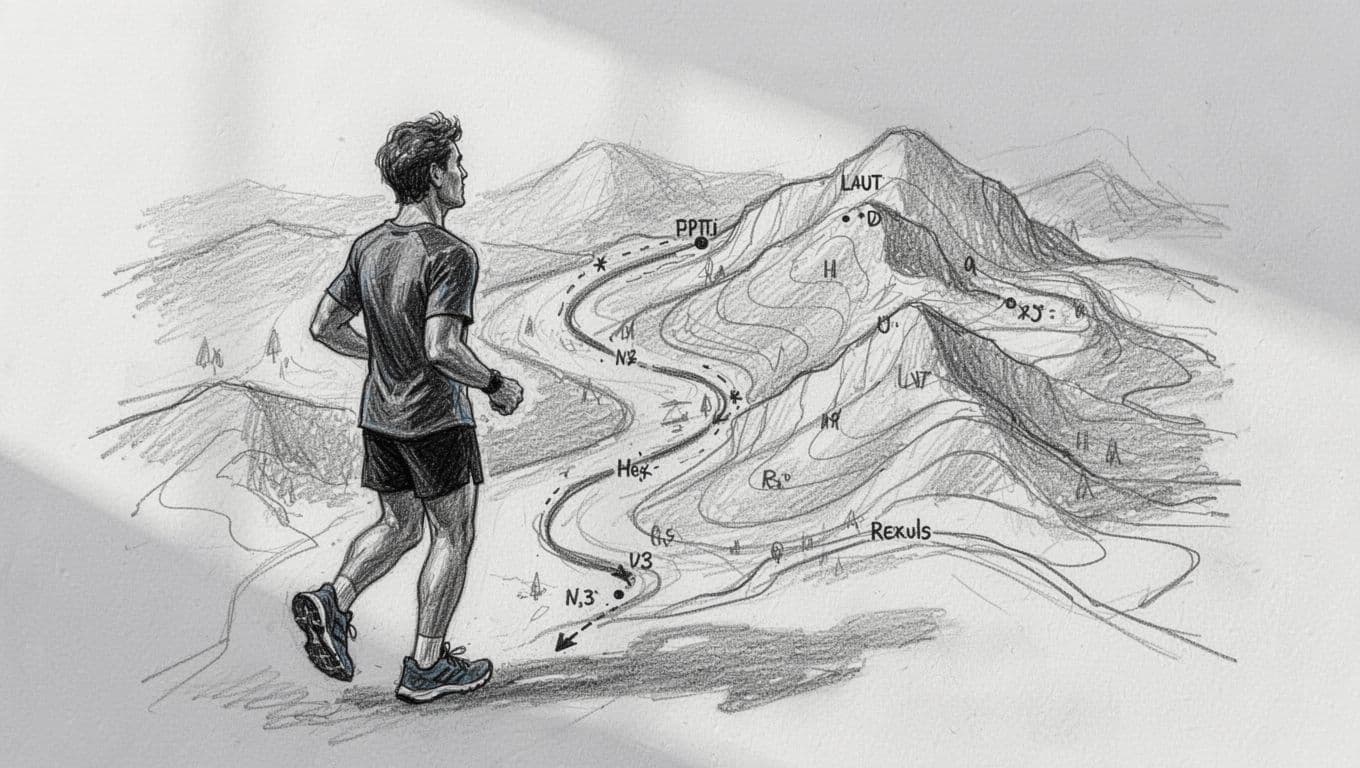 Study the course profile before setting race splits. A 7:40 pace may fit a flat road, but forcing it on a steep climb can drain your legs early. Use an effort-based approach similar to the guidance in this ultramarathon pacing guide, then check your pace again when the terrain becomes runnable.
Who should attempt an eight-hour 100K goal?
This goal fits runners with a stable training routine and a strong endurance base. You should already run consistently, complete regular long runs, and recover within a few days afterward. A recent marathon, 50K, or trail race provides useful experience with sustained effort.
You also need practice eating and drinking while running. Back-to-back long-run weekends can show whether your body handles accumulated fatigue, while trail races reveal how you respond to uneven ground, climbs, and descents.
Choose a slower target or build more base first if you have:
- Recurring injuries that interrupt training.
- An inconsistent weekly running routine.
- No experience beyond the marathon distance.
- Little practice with fueling, hydration, or long periods on your feet.
- Difficulty recovering from ordinary long runs.
A reliable base doesn’t guarantee an eight-hour finish, but it gives the training plan a realistic foundation. If several readiness markers are missing, patience is the faster route to a strong 100K.
Build the Weekly Structure for Your 100K Training Plan
A successful 8:00 100K training plan balances stress with enough recovery to absorb it. Most running should feel conversational, while one quality workout and one long run provide the main training stimulus. Adjust pace by effort when heat, hills, altitude, or technical trails make pace unreliable.
A sample week for building endurance and speed
Use this schedule as a framework, not a fixed prescription. Weekly mileage should match your running history, current fitness, and ability to recover.
| Day | Session | Main purpose |
|---|---|---|
| Monday | Full rest or gentle mobility | Allow your body to absorb the weekend training. |
| Tuesday | Easy aerobic run with 4 to 6 relaxed strides | Build aerobic volume, then add light speed without fatigue. |
| Wednesday | Tempo or threshold workout, plus strength training | Improve sustained effort and running economy. |
| Thursday | Easy mileage or optional recovery run | Keep the legs moving while limiting stress. |
| Friday | Medium-long aerobic run | Extend endurance without the fatigue of a long run. |
| Saturday | Easy run, or rest for a five-day schedule | Add volume only if you feel recovered. |
| Sunday | Long run at controlled effort | Practice time on feet, fueling, pacing, and terrain management. |
For the quality session, try 15 minutes easy, then 3 x 10 minutes at a controlled threshold effort with 3-minute easy jogs between repetitions. Finish with a cool-down. You should work hard enough to focus, but never sprint or finish completely drained.
The medium-long run might last 75 to 110 minutes, depending on your background. Keep it easy, especially before the long run. During the long run, practice the shoes, fluids, foods, and pacing approach you expect to use in the 100K.
Runners training five days can remove Saturday and keep Monday as a full rest day. A six-day schedule can include the easy Saturday run. Seven running days should still contain at least one very short recovery run, and it should not turn every day into a workout.
Choose Your Distance, Duration and Goal Time
Make three quick selections and open the exact plan built for your race target.
Looking for a Fully Personalized Training Plan?
The training plans above are an excellent choice if they match your goal. However, if you’d rather train with a plan built specifically around your current fitness, goal race, preferred training days, weekly mileage, and target finish time, our RDA Custom Training Plans provide a personalized solution. We also have running courses available for runners seeking to run faster from the mile to the marathon.
Why Choose a Custom Training Plan?
| Standard Training Plan | RDA Custom Training Plan |
|---|---|
| Follows a fixed schedule | Built around your schedule |
| Standard weekly mileage | Peak mileage customized for you |
| Fixed workout days | Train on the days you choose |
| Same structure for everyone | Designed around your current fitness |
| Static plan | Updated as your fitness improves |
| One-time purchase | Ongoing personalized coaching and support |
What You’ll Receive
- A training plan built specifically for your goal
- Personalized training paces
- Long runs, tempo runs, threshold workouts, interval sessions, recovery runs, and easy runs
- Peak weekly mileage matched to your experience level
- Flexible training schedule that fits your life
- Ongoing plan adjustments as your fitness improves
Ready to Train Smarter?
Stop guessing and start following a plan built specifically for you, your schedule, and your racing goals.
How to balance mileage, intensity, and recovery
Progressive overload means adding stress in small steps, then allowing your body to adapt. Increase duration or weekly mileage gradually, and schedule a cutback week every few weeks by reducing volume while retaining a small amount of quality.
Adding mileage and intensity together creates unnecessary risk. Increase the long run first, or add more weekly volume, but avoid making both changes sharply in the same week. Easy days must stay easy because they protect the quality of your harder sessions and long runs.
Watch for warning signs:
- Sleep becomes restless or unusually short.
- Your resting heart rate remains higher than normal.
- Irritability replaces your usual motivation.
- Workouts feel harder, or your pace drops despite strong effort.
- Muscle soreness lingers into the next training session.
- A sharp or worsening pain changes your stride.
When these signs appear, reduce volume, remove intensity, or take extra rest. Fitness grows when training and recovery work together.
Use a Phased 100K Training Schedule Over 20 to 24 Weeks
A phased 8:00 100K training plan gives your body time to absorb stress before you add race-specific demands. Divide the schedule into base building, specific endurance, peak training, and tapering. Each phase has a clear purpose, and none should be rushed to make up for missed workouts.
A flexible example might begin around 35 to 45 miles per week, build toward 50 to 65 miles, and peak according to your experience. Your ideal volume may differ because of age, training history, terrain, work demands, and injury risk.
Base building prepares the body for long training weeks
Spend the first 6 to 8 weeks creating a dependable running routine. Keep most mileage easy and conversational, then grow the long run gradually. Regular running should feel normal before you add demanding ultramarathon workouts.
Add two short strength sessions each week with exercises such as split squats, calf raises, step-ups, and core work. After one or two easy runs, include 4 to 6 relaxed strides of 15 to 20 seconds. Strides improve coordination without creating the fatigue of a hard interval session.
Mobility work can remain simple. Spend a few minutes on ankle movement, hip mobility, and gentle calf and hamstring work after training. A three-weeks-up, one-week-down rhythm works well for many runners, although a two-weeks-up pattern may suit athletes who need more recovery.
Avoid forcing mileage, pace, or long-run distance during this phase. The goal is durable consistency, not an early fitness test.
Specific endurance turns long runs into race preparation
The middle phase usually lasts 8 to 10 weeks. Now include longer trail or road runs, controlled tempo work, and hill sessions that match the course. A tempo workout might include 2 to 3 controlled efforts of 10 to 20 minutes, while hill repeats build strength without requiring fast flat-ground pace.
Back-to-back long runs create fatigue resistance. For example, run 18 to 22 miles on Saturday, then 10 to 14 easy miles on Sunday. Use this format on several key weekends, not every weekend. Constant fatigue can reduce training quality and increase injury risk.
Practice your race shoes, socks, clothing, hydration system, and fueling plan during these runs. Test the foods you can tolerate late in a long effort, because race-day nutrition should never be experimental.
Peak weeks and the taper protect your race-day fitness
Place your biggest training block 3 to 5 weeks before the 100K. It may include one demanding back-to-back weekend and your longest planned long run, but the final long run should build confidence without causing deep soreness.
After the peak, reduce volume while keeping a few short, controlled efforts. The taper removes accumulated fatigue; it doesn’t erase your endurance. Sleep more, maintain regular carbohydrate intake, and reduce unnecessary life stress where possible.
During the final week, keep runs short and easy with a few relaxed strides. Arrive at the start rested, fueled, and ready to use the fitness you built rather than trying to create new fitness at the last moment.
Train the Long-Run Skills That Decide an Eight-Hour 100K
A strong 100K performance depends on more than covering the distance in training. Your long runs should rehearse pacing, walking, fueling, terrain, equipment, and the discomfort that arrives after several hours. Treat them as controlled practice sessions, not weekly fitness tests.
Practice effort-based pacing instead of chasing one number
Start every long run conservatively. During the first 20 to 30 kilometers, your breathing should remain controlled, your stride relaxed, and your effort comfortably sustainable. Pace may vary with heat, wind, elevation, and surface, so use perceived effort first. Heart rate can help when it gives reliable readings, but terrain and fatigue can make a fixed number misleading.
On climbs, shorten your stride and protect your breathing. A planned hiking strategy can save energy, especially on steep grades, and it doesn’t mean you’re failing. Walk early at selected climbs, aid stations, or time intervals before fatigue forces you to stop.
If your body feels stable late in the run, gradually increase speed for the final 20 to 30 minutes. Keep the change smooth rather than turning the finish into a race. If your form breaks down, hold the current effort and practice staying composed through discomfort.
Make hills, descents, and technical terrain part of training
Course-specific terrain belongs in your long runs. Uphill hiking improves efficiency, while short hill repeats build strength and teach you to maintain effort without chasing pace. Downhill running develops leg durability, but increase downhill volume carefully. Eccentric muscle damage can appear hours later and may affect the next day’s training.
Uneven trails also improve foot placement, balance, and concentration. Whenever possible, match your training surfaces to the goal race. A road-focused 100K requires different preparation than a rocky trail course with repeated climbs.
A useful workout might include a long aerobic run with several planned climbs, followed by a controlled steady finish on runnable ground. Another option is a back-to-back weekend, such as a long Saturday run followed by an easy, hilly Sunday run.
Use gear rehearsals to prevent avoidable race-day problems
Long runs should test every item you expect to use. Wear your race shoes and socks, adjust your pack, and practice with the same hydration system. Test anti-chafing products, layers, poles when allowed, watch settings, and a small emergency kit in likely weather.
Comfort and reliability matter more than brand prestige. Expensive gear cannot fix poor fit, unfamiliar settings, or clothing that fails when wet. Include planned aid-station stops in some long runs, then restart smoothly after refilling and eating.
Your goal is simple: remove decisions before race day. When shoes, clothing, nutrition, and equipment have already survived demanding rehearsals, you can focus on effort, movement, and reaching the finish.
Fuel and Hydrate for a 100K in 8 Hours
An eight-hour 100K requires steady energy management from the opening miles. Start fueling early, drink consistently, and practice every part of your plan during long runs rather than improvising at the aid station.
Build a fueling plan your stomach can handle
Begin eating within the first 30 to 45 minutes, then continue at regular intervals before fatigue appears. Trained athletes who have practiced high intake may tolerate roughly 60 to 90 grams of carbohydrate per hour, but build toward that range gradually. Your stomach needs training just as your legs do.
Start with a lower intake on long runs, then add carbohydrates over several weeks. A practical race combination might include one gel and sports drink each hour, with chews or small portions of real food added when you want a different texture. Use caffeine only if you have already tested its timing and dose in training.
Keep a simple log after every long run. Record:
- Carbohydrate grams per hour and the products used.
- Fluid intake, temperature, humidity, and wind.
- Terrain, climbing, pace, and total time.
- Nausea, bloating, cramping, taste fatigue, or energy dips.
If nausea develops, slow briefly, reduce the amount per serving, and switch to small sips of fluid or a milder carbohydrate source. Taste fatigue often improves when you rotate gels, chews, sports drink, and savory foods. When chewing becomes difficult, rely on gels or liquid carbohydrates for a while, then resume solid food once your stomach settles.
Missed calories create a problem that can take hours to correct. If you forget to eat, don’t immediately consume several servings at once. Resume with small, frequent amounts and keep the effort controlled until your energy returns.
Plan hydration around conditions and aid stations
Fluid needs depend on thirst, sweat rate, temperature, humidity, clothing, wind, and course exposure. Heat and humidity usually increase losses, while cold weather can reduce thirst without eliminating the need to drink. Long climbs also raise effort and sweat loss, especially when the course offers little shade.
Review the course map before race day. Note the distance between aid stations, then carry enough fluid for the longest gap. Use training runs to estimate your personal needs instead of copying another runner’s bottle plan. Sports drink can provide both fluid and carbohydrate, while sodium may help replace some electrolytes lost in sweat.
Avoid forcing large volumes of plain water. Overdrinking can dangerously dilute blood sodium, particularly during a long event. Drink according to thirst and conditions, and seek guidance from a sports dietitian if you have a medical condition or unusually high or low sweat losses. Never test a new drink, gel, salt product, or unfamiliar real food during the race.
Recover, stay healthy, and adjust the plan when needed
An 8:00 100K training plan only works when your body can absorb the workload. Sleep, easy running, strength work, mobility, and post-workout fueling help you arrive at each key session ready to train. Monitor the small warning signs, then adjust before they become injuries that cost several weeks.
Strength training for durable legs and stable form
Include two short strength sessions per week, preferably after easy runs. Keep the work controlled and leave enough energy for your quality workout and long run. Strength training should support running, not leave you too sore to complete the sessions that matter most.
Build each session around movements that address single-leg control, calves, hamstrings, glutes, hips, and core stability:
- Split squats and step-ups develop strength for climbing, uneven ground, and late-race fatigue.
- Romanian deadlifts and hamstring curls support the posterior chain and help maintain a strong stride.
- Single-leg calf raises prepare the lower legs for thousands of repeated contacts.
- Controlled single-leg balance work improves foot, ankle, and hip control.
- Side planks, dead bugs, and loaded carries train the core without excessive soreness.
Use moderate resistance, steady repetitions, and a full range of motion. During peak weeks, reduce the number of sets if your running load rises. In the taper, keep a little strength work for coordination, but avoid heavy lifting and difficult sessions that create muscle damage.
For a mountainous race, practice hiking strength as well. Step-ups on a sturdy bench, incline treadmill walking, and loaded uphill hikes prepare you to climb efficiently. If poles are allowed, rehearse pole use during training so your shoulders, hands, and rhythm feel familiar.
Know when to push, hold steady, or take a rest day
Use a simple daily check before deciding whether to follow the schedule:
- Push ahead when sleep, mood, energy, and movement feel normal, and your warm-up improves the workout.
- Hold steady when fatigue is mild, sleep was poor for one night, or the planned pace feels harder than usual. Replace intensity with easy running.
- Rest or cross-train when illness, heavy fatigue, poor sleep, heat stress, or worsening soreness affects your movement.
Normal training discomfort usually feels dull, manageable, and better as you warm up. Sharp pain, swelling, pain that worsens, or discomfort that changes your gait requires professional assessment. Don’t run through symptoms that alter how you land or push off.
If you miss a workout, resume with an easy run or rest day. Shorten the next long run if needed, and never cram missed miles into the following week. Skipping one session is far better than turning a small problem into a major injury. After a short break, rebuild with easy volume before adding speed or back-to-back long runs. Sleep well, eat carbohydrates and protein after demanding sessions, and give mobility work a few minutes after easy runs.
Race-Day Strategy for Reaching the Eight-Hour Finish
Your race plan should begin before sunrise and continue through every checkpoint. An eight-hour 100K depends on steady decisions, not one heroic stretch of speed. Protect your energy early, keep aid-station stops purposeful, and use simple process goals when fatigue rises.
Start calm and protect your energy early
Prepare clothing, shoes, bottles, nutrition, headlamp, and drop bags the night before. Check the weather and course profile, then confirm where you will refill, change layers, and access backup food. Eat a familiar breakfast early enough to settle your stomach, and arrive with time to park, use the restroom, collect your bib, and complete a short warm-up.
Begin with a pace that feels almost too easy. Adrenaline can hide effort during the first hour, especially when runners around you surge from the starting line. Do not race the first half aggressively. A fast opening can feel harmless at 10K, yet the cost often appears after 60K when your legs and stomach have fewer reserves.
Use the opening miles to settle your breathing and posture. Keep your shoulders low, hands relaxed, and stride short enough to remain economical. At regular landmarks, check three things:
- Can you breathe comfortably and speak in short phrases?
- Are your shoulders and jaw relaxed?
- Have you eaten and drunk according to your plan?
Start fueling within the first 30 to 45 minutes, even if you feel fresh. Follow your practiced schedule instead of waiting for hunger or thirst. Divide the course into manageable blocks, such as 10K sections, and focus only on reaching the next landmark while maintaining good habits.
Use aid stations quickly without treating them like a race
Enter each aid station with a clear job. Refill bottles, collect the calories you need, check your feet for hot spots, and adjust clothing before leaving. A few purposeful minutes can prevent a blister, empty bottle, or missed meal from creating a much longer delay later.
Rushing creates its own problems. You may forget nutrition, spill a bottle, or continue with a shoe issue that needed attention. Before leaving, confirm your next refill point and decide when you will eat again.
Handle the late-race slowdown with simple mental cues
Heavy legs, low motivation, stomach fatigue, and doubts about eight hours are common in the final third. Break the remaining distance into short segments and use planned walk breaks on steep climbs or at set intervals. Focus on the next aid station, relax your shoulders, take small sips, and make one decision at a time.
If heat, illness, severe pain, confusion, or worsening cramps appear, abandon the time goal and protect your health. A slower finish is acceptable; continuing through serious symptoms is not. When conditions simply worsen, adjust the target, shorten your running segments, and keep moving safely.
Frequently Asked Questions
An eight-hour 100K goal depends on more than the pace shown on your watch. These answers clarify the practical details that often shape race-day decisions, from pacing and walking to training load and nutrition.
How fast do I need to run to finish a 100K in 8 hours?
Covering 100 kilometers in exactly eight hours requires an elapsed average of 8:00 per kilometer, or approximately 12:52 per mile across 62.1 miles. If you exclude stops, the commonly used moving target is about 7:40 per kilometer, which converts to roughly 12:21 per mile, not 12:52.
That moving pace must become faster when the course includes aid-station stops, steep climbs, technical terrain, bathroom breaks, or gear adjustments. For example, 20 minutes of stopped time leaves 7 hours and 40 minutes to cover the course, so your moving pace needs to average about 7:36 per kilometer.
How many weeks do I need to train for an eight-hour 100K?
A runner with a strong endurance base will often need about 20 to 24 weeks for a focused 8:00 100K training plan. Newer ultrarunners may need additional months to build consistent mileage, long-run experience, and tolerance for back-to-back training.
Your timeline depends on current weekly mileage, recent marathon or 50K fitness, injury history, terrain, elevation, and the course profile. A flat road 100K places different demands on your body than a mountainous trail race.
Can I walk during a 100K and still finish in 8 hours?
Yes, planned walking can fit an eight-hour race strategy if your overall pace remains fast enough. Hiking steep climbs, taking brief reset breaks, and walking through aid stations can conserve energy for runnable sections.
However, unplanned stops quickly consume your time budget. Keep breaks purposeful, restart before your legs cool down, and make up lost minutes only through efficient movement rather than reckless surges.
What is the longest run I should do before a 100K?
There is no single correct maximum long-run distance. Many runners prepare successfully with long runs and back-to-back weekends instead of completing the full 100K in training.
Consider your experience, injury history, recovery speed, course demands, and available training time. A very long session may build confidence, but its recovery cost can disrupt several weeks of useful training.
What should I eat during an eight-hour 100K?
Use practiced carbohydrate sources such as gels, sports drink, chews, and familiar soft foods. Begin eating early, then spread intake across the race before fatigue or hunger becomes severe.
Test every product during long runs, especially in hot weather or on technical terrain. Adjust your plan for personal tolerance, weather, and the distance between aid stations.
What if I miss a key workout in the training plan?
Don’t cram the missed mileage or stack hard sessions together. Resume with an easy run, assess your recovery, and continue with the next appropriate workout.
If illness or pain caused the missed session, take more rest and address the problem first. One skipped workout won’t erase your fitness, but forcing extra training can derail the entire plan.
Conclusion
An 8:00 100K is built over months of steady work, not one heroic long run. A reliable 8:00 100K training plan combines consistent aerobic mileage, controlled quality sessions, race-specific long runs, practiced fueling, strength training, and enough recovery to absorb each block. Disciplined pacing then brings those pieces together on race day, especially when terrain, fatigue, and aid-station stops begin to test your focus.
Choose a course goal that matches your current fitness, experience, and the demands of the route. Track how your body responds to training, and adjust the workload with help from a qualified coach or medical professional when pain, illness, or persistent fatigue appears. A realistic plan gives you room to build without forcing progress.
Start with the next manageable week. Complete the easy runs, respect the recovery days, and make each long run a focused rehearsal for the race ahead. Consistent choices will carry you farther than any single impressive workout.
