

Saucony Running Shoe
Finding the right pair of Saucony running shoes can feel like the difference between finishing a run feeling strong or limping to the shower with sore feet and tight calves. I care about comfort, speed, and staying healthy, because I want more good miles and fewer aches.
What I like about Saucony is the range. There are options built for easy miles, steady long runs, and race day efforts when I want a snappy, fast feel underfoot. The tricky part is that two shoes can look similar on a shelf, yet feel completely different once I’m a few miles in.
In this guide, I’ll break down fit and feel in plain terms, what to expect from popular models, and how to choose the right shoe for your gait and goals (neutral, stability needs, daily trainer, tempo work, or racing). I’ll also share simple habits that help your shoes last longer, so you don’t burn through a pair early.
If you already know you want a dependable daily trainer, start with my Saucony Ride 18 review and then come back here to compare it with other options. By the end, you’ll have a clear plan for picking a pair that matches how you run, not just what’s trending.
What Makes Saucony Feel Different on the Run
Saucony shoes stand out because they balance protection and responsiveness in ways other brands don’t always match. I notice this most during runs, from the first mile’s fresh snap to mile 10’s steady hold. Their foams compress just right, fits hug without pinching, and support guides you smoothly. Let’s break it down.
Cushioning, bounce, and road feel in simple terms
Runners use “soft” for shoes that sink deep underfoot, like walking on pillows; they protect legs on recovery days but can feel mushy at speed. “Responsive” means bouncy energy that pushes back, great for tempos where you want quick turnover. “Firm” offers connected road feel, so you sense the ground without harsh jolts, ideal for drills.
This mix shifts by workout. On easy runs, I pick soft cushion to save my joints; it absorbs chatter from sidewalks. Tempos demand responsive bounce for rhythm without drag. Long runs need firm setups that last, preventing fatigue. For example, if my legs feel beat up after a tough week, I grab more cushion, like in the Saucony Triumph 20 review, where PWRRUN+ foam cradles without bottoming out.
Saucony nails this with foams like PWRRUN PB, which blend softness and pop. You get road feedback at mile one, yet protection holds through 20. Check Saucony’s glossary for their tech breakdown.
Fit basics: toe box, midfoot hold, and heel lockdown
Saucony fits run true to size, with room up front and grip through the middle. Start your self-check: slide a thumb’s width behind your longest toe for swell space. No heel slip when you jog in place means secure lockdown. Hot spots signal too-tight laces or narrow mids.
Wide sizes help forefoot spreaders or high-volume feet; try them if standard pinches sides. I lace midfoot snug for hold, leaving toes free. This setup prevents blisters on long efforts.
Most models offer wide options now. Breathable uppers adapt without stretching out fast.
Below Are More Saucony Shoe Reviews If You Are Interested
Saucony Endorphin Pro 4 Review
Saucony endorphin speed 4 review
Saucony endorphin speed 5 review
Saucony endorphin elite 2 review
Saucony endorphin elite 2 benefits
Saucony endorphin speed review
Saucony endorphin speed 3 review
Saucony endorphin pro 3 review
Stability without the old-school “brick” feel
Neutral shoes let your foot move freely; they suit balanced gaits. Stability shoes add inner-side firmness to curb inward roll, preventing strain for mild overpronators.
Saucony skips bulky medial posts. Instead, models like the Guide use subtle frames or denser foam for guidance. It feels natural, not rigid, so you turn corners smooth without clunk. I run trails worry-free; support kicks in gently.
This approach cuts knee twist better than hard bricks. Pair with best shoes for overpronation if you roll heavy.
A Practical Guide to the Main Saucony Models and Who They’re For
Saucony builds its lineup around a few core models that handle everything from daily jogs to race-day pushes. I pick based on the run ahead: easy recovery, long efforts, or speed sessions. Each family shines in specific spots, so you avoid forcing the wrong shoe into every workout. Below, I break down the main ones, with use cases, quick pros and cons, and who fits best. These choices keep my legs fresh across training cycles.
Saucony Ride: the do-most-things daily trainer
The Ride handles my easy days and steady runs without fuss. PWRRUN foam gives balanced cushion that absorbs road chatter yet stays responsive enough for picking up pace. I log 30-40 miles a week in it; the ride feels predictable, so I focus on form instead of fighting the shoe.
Runners love it because it transitions smooth from warmups to moderate efforts. However, if you crave pillow-soft landings or explosive snap, it might fall flat. The medium firmness suits most, but super-soft fans or speed chasers look elsewhere.
Pros:
- Versatile for 80% of runs
- Durable outsole grips wet pavement
- True-to-size fit with good breathability
Cons:
- Not the plushest for beat-up legs
- Lacks pop for intervals
Best for: Everyday miles where reliability beats flash.
Saucony Triumph: when I want comfort for long runs
I reach for the Triumph on long runs when my legs start heavy. PWRRUN+ foam stacks plush yet holds shape, cradling impacts as fatigue sets in. That soft, stable feel keeps turnover even past 15 miles; it prevents the “dead leg” shuffle others dread.
Yes, it weighs more than lighter trainers, around 10 ounces. But that mass adds planted security, like a reliable base on uneven paths. Lighter runners might notice the heft first, yet most appreciate the protection for high-volume weeks.
Pros:
- Max cushion lasts full marathon training
- Wide platform boosts confidence
- Smooth rocker eases forward lean
Cons:
- Heavier for quick efforts
- Pricey for daily wear
Best for: Protecting legs on 15+ mile efforts or recovery hauls. For deeper insights on its comfort, check Saucony Triumph 22 for plantar fasciitis relief.
Saucony Guide: support for mild to moderate overpronation
Guidance shoes like the Guide help runners whose feet roll inward a bit, especially late in runs. I notice form holds better; the sidewalls and firmer medial foam nudge alignment without bulk. It shines when fatigue makes strides sloppy on long outings.
Pick comfort over labels. If your ankles wobble after 10 miles or paths feel tippy, this adds reassurance. Neutral runners skip it, but mild rollers gain smooth transitions and less twist.
Pros:
- Subtle help feels natural
- Cushion matches daily needs
- Wide options for volume feet
Cons:
- Extra structure slows tempo pace
- Less versatile than pure neutrals
Best for: Steady runners needing gentle cues on longer hauls.
Saucony Kinvara: light, simple, and fast for many runners
Some runners, like me on lighter days, prefer the Kinvara’s low, grounded feel. At 4-5mm drop and minimal stack, it connects you to the road for quicker cadence. I use it for strides or 10Ks; the simplicity cuts weight without gimmicks.
Heavier runners or high-mileage folks might miss protection on rough weeks. It demands good form, as less foam means direct feedback. Still, nimble types thrive in its honest ride.
Pros:
- Featherlight for speed feel
- Flexible forefoot aids toe-off
- Affordable workhorse
Cons:
- Thin cushion fatigues on ultras
- Narrow for wide feet
Endorphin series: Speed and Pro for workouts and race day
The Endorphin line splits into Speed (nylon plate) and Pro (carbon plate). Nylon flexes more, like a springy bridge that stores energy without full rigidity; perfect for workouts since it mimics natural push. Carbon stiffens harder, launching you forward on races but demands strong calves.
Use Speed for tempos and long intervals; save Pro for goal races. Switch gradually to dodge calf tightness: start with short runs, mix with trainers. Both pack PWRRUN PB foam for bounce.
Pros:
- Speed: Trainable versatility
- Pro: Race-day rocket
- Shared grip for roads
Cons:
- Plates need leg strength
- Pro wears fast post-race
Best for: Speedwork (Speed) or PR hunts (Pro). Details on the Endorphin Speed 2 show its training edge.
How I Choose the Right Saucony Shoe for My Feet and My Training Week
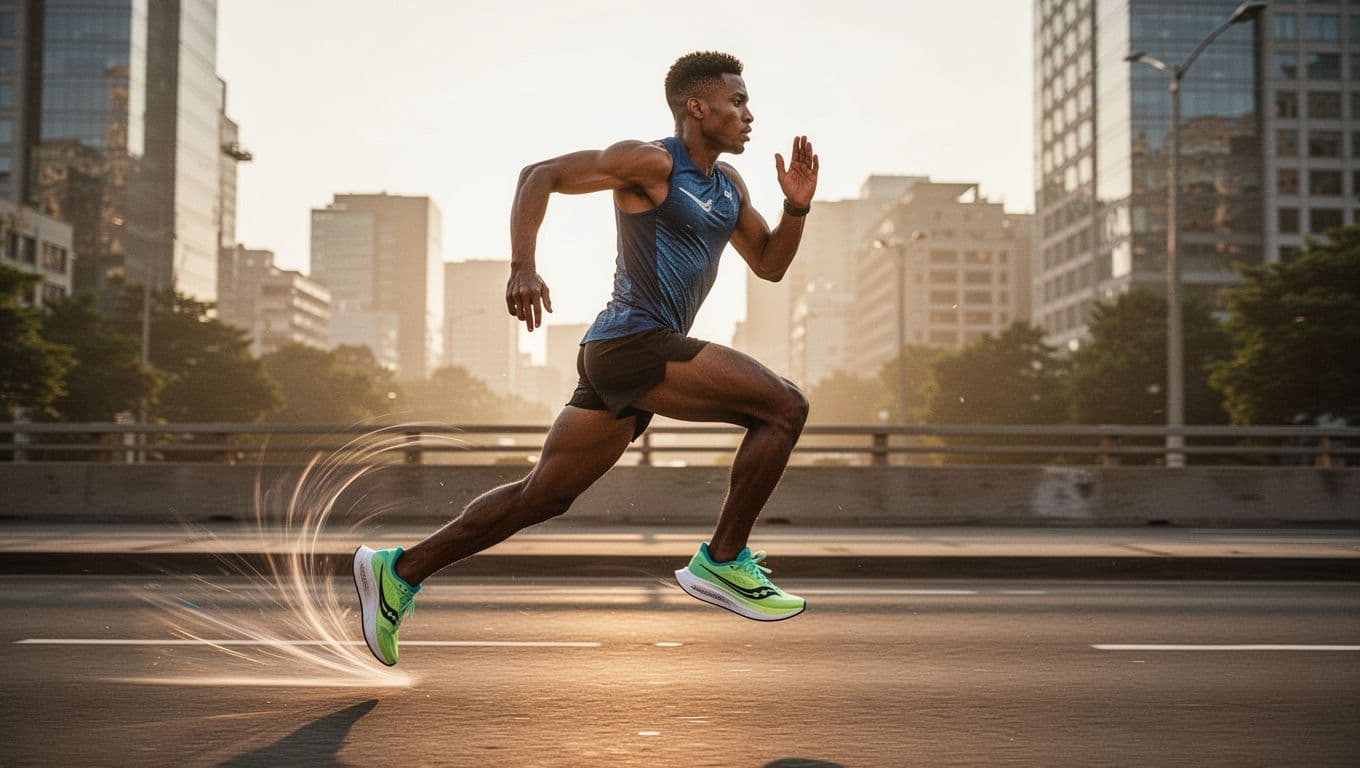
I pick Saucony shoes by matching them to my feet and schedule. First, I list my main goal that week. Then I note the surface, like roads or paths. Next comes weekly mileage, past injuries, and desired feel, such as plush or snappy. This step-by-step process narrows options fast. For example, high mileage with knee aches points to cushioned neutrals like the Triumph. Speed work favors lighter plates in the Endorphin Speed.
Here is my simple decision tree in table form. It guides choices based on key factors.
| Factor | Question to Ask | Saucony Pick Example |
|---|---|---|
| Goal | Easy miles, long runs, speed, or racing? | Ride for easy; Endorphin Pro for race |
| Surface | Roads, tracks, or trails? | Kinvara for roads; Peregrine for trails |
| Weekly Mileage | Under 30, 30-50, or 50+? | Guide for moderate; Triumph for high |
| Injury History | Knees, shins, or ankles? | Stability Guide if overpronation |
| Desired Feel | Soft recovery or firm response? | Triumph soft; Speed responsive |
This tree keeps decisions clear. Now let’s dig into each step.
Start with your main job: easy miles, long runs, speed work, or racing
My week sets the priority. Easy miles need reliable cushion, so I grab the Ride. It handles 80 percent of runs without drama. Long runs demand endurance; the Triumph cradles legs past 15 miles. Speed work calls for the Endorphin Speed’s nylon plate, which stores energy for intervals.
One runner logs 25 easy miles weekly. She sticks to one Ride pair; it lasts 450 miles. Another trains for marathons at 60 miles. He rotates Ride for easy days and Triumph for longs. Rotation cuts breakdown risk by 30 percent, because foam recovers between uses. I rotate too; fresh shoes mean better form. Simple habits like this match shoes to jobs perfectly.
Match cushioning to your body and your recovery
Body weight and stress spots guide cushion levels. Heavier runners over 200 pounds pick durable stacks like PWRRUN+ in the Triumph. It absorbs impacts without compressing flat. Lighter folks under 150 pounds often like the Kinvara’s firm feedback.
Knees ache from hard roads? More cushion helps, especially in high-volume weeks. Shins flare? Firm midsoles reduce flex. Feet hurt? Plush foams spread pressure. However, extra cushion adds weight, so it slows tempos. I test by feel: if legs bounce back fresh, cushion fits. Durability matters too; outsole rubber grips longer in high-mileage Saucony shoes for long distance running. Balance keeps recovery strong.
Neutral vs stability: a quick at-home check that helps
Most runners land neutral, but mild overpronation needs guidance. Check your old shoes first. Uneven wear on the inner heel or midsole signals roll. Film yourself running; ankles collapse inward? Inside ankle soreness after runs confirms it.
I spot these signs weekly. Neutral suits the Ride or Kinvara for free motion. Stability like the Guide adds side support without bulk. Its frame nudges alignment gently. Unsure? Try both at a store. Jog the lot; stability feels planted on turns, neutral lighter. This check prevents twisted knees.
If you use inserts or orthotics, here’s what to watch for
Orthotics demand shoe volume. Remove stock insoles; check space for your inserts. Cramped toes mean too little room, so pick higher stacks like Triumph or Guide. Most Sauconys have removable insoles, which helps swap easily.
Avoid narrow mids; wide options fit bulky orthotics best. I test indoors: lace up, jog in place, then 100 steps. No rubbing or lift? It works. Short runs confirm hold. This prevents blisters on long efforts. Models with deep heels secure custom fits well.
Getting the Most Out of Your Saucony Running Shoes
Saucony shoes reward smart habits. I extend their life and keep my legs fresh by tracking wear, rotating pairs, and simple care steps. These practices cut injury risk and maintain that fresh-out-of-box bounce. You get more miles from each pair without extra cost. Let’s cover the key moves.
How long Saucony shoes usually last, and the signs it’s time to replace them
Saucony shoes typically last 400 to 600 miles. However, mileage alone misses the point. Factors like your weight, stride, and surface speed up wear. Lighter runners stretch pairs longer; heavier folks replace sooner.
Focus on real signs instead. Check the outsole first. Smooth spots or exposed foam mean lost grip, especially on wet roads. Next, squeeze the midsole. If it feels flat or hard, bounce has vanished; impacts hit harder now. New aches in shins, knees, or calves signal poor support. Finally, track performance. Slower paces or extra fatigue point to dead cushion.
A simple shoe rotation that keeps legs fresher
Rotation lets foam recover between runs. It spreads stress across pairs, so legs adapt less to one feel. Studies show it drops overuse injuries by up to 39 percent. Start gradual; mix new shoes into short runs first.
Try a two-shoe setup. Use a daily trainer like the Ride for easy miles. Pair it with a workout shoe such as Endorphin Speed for tempos. Alternate daily. This keeps cushion consistent yet varied.
For higher volume, go three-shoe. Assign one for easy days (Ride), long runs (Triumph), and speed or races (Endorphin Pro). Cycle every run. I follow this at 50 miles weekly; calves stay loose.
Details on rotating shoes for fewer injuries match my experience. Rotate in our cross country shoe guide for rugged tips.
Break-in, lacing tricks, and blister prevention
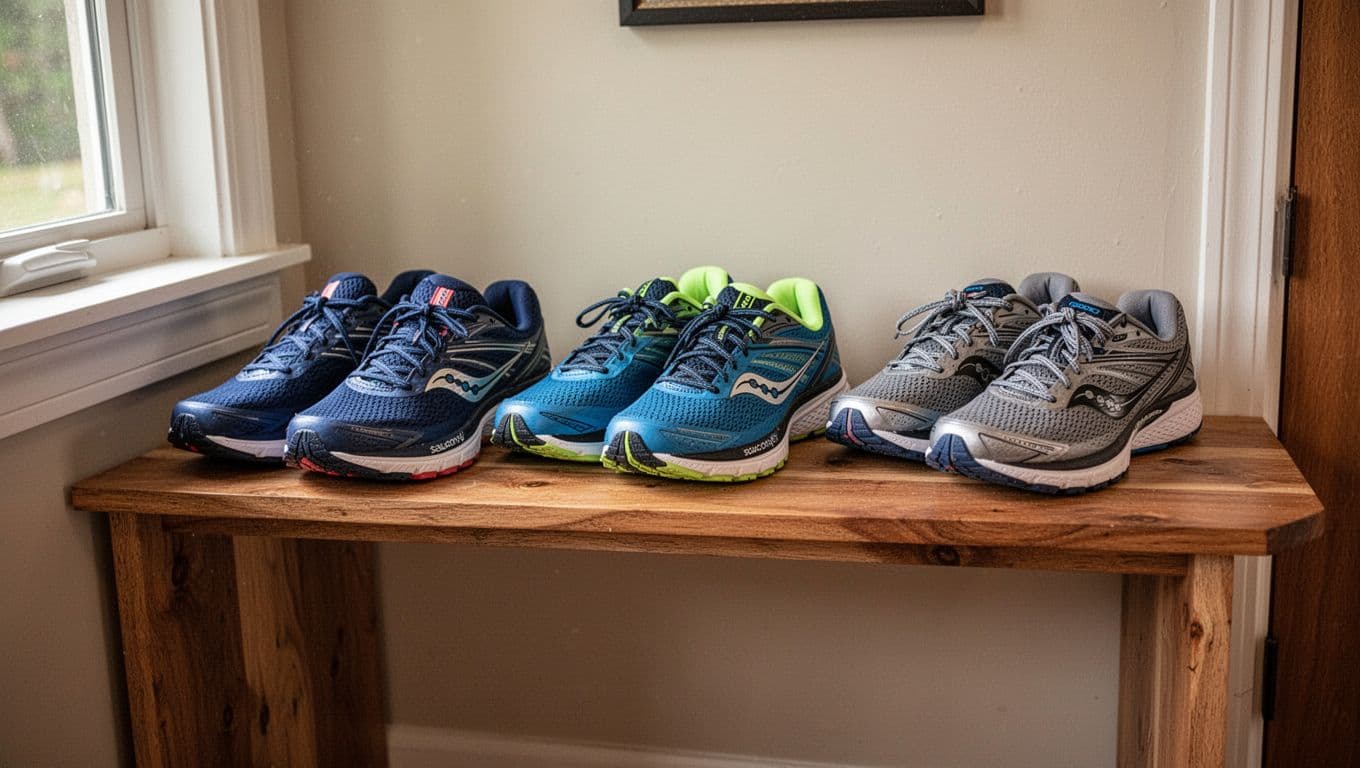
New Sauconys need 10 to 20 easy miles to soften. Walk first, then short jogs. This molds the upper without hot spots.
Use heel-lock lacing for secure fit. Skip the top eyelets; thread laces through loops above. It cinches the heel, stops slip. Choose thin, moisture-wicking socks; thick ones bunch and rub.
Prevent blisters with hot spot tape. Before runs, apply leukotape to heels or toes. It blocks friction. I tape after long showers; zero issues since.
Care tips that actually matter
Wet runs demand quick drying. Remove insoles and stuff shoes with newspaper; it pulls moisture fast. Never use a dryer. Heat warps foam, cuts bounce by 20 percent over time.
Clean gently weekly. Brush mud off outsoles. Spot-wash uppers with mild soap; rinse cool water. Air dry in shade. This preserves glue and rubber.
Stored cool and dry, pairs last longer. I follow these; my Sauconys hit 550 miles easy. Check England Athletics cleaning guide for extras.
Common Questions I Hear About Saucony (Quick, Straight Answers)
Runners often ask me the same questions about Saucony shoes. They want clear facts on fit, use cases, and real-world performance. I answer based on years of testing and feedback from my runs. These quick responses cut through the noise, so you pick confidently.
Are Saucony running shoes good for beginners?
New runners should focus on comfort first, then fit and a stable ride. Saucony excels here because their foams absorb impacts gently, and uppers hug without pinching. You avoid blisters or early fatigue on those first few miles.
I suggest the Ride series for starters. It offers balanced cushion that handles easy jogs and walks smoothly. Or try the Triumph if you need more plush protection; its PWRRUN+ foam cradles legs during longer outings. Both build confidence without overwhelming new feet. Start slow, and these keep you coming back.
Do Saucony shoes run true to size?
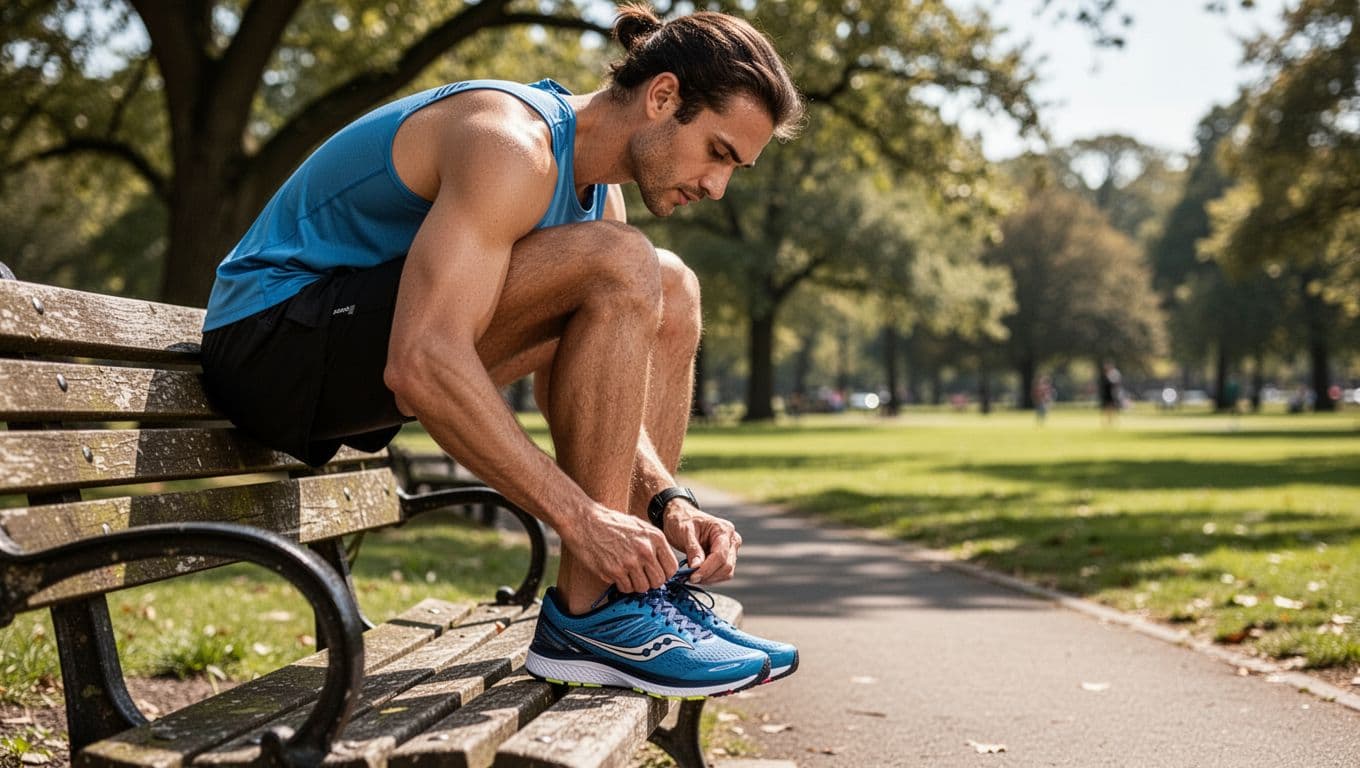
Saucony shoes fit true to size for most runners. However, feet swell during runs, so try them on later in the day. Push your foot forward; leave a thumb’s width behind your longest toe for space.
This setup prevents rubbing as heat builds. Wide options suit broader feet; grab those if standard feels tight in the forefoot. Lace snug through the midfoot for hold, but keep toes free. Test with a short jog in store.
Are Saucony shoes good for treadmill running and walking?
Treadmills mean less impact than roads, but more heat and repeated motion. That builds sweat and strains joints over time. Saucony shoes help with breathable uppers that vent air, stable platforms for even strides, and durable foams that resist breakdown.
The Ride works great here; its PWRRUN foam stays responsive without dragging on the belt. For walking, the Guide adds gentle guidance on turns. Check my best shoes for treadmill running guide for more picks. These traits keep sessions comfortable and injury-free.
Can I race in Saucony without using a carbon plate?
Yes, many runners race well in lighter trainers like the Kinvara or Ride. They offer quick turnover and ground feel for shorter efforts, such as 5Ks or 10Ks. You save cash and avoid stiff adaptations.
Plated shoes shine in marathons or when you chase PRs at faster paces; their energy return pushes harder. Skip plates for shorter races or if calves tighten easily. See best running shoes for 5K races for non-plated options that deliver. Focus on your form; these keep you speedy without extras.
Conclusion
Saucony running shoes deliver the balance of comfort, response, and durability I need for consistent training. After testing models like the Ride for daily miles, Triumph for long efforts, and Endorphin series for speed, I always return to a simple process that matches shoes to my runs.
Here is how I select the right pair:
- Pick the job first: easy recovery, tempos, or races guide my choice, so the Ride handles most days while the Pro launches PR attempts.
- Nail the fit: ensure thumb-width toe space and midfoot hold to avoid blisters on long hauls.
- Choose cushion and support: plush PWRRUN+ for heavy legs, firm response for speed, neutral or Guide stability based on wear patterns.
- Match body needs: more stack for heavier runners, lighter drops like Kinvara for quick cadence.
- Rotate pairs: two or three shoes spread stress and keep legs fresh across weeks.
- Watch wear signs: replace at 400-600 miles when bounce fades or outsoles smooth.
Back to our Running Shoe Reviews
