

Diadora Running Shoes
After years of sticking with the usual big-name running brands, I finally pulled on a pair of diadora trainers out of curiosity, then I kept reaching for them on regular runs. The fit felt different right away, in a good way, and it made me take the brand more seriously than I expected.
Diadora is a heritage Italian brand that’s been making athletic shoes for decades, yet their current running lineup still flies under the radar for a lot of runners. That’s a shame, because the right model can make a lot of sense if you want a solid daily shoe without paying for hype.
In this guide, I’ll break down what matters after real miles: fit (including sizing and toe box shape), ride feel at easy and faster paces, durability over time, and where each style tends to work best. I’ll also be clear about who should skip Diadora running shoes, especially if you need a specific kind of cushion, stability, or roomy fit.
My goal is simple, a practical, runner-first take that helps you buy with confidence and avoid guessing. If you want a reference point from a more common trainer, my Brooks Launch 9 review can help frame the differences in feel and purpose.
Diadora basics that matter on the run (fit, feel, and build)
When a diadora running shoe works for me, it’s usually because the basics line up: the upper holds my foot without pressure, the midsole gives the right mix of cushion and response, and the outsole feels ready for real pavement miles. Those pieces matter more than hype because they decide whether I forget about the shoe and just run.
A few quick definitions make the rest easier. Cushioning is the foam underfoot, it can feel soft (plush) or firm (protective and controlled). Stack height is how much foam sits between you and the road. Heel-to-toe drop is the height difference from heel to forefoot, higher drop often feels friendlier for heel strikers and tight calves. Rocker is the curved sole shape that can help roll you into toe-off.
Outsole rubber is the traction and wear layer, it affects grip and lifespan. Finally, upper support is how the shoe’s fabric, overlays, and heel counter keep you centered.
Fit and sizing: how Diadora tends to run on my feet
On my feet, diadora often feels secure through the midfoot with an upper that doesn’t get sloppy once I’m moving. Length is usually the first thing I check, because a shoe can feel “fine” standing still and still punish toenails on a downhill.
Here’s what I pay attention to when I try them on:
- Length: I want about a thumb’s width in front of my longest toe. Not half a shoe, not “just touching.”
- Midfoot volume: Diadora uppers often feel more traditional and structured, so if you have a high instep, you may notice lace pressure sooner.
- Heel hold: I look for a locked-in heel that stays put when I jog in place. A little movement is normal, but repeated slip is a blister recipe.
- Toe box space: I want room for toe splay. If my big toe angles inward, the shoe is too narrow up front, even if the length is right.
At-home fit testing is simple, and it saves returns later. First, I do the thumb-width check while standing. Next, I do a heel slip check by lacing up and walking fast up a hallway, then jogging in place for 20 to 30 seconds. Last, I test with the socks I actually run in, because a thick sock can steal toe room and change heel lock.
Sizing feels “off” for a few common reasons that aren’t the shoe’s fault:
- Swelling: Feet expand during the day and on runs, so trying shoes on at night gives a truer fit.
- Thick insoles or orthotics: More volume underfoot can tighten the upper and shorten perceived length.
- Wide forefeet: A wide forefoot often tricks runners into buying longer sizes, which then creates heel slip.
If I’m between sizes, my rule is: size up for long runs and warm weather, especially if my toes already run close to the front. If the shoe is borderline roomy, I fine-tune with lacing and sock thickness before I size down. For more detail on the fitting process, I use my own running shoe sizing basics.
Additional Diadora Running Shoe Articles You Might Find Helpful
Diadora mythos propulsion 280 review
Diadora mythos review
Diadora mythos blushield review
Diadora mythos blushield volo 5 review
Diadora equipe atomo review review
Diadora mythos blushield vigore review
Diadora mythos blushield volo 3 review
Diadora mythos blushield 7 vortice review
Diadora mythos blushield volo 4 review
Diadora mythos blushield vigore 4 review
Diadora gara carbon review
Diadora cellula review
Ride feel: soft, firm, or snappy, what you should expect
Ride feel is the “personality” of the shoe once the run starts. Diadora often gives me a more traditional road feel, meaning I can sense the ground and the shoe doesn’t feel like a marshmallow. That can be a positive if you like control and predictability.
Firmness changes how the shoe fits into training. Soft cushioning can feel great on recovery days because it reduces impact sting, but it can also feel unstable if the foam compresses unevenly. Firm cushioning spreads force over a wider area, so it often feels better for steady daily miles and cornering, especially when I’m tired.
Rocker geometry plays a big role here too. A noticeable rocker can feel like the shoe is rolling you forward, almost like a gentle wheel under the forefoot. On easy runs, that can keep transitions smooth. During faster work, a good rocker can make toe-off feel quicker, even without a super bouncy foam.
I also think about stack height and drop when I predict ride. Higher stack usually means more protection, but it can reduce ground feedback. Higher drop often feels smoother for heel striking and can take stress off the calves, while lower drop can feel more natural for midfoot strikers but asks more from the lower leg.
If you like feedback, pay attention to ground feel. Some shoes mute the road, others let you “read” the pavement with each step.
Stability and support: who benefits from a more guided platform
Stability doesn’t have to mean “I overpronate.” In plain terms, stability helps you stay centered, while motion control tries to correct a lot of movement with firmer, more intrusive structures. Motion control is the heavy-duty end of the spectrum. Stability is often just a wider base, smarter sidewalls, and an upper that doesn’t let your foot drift.
I find that diadora often leans into secure uppers and a stable platform, which can be useful even for neutral runners. A stable base helps when:
- You run long and your form gets loose late.
- You’re on cambered roads where one side sits higher.
- You’re coming back from a niggle and want a calmer landing.
- You simply prefer a planted feel over a bouncy one.
Support is a full system, not just the midsole. Upper support matters because a sloppy upper makes any platform feel unstable. Outsole rubber matters too, because good traction reduces the tiny slips that make ankles work harder.
Strength work and form still count, especially hips, calves, and feet. Still, shoe choice can lower the “tax” your body pays each mile. If you’re unsure whether you need more room or more structure, my wide foot running shoe sizing guide can help you separate width issues from stability issues.
How I choose the right Diadora model for my training goal
When I’m picking a diadora running shoe, I don’t start with the shoe. I start with my week. Two things decide almost everything: weekly mileage and the pace range I run most often.
Here’s my quick framework:
- How many miles per week am I really running right now? (not my goal, my reality)
- What’s my “default” pace? Easy runs, steady runs, and workouts live in different worlds.
- What’s the one run that beats me up most? For most runners, it’s long runs or speed sessions.
- Do I need a recovery shoe? If my legs stay sore, I do better with a softer option in the rotation.
If I choose well, one daily trainer handles 70 to 80 percent of my running, then I add a second shoe to cover the stress points.
Easy miles and daily training: comfort first, but not sloppy
For most runners, the daily trainer is the work truck. I want comfort, but I don’t want a shoe that feels like a worn-out couch. A sloppy ride can make my ankles and knees do extra work, especially on uneven roads.
On daily miles, I prioritize three things:
- Durable outsole rubber because daily shoes die from the bottom up. If the rubber goes early, traction and stability go with it.
- Consistent cushioning because I don’t want a shoe that feels great for 30 miles, then turns flat and harsh.
- Comfortable, predictable upper because hotspots ruin training faster than a “boring” ride ever will.
If I’m only buying one diadora shoe, I buy the daily trainer first. It should handle easy runs, steady runs, and even light pickups. That one smart choice covers most of the week, then I can add a second pair later if I need it. For a wider look at what makes a great everyday shoe (beyond brand), I like using this reference list of best daily trainer running shoes.
I also keep a simple rule for recovery: if my easy pace is creeping slower because I’m tired, I add a recovery shoe to rotate in once or twice a week. For me, that means a softer ride, a smooth transition, and an upper that feels forgiving when my feet are beat up.
Long runs and marathon builds: cushioning, fatigue, and foot swelling
Long runs expose fit problems because everything changes after an hour. My feet swell, my form gets less crisp, and small annoyances become loud. That’s why I treat my long-run diadora choice like it has one job: keep me comfortable late.
What I check first is toe space. I want room for swelling, plus a little extra for downhills. If my toes touch the front when I’m standing still, it’s almost guaranteed I’ll flirt with black toenails later. I also pay attention to midfoot hold. On long runs, a tiny bit of slide can cause repeated toe bang.
Late in the run, stability matters more than bounce. I look for:
- Stable landings when my hips start to sag.
- A platform that doesn’t feel tippy when I’m tired.
- Cushioning that protects without feeling mushy.
Pace pairing helps too. For a steady long run, I like a more traditional long-run trainer feel, smooth, stable, and predictable. For a progressive long run (fast finish), I lean toward something lighter and a touch firmer, so the shoe doesn’t feel like it’s fighting me when I pick it up.
If you want a broad comparison set for marathon training shoes, this roundup of best shoes for long distance running is a helpful cross-check.
Tempo days and intervals: when a lighter, faster Diadora makes sense
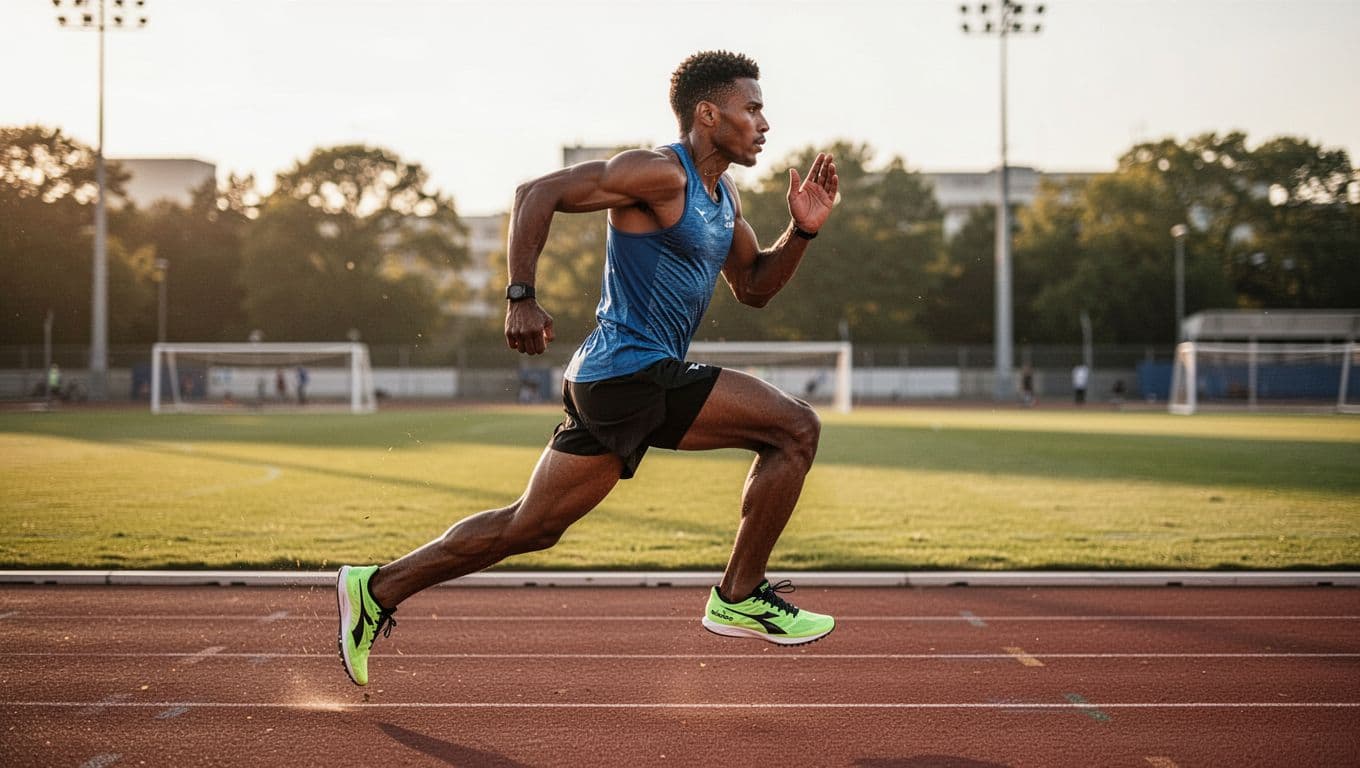
When runners say a shoe feels snappy, they usually mean a few things working together: lower weight, a slightly firmer and more responsive foam, and a shape that helps you roll through toe-off. Some models add a plate or stiffener, which can make transitions feel even quicker.
I rotate a faster shoe when my plan includes real structure, like tempos, intervals, or hill repeats. For many runners, that’s once per week. That single session is enough to get the benefit without beating up calves and feet.
I transition safely by keeping it boring at first:
- First run: short tempo blocks, not a full workout.
- Second run: a normal workout, but I watch calf tightness for 24 hours.
- Only then do I consider longer efforts.
The fastest way to get injured is to treat a speed shoe like a daily trainer on day one.
Racing: what I look for if I want a PR without beating up my legs
For racing, I match the shoe to the distance first, then to my mechanics. A 5K shoe can feel amazing for 20 minutes and miserable for two hours. The longer the race, the more I value comfort and control.
My race-day checklist by distance is simple:
- 5K to 10K: I want stability at speed and reliable grip in corners. A twitchy platform costs time when I’m redlining.
- Half marathon: I need speed, but also a fit that stays calm as my feet heat up.
- Marathon: Comfort becomes performance. If the upper irritates or the shoe wobbles, I’ll pay for it after mile 18.
Grip is a bigger deal than most runners think. If the outsole slips on painted lines or damp turns, my stride gets cautious. That hesitation is a time leak.
One warning I live by: race shoes often feel great for one run, then punish calves if you switch too fast. A more aggressive toe spring, lower drop, or stiffer setup can light up the lower legs, even if the shoe feels “fast” immediately. I keep at least a few workouts in the shoe before I trust it on the start line, and I never debut a new racer on race morning.
What to expect from durability and value with Diadora
When I judge diadora durability, I don’t obsess over one number. I look for a shoe that stays consistent. The ride should feel the same on week six as it did on week one, and the outsole should keep traction when the weather turns.
Most daily trainers, including many diadora models, tend to land in a 300 to 500-mile lifespan for running. For a lot of runners, that’s about 4 to 8 months, depending on weekly mileage. The range swings because three things do the most damage: runner weight (more compression), surfaces (rough asphalt eats rubber), and form (where you strike and how you load the shoe).
The good news is that wear leaves clues, and you can spot them early if you know what to look for.
Mileage lifespan: my simple way to tell when it’s time to replace them
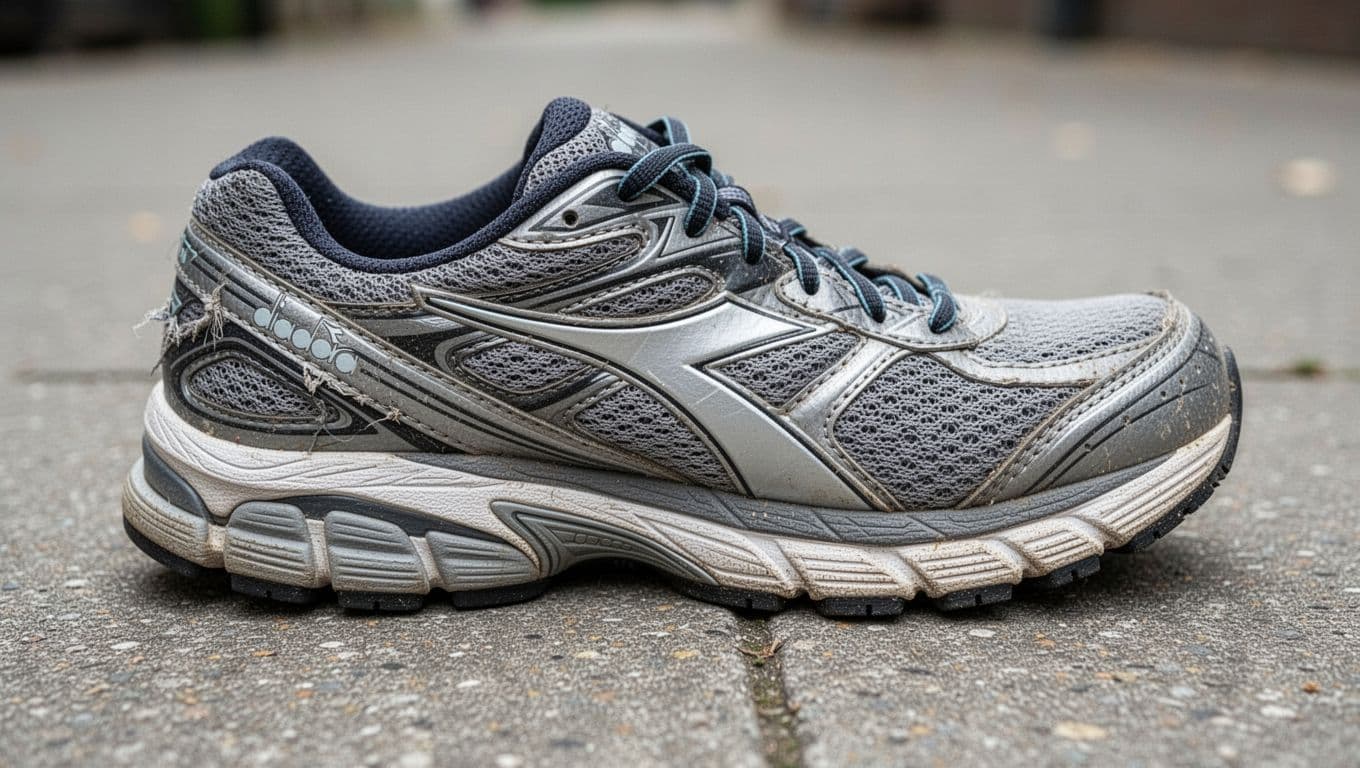
I use mileage as a baseline, then I let my body be the final judge. If I’m lighter, run smooth roads, and stay efficient, I can push closer to 500 miles. If I’m heavier, run a lot of rough pavement, or I’m a hard heel striker, I plan closer to 300.
Here’s my practical replacement checklist. If I hit two or more, I start shopping.
- New aches: little hotspots in the knees, shins, arches, or hips that weren’t there before. The shoe often stops absorbing load evenly.
- Midsole creases and “packed” foam: deep wrinkles are normal, but if the foam feels flat when I press it, it’s losing rebound.
- Outsole smoothing: I look for bald patches at the heel (heel strikers) or lateral forefoot (toe-off wear). Traction drops before the shoe looks “destroyed.”
- Loss of bounce: easy runs feel dull, like the shoe is a dead battery. That’s usually midsole breakdown, not motivation.
- Leaning shoes: set them on a table. If one tilts inward or outward, the platform is deforming and my body starts compensating.
I also watch for where shoes fail first. For me, it’s usually heel rubber wear, then lateral forefoot wear, then small upper tears where the mesh folds. To stay honest, I log miles in an app or a simple note on my phone. If you want a deeper replacement framework, my guide on how often to replace running shoes breaks it down in a runner-friendly way.
Outsole grip and weather: road traction, wet pavement, and light trails
Outsole patterns are more than decoration. Flex grooves help the shoe bend where your foot wants to bend, while rubber coverage in high-wear zones protects the midsole and keeps braking and toe-off stable. On the road, I want rubber in the spots that take abuse, especially the heel edge and forefoot.
Wet grip matters because slips change mechanics fast. One cautious step on damp paint or slick asphalt can turn a smooth stride into a tense shuffle. That tension shows up later as calf or hip fatigue.
If you mix in dirt paths or packed gravel, I keep it simple:
- On hard-packed dirt and crushed gravel, a road shoe with decent rubber coverage usually works fine, as long as you slow down on turns.
- On wet leaves, mud, or loose rocks, traction becomes guesswork, and I’d rather use a trail shoe.
A good rule is to switch to trail-specific when your route has regular uneven footing, sharp rocks, or slippery mud. Trail shoes add lugs, sidewall bite, and often more upper protection.
Are Diadora running shoes worth the price? A real-world value test
I measure value the same way I’d judge a training plan. It’s not about the first impression, it’s about what I get after weeks of use. Here’s my simple comparison method against other brands.
- Comfort per run: do I forget about the shoe, or do I think about pressure points and hot spots?
- Durability: does the midsole stay consistent, and does the outsole keep its bite past the honeymoon phase?
- Injury risk: do little aches show up when the shoe gets older, even though my training is steady?
- Rotation reality: if I rotate two pairs, each pair lasts longer because the foam has time to rebound between runs.
Then I do one quick number: cost per mile. If I pay $160 and get 400 miles, that’s $0.40 per mile. A $120 sale pair that lasts 350 miles is about $0.34 per mile, and often the better buy.
To save money without sacrificing performance, I often buy last year’s colorway once I know the model fits me. Sales also tend to show up around seasonal resets (late winter and late summer), when retailers clear shelves.
Finally, I protect myself with smart purchasing. I buy from retailers with easy exchanges, keep the shoes clean, and test them indoors first. Return policies vary, so I always skim the fine print, especially on clearance. If the fit is off, a quick exchange beats forcing miles in a shoe that’s “almost” right.
Common mistakes I see runners make when buying Diadora shoes online
Buying diadora running shoes online can be simple, but it’s also where I see runners lose time and money fast. The biggest issues usually come from guessing sizing, picking a shoe based on looks, ignoring where they actually run, or changing shoe geometry overnight.
I treat online buying like ordering glasses. If the measurements are off, the product might be “good” and still wrong for me.
Guessing your size instead of measuring and reading fit notes
The most common mistake I see is assuming, “I’m always a size X.” My feet have changed over the years, and yours probably have too. Weight changes, pregnancy, strength work, age, and even more running can all affect foot length and width. Also, my feet measure differently at night than they do in the morning.
Here’s how I measure at home in five minutes:
- I tape a sheet of paper to the floor against a wall.
- I stand with my heel lightly touching the wall (full weight on that foot).
- I mark the tip of my longest toe, then measure heel-to-toe length.
- I measure width at the widest part of my forefoot (ball of the foot).
- I repeat on the other foot and use the larger measurements.
Width matters more than most people think. A shoe can be the right length and still cause numb toes or blisters if the forefoot is too tight. On the other hand, runners with slim feet often size up for toe room, then fight heel slip. If that sounds familiar, I’d compare your fit to my narrow-foot resources like best running shoes for narrow feet.
Finally, once the box arrives, I test indoors first. I walk, do a few calf raises, and jog in place on carpet. That keeps the outsole clean, so the shoes stay returnable.
Buying the wrong shoe type for your pace and weekly mileage
I get it, a sleek shoe photo can make any model look fast. Still, “fast-looking” is not the same as “right for my training.” I see three patterns show up again and again:
- A newer runner buys a super-stiff race shoe because it feels exciting, then easy runs feel awkward, and calves get tight.
- A high-mileage runner uses a low-cushion, minimal-feel shoe every day, then little aches pile up because there’s no break from impact.
- A heavier runner goes too soft because it feels plush in the living room, then the ride turns unstable on corners and tired legs.
Terrain gets ignored too. If most of your miles are on rough asphalt or broken sidewalks, a firmer, more stable daily trainer often feels better than a super-soft option. If you mix in gravel paths, I want outsole coverage and a calm platform, not a slick outsole that’s made for smooth roads.
When I’m unsure, I use a simple cross-check: match the shoe to your weekly miles first, then to your fastest session. My broader guide on why fit matters in running shoes is where I send friends who keep buying “cool” shoes that don’t match their training.
Changing too much at once (drop, stiffness, and volume)
The fastest way to irritate calves and Achilles is switching from a higher-drop trainer to a lower-drop shoe overnight. Drop changes how much your ankle works, and lower drop usually asks more from the calves. Add a stiffer midsole or a tighter upper volume, and my lower legs feel it even more.
If I change drop, I try to keep everything else familiar (fit volume and stiffness), at least at first.
My safe transition plan over 2 to 4 weeks looks like this:
- Week 1: 2 short runs (10 to 20 minutes) in the new pair, easy pace only, then switch back.
- Week 2: 2 to 3 short runs (20 to 30 minutes), still easy, still alternating pairs.
- Week 3: One medium run in the new shoe, plus one short easy run, then reassess next-day tightness.
- Week 4: If calves feel normal, I start using the new pair for one longer run per week.
Before I buy online, I also check sizing notes and charts, since diadora models can vary.
Before you click buy checklist (save this):
- Measured today: length and width, both feet, using the larger foot.
- Matched the shoe to my week: easy miles, workouts, long run distance, and total weekly mileage.
- Picked for my terrain: smooth road vs rough pavement vs light gravel.
- Avoided a geometry shock: no sudden high-drop to low-drop switch without a transition plan.
- Protected the return: indoor try-on only until I’m sure the fit is right.
How I break in Diadora running shoes and rotate them for fewer aches
Breaking in a new pair of diadora running shoes isn’t about “toughing it out.” It’s about teaching the upper, laces, and foam to work with my stride before I ask for real effort. I keep the first 30 to 50 miles controlled, then I let rotation do the heavy lifting for recovery and durability.
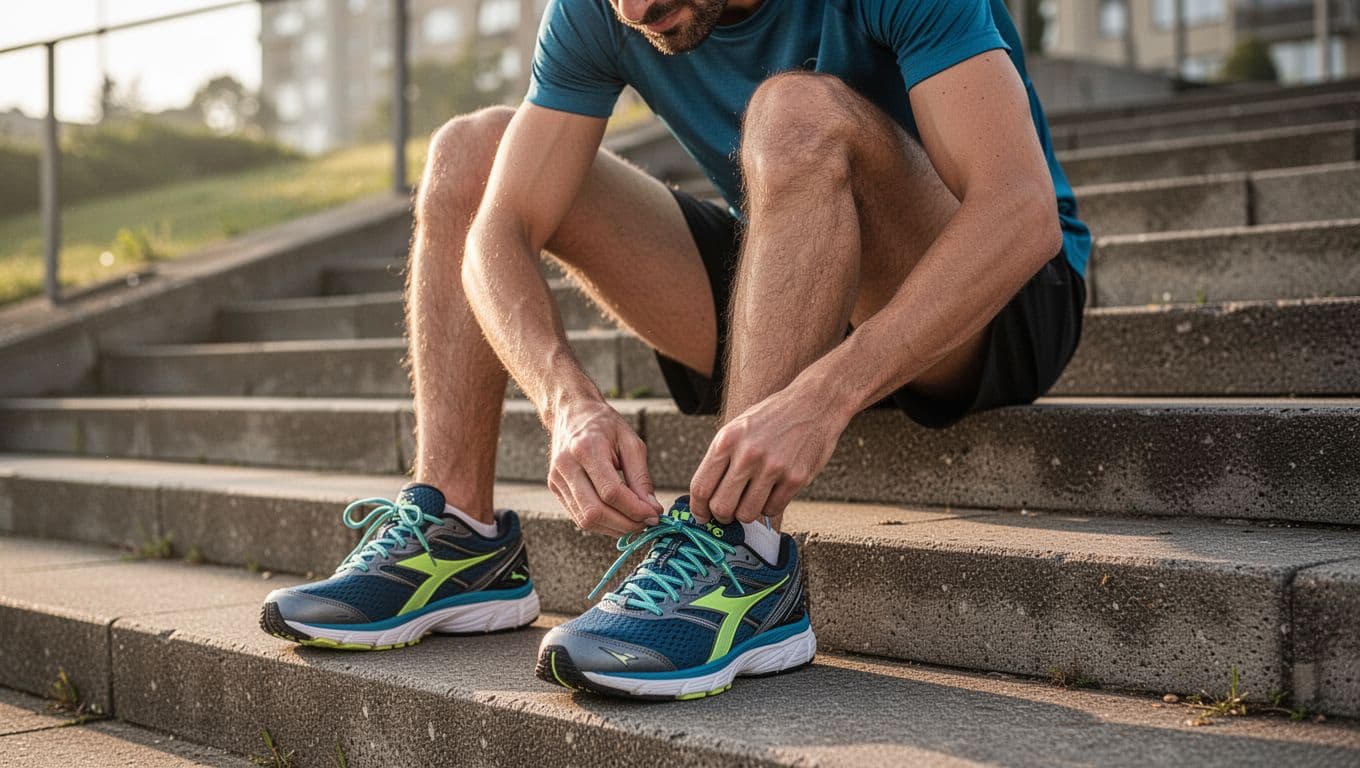
My first-week plan so the shoes feel good by run three
I aim for “boring miles” first, because most aches come from doing too much too soon. New shoes can feel fine at first, then light up a hot spot once sweat and swelling kick in. So I build comfort and trust early.
Here’s my simple first-week schedule (about 15 to 25 total miles, depending on your usual volume):
- Run 1 (2 to 3 miles easy): Smooth surface, no hills, no pace changes. I stop at mile one to check for rubbing.
- Day 2 (rest or cross-train): I let the foam rebound and my feet calm down.
- Run 2 (3 to 5 miles easy): I keep cadence relaxed and stay honest about any heel slip.
- Day 4 (rest or walk): If anything feels “sharp,” I don’t force it.
- Run 3 (4 to 6 miles easy + 4 to 6 light pickups): Pickups are 15 to 20 seconds, not sprints, with full easy jogging between.
During those first three runs, I watch for hot spots (toe knuckle, arch edge, back of heel). If I feel one starting, I make one change at a time: socks first, then lacing, then insole. If you land hard on your heel, I’m even more patient, because geometry changes can show up as calf or knee soreness (my guide to shoes that suit heel strikers can help you sanity-check your setup).
A quick care habit helps break-in too. After every run, I pull the insole, loosen the laces, then air-dry the shoes away from heat so the upper doesn’t get stiff.
Simple rotation setups for different runners
Rotation is my low-effort way to feel better while running more. When I alternate shoes, the foam gets time to decompress, and my legs get a slightly different “signal” each day. That change in stress pattern can reduce the nagging, same-spot soreness that builds when I wear one pair for everything.
My easy rotation templates:
- 2-shoe rotation (most runners):
Daily trainer for easy and steady runs, then a lighter speed shoe for workouts and strides once a week. This keeps the fast shoe from becoming a daily strain. - 3-shoe rotation (when miles climb):
Keep the daily trainer, keep the speed shoe, then add a cushioned long-run shoe for long days and recovery runs. That third pair is my “body insurance” when fatigue stacks up.
I also keep it flexible. If my calves feel tight, I swap in the more forgiving pair. If my feet feel puffy, I choose the roomier upper. In other words, I rotate based on how my body feels, not the calendar.
Quick fixes: lacing, socks, and insoles before you give up on the shoe
When a diadora shoe feels off, I try the simple fixes before I call it a bad match. Most discomfort is either heel movement, forefoot pressure, or friction.
My go-to adjustments:
- Heel slip: I use a heel lock (runner’s loop) on the top eyelets. It anchors the heel without strangling the midfoot. If you want a visual refresher, this guide to common lacing techniques shows the idea clearly.
- Forefoot pressure or numb toes: I loosen the lower laces, then re-tighten only from midfoot up. If the shoe has an extra eyelet, I still avoid cranking it down. Over-tightening cuts circulation, and numb toes can turn into sloppy form.
- Blister prevention: I switch to a smoother sock, and I add a thin layer of anti-chafe balm on known rub zones. If a hot spot starts mid-run, I stop and adjust instead of “running through it.”
- Insole swap: If the arch feels pokey or the underfoot feels too flat, I test a different insole. I only change one thing at a time, because too many tweaks make it hard to diagnose the real issue.
Finally, I keep basic shoe care simple: I don’t machine-dry, I don’t park them in direct sun, and I never store them wet in a gym bag. If they get dirty, I hand-clean with mild soap, rinse lightly, then stuff them with paper to dry fast and hold shape. That routine keeps the upper comfortable, and it helps the shoe feel “broken in” without breaking down.
Conclusion
Diadora running shoes make the most sense for runners who want a secure fit, a reliable road feel, and steady performance over real miles. I like them when I want a shoe that stays structured through the midfoot, lands predictably on tired legs, and holds up well enough that the cost per mile stays reasonable, especially if I buy last year’s colorway.
At the same time, I don’t force the brand to fit every need. If you require extra-wide sizing, chase extreme softness for recovery days, or want a very aggressive race setup, you might be happier looking elsewhere (or at least double-checking what’s available in the current Diadora lineup).
If you want a useful comparison point for a plated trainer concept, my https://rundreamachieve.com/hoka-mach-x-3-review/ can help you think through how “speed support” differs from a more traditional daily trainer feel.
Next step: choose your training goal (daily miles, long runs, workouts, or racing), confirm your size, then test your new diadora pair on two easy runs before you commit to keeping them. After that, tell me what you felt underfoot, firm, smooth, or snappy, and I can help you fine-tune your rotation.
Back to our Running Shoe Reviews
