

Running Gear Tips
I know the feeling, I’m standing in a gear aisle (or scrolling at midnight), staring at walls of options that all promise faster, safer, better runs. The truth is, most runners don’t need more stuff, they need the right stuff. In this guide to running gear, I’ll help you buy less, choose better, and avoid the painful mistakes that waste money and wreck training.
When I say running gear, I mean the basics that support your miles: shoes, socks, and clothes, plus lights, hydration, tech, safety items, and recovery tools. Some pieces matter from day one, while others only earn a spot when your training load grows or the weather turns.
If you’re new to running, returning after time off, or training for a race, I’ll show you what I buy, what I skip, and what I replace on purpose. Comfort and injury prevention always beat flashy features, because blisters, chafing, and niggles don’t care how cool your watch looks. I’ll also point out where spending more helps, and where it’s just marketing.
Before you add anything to your cart, I run it through this quick checklist: fit, function, weather, budget. When a product can’t pass those four, it doesn’t come home with me.
Back to RunDreamAchieve Courses
Start with the basics, the gear that matters on almost every run
Every run needs solid basics in running gear. Shoes protect your feet. Socks and clothes keep you dry. These items prevent most pains, so I focus here first. Skip trends. Buy what works for your body and routes.
Running shoes: how I choose the right pair without guessing
Fit matters most. I leave a thumb’s width between my longest toe and the shoe’s front. This space handles foot swell on long runs. The toe box needs room for toes to spread naturally. Heel lockdown stays secure; no slipping inside. Midfoot hugs snug but not tight.
Test comfort right away. Walk the store aisles. Jog in place. Your foot should feel locked yet free. No pressure points pinch.
No single “best shoe” exists. The right pair matches your foot and training. Cushioning softens impacts for high mileage. It absorbs shock like a car suspension. Ground feel gives feedback for speed work; thin midsoles sharpen response. Stability shoes guide your stride if feet roll inward. Simple posts or rails prevent excess motion without bulk.
Heavier runners or high-mileage folks pick more cushion and durable outsoles. Lighter bodies often prefer responsive rides.
Rotate two pairs. This spreads wear and lets shoes recover between runs. Replace when feel dulls, outsole thins, or new aches appear. Mileage guides help, but body signals rule. Try fresh socks or tighter laces first.
Socks, shorts, and tops: small details that prevent blisters and chafing
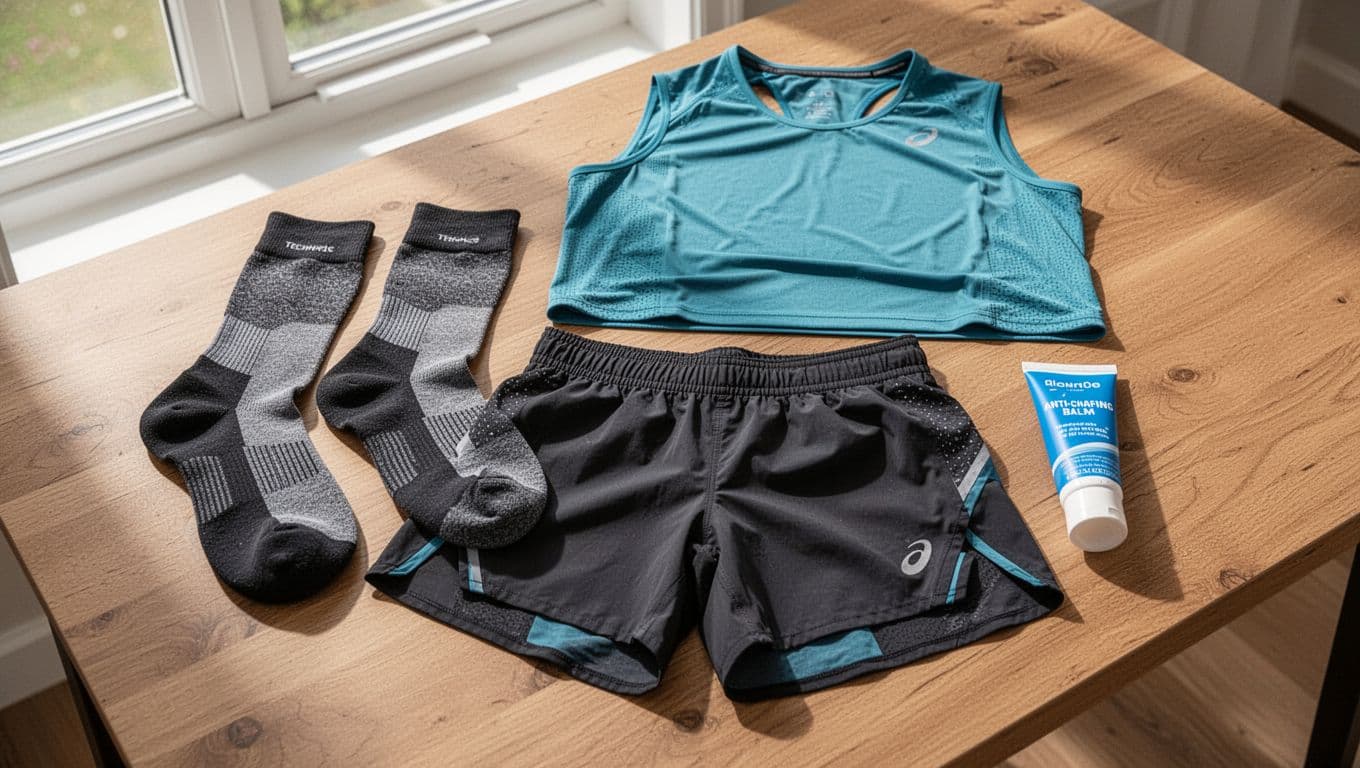
Technical fabrics pull sweat away fast. Cotton holds moisture; it soaks and rubs. Synthetic blends dry quick and breathe.
Pick socks with right thickness. Thin for speed and summer. Cushioned for trails or long miles. Seams stay flat to dodge blisters. Light compression boosts circulation without squeeze.
Chafing hits thighs, underarms, and chest. Snug split shorts reduce thigh rub over liners. Tops fit close but loose at arms. Sports bras support without bind; wide straps prevent shoulder dig.
Apply balm like Body Glide at hot spots before runs. It slicks skin smooth.
Upgrade in your first week with these basics:
- Two pairs of technical socks.
- One pair of split shorts.
- One moisture-wicking tee.
- Anti-chafing balm.
These stop most issues early. See Under Armour’s running socks guide for more sock picks.
The one layer I never skip when weather turns
Layer smart for cold, wind, or rain. Base layers wick sweat. A light wind shell blocks gusts without trap heat. Breathable rain jackets shed water but vent vapor; avoid full waterproofs that steam up.
Hat, gloves, and neck gaiter pack high warmth per ounce. They cover skin fast.
Follow this simple temperature guide I use:
- Above 50°F: Shorts and tee.
- 40-50°F: Long sleeves, tights if windy.
- 30-40°F: Add wind shell, gloves.
- Below 30°F: Fleece midlayer, thicker hat.
Dress for the run’s effort, not start temp. You warm quick. Peel layers if needed. This setup works across most US climates.
Dress for the conditions, and stay comfortable in heat, cold, rain, and dark
Running gear shines when weather fights back. I always match my kit to the forecast because poor choices lead to cut-short runs or worse. Heat demands breathability. Cold needs smart layers on hands and feet. Rain calls for quick-dry picks. Darkness requires lights and glow. These setups keep me moving year-round.
Hot and humid runs: staying cool without getting dehydrated
Light colors reflect sun rays so I stay cooler longer. Dark fabrics soak up heat like a sponge. I pick loose shirts and shorts for air flow, but snug enough to avoid flapping. Sweat-wicking synthetics pull moisture off skin fast; they dry before chafing starts.
Sun protection tops my list. A cap shades my face. Sunscreen covers exposed spots. I carry a hydration vest with soft flasks because plain water loses salts quick in humidity. Electrolytes help when sweat soaks through; they restore what runs steal.
Watch for red flags like dizziness or chills. A heart rate spike means slow down. Gear aids pacing too. I plan short loops near water stops.
Breathable shoes make a big difference. Check my best shoes for hot weather running guide for top ventilated picks.
Cold and windy runs: how I keep my hands and feet warm
Extremities freeze first so I protect them. Liner gloves go under insulated ones for dexterity and warmth. Thick wool socks pair with shoes that have beefier uppers; they block drafts without bulk.
Wind chill bites hard. A light wind shell over base layers cuts gusts yet vents sweat. Warm hats cover ears fully because exposed skin drops core temp fast. I start runs slightly cool since body heat builds quick.
Ice adds risk. Microspikes screw onto shoes for traction; they grip without slowing pace. Always test on easy ground first to avoid trips.
Rain and wet trails: what helps, what’s a gimmick
True waterproof gear traps sweat inside; I feel like a steamed pudding. Water-resistant shells shed light rain fine and breathe better. Wool blend socks stay comfy wet because they insulate and fight blisters. Shoes with drainage ports dump water quick; gaiters block trail splash.
Visibility matters most. Bright colors and reflective strips catch eyes. Skip cotton; it clings cold. I pack a dry tee to change into post-run.
Care keeps stink away. Rinse gear after. Air dry inside out. Skip fabric softener; it clogs wicks. My best running rain jacket picks balance protection and breathability.
Running in the dark: lights and reflectivity I trust
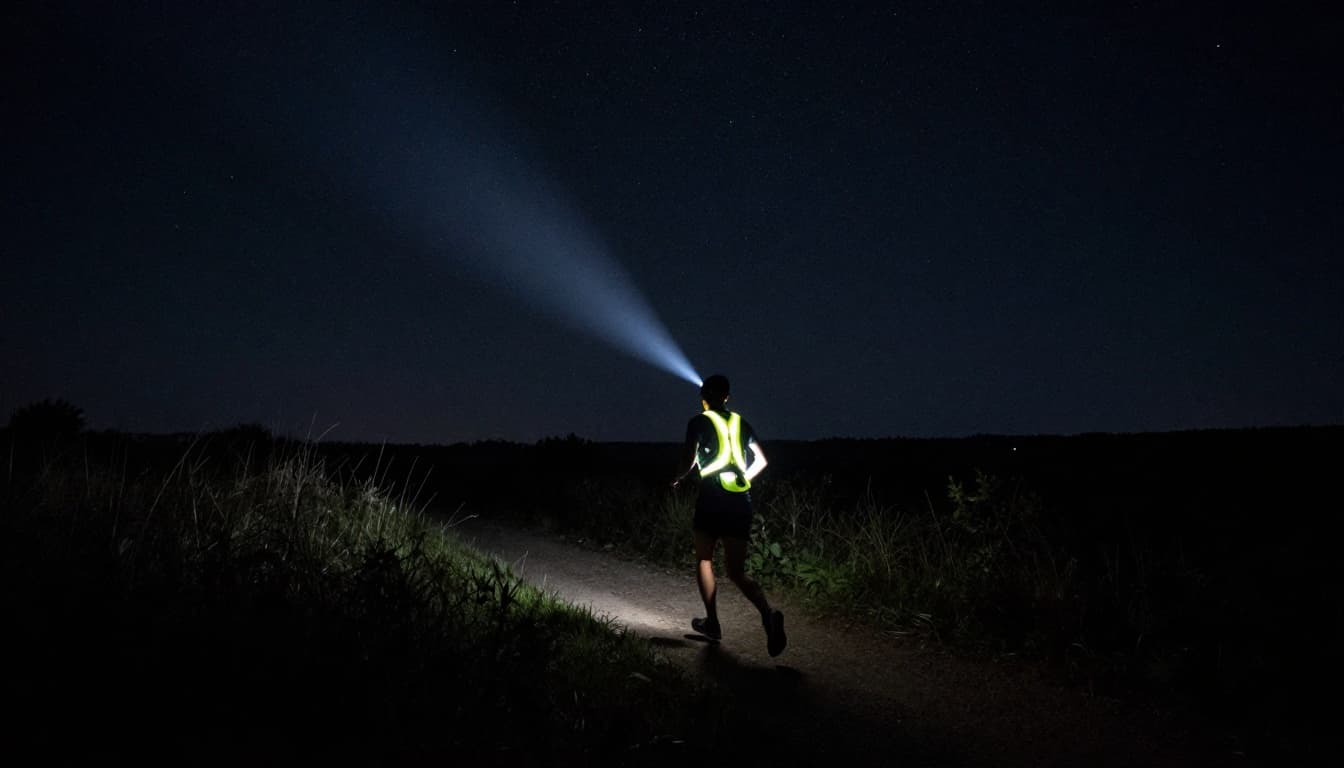
Reflective gear gets you seen; headlamps let you see. Vests or bands glow bright for cars. I clip rear blinking lights to packs so drivers spot motion from behind.
Lumens match terrain. 200-400 work for sidewalks; trails need 600 plus for roots and turns. Angle lamps low to catch ground ahead.
Safety basics seal it. Pick lit routes when alone. Keep earbud volume low. Run with a buddy for tough nights. These steps turn dark miles safe.
Hydration and fuel gear, choosing what to carry and when
I treat hydration and fuel as key running gear pieces because they keep energy steady on long efforts. Poor choices lead to cramps or bonks, so I match carry options to run length, terrain, and storage needs. Comfort rules everything; bounce or rub ruins miles. Below, I break down my decisions for water and snacks.
Handheld, waist belt, or hydration vest, how I decide
Run distance guides my pick first. Short efforts under 60 minutes need no carry; I sip from fountains and feel free. Longer runs demand options, so I weigh comfort against bounce.
Handhelds work for 5-10 miles because one hand stays light, yet I grip a 16-20 ounce bottle firm. They suit roads with refills nearby. Bounce stays low if the strap fits snug over palm.
Waist belts shine for tempo runs up to 90 minutes. I position them low on hips to avoid gut rub, with two 12-ounce flasks for balance. Storage pockets hold phone and keys without shift.
Hydration vests handle ultras or trails over two hours. They spread 1-2 liter flasks or bladders across chest and back, so weight evens out. I check fit by running in place: no shoulder rub, sternum straps loose enough for breaths, side pulls tight against torso.
For top picks, see my best running hydration vest men guide.
Gels, chews, and real food: packaging, pockets, and cleanup
Fuel matters on runs over 90 minutes or hard workouts because low energy hits pace fast. I start with one gel every 30-45 minutes, then adjust based on feel; chews or bananas work too for variety.
Packaging needs tear tabs I rip one-handed mid-stride. Sticky gels go down smooth with a water chaser, so hands stay mostly clean. I stash wrappers in back vest pockets right away; no litter trails behind.
Pockets stay key. Front vest slots hold 4-6 gels for quick grabs. Belts tuck chews in zippers to dodge sweat. Real food like dates fits side mesh, but I skip for races to avoid mush.
Train your stomach early with these combos during long runs. They build tolerance, so race day flows easy.
Race day carry rules so I don’t overpack
Aid stations cut my load, so I carry minimal based on distance and weather. I test full setups on long runs first; new gear stays home from races.
Here is my simple checklist by distance:
| Distance | Hydration | Fuel | Extras |
|---|---|---|---|
| 5K | None | None | Keys, phone |
| 10K | Handheld if hot | 1 gel | ID |
| Half | Belt or vest (1L) | 3-4 gels/chews | Salt tabs if humid |
| Marathon | Vest (2L) | 6-8 gels, chews | Backup socks, balm |
Hot days add electrolytes; cold skips extra water. Personal needs like phone always tag along. This keeps me light yet ready. For more, see my marathon fueling plan.
Tech and accessories that earn their spot in my kit
Tech adds value to my running gear when it tracks runs without distraction. I skip gadgets that drain batteries or complicate efforts. Instead, I pick tools that deliver key data like pace and heart rate. These items fit my daily training because they boost consistency. Reliability matters most, so I test everything on real routes.
GPS watches and phone apps: what features I actually use
I rely on pace, distance, time, and splits for every run. Pace shows if I hold steady effort. Distance confirms mileage goals. Time tracks total duration. Splits break runs into segments, so I spot slowdowns early.
Auto-lap helps too. It beeps at set intervals, like every mile. This keeps me focused without constant glances. Battery life lasts my longest efforts, often 10-20 hours in GPS mode. I charge weekly to avoid surprises.
GPS accuracy dips in cities or thick trees because signals bounce or fade. Open skies work best. For easy runs, I set pace alerts. They vibrate if I push too hard, so I stay relaxed.
Phone apps back up watches with similar data. They sync rides effortlessly. For more on solid options, check my Garmin Forerunner 265S GPS running watch review. See also best running watches for 2026 for tested picks.
Heart rate monitors: when they help, and when they stress me out
Chest straps beat wrist monitors for accuracy. They read electrical signals from the heart, so data stays precise even in motion. Wrist units use light sensors; sweat or loose fit skews numbers.
I use heart rate on easy days to cap effort. It keeps paces slow, which builds base fitness. In heat, I adjust targets lower because sweat ramps pulses fast. This prevents early fatigue.
Yet, numbers stress me if I obsess. Effort feels right when breathing stays steady. Talk test works too: easy chat means good zone. Monitors guide, but body cues rule. Skip them on fun runs to stay present.
Earbuds, phone carry, and comfort add-ons that prevent annoyance
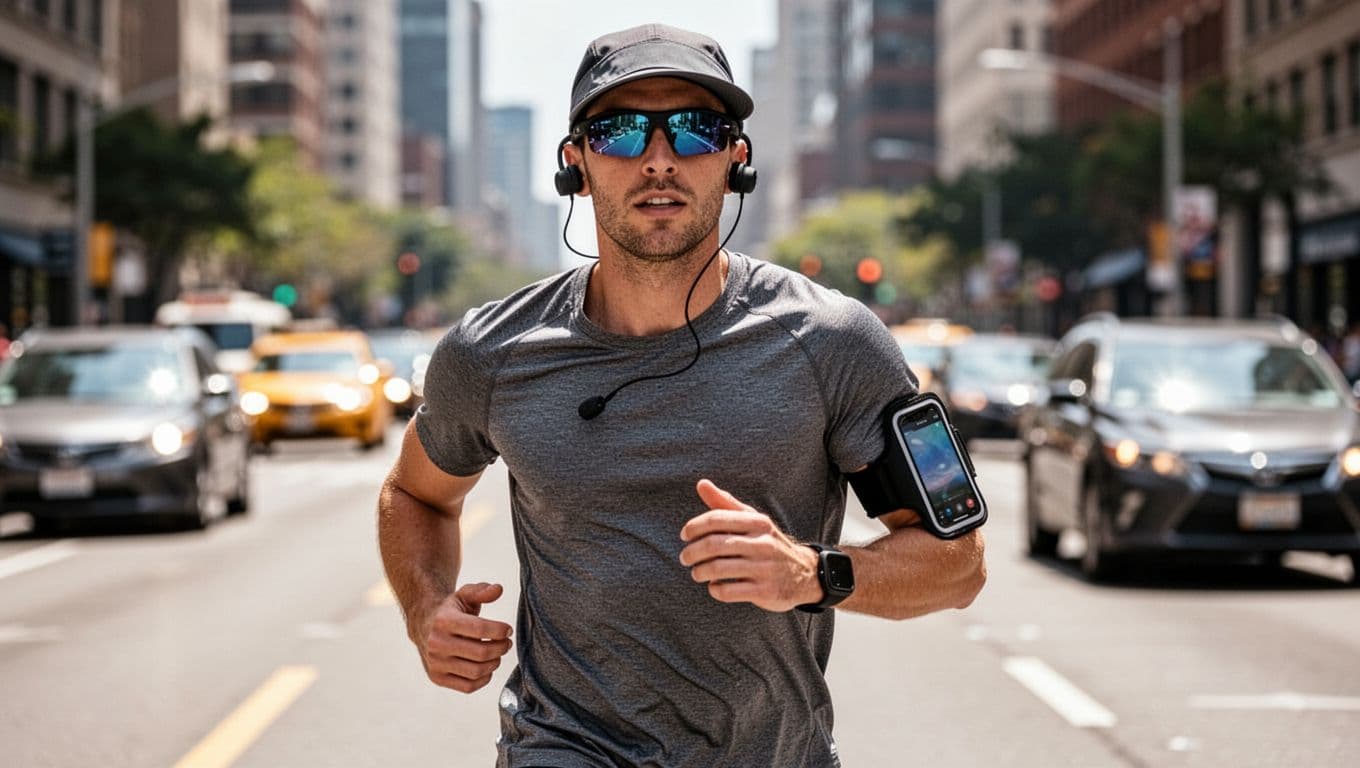
Bone conduction earbuds rest on cheekbones; they leave ears open for traffic sounds. In-ear types block noise more, but I hear horns better with open designs. Both need sweat resistance to survive drips.
Phone carry stops distractions. Shorts pockets work for short runs, but bounce annoys. Belts sit low on hips for balance. Armbands grip firm without shift; I pick slim ones for small phones.
Sunglasses cut glare and shield eyes. Hats wick sweat while blocking sun. These add-ons keep runs comfortable and safe, especially on roads.
Here are my top picks to avoid issues:
- Bone conduction for awareness.
- Armband for steady phone hold.
- Sweatproof rating IPX7 or higher.
Make your running gear last longer, and know when to replace it
Good running gear serves you for months, sometimes years, if you treat it right. I extend the life of my pieces with quick care routines and smart checks. This saves money and keeps performance steady. Proper washing prevents stink and breakdown. Spotting wear early avoids injuries. A simple upgrade plan fits any budget. Follow these steps, and your kit stays fresh through training cycles.
How I wash and dry gear so it doesn’t stink or fall apart
Rinse sweaty clothes right after runs. Cold water pulls out salts before they set. I turn items inside out and soak in a sink for five minutes. This step blocks deep odors from the start.
Wash in cold water with mild detergent. Heat shrinks synthetics and fades wicks. Skip fabric softener; it coats fibers and traps smells. Use a mesh bag for delicates like socks and bras. Run a full cycle, then air dry flat or on hangers. Direct sun yellows colors, so I dry indoors.
Shoes need separate care. Remove insoles and lace out mud first. Wipe with a damp cloth and brush. Stuff with newspaper to absorb moisture; change paper daily. Avoid dryers or heaters; they crack glue. For salt stains, dab with vinegar solution.
Replacement signals: shoes, socks, sports bras, and lights
Mileage guides help, but I watch body cues first. Shoes lose spring when midsoles flatten; steps feel mushy. New aches in shins or knees signal trouble. Check outsoles for uneven wear or thin treads.
Socks thin out fast. Holes or stretched cuffs mean blisters loom. Sports bras lose bounce if straps sag or support fades; test by jumping. Lights dim when batteries decline; beams weaken on trails.
Set a monthly check: lay gear on a table. Feel for compression. Note pains post-run. Replace shoes at 300-500 miles, socks every three months, bras yearly, lights if output drops 20 percent.This routine caught my shoe issues early last season. Bodies don’t lie.
My budget plan for upgrading gear over a season
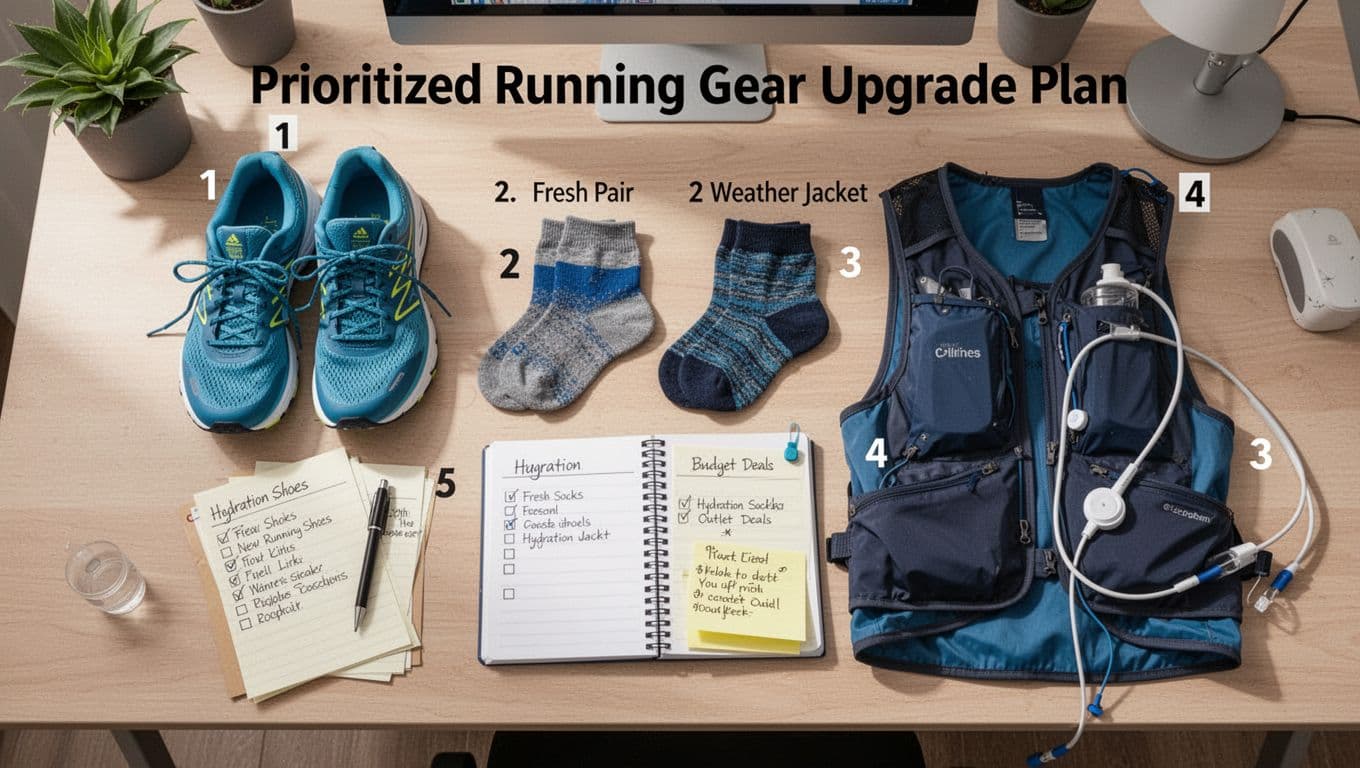
Prioritize high-impact items to stretch dollars. Start with shoes; they protect every step. Buy one pair early spring. Next, grab fresh socks mid-season; they prevent rubs on long runs.
Third, update your weather layer before fall chills hit. Finally, refresh hydration or tech as races near. This order matches wear patterns.
Save with last-season colors at outlets; performance stays the same. Hunt deals online, but test fit in person. Buy one key piece monthly. Rotate old items for short runs.
I followed this last year and upgraded fully under budget. You can too; small swaps build consistency. Track in a notebook for motivation.
Other Running Gear I Have Written You May Be Interested In
What type of running shoes do I need as a beginner?
How often should I replace running shoes?
Do expensive running shoes make a difference?
What are stability running shoes for?
Are carbon plate running shoes worth it?
How do I choose the right running shoe size?
What socks are best for running?
Do I need a running watch?
Is a treadmill as good as running outside?
What clothes should I wear for winter running?
How do I dress for summer running?
Are compression socks helpful for runners?
What is the difference between trail and road running shoes?
How tight should running shoes feel?
Do insoles help with running pain?
Conclusion
I shared my picks for running gear that deliver real value. Solid shoes, wicking socks, and smart layers form the base. They prevent blisters, chafing, and chills so runs stay smooth. Hydration vests and GPS watches add function without overload. Most importantly, the right pieces make every mile safer and more enjoyable. You don’t need a closet full, however. Focus on fit, function, weather, and budget instead.
Test gear on real routes before races. Replace shoes at first aches. Wash items right after use. These habits extend life and cut costs.
Here’s my quick checklist for essential running gear:
Essentials
- Shoes with thumb-width toe space
- Technical socks and split shorts
- Moisture-wicking top
Weather adds
- Wind shell or rain jacket
- Gloves, hat for cold
Safety
- Reflective vest
- Headlamp for dark
Hydration
- Handheld or vest for 90+ minutes
Tech
- GPS watch for pace
Back to Running Questions and Answers
