

Beginner Running Tips
Starting to run can feel awkward at first, especially if you’re worried about getting out of breath, triggering knee pain, or feeling slow in front of other people. Add in the confusion of not knowing what to do on day one, and it’s easy to put it off. The good news is you don’t need to be “a runner” to start, you just need a simple plan you can repeat.
This guide is built for beginner running, with a steady run-walk approach that helps you build fitness without burning out. You’ll get an 8-week schedule you can follow, plus clear cues for pacing, breathing, and recovery so your body has time to adapt. If you’ve tried to run before and quit, it usually wasn’t willpower, it was going too hard too soon.
You’ll also learn how to start safely (including warm-ups and when to take an extra rest day), what to wear so you stay comfortable, and how to pick shoes that don’t fight your feet.
If you live in a tiny home or a small town, running can fit your routine better than a gym membership. Sidewalk loops, quiet neighborhood streets, and trails near campgrounds make it easy to stay consistent, even when space is tight and schedules are busy. By the end, you’ll know how to build a routine you can keep, and how to avoid the most common mistakes that make new runners quit early.
Get your body ready before your first real run
Your first “real” run shouldn’t feel like a pop quiz. A little prep makes a huge difference in how your lungs, joints, and confidence hold up. Think of it like getting a tiny home ready for a storm, you check the basics first, then you start. This section will help you choose a safe starting point, warm up the right way, and use run-walk to build endurance without wiping yourself out.
Check in with your health and pick a smart starting point
Before you lace up, take a quick and honest inventory. Most people can start beginner running with a simple run-walk plan. Still, some situations deserve a medical green light first, especially if running has been off your radar for a while.
Talk to a doctor (or clinician) before you start if you have any of these:
- Chest pain, pressure, or unusual shortness of breath, especially with activity.
- Dizziness, fainting, or new heart palpitations.
- Pregnancy or recently postpartum, particularly if you have pain, pelvic pressure, or leaking.
- Major health conditions, like heart disease, uncontrolled high blood pressure, diabetes complications, or significant asthma.
- A recent injury or surgery, especially to your back, hips, knees, ankles, or feet.
Next, pick the right “lane” for where you are today (not where you wish you were):
- Total beginner: You don’t exercise much right now, or even brisk walking feels tough.
- Returning after years: You used to be active, but your legs and lungs are not adapted anymore.
- Already an active walker: You walk often and can handle steady brisk walks without needing frequent breaks.
A simple self-test helps you choose your day-one plan without guessing:
The 10-minute brisk walk + talk test
- Walk briskly for 10 minutes (you should feel warm and slightly challenged).
- Check your breathing.
- Aim to talk in full sentences without gasping.
Use your result to set expectations:
- If you can talk easily, you can usually start with gentle run-walk intervals.
- If you can only speak a few words at a time, start with more walking and shorter run bursts.
- If you feel chest pain, dizziness, or “wrong” symptoms, stop and get checked out.
One more important line in the sand: muscle soreness is normal, especially in calves and thighs. Sharp pain is not. Pain that changes your stride, spikes quickly, or gets worse as you go is your body asking you to stop, not “push through.”
Rule of thumb: If it feels sharp, sudden, or makes you limp, stop the session and reassess.
Warm up like you mean it (and why it matters)
A warm-up is not a formality. It tells your body, “We’re about to do impact,” and it gives your breathing and joints time to catch up. Without it, the first few minutes often feel stiff, and that is when new runners tend to overstride, tense up, and spike their effort.
Here’s a simple warm-up that works for almost everyone. Keep it easy and controlled, you should feel better at the end than at the start.
Easy pre-run warm-up (about 7 to 10 minutes total)
- Walk for 5 minutes. Start easy, then gradually pick up the pace.
- Leg swings (front to back), 10 per leg. Hold a fence or wall for balance. Keep the swing small at first.
- Leg swings (side to side), 10 per leg. Stay tall, don’t twist your torso.
- Ankle circles, 10 each direction per ankle. Slow circles, like you’re drawing a clean round shape.
- Gentle skips (optional), 20 to 30 seconds. Only if it feels comfortable and stable. If skipping feels awkward, replace it with 20 seconds of quick, light marching.
Why this matters, in plain terms:
- Breathing ramps up gradually, so you don’t feel panicked in minute one.
- Joints get lubricated through motion, which can make impact feel smoother.
- Muscles wake up and coordinate better, which helps you land softer and waste less energy.
If you run from your front door, do the dynamic moves right outside. Tiny home driveway, quiet street, or a nearby sidewalk works fine. The goal is to start your run already “online,” not clunky and cold.
Run-walk is not cheating, it is the fastest way to improve
If you try to run nonstop on day one, you usually end up doing one hard, miserable session, then taking a long break. Run-walk flips that pattern. You get quality practice with running form and breathing, but you also build aerobic fitness without overheating your legs.
Run-walk intervals also keep your effort honest. That matters because most beginners go too fast when they “run,” then crash. With intervals, you stay in control, and consistency is what builds endurance.
Two solid starter options (pick one and repeat it for your first few sessions):
Option A: Very beginner-friendly
- Run 30 seconds, walk 90 seconds
- Repeat for 20 minutes
- Finish with an easy walk (cool down)
Option B: A little more running
- Run 1 minute, walk 2 minutes
- Repeat for 20 to 24 minutes
- Finish with an easy walk (cool down)
What “easy pace” should feel like Easy does not mean slow forever. It means controlled enough that your body adapts.
- You can speak in short sentences (not a full speech).
- Your breathing is steady, not frantic.
- You finish feeling like you could do a little more.
A quick cue that works: during the run part, imagine you’re trying to jog across a parking lot without drawing attention. Light, relaxed, and not dramatic.
Also, give yourself permission to keep the runs truly easy. The walk breaks are where you recover, but the run segments should not feel like a test. You’re building a base, not proving toughness.
For a complete guide, visit:
How Do You Run a Marathon (Complete Guide)
Cool down and basic mobility so you recover faster
Cool downs feel boring until you skip them, then your legs tighten up later. A proper cool down helps your heart rate come down gradually, and it gives your muscles a chance to relax before you hop into the car or sit down at home.
Simple cool down (5 to 10 minutes)
- Walk easy until your breathing feels normal.
- Keep your shoulders relaxed and let your arms swing naturally.
- If your calves feel tight, shorten your stride and slow down.
After the walk, add a few gentle stretches. This is the right time to stretch because your muscles are warm. Save deeper stretching for after your run, not before harder running efforts.
Post-run mobility (choose 3 to 5, hold each 20 to 30 seconds)
- Calf stretch (against a wall or curb): Keep the back heel down and knee straight.
- Quad stretch (standing): Hold your ankle, keep knees close, and don’t arch your back.
- Hamstring stretch (hinge forward): Keep a soft bend in the knee and a flat back.
- Hip flexor stretch (half-kneel or standing lunge): Tuck your hips slightly, then shift forward.
- Figure-4 glute stretch (standing or seated): Go easy, it should feel like a stretch, not a strain.
Keep the intensity low. Stretching is not a toughness contest.
One simple safety rule: if pain gets worse while you stretch or walk, stop. Mild tightness is fine. Sharp, increasing pain is a no.
If you want a quick check-in after your first few sessions, look for patterns. Soreness that fades in a day or two is normal. Pain that sharpens, sticks around, or changes how you move is your signal to adjust your plan, rest, or get help before it turns into an injury.
Gear and comfort basics that make running easier
For beginner running, comfort is the difference between “I could do that again” and “never again.” The goal is not fancy gear, it’s fewer annoyances per mile. When your feet feel stable, your clothes stay dry, and friction stays under control, you can focus on pacing and breathing instead of fixing problems on the fly.
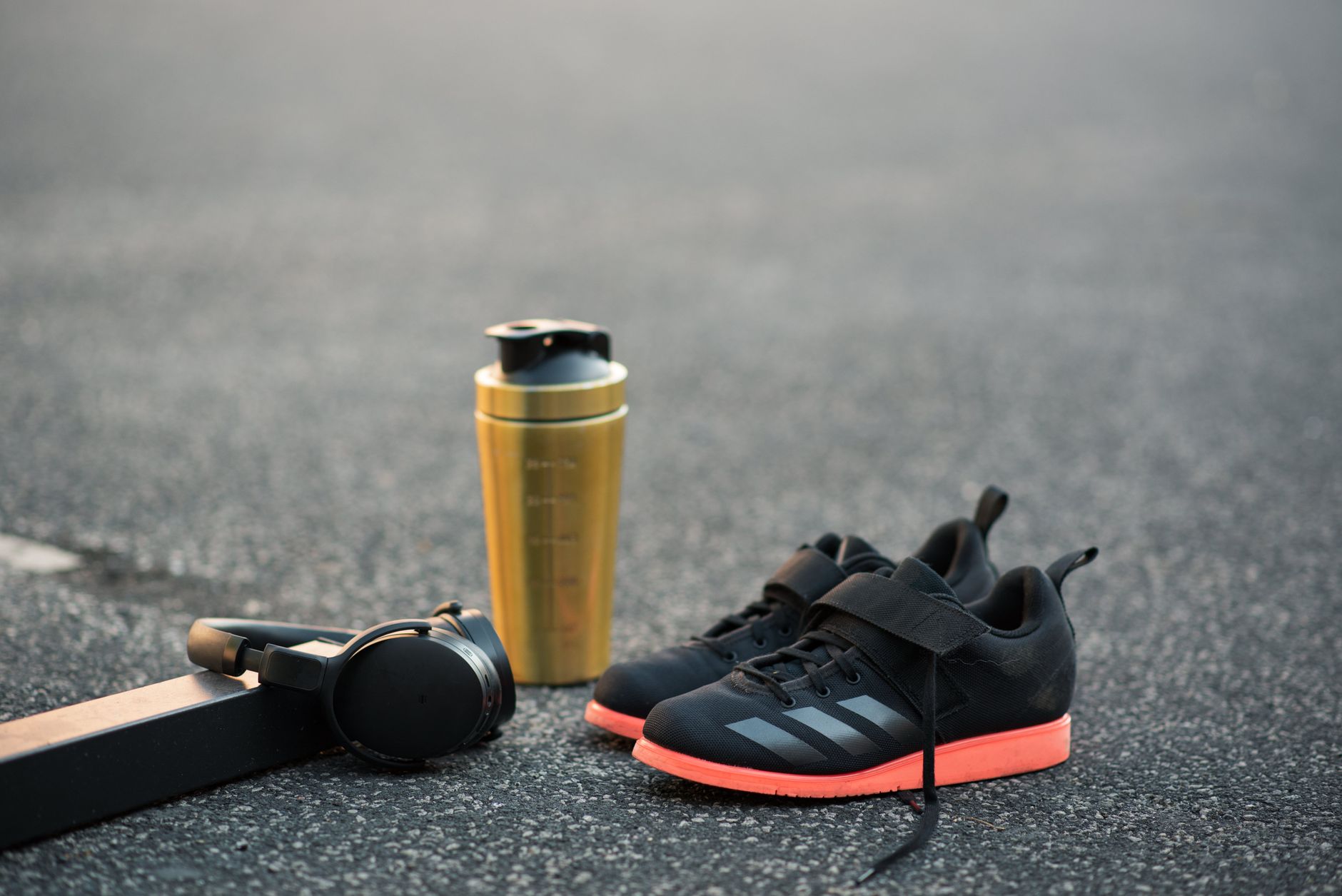
Photo by Anete Lusina
How to choose running shoes without overthinking it
Shoes don’t need to be complicated. You’re looking for a pair that disappears on your feet, not one you “tolerate.” Start with fit first, because a perfectly reviewed shoe that rubs your heel still loses.
Use these quick checks when you try on running shoes:
- Thumb-width up front: Stand up, then press the toe box. You want about a thumb’s width between your longest toe and the shoe’s front.
- Snug heel: Your heel should feel locked in. A little movement is okay, but it shouldn’t lift and slap.
- Room for toes: Your toes should spread and wiggle. If they feel pinched, that usually turns into numbness or blisters later.
- No rubbing: If you notice a hot spot in the store, it rarely gets better on the run.
A few small shopping habits make a big difference. Go later in the day because feet swell. Bring the socks you run in (or buy running socks first, then shop). Also, do a short jog test if the store allows it. Even 15 seconds can reveal heel slip or toe pressure.
Already have shoes? Pay attention to warning signs that they’re past their prime:
- The tread looks uneven (one side is more worn).
- The midsole feels flat (less cushion, more “slap” on pavement).
- You get new aches in knees, shins, feet, or hips that weren’t there before.
A local running store fitting can be a great shortcut. You’ll try options quickly, and you’ll leave with a pair that matches your foot shape without guessing.
Quick reality check: If your shoes cause rubbing on day one, don’t “break them in.” Swap them before the problem becomes a blister.
Socks, clothes, and sports bras, small choices that prevent big problems
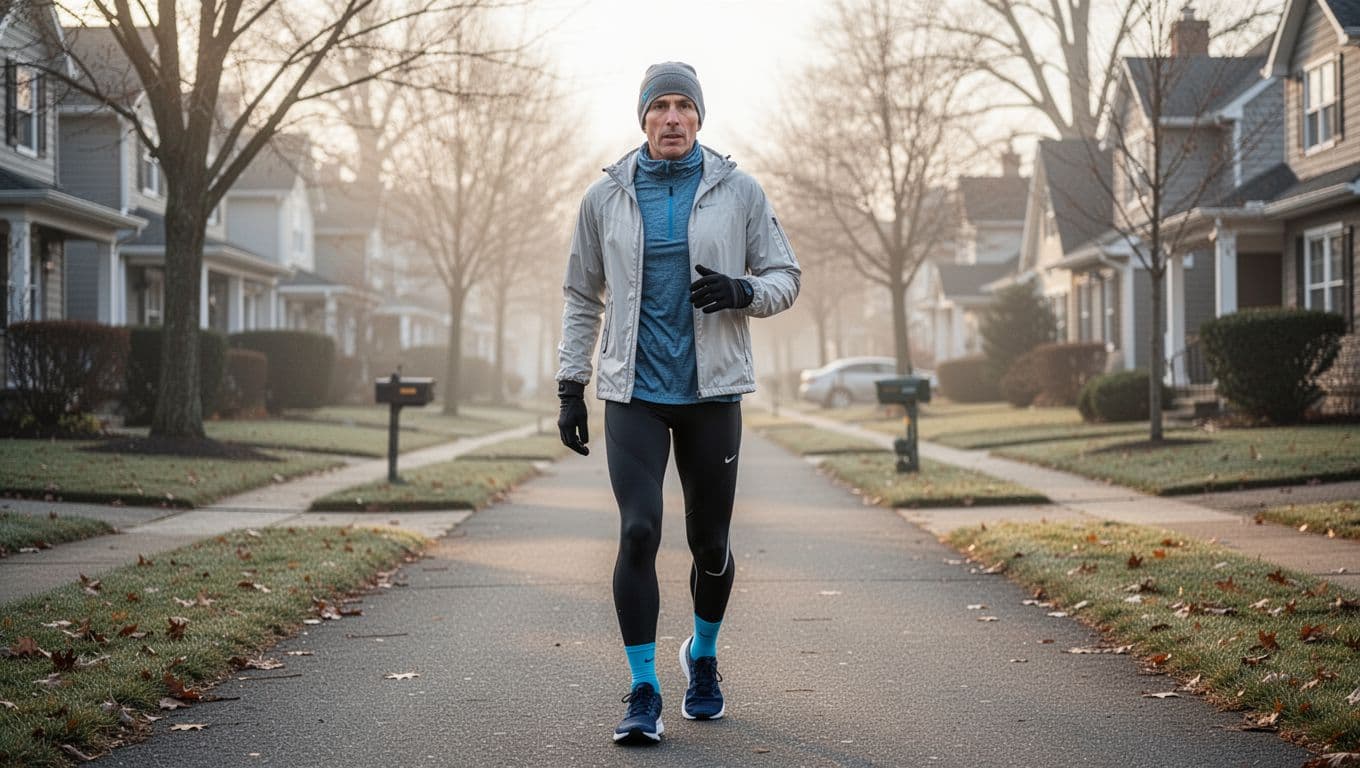
Clothing problems tend to show up slowly, then all at once. You start fine, then you’re soaked, cold, or chafed. The fix is usually simple: avoid cotton, pick a few basics that work together, and don’t overdress.
Moisture-wicking beats cotton because it moves sweat away from your skin. Cotton holds moisture like a sponge. On a run, that can mean heavy fabric, cold chills, and rubbing in all the wrong places. Look for synthetics (polyester, nylon) or wool blends, especially for tops and socks.
Socks deserve their own moment because they can make or break your feet. Thin, smooth running socks (often synthetic or wool blend) reduce friction and manage sweat. Thick cotton socks, on the other hand, can bunch up, hold moisture, and set you up for blisters.
For clothing, keep it boring and practical:
- Heat: Choose light-colored, breathable fabric. Go for shorts or lightweight tights and a thin wicking shirt. A hat helps with sun and sweat.
- Cold: Dress in layers you can adjust. Start with a wicking base layer, add a light insulating layer, then finish with a thin wind layer if needed. Gloves matter more than you think, because cold hands can ruin an otherwise easy run.
- Rain: A light water-resistant jacket helps, but avoid heavy “sweat box” fabric. Also, expect wet feet and plan for it with good socks and shoes that don’t rub.
Sports bras are another comfort multiplier. You don’t need a complex fitting session to get started, but you do need the basics:
- The band should feel snug and level (most support comes from the band).
- Straps should stay put without digging in.
- You should be able to breathe freely, even when you lift your arms.
- If you notice bouncing that feels distracting, go up in support.
If you’re unsure, wear it around the house for a few hours. A bra that irritates you while doing dishes won’t feel better on a run.
Prevent blisters and chafing before they start
Most foot and skin issues come from the same trio: friction, heat, and moisture. The good news is you can usually stop them early, as long as you pay attention to the first warning sign, that faint “burn” that shows up before the pain.
Common hot spots include:
- Heels (often from heel slip)
- Toes (often from a tight toe box or bunched socks)
- Inner thighs (skin-on-skin friction)
- Underarms (shirt seams and sweat)
Start with prevention that actually works:
- Upgrade socks first. Smooth, moisture-managing socks reduce rubbing more than most people expect.
- Fix the laces. If your heel lifts, try a lace lock (runner’s loop) to snug the heel without crushing the toes.
- Use anti-chafe balm. Put it where you tend to rub before you run, not after you feel sore.
- Cover hot spots early. If you know your heel always complains, add a small bandage or blister patch before the run.
If you feel a hot spot during a run, stop and deal with it. That 30-second pause can save you a week of limping around your tiny home.
If a blister happens anyway, keep it simple:
- Protect it with a blister pad or clean bandage so it doesn’t keep rubbing.
- Don’t pop it unless you truly have to, because intact skin helps protect against germs.
- If it opens, clean it, keep it covered, and change the dressing daily.
Watch for infection signs like spreading redness, warmth, swelling, pus, or fever.
Helpful extras, but only if they solve a real problem
Accessories are tempting, especially when you’re starting. Still, the best beginner running gear is the gear you’ll actually use. If an “extra” doesn’t remove a specific annoyance, skip it and keep your setup simple.
Here’s a beginner-friendly way to decide:
- Reflective gear: If you run near traffic, at dawn, or after dinner, wear it. A reflective vest or bright top is cheap insurance.
- Headlamp: If you run in low light on paths without streetlights, it’s worth it. Choose one that lights the ground in front of your feet, not just straight ahead.
- Hydration belt or handheld bottle: If your sessions are under 30 minutes in mild weather, you usually don’t need it. If it’s hot or you run longer, carry water so you don’t cut workouts short.
- Phone armband or waist belt: If your phone flops in a pocket, get it under control. You’ll relax more once it stops bouncing.
- GPS watch: If numbers motivate you and help you stay easy, it can help. If it makes you chase pace, skip it for now and run by feel.
A simple rule: buy gear to fix a problem you’ve already noticed, not a problem you imagine might happen. Your needs will get clearer after a few weeks, and your money will go further.
A simple weekly plan that builds endurance without getting hurt
Beginner running works best when your plan feels almost too easy at first. That is not a flaw, it is the point. Your lungs can improve fast, but your joints, tendons, and feet need time to toughen up.
Think of it like moving into a tiny home. The excitement is real, but you still have to tighten bolts, seal gaps, and learn what rattles in the wind. A steady weekly rhythm keeps you progressing without breaking down.
How often to run, and why rest days are part of training
For most beginners, 3 run-walk days per week is the sweet spot. You practice often enough to improve, yet you leave space for recovery. Those in-between days are not “doing nothing”, they are when your body rebuilds.
Motivation usually shows up first. Your muscles catch up next. Tendons and connective tissue adapt slower, and they do not care how excited you feel on day one. When beginners get hurt, it is often because they add days too quickly, push pace too soon, or skip recovery because they “feel fine.”
A safe weekly pattern looks like this:
- Mon: Run-walk session
- Tue: Rest or easy walk (20 to 40 minutes)
- Wed: Run-walk session
- Thu: Rest or easy walk
- Fri: Rest, or short walk and mobility
- Sat: Run-walk session
- Sun: Rest or easy walk
Need to move days around? Keep the rule simple: avoid running two days in a row early on. If life gets busy, slide the schedule without cramming sessions together. For example:
- If Saturday is packed, run Friday and keep Sunday as an easy walk.
- If Monday is rough, shift to Tuesday, Thursday, and Sunday.
- If you miss a day, skip it and continue. Do not “make it up” the next day.
Recovery tip: If you wake up with a new ache that changes your stride, swap the run for an easy walk. Consistency beats stubbornness.
An 8 week run-walk plan you can actually follow
Distance can feel intimidating, especially at the start. Time is simpler. Every session below aims for 20 to 30 minutes total, including run and walk intervals (plus your warm-up and cool down from earlier).
Use an effort that feels controlled, not heroic. Your job is to finish each session thinking, “I could repeat that.” That mindset is how beginner running turns into a habit.
Here are two tracks. Pick one and stick with it for at least two weeks.
8-week run-walk plan (3 days per week, time-based)
| Week | Cautious track (repeat cycles) | Faster progress track (repeat cycles) | Total work time goal |
|---|---|---|---|
| 1 | Run 0:30, Walk 1:30 | Run 1:00, Walk 2:00 | 20 min |
| 2 | Run 0:45, Walk 1:15 | Run 1:30, Walk 2:00 | 22 min |
| 3 | Run 1:00, Walk 1:30 | Run 2:00, Walk 2:00 | 24 min |
| 4 | Run 1:30, Walk 1:30 | Run 3:00, Walk 2:00 | 25 min |
| 5 | Run 2:00, Walk 1:30 | Run 5:00, Walk 2:00 | 26 min |
| 6 | Run 3:00, Walk 1:30 | Run 8:00, Walk 2:00 | 28 min |
| 7 | Run 5:00, Walk 1:30 | Run 10:00, Walk 1:30 | 28 to 30 min |
| 8 | Run 8:00, Walk 1:00 | Run 12:00, Walk 1:00 | 30 min |
A few notes so it stays realistic:
- Repeat a week when needed. If you cannot keep the run parts easy, stay on that week. Your body will thank you.
- Keep the walk breaks honest. Walk with purpose, but let your breathing settle.
- If you are sore, keep the schedule but shorten the session (for example, 20 minutes instead of 28). Do not “push through” sharp pain.
Pacing, breathing, and form cues that keep you relaxed
Most new runners make the same mistake: they run the “run” parts too fast. Then the walk break feels like rescue, not recovery. Instead, aim for an easy pace from the first interval.
Use the talk test. During the run portions, you should be able to say a short sentence like, “I feel okay,” without gasping. If you can only say one word at a time, slow down. If you could sing, you can gently speed up.
Breathing does not need to be complicated. A few small cues calm everything down:
- Keep a steady rhythm (for example, inhale for two to three steps, exhale for two to three steps).
- Relax your shoulders and jaw, because tension makes breathing feel harder.
- Exhale fully, since shallow breathing often comes from not emptying the lungs.
For form, keep it simple and repeat these cues like a checklist:
- Stand tall, as if a string lifts the top of your head.
- Lean slightly from your ankles, not your waist.
- Take short, quick steps, not long reaching strides.
- Land under your body, not way out in front.
- Swing your arms back and forth, not across your chest.
If you feel yourself “bounding” or slapping the ground, shorten your stride and slow down. Smooth and quiet usually means you are running within your current limits.
Add strength and walking so your legs can handle more running
Running is impact plus repetition. Strength work helps your knees, hips, and ankles handle that load, especially when your form gets a little sloppy near the end of a session. The goal is not bodybuilder workouts, it is basic durability.
Do this twice per week on non-running days. It fits in a small space and needs no gym. Start with one set of each move for the first week, then build to two sets.
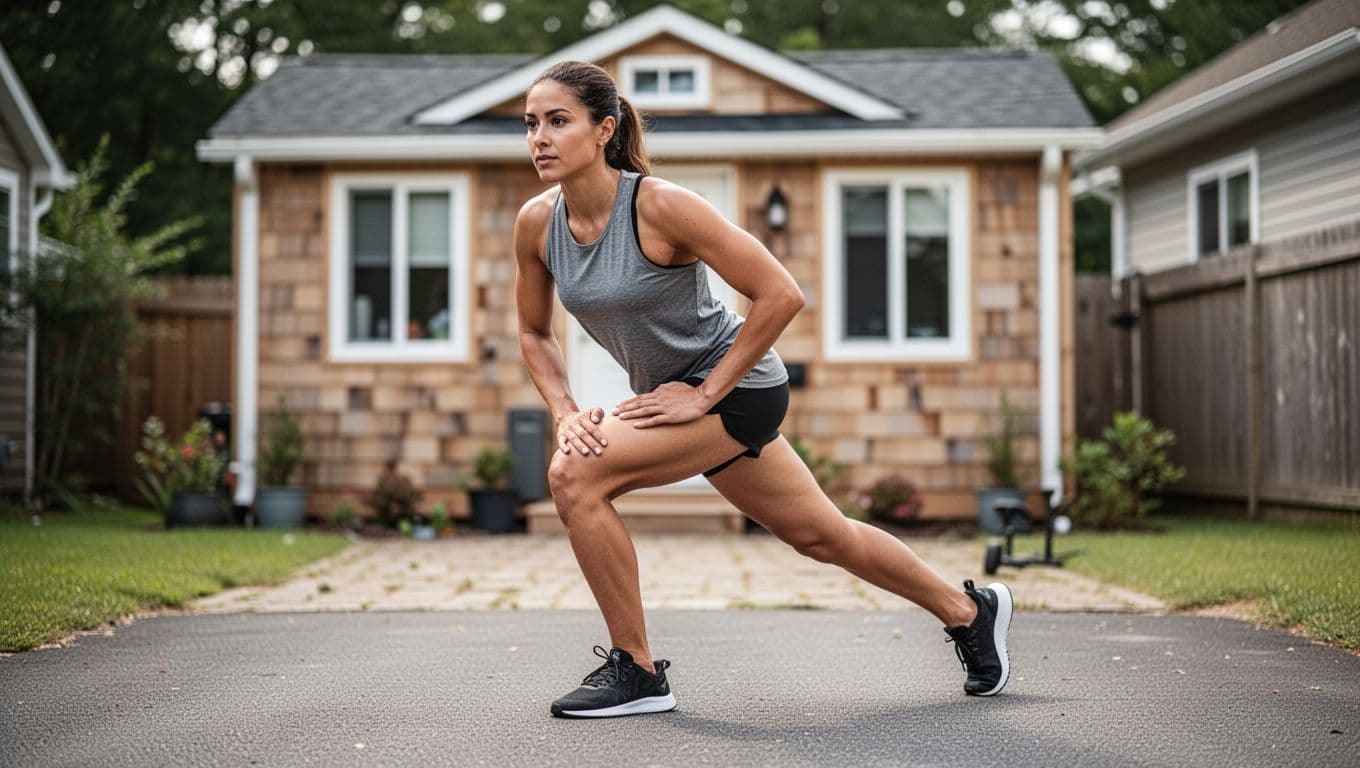
No-gym strength routine (about 15 to 20 minutes)
Move slowly and stop each rep with control.
- Sit-to-stands (or bodyweight squats), 8 to 12 reps
- Calf raises, 10 to 15 reps (use a wall for balance)
- Glute bridges, 10 to 15 reps
- Side steps (with a mini band if you have one), 10 steps each way
- Plank (knees down is fine), 20 to 40 seconds
Small-space options that work well with tiny-home living:
- A resistance band stores in a drawer and adds challenge fast.
- Use stairs for gentle step-ups, if you have them and they feel stable.
- Add short walk breaks during the day (5 to 10 minutes). Extra walking builds leg endurance without the same impact as running.
Keep strength days easy enough that they do not wreck your next run. You are building the foundation, like leveling a tiny home before you add anything heavy.
Stay motivated, stay safe, and handle the problems every new runner faces
Early on, beginner running is less about “being tough” and more about staying steady. Your body is learning impact, your schedule is adjusting, and small issues can feel bigger than they are. The goal here is simple: keep moving forward, while avoiding the common traps that make new runners quit.
Use the tips below as your quick troubleshooting guide. When something feels off, you will know what’s normal, what’s not, and what to do next.
Soreness, small aches, and when to take a break
Some soreness is the admission ticket for starting to run. DOMS (delayed-onset muscle soreness) often shows up 24 to 48 hours after a session, usually in calves, quads, and glutes. It tends to feel like a dull ache or stiffness, and it improves as you warm up during a walk.
In contrast, injury warning signs usually feel different and they change how you move. Pause and treat it as a red flag if you notice:
- Sharp or stabbing pain, especially in one specific spot
- Swelling, bruising, or warmth around a joint or bone
- Limping or any pain that changes your stride
- Pain that worsens as you run, instead of easing once you’re warm
- A “twinge” that keeps grabbing your attention every few steps
When you’re unsure, follow a simple action plan that keeps you progressing without digging a deeper hole:
- Stop the run portion and switch to walking home.
- Rest for 24 to 72 hours from running if it hurts to jog.
- If it’s sore or irritated, ice can help for comfort (especially after activity).
- Reduce volume for the next week (shorter total time, fewer run intervals).
- Swap a run for cycling or brisk walking to keep your routine intact.
- If pain persists, keeps returning, or affects daily walking, see a qualified professional.
A classic beginner issue is shin splints, which often feel like a sore, tender strip along the shin. They are more likely when you increase too fast, run hard on concrete every session, or wear worn-out shoes. To lower the risk, build slowly, keep most runs easy, and consider mixing in softer surfaces sometimes (packed dirt trails, track, or well-kept paths). If your shins flare up, shorten your stride and slow down, because overstriding can make impact feel harsher.
A good rule: soreness you can “walk off” is usually fine. Pain that makes you protect a leg is your cue to back off.
What to eat and drink for short runs (keep it simple)
Most short, easy run-walk sessions do not require special fuel. If you ate a normal meal in the last few hours, you can usually head out and focus on your pace and breathing. Complicated nutrition plans tend to create stress, and stress is not helpful when you’re building a new habit.
If you run first thing in the morning, a small bite can help if you feel low energy. Keep it basic and easy to digest, for example a banana, a piece of toast, or a small yogurt. On the other hand, if food sits heavy in your stomach, it’s fine to run easy without it and eat breakfast afterward.
Hydration can stay simple too:
- For cool to mild weather and short runs, drink water with meals and sip if you feel thirsty.
- In heat or high humidity, drink a bit before you go, slow your pace, and plan routes where you can cut it short if needed.
- If you sweat heavily or your runs get longer, electrolytes can be useful (especially sodium), because plain water is not always enough to replace what you lose.
One more thing that helps: check your urine color later in the day. Very dark urine can be a sign you need more fluids. Still, don’t force huge amounts at once, steady sipping works better.
Make it a habit, not a willpower test
Motivation comes and goes. A routine stays. The easiest way to stay consistent with beginner running is to make each session feel like a small, automatic decision, not a daily debate.
Start with a goal that feels almost too easy, because easy goals get repeated. For example, tell yourself, “I’m just doing my warm-up walk.” Once you’re outside and moving, the rest usually follows.
A few low-effort strategies work well:
- Make a tiny promise: “10 minutes only.” If you feel good, you can keep going.
- Lay out your clothes the night before, including socks and shoes.
- Track your runs in the simplest way possible (a calendar checkmark counts).
- Pick a route you like: quiet streets, a park loop, or a shady trail that feels calm.
- Use a buddy for accountability, even if it’s one run per week.
Busy day? Keep the win small. Do a 15-minute walk-run loop near home, run a short out-and-back, or repeat the same safe block a few times. Tiny-home living can actually help here, because you can build “default routes” that start at your door, like a quick neighborhood loop or a nearby park lap.
Bad weather happens, so plan a backup before you need it. A few options that still count:
- A treadmill walk-run (even short sessions help).
- An indoor walk-run circuit in a hallway, garage, or covered area.
- Stairs at an easy pace (hold the rail, keep it controlled).
If you use music or podcasts, keep volume low enough that you can hear bikes, cars, and people approaching. One earbud is a simple compromise if you run in busy areas.
Running safety, confidence, and trail etiquette
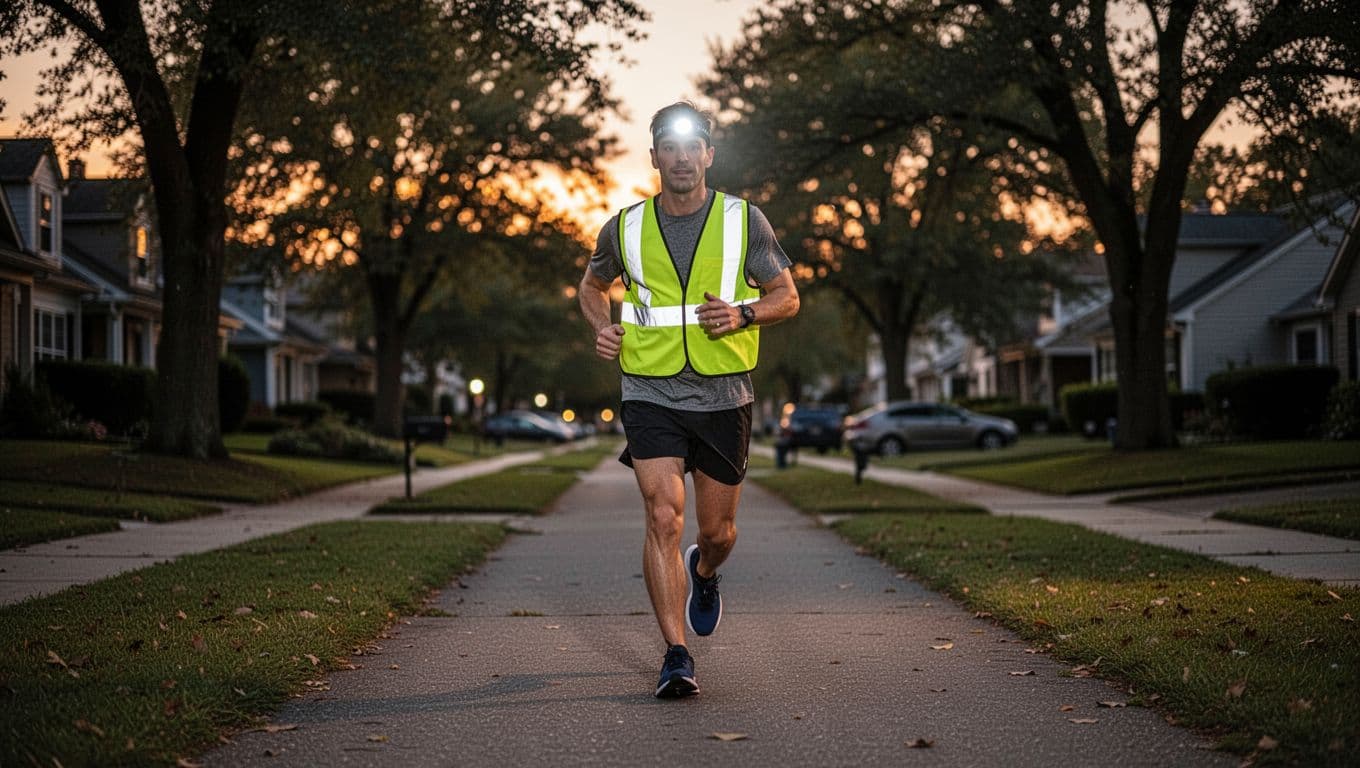
Safety does not need to feel scary. It’s mostly about being seen, staying aware, and acting predictably.
If you run near dawn, dusk, or night, add visibility basics:
- Reflective gear on your torso (a vest or reflective straps).
- A front light (headlamp or chest light) so you can spot cracks, roots, and curbs.
- A rear red light if you’re near traffic or cyclists.
On roads, follow common-sense traffic habits. Run facing traffic when there’s no sidewalk (if local rules allow it), use crosswalks when possible, and avoid weaving. Predictable movement makes you easier to read.
Headphones are fine if they don’t shut out the world. Keep volume moderate, especially at intersections and on multi-use paths. If you want the confidence boost of audio but run in crowded places, consider leaving one ear open.
For personal safety, simple routines help more than complicated tools:
- Tell someone your route and when you expect to be back.
- Stick to well-lit, familiar routes when you’re new.
- Carry your phone, and keep it accessible, not buried in a bag.
On trails and shared paths, good etiquette keeps everyone relaxed. Yield to posted rules, and when in doubt, be courteous:
- Announce your pass early (“On your left”) and give space.
- Yield appropriately based on signage (many trails ask bikes to yield to runners, and runners to yield to hikers, but rules vary).
- Keep dogs controlled and follow leash rules.
- Leave no trash, including gels, tissues, and bottle caps.
Confidence grows fast when you stack calm, safe runs. Over time, you stop “trying to be a runner” and you simply become the person who goes for runs.
Other Beginner Running Articles You May Be Interested In
Does running make you shorter?
How to get into running shape?
How to become a runner when overweight?
How to start running at 60?
How to start running at 45?
Benefits of running 5k 3 times a week
How long does it take to build running endurance?
How many miles in a marathon?
How to train to be a runner?
Benefits of starting to run again?
What to eat before a marathon race?
What to eat prior to half marathon?
Best running trainers for plantar fasciitis
What respiratory structure controls breathing?
What is the best weight for running?
What is the best treadmill for morbidly obese runners?
Should beginners run every day?
Is a 10 minute mile good?
Marathon tapering mistakes to avoid
Conclusion
Beginner running gets easier when you keep it simple. Start slow so your lungs and legs can adapt, then stick with run-walk intervals so every session feels doable. Also, handle the basics early, warm up, cool down, wear socks that don’t rub, and pick shoes that feel good right away (these Mayo Clinic shoe tips make the process less guessy). Most importantly, follow the weekly plan and treat rest days as part of training, because that’s when your body actually gets stronger.
As you build the habit, listen to your body and adjust before small aches turn into a long break. If you want a quick safety check on how much activity to aim for overall, the CDC’s physical activity guidance is a solid reference point.
Now pick your first three run days for next week, put them on your calendar, and commit to one week. Save the 8-week plan, share it with a friend who wants to start too, or comment with your first goal (finish Week 1, run 5 minutes total, or just show up three times).
What would feel like a win after seven days? Keep it small, keep it steady, and let consistency do the work.
Back to Running Questions and Answers
