

Hoka Rocket X Review
I’ll explain how the Hoka Rocket X feels, who will love it, and who should skip it. If you’re shopping for a race-day shoe and want the honest story on ride, fit, stability, and durability, you’re in the right place.
The tricky part is that “Rocket X” doesn’t mean just one shoe anymore. Some runners mean the road racer (including newer releases like the Rocket X 3), while others are eyeing the Rocket X Trail for groomed dirt and gravel. I’ll keep this review focused on what matters when the gun goes off, then I’ll call out the key differences if you’re comparing models.
Set expectations now, this is a race-first shoe, not an everyday trainer. The Rocket X line is built around a rockered ride and a stiff plate feel, so it rewards steady, faster running more than easy jogs. By the end, you’ll know whether it fits your pacing, your foot shape, and the kind of races you actually run.
What the Hoka Rocket X is built to do on race day
On race day, I want a shoe that helps me hold pace when my legs start bargaining at mile 18. That’s the point of the hoka rocket x. It’s a carbon-plated road racer built for speed, especially in longer races where efficiency matters as much as raw snap.
Build Your Complete Race-Day Setup
The right shoe helps, but faster racing comes from better training, pacing, recovery, fueling, and execution.
More Guides for This Shoe
Here’s the plain-language version of the tech. A rockered shape means the sole is curved, like it’s already tipping me toward my next step. A carbon plate is a stiff layer inside the midsole that acts like a firm springboard, it doesn’t do the work for me, but it rewards a strong push. Put those together and the shoe encourages momentum, which can feel like free speed when fatigue shows up.
The ride in plain English: soft landing, fast roll, snappy toe-off
The first thing I notice is the landing feels protected, not mushy. My foot hits, settles quickly, then the shoe nudges me forward. That rocker is the star of the show, it makes the stride feel like it’s rolling along a track instead of slapping the ground.
Once I’m moving at tempo to marathon pace, the ride gets smooth and efficient. I don’t have to force the turnover as much, because the shoe naturally keeps me progressing. When I press the pace, the plate adds that snappy toe-off, like the front of the shoe wants to spring me into the next stride.
Mile to mile, the best part is how consistent it feels. It doesn’t demand perfect form, it just feels better the steadier I run.
Stability surprises: why it feels more planted than many super shoes
A lot of carbon racers feel tall and wobbly when I’m tired. The Rocket X surprised me because it feels more planted than many super shoes, even when my stride gets sloppy late.
Two things help. First, the base feels wider and more confidence-inspiring underfoot, especially on straight roads and gentle turns. Second, HOKA’s foot-cradling sidewalls (that Active Foot Frame style of design) keep my heel and midfoot centered instead of perched on top of the foam. As a result, I get that fast, rockered ride without the ankle-saving gymnastics.
This stability is a big win for:
- Heel strikers who want a calmer landing at speed
- Runners whose form fades late in races
- Anyone who likes super shoes, but hates the “teetering” feeling
If you want carbon speed without feeling like you’re balancing on stilts, this is the kind of stability that matters.
Where it shines most: marathon builds, long tempos, and steady fast running
I think of the Rocket X as a “hold-on-to-your-pace” shoe. It shines when the goal is controlled fast running, not constant surging.
My favorite use cases look like this:
- Marathon-pace workouts when I’m practicing rhythm and fueling
- Long progression runs that finish strong without turning into a sprint
- Controlled half marathon racing where I want smooth speed, not a wild bounce
- Road races where grip and stability help me stay confident on corners
There’s a clear boundary, though. It’s usually not my pick for slow easy days, because the stiff plate can feel awkward at relaxed paces. It’s also not ideal for sharp track work for many runners, since tight turns and all-out reps often feel better in something more flexible and nimble.
Road Rocket X vs. Rocket X Trail: don’t buy the wrong one
HOKA has made the naming confusing, so I keep it simple. The Rocket X 3 is positioned as a marathon road racer. The Rocket X Trail is built for smoother trails and mixed surfaces, and it tends to feel very stiff with a strong rocker that helps you roll over uneven ground.
I choose based on terrain and pace, not hype:
- If most of my fast running is on pavement and I’m chasing marathon or half marathon times, I go Road Rocket X.
- If I race on gravel, groomed dirt, or buffed-out trails, and I want a fast shoe that stays composed off-road, I look at Rocket X Trail.
When in doubt, I ask one question: where will my key workouts happen? The right answer usually picks the right shoe.
Fit and comfort: what I’d know before ordering the Rocket X online
Buying the hoka rocket x online is convenient, but fit is where people get tripped up. This shoe wants a snug, race-ready hold, and that can feel amazing at pace, or annoying if your foot needs space.
Before I click “buy,” I think about three things: toe room (especially late in long runs), midfoot squeeze, and heel security. Get those right, and the Rocket X feels like a fast shoe that still treats your feet well.
Toe box and sizing reality: narrow up front, tricky if you’re between sizes
The Rocket X runs narrow in the toe box. For my foot, that means the front feels precise, not roomy. On short, fast runs that’s a plus, because the shoe tracks cleanly and doesn’t feel sloppy. On longer efforts, that same narrow shape can start to feel like my toes are sharing a tight elevator.
The other online-order headache is sizing availability. Some versions have limited sizing (no half sizes reported in recent coverage), so you might not be able to fine-tune the fit. When that happens, nailing the choice matters more than usual.
Here’s how I decide when I’m between sizes:
- If my toes already sit close to the front in my normal size, I size up to protect against late-run swelling.
- If I have plenty of length but the sides feel snug, sizing up may help a little, but the toe box shape can still feel tapered.
- If my foot is wide, or I need toe splay space, I treat that as a sign to choose a different model, not force this one.
A quick self-check that keeps me honest: I want about a thumb’s width in front of my longest toe standing up, and I want to be able to wiggle my toes without rubbing the upper.
If the toe box feels tight in the living room, it rarely feels better at mile 16.
Upper feel: surprisingly comfortable for a racing shoe
For a carbon racer, the Rocket X upper feels softer and more forgiving than I expect. On the road versions, I notice more padding around the heel collar than many super shoes, plus a tongue feel that doesn’t slice into my instep. That matters in a marathon because small irritations become loud problems after two hours of sweat and repetition.
Comfort also plays defense. A slightly cushioned heel and a smoother interior can reduce hot spots, which lowers the odds of blisters when I’m running with damp socks and tired form.
Still, comfort can come with a trade-off. When the fit is snug, the upper can feel warm or a bit claustrophobic, especially in humid weather. If I know I run hot, I plan ahead with socks.
My sock rule for the Rocket X is simple:
- Narrow or average feet: a thin performance sock helps keep the fit clean and prevents bunching.
- Feet that swell a lot: a thin sock plus a touch more toe room beats a thicker sock that crowds the forefoot.
- Sensitive skin: I go with a smooth, seam-minimized sock to cut down friction.
Lockdown tips that prevent heel slip and hot spots
I’ve seen plenty of reports of strong heel lockdown in the Rocket X, and I’ve felt that too. Even so, I don’t assume “good lockdown” means I can ignore lacing. Most race-day issues come from tiny pressure points that show up only after the foot heats up.
When I want a secure fit without hot spots, I use a simple sequence:
- Set the forefoot first: I lace it snug, not tight, so I don’t pinch the toe box even more.
- Dial the midfoot next: I add tension in the middle eyelets until the shoe stops sliding side to side.
- Finish with a runner’s knot: I use the extra top eyelet to lock the heel, especially if I feel any lift.
Two small warnings that save me pain later. First, I don’t crank the laces over the forefoot, because that can create numb toes in a narrow shoe. Second, I always test the setup on a short run before race day (even 15 to 20 minutes). In that first run, the shoe should feel secure, and any pressure should feel minor, not sharp.
Who should skip it for fit reasons
Fit is personal, but some foot shapes fight the Rocket X from the start. If you fall into one of these groups, I’d think twice before ordering:
- Wide feet that regularly need wide sizing in other brands.
- Bunions or big toe joints that hate pressure on the inner forefoot.
- Runners who need lots of toe splay to stay comfortable late in long races.
In those cases, I’d look at a roomier carbon racer (same race-day intent, more forefoot space) or a plated trainer that gives a similar rolling feel with a less aggressive upper. The goal is the same: fast running without your feet feeling boxed in.
Performance breakdown by distance and pace
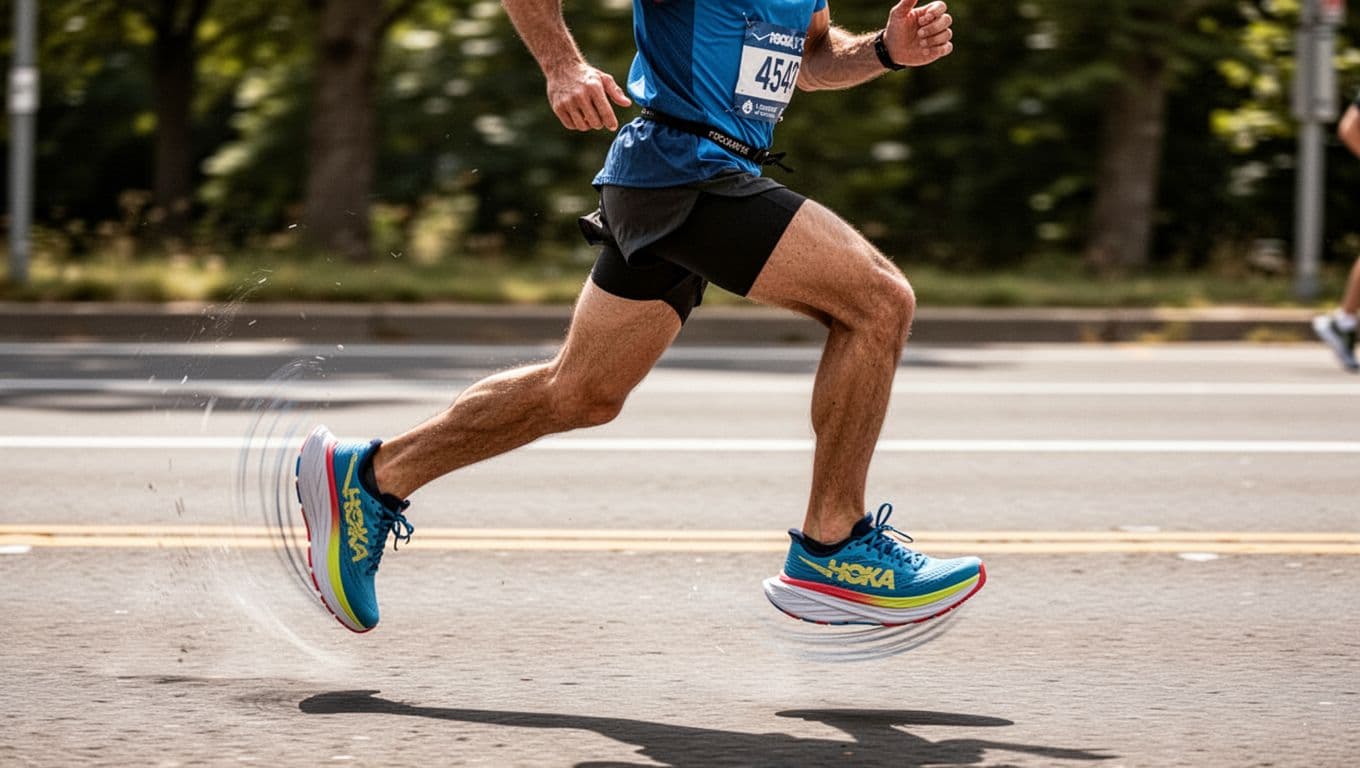
I break down the Hoka Rocket X performance by distance because its rocker and plate respond differently at various speeds. In short races, it delivers quick turnover with stability. Longer efforts highlight its efficiency and comfort. Recent tests confirm it handles 5K to marathon paces well, thanks to bouncy PEBA foam and high energy return (78% at forefoot). However, it thrives most above easy jog speeds. Let’s look closer at each range.
5K to 10K: fast, but not always the most aggressive option
Some runners chase a firmer, nimbler feel for short races. They pick shoes with sharper snap and less stack. The Rocket X works here if you value its smoother rocker and planted base instead. I notice it grips dry or wet roads well (0.57 score in tests), so corners stay confident.
In a local 5K, the plate gives propulsive toe-off without wobble. At 10K pace, turnover quickens naturally. Still, aggressive racers might outpace it because the foam firms up before full pop. Therefore, it suits runners who prioritize stability over max aggression.
Choose it for these short-race scenarios:
- Smooth roads where you hold steady tempo.
- If stability prevents form breakdown.
- One-shoe versatility across distances.
On the other hand, pure speed demons may prefer lighter, snappier options. I use the Rocket X when I want a fast feel that forgives minor errors.
Half marathon: the sweet spot for controlled speed
The half marathon lets the rocker and plate shine. They hold pace smooth, especially in the final 5K when legs tire. I find the forward roll keeps momentum without extra effort. Testers agree; it locks into half pace rhythm better than stiffer rivals.
Pacing advice follows suit. It rewards steady pressure over constant surging. Push consistent midfoot landings, and the 7mm drop aids efficiency. As a result, you cruise without bounce fatigue. Grip helps on turns, too.
In my runs, I hit even splits easier because the shoe nudges forward. For example, during a 1:30 half training race, it felt directed, not wild. Most importantly, non-elites love this control. Surge lovers might notice less explosive rebound, but steady runners gain time.
Besides distance, pair it with even fueling. The stable ride pairs well with gels every 45 minutes. In short, this is where the Hoka Rocket X feels optimized.
Marathon: comfort plus efficiency, especially when fatigue hits
Marathon value comes from stability and upper comfort. The wider base and sidewalls keep you planted late, even as form slips. I appreciate the heel padding; it fights blisters after hours. Foam holds bounce over miles, unlike foam that flattens.
The ride encourages a smooth forward roll. At marathon pace, energy return (73.9% heel) fights fade. Therefore, midfoot strikers benefit most. When fatigue hits around mile 20, the rocker saves energy.
Fueling and form matter here. Stable platform prevents side leans from poor posture. I sip electrolytes hourly and focus on cadence. As a result, the shoe stays responsive under 4-hour finishes.
One tester noted it beats unstable super shoes for everyday marathoners. In addition, breathable upper cuts hot spots. However, heel strikers adapt quickest. Overall, it turns long efforts efficient without harshness.
Workout use: tempos and long intervals, not your daily easy shoe
Reserve the Rocket X for specific sessions. It excels in marathon pace blocks, tempo runs, and long cruise intervals. The stiffness (21.3N) snaps during mile repeats. I notice smoother transitions than the prior model.
Here are prime workouts:
- Tempo runs: Locks rhythm at threshold; stable for 20-40 minutes.
- Long intervals: 1,000m to mile reps at half pace feel directed.
- MP blocks: 10-16 miles steady; rocker builds endurance.
Skip it for slow recovery runs. Stiffness feels awkward below easy pace. The rocker alters stride, forcing shorter steps. Cost adds up, too; save it for quality days.
Meanwhile, warmups work fine before speeding up. After all, its lightness (8 oz) eases entry. In contrast, daily trainers offer softer compliance. I rotate it weekly to protect the outsole
Durability, traction, and value: is the Rocket X worth the price?
I always ask if a super shoe like the Hoka Rocket X justifies its cost. Durability sets the pace here, because fast outsole wear or quick foam fade cuts value short.
Traction keeps you safe on race courses, and real-world use decides the payoff. Recent tests show mixed results: the foam stays bouncy early, but the outsole shreds faster than expected. Still, smart rotation helps runners stretch its life. Let’s break it down so you can run the numbers yourself.
How long it lasts: what to expect from the foam and outsole
The PEBA foam in the Hoka Rocket X 3 delivers strong bounce from the start. It returns 73.9% energy at the heel and 78% in the forefoot, which feels responsive at race paces.
Some older reports claim it stays springy for hundreds of miles, like one around 300 before noticeable drop-off. However, 2025 reviews highlight unknown long-term foam life since it’s a racer for short bursts, not daily miles.
The outsole tells a tougher story. Soft rubber and exposed foam wear quickly on roads. Testers spot midfoot shredding after just 30 miles. Therefore, signs it’s done include a flattened feel, lost snap underfoot, uneven wear patterns, and new aches from reduced cushion. As a result, I rotate it strictly with a trainer to protect the foam and rubber.
In short, expect solid performance for 50 to 100 quality miles if you save it for races and tempos. After that, the ride dulls. Most importantly, treat it as a precision tool, not a workhorse.
Traction and cornering confidence on real roads
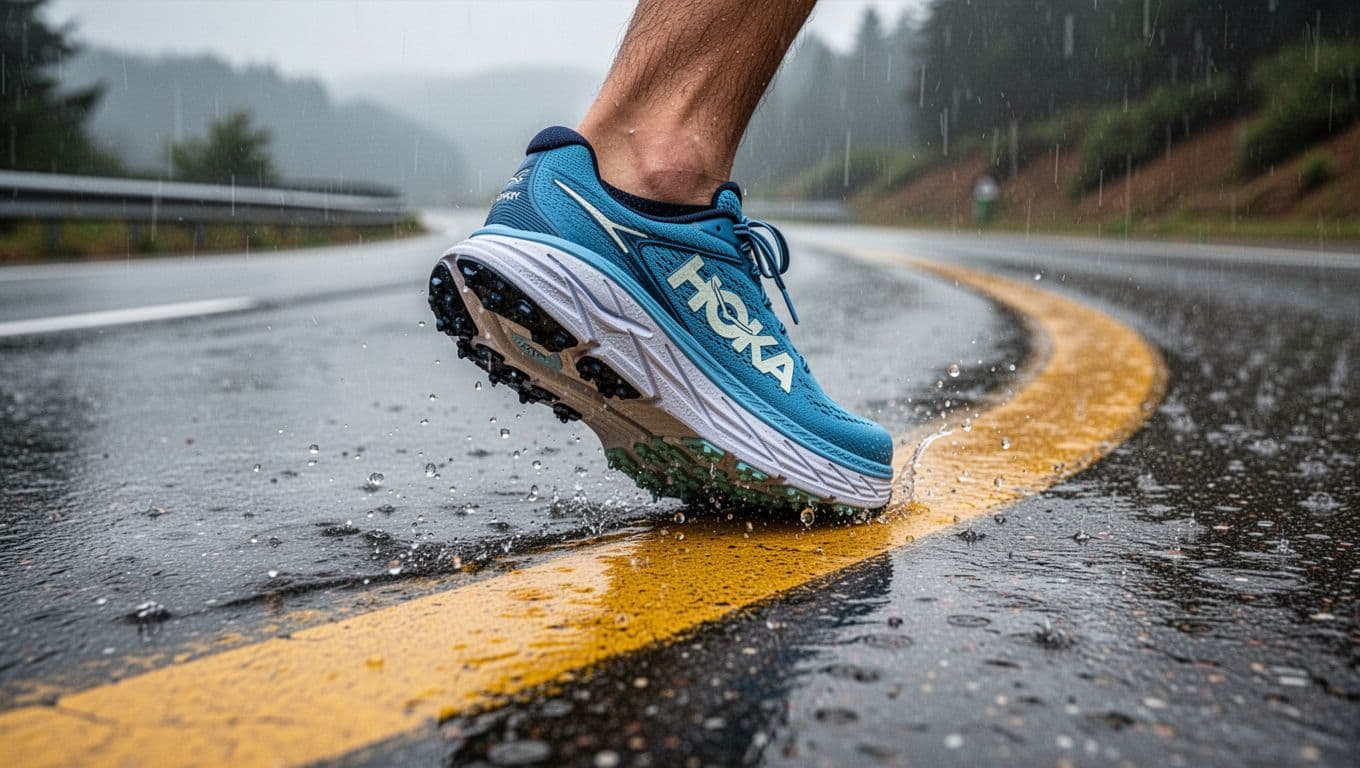
Grip counts big on race day, especially in turns, over painted lines, or through wet spots. The Hoka Rocket X shines here with sticky rubber that scores 0.57 in tests, above the 0.49 average. Recent coverage confirms it holds on wet roads, rough pavement, and even track surfaces without slips. Water beads off the lugs, so cornering stays planted.
I feel confident leaning into bends because the pattern bites evenly. No sliding on damp lines during rainy runs. Besides, it grips gravel patches too, although roads suit it best.
Safety first, though. Test it in the rain before your big day. A quick wet-road shakeout reveals if it matches your stride. In addition, clean the outsole after muddy sessions to keep rubber fresh. Overall, traction builds trust when pace picks up.
Value math for runners: who gets their money’s worth
Racers cost plenty, so value hinges on your plan. Rotate pairs and limit to key days to extend life. Here, three profiles show who wins:
- Key-race specialists: If you own one stable super shoe for 3 to 5 big events yearly, the Rocket X pays off. Its consistent ride and grip deliver even splits. Save it for those guns, and it lasts seasons.
- Marathon builders: Long fast workouts suit it perfectly. Use for 10 to 16-mile tempos or MP blocks weekly. However, pair with a trainer for recovery. You gain efficiency without daily wear.
- Rare racers: If you toe the line twice a year, skip it. A plated trainer gives similar roll for less. Instead, invest in coaching or plans that boost your pace across shoes.
In other words, frequent quality users extract max return. Casual runners see better value elsewhere. After all, the price makes sense when it unlocks your best day.
How the Hoka Rocket X compares to other carbon race shoes (without the hype)
I compare the Hoka Rocket X to popular carbon racers based on real runs, not lab numbers or elite photos. Other super shoes often chase explosive bounce, but the Rocket X prioritizes a planted, rockered ride that holds up when you tire.
Therefore, it suits runners who value control over wild pop. In addition, I weigh it against plated trainers and the Trail version to help you match the shoe to your needs.
If you want max bounce vs. max control, here’s the tradeoff
Some carbon racers, like the Nike Vaporfly 3, deliver lively snap from their ZoomX foam. That bounce feels fun at first, but it can turn wobbly late in races, especially if your form slips. However, the Hoka Rocket X trades some of that pop for a firmer, more guided ride.
In my runs, the Rocket X feels planted thanks to its wider base and sidewalls. The rocker rolls you forward smoothly, so you stay efficient without teetering. For example, during half marathon tempos, it holds steady where bouncier shoes demand perfect landings.
Pick based on your stride. If you overpronate or need confidence on tired legs, choose the Rocket X. Still, pure speed chasers might prefer aggressive bounce, even if it risks instability. Above all, test your form first; confidence wins races.
Rocket X vs. plated trainers: better workouts, better wallet protection
Plated trainers use carbon for roll and snap, but they add durability and forgiveness over pure racers. Shoes like daily super trainers last longer on roads and feel less stiff at varied paces. As a result, they suit bigger mileage without quick wear.
The Hoka Rocket X shines for race day, yet it wears faster on training runs. Therefore, newer marathoners or those with heavy weeks should grab a plated trainer instead. It handles tempos and easy days better, so you save cash on rotations.
I recommend plated trainers for runners who want one fast shoe for most sessions. They forgive sloppy strides and build mileage safely. On the other hand, save the Rocket X for key races if budget matters. In short, plated options protect your wallet while mimicking race feel.
When the Rocket X Trail is the better buy
The Rocket X Trail fits smoother trails or road-to-path routes with its stiff rocker and aggressive plate. It rolls over gravel and dirt fast, so fast trail efforts feel composed. However, reports note a shorter fit, so size up for marathons or long hauls.
In my experience, pick the Trail version when terrain mixes pavement and buffed paths. Its stiffness pushes speed without much flex, unlike softer trail shoes. For example, on groomed gravel, the rocker keeps momentum steady.
Match it to your courses first. Road purists stick with the standard Rocket X, but hybrid racers gain from the Trail’s grip and roll. Besides, that short fit demands a test run early. Most importantly, terrain dictates the choice over hype.
Conclusion
I love how the Hoka Rocket X delivers a smooth rocker that rolls me forward effortlessly. The snappy plate adds propulsion without harshness, and its top-class stability keeps me planted even when form fades late in races. Durability holds up well for key sessions, with grippy outsoles that last 50 to 100 quality miles if I rotate wisely.
However, the narrow toe box cramps my toes on longer runs, especially if I swell. Sizing lacks half options in some spots, so wide feet suffer. At $250, the price demands careful use, since daily training wears it fast.
Before you buy, run this quick checklist:
- Do I need stability over max bounce? Yes.
- Will I save it for races and tempos? Yes.
- Does my foot fit snug up front? Check.
I recommend the Hoka Rocket X for mid-pack marathoners chasing even splits, heavier runners who want a forgiving ride, and steady pacers building long tempos. However, elite speed chasers or daily mileage grinders should pass; grab a lighter racer or durable trainer instead.
Back to Hoka running shoes reviews


