

Richmond Virginia Marathon Race Review
Race morning in Richmond starts with packed streets, cold breath, and the steady rhythm of runners moving toward the James River. Spectators line the route as the Allianz Richmond Virginia Marathon brings beginners, Boston hopefuls, experienced marathoners, and personal-best chasers together for one demanding day.
When comparing fall race reviews, this guide examines the Richmond Virginia event’s defining factors: the course, hills, crowd support, race-day logistics, weather, overall value, and ideal runner profile. You’ll get a practical view of what the race may require, including how its terrain and conditions can affect pacing, fueling, and your final miles.
Race dates, entry fees, policies, and course details can change, so confirm the latest information on the official race website before you register or travel. First, let’s look at the course and the hills that could shape your race strategy.
Key Takeaways
- The Richmond Virginia Marathon combines a scenic city route, river views, neighborhood streets, and enough rolling terrain to punish careless pacing.
- Start conservatively, especially if cool weather hides the effort early; save strength for the final miles.
- Check the official course information for current start, finish, route, and race-day updates before traveling.
- Practice your fueling plan, wear tested shoes, and prepare for changing temperatures during the race.
- Strong crowd support can lift your final miles, but smart pacing and steady effort still decide your finish.
Richmond Virginia Marathon Review: Is It Worth Running?
Yes, the Allianz Richmond Marathon is worth running for athletes who want a well-supported fall race with city energy, manageable terrain, and a memorable finish near the James River. It feels substantial without becoming an overwhelming destination marathon. That makes it appealing to first timers and experienced runners chasing a strong autumn performance.
Build Your Complete Race-Day Setup
The right shoe helps, but faster racing comes from better training, pacing, recovery, fueling, and execution.
More Guides for This Shoe
Richmond’s race identity comes from its combination of local enthusiasm, urban scenery, and practical course design. You run through downtown streets, across the river, and through neighborhoods where spectators often make the miles feel shorter. The event has the size and organization of a major marathon, yet the atmosphere remains more personal than the biggest races in New York, Chicago, or Washington, D.C.
What Makes the Richmond Marathon Stand Out
The course is generally manageable, but runners should expect rolling hills rather than a perfectly flat route. That balance suits athletes who want a fast fall marathon without staring at the same straight road for 26.2 miles. Strong crowd support also matters, especially when fatigue arrives late and the route brings you toward the river and finish area.
First timers often appreciate the clear race-day structure and steady spectator presence. Experienced runners can use the course for a personal best if they control their early pace and prepare for the hills. The race rewards patience more than reckless speed.
Richmond works best for runners who want a large, exciting event without the pressure and congestion of the biggest destination marathons.
Who Will Enjoy Race Weekend Most?
The wider weekend, directed by Sports Backers, a nonprofit organization focused on active living, typically includes the marathon, CarMax Richmond Half Marathon, Capital One Richmond 8K, expo, and related activities. The exact lineup can change. Review the current Richmond Marathon event details before booking travel, especially if you plan to bring family or enter a shorter race.
This event is a strong fit if you want:
- A major fall marathon in a lively Virginia city.
- A scenic route with river views and neighborhood support.
- A realistic personal-best opportunity with some hills.
- A race weekend that gives friends and family multiple ways to participate.
For current start times, course rules, and registration information, check the official marathon course information. Those details can change each year, so separate your lasting impression of the race from temporary logistics such as aid-station locations, entry fees, and event schedules.
What the Richmond Virginia Marathon Course Feels Like From Start to Finish
The Richmond Virginia Marathon feels like a city tour with a steady running rhythm. The course begins in downtown streets, moves through Richmond neighborhoods, reaches river and bridge sections, then brings tired legs toward the riverfront finish. Because organizers can adjust the route, review the current marathon course information before race day.
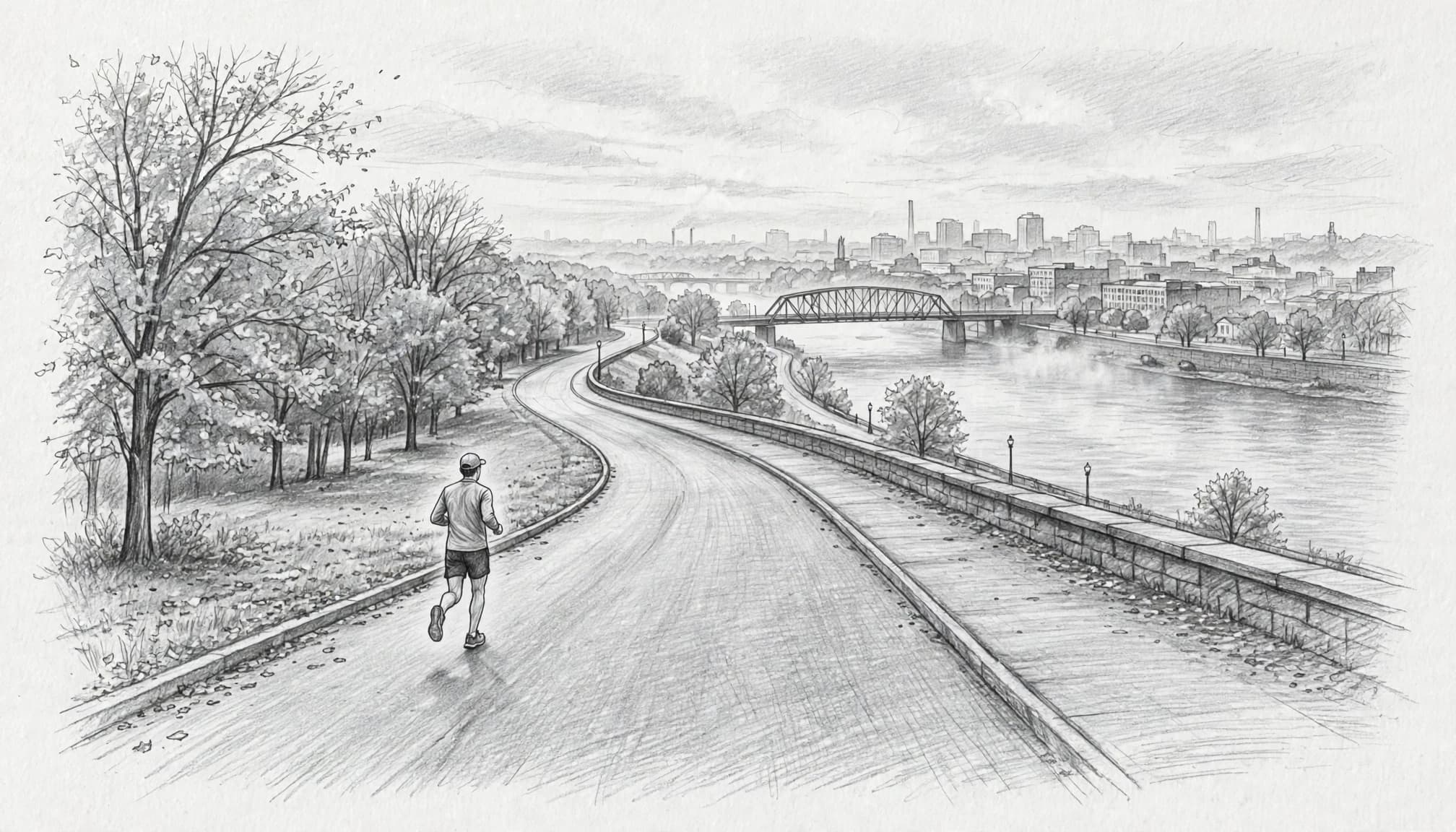
The hills, bridges, and turns that matter most
At the start, expect crowded downtown streets and plenty of nervous energy. The early miles can feel easy because runners are fresh and spectators are close. Resist the urge to bank time. A conservative opening effort gives you more control when the course leaves the central streets and moves through Richmond neighborhoods.
The route is better described as rolling than flat. Study the official elevation chart and GPS map during training. Identify where gradual rises, bridge crossings, sharper turns, and exposed stretches may affect your effort. You don’t need to memorize every street. You do need to recognize where the course may interrupt your rhythm.
Bridges can feel harder than their elevation suggests. Wind is more noticeable over open water, and an exposed crossing removes shelter from buildings and trees. Repeated turns create a different problem. Each corner can break your stride, force small pace changes, or push you wide if you enter it too quickly.
The late-race challenge often comes from accumulated fatigue, not one dramatic climb.
As the course continues through neighborhoods, the scenery changes often enough to keep the race from feeling monotonous. River views and bridge sections can provide a welcome mental reset, but protect your effort on every rise. Let your pace slow slightly uphill, then return to your target effort instead of sprinting over the crest.
How crowd support changes the late miles
Crowd support can change the emotional texture of the race. Residents, volunteers, music, and aid stations give runners regular reminders that the finish is getting closer. The loudest sections may feel like checkpoints, especially when fatigue makes each mile seem longer.
Crowd density varies by location, weather, and time of day. Some stretches may feel busy and loud, while another neighborhood block may offer more space and quiet. Use both conditions well. In a crowded section, focus on relaxed form and smooth breathing rather than matching the excitement around you.
A surge feels tempting when spectators cheer, but it can cost more than it gives. A short lift is fine; a sudden pace jump can damage your final miles. Take fluids and fuel according to your plan, thank volunteers when you can, and keep your effort controlled as the course turns back toward downtown and the riverfront finish.
Choose Your Distance, Duration and Goal Time
Make three quick selections and open the exact plan built for your race target.
Looking for a Fully Personalized Training Plan?
The training plans above are an excellent choice if they match your goal. However, if you’d rather train with a plan built specifically around your current fitness, goal race, preferred training days, weekly mileage, and target finish time, our RDA Custom Training Plans provide a personalized solution. We also have running courses available for runners seeking to run faster from the mile to the marathon.
Why Choose a Custom Training Plan?
| Standard Training Plan | RDA Custom Training Plan |
|---|---|
| Follows a fixed schedule | Built around your schedule |
| Standard weekly mileage | Peak mileage customized for you |
| Fixed workout days | Train on the days you choose |
| Same structure for everyone | Designed around your current fitness |
| Static plan | Updated as your fitness improves |
| One-time purchase | Ongoing personalized coaching and support |
What You’ll Receive
- A training plan built specifically for your goal
- Personalized training paces
- Long runs, tempo runs, threshold workouts, interval sessions, recovery runs, and easy runs
- Peak weekly mileage matched to your experience level
- Flexible training schedule that fits your life
- Ongoing plan adjustments as your fitness improves
Ready to Train Smarter?
Stop guessing and start following a plan built specifically for you, your schedule, and your racing goals.
Is the course fast enough for a personal best?
Richmond can support a personal best, but the route alone won’t decide your result. Weather, training, fitness, pacing, fueling, and race-day conditions all matter. As a running event, its rolling profile may offer a faster experience than a heavily hilly course, yet it won’t provide the constant rhythm of a truly flat route.
The official course cutoff is 7 hours, which equals approximately a 16:00-minute-per-mile pace. That limit gives many recreational runners time to complete the course, but you should still review the published time limit and plan accordingly.
Before choosing Richmond as a goal race, review recent results, aid-station placement, and the current GPS map on the race registration and event details page. Then match your goal pace to effort, especially on bridges and gradual rises. Start patiently, stay relaxed through the middle miles, and save your sharpest focus for the final approach.
Race-Day Logistics, Weather, and Runner Experience
Smooth event morning starts the night before. Richmond’s fall conditions can bring cool temperatures, humidity, wind, rain, or an unexpectedly warm start, so check the forecast and read the official participant guide before traveling. Start times, road closures, aid stations, time limits, transportation, and finish-area procedures can change.
Where to stay and how to get to the start
Staying near downtown can simplify race weekend. You may walk to the start, avoid early traffic, and return to your room quickly after finishing. However, convenient hotels often cost more and sell out early. If your plans are set, register now and reserve accommodations early. Compare the official hotel block with independent hotels, vacation rentals, and nearby lodging, then check cancellation rules before booking.
Plan transportation the night before. Confirm road closures, parking restrictions, shuttle details, start-line access, and any gear-check location. If the race offers shuttles, learn where they leave and how early they run. A five-minute route review can prevent a stressful search in the dark.
What to expect at the expo and packet pickup
The expo is where you collect your bib, race shirt, participant information, and any required timing materials. Vendors may offer gels, shoes, clothing, recovery products, and official marathon merchandise. Those options are useful for replacing forgotten essentials, but event morning is a poor time to test unfamiliar shoes, fuel, or supplements.
Early packet pickup can reduce event-morning pressure, especially if you want to sleep later or avoid downtown congestion. If you plan to buy marathon merchandise, check sizing and inventory before arriving. Also verify expo hours, identification requirements, proxy pickup rules, and transfer policies. Your bib may be tied to your registration, and another runner can’t simply use it without following the event’s stated process.
Fueling, aid stations, and the finish line
Build your nutrition plan around the products provided on the course, including water, sports drink, electrolytes, or gels. Check the participant guide for current offerings, then test the same fuel during long training runs. Carry backup calories if you prefer a particular brand or need nutrition at precise intervals.
Drink consistently rather than waiting until thirst becomes urgent. Take electrolytes when your plan and conditions call for them, but avoid swallowing too much too late. Official training teams organized by Sports Backers can offer useful course support advice, although you still need to monitor effort on hills, in humidity, and during warmer weather.
A simple event-morning timeline keeps small decisions from piling up:
- The night before: Lay out clothing, bib, shoes, fuel, and a warm layer.
- Two to three hours before the start: Eat your familiar breakfast and begin sipping fluids.
- About 60 to 90 minutes before: Arrive, locate restrooms, gear check, corrals, and transportation points.
- Before entering your corral: Use the restroom again, adjust layers, and confirm your pacing plan.
Arrive early, but keep moving or wear disposable warm layers while waiting. After the finish, collect your medal and food, add dry clothing, drink fluids, eat carbohydrates with protein, and walk for several minutes before settling down. Medical support is available for urgent problems, so ask a volunteer for help rather than trying to push through serious symptoms.
How to Train for Richmond’s Rolling Fall Marathon Course
The Richmond Virginia Marathon rewards runners who prepare for changing effort, not just one perfect pace. Build training around gradual long-run progression, controlled marathon-pace work, easy mileage, strength training, recovery, and a short taper. Consistent active living supports this routine between workouts. Rolling terrain can make exact splits misleading, so judge effort by breathing, posture, and how well you recover after each rise.
The best workouts for hills and late-race strength
Most runners need only one focused hill session and one quality long run each week. Keep the remaining days genuinely easy. Easy running builds aerobic volume and helps your legs absorb harder training, while recovery days reduce injury risk.
Short hill repeats build power without requiring an all-out sprint. After warming up, run 6 to 10 repetitions of 20 to 45 seconds uphill at a strong, controlled effort. Jog or walk back down, then repeat with relaxed shoulders and quick, quiet steps.
Every other week, replace the short repeats with longer controlled climbs. Run 3 to 5 repetitions of two to four minutes uphill at approximately half marathon effort, then recover easily. The goal is steady strength, not exhaustion. Add a few relaxed downhill strides afterward to practice staying tall, shortening your stride, and avoiding heavy braking.
Your long run should sometimes include rolling hills. A 14- to 20-mile run with several moderate rises teaches you to hold form when your legs feel tired. Keep most of it easy, then add controlled marathon-pace segments late in the run once your base is strong. Beginners should adjust distance and intensity with a coach or proven marathon plan rather than copying an advanced workout.
Pacing and fueling lessons for race day
Use effort on Richmond’s hills and bridges. Let your pace slow slightly on an incline, maintain smooth breathing, and return to goal effort over the top. Starting a few seconds slower than goal pace may be wise if nerves, humidity, wind, or warmth make the opening miles feel harder than expected.
Protect the first half so you can race the second. A conservative start often feels too easy, but that restraint can preserve your stride after mile 20. During long runs, rehearse your breakfast, fluids, and gel schedule with the products you expect to use. A practical guide from Runner’s World on marathon fueling and recovery can help you compare your plan with established training principles.
If the weather turns warm or humid, slow down and drink according to conditions instead of forcing a split. Windy bridges may require extra effort, while rain can change footing and increase chafing. Your goal pace is a guide, not a command.
Who should choose Richmond as a goal race?
Richmond suits first-time marathoners who want strong support, experienced runners who enjoy an energetic city course, and athletes targeting a fall time goal. The crowds, changing scenery, and rolling profile provide enough stimulation to keep the race from feeling repetitive.
Runners who require a completely flat route may prefer another event. The same is true for athletes seeking a tiny field or a guaranteed cool-weather day. Before committing, compare elevation profiles, historical weather, field size, and race policies. Consistent sleep, strength work, injury prevention, and mental rehearsal will matter as much as the course itself. Practice responding to discomfort with relaxed form and steady effort, because that skill often decides the final miles.
Richmond Marathon Pros, Cons, Cost, and Value
The event offers strong race-weekend value, but the total cost extends beyond the entry fee. Your decision should account for the course, atmosphere, travel, lodging, meals, and the effort required to manage race morning.
The biggest advantages for runners
Richmond blends urban scenery with neighborhood support. Downtown streets, river views, bridges, and residential sections give the course visual variety, while volunteers and spectators help maintain energy during the later miles. You get the excitement of a large event without the constant intensity of the biggest destination marathons.
The fall timing also suits runners who prefer cooler training conditions and a traditional autumn goal race. Weather can change, but November often gives athletes a better chance to race comfortably than a hot summer event. The weekend typically includes the full marathon, half marathon, 8K, expo activities, and opportunities for family members to participate. Check the official Richmond Marathon race page for the current event lineup and registration details.
A large but manageable field creates useful energy without making every mile feel like a battle for space. The event also offers a strong finisher experience, practical aid-station support, and a regional reputation that attracts both first-timers and experienced runners.
The drawbacks to consider before registering
The marathon isn’t a perfectly flat course. Its rolling roads, bridges, and turns can surprise runners who expect an effortless city course. Study the elevation profile, practice on similar terrain, and use effort-based pacing instead of forcing your target split uphill.
Fall weather brings its own risk. Cold temperatures, humidity, rain, wind, or a warmer-than-expected morning can change your clothing and fueling needs. Pack adaptable layers, check the forecast several times, and keep a backup race plan if conditions or an injury disrupt preparation.
Travel creates another expense. Hotels near the start can sell out, parking may become inconvenient, and meals can add more than expected. Book refundable lodging early, compare transportation options, and confirm the official policies for deferrals, transfers, and cancellations before paying.
Finally, crowded corrals and early-morning logistics can increase stress. Arrive with time to spare, locate transportation and restrooms in advance, and expect the opening miles to feel compressed. The official Richmond Marathon site is the best place to check current race-day instructions.
How Richmond compares with other marathon choices
The event is a middle-ground option. A flat city marathon may offer a steadier pace for qualification goals, while a smaller local race may provide quieter roads, lower travel costs, and fewer spectators. A major destination marathon may deliver unmatched scale, but usually brings higher lodging prices, heavier transportation demands, and greater crowd pressure.
Entry fees for the full marathon typically start between $90 and $115 during early-bird tiers. Prices rise incrementally to $145 to $165 or more closer to race day, so register now to secure a lower pricing tier. Weekend costs also vary by race distance, and the CarMax Richmond Half Marathon may have a different fee schedule.
The event is a good value when you want city energy, volunteer support, varied weekend events, and a memorable finish without choosing the largest possible race. Choose another event if your priority is a completely flat course, a tiny field, or the lowest possible trip cost. Your best choice depends on one simple test: does the marathon match your goal, budget, and preferred race size?
The Final Verdict for First-Timers and Experienced Marathoners
The Allianz Richmond Marathon is a strong choice when your goals match its course, atmosphere, and fall timing. It offers enough support for a first marathon, enough speed for a personal-best attempt, and enough crowd energy for a memorable social race weekend. Still, its reputation won’t carry you through the final miles. The route, weather, pacing, and race-day execution matter more than the name on the bib.
Is Richmond right for your marathon goal?
For first timers, Richmond is a good fit if you want strong spectator support, clear event organization, and a course with manageable rolling terrain. You’ll still need to respect the bridges, turns, and late-race fatigue. Runners who prefer a completely flat route may feel more comfortable elsewhere.
A personal-best attempt can work well here when you’ve trained on similar hills and can adjust your pace by effort. The course has faster sections, but wind, humidity, rain, or an unexpectedly warm morning can change the equation. For a Boston qualifier, Richmond is worth considering if your training supports the qualifying standard and you have a realistic weather-dependent plan. Don’t choose it solely because another runner posted a fast time there.
The event also suits a social race weekend. Friends and family can enjoy the city, support runners along the route, and take part in related race activities. Before registering, review the current Richmond Marathon information, since course details and event policies can change.
Use this checklist before signing up
Make these decisions before you pay the entry fee:
- Confirm the current course map, elevation profile, start location, and finish procedures.
- Review the latest fee, transfer, deferral, and cancellation policy. Entry fees may be non-refundable, as outlined on the registration information page.
- Reserve lodging early, preferably with a cancellation option.
- Choose a training timeline that gives you enough weeks to build long-run distance safely.
- Test your breakfast, fluids, gels, shoes, and clothing during long training runs.
- Set a goal pace based on fitness, then create a backup plan for heat, wind, hills, or fatigue.
Richmond rewards prepared runners. If you arrive ready to adjust without abandoning your plan, the race can deliver a fast, supported, and satisfying marathon experience.
Frequently Asked Questions
The Richmond Virginia Marathon attracts first-time marathoners, experienced racers, and runners chasing Boston qualifying times. These answers cover the practical details that can shape your training, travel, and race-day decisions.
Is the race beginner-friendly?
Yes, the race can suit first-time marathoners because of its friendly atmosphere, steady crowd support, and well-organized event structure. Spectators and volunteers can provide a lift when the final miles begin to feel heavy.
The official course cutoff is 7 hours, based on a 16:00 min/mile pace. Still, support cannot replace preparation. Follow a complete marathon training plan, practice your fueling, and set a realistic pace based on your current fitness.
Since the course includes rolling terrain, beginners should train on gradual hills. Learn to manage effort instead of forcing the same pace on every incline.
Can runners qualify for Boston?
Runners may pursue a Boston qualifying time at Richmond. The race describes its course as certified and suitable for Boston qualification, but your result still depends on the official course, timing rules, age-group standard, and your performance on race day.
Before choosing Richmond for a Boston qualifier attempt, review the current Richmond Marathon race information and confirm the latest requirements through the Boston Athletic Association qualifying standards. Also check whether your chip time, course certification, and qualifying window meet the rules for the Boston race you want to enter.
How hilly is the course?
Richmond Marathon is best described as a rolling urban marathon, not a flat course and not an extreme mountain race. The route includes gradual rises, bridges, turns, and sections that can feel harder after fatigue builds.
Study the current elevation profile before race day, then practice changing your effort on similar roads. A late-race rise may seem modest on paper, but tired legs can make it feel much steeper. Stay relaxed uphill, avoid chasing lost seconds, and regain your rhythm gradually after each crest.
What month is the race held?
The Richmond Marathon is generally held in the fall, often in November, although the exact date can change. Cooler conditions can benefit marathoners, but runners should still prepare for wind, humidity, rain, or an unexpectedly warm morning.
Check the official Richmond event calendar for the current race date, registration deadline, expo schedule, start times, and event lineup. Those details matter when you book lodging or plan travel.
What should runners wear on race day?
Choose clothing from the forecast rather than following a fixed race-day formula. Cool temperatures may call for removable layers, while warmer conditions require breathable fabrics that manage sweat and reduce chafing.
Wear tested shoes, familiar socks, and clothing you’ve used during long runs. Bring sun or wind protection when the forecast calls for it, and prepare a rain plan if wet weather is possible. Most importantly, don’t debut new gear on race day, even if it feels comfortable during a quick pre-race walk.
How early should I register?
Registering early can provide lower pricing and a wider choice of hotels, especially when the race weekend attracts runners from outside Virginia. Popular registration tiers may sell out, and nearby lodging can become limited well before race week.
Before committing, review the official fee tiers, refund and deferral rules, hotel availability, and your travel plans. Confirm the current details on the marathon registration page so a policy change doesn’t catch you by surprise.
Conclusion
The Allianz Richmond Marathon is a compelling fall race for runners who want city energy, meaningful crowd support, and a course that rewards smart pacing. Downtown streets, neighborhood sections, bridges, and riverfront views give the route character, while strong organization and a lively atmosphere help first-time marathoners and experienced racers stay engaged.
Still, the event isn’t a flat or effortless course. Rolling terrain, changing weather, crowded early miles, and late-race fatigue can expose weak pacing or incomplete preparation. Match it to your goal, budget, preferred race size, and comfort with hills. Then study the current course map, review race-day instructions, and train for the route’s actual demands instead of relying on its favorable reputation.
A patient opening pace, practiced fueling plan, tested gear, and flexible strategy can make the event a satisfying personal-best attempt or a memorable first marathon. Arrive prepared for the hills and weather, then enjoy the streets, the riverfront, the crowds, and that final push toward the finish.


