

Richmond VA Marathon Route: Map and Pacing Guide
Race morning in Richmond begins with cool air along the James River, the sound of shoes tapping pavement, and runners gathering as spectators claim spots along the streets. As the field moves into downtown, the Richmond VA marathon route turns the city into a long, energetic corridor of cheering crowds, historic landmarks, bridges, and changing scenery.
Most runners search for the course before race day because a map alone doesn’t reveal how the race feels. You need to know where the hills rise, when the major turns appear, which landmarks can help you stay oriented, and how the terrain may affect your pacing. You also need practical details, including aid stations, viewing areas, road closures, start times, and the best places for your support crew to meet you.
This guide breaks down the official course map, the route’s major sections, its terrain and pacing demands, aid station planning, spectator access, and training advice for running Richmond with control.
Because organizers can adjust the course each year, confirm the final turns, closures, start times, and aid station details through the official Richmond Marathon information before you arrive. First, we’ll look at the course map and trace the route from the starting area to the finish. Looking for the best hotels for the Richmond Marathon? Make sure to book early and save later.
Build Your Running Performance System
Move from research to action with training, recovery, nutrition, pacing, and performance tools built for runners.
More Guides for This Runner Goal
Key Takeaways
- The Richmond VA marathon route starts near 1st and Broad Street before winding through downtown, neighborhoods, and riverside sections.
- Expect changing terrain, with early climbs, rolling miles, and a downhill finish at Brown’s Island.
- Use landmarks such as the James River, historic architecture, bridges, and parks to stay oriented.
- Pace conservatively through the opening miles, settle into goal effort, then use the final descent when your legs allow.
- Check the official marathon course information for updated turns, aid stations, closures, and race-day details.
Richmond VA Marathon Route: Course Map, Start, Finish, and Main Landmarks
The Richmond VA marathon route generally begins near 1st and Broad Street in downtown Richmond and finishes near Brown’s Island along the James River. Because organizers can adjust streets, turns, aid stations, or timing details, treat the current race map as your final authority.
The marathon course also differs from the half marathon and 8K routes. Shared streets can make the events look similar at first, but their distances, turnarounds, and finish approaches are not interchangeable.
How to Read the Official Richmond Marathon Course Map
Start on the race website and look for the latest PDF course map and interactive map. The interactive version helps you zoom into downtown streets, while the PDF gives you an easy reference to save on your phone or print before race morning.
Check the map for:
- The exact start and finish locations.
- Street direction and major turns.
- Mile markers and the halfway point.
- Aid stations, bathrooms, and medical points.
- Course limits and time cutoffs.
- Road closures that could affect runners or spectators.
The official marathon information currently lists a 7 a.m. start and a seven-hour course window, but confirm those details during race week. Organizers can update timing, access, or route information after you begin planning.
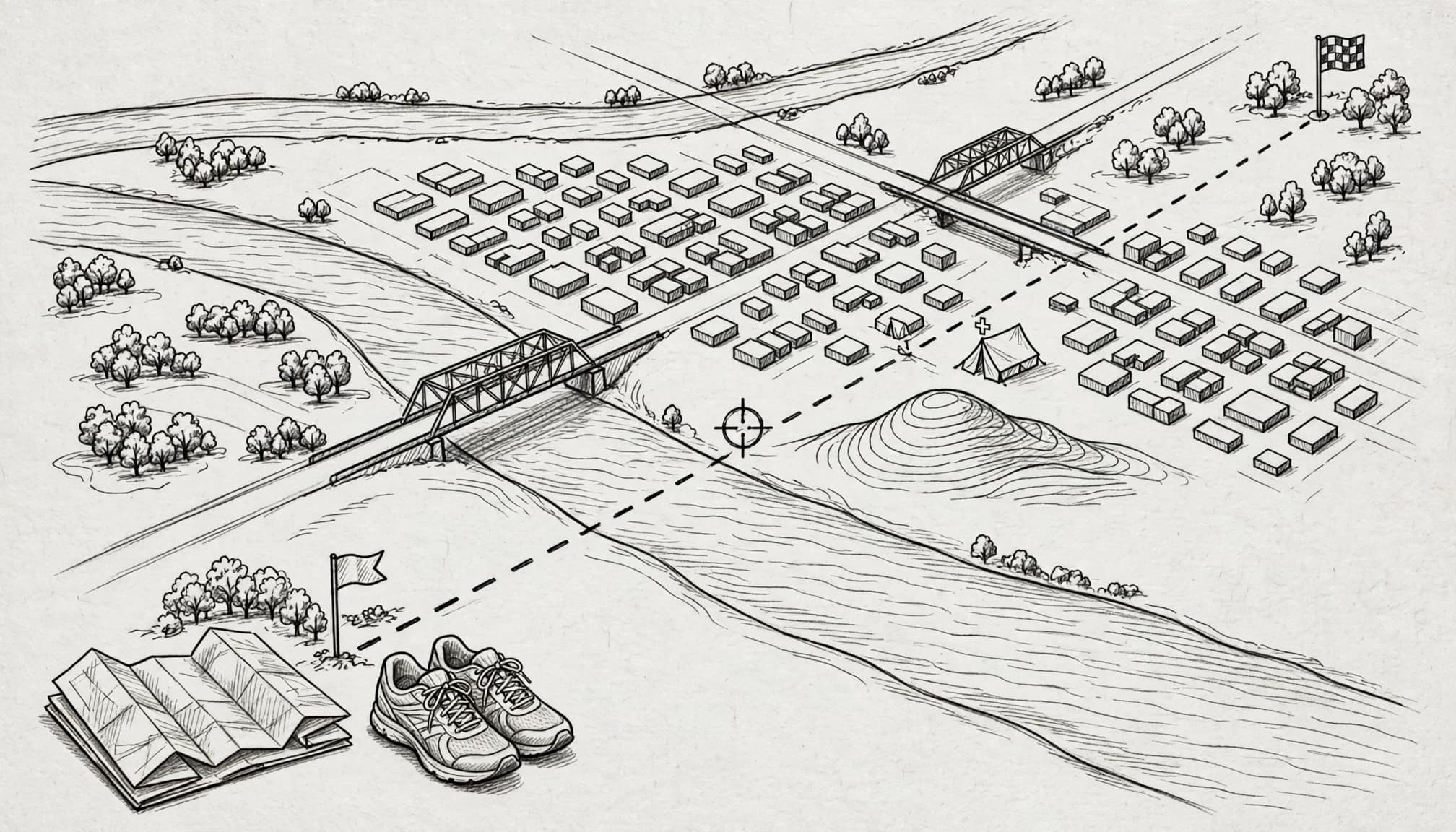
Save an offline copy because cell service can become unreliable around a crowded start area. Then study the route in sections instead of trying to memorize every turn. Divide it into the opening downtown miles, the middle neighborhood sections, the return toward the river, and the final five miles.
Before race day, mark the start, halfway point, major climbs, aid stations, bathrooms, medical support, and finish. This approach gives you useful checkpoints without filling your head with street names.
The Richmond Landmarks That Help You Track Your Progress
Richmond’s landmarks can turn an abstract line on a screen into a series of familiar scenes. Downtown buildings and historic streets help you understand the early portion, while neighborhood roads provide quieter reference points later in the race.
Depending on the year’s course, runners may use the James River, bridges, parks, major avenues, and riverfront views to judge their progress. The Fan District, Monument Avenue, Carytown, and surrounding historic neighborhoods may also appear as useful location references, but always match them against the current official map before relying on them.
A landmark helps with orientation, but the mile marker beside it controls your pacing plan.
As you review the Richmond VA marathon route, pair each broad landmark with a mile range. For example, identify where downtown ends, where the course reaches a major avenue, when the route passes through residential streets, and where the final riverfront section begins. Those visual cues can keep you calm when fatigue makes every turn look familiar.
Finally, confirm whether a landmark belongs to the full marathon, half marathon, or 8K route. Shared sections can create confusion, especially when you study photos or older maps. Use the race-day signs and current mile markers to stay on the correct course.
What Each Part of the Richmond Marathon Course Feels Like
The Richmond VA marathon route changes character as the race moves away from downtown streets and toward the James River. Early miles feel crowded and electric, the middle settles into neighborhood rhythm, and the final stretch rewards runners who saved enough energy to respond late.
Use each phase for a different purpose. Settle in at the start, protect your effort through Richmond’s neighborhoods, then race the closing miles only after the last major test has passed.
The Start: Settle In Before the Course Opens Up
The opening streets can feel packed, especially as runners leave the start near 1st and Broad Street. Shoes overlap, spectators line the barriers, and small changes in pace ripple through the pack. Resist the urge to sprint around slower runners. The marathon has barely begun, and every unnecessary surge spends energy you may need several hours later.
Arrive early enough to handle parking, gear check, bathrooms, corrals, and a short warm-up without rushing. Stress raises your heart rate before the gun, while a calm routine helps you begin with a clear pacing plan. The official Richmond marathon course information can help you confirm current start details and race-day logistics.
For the first few miles, run by effort rather than pace. Adrenaline, downhill sections, cool air, and cheering crowds can make marathon pace feel deceptively easy. Keep your stride controlled, breathe comfortably, and let the field spread out before you settle into your planned rhythm.
The Middle Miles: Find Rhythm Through Richmond’s Neighborhoods
Once the opening congestion fades, the course begins to feel more like a long tour through Richmond. Neighborhood streets, historic buildings, parks, shade, and spectator zones create frequent changes in scenery. Road width can change your stride, while turns and shifting direction may interrupt your rhythm if you react to every corner.
Keep your effort even instead of chasing every quick split. A relaxed stride, loose hands, and steady cadence will carry you better than forcing speed through each lively section. Use landmarks as checkpoints, but pair them with your fueling plan and the current mile markers. The official course page lists the route details that matter most when you study those sections before race day.
Crowd energy helps, but it can also pull you beyond your plan. Accept the cheers without turning every spectator zone into a race. Take fluids and carbohydrates on schedule, then return your attention to effort, posture, and the next manageable landmark.
The Final Miles: Protect Your Form and Use the Crowd
Fatigue changes your mechanics before you fully notice it. Your posture may fold, your cadence may slow, and poor decisions can turn a manageable hill or turn into a major struggle. Keep the correction simple: shorten your steps, relax your shoulders, swing your arms steadily, and control your breathing.
Break the final miles into small targets, such as the next aid station, turn, park, or river view. Let the crowd carry your focus forward, but wait until the final major test has passed before increasing effort. If your legs still respond, gradually press toward the downhill finish at Brown’s Island instead of launching one risky surge.
Choose Your Distance, Duration and Goal Time
Make three quick selections and open the exact plan built for your race target.
Looking for a Fully Personalized Training Plan?
The training plans above are an excellent choice if they match your goal. However, if you’d rather train with a plan built specifically around your current fitness, goal race, preferred training days, weekly mileage, and target finish time, our RDA Custom Training Plans provide a personalized solution. We also have running courses available for runners seeking to run faster from the mile to the marathon.
Why Choose a Custom Training Plan?
| Standard Training Plan | RDA Custom Training Plan |
|---|---|
| Follows a fixed schedule | Built around your schedule |
| Standard weekly mileage | Peak mileage customized for you |
| Fixed workout days | Train on the days you choose |
| Same structure for everyone | Designed around your current fitness |
| Static plan | Updated as your fitness improves |
| One-time purchase | Ongoing personalized coaching and support |
What You’ll Receive
- A training plan built specifically for your goal
- Personalized training paces
- Long runs, tempo runs, threshold workouts, interval sessions, recovery runs, and easy runs
- Peak weekly mileage matched to your experience level
- Flexible training schedule that fits your life
- Ongoing plan adjustments as your fitness improves
Ready to Train Smarter?
Stop guessing and start following a plan built specifically for you, your schedule, and your racing goals.
Elevation, Hills, and Pacing on the Richmond VA Marathon Course
The Richmond VA marathon route often feels manageable because it has rolling terrain rather than long mountain climbs. Still, don’t label it flat or downhill without studying the current elevation profile. Short rises, bridges, turns, wind, and accumulated fatigue can affect your race more than the total elevation gain.
One published elevation profile lists about 685 feet of gain and 813 feet of loss, with elevations ranging from 48 to 274 feet. Course details can change, so compare any profile with the official Richmond Marathon course information.
How to Handle the Course’s Climbs Without Losing Your Race
Let the hill slow your pace slightly while you protect your effort. Shorten your stride, keep your cadence light, and avoid leaning sharply from the waist. A controlled climb may cost a few seconds per mile, but attacking every rise can leave you paying for it after mile 20.
As you reach the crest, don’t surge immediately. Continue driving your arms, allow your stride to open gradually, and return to goal pace only when the road levels out. That smooth transition saves energy and prevents the sharp effort spike that often follows a hard climb.
Practice this response during training on rolling routes. Learn the difference between normal discomfort, such as heavy breathing or tired muscles, and warning pain that changes your stride, becomes sharp, or worsens with each step. The first requires control; the second requires attention and possibly a decision to stop.
Use Downhills and Flat Sections to Build Time Carefully
Downhills offer free speed only when you avoid braking. Keep your posture tall, relax your hands, and let gravity carry you while your cadence stays quick. Overstriding or leaning back forces your quadriceps to absorb each landing, which can create soreness and a late-race slowdown.
On flat sections, hold a steady rhythm instead of forcing a faster pace because the road feels easy. Wind can make a flat mile costly, especially near exposed riverfront sections. Run by effort, then return gradually to goal pace when conditions improve.
GPS pace may jump near downtown buildings, bridges, and tall structures. Use lap pace, effort, and official mile markers as your primary references.
A Simple Richmond Marathon Pacing Plan
Start slightly restrained for the opening miles. Settle near goal effort through the middle, reassess after halfway, and make a controlled decision after mile 20.
- First marathon: Run by comfortable effort early, accept slower uphill splits, and focus on fueling before fatigue appears.
- Boston-qualifying attempt: Protect your average pace without forcing every mile. Use controlled descents and save your strongest decision for the final six miles.
- Personal-best attempt: Let terrain change your split pace while maintaining consistent effort. Press only when your form and breathing remain under control.
Heart-rate runners should expect temporary rises on climbs and avoid chasing an exact number. Pace-focused runners should judge effort when wind, hills, or congestion distort the watch. After mile 20, increase effort gradually, not all at once.
Race-Day Logistics Along the Richmond Marathon Route
A strong Richmond VA marathon route strategy includes more than hills and mile splits. Packet pickup, transportation, aid stations, road closures, and your finish-line plan can shape the entire race experience. Verify every detail in the official runner guide because locations, policies, course limits, and services may change.
Where to Find Water, Fuel, Bathrooms, and Medical Help
Use the official course map and runner guide to locate aid stations before race morning. Check which stations offer water, sports drink, gels, or other products, since supplies may vary by location. If you depend on a particular gel or carbohydrate source, carry enough backup fuel rather than assuming the course will provide it.
Slow slightly as you approach a crowded table, then move through without stopping suddenly. If you need water, step toward the edge, make eye contact, and take a cup from a volunteer when possible. Practice your hydration and fueling plan during training with the exact products you expect to use. Race morning is a poor time to test a new gel, drink, or supplement.
Bathrooms may be positioned near the start, along the course, and around the finish area. Medical support points should also appear in the runner information, but tell a volunteer clearly if you need help. Point to the problem, use direct words, and stop safely away from moving runners when possible.
What Runners Should Know About Road Closures and Transportation
A downtown or point-to-point race can make familiar roads difficult to use. Before traveling, review the official parking plan, shuttle details, public transportation options, closure timetable, and post-race exit routes. Never assume your usual route into Richmond will remain open on race morning.
Packet pickup may occur at a separate location or on a limited schedule, so confirm the date, address, required identification, and whether another person can collect your bib. At the start, allow time for parking or transit, gear check, bathrooms, security, and corral access. Build in extra time for spectators, too, especially if they plan to cross the course or reach multiple viewing points.
Carry only what you need during the race, such as your bib, phone, practiced nutrition, identification, and emergency contact details. Leave extra clothing and post-race items at gear check if the race permits them, using the approved bag and labeling system.
How to Plan Your Finish-Line Pickup and Meeting Spot
Finish areas become crowded quickly, and cell service may weaken when thousands of runners and spectators gather in one place. Choose a clear meeting location away from the finish chute before the race begins. A nearby landmark, open park entrance, or designated reunion area is easier to find than a vague plan to meet “at the finish.”
Share the plan with your support crew, and carry identification plus emergency contact information. After finishing, expect to walk before reaching your belongings or transportation. Plan for dry clothes, food, fluids, recovery time, and a comfortable route out of the area. A simple pickup plan lets you focus on the final miles instead of searching through the crowd.
Best Places to Watch the Richmond Marathon and Support a Runner
A good spectator plan balances access, crowd energy, comfort, and timing. Use the current Richmond VA marathon route map with your runner’s expected pace, then choose one dependable viewing point or two realistic stops. Trying to cross the city during active road closures can leave you stranded, late, or standing on the wrong side of the course.
How to Build a Spectator Plan Around Runner Pace
Start with the runner’s expected marathon pace and calculate an arrival time for each possible viewing point. For example, a runner averaging 10 minutes per mile may reach mile 6 in about one hour, but that estimate is only a starting point. Add extra time for the crowded opening miles, hills, turns, aid stations, GPS variation, and delays getting through downtown.
A practical plan should include a buffer of at least 10 to 20 minutes at each stop. Spectators also need time to walk from transit, find a safe viewing area, and reach the next location. Review the official Richmond Marathon information for the current course, road closures, parking guidance, and access restrictions before race morning.
If you want to see a runner twice, choose points connected by walking routes or public transit. Staying near a central, walkable area is usually more reliable than driving across Richmond while streets are closed. For many families, one well-planned location is better than rushing between three spots and missing the runner at all of them.
Share the plan before the race. Agree on the mile or landmark, the side of the street, and what the runner will do if the timing changes. A short text such as “I will be near the barrier on the east side at mile 10” is clearer than “I’ll find you downtown.” Cell service may become unreliable, so set a backup meeting point.
What Makes a Good Spectator Location
Look for a spot with a clear sight line, enough room to stand safely, and a practical way to leave. Nearby bathrooms, water, food, transit, and shade or shelter can make a long wait much easier. Crowd energy is helpful, but a packed corner may make it harder for your runner to spot you.
Choose layers because race-morning temperatures can change while you wait. Carry water, a charged phone, identification, and only the supplies you can manage comfortably. If you bring a sign or wear bright clothing, keep it visible without blocking other spectators.
Stay behind barriers, follow volunteer directions, and respect residents, businesses, and runners. Never step into the course or hand a runner unplanned food. A surprise snack can upset the stomach or interrupt a carefully practiced fueling plan. Offer encouragement instead, and confirm any planned handoff before race day.
The best public viewing spot can change with each race year. Check the current map, closure schedule, access rules, and transit information before leaving home.
How to Train for the Richmond Marathon Route and Race-Day Demands
Training for the Richmond VA marathon route means preparing for more than distance. You need to handle rolling terrain, repeated turns, changing surfaces, fueling decisions, and tired legs without losing control. Build your preparation around four priorities: study the course, develop aerobic endurance, rehearse race pace and nutrition, then taper with confidence.
Work the Route’s Hills and Turns Into Your Training
Study the current official Richmond marathon course before choosing your key workouts. You don’t need to copy every street. Instead, add gentle hills, bridges, corners, and varied surfaces to selected long runs so your legs learn to adjust without panic.
A useful long run might include two or three hours of easy running followed by 20 to 30 minutes at a controlled marathon effort. Another session could include six to eight short hill repeats with an easy jog back down. More experienced runners may add marathon-pace blocks after an easy opening section, while newer marathoners should keep the entire workout comfortable.
Practice smooth pace changes rather than sudden surges. Let your effort rise gradually on a hill, settle over the top, and return to pace when the road levels. Strength work for the calves, glutes, hamstrings, and core can support this routine, but schedule it away from your hardest runs when possible.
Practice Fueling Before You Need It
Long runs are your testing ground for breakfast, gels, sports drinks, and water timing. Try the products available on the course, then carry a backup if your stomach depends on a particular option. Individual needs vary, so base your plan on workout duration, weather, sweat rate, body size, and previous experience.
Take fuel before you feel empty. Practice small, regular doses during longer sessions instead of waiting for fatigue to arrive. Also test your pre-race breakfast and the time between eating and running. Race day should contain no new foods, supplements, or drinks.
Choose shoes that feel comfortable and reliable after several long runs. A lighter racing shoe may help some runners, but comfort, fit, and proven performance matter more than novelty. Protect sleep and recovery as carefully as workouts, especially during peak training.
Adjust Your Plan for Richmond Weather
Temperature, humidity, wind, rain, and bright sun can change the effort of the same pace. Check the forecast during race week, but avoid dramatic last-minute changes that ignore your training. Prepare practical options instead, such as a light shell for rain, extra layers for a cold start, or a slower opening pace in unusual heat.
Use perceived effort when conditions distort your watch. If heat or humidity pushes your breathing higher than expected, adjust early rather than waiting until you overheat. Wind may require patience on exposed roads, while rain can change footing and increase chafing.
During race week, review the course, prepare your bib and gear, confirm your fueling plan, and write down your pacing targets. Then choose an adjustment strategy for heat, cold, rain, or wind. A clear plan gives you room to respond without abandoning the race.
Frequently Asked Questions
The Richmond VA marathon route rewards runners who prepare for details, not just distance. Use these answers to confirm your race-day plan, then check the organizer’s latest updates before traveling.
Is the Richmond Marathon route flat?
Don’t rely on a simple label such as flat, hilly, or downhill. Review the current marathon course information and study its elevation profile before setting pace targets.
Small climbs can raise your effort, while bridges, turns, wind, and crowded streets can interrupt your rhythm. Late-race fatigue also makes modest rises feel much harder than they did during the opening miles.
Where does the Richmond Marathon start and finish?
The start and finish are generally in or near downtown Richmond. Current course information lists the start near 1st and Broad Street and the finish near Brown’s Island, but organizers can change event zones, access routes, or exact street locations.
Use the current runner guide and official map to confirm your corral, gear check, bathrooms, finish chute, and post-race access. Don’t plan transportation around an older map or a previous year’s street layout.
Can spectators see a runner more than once?
Multiple viewing opportunities may be possible when landmarks, walking routes, and road access line up. However, active closures, crowded sidewalks, and runner timing changes can make a second sighting difficult.
Choose one or two reliable locations instead of trying to cross the entire city. Build in a generous time buffer, agree on which side of the road to use, and set a backup meeting point in case cell service becomes unreliable.
What pace should I run on the Richmond Marathon course?
Your best pace depends on your experience, goal time, training, weather, and how the course feels that day. Begin by effort, especially through crowded or rolling sections, then settle into a controlled rhythm once the field spreads out.
Use official mile markers and planned checkpoints to judge progress. GPS readings can jump near buildings, bridges, and sharp turns, so don’t chase every unstable watch split.
How early should I arrive for the Richmond Marathon?
Arrive early enough to manage transportation, parking, bathrooms, gear check, warming up, and your assigned corral without rushing. A calm arrival protects energy that you will need during the race.
Check the official race weekend information for the current schedule, transportation plan, security rules, and recommended arrival time. Those details may change between race years.
Where can I find the most accurate Richmond marathon route map?
The official Richmond Marathon website is the best starting point, especially the current Allianz Richmond Marathon page. Also review the runner guide, race-week emails, and the official race app if organizers provide one.
Third-party maps can help with general orientation, but they may show outdated turns or aid stations. Confirm final closures, aid locations, start details, and finish access through the race organizer.
Conclusion
The Richmond VA marathon route rewards patience, preparation, and awareness more than an aggressive start. Before race morning, study the current official map, learn the major landmarks, and note the climbs, turns, aid stations, and riverfront finish. Then build those demands into training with rolling runs, controlled hill work, and fueling practice that matches your race plan.
Plan transportation, parking, packet pickup, gear check, and your meeting point before the streets fill. During the race, pace by effort when hills, wind, weather, crowds, or GPS readings change the numbers. Hold back through the opening miles, settle into a steady rhythm through Richmond’s neighborhoods, and use the final downhill only when your form and breathing remain under control.
Each mile gives you a manageable task: relax, fuel, climb smoothly, recover, and move forward. If you respect the course instead of chasing every early split, you give yourself a stronger chance to finish with purpose. Eventually, the streets open toward the James River, the crowd grows louder, and Brown’s Island comes into view as you reach the riverfront finish one controlled mile at a time.


