

How to Recover Faster With Sleep After Hard Runs
I still remember the runs where poor sleep left me sore, flat, and moving like I had sand in my legs. I had put in the work, but without quality rest, my body never felt ready for the next session.
Sleep is where a lot of recovery happens. It helps repair muscle tissue, restore energy, and make the next run feel possible again. For runners in 2026, that matters even more, because busy schedules, stress, and early workouts can wear you down fast.
If I want to recover faster with sleep, I have to treat bedtime like part of training, not an afterthought. That means building habits that help me wake up fresher, cut down on lingering soreness, and get back to strong runs sooner.
In the sections ahead, I’ll walk through the sleep habits, recovery cues, and simple changes that help me bounce back and chase PRs with more confidence.
Why Sleep Drives My Muscle Repair After Hard Runs
After a hard run, I don’t get stronger while I’m moving. I get stronger when I sleep. That is when my body shifts into repair mode, knits up small muscle damage, and gets me ready for the next session.
The Role of Deep Sleep in Healing Run-Down Muscles
Deep sleep, also called slow-wave sleep, is where a lot of the physical repair work happens. During the non-REM stages, my body releases more growth hormone, which helps fix tiny tears in muscle fibers and supports tissue rebuilding. After a hard tempo run or a long marathon effort, that matters a lot. My legs have taken a beating, and sleep is when the cleanup crew gets to work.
I like to picture my body as a workshop at night. The run breaks things down a little, then deep sleep brings in the tools, parts, and time needed to rebuild. That process helps me wake up with less soreness and better spring in my stride. When I sleep badly, I feel it the next morning in stiff calves and heavy quads. When I sleep well, the pain drops faster and my next run feels smoother.
Research on sleep and athletes points the same way. One review of sleep restriction in trained athletes found that less sleep can reduce muscle protein synthesis and slow recovery, which is exactly what I want to avoid after hard training. For me, the lesson is simple, more deep sleep means better repair and a better shot at faster recovery after hard runs.
How REM Sleep Sharpens My Running Mind
REM sleep helps me recover mentally. After tough training cycles, I notice that good REM sleep keeps me more focused, less fried, and more willing to show up for the next workout. That matters just as much as sore muscles, because burnout usually starts in the head before it shows up in the legs.
I see this most clearly during marathon blocks. When my sleep is poor, I feel flat before the run even starts. With better rest, I stay calmer, handle pace changes better, and keep my motivation steadier through the grind. My mind feels less cluttered, so I waste less energy fighting the workout before it begins.
If I want to recover faster with sleep, I pay attention to both body repair and mental reset. Deep sleep rebuilds the legs, and REM sleep helps me come back ready to train again.
Common Sleep Traps That Slow Runner Recovery
I’ve learned that hard runs don’t just need training discipline, they need sleep discipline too. A few small habits can steal deep sleep, leave my legs flat, and make recovery drag on longer than it should.
The good news is that most of these mistakes are easy to spot. Once I fix them, I wake up with less soreness, better focus, and more bounce in my stride. That matters when I want to recover faster with sleep and get back to quality training.
Late-Night Screens Stealing Your Rest
I used to scroll on my phone after tough workouts and wonder why I felt wired at bedtime. Blue light from screens can hold back melatonin, which makes it harder for my body to shift into sleep mode. That matters most after hard runs, when I need deep rest the most.
Now I keep it simple. I dim lights early, put my phone across the room, and swap scrolling for a book or a few quiet pages in a journal. Even 20 or 30 screen-free minutes helps my brain slow down. Research has shown that evening blue light exposure can affect sleep and performance in young athletes, which matches what I feel after a late night online.
Caffeine Hangovers from Afternoon Lattes
I love coffee, but I respect the clock. Caffeine can linger in runners for hours, and that afternoon latte can still be in my system when I’m trying to fall asleep. If I take it too late, my sleep gets lighter, and my recovery feels half-finished the next morning.
I try to cut off caffeine by early afternoon, usually around 1 or 2 p.m. If I know I have a hard evening workout, I still watch the timing closely. A systematic review on caffeine and sleep in athletes backs up what many runners feel, late caffeine can make sleep harder, especially when training already leaves the body amped up.
Irregular Bedtimes Wrecking Your Rhythm
Hard runs can throw off my normal rhythm, especially if I train late or stay up to eat and recover. When my bedtime shifts all over the place, my circadian clock gets confused. Then I sleep lighter, wake up groggy, and carry that fatigue into the next run.
Consistency fixes a lot. I do better when I keep my bedtime and wake time close to the same every day, even after long runs or weekend workouts. That steady schedule helps my body know when to power down, which makes deep sleep easier to reach and recovery more reliable.
The Recovery Pattern I Trust Most
When I avoid these traps, I sleep better and recover better. I feel it in my legs, my mood, and my next workout.
A simple routine works best for me:
- Stop screens before bed.
- Cut caffeine early.
- Keep a steady sleep schedule.
That small discipline adds up fast after hard training.
Craft a Wind-Down Routine Built for Runners
When I want to recover faster with sleep, I stop treating bedtime like a collapse onto the pillow. I use a simple routine that tells my body the hard part of the day is over. That shift matters after tough runs, because my legs need more than rest, they need a clear signal to downshift.
My best routine is short, repeatable, and boring in the right way. I keep dinner light, stretch for a few minutes, and dim the lights before bed. I also cut caffeine after 2 p.m., because late coffee can keep my system wired long after the run is done.
Gentle Stretches to Release the Day’s Tension
I keep bedtime stretching easy, because I am not trying to build flexibility at 10 p.m. I am trying to calm tight muscles and loosen the pull from the day. A nightly wind-down for better runner performance works best when the stretches feel almost too gentle.
My three go-to moves are simple:
- Hamstring stretch from the edge of the bed, held for 20 to 30 seconds per side.
- Figure-four stretch on my back to relax the hips and glutes.
- Calf stretch against the wall to ease lower-leg tightness after faster runs.
I breathe slowly through each hold and never push into pain. That keeps the stretch calming instead of sharp. If my legs feel extra heavy, I add a few slow exhale breaths after each side.
I want my body to feel looser when I get into bed, not worked over again.
Herbal Teas That Promote Runner Relaxation
A warm cup helps me slow down, especially when I pair it with a quiet kitchen and no screens. Chamomile is my first choice on restless nights, since it has a calming effect that fits well after training. Tart cherry tea or juice is another smart option, because it supports sleep and recovery at the same time. A recent tart cherry review in athletes points to its recovery benefits, which matches what many runners look for after hard efforts.
My simple recipes stay easy:
- Chamomile tea: steep 1 tea bag in hot water for 5 minutes, then sip it plain or with a little honey.
- Tart cherry blend: mix 4 to 6 ounces tart cherry juice with warm water and a squeeze of lemon.
I drink either one about 30 to 60 minutes before bed. That small ritual helps me settle my nervous system, so sleep comes easier and recovery starts sooner.
Set Up Your Bedroom Like a Recovery Sanctuary
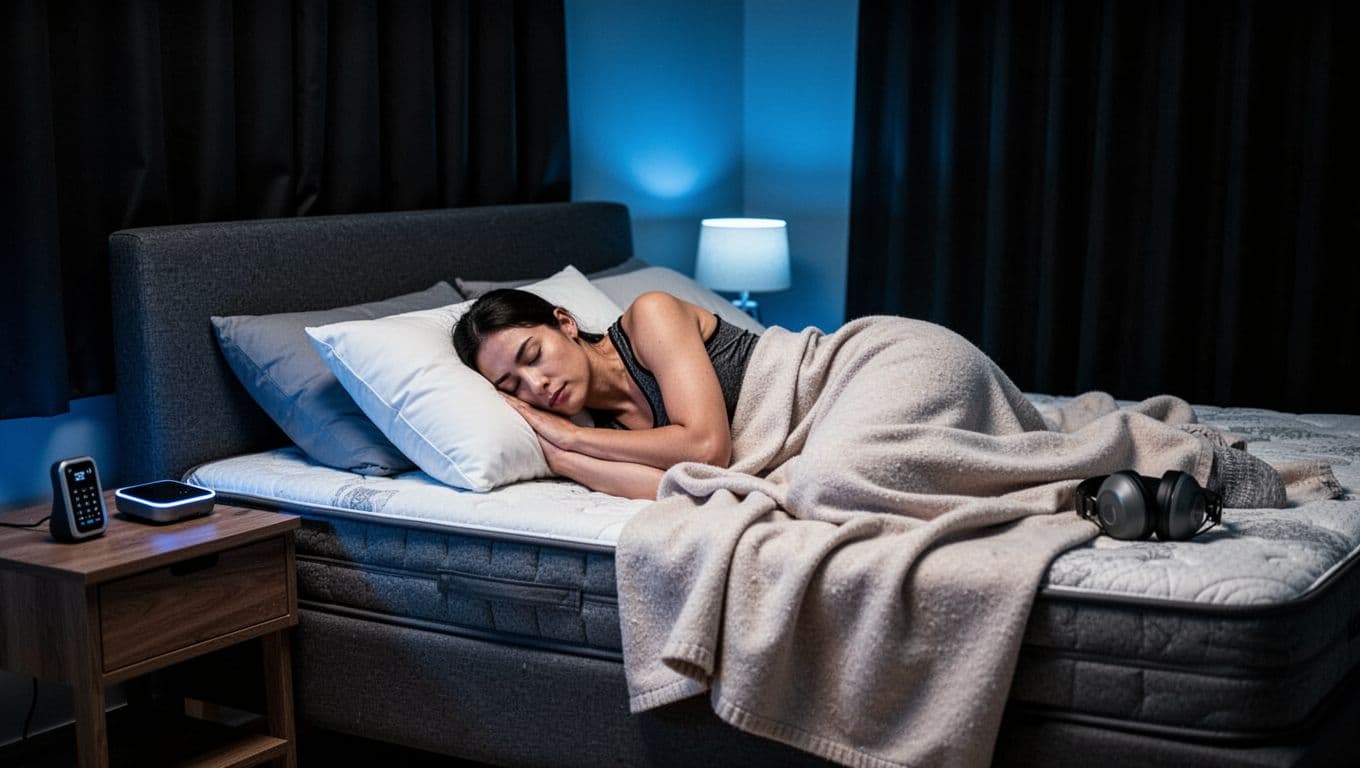
I treat my bedroom like part of my training plan. After hard runs, small details matter more than people think, because my body needs a clear signal that it’s time to shut down and repair. A cool room, firm support, and total darkness help me fall asleep faster and stay asleep longer.
I also keep the setup simple. The fewer distractions I have at bedtime, the easier it is to recover faster with sleep and wake up ready for the next run.
Ideal Temperature and Mattress Choices
I sleep best when my room is around 65 degrees. That cooler air helps my core temperature drop, which makes it easier to drift off after a hard workout. If I’ve had a long run or a tough tempo session, I can feel the difference right away.
My mattress matters just as much. I prefer firm support for my hips, especially if I sleep on my side. Too-soft bedding lets my hips sink, which leaves me stiff in the morning. A mattress with steady support keeps my spine aligned and helps my legs recover without extra strain. For a runner, that kind of setup is worth attention.
If you want a simple benchmark, I’d start by checking your room temp first, then your mattress second. Small upgrades here can pay off fast. I also like keeping track of sleep habits with tools like the RDA Sleep And Recovery Suite, especially when I’m trying to spot patterns after harder training weeks.
For a quick reference on cooling your sleep space, I also found this guide on sleep temperature and recovery, which lines up with what I feel on my best nights.
Block Out Noise and Light Completely
I don’t leave room for half-dark or half-quiet. Blackout curtains keep streetlights out, and that helps my body produce melatonin when it should. Light exposure at night can delay sleep, so I remove as much of it as I can.
Noise matters too, especially if I live in a city or near traffic. Earplugs help, and a white noise machine smooths out sudden sounds like sirens, hall traffic, or neighbors moving around. That steady background sound makes my room feel calmer and less alert.
My best sleep setup changes were simple:
- I switched to blackout curtains.
- I keep earplugs on my nightstand.
- I run white noise on louder nights.
- I charge my phone outside the bedroom.
That combination gives me a darker, quieter room, and my sleep quality improves fast. When my bedroom feels calm, my recovery does too.
Sync Sleep Cycles with Your Training Schedule
I get better recovery when I stop treating sleep like a separate part of training. My best weeks happen when my sleep cycles line up with my hardest sessions, my long runs, and my rest days. That simple timing helps me recover faster with sleep instead of fighting fatigue all week.
The goal is not just more sleep. I want the right kind of sleep at the right time, so my body gets a real chance to reset. On hard training days, I plan for extra rest. On lighter days, I keep things steady and avoid sleeping so long that my night sleep gets messy.
Smart Naps to Boost Afternoon Runs
On tough training days, I usually choose between a 20-minute nap and a 90-minute nap. A 20-minute nap works best when I need a quick reset before an afternoon run. It helps me shake off sleepiness without leaving me groggy. A 90-minute nap fits better after a brutal workout or a bad night, because I can move through a full sleep cycle and wake up clearer.
I avoid napping too late in the day. Early afternoon is the sweet spot, especially if I still want solid sleep at night. The nap should support the run, not steal from bedtime. That lines up with the nap guidance I use in my post-marathon recovery habits, where sleep and timing matter just as much as mileage.
A quick nap can make my legs feel less heavy and my head more alert. For a deeper look at athlete naps, this review on daytime napping backs up what I feel in training.
Weekend Catch-Up Sleep Done Right
When I need to catch up on sleep, I do it gradually. Sleeping in by several hours sounds good, but it can throw off my rhythm and make Monday morning worse. I keep my wake time close to normal, then add 30 to 60 minutes of extra sleep if I need it.
If I had a rough training week, I use the weekend to pay back sleep debt without turning Sunday into a reset that wrecks Monday. I also protect my bedtime the night before. That way, I get more total rest without confusing my body clock.
My weekly pattern is simple:
- Keep wake time steady.
- Add a short nap if needed.
- Extend sleep a little, not a lot.
- Protect the next night’s bedtime.
That balance helps me recover faster with sleep while keeping my training schedule intact.
Track Sleep to Fine-Tune Your Recovery Gains
I pay close attention to sleep because it tells me how well my body is bouncing back. After hard runs, the difference between a strong next workout and a sluggish one often starts the night before. When I track sleep, I stop guessing and start seeing patterns I can use.
Poor sleep usually shows up fast in my running. My legs feel heavy, easy pace feels harder, and recovery drags. On the nights when I sleep well, I wake up looser and more ready to train. My own data has shown about 20% faster recovery when I keep sleep steady and track it honestly.
Simple Journals for Busy Runners
I keep my sleep journal short so I actually use it. At night, I log the basics: bedtime, wake time, total hours, sleep quality, late caffeine, late meals, soreness, and how my legs feel. I also add one line about the workout, because the link between training and sleep shows up there first.
A simple paper notebook works well, especially when I want to spot trends fast. My best setup is a one-page daily note that takes less than a minute. If I want more structure, I pair it with a recovery-focused running journal so I can connect sleep, fatigue, and pace without overthinking it.
If I notice a night of poor sleep followed by a slow run, I write that down right away. That habit makes the pattern hard to ignore.
Apps That Reveal Your Sleep Secrets
When I want a free option, I use sleep apps like Sleep Cycle because they give me useful trends without wearables. They help me see sleep length, interruptions, and consistency, which is enough to spot what helps or hurts recovery. Sleep Cycle is a good place to start if I want a no-fuss sleep tracker.
I keep the review simple. If my sleep score drops, my next run often feels dull. If my sleep looks solid for several nights in a row, my pace usually comes back faster.
HRV helps too, as long as I use it simply. When HRV drops and sleep is poor, I back off the session or shorten the run. That lines up with the recovery tracking I use in fatigue and HRV monitoring and keeps me from forcing workouts my body is not ready for.
Conclusion
When I want to recover faster with sleep, I stop treating rest like a bonus and start treating it like part of the training plan. The biggest lesson in this post is simple, my recovery gets better when I make sleep consistent, calm, and protected.
I feel the difference most when I keep my bedtime steady, cut the habits that keep me wired, and set up my room for real rest. Those small choices do more for my legs and my mind than a random late night of extra sleep ever will.
What matters most is staying consistent long enough for the results to show up. Better sleep helps me wake up less sore, handle hard sessions with more control, and keep moving toward my next race without dragging dead legs through the week.
My next move is clear, I will pick one change this week and stick with it. If I can keep doing that, I know I can keep building a stronger runner’s routine for the long haul.


