

Race Pace Calculator by Lap: Find Your Track Splits
Getting your running pace right is a big deal, especially when you’re training for a race or just want to get better. It’s not just about running fast; it’s about running smart. This race pace calculator by lap guide is here to help you figure out your pace, whether you’re running a quick 5K or a full marathon. I will look at how to use tools, like a race pace calculator by lap, to make sure you’re hitting your goals without burning out too early.
Key Takeaways
- Understanding the difference between pace (time per distance) and speed (distance per time) is important for runners.
- A simple formula, Pace = Time / Distance, helps calculate your running pace, and apps can do this for you.
- Different race distances, like a 5K or a marathon, need different pacing strategies to perform your best.
- Tools like a ‘Magic Mile’ time trial can help predict your race pace and set realistic goals.
- Using a race pace calculator by lap can help you plan and stick to your target speed during training and races.
Understanding Your Race Pace Calculator by Lap

Alright, let’s talk about pace. It’s easy to get mixed up between speed and pace, but they’re not quite the same thing. Think of speed like your car’s speedometer – it tells you how many miles you’re covering in an hour, like 10 miles per hour. That’s useful, sure, but in the running world, we usually talk about pace. Pace is the flip side: it’s how long it takes you to cover a specific distance, usually a mile or a kilometer. So, instead of saying ‘I ran 10 miles per hour,’ you’d say ‘I ran a 6-minute mile.’ It’s the standard way runners communicate and track their efforts.
The Fundamental Difference: Pace Versus Speed
Speed is distance over time (e.g., miles per hour). Pace is time over distance (e.g., minutes per mile). While related, pace is the metric most runners use to plan training and race strategies. It’s the language of the running community.
Build Your Running Performance System
Move from research to action with training, recovery, nutrition, pacing, and performance tools built for runners.
More Guides for This Runner Goal
Decoding Your Running Pace: The Standard Formula
Calculating your pace is pretty straightforward math. The basic idea is to divide your total running time by the total distance you covered. So, if you ran 5 miles and it took you 40 minutes, your pace is:
40 minutes / 5 miles = 8 minutes per mile
Sometimes, especially with race times that aren’t neat, it’s easier to work with seconds. Let’s say you finished a 5K (which is about 3.1 miles) in 28 minutes and 15 seconds. First, convert that to seconds:
28 minutes * 60 seconds/minute = 1680 seconds1680 seconds + 15 seconds = 1695 total seconds
Now, divide the total seconds by the distance:
1695 seconds / 3.1 miles = 546.77 seconds per mile
To convert that back to minutes and seconds:
546.77 seconds / 60 seconds/minute = 9.11 minutes
So, that’s about 9 minutes and (0.11 * 60) = 7 seconds per mile. Your pace was roughly 9:07 per mile.
Calculating Distance and Time with Precision
Once you know two of the three main variables – time, distance, or pace – you can figure out the third. This is where a good calculator or a bit of mental math comes in handy.
- To find Time: Multiply your Pace by your Distance. (e.g., 10 min/mile * 5 miles = 50 minutes)
- To find Distance: Divide your Time by your Pace. (e.g., 60 minutes / 10 min/mile = 6 miles)
- To find Pace: Divide your Time by your Distance. (e.g., 30 minutes / 3 miles = 10 min/mile)
Knowing how to accurately calculate your pace, and being able to do it for different distances, is like having a secret weapon for your training. It helps you understand exactly how hard you’re working and if you’re on track for your goals.
Mastering Pacing Strategies for Every Race
So, you’ve got your race picked out, and you’ve done the training. Now comes the part where you actually run the thing. How you manage your energy over the course can make or break your race, no matter the distance. It’s not just about being fit; it’s about being smart with that fitness.
Conquering the 5K: A Controlled Burn
The 5K is short enough that it feels like a sprint for some, but for most of us, it’s a solid effort that requires a good bit of control. You want to start fast, but not too fast. Think of it as a controlled burn – you’re giving it a lot of gas, but you need to make sure the fuel lasts until the finish line. A common strategy here is the “negative split,” where you aim to run the second half of the race faster than the first. It feels great when you pull it off!
- Start Smart: Don’t go out like a rocket. Find a pace that feels challenging but sustainable for the first mile.
- Mid-Race Focus: Settle into your rhythm. This is where you conserve just enough to start picking it up later.
- Finish Strong: In the last mile, or even the last half-mile, start to push harder. Use that energy you saved.
The Half Marathon: Patience and Steady Splits
Ah, the half marathon. This distance is where pacing really starts to matter. It’s long enough that going out too hard early on will really cost you later. The excitement at the start line can be a real trap. For many runners, the best approach is to aim for steady splits. This means trying to run each mile in roughly the same amount of time. It takes discipline, but it’s a great way to avoid hitting the dreaded “wall.”
The half marathon is a test of your mental game as much as your physical one. Staying calm and sticking to your plan, even when others are flying past you early on, is key to a strong finish.
Here’s a general idea for pacing a half marathon:
- First 3 Miles: Start slightly slower than your goal pace. Get settled.
- Miles 4-10: This is your steady zone. Hit your target pace and focus on your form.
- Miles 11-13.1: Start to increase your effort. If you’ve paced well, you’ll have something left for a final push.
Marathon Mastery: The Ultimate Pacing Test
The marathon is the big one, the ultimate challenge. Here, pacing isn’t just important; it’s everything. Many experienced marathoners talk about the first 20 miles being a warm-up, with the real race starting after that. Even a few seconds per mile too fast in the early stages can lead to serious trouble miles down the road. You need a solid plan for both your pace and your fueling.
| Mile Range | Recommended Strategy |
|---|---|
| 0-6 | Easy, controlled pace, slightly slower than goal |
| 7-13 | Settle into goal pace, focus on hydration |
| 14-20 | Maintain goal pace, start fueling consistently |
| 21-26.2 | Increase effort as able, push to the finish |
The marathon demands respect for the distance. Don’t underestimate it, and don’t go out too fast. Your body will thank you later.
Predicting Performance with the Magic Mile
Ever wonder what pace you could hold for a marathon based on how fast you can run a single mile? That’s where the “Magic Mile” comes in. It’s a simple, yet surprisingly effective, time trial that gives you a solid snapshot of your current fitness and helps you set realistic race goals. Think of it as a quick diagnostic for your running engine.
Executing the Magic Mile Time Trial
This isn’t just about running a mile as fast as you can and calling it a day. Proper execution is key to getting useful data. Here’s how to do it right:
- Warm-up Thoroughly: Don’t just roll out of bed and sprint. Spend at least 10-15 minutes doing some light jogging, dynamic stretches (like leg swings and high knees), and a few short, faster strides to get your body ready. You want to feel loose and primed, not tight and cold.
- Run the Mile: Find a flat, measured mile (a track is ideal, but a familiar road stretch works too). Run it at a hard effort, but aim for a pace you can sustain for that single mile. It should feel challenging, maybe even a bit uncomfortable, but you shouldn’t be completely spent or feeling like you’re going to throw up at the finish line. This is about your maximum sustainable effort for that distance.
- Cool Down: After you cross the finish line, don’t stop abruptly. Jog or walk for a few minutes to let your heart rate come down gradually.
Translating Magic Mile to Race Pace Predictions
Once you have your Magic Mile time, you can use it to estimate your potential pace for longer distances. These are not exact science, but they provide a good starting point for planning your training and race day strategy. Remember, these are predictions, and your actual race performance can be influenced by many factors.
Here’s a common way to estimate:
- 5K Pace: Add about 30-45 seconds to your Magic Mile time. For example, if your Magic Mile is 7:00, your estimated 5K pace might be around 7:30-7:45 per mile.
- 10K Pace: Multiply your Magic Mile time by roughly 1.15. A 7:00 Magic Mile would suggest a 10K pace around 8:03 per mile (7 minutes * 1.15 = 8.05 minutes).
- Half Marathon Pace: Multiply your Magic Mile time by about 1.2. For a 7:00 Magic Mile, this points to a half marathon pace around 8:24 per mile (7 minutes * 1.2 = 8.4 minutes).
- Marathon Pace: Multiply your Magic Mile time by approximately 1.3. A 7:00 Magic Mile suggests a marathon pace around 9:06 per mile (7 minutes * 1.3 = 9.1 minutes).
These calculations give you a baseline. Your training, race day conditions, and how well you execute your pacing plan will ultimately determine your finish time. Don’t treat these numbers as gospel, but as helpful guides.
Setting Realistic Goals with Performance Benchmarks
Using the Magic Mile results helps you set achievable goals. Instead of just picking a random time, you have data to back up your aspirations. If your Magic Mile predicts a 9:00/mile marathon pace, aiming for a 7:00/mile pace might be setting yourself up for disappointment.
Conversely, if it suggests you can run a 7:30/mile pace for a 5K, don’t be afraid to aim for that faster goal if your training supports it. This tool helps you understand your current fitness level and build a training plan that aligns with what’s realistically possible, making your journey toward a personal best more structured and less guesswork.
Essential Gear for Optimal Pace Maintenance
Look, we all want to run faster, right? But sometimes, the biggest roadblocks aren’t in our legs, they’re in our gear. When you’re trying to hit a specific pace, whether it’s for a 5K or a marathon, you don’t want to be fiddling with a shirt that rides up or dealing with blisters. The right equipment can make a surprising difference in keeping you focused and comfortable.
Apparel That Enhances Your Stride
Think about your running clothes. They’re not just for show. Good running tops are made from materials that pull sweat away from your skin. This keeps you from getting too hot when you’re pushing hard or too cold when the weather’s iffy. For women, tops are cut to allow for a full range of motion, so your arms can swing freely. Men’s shirts are usually built tough, meant to handle lots of miles and washes without falling apart.
Footwear and Socks for Uninterrupted Performance
Your feet are pretty important, wouldn’t you say? If they’re unhappy, your whole run is unhappy. Investing in good running socks is a game-changer. They’re designed to prevent rubbing and add just enough padding where you need it. Seriously, a good pair of socks can stop blisters before they even start. And the shoes? Well, that’s a whole other topic, but making sure they fit well and are right for your running style is key to staying on pace without pain.
Accessories to Minimize Distractions
Sometimes, it’s the little things that throw you off. Bright sun can make you squint, and sweat dripping into your eyes is just plain annoying. A simple running visor can block out the sun and keep sweat out of your face. Likewise, gloves can keep your hands warm and comfortable on chilly mornings. These items might seem minor, but when you’re trying to concentrate on your breathing and your pace, removing these small annoyances lets you stay locked in.
The goal with your gear is simple: make it disappear. You want to put it on and forget about it, so you can focus entirely on the effort of your run and the rhythm of your pace. Anything that pulls your attention away, whether it’s chafing, a tag scratching your neck, or shoes that feel wrong, is a distraction you don’t need when you’re chasing a time goal.
Practical Applications of Your Race Pace Calculator
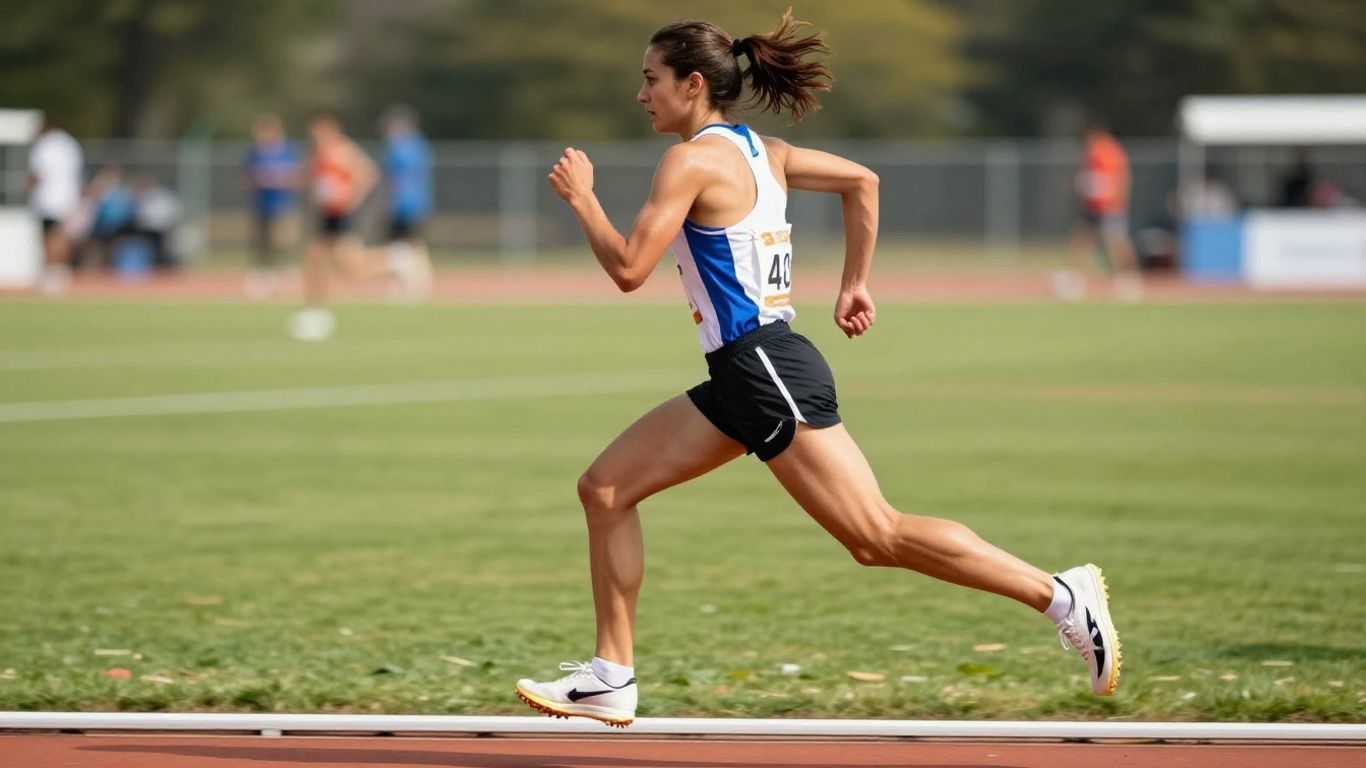
So, you’ve got this race pace calculator, and maybe you’re wondering, ‘Okay, now what?’ It’s not just about crunching numbers; it’s about making those numbers work for you. Let’s look at how you can actually use this thing to get better, race smarter, and maybe even enjoy your runs a bit more.
Scenario One: Training for a Personal Best
This is where the calculator really shines. If you’re aiming to shave time off your previous best, you need a plan. Your calculator helps you figure out exactly what pace you need to hit, not just for the whole race, but for each mile or kilometer. This means you can structure your training runs to mimic that target pace.
- Determine your target race pace: Use the calculator to find the minute-per-mile or minute-per-kilometer pace needed to achieve your goal time. For example, if you want to run a 10K in under 50 minutes, your calculator will tell you that’s a pace of 8:03 per mile (or 5:00 per kilometer).
- Incorporate pace-specific workouts: Plan tempo runs or interval sessions where you practice running at or slightly faster than your target race pace. This builds your body’s ability to sustain that effort.
- Track progress over time: As your training progresses, re-calculate your pace. If you’re getting faster, you might be able to adjust your goal time slightly upwards, or simply feel more confident about hitting your original target.
The key here is consistency. It’s better to run consistently at a slightly challenging pace than to do sporadic, super-hard efforts that leave you wiped out. Your calculator helps you find that sweet spot.
Scenario Two: Managing Race Day Strategy
Race day is a whole different ballgame. Excitement, nerves, crowds – it’s easy to go out too fast and burn out. Your calculator is your secret weapon for staying disciplined.
- Pre-race planning: Before the race, input your goal time and the race distance into the calculator. Write down your target pace for each mile or kilometer. You might even want to break it down by sections of the course if you know it has hills or flats.
- During the race: Use your watch or pace bands to check your splits. If you’re running too fast, ease back. If you’re a bit slow, you know you have room to pick it up later without overdoing it.
- Post-race analysis: After you finish, compare your actual splits to your planned splits. Where did you go wrong? Where did you nail it? This information is gold for your next race.
Here’s a quick look at how different paces might play out over a half marathon (13.1 miles):
| Target Pace (min/mile) | Estimated Finish Time | Notes |
|---|---|---|
| 7:00 | 1:31:12 | Strong effort, likely a PR |
| 8:00 | 1:44:10 | Steady, controlled pace |
| 9:00 | 1:57:08 | Comfortable, good for endurance building |
| 10:00 | 2:10:06 | Focus on finishing strong |
Scenario Three: Adapting to Different Course Types
Not all race courses are created equal. A flat, fast course is very different from a hilly, technical one. Your calculator helps you adjust your expectations and strategy.
- Hilly courses: You’ll likely be running slower on the uphills and potentially faster on the downhills. Your average pace might be slower than on a flat course, even if your effort level is the same. Use the calculator to estimate what a realistic average pace might be given the elevation profile.
- Windy conditions: Strong headwinds will slow you down, while tailwinds can give you a boost. Factor this in when setting your pace goals. You might need to aim for a slightly slower pace if you know you’ll be battling the wind for a significant portion of the race.
- Trail running: Trail races often involve uneven terrain, roots, and rocks, which naturally slow your pace. Don’t compare your trail pace directly to your road pace. Use the calculator to set realistic goals based on the specific trail conditions and your experience on similar terrain.
Understanding how these factors affect your pace allows you to set more realistic goals and avoid getting discouraged on race day. It’s all about working smarter, not just harder.
Leveraging Technology for Pace Calculation
When it comes to tracking your race pace lap by lap, technology makes things simpler than ever before. Today’s pace calculators are more than fancy stopwatches—they’re smart, fast, and reliable. Whether you’re training for your first 5K or eyeing a new marathon PR, knowing exactly how fast you’re moving—and how well you’re pacing each lap—can make a world of difference. Let’s take a look at the tech tools that keep you consistent:
Specialized Calculator Apps for Runners
Runners use dedicated apps to do the math for every split, whether on the road, trail, or track. These apps help runners:
- Instantly convert overall race time into per-lap splits.
- Forecast finish times based on current pacing.
- Store and compare run logs for continued improvement.
For a simple and straightforward option, check out this pace calculator app that focuses on accuracy and ease of use for both speed and time conversions.
Optimizing Performance with Precision Tools
Precision is key for runners aiming for a personal best. Now, digital tools track the smallest changes in lap speed and feed that data right back to you in real time. Here’s what these tools typically offer:
- Sync with GPS watches and phones to track every step.
- Adjustable race distance inputs — use them whether you’re running a mile or a marathon.
- Data export options make long-term tracking a breeze, so you always know if you’re making progress or need a change.
| Tool Feature | Benefit |
|---|---|
| GPS Integration | Real-time pace feedback |
| Custom Distances | Adapt for any race length |
| Lap/Split Settings | Monitor performance per lap |
Sometimes, just seeing your target splits for each lap before the race starts makes the goal feel more doable and helps you stay honest with your pace.
Interval and Split Mastery for Workouts
Sticking to the right interval timing can change the way you train and race. Mastering lap calculation helps with:
- Planning interval workouts tailored to your goals.
- Tracking progress through exact split times.
- Adjusting on the fly when fatigue sets in, so you don’t crash halfway through the workout.
There’s nothing like knowing you nailed every interval because your splits match what you planned. As tech evolves, expect even better ways to sync, share, and review these stats after every run.
Whether you’re just starting out or eyeing that first big podium finish, using technology to fine-tune your pacing can turn hard work into real results.
Closing Thoughts
Knowing your pace isn’t just about numbers; it’s about making your running time count. Whether you’re aiming for a new personal best or just trying to enjoy your miles a little more, this calculator is here to help. Don’t overthink it too much. Just use it to plan your runs, check your progress, and get out there. Remember, every runner’s journey is different, and the most important thing is to keep moving forward, one calculated mile at a time.
Frequently Asked Questions
How can I figure out my running speed without a fancy watch?
No problem! You can use a basic stopwatch and a place with a known distance, like a running track (usually 400 meters or a quarter mile per lap) or a path you’ve measured before. Just time yourself and divide the total time by how far you ran. For instance, if you run 2 miles in 20 minutes, your pace is 10 minutes for each mile. You can write this down to see how you get better!
What’s a decent running speed for someone just starting out?
A “good” speed is different for everyone and depends on how fit you are and what you want to achieve. For many new runners, running a mile in about 12 to 15 minutes is a great start. The most important thing is to run at a speed where you can still talk comfortably. As you run more often, you’ll naturally get faster.
When should I order running gear if I have a race coming up?
We usually send out orders within 1-2 business days. But, to make sure you get your running clothes or race-day items on time, it’s best to order at least two weeks before your race. If you’re ordering special team gear, that takes even longer, so plan ahead!
How do virtual races work and how do I track my speed for them?
Virtual races let you run a set distance whenever and wherever you want within a certain time frame. You use your phone or watch to record your run and then send in your results. It’s a fun way to get a medal and stay motivated without traveling to a race. You can keep your speed practice going strong this way!
What’s the difference between speed and pace in running?
Speed is how much distance you cover in a certain amount of time, like miles per hour (mph). Pace, which runners use more often, is how much time it takes to cover a distance, like minutes per mile. So, if someone asks your pace, you’d say ‘9 minutes and 30 seconds per mile,’ not ‘6.5 mph’.
Can I calculate my pace if I don’t have a GPS watch?
Absolutely! You can use a stopwatch and a known distance, like a track or a measured path. Record how long it takes you to run that distance, and then divide the time by the distance. For example, if you run 3 miles in 30 minutes, your pace is 10 minutes per mile. It’s a simple way to keep track of your progress.


