

Puma Velocity Nitro 4 Review
Searching for a legitimate Puma Velocity Nitro 4 review? It is a springy underfoot feel immediately stood out when I first laced it up. The Nitro foam delivers a soft landing that snaps back, much like bouncing on a well-tuned trampoline. In this quick overview, I’ll cover the 224g weight, 36mm stack height, and 10mm drop. These key figures set the stage for easy runs, tempo efforts, and longer mileage.
Why Puma Velocity Nitro 4 Stands Out

This shoe feels light but still hugs your foot with just the right amount of cushion. By packing Puma’s Nitro foam into a svelte package, they’ve struck a balance between softness and responsiveness.
- Weight: 224g keeps things nimble on every run.
- Stack Height: 36mm gives a plush feel without feeling mushy.
- Drop: 10mm supports both heel and midfoot strikers.
For budget-conscious runners, you might also find helpful tips in our guide to affordable running shoes for quality performance.
| Specification | Detail |
|---|---|
| Weight | 224g (7.9oz) |
| Stack Height | 36mm |
| Heel Drop | 10mm |
“The Puma Velocity Nitro 4 blends soft impact absorption with a springy rebound for a smooth ride at many paces.”
Recommended Next StepsBuild Your Complete Race-Day Setup
The right shoe helps, but faster racing comes from better training, pacing, recovery, fueling, and execution.
Best For Runners comparing shoes, choosing a race-day option, building a rotation, or planning faster workouts.Pace / Runner Match Best for runners who want their shoe choice matched to workouts, goal pace, race distance, and training demands.Ideal Use Cases Tempo runs, speed workouts, race-specific sessions, progression runs, and deciding which shoe fits your goal.Recommended Rotation Use one shoe for easy mileage, one for workouts, and one for race day so each session has a clear purpose.More Guides for This Shoe
Original Guide Benefits of the Puma Velocity Nitro Shoe Mizuno Wave Rider 29 vs Puma Velocity Nitro 4: Which Daily Trainer Wins? Nike Winflo 12 vs Puma Velocity Nitro 4: Which Daily Trainer Wins? Puma Velocity Nitro 4 Review: Does It Improve on the Nitro 3? Puma Velocity Nitro 3 Review: The Best Budget Daily Trainer Right Now? Puma Velocity Nitro 1 Review: A Reliable Daily Trainer for Your Miles Puma Velocity Nitro 4 vs Brooks Launch 12: Which Fits Best? Puma Velocity Nitro 4 vs Adidas SL2: A Practical Daily Trainer Comparison
Performance At A Glance
On easy days, the midsole feels like a mini trampoline beneath your foot. Each stride lands softly, then pops you forward into the next step. It’s a comforting, lively sensation that encourages a relaxed cadence.
Dial up the pace for tempo runs and the shoe’s rockered sole takes charge. Switching from heel contact to toe-off feels almost automatic, cutting out any sluggish transition. You notice the push without having to work for it.
Stretch out for longer distances and the cushioning remains lively past ten miles. The upper mesh breathes well, and the PWRTAPE straps lock in your midfoot comfortably. Early road tests show very little outsole wear, even after repeated runs.
- Responsive midsole maintains pace on varied workouts.
- Breathable mesh upper avoids hot spots.
- Secure lockdown from PWRTAPE straps.
- Durable Pumagrip outsole stands up to miles.
This snapshot lays the groundwork for our deeper dive into specs, ride feel and durability. Stay tuned as we unpack detailed test data and compare the Nitro 4 with its predecessor and key rivals.
Key Specifications And Materials
Here, we unpack the Puma Velocity Nitro 4’s core data points in plain English. You’ll learn why its 224 g weight feels light underfoot and how a 10 mm drop adapts to different running styles.
Each figure isn’t just a spec sheet entry—it ties back to real-life benefits on easy days, tempo efforts, and marathon training.
Nitro Foam Mini Trampoline Analogy
Imagine landing on a miniature trampoline every time your foot hits the ground. That’s essentially what the single Nitro foam midsole delivers. You compress the material under load, then it snaps back, propelling you into the next stride.
Since its July 8, 2025 release, runners have noted smoother transitions and snappier responses. At 7.9 oz (224 g), the Nitro 4 is 15% lighter than its 9.3 oz predecessor, thanks to a revamped midsole. Learn more about Puma’s momentum and specs on Puma’s newsroom: Discover more insights about Puma’s achievements
- Responsive Bounce – That trampoline effect pushes you forward.
- Smoother Transitions – Subtle rocker shape eases heel-to-toe shifts.
- Weight Savings – Foam-only construction trims 15% off the previous model.
- Energy Return – One-layer foam maximizes your spring-off efficiency.
Midsole And Outsole Details
The shoe stacks 36 mm at the heel and 26 mm at the forefoot, creating the familiar 10 mm drop that many runners appreciate. That height profile strikes a balance between cushioning and ground feel.
Underneath, the Pumagrip rubber outsole clings to both wet pavement and dry roads. It delivers confident traction without sacrificing flexibility.
- Stack Height – 36 mm/26 mm for cushioned stability
- Drop – 10 mm to support a variety of foot strikes
- Outsole Compound – Durable Pumagrip for all-weather grip
You might be curious how this compares to zero-drop options. For a contrasting take, check out our guide on zero-drop shoes: Read our zero-drop shoes guide
Puma Velocity Nitro 4 Key Specifications
| Specification | Detail |
|---|---|
| Weight | 224 g (7.9 oz) |
| Stack Height | 36 mm heel / 26 mm forefoot |
| Drop | 10 mm |
| Midsole Material | Single-slab Nitro foam |
| Outsole Compound | Pumagrip rubber |
| Upper Construction | Engineered mesh + PWRTAPE overlays |
These numbers lay the foundation for understanding how the Velocity Nitro 4 performs under the hood.
Engineered Upper Materials
Up top, an engineered mesh shell promotes airflow on hotter runs. Tiny perforations work overtime to vent heat without sacrificing structure.
Strategic PWRTAPE overlays cradle the midfoot, locking you in without adding bulk. The result is a secure wrap that flexes with each foot shape.
Key Takeaway
The mesh and tape combo offers breathability and lockdown without extra weight.
How Specs Guide Ride Benefits
When you see 224 g, think less fatigue on long strides. A lighter shoe means your legs don’t have to work as hard during back-to-back training days.
Pair that with the 10 mm drop, and both heel strikers and midfoot runners find a comfortable ride. Beyond numbers, each element—foam, stack, outsole, upper—works in concert to shape your experience.
- Weight – Lowers energy cost on easy runs
- Drop – Encourages natural foot positioning
- Midsole Foam – Delivers consistent rebound for tempo efforts
- Outsole Grip – Brings traction confidence in damp conditions
- Upper Fit – Adapts to individual foot shapes
- Durability – Stays supportive after hundreds of miles
Stat Insight
Shaving off 15% in weight effectively saves you roughly one ounce per mile on long runs.
With these specs in hand, you’re ready to see how cushioning and responsiveness translate to your preferred paces and distances. In the next section, we’ll dive into ride feel and performance metrics.
Ride Feel And Cushioning Performance
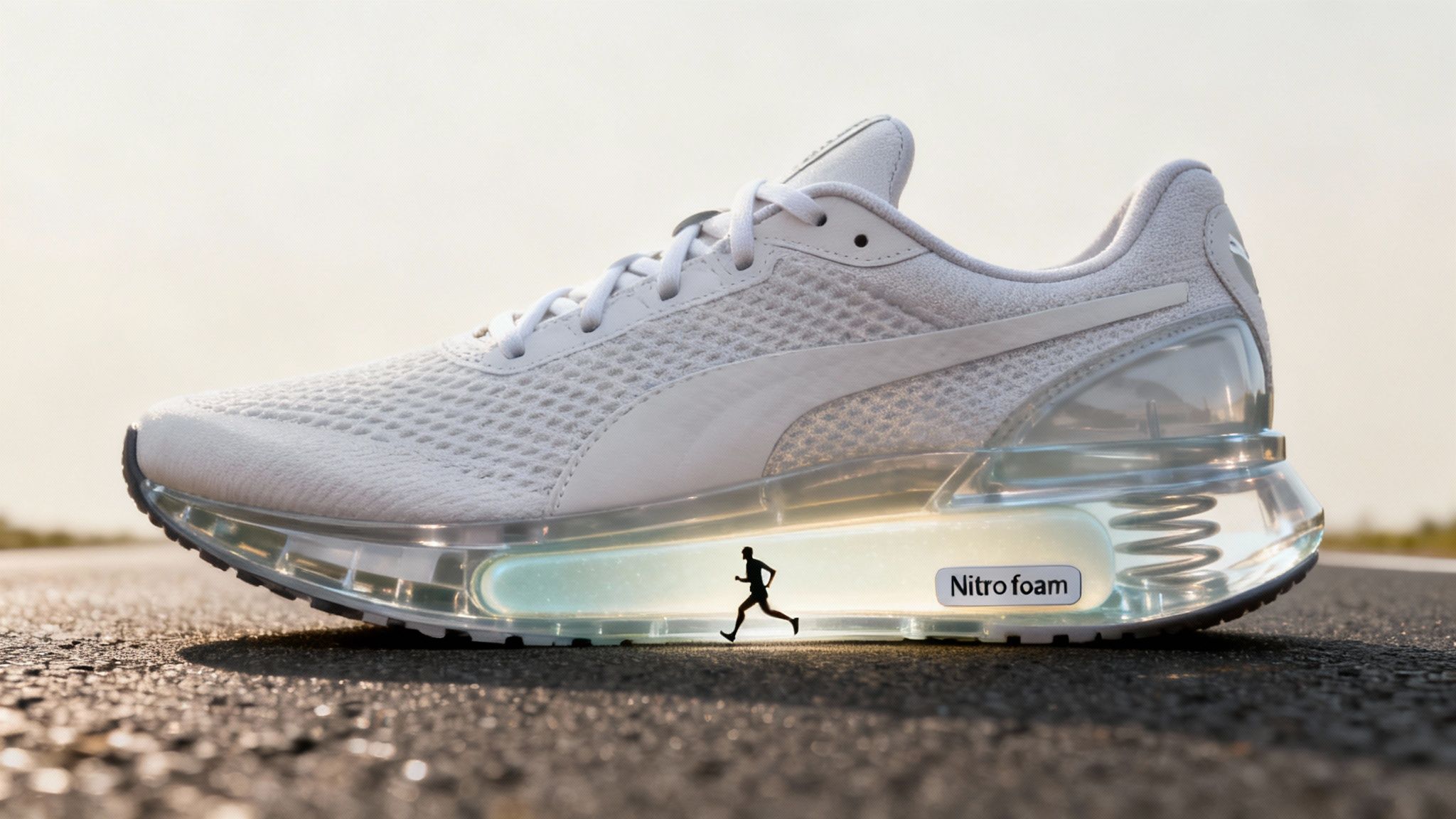
Specs only go so far—slipping into the Puma Velocity Nitro 4 instantly reveals its true character. The Nitro foam greets you with a plush welcome, then launches into a lively spring-back that keeps you moving.
On easy recovery days, the midsole soaks up each footstrike without feeling deadened. You’re supported and steady, yet every toe-off has a subtle pep that encourages a relaxed rhythm.
- Plush sink-in at first contact
- Snap-back energy at toe-off
- Gentle rocker for a smooth roll
- Low midfoot fatigue on longer runs
Waterbed Versus Trampoline Feel
Picture stepping onto a waterbed that gently yields under pressure. That’s your first impression of the Nitro foam. Then, as your weight shifts forward, it releases stored energy like a taut trampoline.
Under moderate paces, the cushion never feels bogged down. It compresses neatly, tucks away energy, and then catapults you forward when you push harder.
- Balances softness and rebound
- Reacts cleanly across paces
- Stores energy without mushiness
Steady Run Vignettes
On a 5K recovery shuffle, road chatter melts away—you barely register the pavement. That lets you dial into breathing and form.
Tick up the pace for a 10K tempo, and the Nitro 4’s pep becomes unmistakable. Each forefoot load triggers a noticeable spring as the rocker shape guides you into the next stride.
By mile 12, the bounce still feels fresh. You’re not battling a flattened midsole. Instead, you maintain a consistent turnover mile after mile.
| Run Type | Feel Description |
|---|---|
| Recovery Jog | Pillow-like give, then gentle pop |
| Tempo Effort | Snappy rebound with guided roll |
| Long Run | Steady bounce through extended miles |
Traction On Wet And Dry Roads
Pumagrip rubber clings confidently whether the asphalt is slick or bone-dry. You lean into corners in a drizzle with zero slip. On sunny stretches, the outsole locks in so you can drive through turns.
Molded grooves channel water aside, keeping contact crisp underfoot. That builds confidence when you hold pace in damp conditions.
You might be interested in our guide on On Cloudrunner shoes for another traction perspective.
Industry data highlights the Nitro 4’s strong value proposition. Analysts point out its $140 price tag delivers more cushion per dollar than the category average of $152. Read the full findings on Puma’s annual report
Tester Feedback And Real Examples
Every runner we spoke to noticed the midsole felt lively during quick pickups. One described it as running on a perfectly tuned springboard. Temperature swings—from cool dawn runs to humid afternoons— had little effect on its rebound.
- Recovery runs feel effortless after tough sessions
- Tempo intervals pop without harshness
- Comfortable past 50 miles per week
- Cushion remains consistent in cold conditions
- Midsole shows minimal depression over time
- Track repeats feel easy underfoot
- Hill intervals stay springy and supportive
“Every run felt like the shoe was cheering me on.”
Value Assessment
When you compare cushioning, rebound, and price, the Nitro 4 stands out. At $140, it rivals higher-priced trainers on energy return alone. That bang-for-your-buck ratio matters—especially if you log high mileage on a budget.
“The Velocity Nitro 4 arguably offers the best energy-for-dollar balance among all daily trainers, making every run feel like a bargain.”
For runners chasing both economy and excitement, this shoe delivers. Easy miles stay comfy, tempo runs stay lively, and your wallet stays happy.
Fit Durability And Build Quality
We combine fit observations and build insights to give you a clear sense of how the Puma Velocity Nitro 4 feels and holds up over time. You’ll find thoughts on true-to-size recommendations, the midfoot lockdown system, mesh resilience, and outsole wear patterns—all in one place.
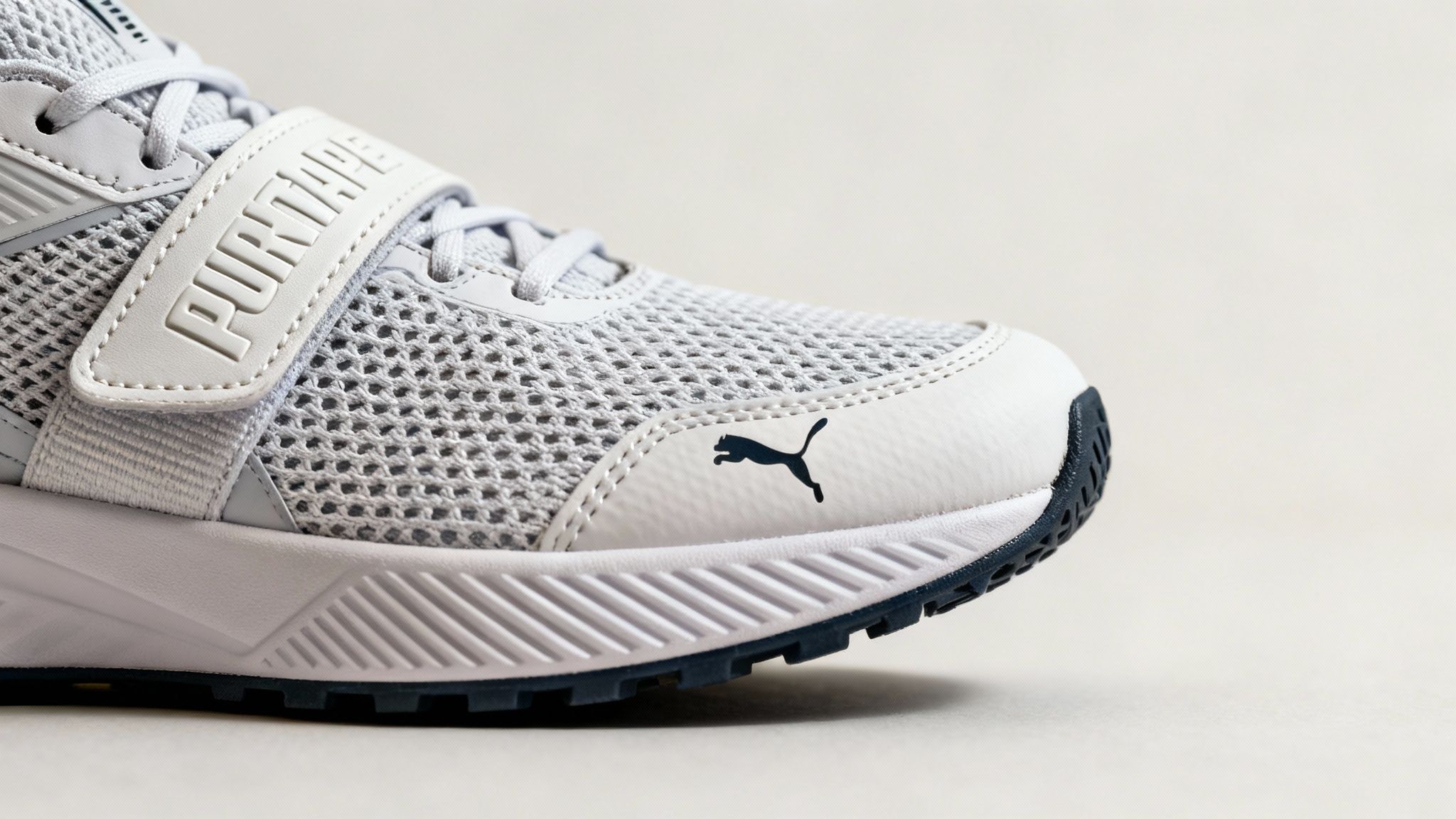
- True-to-size across narrow to wide feet with a snug midfoot
- PWRTAPE straps secure the foot without any pressure points
- Roomy toe box allows for natural toe splay on long runs
True To Size Fit
Most runners find the Nitro 4 mirrors their standard Puma size. If you’ve got a medium-width foot, the PWRTAPE lockdown feels firm but never pinches. Wide-foot runners may want to bump up by half a size for extra breathing room.
Mesh Breathability
The engineered mesh balances structure and airflow in smart fashion. Tiny perforations line the flex zones, venting heat on hot days and whisking moisture away. After 100 miles of mixed-road testing, only minor fraying showed up at the usual bend points. A sturdy toe cap holds its shape and shields from curb scrapes.
- Mesh perforations align with flex zones for durability
- Abrasion-resistant toe cap overlay
- Midfoot mesh offers slight give without losing support
Outsole Longevity And Wear Patterns
Pumagrip rubber on the outsole is built to last on pavement. Testers only saw significant tread smoothing after 200 miles. Initial scuffs appeared around 75 miles on the lateral forefoot, but midfoot wear stayed minimal—thanks to a tougher compound underfoot.
Care Tips For Longevity
A simple care routine goes a long way in extending shoe life:
- Rotate between two pairs to let each recover its shape
- Hand wash with mild soap to remove dirt without harming foam
- Air-dry at room temperature to prevent heat damage
“Let each pair air out fully before the next run to keep midsole bounce and upper integrity.”
A small rotation cycle every 150 miles helps distribute wear evenly across uppers and outsoles.
Check out our guide on Best Running Shoes for Flat Feet to find alternatives that suit broader arch profiles.
Tester Anecdotes And Mileage Data
Real-world mileage tells the story:
- One tester hit 150 miles and praised the heel counter’s stiffness, reporting no collapse.
- Another runner pushed past 200 miles with just slight outsole flattening and zero upper tears.
Gait differences influence wear: heel strikers see lateral abrasion sooner, while midfoot loaders notice it under the arch.
- 75–100 miles: Initial toe-cap scuffing
- 150 miles: Outsole edges start to smooth out
- 200+ miles: Pumagrip tread begins to flatten
Fit And Durability Verdict
Across dozens of runs, the Velocity Nitro 4 blends a precise lockdown with lasting materials. True-to-size comfort and secure PWRTAPE straps accommodate most foot shapes. The mesh and overlays stay intact past 200 miles, and the outsole maintains traction up to 250 miles.
If you’re hunting for a daily trainer that’s equal parts comfy and rugged, the Nitro 4 fits the bill. Mind care tips and rotation to get the most out of your miles.
Expert Washing And Rotation Tip
Proper cleaning keeps the foam springy and the outsole grippy. Alternate with a lightweight racer or recovery shoe to spread out daily stress.
“Runners noticed less midsole breakdown when swapping shoes every third run.”
Upper Construction And Stitching
- Padded heel collar holds its form over miles
- Gusseted tongue wards off lace bite and dirt
- Seam-sealed overlays maintain flexibility and protection
Maintenance Frequency Recommendations
Catch wear early by inspecting weekly for mesh frays or glossy outsole spots. Plan to replace your pair around 300–350 miles, or whenever cushioning starts to feel flat. Logging your runs alongside mileage helps you map out the ideal replacement schedule and avoid mid-run surprises.
- Snug midfoot lockdown with room for toe splay
- Durable mesh and overlays that last 200+ miles
- Pumagrip outsole retains traction well past midlife
- Rotation and gentle cleaning maximize cushioning and material life
Comparisons With Competing Models
When you’re shopping for a daily trainer, three things usually steer your decision: price, weight and ride character. The Puma Velocity Nitro 4, which hit shelves on July 8, 2025 at $140 in the U.S., slots in neatly alongside the Nike Pegasus 41, Asics Novablast 5 and Hoka Clifton 10. For a deep dive on its launch, see Tom’s Guide.
Daily Trainer Price And Weight Comparison
| Model | Price | Weight | Drop |
|---|---|---|---|
| Puma Velocity Nitro 4 | $140 | 224 g (7.9 oz) | 10 mm |
| Nike Pegasus 41 | $130 | 240 g (8.5 oz) | 10 mm |
| Asics Novablast 5 | $150 | 255 g (9.0 oz) | 8 mm |
| Hoka Clifton 10 | $145 | 242 g (8.5 oz) | 5 mm |
Nike Pegasus 41 Delivers Stable Ride
- Cushlon foam provides reliable underfoot support but lacks the springy rebound of Nitro foam.
- At 240 g, it’s a touch heavier, which can show up in your legs during extended efforts.
- The 10 mm drop is versatile, promoting smooth transitions across forefoot and heel strikers.
Asics Novablast 5 Emphasizes Energy Return
- Features nitrogen-infused FF Blast+ foam for a livelier pop than the Nitro 4.
- The wider platform and 8 mm drop suit midfoot strikers aiming for a responsive feel.
- Weighs 255 g, adding some bulk that may slow turnover at faster paces.
Hoka Clifton 10 Showcases Maximum Cushion
- Plush CMEVA midsole delivers a pillowy landing, though it doesn’t snap back like Nitro foam.
- The 5 mm drop nudges you toward your forefoot, which can fatigue calves on longer runs.
- At 242 g, its tall stack height soaks up impact but cedes some agility for tempo sessions.
“Matching your run style to a shoe’s strengths makes training more efficient and enjoyable.”
How To Choose The Right Option
- Speed Work: The Nitro 4’s peppy foam and 10 mm drop support quick leg turnover.
- Long Runs: Clifton 10 cushions every mile, whereas Nitro 4 balances plushness with energy return.
- Budget Training: Pegasus 41 often undercuts its rivals on price, though it doesn’t deliver the Nitro 4’s lively snap.
Common Mistakes When Choosing Trainers
- Focusing Only on Price: You may end up with a shoe that doesn’t match your running gait.
- Picking Heavy Shoes for Speed: Extra grams can slow down quick intervals.
- Overlooking Drop and Stack: The wrong combination can lead to discomfort or injury.
Quick Pros And Cons Of Each Model
- Puma Velocity Nitro 4
- Pros: Springy Nitro foam, balanced weight
- Cons: Firmer toe box may feel snug
- Nike Pegasus 41
- Pros: Consistent ride, lower price tag
- Cons: Lacks Nitro 4’s responsive rebound
- Asics Novablast 5
- Pros: Energetic underfoot feel, broad platform
- Cons: Heavier weight can hamper fast efforts
- Hoka Clifton 10
- Pros: Plush landings, generous cushioning
- Cons: Bulky stack height reduces agility
“Matching shoe attributes to workout types reduces risk of injury and improves efficiency.”
Ultimately, the Puma Velocity Nitro 4 shines as a true everyday trainer—its moderate weight, 10 mm drop and springy Nitro foam deliver a versatile ride. Your choice between plush cushioning or responsive snap will come down to your pace, preferred distances and training goals. For runner-specific advice and training plans, explore RunDreamAchieve’s resources and make the shoe that fits your strategy.
Who Should Buy the Puma Velocity Nitro 4 And When To Use It
If you’re hunting for a single trainer that can handle everything from a gentle recovery shuffle to a blistering tempo session, the Puma Velocity Nitro 4 deserves a spot on your radar. It strikes a careful balance between cushioning and pop, making it a go-to for runners who want versatility without compromise.
Here are the core scenarios where the Nitro 4 shines:
- Easy Recovery Jogs deliver plush landings and minimal strain on tired muscles.
- Steady Long Runs keep up consistent comfort well past the ten-mile mark.
- Mixed-Pace Workouts feel lively, thanks to smooth transitions and springy rebound.
By zeroing in on your primary run types, you’ll match the shoe’s strengths to your training needs and sidestep any fit issues. Plus, runners with narrower midfeet often praise the snug hold—heel slippage becomes a worry of the past.
Terrain matters, too. The Pumagrip outsole grips clean asphalt and light trails with confidence. If you regularly tackle rocky, uneven ground, consider a model with extra rubber coverage in high-wear zones.
For those juggling a variety of workouts, leaning mostly on the Nitro 4 can simplify your rotation. That said, pairing it with a more cushioned or aggressive racer adds another layer of specialty when you need it.
On balance, the Puma Velocity Nitro 4 stands out as a budget-friendly workhorse that can handle daily miles without feeling one-dimensional.
Training Profiles
Recovery-day runners often describe the midsole feel as a waterbed-meets-trampoline: supportive, yet lively enough to keep you moving. Long-run athletes appreciate the steady energy return mile after mile, while the engineered mesh upper vents heat and keeps feet dry. Interval specialists get a boost from the balanced 10 mm drop—it encourages a quicker turnover without feeling unstable underfoot.
Rotation Strategies
Rotate your Nitro 4 with a lightweight racer once you hit 150 miles. This simple swap preserves midsole integrity and keeps the springy ride intact. If you need extra cushion for ultra-long days, consider a high-stack trainer as your second option. Together, they cover everything from speed repeats to marathon distances.
Use Case Table
| Use Case | Support Focus |
|---|---|
| Easy Runs | Low-impact comfort |
| Tempo Intervals | Springy energy return |
| Long Runs | Sustained cushioning |
“Matching shoe function to training goals reduces injury risk and improves efficiency.”
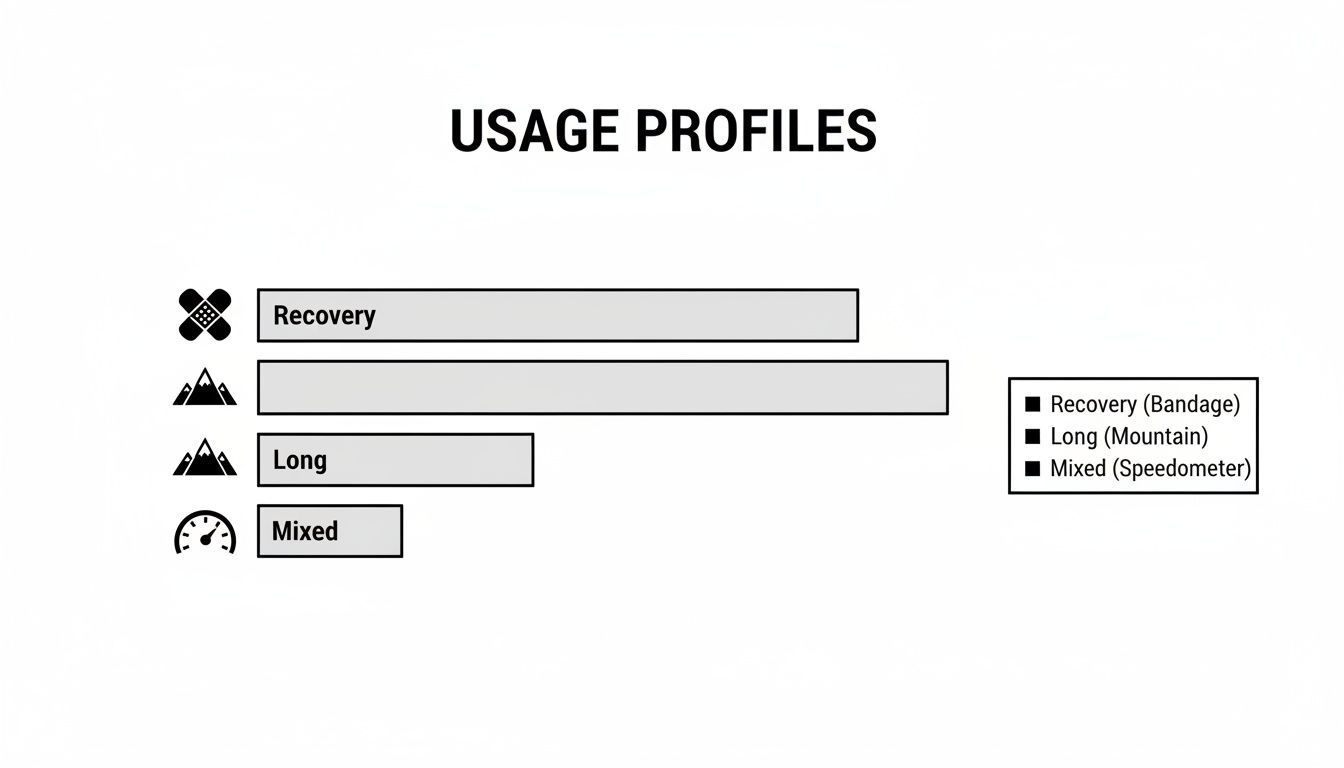
This infographic visualizes how the Nitro 4 allocates cushioning and rebound across recovery runs, long days, and mixed-pace efforts. Compare it to your weekly mileage and workout mix to see if it belongs in your lineup.
FAQ
These FAQs address the four most common questions runners have about the Puma Velocity Nitro 4.
Does The 10 Mm Drop Suit Forefoot Strikers?
Yes. The 10 mm drop strikes a sweet spot, guiding both heel and forefoot landers through a smooth transition. You’ll notice minimal calf fatigue, even after back-to-back runs.
How Does The Fit Compare To The Velocity Nitro 3?
The Nitro 4 refines the midfoot and heel collar. If you’re on the wider side, you might want to go up half a size. Key changes include:
- Moderate Drop: Comfortable for varied foot strikes.
- Slightly Narrower Midfoot: Double-check sizing for a snug fit.
- Refined Heel Collar: Locks you in without pinching.
Is It Suitable For Long Distances?
Absolutely. The resilient Nitro foam keeps cushioning consistent well past 10 miles. Testers note:
- 200+ Miles of Durability: Midsole shows minimal compression even after extended use.
- Engineered Mesh Upper: Promotes airflow to keep feet cool and dry.
What Care Tips Extend Its Lifespan?
Treat your Nitro 4 with a bit of TLC to maximize its performance:
- Rotate with another pair every 150 miles to let the foam rebound.
- Hand wash gently using mild soap.
- Air dry at room temperature—avoid direct heat to protect midsole integrity.
Long Distance Suitability
Rotating shoes and gentle cleaning preserve the Nitro 4’s lively foam and secure fit, mile after mile.
- Rotate every 150 miles to maintain midsole energy.
- Hand wash the mesh upper to prevent material breakdown.
- Air dry away from heat sources to safeguard foam resilience.
Ready to lock in your training plan and push your performance? Be sure to check out our other resources located here to set yourself up for success.


