

Puma Fast R Nitro Elite 3 vs Saucony Endorphin Elite 2: Which Feels Faster?
If you’re choosing between the Puma Fast R Nitro Elite 3 vs Saucony Endorphin Elite 2, you’re already in serious race-shoe territory. Both are built for marathon and half marathon runners who want speed, but they don’t feel the same on the road, and that difference can matter a lot when you’re chasing a goal time.
One shoe may fit your stride, foot shape, and race-day style better than the other. Maybe you want a snappy, aggressive ride; maybe you care more about comfort late in the race; maybe you need a shoe that holds steady when your legs start to fade. Hydration matters too, because even the best race shoe can’t save a rough marathon day if your fueling falls apart, and good endurance hydration habits can make a real difference.
This comparison looks at the parts that matter most when you’re narrowing down a race-day pick: ride feel, speed, comfort, fit, traction, stack, and value. If you’re also sorting through other top options, it helps to see how these models compare with other marathon race day shoes before you commit.
By the end, you’ll have a clearer idea of which shoe matches your race goals, your pace, and the way you like a super shoe to feel underfoot.
How the Puma Fast R Nitro Elite 3 and Saucony Endorphin Elite 2 are built for speed
Both shoes are made to do the same job, but they get there in different ways. The Puma Fast R Nitro Elite 3 feels more like a sharp, forceful racer, while the Saucony Endorphin Elite 2 aims for a smoother, more fluid push forward. That difference shows up in the foam, plate setup, stack shape, and how each shoe behaves when you run hard for a long time.
The midsole is where these shoes get their speed. Puma uses a lively foam and a plate system that feels direct and assertive, so when you press the pace, the shoe answers fast. Saucony takes a slightly different path with a softer, more forgiving foam feel, which can make the ride feel smoother under load.
The plate behavior matters just as much as the foam. In the Puma, the plate adds a firmer snap and can feel more aggressive at toe-off, especially when you run with quick turnover. The Saucony’s setup feels a bit more flowing, so the transition can feel less abrupt and easier to settle into during longer efforts.
That difference changes the way each shoe handles speedwork and racing:
- Puma Fast R Nitro Elite 3: more pop, more firmness, more direct energy return.
- Saucony Endorphin Elite 2: smoother rebound, a softer landing, and a less harsh feel at pace.
If you like a shoe that feels like it is pushing back at you, the Puma has the edge. If you want speed without as much bite, the Saucony feels easier to live with over long miles. For runners comparing super shoes, RunRepeat’s Fast-R Nitro Elite 3 testing also shows how light and aggressive the Puma build is.
The foam and plate combo does more than add bounce. It also changes how stable the shoe feels when you fatigue.
Why the stack height and geometry matter on race day
Stack height changes how a shoe feels when your legs start to fade. A higher stack can bring more protection and a softer step, but it can also make the shoe feel taller and less planted in sharp turns. Lower or better-shaped geometry can help you stay connected to the road when the pace picks up and the course gets tricky.
Puma’s geometry feels tuned for an aggressive ride, with a shape that encourages forward motion. That works well when you are running straight and fast, because the shoe helps guide you onto your toes. Saucony’s design feels more balanced, which can help the shoe stay smoother when you are moving through miles, corners, and late-race changes in pace.
On race day, that matters more than most runners expect. A shoe that turns over cleanly can save energy, but a shoe that feels too unstable can waste it. Cornering is a good example, because a tall, soft platform may feel great on open roads but less secure on tight turns or crowded aid station sections.
The right geometry also affects late-race control. When your form gets sloppy, a well-shaped platform can keep the ride predictable. That can be the difference between holding pace and fighting the shoe.
Which runner each shoe is likely to suit best
The Puma Fast R Nitro Elite 3 fits runners who want a more aggressive, race-first feel. It suits lighter efficiency seekers, forefoot strikers, and runners who like a shoe that feels firm enough to stay snappy at high pace. If you want a racer that feels planted, fast, and a little fierce, this one makes sense.
The Saucony Endorphin Elite 2 is a better match for runners who want speed with a softer landing. It suits runners who like a cushioned race shoe, especially for half marathon and marathon efforts where comfort still matters late. It also makes sense if you want a smoother ride that feels less harsh when the miles stack up.
A simple way to separate them is this:
- Choose the Puma if you want a more aggressive, forceful racer.
- Choose the Saucony if you want a softer, smoother, more forgiving speed shoe.
- Pick the one that matches your stride, because race-day comfort still matters when you are chasing a time.
Hydration still plays a role here too, since even the fastest shoe feels worse when fatigue sets in too early. Good race fueling and endurance hydration habits help both shoes do their job when the pace gets honest.
Puma Fast R Nitro Elite 3 vs Saucony Endorphin Elite 2 on the run
Getting these two shoes on the road reveals how different their personalities are once you start pushing the pace. While both aim to lower your marathon time, the experience shifts depending on whether you want a rhythmic, fluid transition or a sharp, aggressive kick. Choosing the right one is about how you prefer to feel when you are deep into a race, especially when you need to maintain focus through long, demanding stretches.
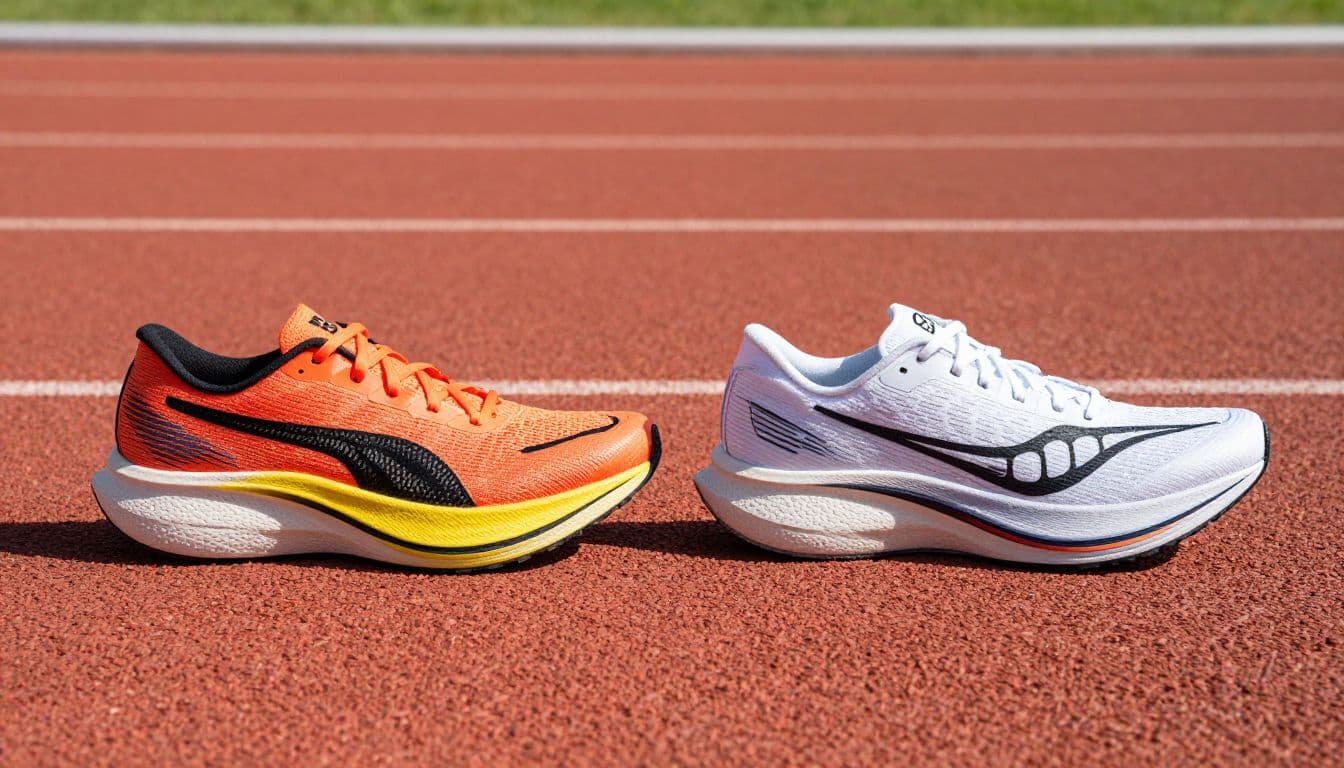
At steady marathon pace, the Saucony Endorphin Elite 2 feels remarkably composed. The foam works in harmony with the geometry, creating a rolling sensation that makes it easy to stay in a rhythm for miles. It feels more natural for those steady, controlled efforts where you want the shoe to disappear beneath you. You don’t have to fight it; you just keep moving forward.
The Puma Fast R Nitro Elite 3 behaves differently. It feels purpose-built for speed, often demanding you run at a faster clip to feel its true potential.
When you pick up the pace or hit that “sharp” section of a workout, the Puma comes alive. It provides a more aggressive snap that rewards quick turnover, making it a stellar choice for runners who like an assertive, almost rigid push-off during their speed work or late-race kicks.
If you are curious how these stack up against other market favorites, looking at best elite marathon racing shoes compared helps provide context for how different geometries impact your efficiency.
Energy return, bounce, and leg savings over long runs
Late in a marathon, your legs tell the truth about your shoe choice. The Saucony Endorphin Elite 2 shines here because it focuses on a softer, more protective landing that helps keep your legs fresh.
By reducing the impact over every mile, it gives you a bit more “cushion” to lean on when the fatigue hits. You get a lively, bouncy return without that harsh firmness that sometimes beats up the calves or quads late in the day.
Puma takes a different approach by focusing on a highly reactive, firm energy return. The bounce is undeniable, but it is less about impact absorption and more about maximal propulsion. For some runners, this is a major benefit that keeps them rolling toward the finish line, but others might find it less forgiving as their form starts to degrade. It is a trade-off: you get a very responsive ride, but you have to be ready to handle the firmness over the full 26.2 miles.
Regardless of the shoe, remember that your internal fuel tank matters as much as the foam under your feet. Keeping up with good endurance hydration habits ensures your body can actually use that bounce to finish strong.
Stability and control when your form starts to fade
Fatigue changes your gait, often causing you to overpronate or stumble slightly on corners. The Saucony Endorphin Elite 2 offers a more predictable platform in these moments. The wider, more stable geometry under the heel and midfoot provides a sense of security, which is invaluable when you are weaving through a crowded race course or navigating turns on tired legs. It stays planted, giving you one less thing to worry about when you are digging deep.
The Puma Fast R Nitro Elite 3 is more specialized. Because of its unique, cut-out construction, it feels very precise, but it requires more attention. You get a fantastic feel for the road, which helps with control, yet it feels less “forgiving” than the Saucony if you are having a really rough day.
If you are a runner who values feeling connected to the surface and you have strong, stable mechanics, the Puma offers a level of responsiveness that is hard to match. For those who need extra structure when the miles become a struggle, the Saucony is the more reliable partner.
Fit, upper comfort, and lockdown feel when the miles add up
Finding a race-day shoe that stays comfortable for the entire marathon is difficult. Your feet change throughout a long race, often swelling and demanding more room than they need at the starting line.
Both the Puma Fast R Nitro Elite 3 and Saucony Endorphin Elite 2 use lightweight, technical uppers to manage this. However, how they achieve that “locked-in” feeling while balancing long-term comfort differs in ways that might influence your final decision.
Toe box room and forefoot shape
The forefoot shape of these two racers caters to different foot types. The Saucony Endorphin Elite 2 offers a more accommodating, rounded toe box. This design allows for natural toe splay, which is a major advantage during the later stages of a marathon when foot swelling is inevitable. If you have wider feet or simply prefer extra space to prevent blistering during high-mileage efforts, you will likely find the Saucony build more forgiving.
In contrast, the Puma Fast R Nitro Elite 3 features a sharper, more tapered forefoot. It provides a precise, race-oriented fit that keeps your foot secure and prevents unnecessary sliding inside the shoe.
While this feels excellent for speed and cornering, runners who need extra width might find the edges of the upper pressing against their toes after several hours. The Puma design prioritizes lockdown and directness over roominess, making it feel more like a specialized track spike than a traditional long-distance trainer.
Heel lock, midfoot hold, and lace security
A secure lockdown is essential for confidence, especially when you are cornering at high speeds or pushing through late-race fatigue. The Saucony Endorphin Elite 2 relies on a structured, minimalist heel counter paired with a highly effective lacing system.
This setup creates a reliable hold that keeps your foot centered over the midsole without creating hot spots or unnecessary pressure points. You can trust the midfoot to stay snug through quick changes in direction, which helps when you are navigating tight turns on a congested course.
The Puma Fast R Nitro Elite 3 takes a more aggressive approach to lockdown. Its upper construction is exceptionally thin, relying on high-tension materials to pull the foot down into the footbed. This provides a locked-in feel that is virtually unmatched in terms of responsiveness; you feel one with the shoe immediately upon lacing up.
However, getting the tension right requires a bit of patience. Because the material is so thin and direct, any slight overtightening can lead to pressure over the bridge of the foot. Once secured correctly, however, the hold is formidable and keeps you steady through your fastest efforts.
How the upper feels in hot race conditions
Breathability is a critical factor when temperatures rise. Both models use ultra-thin, engineered mesh uppers that excel at dumping heat.
The Puma Fast R Nitro Elite 3 feels slightly more porous, which helps airflow during intense heat. This helps keep your feet cool and dry, though it also means the upper offers very little in terms of external protection. If you are racing in high humidity, the Puma upper manages moisture effectively, keeping the shoe weight low even as you sweat.
The Saucony Endorphin Elite 2 uses a slightly denser, yet still highly breathable, mesh. It feels a bit softer against the skin, which is a welcome feature if you prefer a sock-like wrap rather than a high-tension cage.
As your feet swell during a hot, long race, the Saucony upper stretches just enough to maintain comfort without losing its shape.
Regardless of which pair you choose, staying on top of good endurance hydration habits is vital, as proper fluid intake helps regulate your body temperature and limits the degree of foot swelling you experience late in the race. Both shoes are excellent performers, but the Saucony often feels slightly more forgiving when the heat makes your feet sensitive.
Traction, durability, and the surfaces each shoe handles best
Racing shoes are designed for performance, but their utility depends heavily on how they handle different road surfaces and wear over time.
While you want speed, you also need the confidence to corner hard and the durability to make your investment last through your training cycle. Evaluating the Puma Fast R Nitro Elite 3 vs Saucony Endorphin Elite 2 requires looking at how their outsoles respond to varied conditions and how quickly those materials break down during intense preparation.
Grip on dry roads and wet pavement
Confidence is everything when you are cornering on a rainy race day or navigating sharp turns on city streets. The Puma Fast R Nitro Elite 3 features an outsole design that emphasizes targeted coverage.
This approach provides excellent bite on dry pavement, especially when you are putting down power through the forefoot. However, the exposed areas of the midsole mean you should be mindful of slippery painted lines or metal surfaces during wet weather.
The Saucony Endorphin Elite 2 takes a different approach by offering more consistent rubber coverage across the high-wear zones. This design helps the shoe maintain better contact with the ground, making it feel more predictable on damp pavement. If you frequently race on courses with tight turns or unpredictable conditions, the Saucony often provides a slight edge in terms of security.
Regardless of the model, you should always check the texture of the roads before a race, as even the best traction is no match for slick oil slicks or debris. Maintaining your body is just as important as your gear, so keep up with good endurance hydration habits to stay sharp enough to navigate the course safely.
Durability
Durability is often a weak point in super shoes because the materials prioritize weight savings over longevity. The Puma Fast R Nitro Elite 3 is built for pure speed, and its exposed foam sections show wear faster if you use them for daily training on abrasive surfaces like concrete.
Runners who have a heavy heel strike or drag their feet during late-race fatigue will likely notice the rear foam degrading more quickly than the forefoot.
The Saucony Endorphin Elite 2 usually handles higher mileage with more grace. Because it uses more robust rubber in the key landing zones, the outsole withstands the friction of long tempos and race-pace intervals better than the Puma.
If you are a runner who wants one pair of shoes for both your final build-up workouts and the race itself, the Saucony is the more reliable choice for getting through those extra miles without burning through the tread too early.
Ultimately, lighter runners or those with a very efficient, midfoot-focused stride will get more life out of both models. If you tend to be hard on your shoes, expect to retire these racers sooner than a standard trainer. Rotating them only for your hardest efforts is the best way to ensure the foam and outsole stay in top shape until the starting gun goes off.
Price, value, and which shoe gives more for your money
Choosing between the Puma Fast R Nitro Elite 3 vs Saucony Endorphin Elite 2 is a significant investment. Super shoes carry a high price tag because of the advanced foams and carbon plates required to deliver that race-day snap. When you look at value, it helps to consider how many hard efforts or races you actually need the shoe for. A shoe that helps you PR during a goal race often pays for itself in the satisfaction of hitting your target.
When the premium price makes sense
Paying for a top-tier racer is usually worth it when you have a specific goal on the calendar. If you are chasing a personal best in a marathon or half marathon, the performance gains from these shoes provide a tangible advantage. They are lighter and more responsive than daily trainers, which helps you maintain pace when your legs start to tire.
You should consider the investment when you race often throughout the year. If you frequently line up for high-stakes events, having a dedicated race shoe prevents premature wear on your daily trainers.
These racers are specifically tuned for efficiency at high speeds. When every second counts toward a qualifying time or a podium finish, the extra cost covers the research, material science, and engineering that keeps you moving faster for longer.
When a runner should save money and choose differently
Not every runner needs an aggressive, high-priced super shoe for every workout. If you are relatively new to running, your focus is better spent on consistent mileage in a durable, stable trainer.
Advanced race shoes are often built with narrow platforms that can be unstable if you haven’t yet developed the specific strength needed to handle them. You might find more comfort and better results in a standard daily shoe that offers more support and cushioning.
You may also want to save money if you rarely race. High-end carbon-plated shoes have a limited lifespan because the performance foams break down after a certain number of miles. If you only run for fitness or occasional fun runs, you won’t get enough use out of them to justify the cost. Many mid-tier options now offer excellent energy return and comfort without the specialized, expensive construction of an elite racer.
Always keep in mind that your overall health impacts performance more than your footwear. Even with the best gear, staying on top of good endurance hydration habits is essential for a successful race. You will get more value from a slightly cheaper shoe paired with smart training than you will from the most expensive racer if your body isn’t fueled to handle the distance. Pick the gear that matches your current stage of development rather than just the fastest option on the shelf.
Final pick: Puma Fast R Nitro Elite 3 or Saucony Endorphin Elite 2?
Choosing between the Puma Fast R Nitro Elite 3 or Saucony Endorphin Elite 2 eventually comes down to your personal racing style and your physiological needs over a long race. Both shoes deliver top-tier speed, yet they prioritize different mechanics. You have to decide if you want a firm, responsive ride that rewards aggressive mechanics or a softer, more fluid platform that shields your legs from repetitive impact.
How to decide based on your race-day goals
Your target distance and typical race intensity should guide your decision. The Puma Fast R Nitro Elite 3 functions like a precision tool for runners who favor a snappy forefoot transition.
If your stride is efficient and you prefer a shoe that feels stiff and reactive, this is often the better choice. It pushes you to stay on your toes, which helps maintain a high cadence through the final miles of a half marathon or a fast-paced marathon.
On the other hand, the Saucony Endorphin Elite 2 handles long-distance fatigue with more grace. It offers a more forgiving ride that keeps your legs feeling fresher when you hit the 20-mile mark. If your goal is simply to hold a steady, sustainable pace while minimizing quad fatigue, the extra protection in the Saucony midsole is a significant advantage.
Consider these factors before you commit:
- Your injury history and how well your body handles firm, plate-heavy shoes.
- The specific technical requirements of your race course, such as tight corners or heavy elevation changes.
- Whether you prioritize a “fast” feel that pushes you harder or a “cushioned” feel that saves your energy for a final kick.
Making the call for your next event
No single shoe is perfect for everyone, even at the elite level. A shoe that feels incredible for one runner might feel too harsh for another, regardless of what the tech specs suggest.
You need to weigh the responsiveness of the Puma design against the protective flow of the Saucony model. If you are struggling to maintain your form during late-race training runs, prioritize the shoe that offers the most stability and support.
Most importantly, ensure your training includes proper fueling and good endurance hydration habits throughout your preparation. Even the most advanced footwear cannot compensate for dehydration or poorly planned energy intake. Pick the pair that aligns with your mechanics and your body’s specific comfort threshold. When you feel confident in your gear, you can stop thinking about your feet and focus entirely on the road ahead.
Conclusion
The choice between the Puma Fast R Nitro Elite 3 vs Saucony Endorphin Elite 2 relies on your specific mechanics and what you want from your race-day gear.
If you prioritize a snappy, aggressive ride that rewards high-cadence turnover, the Puma model delivers a firm and direct feel. Runners seeking more comfort and a smoother, rolling sensation during long-distance efforts often prefer the Saucony alternative.
Both shoes perform at a high level, but they respond differently to leg fatigue and varying race conditions. You must weigh the firm propulsion of the Puma design against the cushioned, stable platform of the Saucony. Your final decision should reflect your own stride, the distance you plan to cover, and whether you lean toward a harsh, responsive snap or a more forgiving, fluid transition.
Always remember that your performance extends beyond your footwear. You need to focus on your internal physiology as much as your gear, so keep up with good endurance hydration habits throughout your training and on race day. Whether you choose the Puma or the Saucony, your best race results will come when your shoes match your unique style.


