
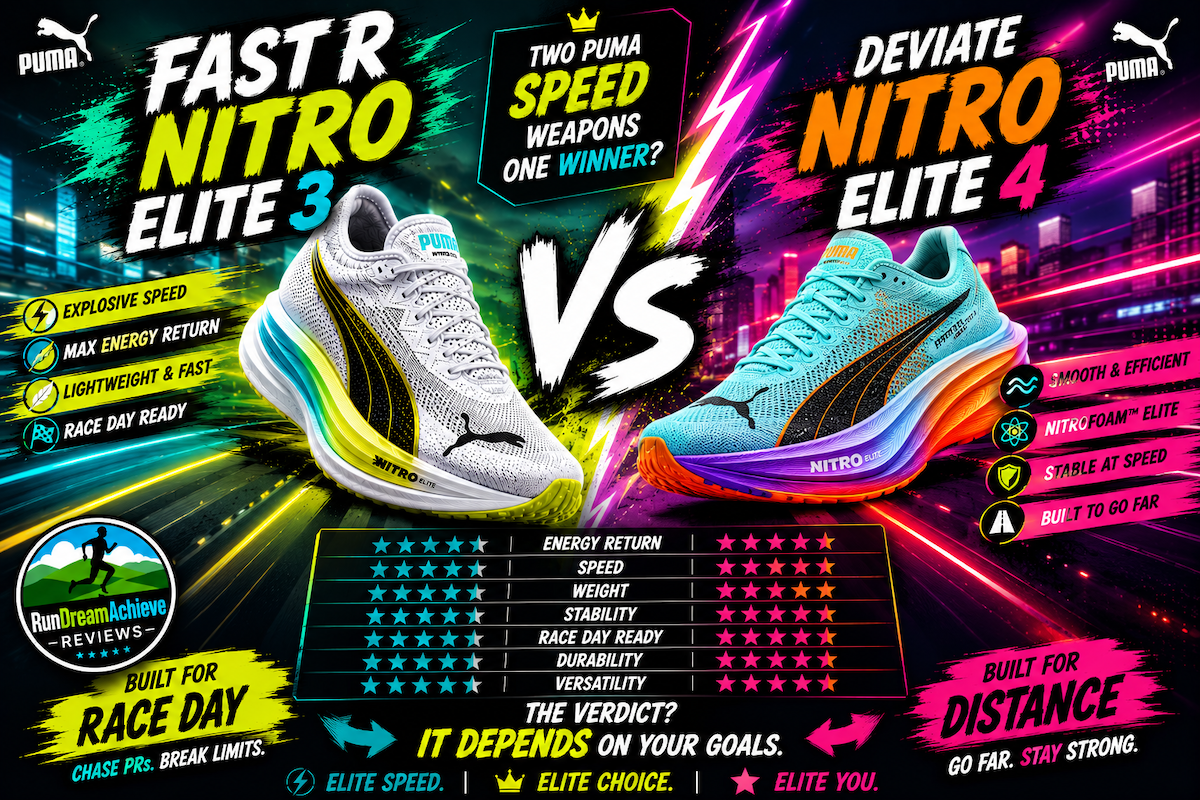
Puma Fast R Nitro Elite 3 vs Puma Deviate Nitro Elite 4: Race Day or Daily Training?
Choosing between the Puma Fast R Nitro Elite 3 vs Puma Deviate Nitro Elite 4 comes down to how you run on race day, not which shoe has the flashier name. Both are built for fast efforts, but they suit different runners, and that matters when you’re chasing speed over 5K, half marathon, or 26.2 miles. If you’re also sorting through other Puma options for longer races, this marathon racing shoe guide gives useful context.
The Fast R Nitro Elite 3 leans toward a more aggressive feel, while the Deviate Nitro Elite 4 aims for a smoother mix of speed, comfort, and control. That means one shoe may fit your stride better if you want a sharper ride, while the other may make more sense if you care about steadier support late in the race.
For runners trying to pick the right Puma super shoe, the details matter more than the headline specs. The real question is which one feels faster under your feet, holds up when the pace gets hard, and matches the distance you want to race.
What makes these two Puma racing shoes worth comparing
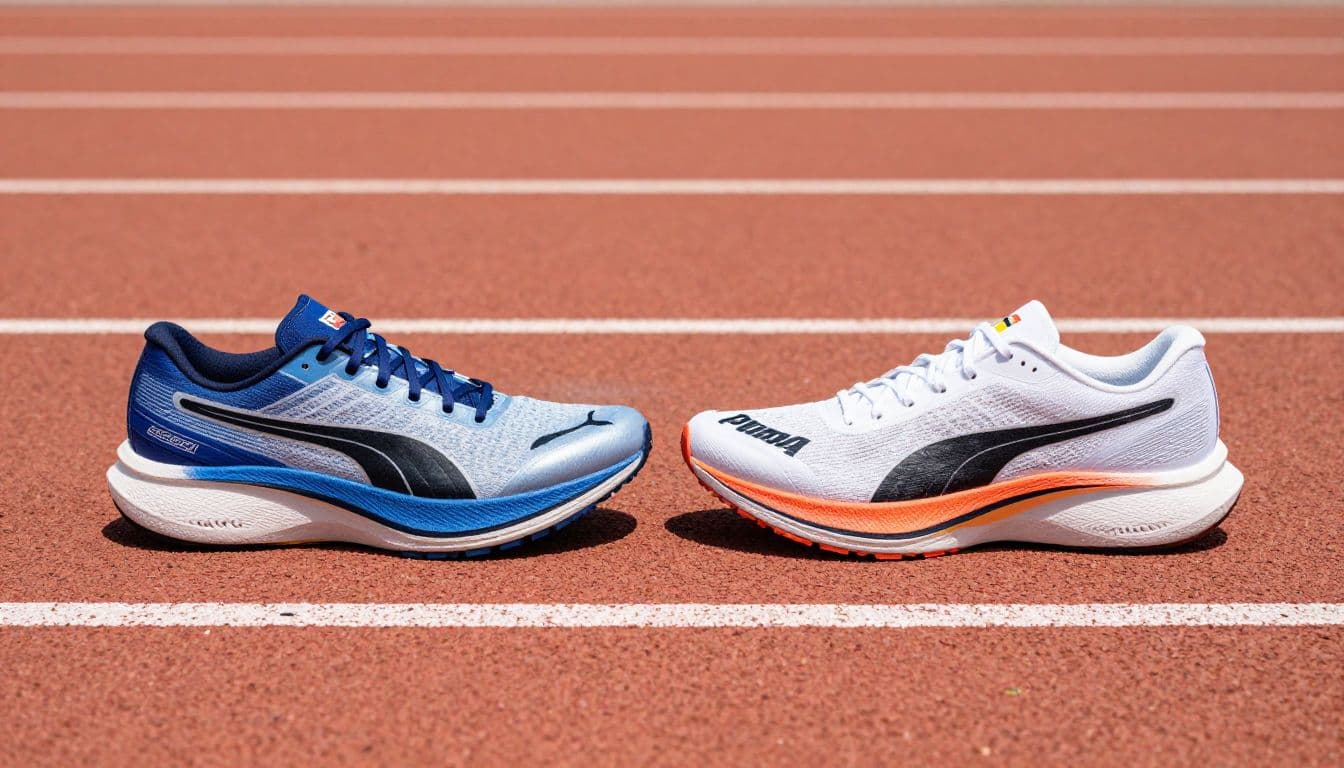 These two Puma shoes get compared because they sit close enough in the lineup to overlap, but far enough apart to suit different runners. Both are built for speed, both use race-ready foam and aggressive geometry, and both can handle hard efforts. Still, they do not chase the same feel on the run.
The Puma Fast R Nitro Elite 3 is the more direct race shoe. It targets runners who want a sharp, snappy platform that feels ready to attack from the first stride. On the other hand, the Puma Deviate Nitro Elite 4 gives you speed with a wider range of use, so it can make sense for workouts, long runs, and race day.
That difference is why runners keep putting them side by side. If you want a shoe that feels like a pure weapon for racing, the Fast R Nitro Elite 3 has obvious appeal. If you want one shoe that can handle tempo runs, half marathons, and even marathon training, the Deviate Nitro Elite 4 starts to look smarter.
For runners deciding between these models, the question is simple: do you want the most aggressive race-day feel, or a fast shoe that stays useful beyond the start line? Puma’s Brooks Hyperion Elite 4 PB review shows how race-focused shoes can narrow in on pure speed, and that same idea helps explain why the Fast R and Deviate models are worth comparing here.
The Fast R Nitro Elite 3 is built for pure speed
The Fast R Nitro Elite 3 is aimed at runners who want a lightweight, race-first ride. It feels more aggressive underfoot, so it suits people who like quick turnover and a shoe that pushes the pace without much fuss.
That kind of setup works best when you already know you want to race hard. If you run best in a snappier, more forward-moving shoe, this one makes sense.
The Deviate Nitro Elite 4 brings speed with more versatility
The Deviate Nitro Elite 4 still feels fast, but it opens the door to more uses. You can race in it, train in it, and use it for longer efforts when you want speed without as much edge.
That broader range matters if you want one premium shoe to do more than one job. It appeals to runners who like a fast feel, but also want a bit more comfort and flexibility on varied runs.
How the ride feels in daily use and on race day
Every runner expects a specific behavior from a super shoe when the pace picks up. Choosing between the Puma Fast R Nitro Elite 3 vs Puma Deviate Nitro Elite 4 means understanding how these different designs interact with your unique stride. One platform demands attention and engagement, while the other offers a more forgiving experience that still rewards speed.
Which shoe feels more explosive underfoot
The Fast R Nitro Elite 3 provides a more immediate, springy sensation that feels purpose-built for speed. It uses a decoupled midsole construction that separates the heel and forefoot, which creates a distinct snap as you transition through your gait cycle. This design makes the shoe feel aggressive, almost like it wants to launch you into the next stride without delay.
If you enjoy a ride that feels crisp and responsive during shorter races or fast interval sessions, this model delivers that pop you likely want. It removes the extra bulk often found in daily trainers, resulting in a lean, forward-focused platform. You will notice the difference instantly when you hit the gas on the track or during a high-intensity tempo run.
Explosiveness
While the Fast R focuses on raw explosiveness, the Deviate Nitro Elite 4 excels at keeping your legs feeling fresh over long distances. It offers a more traditional, unified midsole feel that is easier to live with during a full marathon or long Sunday workout. You get plenty of cushioning and energy return, but the transition feels less like a launchpad and more like a steady, efficient push.
The geometry here is more forgiving on your ankles and calves, which matters when fatigue sets in toward the end of a long race. It creates a smooth, rolling sensation that helps you maintain a consistent cadence even when your form begins to drift. If you prioritize comfort and protection while still chasing a fast time, this shoe usually feels more manageable for the duration of a long effort.
What the midsole setup means for real runners
The underlying tech explains why these shoes feel so different on the road. The Fast R uses a carbon-fiber plate that works with the decoupled foam to drive you forward, providing a rigid, high-performance lever for maximum efficiency.
This setup feels stiff, which is great for top speed but can feel demanding if you do not have the leg strength to handle that level of aggression for hours on end.
On the other hand, the Deviate Nitro Elite 4 offers a more balanced approach that remains stable at various paces. It uses a refined foam compound and plate placement that gives you enough pop for racing while remaining stable enough for training days. This makes it a better choice if you want one high-end shoe that can handle a variety of training paces without feeling unstable or overly twitchy.
| Feature | Fast R Nitro Elite 3 | Deviate Nitro Elite 4 |
|---|---|---|
| Ride Style | Aggressive and snappy | Smooth and consistent |
| Best Distance | 5K to half marathon | Half to full marathon |
| Midsole Feel | Decoupled and rigid | Unified and balanced |
| Primary Goal | Maximum explosive speed | Speed with endurance comfort |
Ultimately, your choice depends on the kind of feedback you prefer from your shoes. The Fast R forces you into a fast rhythm, while the Deviate adapts to your needs during a long, steady-state effort. Finding the right Puma marathon racing shoe often comes down to this exact balance between raw speed and sustainable comfort.
Fit, upper feel, and lockdown compared side by side
Your race-day performance depends heavily on how well your shoe holds your foot. When comparing the Puma Fast R Nitro Elite 3 vs Puma Deviate Nitro Elite 4, you will notice distinct differences in the upper construction. Both models use thin, breathable mesh designed for speed, but the structural execution changes how they behave when you move at high intensities.
Which upper feels more race-ready and secure
The Fast R Nitro Elite 3 prioritizes a locked-in, aggressive feel. It uses a thin, almost translucent mesh that hugs the midfoot tightly to minimize any wasted energy.
You might find the heel hold more rigid and focused, which keeps you secure during sharp turns or rapid acceleration on the track. Because the material is so minimal, breathability remains excellent even in hot weather. However, if your feet swell significantly during a long event, that lack of stretch can become a nuisance.
In contrast, the Deviate Nitro Elite 4 uses a slightly more accommodating upper. It still feels light and fast, but it offers a touch more forgiveness in the forefoot and midfoot areas. This construction makes it a comfortable choice for runners who prefer a secure fit without the feeling of being squeezed. It holds your foot reliably through long miles, and the material adapts better to foot expansion as the hours pass. If you value a balance of lockdown and long-term comfort, this version usually wins.
Your Foot Shape
Your foot shape ultimately dictates which of these models fits your needs better. Runners with narrow feet often thrive in the Fast R Nitro Elite 3 because it cinches down for a precise, glove-like feel. Those who need extra room in the toe box or have a wider forefoot might find this precision to be too restrictive. It is a performance-focused shape, so it assumes you want your shoe to move exactly as your foot moves.
The Deviate Nitro Elite 4 works better for runners who like a bit of breathing room. The wider footprint in the forefoot allows for natural toe splay, which many marathoners prefer to prevent numbness or hot spots late in a race.
If you usually find racing shoes too narrow, this model offers a more generous fit while keeping the performance benefits of a modern carbon-plated shoe. You should choose based on how much freedom you need to feel confident during your stride. If you are still weighing your options for race day, you might also find this Puma running shoe comparison helpful for finding the right match.
Weight, stack height, and stability can change how fast they feel
Racing shoes exist to help you run faster, but the way they achieve that speed varies significantly. When you look at the Puma Fast R Nitro Elite 3 vs Puma Deviate Nitro Elite 4, you encounter two different schools of thought regarding efficiency.
A shoe’s mass, its distance from the ground, and how it holds your foot together dictate your confidence level throughout a hard effort. Understanding these mechanical traits helps you pick a model that complements your stride rather than fighting against it.
Why a lighter shoe can feel faster without being better
It is tempting to look at a scale and assume the lightest shoe is always the best choice for race day. Lower weight often helps with turnover because you have less mass to move forward with every single stride.
This benefit becomes most apparent during short, high-intensity efforts where your cadence stays high and your legs feel fresh. However, if a shoe sheds too much weight by sacrificing structure or protection, your legs may tire faster than the scale weight suggests.
A slightly heavier shoe often makes more sense if it provides better energy return or reduces muscle fatigue over the final miles of a marathon.
Think of it as a trade-off between immediate snappiness and long-term sustainability. If you struggle with foot fatigue or joint aches late in a race, the extra grams in a more cushioned shoe are usually a good investment. You need a platform that supports your form when your muscles start to falter, not just one that feels quick during your first mile.
Confidence
Confidence is a critical, yet often overlooked, part of running fast. If your shoe feels wobbly or disconnected from the road during cornering, you will instinctively pull back your pace.
A stable platform allows you to plant your foot firmly and push off with full power, regardless of your experience level. Elite athletes rely on this stability to maintain form under extreme stress, and everyday runners benefit even more from that peace of mind.
The Puma Fast R Nitro Elite 3 and Puma Deviate Nitro Elite 4 manage this stability in distinct ways. The Fast R uses a more specialized, aggressive geometry that rewards a precise foot strike. It feels very tuned for speed but demands more attention on technical courses with tight turns.
On the other hand, the Deviate offers a more planted sensation that remains predictable on tired legs. If you want speed without the “tippy” feeling found in some high-stack models, the Deviate is often the easier shoe to control.
Stable shoes keep you efficient by reducing the small, corrective movements your ankles have to make every time you land. When you trust your shoe to handle the ground underneath, you focus entirely on your rhythm and breathing instead of your balance.
Best race distances and workout uses for each model
Choosing the right tool for the job is essential when performance counts. Both the Fast R Nitro Elite 3 and the Deviate Nitro Elite 4 bring elite tech to the road, but they behave differently under varying conditions. Matching the right shoe to your specific goals helps you get the most out of your training and race-day efforts.
When the Fast R Nitro Elite 3 makes the most sense
The Fast R Nitro Elite 3 is an aggressive racer. It feels best when you are chasing personal records in shorter events like 5K and 10K races.
Because of its decoupled midsole design, it provides an immediate, snappy energy return that excels when your cadence is high. It forces your foot into a forward-leaning position, which is perfect for maintaining top-end speed during high-intensity efforts.
This model is a top choice if you want a dedicated race-day shoe. It is not designed for easy miles or long, slow recovery runs. Instead, it shines during fast interval work on the track or intense tempo runs where you need to feel every bit of snap from the carbon plate. If you are a runner who prefers a direct, firm connection to the ground rather than a soft, pillowy ride, this is your best option.
When the Deviate Nitro Elite 4 is the smarter pick
The Deviate Nitro Elite 4 is the more balanced, versatile sibling. It feels right at home during half marathons and full marathons where efficiency and sustained comfort are just as important as raw speed. The geometry is tuned for a smooth, rolling transition that helps keep your legs moving when fatigue begins to set in late in a race.
If you prefer to own one high-performance shoe that handles everything from speed sessions to race day, this is the smarter pick.
You can use it for your long-distance weekend workouts without feeling like you are beating up your legs, yet it still offers plenty of pop for your primary goal races. It offers a more forgiving fit and feel, which is often better for the natural swelling that happens over the course of 26.2 miles.
Which shoe is better for everyday speed work
Deciding between these two depends on how often you plan to lace them up. If your week includes a variety of speed sessions, intervals, and threshold runs, the Deviate Nitro Elite 4 is the more practical daily speedster. Its platform is stable and predictable, meaning you can wear it for a wide range of paces without needing to adjust your stride or adapt to a highly aggressive shoe.
The Fast R Nitro Elite 3 is more of a specialist. It is excellent for a weekly track session or a sharp tempo run, but it can feel overly demanding for long, steady-state progression runs.
If you have the budget to rotate your footwear, keep the Fast R for your hardest sessions and race days, and use the Deviate as your versatile workhorse. This combination protects your legs while keeping your speed-focused training on track. Using the right tool for each specific workout ensures you reach your peak fitness without unnecessary strain.
Price, value, and which runner should buy which shoe
Price tags often tell you what a shoe costs, but they rarely tell you the actual value you get for your money. When you look at the Puma Fast R Nitro Elite 3 vs Puma Deviate Nitro Elite 4, you have to think about how often you will actually wear the shoe.
The most expensive pair becomes a poor value if it sits in your closet because it feels too aggressive for your daily needs. Alternatively, a shoe that you wear for every workout, race, and long effort provides immense value regardless of its price. Your goal is to find the model that aligns with your specific training cycle.
If you already have a rotation of dedicated track spikes or speed shoes, the Fast R might be the perfect addition to your kit. If you prefer keeping your life simple with one primary race-day partner, the Deviate usually wins on pure utility.
Choose the Fast R Nitro Elite 3 if you want a sharper race tool
You should lean toward the Fast R Nitro Elite 3 if you are a runner who views racing as a high-stakes, maximum-effort event. This shoe is built for the individual who wants to feel every bit of energy return underfoot.
It suits runners who enjoy an aggressive, snappy ride that encourages a fast, forward-leaning gait. If you prioritize raw turnover during 5K or 10K races and want a platform that feels like an extension of your own leg strength, this model is the right pick. It thrives on precision and responds best to a powerful foot strike.
You will find that this shoe works wonders if you already possess a secondary, more forgiving trainer for your recovery miles. It is a specialized tool that excels at being fast, firm, and uncompromising when you cross the starting line.
Choose the Deviate Nitro Elite 4 if you want more all-around usefulness
The Deviate Nitro Elite 4 is the smarter investment if you want a single high-performance shoe to cover most of your running needs. It bridges the gap between training and racing by offering a ride that is fast enough for personal bests but stable enough for your long Sunday miles.
If you value comfort and a smooth transition over the aggressive, decoupled feel of a dedicated track racer, you will appreciate how this shoe handles varied paces.
It is an excellent choice for marathoners who need their footwear to remain supportive once their form begins to fatigue late in the distance. By choosing this model, you gain a versatile partner that feels quick during tempo efforts and reliable throughout your entire training block. It provides genuine value because it serves you well across nearly every scenario on your calendar.
Conclusion
Choosing between the Puma Fast R Nitro Elite 3 vs Puma Deviate Nitro Elite 4 depends on your personal racing style and your goals for race day. The Fast R model offers a highly aggressive, snappy ride that rewards runners seeking maximum turnover in shorter events. If you prefer a platform that forces a fast, forward-leaning gait, this shoe is a perfect fit for your rotation.
Meanwhile, the Deviate Nitro Elite 4 provides a more balanced and forgiving experience. It excels over long distances because its stable geometry helps you maintain consistent form even as your legs grow tired.
This shoe is a smarter choice if you want a reliable partner for marathons or a versatile option that handles training and racing with equal ease. You can explore further options in this marathon racing shoe guide to see how different designs support various endurance needs.
Ultimately, your best choice is the one that makes you feel most confident when the pace intensifies. Focus on how the shoe interacts with your specific stride and leg strength. Select the pair that complements your natural movement, and you will find your best performance on the road.


