

Puma Deviate Nitro 4 Review: Built for Fast Training and Racing
The Puma Deviate Nitro 4 arrives as the newest evolution in a line that runners already know for speed and comfort. It’s built for days when you want a quick, responsive ride, but it still needs to hold up like a real training shoe.
That balance matters, because racing features can feel harsh if a shoe goes too far in one direction. Puma is trying to keep the bounce and snap that fast runners want while adding the durability you need for regular mileage, much like the more daily-focused feel you get in the Puma Velocity Nitro 3.
In the sections ahead, the tech, fit, and ride get a closer look so you can see where this shoe fits in your rotation.
What Makes the Puma Deviate Nitro 4 Different
The Puma Deviate Nitro 4 feels built around a simple idea, give you speed without asking your legs to pay for it later. That matters because many plated trainers can feel lively for a few miles, then start to feel harsh or overly stiff.
Build Your Complete Race-Day Setup
The right shoe helps, but faster racing comes from better training, pacing, recovery, fueling, and execution.
More Guides for This Shoe
Puma takes a more balanced route here. The ride stays responsive, but it also has enough softness and support to work for daily training, tempo runs, and longer efforts.
Advanced Foam Tech for Better Energy Return
The midsole uses Puma’s Nitro foam, and that is a big part of the shoe’s personality. It gives the Deviate Nitro 4 a light, springy feel that returns energy instead of just soaking up impact. On the run, that means your stride feels more alive, especially when you pick up the pace.
What stands out most is the way the foam cushions without turning mushy. Landings feel smooth, then the shoe pushes back with a quick rebound. That bounce helps the shoe feel fast, but it also takes some stress off your calves and quads during longer runs.
Puma has clearly aimed for a ride that works when your form starts to fade. The foam helps absorb repeated impact, so your legs do not take the same beating as they might in a firmer shoe. That extra protection is useful on marathon pace runs, long intervals, and any day when you want speed with less soreness the next morning.
The best part of the Nitro foam is how it balances softness and pop. You get cushioning that feels forgiving, but you don’t lose the quick response that makes a trainer feel exciting.
For runners who want a better sense of the foam’s overall performance profile, this detailed Puma Deviate Nitro 4 review adds useful lab-based context.
The Role of the Carbon Composite Plate
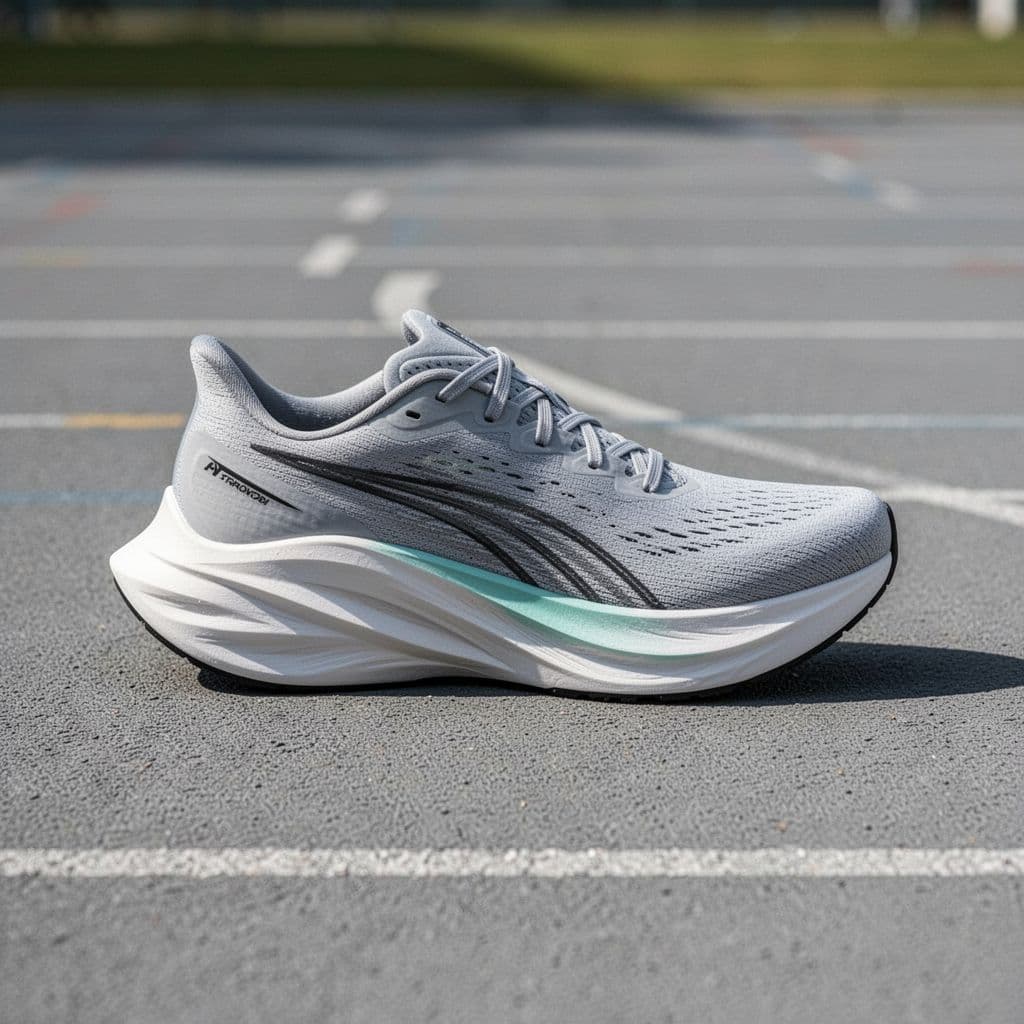
Inside the midsole, Puma places a carbon-composite plate that helps shape the ride. It adds stiffness where you need it, so the shoe bends in a more efficient way as you move from landing to toe-off. That gives each stride a cleaner transition and a more noticeable snap at the front of the shoe.
The plate also helps keep the platform steady. Instead of feeling twitchy or unstable, the shoe holds its line well, which matters when you are running faster or turning tired late in a workout. The result is a plated feel that stays controlled instead of overly aggressive.
That is one reason the Puma Deviate Nitro 4 feels more refined than earlier versions. The plate and foam work together more naturally now, so the shoe does not force a hard racing feel on every run. It still has speed, but it is easier to live with for everyday training.
Runners who want to compare its setup with another fast trainer can also look at the Puma Deviate Nitro 4 vs Adidas Boston 14 comparison.
Putting the Puma Deviate Nitro 4 to the Test
The real test for a shoe like the Puma Deviate Nitro 4 is not a single fast run. It has to handle the easy days, the tired miles, and the sessions where you ask for more. That is where ride quality and ground feel matter most.
This shoe tries to sit between a true daily trainer and a speed model. The result is a ride that feels useful across more of your week than a pure racer or a soft recovery shoe. If you want a point of comparison, the Nike Pegasus Plus review shows a similar attempt to blend comfort with pace, while the ASICS Gel Cumulus 27 review leans more toward steady, predictable mileage.
How the Shoe Handles Daily Training Miles
On easy runs, the Puma Deviate Nitro 4 feels smoother than you might expect from a plated trainer. The underfoot ride has enough cushion to take the edge off pavement, but it still keeps you close enough to the road to stay in control. That balance matters on recovery days, when you want comfort without a mushy or disconnected feel.
The shoe does a good job of staying calm at relaxed paces. It does not force a fast turnover, and it does not feel awkward when you shorten your stride. Instead, it settles into a steady rhythm that works for warm-ups, cooldowns, and normal aerobic mileage.
A few things stand out during daily use:
- Ground feel stays controlled: You can feel the road, but not in a harsh way.
- Cushioning feels balanced: It absorbs impact without sinking too much.
- Transition stays smooth: Each step rolls forward cleanly, even when you are not pushing pace.
- Stability is solid for a plated shoe: That helps on long easy runs and tired legs.
For daily training, the shoe feels best when you want one pair that can do a little of everything without feeling dull.
Compared with many everyday trainers, the Puma Deviate Nitro 4 feels more lively. Compared with aggressive supershoes, it feels much easier to live with. That middle ground is where it earns attention. You can use it for a short recovery jog in the morning, then bring it back later in the week for a longer steady run.
The ride also keeps enough structure to stop it from feeling sloppy late in the run. That matters if your form tends to fade when the miles add up. The shoe gives you a bit of help without doing all the work for you, and that is exactly what many runners want in a daily driver.
Performance During Speed Workouts
When the pace picks up, the Puma Deviate Nitro 4 responds quickly. The plate adds a firm push through toe-off, and the foam gives the ride a pop that makes faster running feel natural. It does not feel like a shoe that needs a perfect effort to perform. It feels ready once you start asking for more.
That shows up clearly in intervals and threshold runs. During short repeats, the shoe comes around fast and stays stable under pressure. During longer tempo work, the ride holds its shape, so you do not feel like the shoe is fading before the workout ends.
The best speed shoes often give you one thing at the cost of another. Some feel snappy but tiring. Some feel cushioned but flat. The Deviate Nitro 4 does a better job of staying in the middle. It has enough snap to support quicker turnover, while still giving your legs some protection when the set gets long.
This is where the shoe really separates itself from a basic daily trainer. It does not just handle faster runs, it seems built for them. The forefoot feels ready to roll, and the transition from landing to toe-off has a quick, efficient path. That makes it a strong choice for workouts like:
- Tempo runs at controlled, sustained effort
- Cruise intervals where rhythm matters
- Shorter track repeats when you want a responsive shoe
- Progression runs that start easy and finish fast
The shoe can still feel a little too structured if you want a very soft, relaxed recovery jog. However, that same structure pays off once the pace changes. It gives the shoe a more purposeful feel, which is exactly what you want during workout day.
For runners comparing it with other performance trainers, The Run Testers’ Puma Deviate Nitro 4 review and RunRepeat’s lab-based breakdown both point to the shoe’s stronger fast-pace personality. The takeaway is simple, it is not just a training shoe that can sprint. It is a speed-oriented trainer that still respects the miles between workouts.
If your week includes both easy mileage and structured speed, this is where the Puma Deviate Nitro 4 makes the most sense. It gives you a single shoe that can handle the full range without feeling out of place at either end.
Design Upgrades and Fit Improvements
The Puma Deviate Nitro 4 makes its biggest gains in the upper and fit package. The ride matters, but the way the shoe wraps your foot changes how confident it feels at faster paces. A shoe can have great foam and still miss the mark if the upper feels sloppy or the heel slips around.
This version feels more polished than a lot of plated trainers in this price range. The upper works with the platform instead of fighting it, and that shows up the moment you lace it up and start moving.
Upper Construction and Breathability
The upper uses a lightweight mesh that feels thin, airy, and more refined than bulky. It lets air move well across the top of the foot, which helps on warm days and during harder workouts when your feet heat up fast. The material also has enough structure to hold shape, so it does not collapse or feel flimsy.
What stands out is the way the mesh adapts across different foot shapes. Runners with average-width feet should get a close, secure fit without pinching. Narrower feet should also do well because the upper holds the midfoot in place. Wider feet may need to pay closer attention, since the forefoot feels more performance-oriented than roomy.
A few fit traits stand out right away:
- Forefoot feel: snug, but not cramped
- Midfoot wrap: secure without hot spots
- Toe box shape: performance-focused, with enough room for natural toe movement
- Upper comfort: smooth against the foot, with less rubbing than older plated trainers
That combination makes the Puma Deviate Nitro 4 easier to trust on longer runs. Breathability keeps the foot cooler, while the shape stops your foot from sliding around when the pace climbs. If you want a pair that feels stable during tempo work but still light on easy miles, the upper delivers that balance well.
For more background on fit and sizing across running shoes, these fit tips for choosing the correct running shoe size are useful when you are deciding between your usual size and a half-size change.
The upper feels performance-first, but not harsh. That matters because a fast shoe should hold your foot, not fight it.
You can also see how Puma positions the model within its broader lineup on the official Puma running shoe page, which helps frame the Deviate Nitro 4 as part of the brand’s speed-focused training range.
Heel and Midfoot Security
The heel and midfoot hold the shoe together when the pace gets serious. Puma uses solid collar padding and a firm rear structure, so the back of the shoe feels planted without digging into the Achilles. That padding adds comfort, but it still leaves enough structure to stop the heel from shifting around.
This matters more than many runners think. When your heel slides, your foot has to work harder to stay centered on the platform. That small movement can create friction, waste energy, and raise the chance of blisters or unstable landings during fast efforts. A locked-in heel keeps each stride cleaner and more predictable.
The midfoot fit is just as important. Here, the shoe hugs well through the center of the foot, which helps the plate and foam do their job. When the shoe stays lined up under you, the transition feels smoother and the ride feels more efficient.
Lacing System
The lacing system supports that security nicely. It gives you enough room to fine-tune pressure across the top of the foot, and the eyelets hold tension well once tied. That means you can snug the shoe down for workout days without creating harsh pressure points.
The tongue also feels improved. It sits comfortably on top of the foot and stays put once the laces are set. There is enough padding to keep lace bite away, but not so much that the upper starts to feel bulky. That matters during faster runs, because any rubbing or bunching gets noticed quickly when your cadence rises.
A secure fit helps in a few practical ways:
- It keeps your foot stable during cornering and quick turns.
- It reduces heel lift on longer intervals.
- It helps prevent rubbing when feet swell late in a run.
- It makes the shoe feel more connected to the road.
For runners who deal with discomfort in new footwear, this guide to foot pain after running in new shoes offers a good reference point. The fit in the Deviate Nitro 4 is strong enough to reduce a lot of those common issues, especially when you get the sizing right.
The end result is a shoe that feels ready for speed without feeling loose or fussy. The upper breathes well, the lacing is dependable, and the heel hold gives you the confidence to push harder when the workout demands it.
Durability and Traction on the Road
The Puma Deviate Nitro 4 does two things well that matter on real roads, it grips with confidence and holds up over time. That combo is harder to find than many runners expect. A shoe can feel fast on day one and still fall flat when the pavement turns slick or the foam starts to lose life.
Puma has built a strong name around outsole grip for a reason. The brand’s PumaGrip rubber has a tacky, almost sticky feel that clings to pavement better than many standard road compounds. On damp streets, painted crosswalks, or textured sidewalks, that extra bite gives you more control and less hesitation.
Wet roads are where the Puma Deviate Nitro 4 earns a lot of trust. The outsole rubber keeps contact well when the surface gets slick, and that matters more than flashy specs on a rainy morning. You can feel the difference in corners, on shallow turns, and when you land a little off-center.
PumaGrip works because the compound is designed for bite, not just durability. It holds onto the road instead of skimming across it, which helps the shoe feel secure at faster paces. That is one reason Puma is known for some of the best grip in running shoes, especially on asphalt and mixed street surfaces.
Tread Support
The tread layout also helps. The outsole spreads rubber in the areas that need it most, so water has room to move away while the shoe stays planted. That gives you a cleaner push-off and a calmer landing when the ground is wet.
If you run in a rainy climate, this kind of traction changes how you move. You stop bracing for slips and start running normally again. That confidence is a big deal, because hesitation can mess with cadence and make the whole run feel choppy.
For a deeper look at how outsole patterns affect grip on pavement, RunRepeat’s outsole guide gives a solid breakdown of tread and wet-surface performance.
On wet pavement, the outsole feels more trustworthy than most plated trainers. That extra security is easy to notice once you hit your first slick patch.
The Puma Deviate Nitro 4 also stays composed on dry roads, where the rubber feels quiet and efficient. It does not slap the ground or feel overly harsh. Instead, it gives you a firm, confident contact point that works in daily training and faster workouts alike.
Longevity of the Midsole Foam
The midsole foam in the Puma Deviate Nitro 4 should hold up well for a plated training shoe, but no foam stays lively forever. Most runners can expect around 300 to 500 miles before the shoe starts to lose its pop.
Lighter runners who rotate shoes often may stretch closer to the top of that range. Heavier runners, or runners who do most of their mileage on rough pavement, may feel the fade sooner.
The first sign of age usually shows up in the ride, not the looks. The shoe may still look fine, but the bounce becomes less sharp. Landings feel a little flatter, and the toe-off loses some of the spring that made the shoe feel quick in the first place.
A few signs tell you the foam is starting to go:
- Less rebound during tempo runs or intervals
- More leg fatigue after similar mileage
- A flatter forefoot feel when you pick up the pace
- Reduced stability if the midsole starts to soften unevenly
That does not mean the shoe is done the moment it loses its snap. It can still work for easy miles after the peak ride fades. Still, if you bought the Puma Deviate Nitro 4 for speed, you will want to replace it once the midsole stops pushing back the way it should.
If you want a broader guide for timing shoe swaps, when to replace running shoes is a helpful reference. The main idea is simple, watch the ride, not just the outsole. The rubber may last, but the foam is usually what decides when a shoe is past its best days.
Used with a rotation and a little care, the Puma Deviate Nitro 4 should give you a strong run of mileage. The outsole brings real grip, and the foam gives you enough life to make the shoe worth the investment for runners who train often.
Is the Puma Deviate Nitro 4 Right for You
The Puma Deviate Nitro 4 makes the most sense for runners who want one shoe that can handle more than a single job. It feels fast enough for workouts, cushioned enough for longer runs, and stable enough for regular training. If you want a plated shoe that does not feel locked into race-day duty, this one fits that lane well.
This shoe works best if your week includes easy runs, tempo sessions, and long runs with some pace. The Deviate Nitro 4 gives you enough snap for faster work, but it still feels calm on slower days. That makes it a strong pick for runners who want a super trainer without buying something too harsh or too race-specific.
It also makes sense if you like a firmer, more guided ride. The plate adds structure, the foam adds bounce, and the outsole gives you confidence on wet pavement. For many runners, that combination feels more practical than a pure supershoe.
If you want to see how Puma positions its performance lineup, the Puma running shoe reviews page is a helpful place to compare models before you choose.
Who may want a different shoe
The Puma Deviate Nitro 4 is not the best match for everyone. If you want a soft, sink-in recovery shoe, it may feel too purposeful. If you prefer a very wide toe box, the fit may also feel more performance-focused than relaxed.
Runners who need extra stability for overpronation may want to look at a different option too. Puma does make more supportive trainers, and the Puma ForeverRun Nitro review is a better place to start if that is your priority.
A simple way to judge the fit is to ask how you run most weeks:
- Choose the Deviate Nitro 4 if you want one shoe for workouts and daily mileage.
- Choose a softer daily trainer if easy comfort matters more than pace.
- Choose a stability shoe if you want more guidance underfoot.
- Choose a true racer if you only care about race-day speed.
How it compares to other super trainers
Compared with other popular super trainers, the Deviate Nitro 4 feels more balanced than dramatic. Shoes like the Brooks Hyperion Max 3 aim for a fast, efficient ride with a more polished training feel, while others in the category push harder on soft cushioning or aggressive rebound. Puma lands in a middle ground that feels easier to use all week.
That middle ground is the appeal. You get enough speed for intervals and progression runs, but you do not have to save the shoe only for hard days. Runners who rotate shoes often may love that. Runners who want the most cushioned super trainer on the market may want something bigger and softer.
If you want one shoe that feels like a workout tool and a daily trainer, this is a smart place to spend your money.
The Puma Deviate Nitro 4 is the right call for runners who value versatility, grip, and a lively ride. It is not trying to be the softest or the flashiest shoe in the super trainer category. Instead, it gives you a dependable fast trainer that fits into real training weeks, and that is exactly why it stands out.
Conclusion
The Puma Deviate Nitro 4 gets the important things right. It gives you a lively ride, strong grip, and a fit that feels ready for faster training without giving up daily comfort.
That mix makes it a smart pick for runners who want one shoe that can handle workouts, steady mileage, and long runs with pace. If your training is built on why consistent running matters for performance, this shoe fits that kind of week well.
Runners who want a balanced super trainer with real road grip should pay attention here. The best results still come from steady training, and this shoe gives you a reliable way to keep showing up.


