

Portland Marathon Elevation Gain: How Hilly Is it
Portland gives marathoners a memorable backdrop: tree-lined streets, neighborhood landmarks, and long stretches where the road seems to roll beneath your feet. That scenery comes with a practical question for anyone chasing a personal best or preparing for a first 26.2 miles: how much climbing does the course really include?
The Portland Marathon elevation gain can vary depending on the course version, the mapping tool, and the GPS device used to measure it. Small differences in route data, elevation correction, and satellite tracking can produce different totals, so treat the current official course map as the final source when planning your race. The course may not look mountainous, but repeated rises can still affect your effort, especially after the halfway point.
This guide breaks down the elevation profile, identifies the hills that deserve your attention, and explains how to adjust pacing without giving away too much time early. You’ll also see how to train for the climbs, manage effort on the descents, and build a race-day strategy that fits your goal. Before setting target splits, start with the course’s actual elevation data and learn where the hardest sections appear.
Be sure to book your Portland Marathon hotels early to save on prices.
Build Your Running Performance System
Move from research to action with training, recovery, nutrition, pacing, and performance tools built for runners.
More Guides for This Runner Goal
Key Takeaways
- The Portland Marathon elevation gain is roughly 873 feet on one commonly reported course measurement, with gradual climbs rather than mountain-style ascents.
- The official course reaches about 178 feet at its highest point, while the start and finish sit only 36 feet above sea level. See the official Portland Marathon course map.
- Rolling sections can still affect your pace, especially after 20 miles when fatigue makes modest rises feel steeper.
- Use effort-based pacing, practice controlled climbs, and avoid chasing lost seconds on descents.
- Always confirm the current route because course versions and elevation tools can produce different totals.
Portland Marathon Elevation Gain: How Hilly Is the Course?
Portland is generally a moderate, manageable marathon. It is not a pancake-flat race, but it also isn’t a mountain course. A commonly reported measurement lists about 873 feet of total climbing, while the official course information places the start and finish near 36 feet above sea level and the highest point around 178 feet. Check the official Portland Marathon course map before making a final race plan, since routes and measurements can change.
Total Climb, Net Change, and What Your Watch Reports
Total elevation gain is the amount of uphill running added together across the entire course. If you climb 40 feet, descend 25 feet, then climb another 35 feet, your total gain is 75 feet. Elevation loss is the total amount of downhill running.
Net elevation change compares the finish with the start. When both points sit at nearly the same height, the net change may be close to zero, even after hundreds of feet of climbing. Rolling terrain creates that result: every rise is followed by a descent, but each uphill still costs energy.
A marathon can finish near its starting elevation and still feel demanding. Your legs respond to each climb separately, especially when the rises appear late in the race or interrupt your rhythm. For comparison, a truly flat marathon has very little repeated climbing, while a notably hilly marathon includes longer grades and more sustained elevation changes. Portland sits between those extremes.
Your watch may report a different total than a course website or mapping app. Barometric sensors can react to pressure changes, GPS tracking can drift between buildings or trees, and satellite conditions can affect the recorded route. Apps also rely on different map sources, elevation models, smoothing settings, and start-and-finish measurements. Some sources report total gain, while others focus on net change.
Use the official race data for pacing and training decisions. Your personal device remains useful, but treat its elevation number as a training reference rather than the final authority.
Where the Course Feels Hardest
Study the route by location and race mile, not only by its final elevation total. An early rise can affect your opening pace, while a long gradual climb may become more costly than a short, sharper hill. Repeated rollers also demand attention because the legs never settle into one steady rhythm.
Bridges and overpasses can add noticeable grades if they appear on the current course. Late-race changes matter even more, since a modest incline after 20 miles can feel far steeper than the same grade near mile three.
Before naming streets, bridges, or landmarks in your strategy, compare them with the current official map and race-year updates. Portland has used different course versions, so an older elevation profile may describe roads that no longer appear in your race. Map the climbs by mile, then set effort targets around the sections that can disrupt your pace.
How Portland’s Elevation Profile Changes Your Race Strategy
Portland’s moderate hills reward runners who manage effort instead of chasing perfect splits. Even gradual climbs raise breathing rate, increase muscular fatigue, and use more energy across 26.2 miles. Review the official Portland Marathon course information before race day, then adjust your plan around effort, terrain, and fatigue.
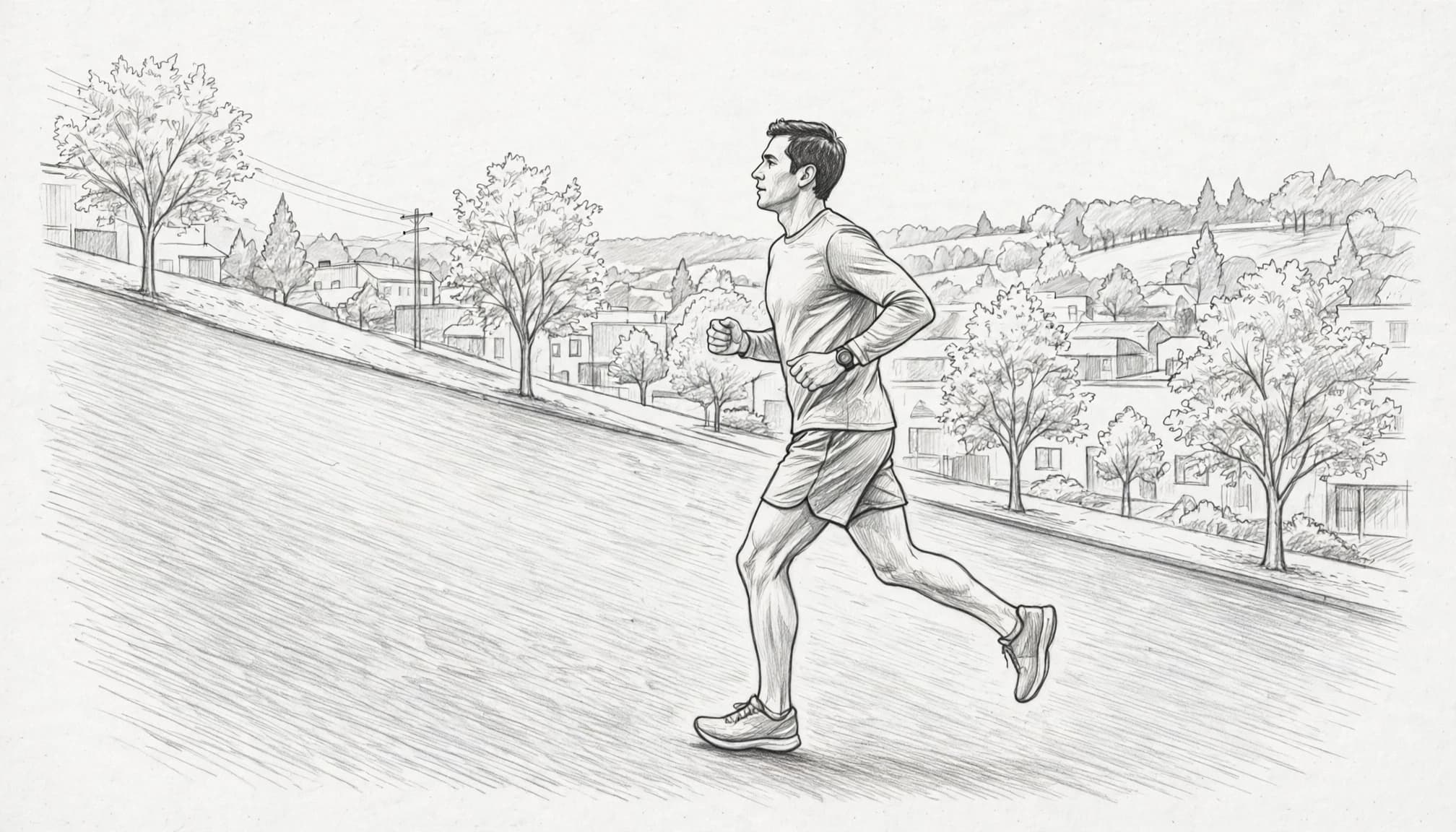
Use Effort, Not Ego, on the Uphills
Shorten your stride as the road rises, keep your cadence steady, and let your shoulders stay loose. A small pace slowdown is normal. Trying to protect an exact goal pace can turn a manageable climb into an early surge, and that extra effort may surface much later.
Use breathing and perceived effort as your first checks. You should still feel controlled rather than strained during the opening miles. Heart rate trends can help too, but weather, stress, caffeine, and poor sleep can push the number higher than expected. Judge the full picture instead of reacting to one reading.
Once you reach the top, don’t sprint to recover every lost second. Return to your normal rhythm gradually, allowing the downhill or flat road to bring your pace back.
Let the Downhills Give You Speed Without Breaking Your Legs
Run downhill with a quick, relaxed cadence and a light foot strike. Keep your body tall or allow only a slight forward lean from the ankles. Avoid reaching out with a long stride, since overstriding creates braking forces that can punish your quads.
The descent should give you efficiency, not an invitation to sprint. Relax your hands, soften your knees, and let your pace increase naturally while you stay balanced. That approach preserves more muscle for the later miles.
Late in the race, tired legs make downhill control harder. Shorten your stride again, especially when your form starts to collapse. A controlled descent at mile 23 is faster overall than an aggressive push that leaves your legs damaged for the final flat stretch.
Pacing Adjustments for a Portland Marathon Goal Time
Build your plan around even effort, not rigid mile splits. Practice running slightly slower uphill, returning to goal effort over the crest, and allowing a modest pace increase downhill. Rehearse those changes during long runs so they feel familiar rather than alarming.
A conservative first half gives you room to respond when the rollers arrive late. Compare your goal with recent race results, long-run performance, current fitness, weather forecasts, and the official course profile. During the final 10K, protect your form first, then increase effort only if your breathing and stride remain under control.
How to Train for Portland’s Hills Without Overtraining
Portland’s rolling profile calls for specific hill preparation, not a hill workout every day. Combine easy running, controlled climbing, marathon-pace work, strength training, and recovery so your legs learn the course demands without carrying constant fatigue.
Hill Workouts That Match the Course Demands
Choose one focused hill session most weeks, then adjust based on your experience, goal, injury history, and current training load. Begin with modest volume and build gradually.
Short hill strides improve posture, foot placement, and power without creating heavy fatigue. After an easy run, complete four to six repetitions of 10 to 15 seconds on a gentle incline. Walk or jog back down, then stop while your form still feels sharp.
Longer climbs build strength and teach you to hold steady effort. Try four repetitions of 45 to 90 seconds at controlled intensity, with an easy jog downhill for recovery. Keep your stride compact instead of attacking the slope.
Rolling marathon-pace runs connect hill strength to race rhythm. For example, run three to five miles at marathon effort on gently rolling roads. Let your pace slow slightly uphill, then return to effort without sprinting over the crest.
Your long runs should sometimes include terrain that resembles Portland, but they don’t need to copy every rise. Start with a mostly flat route, add a few gentle rollers the following week, then use a longer rolling route after your body adapts.
A simple progression might look like this:
- Week one: Add four short hill strides after an easy run.
- Week two: Complete six strides, or include two controlled 45-second climbs.
- Week three: Run a rolling marathon-pace segment during a midweek workout.
- Week four: Reduce hill volume and keep the long run comfortable.
That gradual increase gives your calves, quads, and connective tissues time to respond. The American College of Sports Medicine’s distance-running guidance also emphasizes efficient form and sensible training habits.
Strength and Mobility for Climbing and Descending
Strength work should support your running, not leave your legs exhausted before key sessions. Use split squats, step-ups, calf raises, deadlifts or hip hinges, single-leg balance drills, and controlled core exercises one or two times weekly.
Prioritize slow, stable movement. Split squats and step-ups support uphill drive, while hinges and single-leg work help your body control downhill loading. Resistance training may also improve running economy, according to this review of resistance exercise research.
Add gentle ankle, hip, and calf mobility after easy runs or strength sessions. Mobility can improve movement comfort, but stretching alone doesn’t prevent every running injury. Reduce the load when soreness changes your stride.
How Much Elevation Should You Add to Long Runs?
Alternate flatter long runs with rolling routes. Flat terrain helps you practice rhythm and fueling, while hills build strength and pacing control. Track total climbing, steepness, surface, weather, and recovery cost rather than elevation alone.
Your hill volume is too high when soreness lingers, sleep worsens, form breaks down, or workout quality declines. At that point, replace a hilly run with an easier route and resume progression after your legs recover.
Portland Marathon Course Details That Matter Beyond Elevation
Elevation is only one part of the Portland Marathon’s difficulty. The current race date, start and finish area, route map, aid stations, road surface, turns, bridges, crowd support, and course updates can all affect how the race feels. Confirm those details through official race communications before you set final splits.
Weather, Wind, and Wet Roads Can Change the Effort
A cool morning may help you hold marathon effort, but warm temperatures can raise your heart rate and increase fluid loss. Rain adds another layer of work. Wet clothing becomes heavier, shoes may lose traction, and slick pavement can shorten your stride. Even a gentle rise can feel demanding when your socks, shirt, and shoes stay damp for hours.
Wind creates a similar problem without changing the elevation profile. A headwind can slow you on a flat section, across a bridge, or along an exposed road. If you fight it by forcing your planned pace, you may spend energy that your legs need later. A tailwind can help, but don’t count on it when setting your opening pace.
Check the forecast again during race week and once more close to the start. Plan clothing around the likely conditions, including moisture-wicking layers, a light rain shell if needed, and protection against chafing. Keep your pace flexible. One ideal-weather prediction should never determine your entire race plan.
A modest hill can feel harder when heat, wind, rain, or wet clothing raises the cost of every mile.
Know the Aid Stations and Crowded Sections Before Race Day
Study the current official route and aid-station schedule before race morning. Mark the points where you’ll take fluids, use fuel, or adjust clothing. A busy station can disrupt your rhythm more than a gradual incline, especially if runners stop suddenly or spread across the road.
The opening miles may also feel slower because of crowding. Narrow sections, sharp turns, bridges, and road-surface changes can force you to brake, weave, or shorten your stride. Those interruptions add effort even when your watch shows a flat course.
Build a simple plan with flexible pace ranges instead of one rigid split. Note your fueling reminders by mile, then expect small slowdowns at aid stations and turns. Once the field opens up, return to your target effort gradually rather than trying to recover every lost second. The best Portland Marathon strategy accounts for the whole course, not just its elevation gain.
A Race-Day Plan for Running Portland’s Elevation Efficiently
Portland’s moderate elevation gain rewards restraint. Use the opening miles to settle your rhythm, climb by effort, fuel before fatigue appears, and save your strongest running for the final 10K.
Start Calm and Protect the First Half
Crowd energy, adrenaline, and an early downhill can pull you into a pace your body cannot sustain. Hold back during the first few miles, even if your watch shows faster-than-planned splits. Your breathing should feel controlled, and your stride should remain smooth.
A conservative start protects glycogen and muscle strength for the climbs ahead. Check your effort every mile, relax your shoulders, and settle into a rhythm that feels almost too easy. If you are chasing a personal best, stay near marathon effort rather than forcing exact pace on every rise. If your goal is to finish strong, allow yourself even more patience early.
Take fluids and carbohydrates before you feel thirsty, hungry, or tired. Early discipline is easier than trying to repair a depleted race later.
Fuel Before the Hills Become a Problem
Follow the fueling schedule you practiced during long runs. Waiting for hunger often means you have already fallen behind, especially when climbing raises the effort. Take your first carbohydrate serving early, then continue at regular intervals according to your tolerance and race plan.
Carbohydrate needs vary, but many marathon guidelines use roughly 30 to 60 grams per hour during prolonged racing. The GSSI guidance on endurance-athlete carbohydrate intake provides broader timing and intake context. Drink at aid stations in amounts that match the weather, your sweat rate, and your training experience. Electrolytes may help during a long, warm race or for runners with high sodium losses, but more is not always better.
Fuel before demanding sections, not halfway up a hill when your effort is already rising. Use only gels, drinks, chews, or supplements you have tested in training. Race morning is a poor time to discover that a new product causes stomach trouble.
Finish by Racing the Runners and the Course in Front of You
After halfway, reassess your breathing, posture, legs, and fuel status. On late climbs, shorten your stride and keep your effort patient. A small pace slowdown is acceptable if it prevents a larger collapse.
Use controlled descents to regain rhythm without attacking the road. Keep your arms relaxed, your feet quick, and your breathing steady. Focus on the next landmark, aid station, or turn instead of counting every remaining mile.
During the final 10K, increase effort only when you have enough strength to hold it. A personal-best attempt can build gradually after mile 20, while a finish-strong plan should prioritize steady form and continuous forward movement. Normal hill discomfort feels like rising effort that settles when you ease slightly. Sharp pain, dizziness, chills, unusual breathlessness, or form that suddenly breaks down requires backing off and seeking medical help.
How Portland Compares With Flat and Hilly Marathons
Portland sits between the two extremes. Its elevation profile is more demanding than a flat course, yet it lacks the long, steep climbs found in mountain races. The commonly reported Portland Marathon elevation gain can affect rhythm and muscle fatigue, but total climbing alone doesn’t determine how fast the course feels.
Portland Versus a Flat Marathon
Runners accustomed to flat courses often settle into one stride, cadence, and effort level for long stretches. Portland’s rises and descents interrupt that pattern. Your calves and glutes work harder uphill, while your quadriceps absorb more load on the way down. Even moderate changes can feel noticeable after 20 miles.
The tradeoff is that rolling terrain can break up a long, straight road. A gentle climb gives you a reason to shorten your stride and reset your posture. The descent then lets different muscle groups take more of the workload. That variation may feel better than holding one exact rhythm for the entire race.
Still, don’t assume a flat-course pace will transfer perfectly. Use effort as your guide, especially when wind, rain, wet pavement, crowded turns, or bridge approaches add resistance. Portland’s official course information describes a low overall profile, but a lower elevation total doesn’t guarantee a faster race for every runner. Strong climbers may welcome the rollers, while runners who excel at uninterrupted pacing may prefer flatter roads.
Portland Versus a Mountain or Major-Hill Marathon
A mountain marathon creates a different set of demands. Sustained climbs can last for miles, altitude can reduce available oxygen, and uneven trails may require constant attention to footing. Portland’s roads and moderate rises call for more measured preparation.
You don’t need a mountain-race training plan unless your own goals or experience require one. Extreme climbing sessions can add unnecessary fatigue, especially if your target race contains short or gradual rises. Instead, practice efficient pacing on rolling roads, build steady lower-body strength, and include controlled descents in long runs.
Course-specific training matters more than chasing an impressive elevation number. Learn where the Portland hills appear, rehearse fueling before demanding sections, and keep your effort even across changing grades. That preparation helps you treat each rise as part of the race rather than a surprise that forces a costly surge.
Common Mistakes Runners Make When Preparing for Portland’s Elevation
The Portland Marathon elevation gain can look manageable on paper, yet poor preparation still costs time late in the race. Most problems come from trusting incomplete data, chasing hills too aggressively, or ignoring how terrain affects fueling and fatigue.
Using Old Course Data as if It Were Current
Marathon routes can change because of construction, permits, safety needs, bridge access, or event logistics. An elevation chart from a previous race may show roads, turns, or climbs that aren’t part of your current course.
Before setting training targets, confirm the race-year course map and official updates. The official Portland Marathon course map should guide your final pacing and route preparation. Save the official elevation profile, then check the date or version attached to any third-party route data, such as an independent Portland elevation listing.
An outdated chart can send your training in the wrong direction. You might prepare for a late climb that no longer exists while missing a new rise that affects your final 10K.
Training for the Number Instead of the Actual Terrain
A total elevation figure doesn’t show where the climbs occur, how steep they are, or whether they arrive before or after a long flat stretch. Two courses can share the same Portland Marathon elevation gain and feel completely different.
Study the course by mile. Practice controlled climbing with a shorter stride, relaxed descending without overstriding, and smooth effort changes over rolling roads. Fuel before demanding sections so you aren’t trying to take a gel while breathing hard halfway up a hill.
Don’t add steep climbs simply to match a calculated total. That approach can create more fatigue without preparing you for the actual route. Specific terrain and steady effort matter more than making your watch display an impressive number.
Treating Every Hill Like a Time Trial
Attacking every incline in daily training turns ordinary mileage into repeated hard workouts. The result can be lingering calf soreness, heavy legs, poor sleep, or an injury that interrupts the weeks that matter most.
Keep most hill running easy or controlled. Reserve hard uphill efforts for planned workouts, then protect the recovery days that follow. On normal runs, let your pace slow naturally while you maintain relaxed form and consistent breathing.
Starting too fast creates the same problem on race day. Adrenaline can push you over the first rises, but the cost often appears after mile 20. Consistency across the full training cycle matters more than one impressive hill session. Arrive healthy, fuel on schedule, and save enough strength to run the final 10K with control.
Frequently Asked Questions
The Portland Marathon elevation gain is manageable for most runners, but the exact experience depends on the current race-year route. Use the official course information when planning your pacing, training, and time goal.
Is the Portland Marathon considered a flat race?
After confirming the current course, Portland fits the flat-to-rolling range more accurately than the perfectly flat category. Runners should expect gradual rises, descents, and changing effort rather than a completely level route.
Course versions can change, so check the official Portland Marathon course map before relying on older elevation charts or race reports.
What is the exact elevation gain of the Portland Marathon?
There isn’t always one universal number. Official maps, GPS files, watches, and running websites may use different route points, elevation models, smoothing settings, and correction methods. One commonly listed measurement reports about 873 feet of gain, but confirm the current official elevation profile before race day.
Total gain adds every uphill section together. Net elevation change only compares the starting and finishing heights, so a course can finish near its starting elevation while still including substantial climbing. See the reported Portland elevation data as a reference, not a replacement for current race information.
Do I need special hill training for Portland?
Most runners benefit from regular rolling terrain, a few controlled hill workouts, and strength work for the calves, glutes, and quads. Include some downhill practice too, because descending places extra load on tired legs.
Extreme mountain training is usually unnecessary for a moderate road course. Match the plan to your experience, injury history, and goal, then build gradually instead of chasing a large elevation number.
Should I slow down on the Portland Marathon hills?
A small pace change is often smart when it preserves even effort and prevents early fatigue. Avoid a dramatic slowdown caused by panic, but don’t force goal pace uphill if your breathing and form begin to deteriorate.
After the climb, regain speed smoothly rather than sprinting down the other side. A controlled descent protects your legs for the final miles.
How can I practice the Portland elevation profile if I live somewhere flat?
Use treadmill incline sessions, short hill repeats, bridges, or parking-garage ramps where access is safe and legal. Stair work and strength exercises can also prepare your legs, while rolling routes during travel offer more natural practice.
Flat runners should rehearse effort changes and downhill control, not only uphill force. A treadmill incline builds climbing strength, but relaxed descending requires separate practice on a real slope.
Will Portland’s elevation gain affect my marathon finish time?
Elevation can influence your time, but the effect depends on grade, climb placement, weather, wind, fitness, pacing, and road conditions. A short rise early in the race may cost little, while repeated rollers late in the course can become expensive.
Set a realistic time range and keep an effort-based backup plan. Elevation alone cannot justify one fixed time penalty for every runner.
Conclusion
Portland’s tree-lined streets and rolling roads create a course that rewards control more than aggression. The Portland Marathon elevation gain is manageable for runners who understand where the climbs occur, train on similar terrain, and adjust pace by effort instead of forcing every mile split. Gradual rises may seem harmless early, but they can become costly when fatigue builds after 20 miles.
Before finalizing your race plan, verify the official race-year elevation profile and course map. Routes, published totals, and GPS measurements can change, so current information should guide your training and pacing. Include controlled hills, relaxed descents, consistent fueling, and enough recovery to arrive with strong legs.
Smart preparation turns Portland’s hills into a familiar part of the race rather than an unexpected obstacle. Stay patient early, protect your rhythm on the climbs, and save your best effort for the final miles. Run with purpose, trust the work you’ve completed, and give yourself the chance to finish strong.


