

Philadelphia Marathon Parking: Best Garages, SEPTA & Race-Day Tips
Race morning in Philadelphia starts with thousands of runners, dark streets, cold air, road closures, and limited time before the starting gun. Finding Philadelphia Marathon parking is less about grabbing the closest space and more about choosing a safe arrival plan that accounts for garage hours, walking distance, traffic restrictions, and your route out after the race.
A convenient spot can become a headache if you can’t reach it through closed streets or if tired legs face a long walk back. This guide compares garages, surface lots, public transit, and drop-off plans, while also covering costs and common race-day parking mistakes. You’ll get practical ways to arrive calm, protect your pre-race routine, and avoid unnecessary delays.
Because the Philadelphia Marathon weekend schedule and traffic rules can change each year, confirm the latest details with the official race website and the Philadelphia Parking Authority before traveling. Start by reviewing the parking and transit options closest to the race area. Be sure to book your Philadelphia Marathon hotels in advance to save money.
Key Takeaways
- Reserve Philadelphia Marathon parking early, then confirm garage hours, entrance locations, pricing, and walking distance before race morning.
- SEPTA can reduce driving stress, but check official marathon transit updates for schedules, detours, and drop-off restrictions.
- Expect road closures around Center City, the Benjamin Franklin Parkway, and portions of I-76 and I-676. Review the latest marathon closure notice before leaving.
- Build extra time into your plan, carry essentials in a small bag, and know how you’ll reach your vehicle after the finish.
Philadelphia Marathon Parking: Start With the Route and Road Closures
The race route should guide your parking choice before any map pin does. A garage may look close to the start, yet closed streets can block its entrance, prevent a rideshare drop-off, or turn your return trip into a long detour.
Review the official course map, current closure notices, and nearby no-parking signs several days before race weekend. The official 2025 road closure notice shows why checking the latest plan matters. Streets, closure times, traffic patterns, and restricted parking zones can change each year.
How the Course Can Affect Your Parking Plan
The start area near Eakins Oval and the Philadelphia Museum of Art typically becomes one of the most restricted parts of the course. Benjamin Franklin Parkway closures can affect both directions, while Logan Square and nearby Center City streets may have barricades, traffic controls, and temporary parking limits.
Kelly Drive also deserves attention. Depending on the year’s race plan, sections near 25th Street and the river can close for runners, affect cross-town access, or reopen later than nearby roads. Drivers approaching from the Schuylkill Expressway, I-676, or Center City may need a different route than usual.
The marathon FAQ and race information can help you confirm start-area details, but don’t rely on last year’s memory. Read every temporary sign when you arrive, even if you parked on the same block before.
A garage you can enter before the race may not be a garage you can leave after it.
That difference matters after 26.2 miles. Streets around the finish area may remain crowded or closed while crews remove barricades and runners clear the course. A nearby garage inside the restricted zone could hold your car for hours, or force you to wait until police reopen the surrounding streets.
A Simple Parking Method
Use this process before race morning:
- Identify the start area and mark Eakins Oval, the Philadelphia Museum of Art, the Parkway, Logan Square, and the finish area.
- Choose a garage or lot outside the most restricted zone, even if it adds a short walk.
- Map a walking route that avoids the course and save it on your phone.
- Check both directions, the entrance street, and your likely exit route.
- Save a backup garage or lot in a different area.
Arrive early because Philadelphia Marathon parking demand peaks before dawn. Give yourself enough time to park, walk through changing traffic patterns, use the restroom, and reach your corral without rushing. A ten-minute walk on a clear route is often easier than parking beside the course and waiting hours to escape.
The Best Parking Options Near the Philadelphia Marathon Start and Finish
The best Philadelphia Marathon parking spot balances walking distance with your exit plan. The closest garage may save your legs before the race, but a location farther from the course can reduce congestion after the finish.
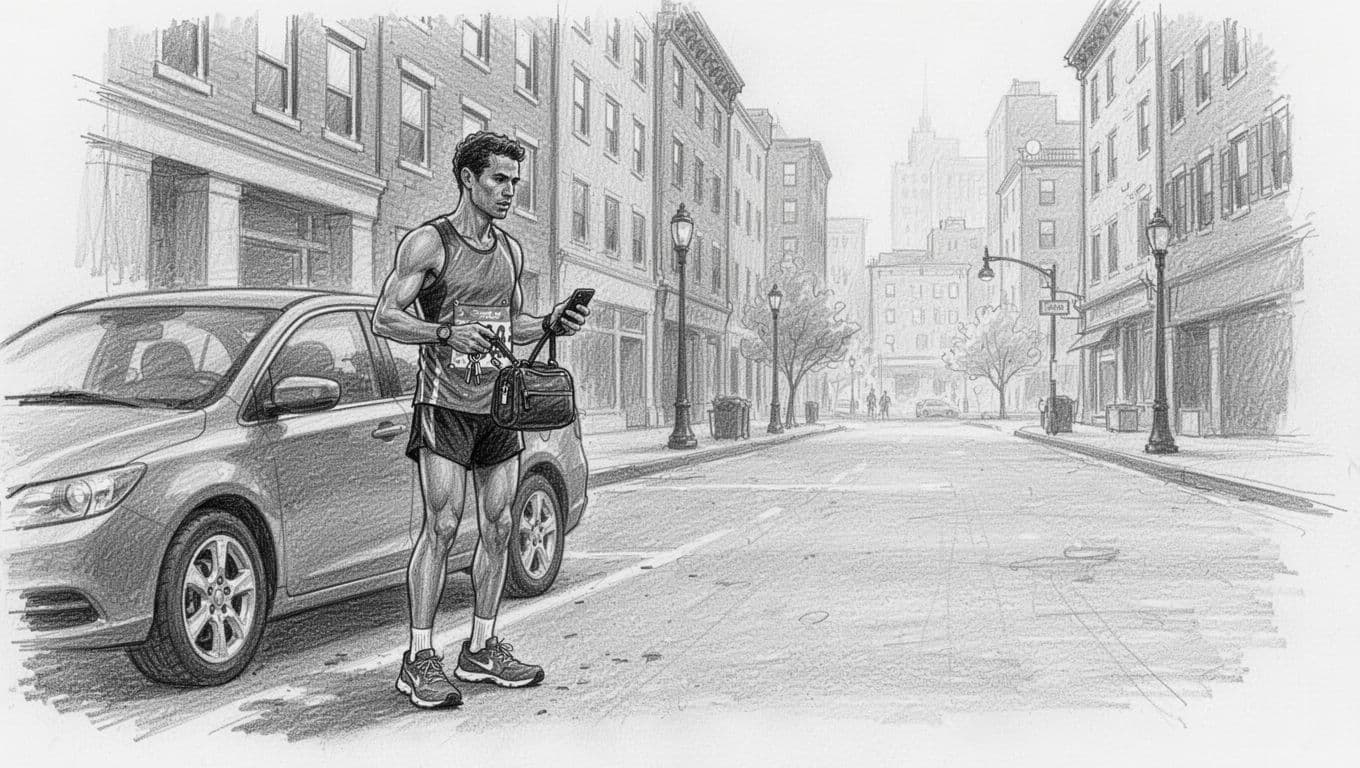
How to Choose Between a Center City Garage and a Farther Parking Lot
Center City garages near City Hall, Logan Square, Rittenhouse Square, and the Pennsylvania Convention Center offer shorter walks and better shelter from cold or wet weather. Philadelphia Parking Authority facilities may provide predictable access, while private garages booked through parking apps can offer reservations. Hotel parking and surface lots add more choices, but prices and hours vary by location.
A nearby garage can become expensive when event pricing applies. Congestion may slow entry, blocked streets can limit access, and crowded exits may delay your drive home. A surface lot or garage farther from the course often costs less and makes leaving easier. However, you may face a longer walk after 26.2 miles or need a transit connection.
The start and finish areas aren’t always equally convenient. Plan around your entire day, not only the starting corral. Before choosing, ask yourself:
- Will your pace or mobility needs make a longer post-race walk difficult?
- Are you carrying a gear bag, extra layers, or recovery supplies?
- Does cold, rain, or wind make an indoor garage more useful?
- Are family members, children, or spectators returning to the car with you?
- Must the driver leave quickly after the race?
- Can everyone handle a SEPTA ride or a longer walk after finishing?
Check the Philadelphia Parking Authority’s current parking information before committing to a facility. Treat convenience as one part of the decision, not the entire plan.
What to Check Before Paying for a Reserved Space
A reservation can protect your spot, but it doesn’t guarantee a simple race-day arrival. Before paying, confirm:
- The exact entrance address, not just the garage’s general map location.
- Opening time and whether staff will admit marathon-day customers before dawn.
- Accepted payment methods, event surcharges, and the final total.
- Maximum vehicle height, especially if you drive an SUV or van.
- In-and-out rules, cancellation terms, and accessible-space availability.
- Overnight policies and the deadline for removing your vehicle.
- Whether road closures leave the entrance reachable from your approach.
Don’t trust an app’s normal travel-time estimate. It may not account for barricades, police control, race traffic, or a closed exit street. Review the official marathon road closure notice and confirm access directly with the garage.
Save your reservation confirmation offline, including the entrance address and customer-service number. That small step helps when cell service is slow, your phone battery is low, or you need to change plans before the starting gun.
Can You Avoid Driving? SEPTA, Drop-Offs, and Rideshare for Race Morning
Driving into the race zone isn’t your only option. SEPTA, a planned drop-off, or a carefully chosen rideshare stop can help you reach the start without searching for Philadelphia Marathon parking before sunrise.
Each option needs a time buffer. Race morning includes road closures, crowded sidewalks, bathroom lines, bib checks, bag check, warm-up, and corral access. Build your plan around those details, not the scheduled arrival time alone.
A Simple Public Transit Plan for Early Marathon Starts
SEPTA Regional Rail, subway, trolley, and bus routes can bring runners toward Center City, but race-day service may differ from a normal Sunday. Bus detours, station entrances, early-morning schedules, and line disruptions can change as streets close. Check SEPTA’s current schedules and service alerts close to race morning.
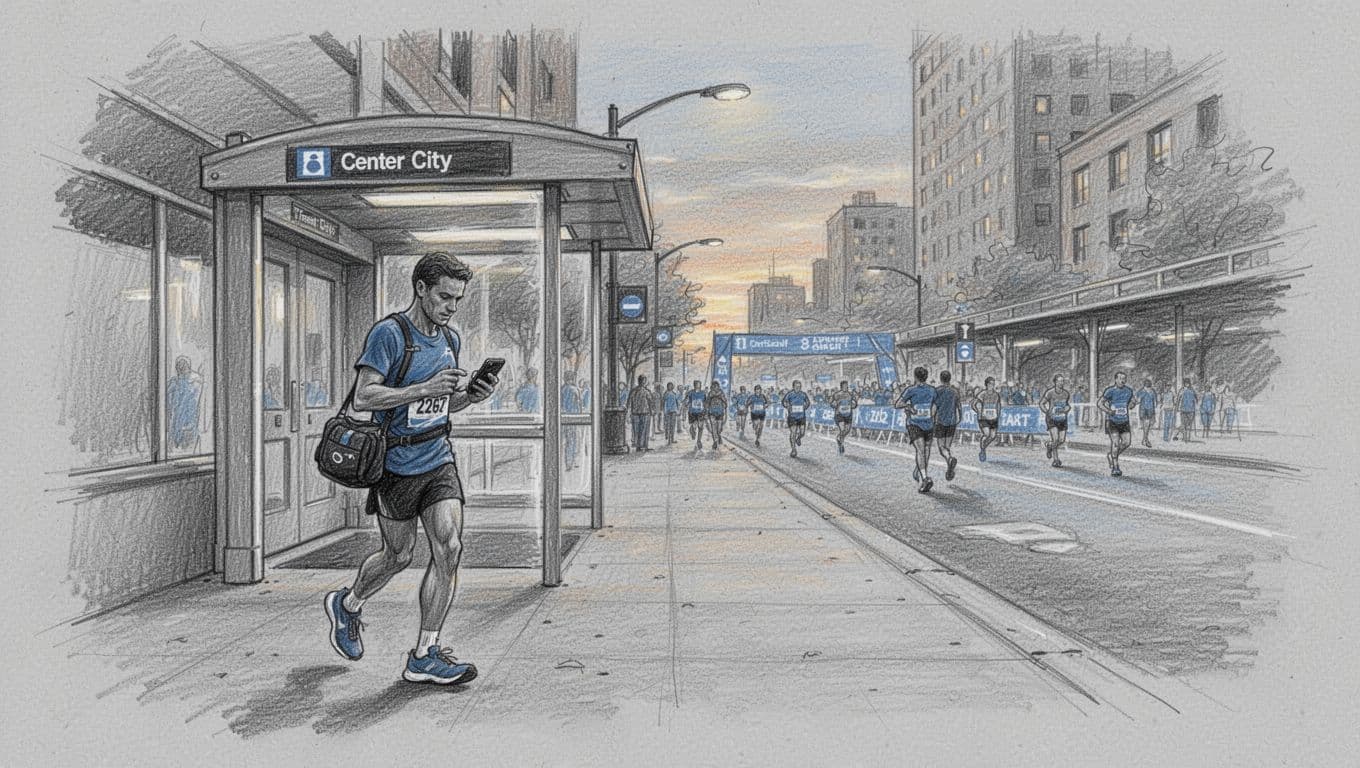
Use this sequence to make public transit part of your Philadelphia Marathon parking plan:
- Check the first available train or the full train, subway, trolley, or bus connection. Confirm the departure time, transfer point, destination station, and walking route.
- Add time for transfers, locked or crowded station entrances, security checks, temporary barricades, and slower walking conditions.
- Load your transit payment method before leaving. Keep a backup payment option available in case your phone battery runs low.
- Download an offline map that shows the station, start area, restroom locations, and your planned walking route.
- Identify a backup station in case your first stop is crowded, closed, or difficult to reach.
A train that arrives near the start time leaves too little margin. You still need to reach your bib area, check a bag, use the bathroom, adjust layers, warm up, and enter the correct corral. If you’re visiting Philadelphia for the first time, trial the route the day before. Walk the final segment and note stairs, elevators, steep ramps, and alternate entrances.
Runners with wheelchairs, gear bags, children, or extra preparation time should add more margin. Check elevator access before race morning and choose the route with the fewest obstacles, not simply the shortest distance.
How to Build a Reliable Family Drop-Off and Pickup Plan
A planned drop-off can work well, but the curb used in the morning may not be available later. Choose a drop-off point outside the closed course, then walk the final distance to the start. Rideshare drivers may face blocked streets, surge pricing, and GPS directions that lead toward a barricade instead of an accessible curb.
For pickup, select a meeting point away from the finish exits and the densest spectator crowds. Agree on a backup location before the race, preferably near a recognizable building or intersection outside the course restrictions.
Write down the plan in case cell service fails. Decide how your family will communicate if a phone dies, a runner finishes late, or traffic prevents a driver from reaching the first location. Families must never stop in a travel lane, block a crosswalk, or obstruct emergency access. A few extra walking minutes are safer than forcing a vehicle into a restricted curb.
Race-Morning Parking Strategy: Arrival Times, Walking Routes, and the Finish
Philadelphia Marathon parking requires more than choosing a garage near the Art Museum. Your plan should account for the runner’s corral deadline, the walk to the start, pre-race tasks, and the difficult trip back after 26.2 miles.
How Early Should You Arrive for Philadelphia Marathon Parking?
Work backward from the time you must enter your wave or corral, not only from the official race start. The Philadelphia Marathon FAQ includes current information about corrals and race-day details, but your personal schedule depends on your parking location and routine.
Use this planning formula as a starting point:
Drive time + garage entry or parking search + walking time + bag check + bathroom stop + breakfast or bib setup + 30 to 45 minutes of buffer = target arrival time.
For example, if your corral deadline is 6:45 a.m., allow 25 minutes to drive, 15 minutes to enter the garage, 20 minutes to walk, 10 minutes for bag check, 10 minutes for the bathroom, and at least 30 minutes for delays. That puts your arrival near 5:25 a.m., before peak traffic builds around Center City and the Benjamin Franklin Parkway.
A reservation helps, but it doesn’t remove every delay. Garages may have a line at the entrance, a staffed check-in process, or a single open access point even when you have already paid for a space. Save your confirmation offline, keep the entrance address available, and leave enough time to switch to your backup location.
Carry only what you need during the walk from your car:
- Your phone, identification, payment card, and race essentials.
- Warm layers that can stay with you or go into your checked bag.
- Nutrition, medication, and a small emergency item such as blister care.
- Keys secured in one place, rather than loose inside multiple pockets.
Plan the Walk From Your Car to the Starting Corral
Map the pedestrian route before race morning. Check which garage entrance opens onto the sidewalk, then identify alternate entrances in case barricades, construction, police controls, or temporary closures block the shortest path.
A route that looks like eight minutes on a map can take twice as long with thousands of runners moving toward the start. Cold rain, icy sidewalks, crowded crossings, and narrowed walkways create more delays. Wear comfortable walking shoes before the race, and keep your race shoes and clothing organized in one bag or compartment. Searching through the car for socks, gels, or gloves wastes time when every minute matters.
Review the official Philadelphia Marathon course information before choosing your route. Save walking directions on your phone, then carry your essentials where they remain accessible without unpacking the entire bag.
Make the Post-Race Exit Easier on Tired Legs
Parking close to the finish can create a false sense of convenience. Roads around the Art Museum, Parkway, and Center City may remain closed after the last runner passes, while police controls, spectators, and cleanup crews slow access to nearby garages.
After finishing, expect to walk before reaching your vehicle or family. Save the route in advance, and arrange to meet family outside the densest finish crowd at a clear landmark beyond the restricted area. A longer walk to a less congested garage or transit stop may be easier than waiting beside the finish.
Pack a small recovery kit in the car with dry clothes, food, fluids, and a warm layer. Stiff legs, wet socks, cold wind, and a long delay can turn a manageable walk into an uncomfortable one. Plan for the finish you hope to have, but also for the slower exit your body and Philadelphia traffic may require.
Parking Costs, Safety, and Accessibility Details Runners Should Not Miss
Philadelphia Marathon parking costs extend well beyond the amount shown on a garage sign. Event-day rates may differ from normal prices, and your final total can include taxes, reservation fees, transit tickets, rideshare fare, tolls, meals, and a backup parking space. Confirm current prices with the facility instead of relying on an old blog post or last year’s rate.
What a Real Philadelphia Marathon Parking Budget Includes
Use this simple table to estimate the full trip before race morning:
| Cost category | What to include |
|---|---|
| Garage or lot fees | Event-day rate, hourly charge, daily maximum, or overnight fee |
| Parking reservations | Booking fee, service charge, taxes, and cancellation terms |
| Transit or rideshare | SEPTA fares, transfers, surge pricing, or pickup changes |
| Tolls | Highway tolls for the drive into or out of Philadelphia |
| Meals | Breakfast, coffee, post-race food, and drinks for supporters |
| Backup fund | Extra parking, a longer ride, or an unexpected delay |
The cheapest listed rate may not be the cheapest overall. A low-cost lot can add a long walk after the race, while a distant garage may require an extra SEPTA transfer or rideshare trip. Compare the total arrival and exit cost, including time, walking distance, and the chance that road restrictions delay your departure.
Keep your parking reservation, payment card, and garage phone number accessible offline. Also photograph your parking level, section, and nearby landmark before walking away. After a marathon, every concrete floor can look the same, especially when you’re tired and carrying extra layers.
Choose a well-lit facility with visible entrances and regular foot traffic. Remove electronics, bags, and other valuables from the car, then lock the vehicle before leaving. Never park in a temporary no-parking zone because a familiar curb may have new race restrictions.
Accessible Parking and Mobility-Friendly Race-Day Planning
Runners and supporters who need an ADA space should confirm details before race weekend. Philadelphia’s current ADA parking information explains local requirements, but individual garages still control their own spaces, entrances, and access procedures.
Contact the parking operator and race support team early. Ask these direct questions:
- Are ADA spaces available, and can the facility reserve one?
- Will an elevator operate before dawn and after the race?
- Are accessible restrooms available inside or near the facility?
- Does the route include curb ramps and a reasonably short walk?
- Which entrance remains reachable during street closures?
A route can look accessible on a map yet become difficult on race day. Barricades may block a curb ramp, crowds may narrow the sidewalk, and uneven pavement or temporary street restrictions can force a longer detour. Check the latest race-day closure information close to the event.
Don’t assume a standard garage will meet every mobility need. Confirm the full path from the parking space to the course, then create a backup route before race morning.
Common Philadelphia Marathon Parking Mistakes and a Better Backup Plan
Even experienced runners can lose valuable energy before the Philadelphia Marathon by treating parking as a last-minute detail. Race morning rewards a clear plan, a reachable garage, and enough time to change course when traffic or closures disrupt the original route.
Parking Mistakes That Create Race-Morning Stress
Arriving at the last minute is one of the costliest mistakes. A short drive can turn into a long delay when thousands of runners enter Center City at once. Garage lines, closed intersections, bathroom stops, and the walk to your corral all take time. Work backward from your corral deadline and leave extra fuel in the tank, since detours can add miles.
Street parking near the course also creates problems. A familiar curb may become a temporary no-parking zone, and enforcement can begin before sunrise. The official Philadelphia Marathon closure notice explains that vehicles along the route can be relocated. Never trust an old parking habit, an outdated map pin, or an open space beside a barricade.
Garage reservations require careful reading, too. Some facilities accept reservations only during specific entry windows. Others require a particular entrance, prohibit re-entry, or cancel the booking if you arrive late. Confirm the address, access time, vehicle height limit, payment rules, and cancellation policy before race weekend. A low-clearance garage can reject an SUV even when the reservation is valid.
A reserved space helps only when you can reach the correct entrance during its permitted hours.
Build a Two-Level Backup Plan
Choosing parking based only on the start line can leave you stranded after the finish. Your vehicle may sit near streets that remain closed while runners, spectators, police, and cleanup crews clear the course. Consider the full day, including the walk back and your route out of Philadelphia.
Use two parking options:
- Select a primary garage or lot with a confirmed entrance, opening time, and walking route.
- Choose a second facility in a different area, outside the main closure zone, with its own approach and exit route.
Save both addresses offline, along with payment details and nearby landmarks. Check the official race updates the night before, then review them again on race morning. The Philadelphia Marathon FAQ can help confirm current race-day access information.
If your first route fails, keep moving toward the backup. Don’t make unsafe turns, cross barricades, stop in a travel lane, or pull onto an illegal curb. A legal space farther away is a better choice than a risky shortcut.
Good Philadelphia Marathon parking protects more than your schedule. Calm logistics preserve energy for pacing, fueling, and finishing strong. When your arrival and drive home are already planned, you can focus on the race itself.
Choose Your Distance, Duration and Goal Time
Make three quick selections and open the exact plan built for your race target.
Looking for a Fully Personalized Training Plan?
The training plans above are an excellent choice if they match your goal. However, if you’d rather train with a plan built specifically around your current fitness, goal race, preferred training days, weekly mileage, and target finish time, our RDA Custom Training Plans provide a personalized solution. We also have running courses available for runners seeking to run faster from the mile to the marathon.
Why Choose a Custom Training Plan?
| Standard Training Plan | RDA Custom Training Plan |
|---|---|
| Follows a fixed schedule | Built around your schedule |
| Standard weekly mileage | Peak mileage customized for you |
| Fixed workout days | Train on the days you choose |
| Same structure for everyone | Designed around your current fitness |
| Static plan | Updated as your fitness improves |
| One-time purchase | Ongoing personalized coaching and support |
What You’ll Receive
- A training plan built specifically for your goal
- Personalized training paces
- Long runs, tempo runs, threshold workouts, interval sessions, recovery runs, and easy runs
- Peak weekly mileage matched to your experience level
- Flexible training schedule that fits your life
- Ongoing plan adjustments as your fitness improves
Ready to Train Smarter?
Stop guessing and start following a plan built specifically for you, your schedule, and your racing goals.
Frequently Asked Questions
Race-day parking questions often come down to access, timing, and what happens after the finish. Use these answers to check the details that can affect your Philadelphia Marathon parking plan.
Is street parking available during the Philadelphia Marathon?
Some legal spaces may remain open outside restricted areas, but availability is usually limited. Temporary parking bans, meters, posted time limits, race restrictions, and towing rules can affect a space that looks safe at first glance. Review the Philadelphia Parking Authority’s street parking rules and the latest marathon notices before leaving home.
Never assume a familiar block will remain available during the race. Read temporary signs at the curb, check the enforcement schedule, and move your vehicle if officials require it.
Can I leave my car in a garage during the entire race?
Many garages allow customers to leave vehicles parked throughout the race, but each facility sets its own rules. Opening hours, event rates, overnight limits, reservation windows, and reentry policies can differ, even between nearby garages.
Before booking, ask whether you can enter before the race, leave the car until after the finish, and return without paying another fee. Keep your reservation confirmation, payment details, garage address, and customer-service number available offline.
Where should spectators park to watch the marathon?
Spectators should choose parking based on their viewing point and how easily they can reach another part of the course. Parking beside the finish may look convenient, but restricted streets and dense crowds can make movement difficult later.
Choose a garage or lot outside the most restricted streets, then walk or use SEPTA to reach the viewing area. Check the current crowd plan, course closures, and pedestrian crossings before deciding where to watch. A slightly longer walk can give your group more flexibility.
What happens if my reserved garage is blocked by road closures?
Contact the garage or booking provider before race morning and ask which entrance remains open during the closures. A reservation may still be valid, but the normal approach could be blocked by barricades or police traffic controls.
Don’t drive through a barricade or follow GPS directions into a restricted street. Save an offline confirmation, allow extra walking time, and identify a backup garage in another area. If access remains unclear, call again before starting your trip.
Is SEPTA better than driving to the marathon?
SEPTA often avoids garage searches, parking fees, and road-closure problems, but transit isn’t automatically easier for every runner. Early starts, service changes, crowded trains, station stairs, transfers, and a long walk can add stress before the race.
Compare the full door-to-door plan, including your first departure, transfers, walking route, payment method, and return trip. Driving may work better for runners carrying medical supplies or needing flexible post-race access, while transit can suit those who want to avoid Center City traffic.
How can I find my car after the marathon?
Before walking away, photograph the garage level, section, nearby entrance, and a recognizable landmark. Save the garage address in your map app, then share the location with family or your support crew.
After 26.2 miles, fatigue and crowds can make familiar parking levels look identical. Keep your keys in one secure place and follow the saved walking route instead of relying on memory.
Conclusion
The best Philadelphia Marathon parking plan protects your time, energy, and route home. Compare a reserved garage with SEPTA or a planned drop-off, then choose the option that fits your start-area access, walking needs, and post-race exit. Check the official course map and road-closure updates before race weekend because an accessible entrance or familiar street can change by race morning.
Prepare a backup plan in case your garage is full, an entrance is blocked, or transit service changes. Save addresses, confirmations, walking directions, and meeting points offline. Arrive early enough for parking, walking, bag check, bathroom lines, and corral access without rushing.
For RunDreamAchieve runners, smart race preparation starts before the warm-up. When your arrival and exit are already organized, you can preserve focus for pacing, fueling, and the finish instead of spending energy on traffic. Review your Philadelphia Marathon parking plan before race weekend, then let your race-day execution begin with a calm first step.


