

Philadelphia Marathon Course Guide: Route, Hills & Pacing Strategy
Race morning in Philadelphia begins with cold air, crowded corrals, and the steady pulse of thousands of runners waiting to move through Center City. Once the course opens, the route carries you past historic streets, cheering neighborhoods, the Schuylkill River, and the long stretch toward the finish, but its turns and rolling sections can punish a pace that feels too aggressive early.
Understanding the Philadelphia Marathon course helps you set realistic splits, manage your effort, and make better decisions when fatigue or changing weather affects your plan. This guide breaks down the route, major hills, landmarks, aid stations, weather concerns, race-day logistics, and practical strategy for both first-time marathoners and experienced runners chasing a personal best.
Course details can change from year to year, including street closures, aid-station locations, and other race procedures, so confirm the latest official course map before race day. First, let’s examine how the route unfolds and where you should expect the biggest demands. Lastly, be sure to book your Philadelphia Marathon hotels early so you save money.
Key Takeaways
- The Philadelphia Marathon course combines historic Center City streets, neighborhood crowds, Fairmount Park, and Schuylkill River views.
- Rolling sections and late-race fatigue reward even pacing, especially when early excitement tempts you to run too fast.
- Use the official Philadelphia Marathon course details to confirm checkpoints, aid stations, turns, and race-day changes.
- Practice fueling, hydration, and pace control before race morning rather than relying on crowded stations or instinct.
- Cold temperatures, wind, congestion, and long exposed stretches can affect your race plan, so prepare flexible pacing options.
Philadelphia Marathon Course: Route Overview From Start to Finish
The official Philadelphia Marathon covers 26.2 miles through Center City, historic neighborhoods, Fairmount Park, and the Schuylkill River corridor. While the exact streets, turns, timing mats, aid stations, and start procedures can change, the route usually feels like a long tour of the city rather than one continuous stretch of pavement.
Before race day, review the official Philadelphia Marathon course details. Then use the landmarks below as memory points, not fixed mile markers.
What runners see along the Philadelphia marathon route
The race typically begins near the Benjamin Franklin Parkway, where the Museum District gives the opening miles a broad, impressive feel. Runners move into Center City streets near the City Hall area, surrounded by historic buildings, spectators, and the sound of thousands of feet striking the pavement.
As the Philadelphia marathon course continues, the scenery shifts between dense city blocks and quieter residential sections. That change in atmosphere can help you divide the race into manageable goals. Reach one landmark, settle into the next section, then focus on the following turn instead of thinking about all 26.2 miles at once.
The route later brings runners toward the Schuylkill River, where longer stretches require patience. Depending on the current layout, the river section may include an out-and-back pattern, with runners reaching a turnaround area before retracing part of the course. Views of Boathouse Row and the riverfront can provide useful confirmation that you are progressing through the middle or later stages.
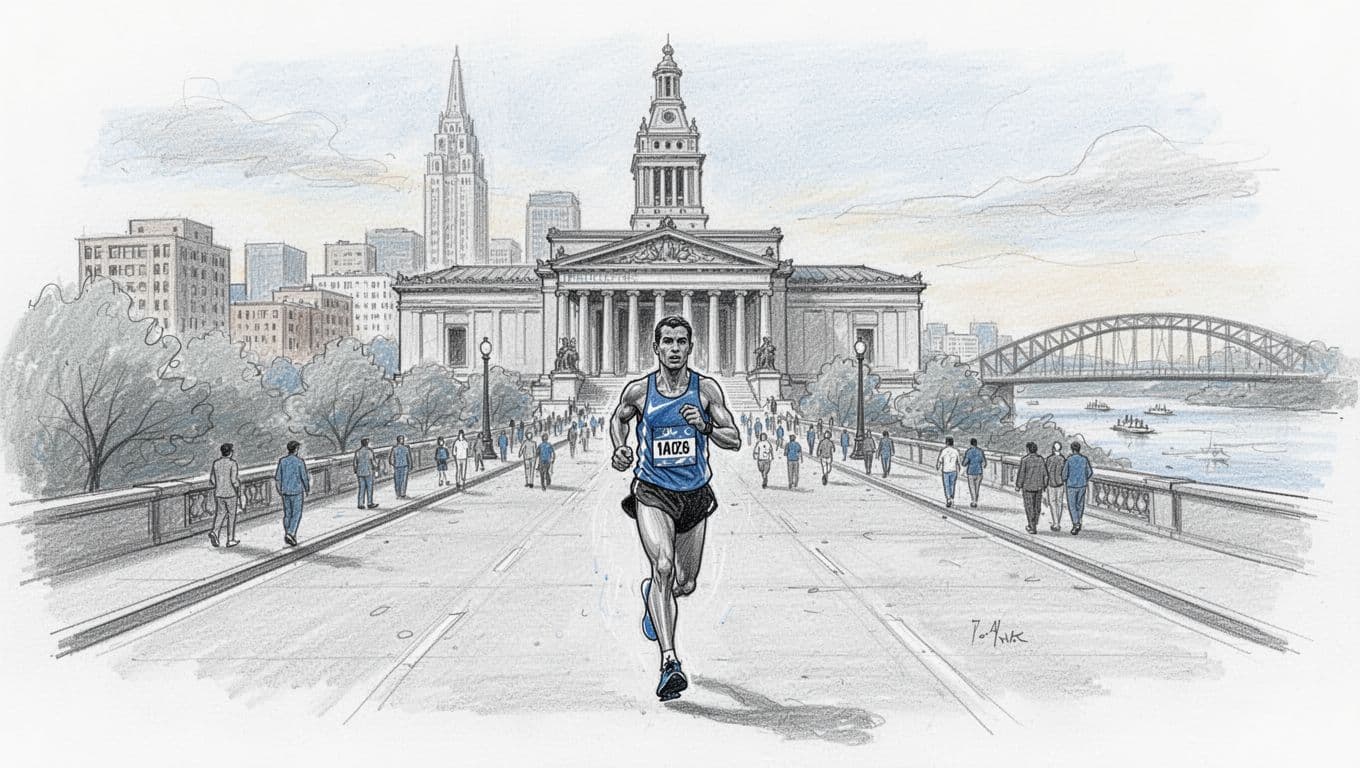
Crowds often feel strongest near Center City and major landmarks, while river and park sections may sound quieter. That contrast matters because your own breathing, pacing, and fueling become more important when spectators thin out. Finally, the course heads back toward the Philadelphia Museum of Art, where the finish area near Eakins Oval gives the closing miles a clear visual target.
How the marathon course differs from the half marathon route
The half marathon shares some early or central-city scenery, but it covers only 13.1 miles. Runners may recognize the Parkway, City Hall area, and other downtown views without facing the marathon’s full river out-and-back distance.
A half marathon also demands less late-race patience and endurance planning. Marathoners must manage energy for several hours, including the return from the turnaround when crowd support and freshness may fade. Don’t assume a half marathon map shows every marathon turn, timing mat, or aid station. Compare the current official half marathon course map with the marathon route before making race-day plans.
Where the Course Gets Tough: Hills, Turns, and Surface Changes
The Philadelphia Marathon course rarely asks you to conquer one long mountain. Instead, it tests how well you handle rolling city streets, repeated turns, changing pavement, and small rises that feel much steeper after 20 miles. Your best strategy is to manage effort early, stay alert through the middle miles, and protect your form when fatigue changes how the road feels.
The early miles require controlled effort
The opening miles can feel easier than planned. Crowds carry you forward, fresh legs respond quickly, and smooth pavement or an early downhill section may make your goal pace feel almost effortless. That combination can create a costly mistake before the race has truly begun.
Settle into goal marathon effort, not your fastest comfortable pace. Let runners pass if they surge, and leave enough room to move around groups without weaving through the field. Every sharp acceleration spends energy, even when your breathing stays calm.
Use the first miles to establish rhythm. Keep your shoulders relaxed, shorten your stride slightly on descents, and check your watch only after the crowd spreads out. A controlled start gives you more options when the course reaches its rolling sections and the legs no longer feel fresh.
The Schuylkill River section tests patience
Near the Schuylkill River, the Philadelphia Marathon course may feel calmer and more exposed than the crowded city streets. Long, straight stretches offer fewer visual changes, while wind can make the same pace feel harder in one direction than the other. Nearby runners may surge or fade, but their pace doesn’t determine your race.
Break the river portion into small landmarks. Focus on the next bridge, bend, aid station, or turnaround rather than staring at the miles still ahead. A steady breathing pattern also gives you a simple check: if your effort rises because you are chasing someone, return to your planned pace.
Fueling reminders matter here because quiet sections can make time blur. Take nutrition according to your schedule, drink when planned, and avoid waiting until hunger or thirst forces a decision. The official Philadelphia Marathon course details can help you confirm current checkpoints and aid-station information before race morning.
Late-race turns and the finish approach
After mile 20, even a small incline can feel like a major hill. Turns also demand more concentration because tired runners often drift across the road, clip uneven pavement, or take wider lines than necessary. Bridges and overpasses, if included in the current layout, deserve the same respect.
Protect your efficiency by running the tangents when safe, scanning the pavement, and keeping your posture tall. The Art Museum may come into view before the race is truly finished, so keep your effort steady through the approach. Save your final push for the closing stretch, not the first glimpse of the building.
How to Pace the Philadelphia Marathon Course Without Fading
A strong Philadelphia Marathon pacing plan balances goal pace, effort, and average pace. Your goal pace guides the race, but hills, turns, crowds, wind, and weather will make individual splits vary. The goal is to reach mile 20 with enough control to make a smart decision, not to prove your fitness in the opening miles.
Use effort on hills and pace on smoother sections
Let your pace slow slightly on rises throughout the Philadelphia Marathon course. Keep your breathing controlled, shorten your stride, and maintain steady effort rather than forcing an exact split. On the descent, allow your pace to return naturally. Avoid braking with your heels, since that sends extra force into your quadriceps and can make the later miles much harder.
When the road flattens, settle into relaxed form. Keep your shoulders low, hands loose, and stride compact enough to stay efficient. First-time marathoners should favor a conservative effort during the early Parkway and Center City miles. Experienced runners can sit near goal effort, but should still avoid surging around turns or chasing runners who move ahead.
Your watch is a guide, not a judge. GPS pace can jump near tall buildings, trees, and crowded streets, especially when the field forces you to weave or slow. Use lap pace, elapsed time, breathing, and perceived effort together. Average pace matters most after several miles, not after one noisy GPS reading.
Plan fueling around the aid stations
Review the latest Philadelphia Marathon FAQ and station information before race morning. Carry enough fuel to reach your first planned station, then follow a routine you have already practiced in long runs. Take fluids early, even if you don’t feel thirsty, and slow briefly if needed so you can drink without choking or spilling.
Don’t test a new gel, sports drink, or caffeine strategy during the race. Fueling needs vary with body size, pace, weather, and individual tolerance, so use a tested plan or follow guidance from your coach. The busy city sections can make grabbing a cup difficult, while quieter river miles may offer a better chance to drink calmly.
Break 26.2 miles into manageable sections
Divide the race into three-to-five-mile blocks or landmarks such as the Parkway, City Hall, the river, a turnaround, and the return toward the Art Museum. Focus on reaching the next aid station or pacing checkpoint instead of carrying the full distance in your mind.
A negative-split approach can be simple: run the first half controlled, settle into steady effort through the middle, then reassess after mile 20. If your form and breathing remain strong, gradually increase pressure. If fatigue is rising, protect your rhythm and keep moving forward. The final miles require patience, positive self-talk, and honest effort, not panic.
Race-Day Logistics Around the Philadelphia Marathon Course
Race morning logistics can shape your experience before you run a single mile. Read the current Philadelphia Marathon FAQ and participant guide before traveling, since schedules, access rules, bag procedures, and street closures can change.
Getting to the start and finding your corral
Arrive early enough to handle bib pickup, toilets, security, and the walk to your assigned starting area without rushing. If you need to collect your bib in person, check the event schedule and location before race weekend. Race-morning pickup may not be available, or it may have limited hours.
Center City streets can close before the race begins, and traffic often moves slowly around the start. Plan SEPTA, a rideshare drop-off, or a walking route in advance. If someone drives you, choose a drop-off point outside the most restricted streets, then walk the remaining distance. Last-minute parking or driving toward the Benjamin Franklin Parkway can turn a simple arrival into a stressful search.
Check your bib for the correct wave or corral before entering the start area. Follow staff instructions, attach the bib as directed, and confirm that your timing chip remains secure. Bring only permitted items, since backpacks and other bags may not be allowed. The official marathon page also lists current race amenities, including restrooms and bag check.
What to do with clothing and personal items
If you use gear check, pack only what you need after finishing. Use the official participant bag when the race provides one, complete the label carefully, and follow instructions for where and when to drop it. Bags may be inspected, so don’t treat gear check as a place for prohibited items or irreplaceable valuables.
Cold November mornings can make the wait uncomfortable. Wear an inexpensive outer layer that you can discard only where race officials allow it, or use clothing you won’t mind leaving behind. Keep your wallet, keys, medication, and electronics protected, and decide beforehand which items must be available after the finish.
Choose Your Distance, Duration and Goal Time
Make three quick selections and open the exact plan built for your race target.
Looking for a Fully Personalized Training Plan?
The training plans above are an excellent choice if they match your goal. However, if you’d rather train with a plan built specifically around your current fitness, goal race, preferred training days, weekly mileage, and target finish time, our RDA Custom Training Plans provide a personalized solution. We also have running courses available for runners seeking to run faster from the mile to the marathon.
Why Choose a Custom Training Plan?
| Standard Training Plan | RDA Custom Training Plan |
|---|---|
| Follows a fixed schedule | Built around your schedule |
| Standard weekly mileage | Peak mileage customized for you |
| Fixed workout days | Train on the days you choose |
| Same structure for everyone | Designed around your current fitness |
| Static plan | Updated as your fitness improves |
| One-time purchase | Ongoing personalized coaching and support |
What You’ll Receive
- A training plan built specifically for your goal
- Personalized training paces
- Long runs, tempo runs, threshold workouts, interval sessions, recovery runs, and easy runs
- Peak weekly mileage matched to your experience level
- Flexible training schedule that fits your life
- Ongoing plan adjustments as your fitness improves
Ready to Train Smarter?
Stop guessing and start following a plan built specifically for you, your schedule, and your racing goals.
Planning spectator support and the finish-area exit
Downtown crowds make spontaneous meetups unreliable. Choose a landmark several blocks away from the finish chute, share it with your family, and agree on a backup location if cell service becomes slow. Carry a fully charged phone if the current rules allow it, but don’t depend on a call immediately after finishing.
The walk through the finish area can feel longer than expected on tired legs. Before race morning, learn where medals, recovery supplies, post-race food, transportation, and bag claim are located. Your meeting point should account for that walk, not sit beside the first barrier you see.
Weather, Clothing, and Training for Philadelphia in November
Late November can give you a crisp, fast morning or a cold, wet race with wind cutting through exposed sections. Philadelphia weather can shift during race week, so review the National Weather Service Philadelphia climate data and check the forecast again before traveling. Then choose clothing for the effort you will produce, not only the temperature shown at the start.
Prepare for wind, cold, or rain on exposed sections
A straight stretch beside the Schuylkill River can feel harder when a headwind removes your rhythm. You may hold the same pace while working much harder, especially after the course has already taken energy through city streets and rolling sections. Run by effort in the wind, stay near other runners when appropriate, and avoid surging to defend every split.
Rain creates a different problem. Wet fabric can rub against your neck, underarms, waist, or inner thighs for hours. Apply anti-chafing balm before leaving your hotel, and use clothing you have already tested on long runs. A reliable race-day setup may include:
- A moisture-wicking shirt under a light shell or vest.
- Thin gloves that you can remove if your hands warm up.
- A lightweight hat or cap that keeps rain away from your face.
- Technical socks, fitted shorts or tights, and anti-chafing protection.
Warm-up comfort matters while you wait in the corral, but carrying extra gear for 26.2 miles can become irritating. Wear an inexpensive sweatshirt, long-sleeve shirt, or poncho over your race kit, then discard it only in locations permitted by race officials. Don’t leave clothing in the running lane or assume volunteers can collect every item.
Wet clothing rarely feels troublesome at mile two. After several hours, the same rubbing can become a serious distraction.
Practice the course demands in training
Your long runs should resemble the Philadelphia Marathon course in the ways that affect your effort. Include gentle rollers, frequent turns, pavement, and a sustained push late in the run. Flat treadmill miles can build endurance, but they won’t fully prepare your legs for repeated changes in direction or tired-leg pacing outdoors.
Practice fueling at race effort rather than during easy jogging. Start controlled, take nutrition on schedule, and finish selected workouts with strong posture and steady arm movement. Running the final miles with good form teaches you to keep your stride organized when fatigue arrives.
When possible, train in clothing and conditions similar to race day. A cool, windy long run gives you useful information about gloves, layers, and hydration. That knowledge is more dependable than guessing what will feel comfortable from the starting temperature alone.
Common Philadelphia Marathon Course Mistakes to Avoid
The Philadelphia Marathon course rewards patience and punishes rushed decisions. Small errors early can grow into lost time, sore legs, and a less enjoyable finish, so use these corrections to stay in control.
Do not race the crowd or chase perfect splits
Crowded opening miles can create slow or uneven splits. That pattern is normal on a busy Philadelphia Marathon course, especially when runners settle into their corrals and the road narrows. Weaving from one gap to the next adds distance and wastes energy before the harder miles arrive.
Use the first few miles to find a clear rhythm. Run the shortest safe line through turns, but don’t cut across runners or make sharp lateral moves for a cleaner GPS trace. Tall buildings, trees, turns, and crowd congestion can also make GPS pace jump. Judge your race by controlled effort, breathing, lap pace, and overall execution rather than one noisy watch reading.
Keep these corrections in mind:
- Starting too fast: Hold back during the excitement and run by marathon effort until the field spreads out.
- Weaving through crowds: Choose a steady lane and pass only when the opening is clear.
- Ignoring turns: Look ahead, protect your footing, and follow course arrows, volunteers, and barriers.
- Chasing every split: Let individual miles vary when congestion, hills, or GPS errors affect the reading.
Do not wait until fatigue arrives to make decisions
Fueling, hydration, clothing, and pacing corrections work best before discomfort becomes severe. If you wait for hunger, thirst, cold hands, soaked clothing, or heavy legs, the problem may take longer to fix. Review the official Philadelphia Marathon race information before race day, then rehearse simple decisions during long runs.
- Waiting too long to fuel: Take nutrition according to your tested schedule, not when hunger appears.
- Ignoring hydration: Drink early and adjust the amount for temperature, wind, and your own tolerance.
- Wearing untested gear: Race only in shoes, socks, layers, and fuel systems that have worked in training.
- Missing course updates: Check the latest map, aid-station details, closures, and start instructions before traveling.
- Surging near the finish: Increase effort only when your form remains controlled, rather than reacting emotionally to another runner or the finish line.
A calm plan gives you room to respond when the weather changes or your legs feel different than expected. That flexibility protects both your performance and your enjoyment of the final miles.
A Simple Philadelphia Marathon Course Plan for Your Race Morning
A calm race morning starts before you leave your room. Use the evening to remove small decisions, then carry one clear plan through each part of the Philadelphia Marathon course.
The night before and morning of the race
Before bed, lay out your bib, shoes, socks, race clothing, weather layers, fuel, phone, and any medication you need. Pack your transportation plan, including your departure time, route to the start, and a backup option if traffic or road closures disrupt the first plan.
Eat familiar foods that have worked during training. Drink normally throughout the evening and morning, but don’t force extra fluids. Avoid experimental supplements, unfamiliar meals, and large amounts of caffeine unless you have already tested them.
Leave enough time for the restroom, a light breakfast, security, gear check, and the walk to your corral. Confirm these details before sleeping:
- Review the latest official Philadelphia Marathon race page and course map.
- Check the published start time, your wave or corral, and any arrival instructions.
- Review current road closures, transit changes, and permitted drop-off areas.
- Confirm bag-check rules, gear-check hours, and the approved participant bag.
- Save key race information to your phone in case cell service is slow.
Write your fueling interval, target effort, and one calming reminder on a wristband or pace card. Keep the message short, such as “Easy early, fuel on time, reassess at 20.”
A checkpoint plan from the start line to the Art Museum
Use this mental script as the Philadelphia Marathon course unfolds:
- Start to the opening miles: Stay calm, protect your space, and let crowded streets create slower early splits if needed. Run by controlled marathon effort.
- Center City and the river: Settle into your rhythm through the downtown streets and longer river sections. Fuel before fatigue arrives, drink according to your practiced plan, and run hills by effort.
- After mile 20: Reassess your breathing, posture, legs, and fueling. If you feel strong, increase pressure gradually. If fatigue is high, shorten your stride and protect steady forward movement.
- The final landmarks: Use the return toward the Art Museum as a series of small targets. Stay engaged through each turn, then increase effort only when your form remains controlled.
Weather, crowding, or tired legs may change the plan. Slow slightly into a headwind, wait for a safe opening instead of weaving, and replace an aggressive pace goal with consistent effort when necessary. Your best race morning plan is firm about fueling and patience, but flexible about the numbers on your watch.
Frequently Asked Questions
The Philadelphia Marathon course looks straightforward on a map, but small details can change how it feels on race day. Use these answers to refine your expectations, then confirm current route, access, and race procedures through the official marathon information.
Is the Philadelphia Marathon course flat?
The course isn’t a mountain route, but calling it completely flat gives runners the wrong expectation. You should prepare for rolling sections, frequent turns, possible bridges or overpasses, and small rises that feel harder after 20 miles.
Wind along the Schuylkill River can add another layer of difficulty, especially when fatigue has already shortened your stride. Review the current elevation profile instead of relying on a simple “flat” or “hilly” label, since organizers can adjust streets and course details.
Where does the Philadelphia Marathon start and finish?
The race typically starts near the Benjamin Franklin Parkway and finishes near the Philadelphia Museum of Art, around Eakins Oval. These familiar landmarks make the route easier to picture, but the exact corrals, access points, streets, and finish-area exits can change.
Before traveling, check the current Philadelphia Marathon course map. Give yourself extra time to walk from transportation or bag check to your assigned corral, since nearby streets may close well before the start.
What is the hardest part of the Philadelphia Marathon route?
Many runners find the late miles and river out-and-back the most demanding. The scenery becomes less varied, the return can feel repetitive, and wind or small rises can expose an overly fast opening pace.
Your hardest point may differ based on pacing, weather, and experience. A first-time marathoner may struggle earlier with endurance, while an experienced runner may reach mile 22 before the real test begins.
Can spectators easily watch the Philadelphia Marathon?
Spectators can often see runners at several Center City, Parkway, park, and river locations. However, road closures, barriers, crowds, and the course’s out-and-back sections can make quick movement difficult.
Choose one or two meeting points instead of trying to follow the entire route. Public transportation is often more practical than driving, so review current traffic information and use the official Philadelphia Marathon app details for race-day updates.
What should I wear for the Philadelphia Marathon?
Dress for the forecast, wind, and rain, while accounting for your personal cold tolerance. November mornings can feel much colder while you wait in the corral than they will during several hours of running.
Wear tested layers, comfortable technical socks, and anti-chafing protection. Gloves, a light shell, or a removable outer layer may help, but don’t race in anything you haven’t used during a long run.
Conclusion
The Philadelphia Marathon course rewards patience more than an aggressive opening pace. Study the latest official map, practice on similar rolling terrain, plan your fuel and clothing, and arrive early enough to reach your corral without stress. Keep the first half controlled, then adjust your effort based on your form, breathing, and the weather.
With smart preparation and steady decisions, you can handle the river section, late-race fatigue, and final turns toward the Art Museum with confidence. Whether you’re chasing a personal best or simply aiming for a strong finish, confirm every race-day detail with the organizers before you travel.


