

Ottawa Marathon Review: Is It Worth Running? Course, Costs & Race-Day Experience
Before sunrise, Ottawa’s streets fill with shoe noise, nervous energy, and runners settling into their race plans as Tamarack Ottawa Race Weekend gets underway. The marathon carries you through a city that can feel welcoming and demanding in the same few miles, so your experience depends on more than the course map.
This Ottawa Marathon review looks at the route, race organization, atmosphere, cost, logistics, and the runners the event suits best. Details such as race dates, entry fees, and time limits can change each year, so check the current event information before registering.
Whether you’re chasing your first marathon or refining a personal-best attempt, the sections ahead assess the race with both goals in mind, starting with the course itself. Remember, make sure to book your Ottawa Marathon hotels early to save on costs.
Key Takeaways
- The Ottawa Marathon combines a demanding 42.2-kilometer route with views of Ottawa’s streets, waterways, and landmarks.
- Costs, start details, aid stations, and race policies can change, so review the official Ottawa Marathon information before registering.
- Runners have a seven-hour completion limit, with an intermediate checkpoint requiring marathon participants to reach 26 kilometers by 11:30 a.m.
- Strong pacing, early accommodation planning, and a clear transportation strategy can make race morning far less stressful.
- The event suits first-time marathoners and experienced runners, but personal-best attempts require careful preparation.
Ottawa Marathon Review: Is It Worth Running?
Yes, the Ottawa Marathon is worth running if you want a major Canadian road race with a strong city setting, broad runner support, and a full weekend of activity. It offers more than a single start line: the race combines a challenging marathon with the energy of Tamarack Ottawa Race Weekend.
The best fit depends on your goal. First-time marathoners and destination runners will likely appreciate the support and atmosphere, while Boston-qualifying runners need to treat the crowded field, weather, and course demands as serious race factors. Check the official Ottawa Marathon information for current dates, fees, policies, and course details before making plans.
What makes the Ottawa Marathon stand out
The marathon is the centerpiece of Tamarack Ottawa Race Weekend, a multi-event celebration that brings runners, families, volunteers, and spectators into Canada’s capital. Other races take place across the weekend, including shorter events and youth-focused races, so the city feels active well before marathon morning.
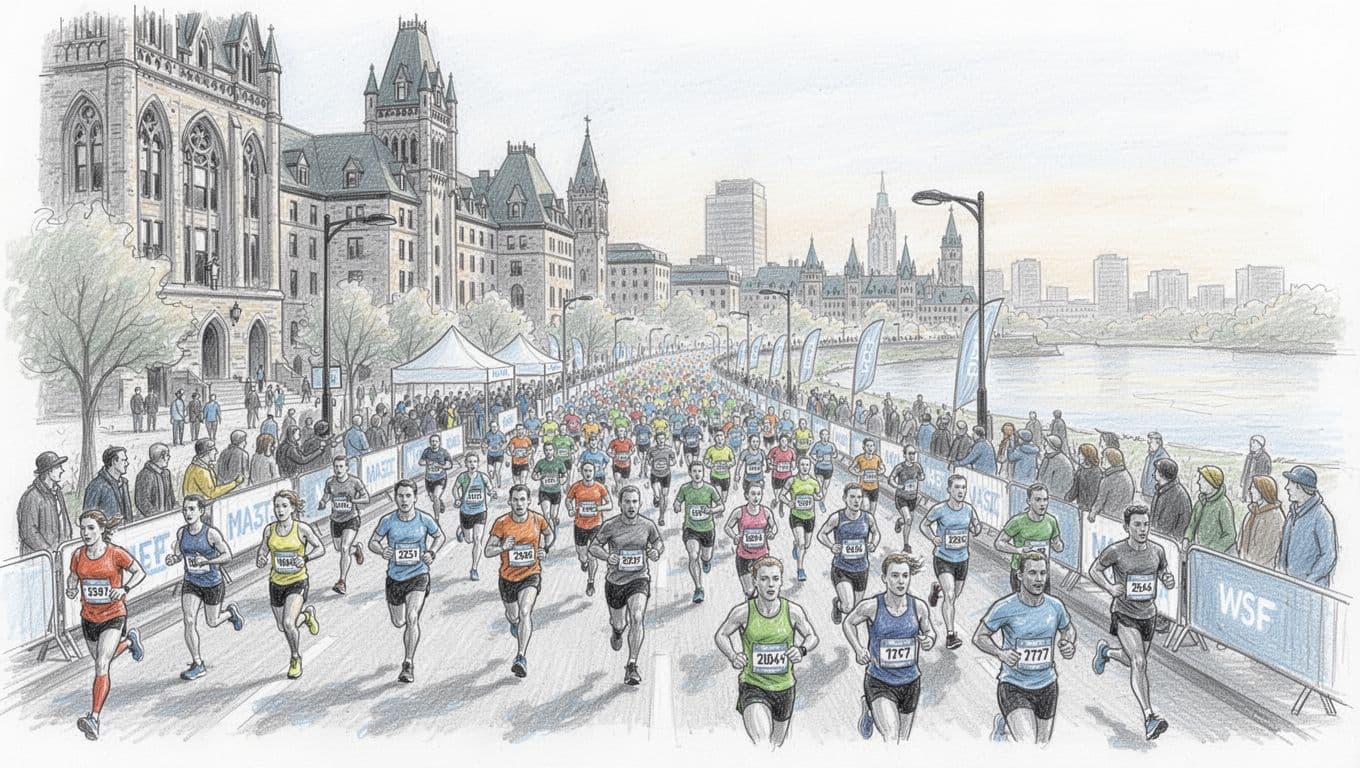
That variety creates a festival atmosphere rather than the isolated feel of a standalone marathon. A first-time runner may share the weekend with a child completing a youth event, a friend racing the half marathon, or an experienced athlete chasing a personal best. The Ottawa Half Marathon is one example of how the weekend gives different runners a reason to participate.
Ottawa also gives the race a memorable backdrop. Runners pass through Canada’s capital, with views shaped by civic buildings, waterways, parks, and familiar city streets. Those surroundings can make difficult miles feel more rewarding, especially for visitors who want the race to double as a travel experience.
Who will enjoy this race most
The Ottawa Marathon suits runners who want challenge with visible support. First-time marathoners can benefit from the large field, frequent spectators, and shared momentum. Charity runners may also enjoy the sense of occasion, since the weekend gives fundraising teams and supporters a natural place to gather.
Experienced racers have a different reason to enter. The event can provide a serious road-racing environment for runners pursuing a Boston-qualifying time or a faster personal best. However, a large race brings crowded early miles, busy aid stations, and more competition for space. Your pacing plan must account for those conditions instead of assuming a perfectly open road.
Spectators often have plenty to watch because several events unfold across the weekend. That makes Ottawa a strong choice for running groups and families, but solo runners seeking a quiet, low-pressure experience may find the crowds tiring. The race is best for athletes who welcome energy around them and can stay patient when the course feels busy.
The Ottawa Marathon Course: Scenic, Fast, and Not Completely Flat
The Ottawa Marathon gives runners a memorable tour through Canada’s capital, but the scenery should not disguise the work required over 42.2 kilometers. The course includes urban roads, waterways, parks, bridges, turns, and exposed sections where weather can affect your effort.
Course details and elevation can change between editions. Before race weekend, study the current Ottawa Marathon course map, including its road closures and elevation profile.
Landmarks and scenery along the route
Ottawa’s visual character changes throughout the race. Downtown streets place runners near government buildings and the formal architecture of Canada’s capital. Elsewhere, the route brings parks, open green space, river views, and the Rideau Canal area into view.
That variety helps break the marathon into smaller mental sections. A familiar landmark gives you something to focus on besides the watch, while spectators and volunteers add energy when fatigue begins to build. Long stretches can feel shorter when the surroundings keep changing and people are calling encouragement from the roadside.
Still, a scenic course is not automatically an easy course. Attractive views can make the miles more enjoyable, but your legs still absorb every turn, rise, bridge, and exposed stretch.
Where the course can test your legs
The opening miles may feel crowded as runners settle into position. Hold your pace instead of weaving through the field, especially if your goal is to finish comfortably or protect energy for the second half. Congestion costs effort before the race has properly begun.
Bridges and gentle rollers can interrupt an otherwise quick road rhythm. Turns also require small changes in speed, while open sections may expose you to wind or rising temperatures. Ottawa’s weather can shift your effort even when your pace appears steady, so judge the day by breathing, form, and perceived exertion.
Late in the race, discipline matters more than enthusiasm. A course that feels fast early can become demanding after several hours, particularly when fatigue meets wind, heat, or gradual elevation changes. Use the official elevation profile to identify likely pressure points, then expect the route to test your patience rather than follow a perfectly flat line.
How to pace the Ottawa Marathon wisely
Start controlled, even if the crowd and race-day excitement pull you forward. For a first marathon, settle into a pace that feels almost too easy during the early miles. Experienced runners chasing a Boston-qualifying time or personal best should also protect their effort instead of banking time.
Through the middle miles, aim for even effort. Let pace drift slightly on a bridge, hill, or windy section, then return to your rhythm when conditions improve. The final 10K deserves a separate plan: maintain form, take fuel on schedule, and increase effort only when you know you can sustain it.
Practice goal pace and fueling during long training runs. Race-day excitement cannot replace rehearsed nutrition, and a watch cannot account for every hill, turn, or crowded section. Run the conditions in front of you, not the split you expected on paper.
Race Organization, Aid Stations, and the Runner Experience
The Ottawa Marathon feels manageable when you treat race day as a sequence of small logistical decisions. Bib pickup, transportation, corrals, aid stations, and the finish area all matter because a minor delay can affect your pacing before the race begins.
What to expect before the starting gun
Start planning during race week, not on marathon morning. Check the current athlete guide for bib pickup hours, expo location, required identification, and whether someone else can collect your materials. Also confirm whether late pickup is allowed. Many races require in-person collection before the start, and assuming otherwise can create an avoidable problem.
Choose a hotel with a practical route to the start, then test that route on a map. Ottawa’s LRT stations near the start include University of Ottawa, Rideau, and Parliament, while the O-Train is scheduled to open early on race morning according to the race transportation information. Still, check current service times, road closures, and replacement buses before leaving your hotel.
Arrive early enough to find the toilets, warm-up space, bag drop, and corral without rushing. Early does not mean standing outside for an hour in cold or heat. Dress in removable layers, use a disposable outer layer if needed, and enter the start area after checking the forecast and transportation schedule.
Your bib, timing chip, and corral assignment should match the information in your registration account. Course markings and signs usually guide runners well, but crowded starts require patience. Move toward your assigned corral, avoid weaving, and keep your first kilometer controlled. If you plan to check a bag, review the Ottawa Marathon baggage rules before packing. The race warns runners to expect possible delays and may ask to inspect bags.
Fueling, hydration, and medical support on course
Aid stations are easier when you know what is coming. Use the current athlete guide to confirm station locations, water and sports drink availability, the sports drink brand, gels, and any food offered that year. Products can change, so don’t build your nutrition plan around an older race report.
Carry familiar fuel whenever possible. Practice taking it during long runs at your planned race effort, then slow briefly as you approach a station instead of stopping suddenly in front of other runners.
Volunteers make the course safer and friendlier, but you remain responsible for recognizing warning signs such as confusion, chills, severe dizziness, unusual weakness, heat illness, dehydration, or sharp pain. Move aside and ask for help early. Review the event’s medical services and safety guidance before race morning.
The finish-line atmosphere and post-race recovery
Crossing the Ottawa Marathon finish line can feel surprisingly emotional, especially after managing the course for several hours. Keep walking gently through the finish chute so volunteers can direct you toward your medal, timing confirmation, food, drinks, and recovery area. Check how official results are posted, since race organizers may provide them online or through event systems.
Arrange a meeting point before the race. Finish zones become noisy and crowded, and a phone may be hard to access while you collect your gear. Afterward, change into dry clothes, replace fluids, and eat carbohydrates with some protein within the first few hours. Keep moving lightly, but skip aggressive stretching if your muscles feel damaged. Your first recovery decision is simple: get warm, refuel, and pay attention to symptoms that need medical support.
Cost, Travel, and Race Weekend Logistics in Ottawa
The Ottawa Marathon can be a relatively simple local race or a full destination weekend. Your total cost depends less on the entry fee alone than on where you sleep, how you travel, and how many people join you.
What the marathon may cost beyond the entry fee
Registration usually follows pricing tiers, so entering during an early-bird period can cost less than waiting for a later tier. Charity entries may involve fundraising commitments, while transfers, deferrals, and race changes can have their own conditions or processing fees. Read the official race FAQ before paying, especially if your plans could change.
A visitor should budget for:
- Hotel nights, with race-weekend demand affecting both availability and rates.
- Transportation to Ottawa, airport transfers, gas, or intercity travel.
- Meals, coffee, snacks, and familiar pre-race foods.
- Parking, public transit, rideshares, or taxi fares.
- Optional race photos, event apparel, and souvenirs.
- Recovery supplies, such as meals, massage, or extra lodging after the race.
Local runners can keep costs low by sleeping at home, packing meals, using public transportation, and skipping optional merchandise. Visitors need a wider budget because even a modest hotel stay can cost more than the registration itself. Families should also account for meals and activities for each person, not only the runner.
Before registering, check the current terms for refunds, deferrals, transfers, and charity requirements. A low entry price offers little protection if you can’t use the registration later.
Where to stay and how to get around
A downtown hotel offers the easiest race morning. You may be able to walk to the start, avoid a long drive, and return to your room quickly after finishing. That convenience often comes with higher rates, particularly when runners, families, and spectators fill Ottawa for the weekend.
Hotels farther from downtown can save money, especially when you travel with family or split a room. However, calculate the full cost of commuting before booking. A cheaper room loses its advantage if you need paid parking or repeated rideshares.
Ottawa’s public transportation can help, but race-day road closures may change normal routes. Parking near the start can be limited, and streets may close before you arrive. Check the current transportation plan, transit schedule, start-area rules, and closure map through Tamarack Ottawa Race Weekend updates. Then allow extra time for security, crowds, bag drop, and detours.
Book early if you’re traveling. A room within walking distance is especially valuable when you need to protect sleep and avoid standing around before the start.
Weather, clothing, and sightseeing plans
Late-spring weather in Ottawa can shift quickly. Race morning may bring cool air, bright sun, wind, rain, or temperatures that rise steadily after the start.
Pack flexible layers rather than one fixed outfit. A disposable warm layer can help during the wait, while sunscreen, sunglasses, and a light rain shell cover changing conditions. Adjust your pacing and hydration plan if heat or wind appears.
Save major sightseeing for before race day only if it won’t leave your legs tired. Otherwise, visit museums, landmarks, and restaurants after you recover. A short walk and an easy meal are better choices than spending hours on your feet before a marathon.
Pros and Cons of the Ottawa Marathon for Different Runners
The Ottawa Marathon offers a strong destination-race experience, but its advantages depend on your priorities. The same large field that creates energy for a first-time marathoner can frustrate someone chasing every second of a personal best.
The biggest reasons to choose Ottawa
Ottawa gives destination runners a memorable capital-city route with rivers, parks, bridges, and prominent civic buildings. The changing scenery can help divide 42.2 kilometers into manageable sections, especially when fatigue makes the road feel endless.
The race weekend also includes several events, including the half marathon, 10K, 5K, and youth races. That variety suits families, running clubs, and groups with different abilities. A first-time marathoner may appreciate having friends nearby, while a more experienced runner can build a full weekend around a serious goal.
Large crowds bring practical benefits, too. Volunteers, spectators, and other runners create frequent encouragement, particularly through difficult late-race sections. Runners who enjoy a lively atmosphere often find that support easier to sustain than the quiet mood of a small local race.
The course can reward disciplined pacing. Although bridges, turns, wind, and changing surfaces may interrupt your rhythm, a controlled opening and steady middle section can leave you in a strong position for the final 10K. That makes Ottawa a reasonable option for runners seeking a challenging personal best without entering one of the world’s largest international marathons.
The tradeoffs to consider before registering
Crowding is the clearest drawback. Busy early miles, turns, bridge sections, and aid stations can force you to adjust your line and pace. A goal-oriented runner must protect energy instead of weaving through the field, while a social runner may enjoy the shared momentum.
Weather adds another variable. Late-spring conditions can shift from cool and comfortable to warm, windy, or wet, and you cannot control the forecast on race day. You can control your training, clothing options, fueling, pacing plan, and transportation. Course layouts, policies, road closures, and services can also change by year, so check the current race information before making final plans.
Travel creates a second cost beyond registration. Hotels, meals, transportation, and extra nights can make Ottawa expensive for visitors. Large-event logistics require early planning, and a downtown room may cost more than a quieter location outside the center.
How it compares with other destination marathons
Compared with a small local race, Ottawa offers more spectators, event choices, and city atmosphere, but usually brings more congestion and planning. A flatter rural marathon may provide a cleaner path to even splits, while Ottawa offers more visual variety and a stronger travel experience.
Larger international city marathons often create greater spectacle and heavier travel demands. Ottawa gives you a substantial race weekend without requiring the same scale of international trip. Choose it if you want capital-city scenery, organized support, and a busy but manageable event. Choose a smaller or rural race if open roads and maximum pacing control matter most.
How to Prepare for a Strong Ottawa Marathon Performance
A strong Ottawa Marathon result starts weeks before race morning. Build your preparation around the course, rehearse your fueling, protect recovery, and arrive with a simple plan you can follow when the crowd gets loud.
Build training around the course and your goal
Review the current Ottawa Marathon course map and elevation profile before shaping your final training block. Look for bridges, turns, exposed roads, and sections where wind may affect your effort. Then add controlled hills, bridge-style climbs, and rolling tempo work to long runs when possible. You don’t need an identical route, but your legs should recognize changes in rhythm.
Include long runs that gradually build endurance, along with selected marathon-pace segments. Newer marathoners should prioritize consistent weekly running, a manageable long run, and finishing with enough energy to recover. Experienced runners targeting a personal best can add longer stretches at goal pace, but only after easy mileage and recovery are stable.
Set three outcomes before training becomes demanding:
- Your A goal is the result you can earn under favorable weather and strong execution.
- Your B goal is a realistic adjustment for heat, wind, congestion, or a slightly off day.
- Your C goal is a finish-focused plan that protects your health and keeps your effort controlled.
Base those targets on recent race results, consistent training, and current conditions. Wishful pacing creates stress early and weakness late. Strength training twice weekly, regular sleep, and a gradual taper will support the running that matters most.
Practice fueling before race day
Use long runs to test the exact gels, chews, drink mix, or other products you expect to carry. A simple routine might include carbohydrates at regular intervals beginning early in the race, fluids at aid stations, and electrolytes when conditions or sweat loss require them. The right schedule depends on your body, pace, weather, and product concentration.
Waiting until fatigue appears often means you’ve waited too long. Take fuel before you feel empty, and practice swallowing it while running at a controlled effort. Check the official Ottawa race information for the current sports drink, gel options, aid-station details, and runner policies. If permitted, carry backup fuel in case you miss a table or the on-course offerings don’t suit you.
Race-week and race-morning checklist
During the final days, reduce unnecessary walking and protect your sleep. Confirm these details before leaving home:
- Check your bib number, timing information, pickup requirements, and corral assignment.
- Pack shoes, socks, and clothing you’ve already tested during long runs.
- Bring fuel, fluids, weather layers, sunscreen, and any required medication.
- Confirm transportation, road closures, parking, and the route to the start.
- Set your bathroom routine early, then leave time for a second stop if needed.
- Decide where family or friends will meet you after the finish.
- Prepare warm, dry clothes and a recovery meal for afterward.
Finally, start with restraint. A smart opening mile is more valuable than an emotional first mile.
Choose Your Distance, Duration and Goal Time
Make three quick selections and open the exact plan built for your race target.
Looking for a Fully Personalized Training Plan?
The training plans above are an excellent choice if they match your goal. However, if you’d rather train with a plan built specifically around your current fitness, goal race, preferred training days, weekly mileage, and target finish time, our RDA Custom Training Plans provide a personalized solution. We also have running courses available for runners seeking to run faster from the mile to the marathon.
Why Choose a Custom Training Plan?
| Standard Training Plan | RDA Custom Training Plan |
|---|---|
| Follows a fixed schedule | Built around your schedule |
| Standard weekly mileage | Peak mileage customized for you |
| Fixed workout days | Train on the days you choose |
| Same structure for everyone | Designed around your current fitness |
| Static plan | Updated as your fitness improves |
| One-time purchase | Ongoing personalized coaching and support |
What You’ll Receive
- A training plan built specifically for your goal
- Personalized training paces
- Long runs, tempo runs, threshold workouts, interval sessions, recovery runs, and easy runs
- Peak weekly mileage matched to your experience level
- Flexible training schedule that fits your life
- Ongoing plan adjustments as your fitness improves
Ready to Train Smarter?
Stop guessing and start following a plan built specifically for you, your schedule, and your racing goals.
Frequently Asked Questions
The Ottawa Marathon combines a large race atmosphere with practical decisions that can shape your day. These answers address common concerns about preparation, speed, timing, registration, weather, and spectating.
Is the Ottawa Marathon good for first-time marathoners?
Yes, it can be a strong choice for a first marathon because the event offers visible volunteer support, aid stations, spectators, and the momentum of a large field. However, the course includes bridges, turns, exposed stretches, and 42.2 kilometers of sustained effort, so the race won’t feel easy simply because it is well organized.
Prepare with consistent long runs and practice your planned pace and fueling. A clear pacing and nutrition strategy gives you something reliable to follow when excitement fades and fatigue begins to build.
Is the Ottawa Marathon a fast course for a personal best?
The Ottawa Marathon can provide a solid road-racing setting for a personal best, but no course guarantees a fast result. Weather, crowd congestion, bridges, turns, wind, and your current fitness can all affect your splits.
Review the current route and elevation profile before choosing a goal. Also check the time standards for any target, such as a Boston qualifying performance, because standards and qualification rules can change independently of the race route.
When does the Ottawa Marathon usually take place?
The Ottawa Marathon is generally held during Tamarack Ottawa Race Weekend in late spring. The exact weekend can change, so confirm the date for your planned year through the official Tamarack Ottawa Race Weekend site.
That timing also means you should prepare for variable conditions. Book lodging and transportation after confirming the official schedule, especially if you plan to bring family or attend other weekend events.
What should runners know about Ottawa Marathon registration?
Entry fees and registration rules can change by year, and pricing often increases as later registration periods open. Before paying, review the official Ottawa Race Weekend FAQ for entry limits, transfers, deferrals, charity options, and cancellation terms.
Check what your registration includes, such as the bib, timing services, race shirt, medal, and access to post-race areas. Charity entries may also include fundraising requirements, so read those conditions before selecting that route.
What is the weather like during the Ottawa Marathon?
Late spring in Ottawa can bring cool or warm temperatures, bright sun, rain, or wind. Conditions may also change during the race, with a comfortable start becoming warmer by the final 10K.
Check the forecast close to race day and adjust your clothing, hydration, and pacing accordingly. A fixed pace that works in cool weather may create unnecessary strain in heat, while wind can demand more effort even when the temperature looks favorable.
Can spectators easily watch the Ottawa Marathon?
Spectators can find good viewing opportunities, but they need to plan around road closures, start and finish access, and transit changes. The race organizer’s city transportation information can help families choose practical routes and meeting points.
Pick one or two reliable viewing areas instead of trying to follow a runner everywhere. Agree on a meeting place before the start, because crowded streets and limited access near the finish can make last-minute plans difficult.
Conclusion
The Ottawa Marathon is a strong choice for runners who want a well-supported city race, changing scenery, and the energy of a full race weekend. First-time marathoners, families, charity runners, and experienced athletes can all find a reason to register, while runners who prefer open roads, quieter fields, or a highly specialized personal-best course may be happier at a smaller event.
The race rewards preparation as much as ambition. Study the current route, practice your pacing and fueling plan, respect the weather, and organize transportation before race morning. Arrive ready to manage the early excitement and run the final miles with control. Your best Ottawa Marathon performance will come from disciplined preparation, not race-day enthusiasm alone.


