

Ottawa Marathon Route: Course Map, Elevation & Pacing Strategy
The Ottawa Marathon route carries you through Ottawa and Gatineau during Tamarack Ottawa Race Weekend, with city streets, river views, cheering crowds, and long stretches where pacing matters more than excitement. Knowing the course before race morning helps you anticipate landmarks, hills, sharp turns, surface changes, and the places where spectators can see you.
The route also affects your logistics. Road closures, start areas, aid stations, and access points can change, so always treat the official race map and race-week updates as the final source. This guide focuses on the course layout, terrain, pacing, training, logistics, and race-day strategy you need to run with a clear plan. Next, we’ll break down the route section by section. Be sure to reserve your Ottawa Marathon hotels early to save on costs.
Key Takeaways
- Review the official Ottawa Marathon course map before race weekend, then check for updates.
- Expect a varied route with city streets, river views, bridges, turns, and sections where steady pacing matters.
- Use effort, not excitement, to control your early pace and protect your energy for the final miles.
- Plan for hills, aid stations, road closures, clothing, fueling, and spectator access before race morning.
- Treat Tamarack Ottawa Race Weekend information as the final authority for course and logistics changes.
Ottawa Marathon Route: A Clear Look at the Full Course
The Ottawa marathon route is a point-to-point course that travels through Ottawa, crosses into Gatineau, and returns to Ottawa for the finish. Because organizers can adjust roads, turns, and event logistics, use the official Ottawa Marathon course map as your reference for the current edition.
Where the Ottawa marathon starts and finishes
The start area has one job: move thousands of runners into the correct corrals and onto the course safely. Arrive early enough to find your corral, drop your bag, use the toilets, and reach the start line without rushing. The finish area has a different rhythm. After you cross the line, follow the finish chute for medals, fluids, medical support, baggage access, and runner recovery.
Before race morning, study the map legend and check the location of:
- Your assigned start corral and the entry points around it.
- Bag drop, portable toilets, aid stations, and medical points.
- Timing mats, which can identify your official start and split times.
- The finish chute, reunion areas, transportation, and restricted roads.
The finish may be near familiar Ottawa landmarks, including the area around Queen Elizabeth Driveway and Lansdowne Park, depending on the current race layout. Use those landmarks when planning spectator meetings, but confirm the exact finish location before traveling. Run Ottawa’s race weekend information page includes updates and links to the interactive map, which can show road closures and course details.
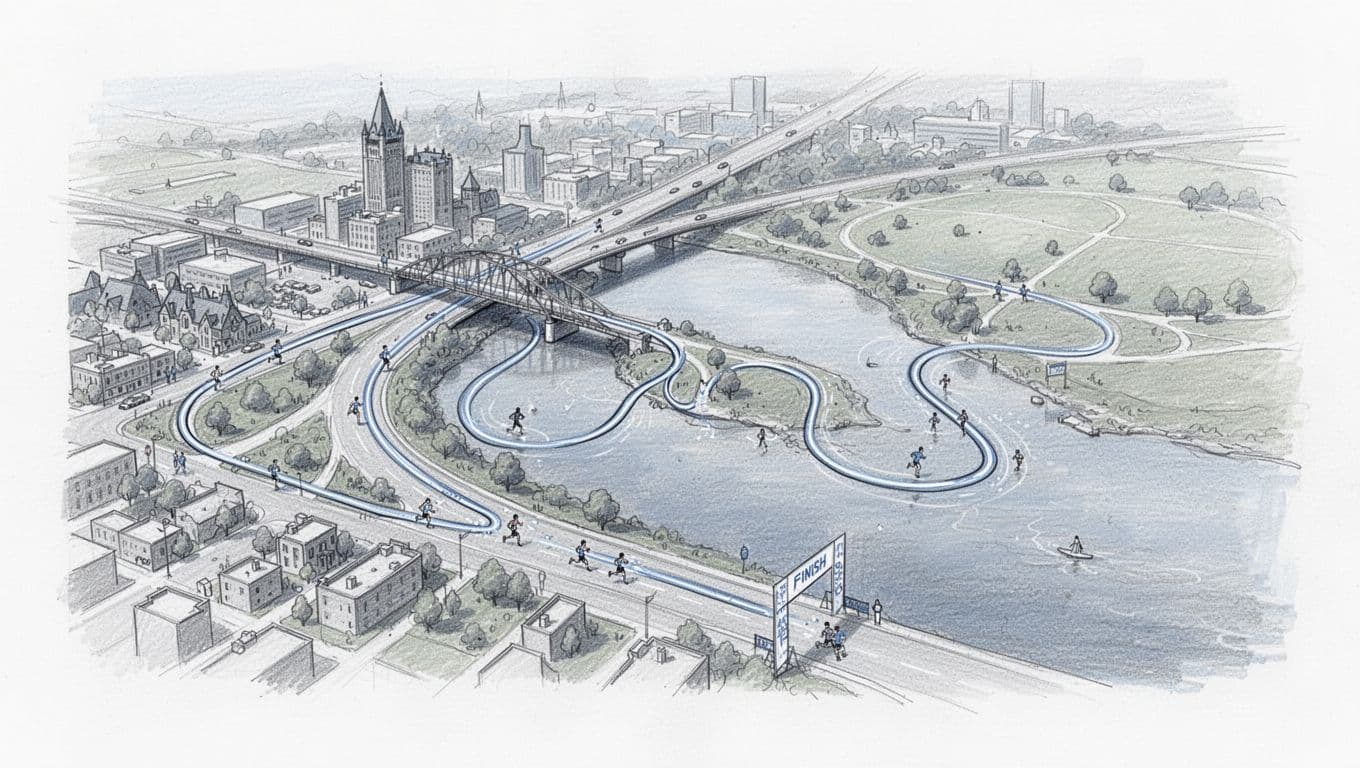
The Ottawa and Gatineau landmarks along the way
Once the race leaves the start area, the course moves through downtown Ottawa before reaching the Ottawa River and crossing into Quebec. Bridges create an obvious mental checkpoint. You can divide the race into stages: settle into Ottawa, cross toward Gatineau, hold steady through the Quebec section, then focus on the return toward the Ottawa finish.
Gatineau streets, waterfront views, parkways, and closed-road sections change the feel of the course without requiring you to memorize every turn. Instead, match each landmark with a pacing goal. Use the early city streets to stay controlled, the river sections to protect your rhythm, and the return across the river as a clear signal that the final phase has begun.
Because the route crosses provincial boundaries, review the map for major direction changes and surface transitions. A familiar landmark can guide your attention, but your watch, effort, and planned fueling remain more reliable than excitement from the crowd.
What the Course Feels Like Underfoot
The Ottawa marathon route is generally suited to fast racing, but “fast” doesn’t mean effortless. Pavement, parkways, bridges, open river sections, gentle rollers, and repeated turns each place a slightly different demand on your legs. The course can feel smooth early, then become much harder when wind, sun, humidity, or late-race fatigue arrives.
The main hills, bridges, and sections that can change your effort
Use the current Ottawa Marathon course map and elevation profile before race morning. Organizers can adjust details, so don’t rely on an old route image or a previous runner’s description.
The bridge approaches deserve attention because the road may rise gradually before the crossing. The bridge itself can expose you to wind, while the descent afterward may tempt you to accelerate too sharply. Keep your shoulders relaxed, shorten your stride slightly, and let effort guide your pace.
The same approach works on gentle ramps and late-course rises. A small incline may barely register on the elevation profile, yet repeated rises can slowly drain your legs. Turns have a similar effect. Each sharp change in direction interrupts rhythm, especially when fatigue makes it harder to regain speed.
Watch your breathing and posture instead of forcing an exact split. If your breathing becomes strained, ease back briefly and crest the rise under control. Once you reach flatter pavement, return gradually to goal pace. Protecting your effort for several minutes can save far more time than attacking one short incline.
Parkway pavement often feels quick, but long exposed sections provide little shelter from wind or direct sun. Keep your cadence steady and avoid racing toward every visible landmark. A modest total elevation gain doesn’t tell the whole story, because small changes repeated across 26.2 miles still affect marathon effort.
How weather can reshape the Ottawa marathon experience
Late May can bring a cool start, rising temperatures, bright sun, and wind along open water. A calm morning may make the Ottawa marathon route feel fast, but the same course can become demanding once the afternoon warms.
Dress for the conditions you expect after the opening miles, not only the temperature at the start. In cool weather, lightweight layers can help you stay comfortable before the gun. As temperatures rise, take fluids at planned aid stations and consider electrolytes when heat, sweat loss, or a long finishing time makes them useful.
Wind changes the course without changing a single turn. Run by effort on exposed river sections, then return to goal pace when conditions become calmer. Most importantly, don’t spend early energy chasing splits that belong to cooler, sheltered roads.
How to Pace the Ottawa Marathon Route for a Strong Finish
A smart Ottawa Marathon pacing plan protects your best running for the final 10K. Whether you’re chasing a personal best, a Boston qualifying time, or a confident finish, control matters more than early excitement. The Ottawa Marathon route rewards runners who stay patient through crowded streets, bridges, turns, wind, and rising fatigue.
A simple strategy for the first half
Start slightly slower than goal effort while the field spreads out. The opening miles should feel controlled, almost restrained. Let runners surge around you without reacting. You won’t gain much by making up a few early seconds, but you can lose minutes later if you spend energy weaving through traffic or attacking the first bridge.
Settle into a steady rhythm once the roads open. Check your pace at mile or kilometer markers rather than staring at your watch every few seconds. Your breathing should remain smooth, your shoulders relaxed, and your stride compact enough to handle turns without unnecessary braking.
Treat the first half as controlled work, not a test of fitness. A personal-best attempt should feel sustainable at halfway. For Boston qualifying goals, use the B.A.A. marathon training guidance to support the larger preparation, then execute race morning with restraint.
GPS can become unreliable near tall buildings, bridges, and large crowds. When your watch shows an unusual spike or drop, check effort against the course markers. If your breathing and stride feel right, hold your rhythm instead of chasing a questionable reading.
How to manage the final 10K and the last miles
After 20 miles, the Ottawa Marathon route becomes a mental and muscular test. Break the final 10K into smaller targets, such as the next aid station, bridge, landmark, or kilometer marker. Smaller goals keep the distance manageable when fatigue makes the finish seem far away.
Stay tall as your legs tire. Keep your arms moving, shorten your stride slightly on rises, and respond to hills with effort rather than panic. Wind and heat may slow your pace, so protect your effort and return to goal pace when conditions improve.
Continue fueling at planned intervals if your stomach tolerates it. After your final planned checkpoint, increase effort gradually if you still have control. A measured negative split can produce a strong finish, but a dramatic surge often leads to a late collapse. Hold form, pass runners one at a time, and save your fastest running for the final stretch.
Race-Day Logistics for Navigating Ottawa Marathon Weekend
Race weekend changes the rhythm of downtown Ottawa and Gatineau. Expect road closures, limited parking, crowded bridges, and slower traffic, so build your plan around reliable movement rather than a last-minute car trip. Read the current Tamarack Ottawa Race Weekend runner information before leaving your hotel.
Getting to the start when roads are closed
Public transit, walking from nearby lodging, or an official race shuttle is often more dependable than driving. A car can leave you searching for a legal parking space while streets close around you. Even available lots may sit far from the start, and bridge restrictions can make a short route much longer.
Before race morning, check the start-zone opening time, your correct entry point, bag-check location, and the latest transit service notices. Confirm which bridges remain open to runners, spectators, and vehicles. The official getting-around guide includes current transportation and parking information, while the road-closure schedule shows how access may change across the city.
Leave extra time for security, crowded sidewalks, toilet lines, and corral access. Pack your race essentials the night before, then walk the final route from your lodging if practical. Keep a backup plan that includes another transit route, a nearby walking connection, or a designated drop-off point outside the closure zone.
Once you reach the start area, find bag check, portable toilets, warm-up space, and your corral before settling in. After finishing, follow the marked chute and recovery instructions instead of trying to cut across restricted streets. Arrange a spectator meeting point away from the finish chute, using a clear landmark that remains accessible.
Using aid stations, toilets, and course support wisely
Review aid-station locations before the race and match them to your planned fueling schedule. Decide where you will take water, sports drink, electrolytes, or a gel, then carry a familiar nutrition option if the supplied products differ from your training.
Move toward the side before slowing. Avoid stopping suddenly in the center of an aid station, where you can collide with runners behind you. Volunteers can direct you to fluids, medical tents, portable toilets, or course support. Timing mats also record official splits, so avoid lingering near them unless you need assistance.
Where spectators can watch and support runners
Choose one or two reliable viewing locations near accessible downtown landmarks, waterfront sections, or major crossings. The finish area may offer strong energy, but closures and event rules can limit access. Check the current map before promising a specific location.
Share the same landmark with your supporters, use live tracking to estimate arrival, and avoid chasing you across the city. Spectators should bring warm layers, water, and a simple meeting plan. A fixed location away from the finish chute makes reconnecting far easier.
How to Train for the Ottawa Marathon Route
Training for the Ottawa marathon route means preparing for more than distance. Long pavement stretches, bridges, gentle grade changes, sharp turns, wind, and late-race fatigue can all affect your rhythm. Build your preparation around long runs, marathon-pace work, controlled hills, strength training, and race-specific practice.
Practice marathon pace on flat roads and gentle rollers
Use workouts that blend steady pavement running with short, controlled rises. For example, run 4 to 6 miles at an easy pace, then add 3 to 6 miles at marathon pace on mostly flat roads with several gentle rollers. Another option is to finish a long run with 20 to 40 minutes at marathon effort.
The goal is smooth effort, not fast hill repeats. Shorten your stride slightly as the road rises, keep your breathing controlled, and avoid sprinting over the top. After each rise, let your pace return naturally on the descent instead of chasing lost seconds.
Practice marathon pace after easy running or late in a long run. Your legs should learn to hold posture and rhythm when they feel heavy. Beginners can start with short blocks, such as 10 minutes at marathon pace followed by 5 minutes easy. Experienced runners may use longer continuous sections, provided recovery remains manageable.
Prepare your legs for bridges, turns, and hard pavement
Add simple strength exercises two times per week when your schedule allows. Calf raises support the repeated push-off of road running, while split squats and step-ups train the glutes and legs for bridges and gradual rises. Controlled single-leg deadlifts can also challenge balance and hip stability.
Increase long-run volume gradually, then include some training on pavement or a similar hard surface. Strength work can improve your ability to handle the course, but it can’t prevent every injury. Keep easy days easy, and reduce training when pain changes your stride.
Gentle mobility for the calves, hips, and hamstrings can help you move comfortably. Sleep, regular meals, and recovery days matter just as much as another hard workout.
Rehearse fueling, hydration, and clothing before race weekend
Use long runs to test every race-day detail, including gels, sports drink, water timing, shoes, socks, and layers. Start fueling early rather than waiting until fatigue appears. Your plan should match your tolerance, expected weather, and guidance from a qualified coach or sports professional.
The Korey Stringer Institute’s marathon fueling guide offers practical guidance for training nutrition and hydration. Race morning is the wrong time to test a new gel, shoe, sock, or jacket. Use your final long runs to confirm what feels comfortable, then repeat that routine on the Ottawa Marathon route.
Common Ottawa Marathon Route Mistakes and Better Choices
Small decisions can cost more energy than a difficult hill. Use the current Ottawa Marathon route, then match each common mistake with a simple correction you can follow under pressure.
Why an old course map can lead to a bad race plan
Race details can change from one Ottawa Marathon edition to the next. The route, start zones, finish zones, aid stations, timing mats, and road restrictions may all move. A plan built around last year’s bridge approach or finish location can leave you rushing, missing support, or pacing the wrong sections.
During race week, compare the official Ottawa Marathon information with the runner guide, downloadable course map, elevation profile, and pre-race emails. Look for changes in:
- Start corrals and entry points.
- Aid-station locations and supplied fluids.
- Road closures and spectator access.
- Turns, bridges, surface changes, and the finish chute.
Save an offline copy of the latest map and review it during race week. The Tamarack Ottawa Race Weekend FAQ includes current route and elevation information, but race-week emails may contain updates that affect your plan.
How to keep small problems from becoming race-ending problems
Use this quick correction list when the race stops matching your expectations:
- A crowded start can produce accidental surges. Stay patient, hold your effort, and wait for open space before settling into goal pace.
- Starting too fast spends energy you need later. Run the first miles by controlled effort, even when the field moves quickly.
- Wind on an exposed river section can slow your split. Relax, shorten your stride slightly, and judge effort instead of fighting for perfect pace.
- GPS can misread bridges, tall buildings, and sharp turns. Confirm your effort with course markers before changing pace.
- If you miss a turn, follow course arrows and ask a volunteer rather than improvising a shortcut.
- Underfueling often appears late, after the damage has begun. Take familiar nutrition on your planned schedule and drink before thirst becomes urgent.
- The first aid station may be crowded. Move toward the side, take what you need, and keep moving when possible.
- Untested shoes, socks, or clothing can create blisters and hot spots. Race only in gear proven during long training runs.
- A loose shoelace deserves a brief stop. Fix it fully, then resume gradually instead of running awkwardly.
- Stomach trouble, rising heat, a missed drink, or a slow split calls for a calm adjustment. Set a short-term goal, reduce effort if needed, and ask volunteers or medical staff for help.
Safety comes before a finish time. A smart decision early can keep a manageable problem from ending your Ottawa Marathon route experience.
A Final Ottawa Marathon Route Checklist Before You Travel
Use race week to remove uncertainty from your race plan. The Ottawa marathon route may look familiar, but start procedures, transit access, aid stations, and road closures can change between race editions.
What to confirm during race week
Complete these checks 24 to 72 hours before the race:
- Confirm the official start time, start location, corral assignment, and required entry point. Save a screenshot or offline copy of the current details.
- Review the latest route map and elevation profile. Mark bridges, notable climbs, sharp turns, timing mats, and the finish chute.
- Check bag-drop rules, including the allowed bag, labeling requirements, opening hours, and collection location.
- Plan transportation with current transit notices and road-closure information in mind. Allow extra time for detours, crowded sidewalks, and restricted crossings.
- Check the forecast for temperature, wind, rain, and changing conditions. Choose clothing based on the weather after the opening miles, not only the temperature at the start.
- Mark aid stations and confirm whether they offer water, sports drink, gels, or other supplies. Carry familiar fuel if the available products don’t match your training plan.
- Prepare your shoes, socks, race clothing, bib, watch, fueling, and pre-race food the night before.
- Review the current Ottawa Race Weekend expo and bib pickup information. Confirm dates, identification requirements, pickup rules, and any race-specific instructions in the official runner information.
- Share one or two spectator meeting points away from the finish chute. Choose landmarks that remain accessible during closures.
- Save emergency contacts, medical information, hotel details, and the race organizer’s current contact information on your phone.
Use the official start-line information as your final reference. Social media posts and older blog articles may describe a previous course or outdated procedures. When official information is available, follow it instead.
Choose Your Distance, Duration and Goal Time
Make three quick selections and open the exact plan built for your race target.
Looking for a Fully Personalized Training Plan?
The training plans above are an excellent choice if they match your goal. However, if you’d rather train with a plan built specifically around your current fitness, goal race, preferred training days, weekly mileage, and target finish time, our RDA Custom Training Plans provide a personalized solution. We also have running courses available for runners seeking to run faster from the mile to the marathon.
Why Choose a Custom Training Plan?
| Standard Training Plan | RDA Custom Training Plan |
|---|---|
| Follows a fixed schedule | Built around your schedule |
| Standard weekly mileage | Peak mileage customized for you |
| Fixed workout days | Train on the days you choose |
| Same structure for everyone | Designed around your current fitness |
| Static plan | Updated as your fitness improves |
| One-time purchase | Ongoing personalized coaching and support |
What You’ll Receive
- A training plan built specifically for your goal
- Personalized training paces
- Long runs, tempo runs, threshold workouts, interval sessions, recovery runs, and easy runs
- Peak weekly mileage matched to your experience level
- Flexible training schedule that fits your life
- Ongoing plan adjustments as your fitness improves
Ready to Train Smarter?
Stop guessing and start following a plan built specifically for you, your schedule, and your racing goals.
Frequently Asked Questions
The Ottawa Marathon route is easier to manage when you know what may change and which details require a personal plan. Use the current Ottawa Marathon course information as your final reference before race weekend.
Is the Ottawa Marathon route flat?
Runners often view the Ottawa Marathon route as relatively fast, especially because it includes long paved sections and gradual grades rather than sustained mountain climbs. Still, the course demands attention. Bridges, ramps, gentle rollers, sharp turns, wind, and late-race fatigue can all raise your effort.
A flat-looking route can still punish an aggressive opening pace. Review the current elevation profile instead of assuming the course is completely flat, particularly if you’re targeting a personal best.
Does the Ottawa Marathon cross into Gatineau?
The full marathon traditionally connects Ottawa and Gatineau through sections near the Ottawa River. That crossing gives the race its distinctive two-city feel, but the exact bridge, direction, and route details can change between race editions.
Check the official map for the year you entered. Mark the major crossing and return point, then use them as mental checkpoints rather than relying on an older route description.
Where does the Ottawa Marathon finish?
The marathon finish is located in Ottawa. However, the exact finish chute, runner exit, baggage area, and nearby access points can change, so confirm them in the current runner guide before making plans.
Spectators may not meet you directly at the finish line because barriers, medical access, athlete recovery, and crowd flow can restrict the area. Choose a reunion point outside the chute and share one clear landmark with your supporters.
What should I carry during the race?
Carry only items you’ve tested during long training runs. Familiar fuel, identification, a phone if needed, and weather-appropriate gear are practical choices, while new products can create stomach or blister problems.
Aid stations may offer water, sports drink, and nutrition, but supplies can change. Check the current race information, then build your plan around your personal needs and carry any fuel you can’t replace on the course.
How early should I arrive for the Ottawa Marathon?
Arrive early enough to handle transit delays, road closures, bag drop, toilet lines, warm-up, security, and the walk to your assigned corral. There isn’t one ideal arrival time for every runner because start waves and access instructions differ.
Follow the event’s current guidance for your wave. Give yourself enough margin to reach the corral calmly, rather than turning the opening miles into an extension of your warm-up.
Can I use GPS to follow the Ottawa Marathon route?
GPS helps you track pacing trends, but readings can drift near buildings, bridges, trees, and crowded areas. A sudden pace spike doesn’t always mean your effort changed.
Use GPS alongside official mile or kilometer markers, elapsed time, breathing, and perceived effort. The course map also helps you understand where turns and exposed sections may distort watch readings.
Conclusion
The Ottawa Marathon route rewards runners who prepare for the whole course, not only its turns and landmarks. Study the current official map, practice pacing and nutrition on pavement and gentle rises, and arrive with a clear transportation plan. Then stay flexible when wind, heat, crowds, or road changes affect your race-day strategy.
Smart decisions matter from the opening steps through the final 10K. Hold back when the field surges, fuel before fatigue takes over, and let effort guide you across bridges and exposed sections. With a steady plan and disciplined execution, you can reach the Ottawa finish line knowing each mile received the right response.


