Ottawa Marathon Date: Race Weekend Schedule & Key Dates
The Ottawa Marathon is held during Tamarack Ottawa Race Weekend, usually on the final weekend of May in Ottawa, Ontario. The exact Ottawa Marathon date can change each year, so check the official race website before booking travel, reserving a hotel, or building your training calendar.
That timing gives runners a spring marathon with a major race-weekend atmosphere, but it also demands smart preparation. Whether you’re chasing your first marathon finish, a Boston qualifying time, or a personal best, knowing the 2026 and 2027 date context will help you set realistic training milestones and plan your recovery after race day.
The weekend includes more than the full marathon, with other events, busy streets, changing spring weather, and a course that rewards controlled pacing. Next, you’ll find the key dates, registration details, course information, weather and travel considerations, plus practical preparation guidance for arriving in Ottawa ready to run. Remember, be sure to reserve and book your Ottawa Marathon hotels well in advance to save on costs.
Key Takeaways
- The 2027 Ottawa Marathon date is Sunday, May 30, with a 7:00 a.m. start at Ottawa City Hall.
- Tamarack Ottawa Race Weekend runs May 29-30, 2027, with multiple events for different ages and abilities.
- Check the official Ottawa Marathon page for course details, registration updates, and race requirements.
- Review the 2027 event FAQ for start times, race-weekend procedures, and participant information.
- Build training around steady mileage, marathon-pace work, recovery, spring weather changes, and a practical race-day plan.
What Is the Ottawa Marathon Date for 2026 and 2027?
The Ottawa Marathon is part of Tamarack Ottawa Race Weekend, a multi-event celebration held in late May. The 2026 race weekend took place on May 23-24, while the next major date for most readers is the official 2027 weekend, May 29-30. Of course, depending on when you are reading this, dates and times will most certainly change. You could be reading this post in 2030 or beyond.
| Year | Status | Race weekend timing | What runners should verify |
|---|---|---|---|
| 2026 | Official, now past | May 23-24, 2026 | Results, course records, and future registration details |
| 2027 | Official | May 29-30, 2027 | Marathon start time, registration deadlines, bib pickup, and course updates |
The 2027 Ottawa Marathon date is Sunday, May 30, 2027. The other Race Weekend events take place on Saturday, May 29, and Sunday, May 30. The official Tamarack Ottawa Race Weekend website remains the best place to confirm changes before you book travel or take time off work.
Why the Race Weekend Date Can Shift From Year to Year
Run Ottawa generally places the event near the final weekend of May, but the calendar doesn’t produce the same weekend pattern every year. Organizers must coordinate the day of the week, holiday weekends, city permits, police support, road closures, transit changes, volunteers, medical services, and access to race venues.
Those details affect the full schedule. A marathon date means the day of the 42.2-kilometer race itself. A race weekend date covers every event, including the 2K, 5K, 10K, kids’ races, and marathon. Registration opening is a separate deadline, while bib pickup usually happens during the days before race morning.
A search result can show the correct year but still display outdated start times or registration information.
For that reason, don’t rely on an old blog post, cached calendar, or search snippet when arranging flights, hotels, or vacation time. Check the official runner FAQ for current start times, participant instructions, pickup details, and race-weekend procedures. Then confirm the information again after registration, because organizers can update logistics as race day approaches.
Which Races Are Part of Tamarack Ottawa Race Weekend?
The Ottawa Marathon date is only one part of a larger running festival. Tamarack Ottawa Race Weekend includes the Ottawa Marathon, Ottawa Half Marathon, Ottawa 10K, Ottawa 5K, Ottawa 2K, and Ottawa Kids Marathon. The schedule also includes the Elite Women’s 10K, so runners and spectators should review the official 2027 event schedule before making plans.
Saturday, May 29, 2027, features the kids’ race, 2K, 5K, and 10K events. The marathon and half marathon follow on Sunday, May 30. That split gives families and running groups more flexibility, but it also creates a busy weekend of road closures, packet pickup, meals, warmups, and spectating.
How to Choose Between the Full Marathon and Half Marathon
The full marathon requires a longer training cycle, higher weekly mileage, and more attention to fueling, sleep, and recovery. You may spend several months building endurance before adding long runs and marathon-pace sessions. Race day also brings greater pacing pressure because a small mistake early can become serious after 30 kilometers.
Choose the full distance if you have enough time to train consistently and want an endurance goal that demands patient preparation. Your target might be finishing your first marathon, running a Boston-qualifying time, or setting a personal best.
The half marathon usually creates less recovery stress and gives you more room to train for speed. You can still build a serious plan, but long runs are shorter and many runners return to normal training sooner. For a first-time racer, the half marathon can be a smart introduction to Ottawa’s course and race-day crowds.
A practical comparison looks like this:
- The marathon rewards durability, fueling practice, and controlled pacing.
- The half marathon rewards speed, rhythm, and a precise effort from the start.
- Marathon recovery may affect training for one to two weeks or longer.
- Half-marathon recovery is often shorter, although a hard race still requires care.
You can also split the weekend with a friend. One runner might race the marathon while the other chooses the half marathon, then both can plan meals, sleep, and meeting points around separate start times. If you race Saturday’s 5K or 10K and support a marathoner Sunday, protect your legs, arrive early, and leave enough time to reach key spectator locations. The official Run Ottawa race calendar is the best place to confirm each event’s current details.
How to Plan Registration, Travel, and Race Weekend Logistics
Once you confirm the Ottawa Marathon date, turn it into a practical race-weekend plan. Popular events can fill quickly, while registration prices often rise after early-bird periods. Check the official 2027 race information before paying, then review the registration deadline, deferral rules, transfer policy, fundraising requirements if applicable, and course time limits.
A simple timeline keeps small details from becoming race-week stress:
- After registration opens: Enter the race, save your confirmation email, and record every deadline.
- Several months out: Book a downtown Ottawa hotel with reasonable cancellation terms. Staying near the start area can reduce transportation worries, especially if road closures affect taxis or rideshares.
- Four to eight weeks before race weekend: Check flight and train options, arrange airport transportation, and confirm your route to Ottawa. Add extra time for delays instead of scheduling arrival immediately before bib pickup.
- Race week: Read the latest participant instructions, verify packet pickup hours, and study the official transportation and road closure information.
- The day before racing: Pick up your bib as early as practical, lay out your race kit, and walk through your morning schedule.
Don’t assume race-day bib pickup is available. Many large races require runners to collect packets before the start, and missing that window can prevent participation. Keep your identification and registration details accessible during travel.
What to Pack for Ottawa in Late May
Ottawa can feel cool during an early morning start, then warm considerably later. Check the forecast several times during race week, because your packing choices should match the latest temperature, wind, and rain outlook.
Use this checklist:
- Pack race shoes you’ve tested during training, along with your planned socks.
- Bring your complete race kit, including shorts or tights, shirt, sports watch, and bib fasteners.
- Add extra layers, a lightweight rain shell, and clothes you can discard or wear while waiting.
- Carry sunscreen, sunglasses, familiar gels or sports drink, and any nutrition you practiced using.
- Bring government-issued identification, confirmation details, and payment cards.
- Pack recovery clothing, comfortable shoes, and blister-care supplies such as bandages and lubricant.
Race morning is the wrong time to test new shoes, clothing, gels, supplements, or unfamiliar caffeine products. Your training runs are the laboratory; race day should follow the formula your stomach, feet, and pacing plan already know.
What Is the Ottawa Marathon Course Like?
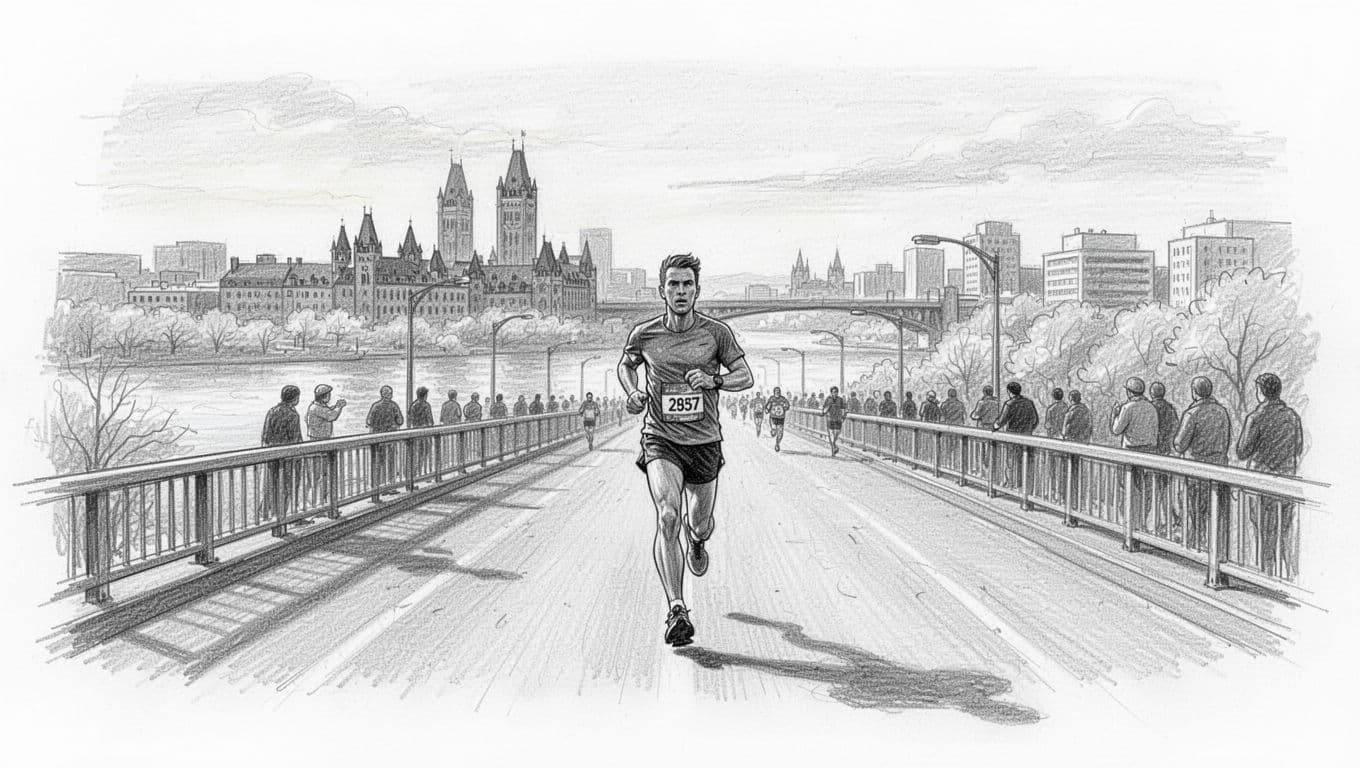
The Ottawa Marathon course showcases both sides of the Ottawa River, with city streets, river views, bridges, landmarks, and enthusiastic crowds along parts of the route. The exact layout can change, so study the official Ottawa Marathon course map before race weekend. Review the elevation profile, aid stations, major turns, start and finish areas, and any bridge or out-and-back sections.
A city marathon can look fast on paper, yet it still punishes runners who start too quickly. Buildings, trees, bridges, wind, and dense crowds can change how each kilometer feels. Treat the route as a series of effort changes rather than a perfectly flat line on your watch.
How the Route and Bridges Affect Pacing
Start the opening miles under control, even when your legs feel fresh and spectators push the energy higher. Hold back slightly through crowded areas, narrow sections, and early turns. Runners around you may surge, stop suddenly, or force small changes in your line, so protect your rhythm instead of chasing every split.
Bridges deserve the same effort-based approach. Wind can slow you on an exposed span, while a sheltered section may produce a faster split without extra effort. Keep your breathing steady, shorten your stride slightly if needed, and run by exertion. Once you reach the other side, allow the downhill to increase your speed naturally. Stay relaxed rather than braking or attacking the slope.
For example, a runner targeting a 4:00 marathon may use roughly 5:41 per kilometer as a goal pace. That runner could let the first few kilometers sit near 5:45 to 5:50, settle close to 5:41 on open roads, and accept a slower bridge split when wind increases resistance. These numbers are illustrative only. Adjust them to your fitness, weather, crowd conditions, and race-day feedback.
A slower bridge kilometer can be a smart trade if it prevents a costly spike in effort.
Save your strongest focus for the final 10K. By then, congestion may thin, but fatigue exposes every early mistake. Check your posture, relax your hands, and return to steady effort after each turn or aid station. A controlled first half gives you the energy to run the closing kilometers with purpose.
How to Train for a Late-May Ottawa Marathon
The Ottawa Marathon date falls in late May, so work backward from May 30, 2027, when building your training calendar. Most marathon plans last 16 to 20 weeks, but your ideal start depends on current mileage, injury history, racing experience, and whether you want to finish, set a personal best, or pursue a qualifying standard.
Build Endurance Before Chasing Marathon Pace
Begin with consistent easy running before adding demanding marathon-pace segments. Long runs should grow gradually, with easier weeks built into the schedule so your muscles, tendons, and aerobic system can adapt. A typical week may include:
- Two or three easy aerobic runs at a conversational effort.
- One quality workout, such as intervals, hills, or a controlled tempo run.
- One long run, followed by recovery or rest.
- One or two strength sessions focused on the hips, calves, hamstrings, and core.
- At least one complete rest day.
Keep easy days easy. Weekly consistency matters more than one heroic workout that leaves you exhausted for several days.
A beginner may need more than 20 weeks to build safely, while an intermediate runner with a steady mileage base may use a focused 16-week plan. An experienced runner targeting a qualifying standard might start earlier, add more structured workouts, and monitor recovery closely. None of these runners should copy the same schedule.
Peak, Taper, and Warning Signs
After you establish an aerobic base, add short marathon-pace sections to selected long runs. Extend those segments gradually as race fitness improves. The peak phase usually includes your longest run and several weeks of specific endurance, but your final long run should happen early enough to allow recovery before race day.
During the last two to three weeks, reduce mileage while keeping a few short, controlled efforts. This taper lowers fatigue without making your stride feel unfamiliar or flat. Keep some rhythm, but remove the training volume that creates lingering soreness.
Sharp pain, unusual fatigue, poor sleep, repeated heavy legs, or declining performance should prompt an adjustment. Reduce intensity or mileage, and seek advice from a qualified medical or running professional when symptoms persist.
How to Practice Fueling Before Race Day
Your long runs are the place to test race nutrition. A gel, drink, or breakfast that seems harmless at home may feel very different after two hours of running. Practice fueling while running at goal effort, and record what you take, when you take it, and how your stomach responds.
Eat a familiar carbohydrate-rich meal before key runs and race morning. During the marathon, use carbohydrates at intervals you have rehearsed rather than waiting until energy drops. The Korey Stringer Institute fueling guide discusses common carbohydrate guidance for marathon training, but your needs depend on pace, body size, weather, and tolerance.
Plan fluids around thirst, conditions, and the race’s available stations. Electrolytes may help during longer efforts or hot, sweaty conditions, but products vary, so follow the label instructions. Caffeine can support familiar runners who already tolerate it; race day is a poor time to test a new dose.
Write your fueling plan before the taper. Check which products Ottawa provides, carry alternatives if allowed, and take nutrition without disrupting your pace or breathing.
Ottawa Marathon Weather, Start Times, and Race-Day Strategy
Late May can produce a cool Ottawa morning that feels much warmer by the final 10K. Sun, humidity, wind, and rising temperatures can turn a comfortable pace into a costly effort, so check the forecast during race week and adjust your plan before the start.
How to Adjust Your Goal for Heat, Wind, or Poor Sleep
Set three goals before race morning. Your A goal is the performance you want under favorable conditions. Your B goal is a strong result with a controlled adjustment, such as accepting a slower pace in heat or wind. Your C goal is the minimum successful outcome, which may be finishing healthy, pacing evenly, or gaining marathon experience.
Use effort, breathing, and posture to guide your pace when conditions change. If the forecast turns hot, start conservatively and hydrate earlier rather than waiting until you feel thirsty. Use shade when available, relax your shoulders, and accept a slower split instead of forcing a risky pace. Heat-running guidance also supports beginning well hydrated and limiting excessive fluid loss during exercise.
One poor night of sleep doesn’t automatically ruin a race. Follow your normal breakfast routine, avoid trying to replace sleep with excessive caffeine, and let your effort determine the outcome. However, accumulated fatigue, illness, dizziness, sharp pain, or a worsening injury deserves serious attention. Move to your B or C goal, slow down, or stop if continuing could put your health at risk.
Use this race-day sequence to keep decisions simple:
- Eat your familiar breakfast early enough to settle your stomach, then sip fluids normally.
- Arrive with time for transportation delays, bathroom lines, bag check, and a relaxed warmup.
- Confirm your start wave and corral, then place yourself according to your realistic goal rather than your best training split.
- Run the opening miles below your maximum effort. Let crowded roads and wind produce slower splits without chasing them.
- Begin fueling and drinking according to your practiced plan before fatigue appears. Take aid stations calmly and keep moving.
- At the final 10K, reassess your breathing, legs, and temperature. If you feel strong, progress gradually; if not, protect your finish.
Check the official race-week instructions for start waves, corrals, timing, cutoffs, bag check, aid stations, emergency procedures, and transportation before leaving your hotel. Those details can change, and knowing them removes avoidable stress on race morning.
Is the Ottawa Marathon a Good Race for Your Next Goal?
The Ottawa Marathon is a strong choice if you want a major race atmosphere, a scenic urban course, and several distance options across one weekend. The late-May date also gives you a practical spring training window, especially if you prefer building fitness through winter and early spring.
Why Runners Choose Ottawa
Ottawa combines the energy of a large running festival with views that make long miles easier to absorb. River paths, bridges, parks, and city landmarks give the course visual variety, while spectators and other runners help maintain momentum when fatigue arrives.
The weekend also works well for groups. You can choose the full marathon, half marathon, 10K, 5K, or a youth event without separating completely from friends and family. That range makes Tamarack Ottawa Race Weekend appealing when everyone wants to participate at a different level.
Late May can fit a focused marathon plan. You have enough time after winter to build mileage, practice marathon-pace work, and complete long runs before tapering. However, Ottawa’s weather can shift quickly. Run Ottawa reports an average late-May temperature near 60°F, with both cooler and warmer conditions possible. Review the official medical and safety information before race week.
Potential Drawbacks to Consider
A large event brings tradeoffs. Busy start areas can make it harder to settle into your pace, while bridges and exposed roads may add wind or congestion. You must also account for travel costs, hotel rates, meals, transportation, and time away from work.
A local marathon may be the better choice if you want a simpler race morning, lower expenses, or a course you can preview easily. Ottawa makes more sense when the destination experience motivates you and you have enough support to protect sleep, nutrition, and recovery.
Ottawa Marathon Registration Checklist
Before registering, confirm that:
- The May 30, 2027 date fits your calendar and travel schedule.
- You have enough training time to build mileage without rushing.
- Your budget covers registration, transportation, lodging, and meals.
- You feel comfortable with bridges, crowds, and an urban course.
- Your travel companions can support your race-week routine.
- Your goal matches your current fitness, training history, and likely weather.
Check the official race FAQ before booking anything, since start times, course details, and race logistics can change.
Choose Your Distance, Duration and Goal Time
Make three quick selections and open the exact plan built for your race target.
Looking for a Fully Personalized Training Plan?
The training plans above are an excellent choice if they match your goal. However, if you’d rather train with a plan built specifically around your current fitness, goal race, preferred training days, weekly mileage, and target finish time, our RDA Custom Training Plans provide a personalized solution. We also have running courses available for runners seeking to run faster from the mile to the marathon.
Why Choose a Custom Training Plan?
| Standard Training Plan | RDA Custom Training Plan |
|---|---|
| Follows a fixed schedule | Built around your schedule |
| Standard weekly mileage | Peak mileage customized for you |
| Fixed workout days | Train on the days you choose |
| Same structure for everyone | Designed around your current fitness |
| Static plan | Updated as your fitness improves |
| One-time purchase | Ongoing personalized coaching and support |
What You’ll Receive
- A training plan built specifically for your goal
- Personalized training paces
- Long runs, tempo runs, threshold workouts, interval sessions, recovery runs, and easy runs
- Peak weekly mileage matched to your experience level
- Flexible training schedule that fits your life
- Ongoing plan adjustments as your fitness improves
Ready to Train Smarter?
Stop guessing and start following a plan built specifically for you, your schedule, and your racing goals.
Frequently Asked Questions
The Ottawa Marathon date gives you a target, but race-week details can affect your plans just as much as the calendar. Confirm current information before booking travel, choosing a hotel, or setting a final race strategy.
Where does the Ottawa Marathon start and finish?
The exact start and finish locations can change, so use the current Ottawa Marathon course map and official race guide as your final references. Those materials should also identify your start corral, access route, bag-drop instructions, road closures, and any restricted areas.
Check these details before choosing a hotel or planning transportation. A property that looks close on a map may sit on the wrong side of a road closure, bridge, or restricted race zone. Save the guide to your phone and review it again during race week.
Can I register for the Ottawa Marathon after the regular deadline?
Late registration may be unavailable, limited to remaining capacity, or more expensive than earlier entry periods. The 2027 marathon has a stated event capacity, so waiting can put your place at risk even if the race still appears in online searches.
Use the official race FAQ and registration information for current deadlines, prices, transfer rules, and availability. Avoid resale listings or unofficial bib transfers, since the entry may be invalid or tied to another runner’s information.
What is the Ottawa Marathon time limit?
Time limits and course-support rules can vary by race edition. Check the current participant guide for the official cutoff, aid-station schedule, road reopening times, and any points where runners must meet a stated deadline.
When planning your pace, account for the delay between the gun and your actual crossing of the start line. A runner near the back of a crowded corral may lose several minutes before reaching the timing mat. Build your plan around the published cutoff points rather than relying only on average marathon pace.
Is late May a good time to run a marathon in Ottawa?
Late May can provide comfortable morning temperatures and a lively race atmosphere. However, spring weather can shift quickly, so prepare for a cool start as well as unexpected heat, humidity, rain, or wind.
Pack light layers for the corral and test your pacing plan in different conditions during training. If race morning turns warm or windy, use effort instead of forcing your planned pace.
How far in advance should I book a hotel for race weekend?
Book as soon as the Ottawa Marathon date and your registration are confirmed, especially if you want a downtown location. Race-weekend rooms can become expensive or scarce as runners and spectators finalize their plans.
Compare cancellation policies, breakfast hours, transportation access, parking costs, and walking distance to your assigned start area. A slightly farther hotel with reliable transit may work better than a closer room that makes race-morning logistics difficult.
Conclusion
The 2027 Ottawa Marathon date is Sunday, May 30, but your preparation begins well before race weekend. Confirm the official Tamarack Ottawa Race Weekend date for your target year, then work backward through registration, hotel and transportation plans, training, fueling, tapering, and race-day logistics. Saving the official race guide and course map once they are published will give you a reliable reference for start times, road closures, aid stations, and course changes.
Late May can deliver a fast, comfortable morning or a warmer, windier challenge. Prepare for both by building steady training weeks, practicing your nutrition, and adjusting your goals when the forecast or your health calls for a change. Patient pacing matters just as much as fitness, especially during the opening kilometers and across exposed bridges.
The best Ottawa Marathon experience comes from preparation that leaves little to chance. A strong marathon is built through consistent weeks, controlled effort, and smart adjustments, not excitement alone. With the date confirmed and your plan organized around May 30, you can arrive in Ottawa ready to run your race with confidence.