

OC Marathon Review: Course, Logistics, and PR Potential
Before sunrise, race morning in Orange County brings the familiar mix of cool air, nervous energy, and last-minute checks on your shoes and pace plan. Before signing up for the OC Marathon, you’ll want to know what the full-marathon course demands, how race-day logistics affect your preparation, and whether the event fits your goals.
This review of the Hoag OC Marathon focuses on the Full Marathon, while recognizing that the event may offer other race distances. We’ll weigh its appeal for runners chasing a personal best against the practical trade-offs that can shape your day, without assuming details that may change from year to year.
Keep reading for a closer look at the course, event experience, and the kind of runner who may get the most from this race. Make sure to book your OC Marathon hotels early to save money.
Key Takeaways
- The OC Marathon covers 26.2 miles through Orange County. Check the official marathon course details and map to assess the route against your strengths.
- A personal record depends on how well the course suits your pacing and training, not on scenery or race-day excitement alone.
- Logistics can shape your experience, so verify current start details, parking, packet pickup, and transportation before making travel plans.
- Match the race’s demands to your goals and preparation. A realistic pace plan and consistent training give you a stronger shot at a successful day.
OC Marathon Review: What the Course and Race-Day Experience Are Really Like
The OC Marathon’s strongest appeal is its Orange County setting and a course the event describes as net downhill. That profile may suit runners who pace descents well, but it doesn’t guarantee an easy race or a personal record. The practical verdict: study the current route, plan for the full 26.2 miles, and confirm race-day details before you travel.
A scenic Orange County route with changing surroundings
The event describes the marathon as a 26.2-mile tour of Orange County, but the exact streets and scenery depend on the current course. The Course map on the official marathon course page is the best resource to check before race day. Does the current route include rolling hills? Use the map to see which stretches pass through coastal areas, neighborhoods, or more open roads rather than relying on a general impression of the region.
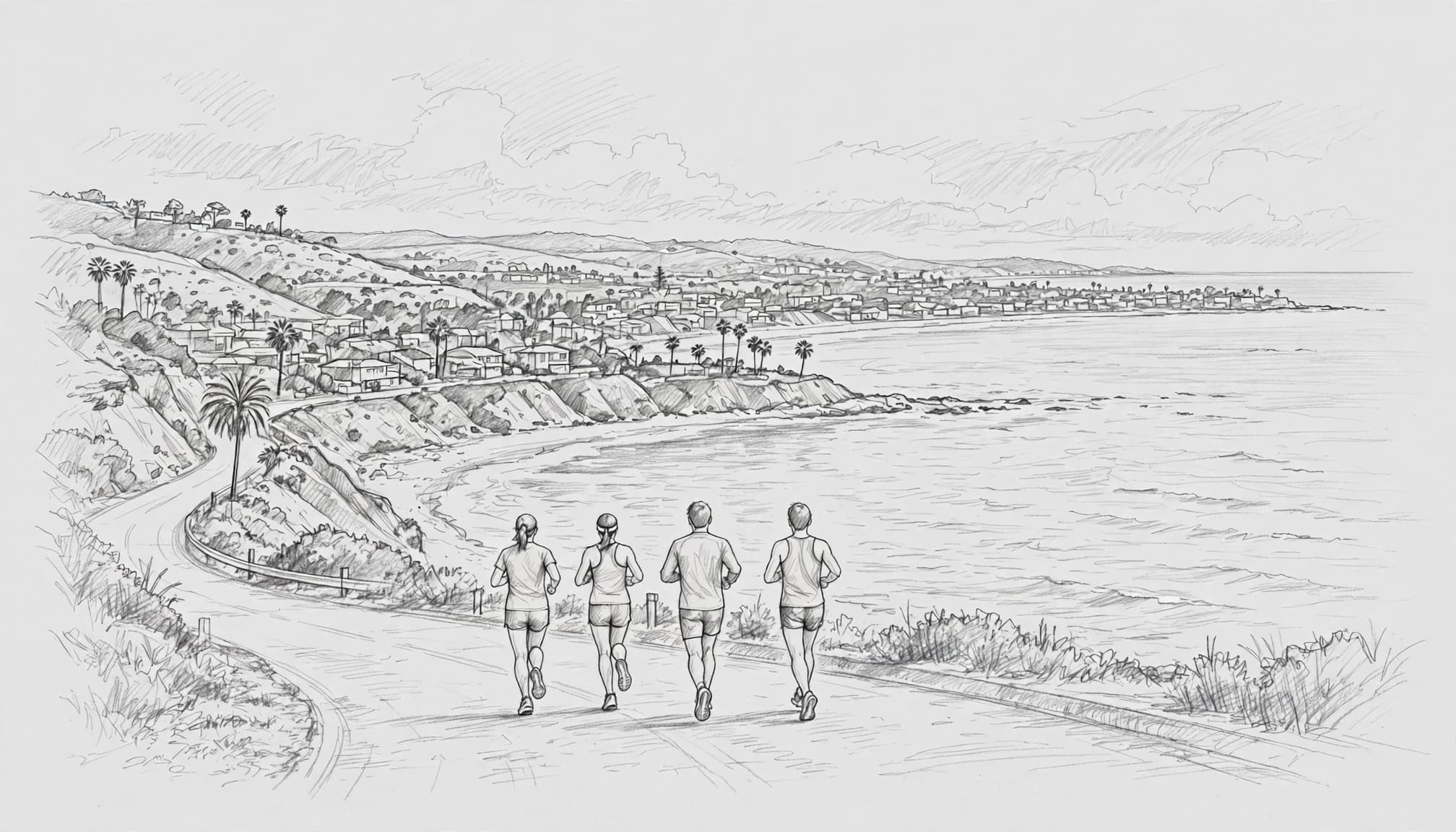
An illustrative coastal running scene, not a course map.
A changing backdrop can make the miles feel less repetitive, though scenery won’t erase the work of holding pace. Check the route and elevation profile together, then decide where you’ll need to stay focused rather than speeding up for a view.
Course difficulty, hills, and the miles that may test you
The official event page describes the course as net downhill. That’s useful context for runners considering a time goal, but it doesn’t tell the whole story. Net elevation accounts for the overall change in height, not every climb, descent, turn, or stretch of exposed road along the way.
Downhills can help you move efficiently early, yet pounding the brakes or lengthening your stride can leave your legs less prepared for the final miles. Review the current route for elevation changes and turns, and practice controlled downhill running in training if the profile includes sustained descents. The late-race challenge will depend on that year’s route, your pacing, and how well you manage effort before fatigue sets in.
Crowds, volunteers, aid stations, and finish-line energy
The event promotes a festive finish line, giving the day a clear destination after the long miles. Spectator support and crowd energy can vary by year and stretch, so treat them as a welcome boost, not part of your pacing plan.
Aid stations are worth checking before the start. Consult the official race-day FAQs for current station details, transportation, parking, and other event logistics. Compare the supplies available at aid stations with your practiced fueling plan. If you rely on a particular gel or drink, carry what you need rather than assuming every station will match your routine.
Registration, Travel, and Race-Day Logistics to Know Before You Go
A strong OC Marathon race plan starts before race morning. Entry choices, packet pickup, and transportation can all affect your schedule, so confirm the details on the official event pages before booking travel or setting a goal.
Entry options, fees, and what your registration includes
The OC Marathon Running Festival offers a full marathon and shorter options, including a half marathon, 5K, and Kids Run the OC. The lineup may also include Combo Crush, so check the current OC Marathon registration details for available events, deadlines, and prices.
Fees can change as registration periods close, and optional purchases may add to the total. Before paying, review the checkout page for add-ons and confirm what your entry includes, such as race-day access, a bib, or participant gear. Don’t assume every item comes with every distance or entry tier. The official listing is the best place to verify current inclusions and any transfer or refund rules.
Getting to the start, parking, and arranging your finish-line plan
Race-day transportation deserves the same attention as your pacing plan. The course starts in Newport Beach and finishes in Costa Mesa. Check the official race-day FAQs for current parking instructions, road closures, and shuttle information. The FAQ has listed parking fees and shuttle service in past event details, but confirm current availability and costs before relying on them.
Build in time for traffic, parking, security, and the walk to your start corral. If the start and finish are in different locations, decide in advance where to meet family near the finish line or how you’ll retrieve your car. Share a specific meeting point, and don’t assume you can walk straight back to the start after finishing. Check the event’s current transportation map and instructions before event weekend.
Choose Your Distance, Duration and Goal Time
Make three quick selections and open the exact plan built for your race target.
Looking for a Fully Personalized Training Plan?
The training plans above are an excellent choice if they match your goal. However, if you’d rather train with a plan built specifically around your current fitness, goal race, preferred training days, weekly mileage, and target finish time, our RDA Custom Training Plans provide a personalized solution. We also have running courses available for runners seeking to run faster from the mile to the marathon.
Why Choose a Custom Training Plan?
| Standard Training Plan | RDA Custom Training Plan |
|---|---|
| Follows a fixed schedule | Built around your schedule |
| Standard weekly mileage | Peak mileage customized for you |
| Fixed workout days | Train on the days you choose |
| Same structure for everyone | Designed around your current fitness |
| Static plan | Updated as your fitness improves |
| One-time purchase | Ongoing personalized coaching and support |
What You’ll Receive
- A training plan built specifically for your goal
- Personalized training paces
- Long runs, tempo runs, threshold workouts, interval sessions, recovery runs, and easy runs
- Peak weekly mileage matched to your experience level
- Flexible training schedule that fits your life
- Ongoing plan adjustments as your fitness improves
Ready to Train Smarter?
Stop guessing and start following a plan built specifically for you, your schedule, and your racing goals.
Expo, packet pickup, and lodging considerations
For the 2026 race weekend, the event’s quick-links page lists packet pickup at the OC Lifestyle & Fitness Expo on Friday, May 1, from 3 p.m. to 7 p.m., and Saturday, May 2, from 10 a.m. to 5 p.m. Review the 2026 race-weekend information for the venue and any updates before heading over.
Treat those hours as fixed limits when planning your arrival. Confirm whether runners must pick up their own bibs, what identification they need, and whether someone else can collect a packet. If you’re traveling, choose lodging with the expo and race transportation in mind, not just the finish area. Fashion Island is near the Newport Beach start, while a distant stay may require an earlier departure and a backup plan for traffic.
How to Train and Pace the OC Marathon Course
The OC Marathon course is net downhill and mostly flat through mile 10.5, according to the official course description. That profile can support a strong race, but the early flat miles may tempt you to run faster than your training supports. Review the current elevation profile, prepare your legs for the full distance, and adapt your plan to your experience, goal, and race-day conditions.
Build strength and endurance for the course profile
Make the long run the foundation of your training. Beginner marathoners can gradually build toward a comfortable long-run peak, while experienced runners may add sections at marathon effort once they have a solid endurance base. Either way, arrive at the start healthy and ready to hold your form late in the race, rather than chasing a mileage target at any cost.
The first 10.5 miles are described as mostly flat, but the course is net downhill overall. Include controlled downhill running in training if the current map shows similar descents. If the route map confirms rolling hills, prepare for them with short hill repeats and strength work. Keep the effort measured: downhill practice should build control and durability, not leave you sore for days.
Add marathon-pace work to selected runs rather than racing every workout. After building endurance, for example, include a few miles at goal effort within a medium-long run. Newer runners can focus on steady, conversational running first; experienced runners can use longer pace segments to test whether their goal remains realistic.
Set a realistic pace and avoid spending energy too early
The start may feel easy, especially on a mostly flat stretch with other runners moving quickly. Begin at a controlled effort, then settle into your planned pace once your breathing and stride feel steady. A net-downhill course can help your pace, but forcing speed on descents may fatigue your quads before the final miles.
Use effort as your guide when conditions change. If wind, heat, or an unexpected climb makes your target pace feel too hard, ease off and protect your ability to keep moving well later. Don’t surge just because the course feels comfortable early. Experienced runners can adjust within a tested pace range; beginners may benefit from an effort-based plan with brief walk breaks set in advance.
Write your strategy down before race morning. Include your opening pace or effort, when you’ll reassess, and what you’ll do if weather or fatigue changes the plan. A familiar strategy leaves less room for excitement to make decisions for you.
Practice fueling, hydration, and race-day routines
Use long runs to test your breakfast, gels, fluids, clothing, and any gear you plan to carry. Practice at race time when possible, and note what sits well and when you need it. Guidance summarized in this review of carbohydrate intake during exercise describes 30 to 60 grams of carbohydrate per hour as a general recommendation for endurance exercise, but your plan should reflect what you have trained your stomach to tolerate.
Aid stations can vary, so check the current course map and FAQs for their locations and available products. Don’t build your race plan around an unconfirmed offering. If you depend on a particular gel or drink, carry enough or confirm that the event will provide it. Practice your planned routine on training days, then repeat it on race morning.
The Biggest Pros and Cons of Running the Orange County Marathon
The OC Marathon pairs a Southern California setting with a race weekend that offers options for runners and families. Its appeal depends on what you value most: a destination experience and multiple event distances, or a low-stress race that requires little travel planning.
What runners may love about the race
Orange County gives the event a distinct sense of place. Coastal scenery and the region’s mild-weather reputation can make the trip appealing, especially if you want to turn your marathon into a short getaway. Conditions still vary, so check the forecast close to race day and prepare for the weather you may actually encounter.
The event also offers more than the 26.2-mile race. Its current Costa Mesa-area lineup includes the marathon, half marathon, 5K, and Kids Run the OC, making the event easier to share with friends or relatives who have different fitness goals. You can choose your own challenge while connecting with the local running community.
For marathoners, the destination-race format adds an extra reason to travel. A planned stay can give you time to explore the area before or after the race, although you’ll want to keep sightseeing modest before the start. Race weekend excitement and spectator support can be motivating, but treat them as a bonus rather than a substitute for pacing and fueling.
What could make race weekend harder than expected
Travel adds decisions that local runners can avoid. You may need to coordinate lodging, packet pickup, parking, and transportation around event schedules and road closures. The event’s current race-day FAQs are the place to confirm those details. Book flexible travel when possible, and leave extra time for getting to the start.
A larger event can also bring more demand for rooms, parking, and event services. The organizer expects the 2027 event to sell out, so waiting to register or book a nearby hotel could limit your choices. Check current registration and lodging options early, especially if you’re traveling with family.
Course exposure is another factor to assess, not assume. Use the current map to identify open stretches and check the forecast before deciding what to wear or carry. If parts of the route offer little shade, plan sun protection and hydration accordingly. Since the full marathon and shorter races share event logistics, follow the instructions for your specific event and start time.
The OC Marathon may be a strong fit if you want a destination race with distance options and you’re comfortable managing travel details. If convenience and a simple race morning matter most, compare the event schedule and transportation plan before committing.
Who Should Run the OC Marathon, and Is It Worth the Entry Fee?
The race is a stronger choice when its setting, course, and event logistics match your priorities. Your experience level, time goal, travel budget, and comfort with the current route matter more than the event’s reputation alone.
A good fit for runners who value scenery and a destination race
If you want your marathon to feel like a Southern California trip as well as a race, this event may suit you. Marathon runners with consistent training, experienced runners seeking a new course, and travelers sharing race weekend with family or friends may value the experience. The coastal setting adds a memorable backdrop, and the event may include spectator support. The surrounding area also offers a reason to extend your stay.
Still, scenery alone doesn’t tell you whether the marathon fits. A beautiful route can include grades, exposed stretches, or logistics that don’t suit your strengths. Review the current OC Marathon course map and time limit before deciding. The listed seven-hour limit, equivalent to about a 16-minute-per-mile pace, is especially relevant if you expect to run-walk or need a generous time buffer.
Consider another race if your top priority is a specific PR setup
Runners chasing a personal best should compare the course with their goal’s demands. A net-downhill profile may appeal if you handle descents well, but it doesn’t promise fast conditions. Consider the full elevation pattern, turns, road exposure, and any sections that could challenge your pacing or legs late in the race.
Weather and travel can also affect performance. Southern California may sound appealing, yet race-day temperatures and wind vary. Check historical conditions alongside the forecast as the event approaches. If you travel, account for early arrival, sleep, unfamiliar meals, and time spent getting to the start. These factors can matter more than a small course advantage, particularly when you’re targeting a narrow PR.
A simple checklist for deciding whether to register
Before paying, work through these questions:
- Does the current entry fee fit your budget after travel, lodging, transportation, and any extra costs?
- Does the course profile match your strengths, and have you reviewed the latest map rather than relying on a general description?
- Can you arrange lodging and transportation without adding too much stress before race morning?
- Do you understand how you’ll get to the start and manage the finish, including any current parking or shuttle requirements?
- Are you training consistently for 26.2 miles, and does your preparation support the event’s time limit?
- Is your main goal a destination experience, a first marathon, or a PR attempt, and does this race serve that goal better than other options?
The entry fee may feel worthwhile when the event delivers the setting and experience you want. However, the total cost and course fit should make sense together. Check the official race FAQs for current registration, transportation, and race-day details before you commit.
Frequently Asked Questions
These quick answers cover OC Marathon details, from course expectations and spectator support to what to carry on race morning. Confirm changing event information with the organizer before making final arrangements.
Where does the OC Marathon start and finish?
Current event information lists the marathon start at Newport Center in Newport Beach and the finish at the OC Fair & Event Center in Costa Mesa. Because the race begins and ends in different cities, check the official OC Marathon FAQs before arranging parking, a ride, or a post-race pickup. Transportation details and access points can change between race years.
Is the OC Marathon a good race for first-time marathoners?
It can be, provided you’ve built the endurance to cover 26.2 miles and have practiced your pacing and fueling. The event’s support and a course described as net downhill may appeal to newer marathoners, but downhill running can tax tired legs. First-timers should also feel comfortable following race-day instructions and planning transportation, especially when the start and finish are in different locations.
How hilly is the OC Marathon course?
The event describes the course as net downhill and mostly flat through mile 10.5, but that summary doesn’t capture every grade or how the route feels late in the race. Review the latest elevation map before choosing a pace strategy, since routes can change and older descriptions may no longer match the current course. Practice controlled downhill running if the current profile includes descents.
When should I register for the OC Marathon?
Register early once you know the race fits your goals and schedule. Capacity, pricing tiers, and deadlines can vary by year, and popular entry options may become limited. Check the official race-weekend quick links for current registration information rather than relying on last year’s dates or fees.
What should I bring for race day?
Wear shoes and clothing you’ve already tested on long runs, and bring the gels or other fuel that match your practiced plan. Aid stations can vary, so check current provisions and carry any fuel your plan depends on. Review the event’s current rules for packet pickup, identification, and permitted gear; the organizer warns that using another runner’s bib can lead to disqualification. Keep your own bib with you and follow the latest instructions for your event.
Conclusion
The OC Marathon can be a rewarding goal if you want a Southern California race and can manage the travel, costs, and race-day logistics. Its net-downhill profile may suit runners who handle descents well, but course conditions alone won’t guarantee a personal best. Your training, pacing, and fit with the current route matter more.
Before you register, check the latest course map and event details, then weigh them against your budget and race goals. If the race fits, build a training plan that prepares your legs for the full 26.2 miles and gives you a steady pacing and fueling strategy. A clear plan turns an appealing race into a challenge you can approach with confidence.


