

Nike vs Adidas Running Shoes: Which Brand Is Better for You?
During one tough marathon training week, I stood in a running store with sore legs, trying to choose between two pairs that looked great on paper and felt different the second I tied them on. That’s usually where the Nike vs Adidas running shoes debate gets real, because both brands make strong shoes, but they don’t run the same way. Nike often leans fast and snappy, while Adidas tends to bring a smoother, more grounded feel that many runners trust for long miles.
If you’re stuck between them, you’re probably weighing the same things I do, speed, comfort, fit, and how much your legs can handle after mile 16. The right shoe can help you hold pace, stay comfortable, and cut down on hot spots or wasted effort, so the choice matters more than the logo on the side.
I’ve learned that the better pick depends on how you run, not just what looks good in the box. Foot shape, training goals, and the kind of ground I cover all change the answer, which is why I always compare the details before I buy. For a broader look at strong race-day options, I also like checking my best marathon runner shoes guide before I commit.
My goal here is simple, help you sort through the Nike vs Adidas running shoes debate without the hype.
Recommended Next StepsBuild Your Complete Race-Day Setup
The right shoe helps, but faster racing comes from better training, pacing, recovery, fueling, and execution.
Best For Runners comparing shoes, choosing a race-day option, building a rotation, or planning faster workouts.Pace / Runner Match Best for runners who want their shoe choice matched to workouts, goal pace, race distance, and training demands.Ideal Use Cases Tempo runs, speed workouts, race-specific sessions, progression runs, and deciding which shoe fits your goal.Recommended Rotation Use one shoe for easy mileage, one for workouts, and one for race day so each session has a clear purpose.More Guides for This Shoe
Original Guide Nike Pegasus Review Saucony Peregrine 15 vs Nike Zegama 3: Honest Comparison Before You Buy Saucony Peregrine 15 vs Nike Pegasus Trail 5: Which Trail Running Shoe Is Better? ASICS Fuji Lite 5 vs Nike Pegasus Trail 5: Which Trail Running Shoe Is Better? Nike Vomero 19 vs On Cloudmonster 3: Which Should You Buy? Nike Vomero 19 vs Adidas Adistar 4: Which Is Better? Nike Vomero 19 vs ASICS Superblast 3 Review Nike Vomero 19 vs ASICS Novablast 6: Which Is Better?
By the end, I want you to know which brand fits your stride, your foot, and your goals, because neither one wins for every runner, but one of them might be perfect for you.
Understanding What Runners Need from Their Shoes
When I compare Nike vs Adidas running shoes, I start with the basics first. Style matters less than how a shoe treats my feet after a few hard miles, because the wrong setup can turn an easy run into a grind.
Every solid running shoe needs four things: cushioning, stability, breathability, and a lightweight feel. Cushioning softens the impact when my foot hits the ground. Stability keeps my stride from wobbling. Breathability helps my feet stay cool. A lighter shoe usually feels quicker when I pick up the pace.
Here’s the simple version of what I look for:
| Must-have | Why it matters | What I notice on runs |
|---|---|---|
| Cushioning | Cuts shock on pavement | Less soreness in my knees and feet |
| Stability | Helps control twist and roll | More confidence on tired legs |
| Breathability | Moves heat and sweat out | Fewer hot spots and less moisture |
| Lightweight design | Makes turnover feel easier | Faster, smoother strides |
A beginner usually needs more comfort and forgiveness. Marathoners often want cushioning that holds up late in the race. Trail runners need grip, protection, and a more stable base for uneven ground. That’s why road running shoe picks and endurance running shoe options can look very different from each other.
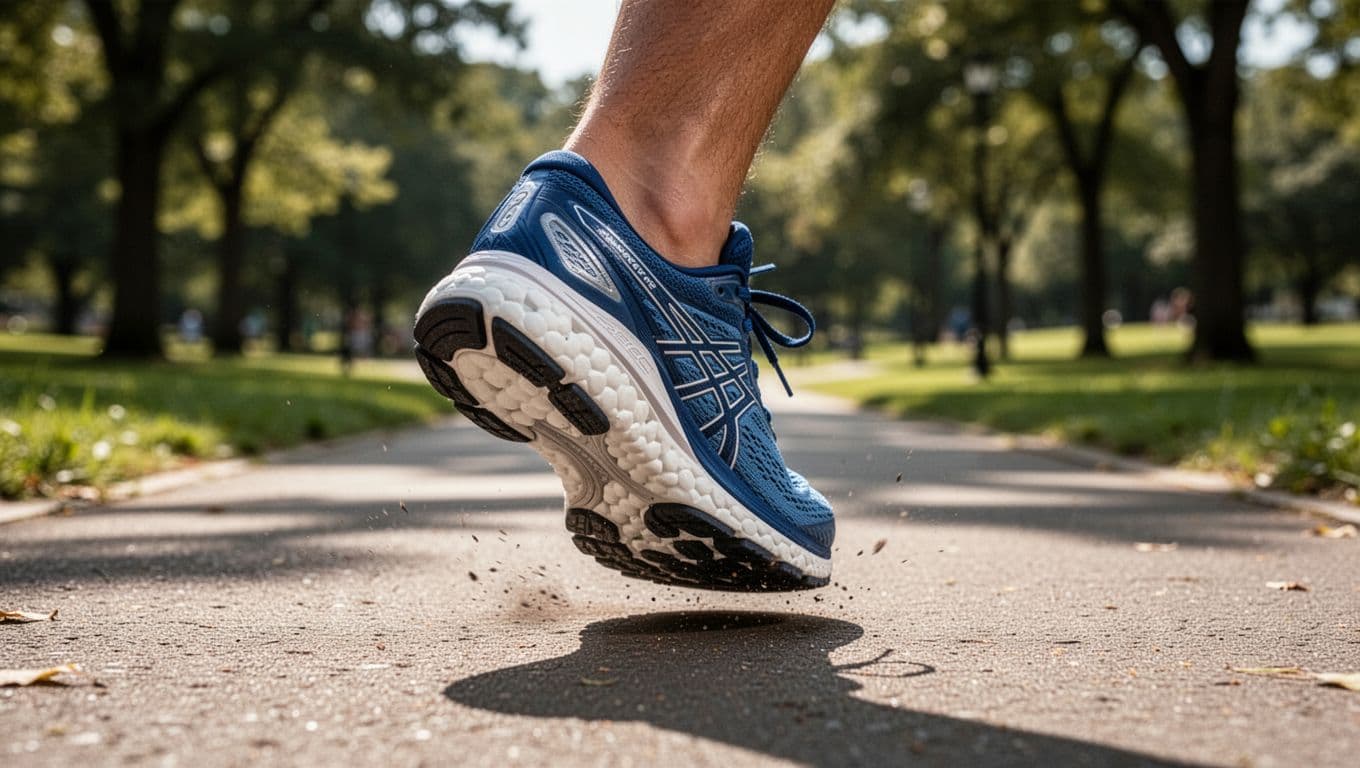
If a shoe feels great in the store but leaves me beat up after 8 miles, it doesn’t fit the job.
Cushioning and Energy Return Basics
Good cushioning does more than feel soft. It helps absorb shock, which can ease stress on joints when I’m running on roads or covering long distances. At the same time, the best foams do not just sink and disappear. They give some of that force back, so each step feels a little easier.
I keep foam types simple. EVA feels familiar and dependable. Supercritical foams feel lighter and bouncier. PEBA-based foams often feel very lively, which is why many faster shoes use them. For a deeper foam breakdown, I like the clear running shoe foam guide.
Fit and Stability for Different Foot Shapes
Fit can make or break a run. I’ve had shoes that looked perfect but rubbed my heel raw by mile three. Narrow feet usually do better in a snugger upper, while wide feet need more room in the forefoot so the toes can spread naturally.
Pronation matters too. Some runners need a neutral shoe, while others benefit from a little guidance to keep the foot from rolling in too far. Poor fit often leads to blisters, black toenails, or aches that show up after repeat runs. If I want a more structured option, I look at models like the Adidas Solar Glide 7 or the ASICS Gel-Pulse 16 review for a steadier feel.
Nike’s Game-Changing Running Tech
Nike wins a lot of attention because its best shoes feel sharp, quick, and built for speed. When I compare Nike vs Adidas Running Shoes, I can usually feel Nike’s tech idea in the first few steps. Some models want to save energy for race day, while others are made to hold up through the weekly grind.
That mix matters to me. I want a shoe that can fire on tempo days, still feel decent on easy miles, and not fall apart too soon. Nike does that well by using different foams and plates for different jobs, which is why the lineup feels so broad.
ZoomX and Carbon Plates Explained
ZoomX is the part that makes a Nike super shoe feel springy underfoot. It is light, soft, and quick to rebound, so my stride feels less like sinking into foam and more like loading a jump. On fast workouts, that extra snap can make a shoe feel alive, almost like the ground is pushing back.
The carbon plate adds the other half of that feeling. It stiffens the shoe and helps guide the foot forward, so the bend happens in a more efficient way. I notice it most during tempo runs, when the pace gets honest and every step starts to count.
The best way I can describe it is simple, ZoomX gives the bounce, and the carbon plate helps aim it forward.
That combo is why shoes like the Nike Vaporfly Next 3 benefits feel so fast in races. Nike also explains its foam clearly on its ZoomX page, where it describes the material as its lightest and most responsive foam. In real running terms, that means less dead feel and more pop when I press the pace.
Pegasus Series for Everyday Miles
The Pegasus is the Nike shoe I keep coming back to for regular training. It feels balanced, which is why it has stayed popular for so long. I can take it out for a recovery jog, a steady middle-mile run, or even a light pickup session without feeling like I chose the wrong tool.
What I like most is the mix of comfort and response. It has enough cushion to stay friendly on tired legs, but it still moves well when I pick up the cadence. That matters on weeks when I want one shoe to do a lot of work.
If you want the fuller picture, the Nike Pegasus 41 review breaks down the ride in more detail. For me, the Pegasus is Nike’s everyday safety net, while shoes like the Vaporfly are the sharp edge.
That split also shows where Nike is heading. The brand still puts its biggest energy into elite race shoes, but the daily trainers have gotten better too. If I want a versatile workhorse, Pegasus stays on the short list, and if I want more support for easier miles, the Nike Pegasus vs Structure comparison is worth a look.
Adidas Innovations That Keep You Going Strong
When I compare Nike vs Adidas Running Shoes, Adidas keeps winning me over in the long run because it knows how to balance comfort, grip, and durability. I may reach for Nike when I want a sharper race feel, but Adidas often gives me the more dependable miles. That matters when my legs are tired and the weather turns ugly.
Adidas also gives me options for different run types without making me feel like I need a different shoe for every workout. I can stay cushioned on long runs, stay quick on race day, and still trust the outsole when the roads get slick. For me, that mix makes Adidas feel practical in the best way.
Boost Foam’s Superior Shock Absorption
Boost is the Adidas innovation I notice most on easy runs and long efforts. The foam feels soft when my foot lands, but it does not collapse into mush. Instead, it gives me a smooth, springy ride that keeps my stride moving.
I like Boost because it takes the edge off hard pavement. After a long run, my legs usually feel less beaten up when I wear a shoe built around this foam. If I want that plush comfort for daily mileage, I often look at shoes like the Adidas Ultraboost 23 review for the kind of cushioned ride that holds up well over time.
Boost works best when I want comfort first, but I still want enough pop to keep running with purpose.
That balance is why Adidas can stay relevant for runners who value both feel and function.
Adizero Line for Race-Day Speed
When I want pace, I look straight at the Adizero line. Lightstrike Pro gives these shoes a quicker, livelier feel, and that matters when every second counts. The ride feels firmer and faster than Boost, which helps me stay on my toes during workouts and races.
The Adizero family gives Adidas a real answer to Nike’s racers. I do not feel like I am giving up much speed when I line up in an Adizero shoe. In fact, models like the Adizero SL 2 daily trainer show how Adidas can bring race-inspired energy into a more affordable training shoe.
I also trust the grip. Continental rubber outsole traction has saved me on more than one wet run, including a rainy trail outing where the roads and paths felt slick from the start. I hit a muddy turn, expected a slide, and the shoes held firm. That kind of confidence matters.
Adidas also gets points from me for value and wear life. The shoes often last well, and that makes the price feel easier to justify. For runners who want a reliable training-and-racing mix, Adidas brings a lot to the table without asking for all the money in my wallet.
Head-to-Head: Nike vs Adidas on Key Features
When I compare Nike vs Adidas Running Shoes, I stop looking at brand buzz and focus on how each shoe feels under real miles. Nike usually gives me a more lively ride, while Adidas often feels smoother and more planted. That difference shows up in cushioning, grip, fit, and how long the shoes stay useful.
I also pay attention to lab-backed testing when I can, because it helps separate feel from marketing. For a broader look at shoe testing, RunRepeat’s running shoe lab guides are useful for comparing foam, grip, and weight across models.
Which Offers Better Cushioning and Bounce?
For pure bounce, I give the edge to Nike. Nike’s ZoomX-based shoes usually feel more energetic, so when I want a fast, springy toe-off, Nike is the pair I reach for. Adidas, on the other hand, gives me a plusher and calmer ride, which I prefer on easy days and long recovery runs.
That split matters more than people think. If I’m doing tempo work or race prep, Nike’s lively feel helps my legs turn over faster. If I’m logging a long Sunday run, Adidas often feels kinder late in the session because the cushioning settles into a more relaxed rhythm.
Here is how I break it down:
| Feature | Nike | Adidas |
|---|---|---|
| Cushioning feel | More bouncy and lively | Softer and plusher |
| Best run type | Tempo runs, racing, faster daily miles | Easy runs, long runs, recovery miles |
| Ride character | Snappy and responsive | Smooth and forgiving |
| Who I pick it for | Runners who want pop | Runners who want comfort first |
Nike’s edge comes from how its foam rebounds. Adidas wins when I want comfort that doesn’t feel too aggressive. In short, Nike gives me more spark, but Adidas gives me more cushion.
If I had one pair for speed sessions, I would lean Nike. If I had one pair for tired-leg miles, I would lean Adidas.
Durability and Grip Showdown
Adidas usually takes this round for me. Its outsoles tend to hold up well, and I trust the grip more often on wet roads and worn pavement. Nike can grip well too, but many of its lighter race-style outsoles trade some wear life for speed.
That shows up over mileage. Nike’s faster shoes often feel amazing early, then start to show more outsole wear if I use them too often for daily training. Adidas daily trainers usually stretch farther for me before the tread looks tired, which makes them easier to keep in rotation.
I also think about real use, not just first-run feel. A shoe can feel fantastic at mile 20 of a workout and still be a poor long-term buy if the outsole fades too fast. For runners who want a deeper look at Adidas options built for mileage, my compare daily trainer comfort and longevity pick list helps narrow that down.
A simple way to think about it:
- Nike works best when speed matters more than long wear.
- Adidas usually lasts longer in regular training.
- Wet grip often feels more secure in Adidas road shoes.
- Outsole wear tends to show up sooner in lighter Nike racers.
That is why I treat Nike as the sharper tool and Adidas as the tougher one. If I want a shoe to survive more weekly miles, Adidas gets my vote.
Price and Value for Money
Adidas often gives me better value. The brand has more models that sit in the middle of the price range, and those shoes often last long enough to lower the cost per mile. Nike can be worth the money too, especially in race shoes, but I usually pay more for that extra bounce and speed.
When I do the math, I look past the sticker price. A $140 shoe that lasts 350 miles costs about 40 cents per mile. A $180 shoe that lasts 250 miles costs 72 cents per mile. That gap adds up fast if I run often.
This is where Adidas often wins my wallet. I can usually find strong training shoes that deliver a steady ride without pushing into premium pricing. Nike sometimes asks more up front, especially in its best-performing foams, and I accept that only when I know I want the faster feel.
For runners who want a more affordable training setup, Adidas daily trainer options can be easier to justify than a high-priced race shoe. Nike still has strong value if I use it for specific workouts, but Adidas is usually the better buy for everyday use.
If I had to sum it up simply, I would say this:
- Nike is the better splurge when I want speed and a lively ride.
- Adidas is the smarter buy when I want more miles for the money.
- Cost per mile usually favors Adidas for daily training.
- Performance per race can favor Nike when I need a faster shoe.
That is the balance I keep coming back to. Nike often feels more exciting, but Adidas usually feels easier to justify run after run.
Top Models Face Off: Best Nike vs Best Adidas Picks
When I compare the best Nike vs Adidas Running Shoes, I stop looking at brand loyalty and focus on job type. A race shoe needs snap and efficiency. A daily trainer needs comfort that lasts. A stability shoe needs enough guidance to keep my stride calm when fatigue sets in.
That is why I break the matchup into categories. The right pick for me depends on the run I plan to do, not the logo on the side. For runners who want a deeper look at race-day foam and plate setups, I also like my Nike Vaporfly Next 3 race day insights and the Nike ZoomX Vaporfly Next 4 review. For more training-mile context, the Nike Pegasus 41 review is a good companion read.
Race Shoes: Speed Demons Compared
For racing, I give Nike a slight edge when I want the most aggressive feel. The Nike Vaporfly 3 is lighter, snappier, and more race-focused in the way it rolls forward. The Adidas Adizero Adios Pro 3 feels a touch more stable and controlled, which I appreciate when the pace is fast but my form starts to fade.
Here is how I see them in real use:
| Shoe | Approx. price | Best for | My quick read |
|---|---|---|---|
| Nike Vaporfly 3 | About $250 | 5K to half marathon racing | Faster, lighter, more explosive |
| Adidas Adizero Adios Pro 3 | About $250 | Half marathon to marathon racing | Smooth, stable, efficient |
The Vaporfly 3 is the shoe I want when I trust my legs and want to attack the course. Its biggest strength is pure speed. The downside is that it feels a little less forgiving late in a long race. The RTINGS comparison of Vaporfly 3 vs Adios Pro 3 lines up with what I feel, Nike leans faster, while Adidas brings more balance.
Adidas is the shoe I choose when I want race-day efficiency without as much nerve. The Adios Pro 3 still feels quick, but it gives me more confidence over longer stretches. If I were lining up for a half marathon and wanted the best mix of speed and control, I would pick the Adidas Adizero Adios Pro 3. For a shorter, all-out effort, I would flip to the Vaporfly 3.
Nike Vaporfly 3 pros: lighter feel, more pop, excellent for sharp pacing.
Nike Vaporfly 3 cons: less forgiving, pricier feel if you only race a few times a year.
Adidas Adios Pro 3 pros: stable ride, strong marathon efficiency, confidence late in the race.
Adidas Adios Pro 3 cons: a little less explosive than Nike, still a premium-priced shoe.
If my goal is a half marathon PR, I want the Adios Pro 3 under my feet more often than the Vaporfly 3.
Daily Trainers for High Mileage
For everyday runs, I want comfort that holds up across a full training block. That is where the Nike Pegasus 41 and the Adidas Ultraboost Light come into play. The Pegasus 41 feels more versatile, while the Ultraboost Light feels softer and more cushioned for easy miles.
The Pegasus 41 usually sits around $140 to $150, and I see it as the better all-around trainer. It can handle easy runs, moderate workouts, and long runs without feeling out of place. The Adidas Ultraboost Light usually lands closer to $190, and I see it as the plush comfort option for runners who want a smoother ride and do not mind extra weight.
The best fit depends on what I want most:
- Nike Pegasus 41: better if I want one shoe for a wide range of runs.
- Adidas Ultraboost Light: better if I want soft landings and easy-day comfort.
- Pegasus 41: better for runners who like a more balanced, everyday feel.
- Ultraboost Light: better for runners who prioritize cushion over speed.
I usually send neutral runners and newer runners toward the Pegasus 41 first. It has enough structure to feel dependable, but it does not lock me into one run type. The Ultraboost Light works best for runners who love a plush ride and want their shoes to feel kind on tired legs. I would not call it my first pick for fast workouts, but I can see why plenty of runners like it for recovery days.
Stability Shoes for Steadier Miles
When I want extra guidance, I look at the Nike Structure and the Adidas Solarboost. These are the shoes I reach for when I want my stride to feel calmer, especially on long training weeks. They are useful for runners who need a bit more support without moving into a bulky stability shoe.
The Structure usually feels more controlled and supportive, while the Solarboost feels smoother and a little more natural underfoot. I think of the Structure as the safer pick for runners who want a steadier platform. I think of the Solarboost as the easier choice for someone who wants support with less stiffness.
Both make sense for runners dealing with fatigue, mild overpronation, or simply a need for a more secure ride. If I had to choose one for mixed training, I would lean Nike Structure for stronger guidance and Adidas Solarboost for comfort-first stability.
What Runners and Experts Say
When I read runner feedback, I see the same split over and over. Nike gets the loud praise, especially from runners who want speed and a race-day feel. Adidas gets the steady loyalty, especially from everyday athletes who care more about comfort, grip, and a shoe that keeps showing up week after week.
Pros and Cons from Real Runs
In reviews I’ve read from Runner’s World and in the running threads I follow, Nike usually earns praise for its snappy ride and race-ready feel. Runners talk about smooth toe-off, strong energy return, and that “fast” sensation that makes hard workouts feel sharper. A lot of people also mention Nike’s star power, and it’s hard to ignore names like Eliud Kipchoge when you think about why the brand gets so much attention.
Adidas, on the other hand, keeps winning points for everyday mileage. I see more comments about comfort on long runs, more secure traction in bad weather, and a ride that feels easier to trust when fatigue sets in. On Reddit, the feedback often sounds practical, not flashy, which tells me a lot. Runners keep saying they reach for Adidas when they want a shoe that just works.
The complaints are pretty consistent too. Nike’s narrow fit comes up a lot, especially for runners with wider feet or high-volume feet. Adidas gets its share of pushback for feeling a little heavier, especially in some daily trainers. That tradeoff matters if you want a shoe that feels quick right away.
A simple way I think about it:
- Nike feels better if I want speed, pop, and race-day excitement.
- Adidas feels better if I want comfort, grip, and a calmer ride.
- Nike fit can be tricky if my foot runs wide.
- Adidas weight can matter if I want a lighter feel for workouts.
Expert Lab Tests and Awards
Lab testing and awards usually back up what runners say. In Runner’s World coverage of Nike and Adidas, both brands get credit for top-tier performance, but for different reasons. Nike often wins on bounce and race-day aggression, while Adidas stands out for balance, durability, and dependable mileage.
I also pay attention to broad testing roundups and brand comparisons like the best shoe brand for running, because they line up with what I feel on the road. Nike tends to collect attention in super-shoe circles, while Adidas picks up praise for shoes that stay useful beyond the first exciting run.
Strava-style mileage chatter tells a similar story. Fast runners post about Nike when they want PR attempts. Daily runners stick with Adidas when they want a shoe that handles more of the weekly grind without feeling fragile. That tells me both brands have clear strengths, but they serve different runners well.
For me, the takeaway is simple. Nike gets the nod when performance and hype matter most. Adidas gets the nod when I want a shoe that earns trust mile after mile.
Picking Your Winner: Nike or Adidas?
When I narrow Nike vs Adidas Running Shoes down to one winner, I stop asking which brand is better overall. I ask which one fits my foot, my mileage, and the ground I run on most. That approach saves me from buying a shoe that feels great for five minutes and wrong for five miles.
I pick Nike when speed matters most
If I want a shoe for tempo runs, workouts, or race day, I usually lean Nike. The fit often feels snugger, the ride feels snappier, and that works well for me when I want quick turnover. Runners with narrow or average-width feet often like that close feel, while wide-footed runners may need to size up or look elsewhere.
Nike also makes more sense when I care about pure performance over price. I’m usually fine paying more for a shoe that gives me a faster feel, but I want that shoe to earn its place in my rotation. For a deeper look at race-day options, I’d compare models in my running shoes review roundup.
I pick Adidas when comfort and durability matter more
Adidas is my choice for long miles, easy days, and runners who want a more grounded ride. The brand often gives me better grip, a steadier platform, and more staying power over time. That makes it easier to trust on wet roads, long training blocks, and runs where comfort matters more than speed.
I also think Adidas is the safer bet for runners who want better value. If I’m watching my budget, I want a shoe that lasts and still feels good after the excitement wears off. The Adidas running shoes fit guide is useful if I’m matching a shoe to my foot shape.
I decide by testing both in person
The best choice often shows up in the store, not online. I try both brands on the same day, jog a little, and pay attention to heel lock, toe room, and how stable I feel when I turn.
My simple rule is this, Nike for speed demons, Adidas for durable comfort seekers. If I still can’t decide, I pick the pair that feels best the moment I start moving.
Conclusion
When I compare Nike vs Adidas Running Shoes, I keep coming back to the same truth: Nike usually feels faster and more aggressive, while Adidas often feels smoother, steadier, and easier to trust over long miles. That means the better brand depends less on hype and more on how I run.
If I want a sharper race-day feel, I lean Nike. If I want comfort, grip, and durability for the long haul, I lean Adidas. For runners who want more help choosing a race-ready option, my best half marathon race day shoes guide can help narrow the field.


