

Nike Vaporfly 4 Carbon Plate Review: Fast Enough for Race Day?
June 2026 is a good time to ask if the Nike Vaporfly 4 carbon plate still has enough race-day bite for serious runners. If you race road 5Ks, half marathons, or marathons, the real question is simple, does this shoe still feel fast enough when seconds matter?
That answer matters most if you’re weighing comfort against pure speed. Some runners want a smooth, forgiving super shoe, while others want a sharper snap underfoot and a more locked-in race feel.
This review looks at the parts that decide that call, including ride feel, carbon plate snap, fit, grip, and value. If you want a deeper look at the shoe itself, the in-depth Nike Vaporfly 4 review gives the full picture before we sort out whether it belongs on your race-day line-up.
What the Nike Vaporfly 4 changes from older versions
The Nike Vaporfly 4 keeps the same race-day idea, but it feels tuned in a few important ways. Runners will notice the updates most in the upper, the platform shape, and the way the shoe sits underfoot at speed.
Build Your Complete Race-Day Setup
The right shoe helps, but faster racing comes from better training, pacing, recovery, fueling, and execution.
More Guides for This Shoe
Those changes matter because small tweaks can add up over 13.1 or 26.2 miles. A shoe that feels a little lighter, a little more stable, or a little less cramped can save energy when your legs are already working hard.
The carbon plate setup and how it affects the ride
The Nike Vaporfly 4 carbon plate still works with the foam to create that quick, forward-driving feel runners want on race day. The plate gives the shoe its pop, while the foam softens the landing and helps roll you into toe-off with less wasted motion.
That combination is what makes the ride feel efficient. Your foot lands, loads the foam, then the plate helps push the shoe back into shape as you move forward. The result is a smoother turnover and a toe-off that feels more direct.
A carbon plate helps, but it doesn’t do the job alone. Fit, foam, and geometry still decide how fast the shoe feels on your foot.
Compared with older Vaporfly versions, the 4 seems more focused on a controlled, race-ready ride than a wildly soft one. That can make it feel a touch more precise at faster paces, which is exactly what many runners want when the pace picks up late.
For a fuller side-by-side race shoe look, the Nike Vaporfly 4 vs Adidas Adizero Adios Pro 5 guide helps show how the Vaporfly stacks up against another major marathon shoe.
Upper, tongue, and lockdown: what feels different on foot
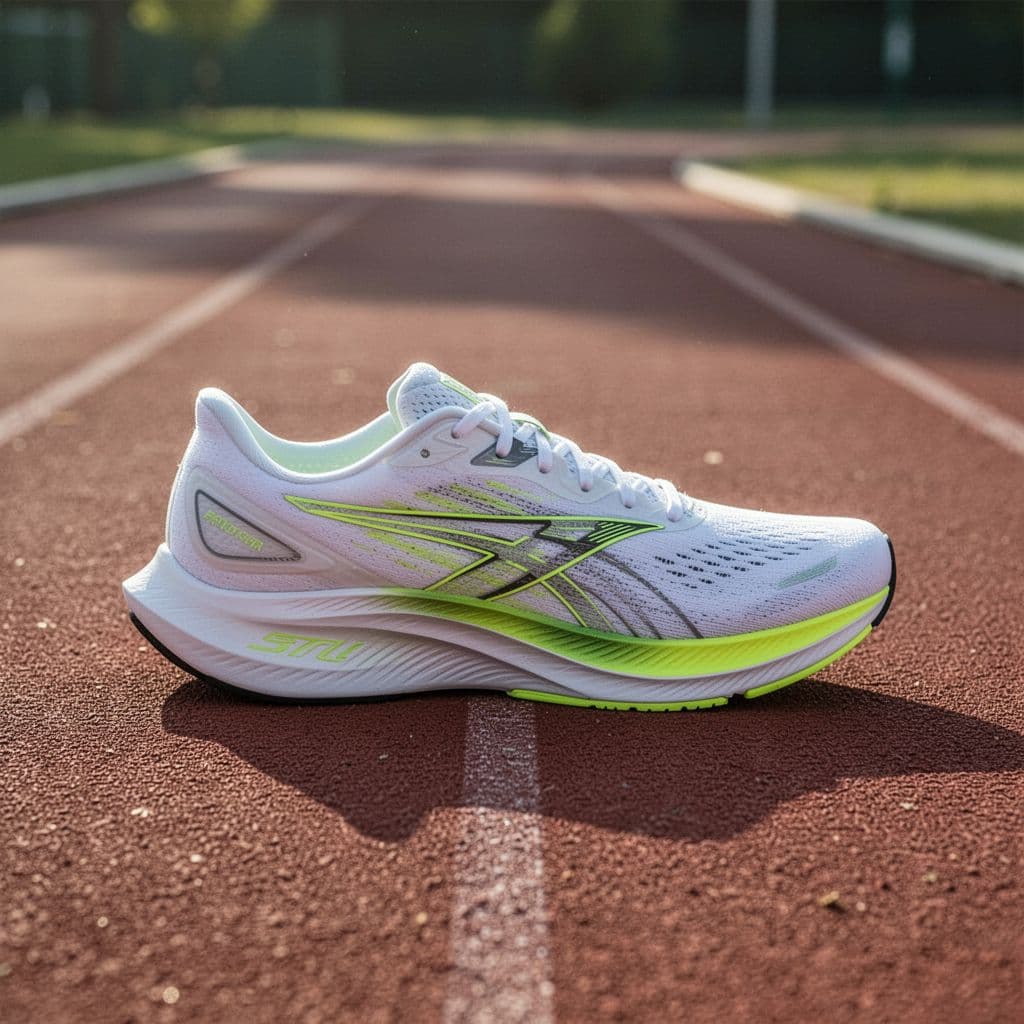
The upper is where many runners will feel the biggest day-to-day change. It looks built more for race comfort with secure lockdown than for a loose, roomy fit, and that matters once the miles start piling up.
Midfoot hold feels important here. If the shoe locks the foot in well, the whole ride feels more stable and less fussy at pace. If it doesn’t, the shoe can start to feel narrow or tense, especially in the forefoot.
Heel security also matters more than many runners expect. A clean heel hold helps the shoe stay calm during fast turns, late-race surges, and tired strides. When your foot starts to swell, a snug upper can either feel supportive or feel tight, so fit testing is smart.
Runners with wider feet should pay close attention here. The Vaporfly line has often leaned toward a more race-shaped fit, and small differences in upper shape can change comfort a lot by mile 10 or mile 20.
Midsole feel and stack height in real running terms
The foam feel is what most runners notice after the first few strides. In simple terms, the Vaporfly 4 aims for a ride that feels soft enough to protect, but still firm enough to keep moving.
Stack height changes that feel in a big way. More stack usually means more cushion and less ground feel, while a lower or more tuned platform can feel quicker and more stable under pressure. In racing, that tradeoff matters because you want bounce without wobble.
The Vaporfly 4 appears to aim for a more balanced setup than older versions that felt extra lofty or overly soft. That can help runners who want less side-to-side motion and a better sense of where the shoe is underfoot when fatigue sets in.
For a good technical reference on the shoe’s latest setup, RunRepeat’s Vaporfly 4 review gives a close look at the platform changes and how they affect the ride.
The practical takeaway is simple:
- More stable platform can help you hold form late in a race.
- Slightly firmer underfoot feel can improve control at faster paces.
- Enough stack still matters, because the shoe needs cushion for longer efforts.
When a race gets hard, even small changes in midsole shape can affect leg fatigue. A shoe that feels easier to guide at mile 18 is often the one that feels best on race day.
How the Vaporfly 4 feels at race pace
The Nike Vaporfly 4 carbon plate makes the most sense when the pace gets serious. At relaxed speeds, it can feel a little too eager, almost like a race car stuck in traffic. Once you press into 5K, 10K, and half marathon effort, though, the shoe starts to feel alive and much easier to trust.
That quick change in feel matters. A good super shoe should not just look fast, it should encourage fast running without forcing you to fight the shoe. The Vaporfly 4 is built for that kind of effort, and it shows most clearly when you move from steady running into true race rhythm.
Does it feel snappy enough for 5K, 10K, and half marathon pace?
At 5K pace, the shoe feels most natural when you are already on the front foot. The carbon plate and foam work together best when your turnover is high and your stride is short and sharp. That is where the Vaporfly 4 feels snappy, quick, and ready to move.
For 10K racing, the ride still feels lively, but a little more controlled. You can settle into a strong rhythm without losing the pop you want during surges, pack changes, or late-race pushes. If you run efficiently, the shoe gives you a clean toe-off that makes fast pacing feel less forced.
Half marathon pace is where the Vaporfly 4 starts to show more of its range. It still feels quick, yet it also settles into a smoother flow when you lock into rhythm. For runners who can hold a steady cadence, that balance is a big plus.
If you’re choosing one racer for more than one distance, the Vaporfly 4 is best for runners who want a fast, responsive feel first. It is less about plush comfort and more about keeping the pace honest. For a closer comparison with other race-day options, the Nike Vaporfly 4 versus ASICS Magic Speed 5 breakdown helps show where this shoe sits among speed-focused choices.
The Vaporfly 4 feels most alive when you run fast enough to load the plate and foam together. Slow the pace too much, and some of that spark fades.
Is it stable enough when fatigue kicks in late?
Late in a race, the Vaporfly 4 feels more planted than some super shoes, but it still has that high-stack, race-day feel. When your form starts to slip, you will notice the platform more. That can mean a bit of bounce and a bit less certainty, especially on sharp turns or cambered roads.
Heel strikers and runners who mildy overpronate should pay close attention here. The shoe does not feel sloppy, but it can feel a little tippy if your legs are tired and your landing gets messy. On flat, straight courses, it usually feels calmer. On downhill sections or winding routes, you may need to stay more alert.
That is the tradeoff with most super shoes. They save energy and speed up turnover, but they often give up some stability to do it. The Vaporfly 4 lands in a middle ground, more controlled than some aggressive racers, yet still clearly tuned for speed. If you want a broader race-shoe comparison, the Vaporfly 4 and Endorphin Pro 5 comparison is useful for seeing how different plates handle fatigue.
What kind of runner gets the most benefit from the plate?
Runners who already move efficiently feel the most from this shoe. If you strike midfoot or forefoot, keep a fast cadence, and stay smooth under pressure, the plate feels like it adds rhythm to your stride instead of fighting it.
That benefit shows up most in runners who can hold pace without much wasted motion. The shoe rewards clean mechanics, so every stride feels a little more direct and a little more urgent.
Runners who may feel less of a boost are often newer racers or anyone who prefers a softer, more grounded ride. If you like a shoe that disappears underfoot, this one may feel too eager. If you want a shoe that nudges you forward every step, the Vaporfly 4 carbon plate does that well.
For race day, that means the shoe is best for people who want pop, pace, and a clear sense of forward motion. If your running style already matches that, the plate feels easy to appreciate.
Comfort, fit, and sizing for long race days
Race-day comfort is where a shoe earns its place in your lineup. A fast trainer can feel great for 30 minutes and then fall apart late in a marathon, so the real test is how the Vaporfly 4 feels after the first wave of excitement fades. The Nike Vaporfly 4 carbon plate has the tools to stay usable over long miles, but comfort depends on more than soft foam.
The upper, midsole, and fit all work together. If one part feels off, the whole shoe can start to feel demanding. That matters most when your feet swell, your form gets sloppy, and you want the shoe to help instead of distract.
Can you wear it for a marathon without hating it by mile 20?
For many runners, yes, but only if the fit is right and your stride stays smooth. The midsole gives enough cushioning to blunt the road, so your legs do not take the full hit of each landing. That helps when the race gets long and the pavement starts feeling harder than it did in the first miles.
Still, this is not a lazy, sink-in kind of ride. The shoe has enough structure to stay quick, which means it can feel a little more assertive late in the race. If you want a soft cruiser, this will feel more focused than plush.
Pressure points matter more after mile 18. A snug arch or tight forefoot can turn from manageable to annoying once your feet swell. Marathon comfort comes from the full package, not just the foam, so the upper has to hold the foot without pinching.
If the shoe feels slightly tight in the store, it may feel tighter after 20 miles.
The Vaporfly 4 can help preserve the legs, especially for runners who stay efficient. It reduces some of the pounding, but it still asks you to run with good form. For a broader fit reference, the Nike ZoomX Vaporfly Next 4 fit guide is useful if you want another look at how this family tends to fit on foot.
Fit check: narrow, true to size, or roomier than expected?
The safest answer is that the Vaporfly 4 runs closer to a race fit than a relaxed daily trainer. It usually feels snug through the midfoot, and that helps lock the shoe in place when you are moving hard. Most runners will want to start with their usual size, then check whether the toe box gives enough room for race-day swelling.
If you have a wider forefoot, be careful. A shoe that feels fine for a short tempo run can feel cramped in the last 10K of a marathon. The toe room should let your toes spread a bit, but not so much that the foot slides around.
Heel security is just as important. A locked-in heel keeps the shoe from rubbing when your cadence changes or your legs get tired. If you often notice heel slip in race shoes, use a runner’s knot before judging the fit.
For online orders, keep the decision simple:
- True to size works for many runners with average-width feet.
- Half-size up can help if you prefer more toe room.
- Watch the midfoot if you dislike a snug race fit.
If you want a broader sizing framework before buying, how to choose running shoe size gives a practical way to judge length, width, and lock-in before race day.
How the upper handles heat, moisture, and race-day nerves
The upper feels built for speed, but it also needs to handle heat. On warm days, breathability matters as much as cushioning because sweaty socks can change how secure the shoe feels. A lighter, airier upper helps keep the foot from feeling boxed in when the temperature climbs.
Moisture management matters too. If your socks get damp from rain, humidity, or a hard sweat, the shoe should still hold the foot without getting sloppy. That is where a close-fitting upper can help, as long as it does not start rubbing against the top of the foot or around the heel.
Race pressure changes how a shoe feels. When the gun goes off and you surge through the opening miles, you want the upper to disappear. A good race fit feels calm under load, so you can focus on pace instead of adjusting laces or thinking about hot spots.
For a second opinion on comfort and fit from another race-shoe review, The Run Testers’ Vaporfly 4 review gives a helpful look at heel slip and overall race-day feel.
Grip, durability, and the realities of racing on the road
Race shoes live a hard life, even if they don’t log huge weekly mileage. The Nike Vaporfly 4 carbon plate is built to go fast first, so grip and wear need a race-day lens, not a daily-trainer one. That means looking at how it behaves on real pavement, how secure it feels when the weather turns, and how long it stays sharp before the foam loses its spring.
The short version is simple. This shoe makes the most sense on clean roads and controlled race courses. If you expect slick paint, rough patches, and wet corners, you’ll want to know where it feels confident and where it asks you to stay careful.
How the outsole handles wet roads and cornering
On smooth pavement, the outsole feels secure enough for race pace. The grip is built for straight-line speed, so it bites best when the road is clean and predictable. If you’re running a flat course with fresh asphalt, the shoe feels comfortable enough to trust.
Painted lines and wet patches are a different story. Like most lightweight race shoes, it can lose a little confidence there, especially if you push hard through a turn. Light rain is manageable, but you should still treat slick crosswalks, lane markings, and shiny road paint with respect.
For tighter corners, the shoe feels best when you keep your stride tidy. Fast leaning turns on dry pavement are fine, but sharp corners on wet streets can make the platform feel a little less planted. In other words, it’s a shoe that likes clean roads more than messy ones.
If your race course has frequent turns, rough bike-lane paint, or damp sections, give yourself extra room on corner entries.
That makes race-day planning easier. Use it when the route is straight, smooth, and dry, or when you know the weather should stay mild. If the forecast calls for steady rain or a technical course, this is not the shoe you choose for maximum peace of mind.
How many miles can you expect before it starts to fade?
A carbon plated racer does not stay race-ready forever. The foam loses some bounce, the plate feels less lively, and the whole shoe starts to feel flatter over time. That’s normal, and it’s why most runners should save the Vaporfly 4 for key workouts and races.
For race-day use, the first warning sign is a loss of snap. The shoe may still look fine, but it stops feeling quick underfoot. Toe-off feels less urgent, the midsole feels less lively, and you may notice that tempo efforts take more work than they used to.
A few common signs the shoe is fading:
- Flatter foam after runs that used to feel springy
- Less rebound when you pick up the pace
- Softer edge control in corners or late in long runs
- Visible outsole wear on high-contact spots
That doesn’t mean the shoe is done the moment it shows wear. It means the race-day magic is slipping. For most runners, that’s the point where it shifts from “big race only” to “key workout shoe.”
If you want a simple rule for all running shoes, this replacement guide is a useful reference. For a carbon racer, the real test is not just mileage, but whether it still feels fast when you open up the pace.
The best way to stretch its life is simple. Use it for sharp sessions, long runs at race effort, and actual race day. Skip heavy daily miles in it. A super shoe is more like a sprinter than a commuter, and once the pop fades, you feel it fast.
Nike Vaporfly 4 carbon plate versus other super shoes
The Nike Vaporfly 4 carbon plate sits in a very specific lane. It is built for runners who want speed, but not a huge, marshmallow-soft platform underfoot. Compared with the broader super shoe field in 2026, it feels lighter, cleaner, and a little less dramatic than the most aggressive marathon racers.
That makes it easier to sort by preference. If you like a shoe that feels quick and direct, the Vaporfly 4 will make sense fast. If you want more cushioning, more rebound, or more help when your stride falls apart late, another super shoe may fit you better.
How it compares with the Alphafly and other Nike racers
Within Nike’s race-day lineup, the Vaporfly 4 feels like the simpler, lighter choice. The Alphafly line usually brings more cushioning and a more forceful push, so it can feel better when you want extra protection over the marathon distance. The Vaporfly 4 stays more stripped back, which makes it feel quicker to move and easier to control at sharp pace changes.
That difference matters on the run. The Vaporfly feels more like a sharp tool, while the Alphafly often feels like a bigger machine built to carry tired legs. If you want a shoe that disappears more easily underfoot, the Vaporfly 4 makes sense. If you want more underfoot help and a more pronounced forward feel, the Alphafly may be the better match.
Nike also has other racers that sit in between these two ideas. Some runners want a more forgiving marathon setup, while others want a shoe that feels as close to the road as possible. The Vaporfly 4 lands near the middle for speed, but it leans toward the lighter, simpler end of the group.
The Vaporfly 4 is the better pick when you want less bulk and more direct road feel.
For runners deciding between the two top Nike options, the Nike Alphafly 4 versus Vaporfly 4 comparison is the easiest place to sort out the ride difference. It shows why one shoe suits marathon protection, while the other suits a leaner race feel. You can also read the Nike Alphafly 4 review if you want the fuller marathon-focused picture.
Where it stands against rival carbon plate shoes
Compared with rival carbon plate shoes, the Vaporfly 4 feels like a balanced racer with a speed-first personality. Some shoes in this category chase maximum bounce. Others aim for more stack and comfort. The Vaporfly 4 keeps a tighter focus on pace, turnover, and a clean transition through toe-off.
That gives it a clear identity. It does not feel like a max-cushion cruiser, and it does not feel like a stiff, harsh tempo shoe either. Instead, it sits in the middle with enough softness for longer racing and enough snap for quicker efforts. For many runners, that balance is the point.
A few buying factors help separate it from the pack:
- Bounce: lively enough for race day, but not overly soft or trampoline-like.
- Comfort: good for racing, though not the plushest option available.
- Stability: more controlled than some tall, aggressive supershoes.
- Pace range: strongest at fast efforts, especially when your turnover is already high.
If you are comparing the bigger 2026 field, the Vaporfly 4 is less about maximum assistance and more about efficient speed. That is why it often appeals to runners who want a shoe that feels easy to race in without feeling bulky or overly engineered. For a wider look at the category, The Run Testers’ carbon plate shoe roundup is a helpful way to see how the Vaporfly fits next to other current racers.
Best race distances for this shoe
The Vaporfly 4 makes the most sense at distances where pace stays high and form stays sharp. That usually means 5K, 10K, and half marathon racing, with the marathon also in play for runners who like a lighter, more direct shoe. The best choice depends on how you race, because not everyone wants the same mix of cushion and propulsion.
For shorter races, the shoe feels quick and responsive. That works well if you like a fast turnover and want a shoe that reacts fast underfoot. Over a half marathon, it still feels lively, but it also gives enough comfort to stay useful when the miles start adding up.
Marathon runners need to be a little more selective. If you want the most cushion possible, another super shoe may serve you better. If you prefer a leaner setup and you run efficiently, the Vaporfly 4 can still go the distance without feeling like overkill.
A simple way to think about it:
- 5K and 10K suit runners who want a sharp, quick race shoe.
- Half marathon suits runners who want speed with a little more room for rhythm.
- Marathon suits runners who value lightness and direct feel over max cushioning.
If you race by feel and like a shoe that stays quick when the pace gets hard, the Vaporfly 4 is a strong fit. If you want more help from the shoe as fatigue builds, a more aggressive marathon racer may be the better call.
Who should buy it, and who should skip it
The Nike Vaporfly 4 carbon plate is a shoe for runners who care about pace first. If you want a light racer that feels quick on race day and sharp during hard workouts, it makes sense. If you want one shoe for everything, it usually does not.
This is where the decision gets simple. Buy it for speed, clean turnover, and race-day focus. Skip it if you want a soft daily trainer, a roomy fit, or a shoe that hides tired legs.
Best for runners chasing a PR
This shoe fits competitive runners who want a fast, efficient ride for race day and key workouts. It works best when you already run with solid form and want the shoe to help you keep that rhythm under pressure. If you are chasing a personal best, the Vaporfly 4 gives you a clear reason to lace it up.
The best match is someone who values speed over softness. That means you likely run road 5Ks, 10Ks, half marathons, or marathons with a clear pace goal. For that kind of runner, the Nike Vaporfly 4 carbon plate feels like a sharp tool, not a casual trainer. It shines when every second matters and your job is to keep moving efficiently.
Runners who like a snug, race-shaped fit will also get more out of it. The shoe feels best when you want lockdown, a quick toe-off, and less bulk underfoot. If that sounds like your race-day taste, it belongs near the top of your list. For runners choosing between speed-focused options, the best shoes for 5K races can help narrow the field even more.
Not the best pick if you want a soft daily trainer
A carbon plate racer is a poor choice for everyday miles. Daily runs, recovery jogs, and easy efforts usually call for more cushion, more forgiveness, and a calmer ride. This shoe is tuned for fast efforts, so it can feel too eager when the pace drops.
If you want one shoe to handle everything, this is probably the wrong buy. A daily trainer should feel comfortable when your legs are fresh and when they are tired. The Vaporfly 4 is more precise than relaxed, so it makes less sense for long weeks of easy mileage. It is a race shoe first, and that focus shows in how it feels underfoot.
Runners who prefer a soft landing or a wider, more forgiving platform may also want to pass. The shoe rewards quick, efficient running, but it does not try to be an all-purpose comfort shoe. That matters because the wrong shoe for easy miles can make training feel harsher than it should.
If you want a better fit for less aggressive use, carbon plate running shoes for beginners is a smarter place to start. It gives you more room to choose a shoe that matches your actual training, not just your race-day wish list.
Good alternatives if you need more cushion or stability
Some runners want more protection, more stability, or just a softer feel on race day. That is a valid call. The best shoe is the one that matches your stride, foot shape, and comfort needs, not the one with the loudest reputation.
If you want more cushion, look for a super shoe with a plusher midsole and a more forgiving platform. If you need extra stability, choose a racer that feels planted when your form breaks down late. For runners who race longer distances, that can matter more than pure snap.
A few quick buying cues help here:
- More cushion suits runners who want less road feel and more late-race protection.
- More stability helps if you notice wobble in tall, aggressive racers.
- More forgiveness is better if you dislike a tight forefoot or narrow fit.
If you are still deciding on race-day footwear, the best half marathon race shoes guide is useful for comparing comfort, pace, and distance needs before you buy.
Conclusion
The Nike Vaporfly 4 carbon plate still earns its place on race day, especially for runners who want a light, quick shoe with a direct feel underfoot. It is most convincing for 5K, 10K, half marathon, and efficient marathon runners who like speed more than softness.
Its biggest strengths are easy to see, it feels fast, stays responsive at pace, and keeps the ride focused when you are trying to hold form. The tradeoff is just as clear, because the fit is race-snug and the shoe is best used for racing, not everyday miles.
If you want a sharper, leaner racer and your foot shape matches the fit, it is worth trying on before race day. If you want more cushion or a roomier setup, a different carbon shoe may suit you better, especially after comparing it with other top options like the Vaporfly 4 and Adios Pro 4 matchup.


