

Nike Pegasus Review
The Pegasus 41 fits true to size for most runners. You get good length up front, with a toe box that offers wiggle room after break-in. However, the midfoot stays snug, and width runs average to narrow. Runners report it feels secure rather than sloppy. Some notice initial tightness that eases over time.
In this Nike Pegasus review, we cover real-world fit based on runner feedback, plus fixes for common gripes like heel slip or pressure points. Always try them on, because foot shape varies.
First, use this simple try-on checklist. In-store, wear running socks and walk the aisles. At home, test a short jog. Check thumb’s width from toes to front; it should match your big toe without squish.
Sizing quick guide: when to go true to size vs half size up
Stick to your true size unless specific issues pop up. The Pegasus 41 measures longer internally than average, so toes rarely hit the end. Most runners with normal feet grab their usual size and love the fit.
Go true to size if your feet stay stable on short runs. However, size up a half if feet swell on long efforts over 10 miles. High insteps also benefit from extra room up top. Between sizes? Pick the larger one for comfort.
Here’s a quick decision table:
| Foot Situation | Size Recommendation | Why It Works |
|---|---|---|
| Normal width, no swelling | True to size | Built-in length prevents cramping. |
| Wide feet | Extra Wide version, true to size | Standard feels narrow at 94.6mm toebox. |
| High instep or swelling | Half size up | Avoids top-of-foot pressure. |
| Between sizes | Larger size | Ensures smooth break-in. |
In short, test for your needs. Nike’s return policy helps if it doesn’t click.
Toe box, midfoot, and heel: what different foot shapes should expect
The toe box spans 94.6mm wide, average but snug at first. Narrow or medium feet get plenty of space; toes wiggle freely after a few runs. Wide feet often feel pinched, so grab the Extra Wide (2E women, 4E men).
Midfoot hugs close for security. Low-volume feet love the wrap; it prevents side-to-side shift. High-volume or bunioned feet might sense pressure, especially pre-break-in. Runners call newer Pegasus models snug but secure because the mesh stretches just enough.
Heel lockdown shines at 89.2mm wide. The firm counter and padded collar grip without rubbing. Most avoid slip, even on downhills. Pair with thin running socks for best feel; thick ones add bulk and loosen the fit.
Simple lacing tweaks for hotspots, heel slip, and midfoot tightness
Lacing fixes most fit woes fast. Start with standard crisscross, then adjust. These tweaks take seconds and boost comfort on long runs.
- Heel slip: Use the runner’s loop. Thread laces through the top eyelets, then loop back over for a cinch. This pulls the heel down tight without squeezing toes.
Test tweaks on a short run. Most runners settle in after 10 miles. If issues persist, swap socks or size up.
Cushioning and tech that matter: ReactX foam and Zoom Air without the hype
The Pegasus 41 upgrades its ride with ReactX foam and Zoom Air units. ReactX replaces the older React foam from the Pegasus 40. It feels softer overall because Nike added 4mm more stack height: 37mm in the heel and 27mm in the forefoot. This setup absorbs impacts better, especially for heel strikers and heavier runners. Beginners appreciate the protection without mush.
Forefoot strikers get a firm push, although it lacks max plushness. In this Nike Pegasus review, we skip the buzz and focus on what these tech bits deliver during runs. You notice smooth landings and a mild snap forward. However, it stays predictable, not wild. Runners report fresher legs after long efforts compared to firmer past Pegs.

ReactX midsole: softer than older Pegs, still not super squishy
ReactX foam strikes a balance between cushion and firmness. It compresses softly under your heel, then firms up through the midfoot. This change from the Pegasus 40 makes landings gentler. Runners feel less harshness on pavement after 10 miles. Yet, it avoids sinking like pillow shoes. Heavier runners stay supported; the foam holds shape without bottoming out.
Some call the forefoot firm because the embedded Zoom Air unit creates a solid platform. This firmness aids stability and smooth transitions. Heel strikers roll forward easily. Forefoot strikers push off predictably, although beginners might need time to adjust. In short, ReactX suits daily miles. It protects joints for new runners while keeping heavier folks steady. Compared to older Pegs, you get more bounce without excess weight.
Zoom Air units: what you actually notice while running
Zoom Air units sit in the heel and forefoot. They deliver a quick snap and mild bounce on toe-off. You sense it most at steady paces, like 8-minute miles. The heel unit softens impacts first. Then, the forefoot unit springs you ahead. Runners feel this during tempos or strides, not just easy jogs.
Pace matters here. Slower runs highlight the cushion; faster ones reveal the pop. Heel strikers notice heel bounce right away. Forefoot strikers get responsive feedback, yet it stays subtle. Heavier runners appreciate the energy return on long efforts. Beginners find it forgiving without overwhelming snap. However, it won’t launch you like racing shoes. Real runs show modest 13% better return than average foams. This keeps efforts consistent across workouts.
Stability for a neutral shoe: why it feels steady for many people
The Pegasus 41 acts stable despite neutral design. A wide platform, stiff heel counter, and rocker geometry guide your stride. The outsole grips evenly; firmer foam prevents wobbles. Runners praise this on uneven paths or tired legs. Heel strikers benefit most from the secure heel. Midfoot lockdown adds confidence without guidance posts.
However, true overpronators with pain should pick stability models. Those needing medial posts or firm rails face risks here. Beginners and neutral runners stay upright easily. Heavier folks report no roll on longer runs. Forefoot strikers get a planted base for push-off. In contrast, max-cushion seekers might sense less side support.
Durability and value: how long the Pegasus lasts, and what it costs per mile
Runners pick the Pegasus 41 because it handles high mileage without quick breakdowns. Expect 300 to 500 miles from a pair, depending on your weight, surfaces, and rotation.
Heavier runners or concrete lovers hit the lower end; lighter folks on roads stretch it further. Uppers hold up well too, with minimal tears after heavy use. In this Nike Pegasus review, we check real-world wear and crunch the numbers on value at $140 retail, especially with sales dropping it to $81 right now.
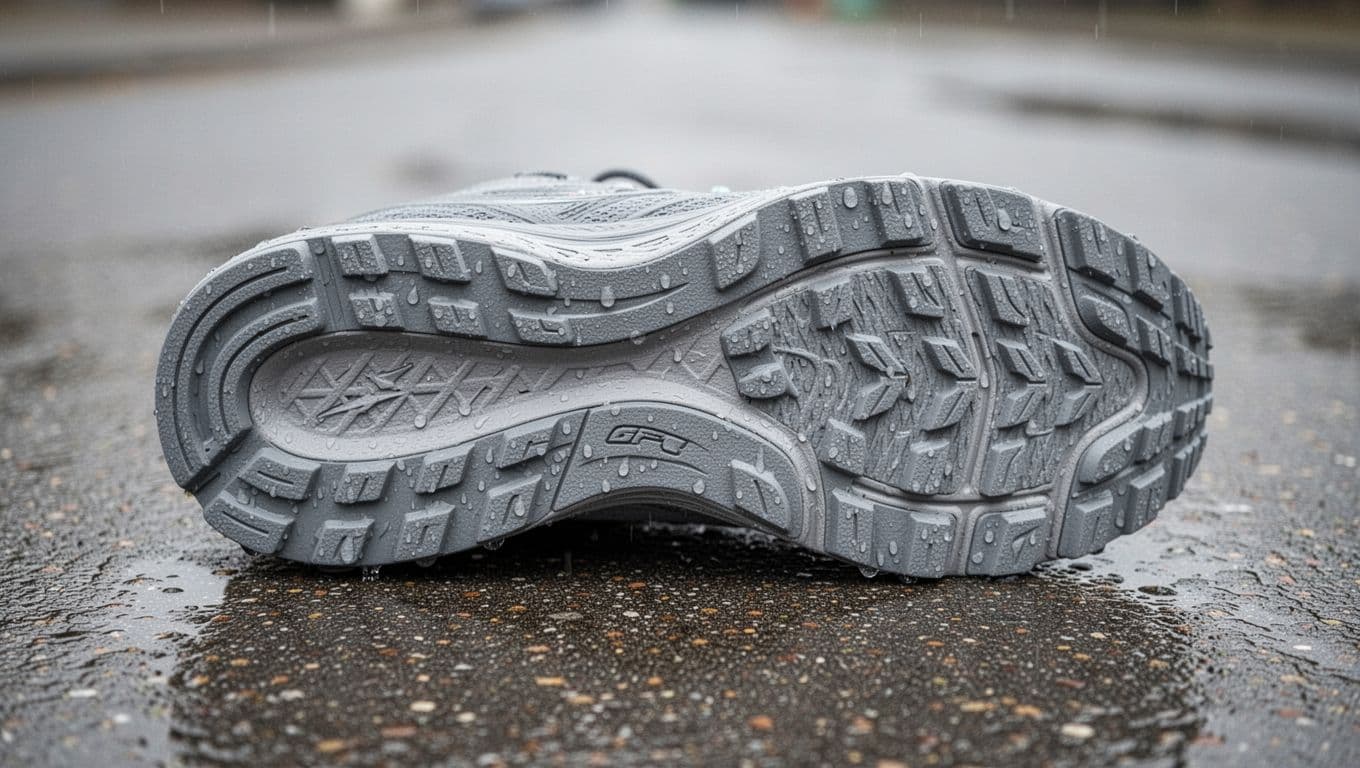
Outsole grip and wear: why the Pegasus is known for lasting miles
The waffle-pattern rubber outsole grabs well across surfaces. It sticks on wet roads without slips, thanks to deep grooves that channel water. Light gravel poses no issue; lugs flex and bite in. Treadmills stay drama-free because the pattern wears evenly under steady belt friction.
This design lasts because Nike uses thick, durable rubber in high-wear zones. Runners log 300 miles before bald spots appear. However, constant heavy concrete pounding speeds up wear; rotate shoes to extend life. Most see smooth degradation, not sudden failure. As a result, you trust it for daily training without grip worries.
When the cushion starts to feel flat: what to watch for
ReactX foam tires gradually, so spot changes early. New aches in knees or shins signal less bounce after familiar runs. The midsole packs down unevenly; heel compresses first for strikers there. Toe-off loses snap, making strides feel labored.
Upper wear shows as stretched mesh or frayed overlays, but it rarely fails before the foam. Check these practical signs it’s time to replace:
- Leg fatigue: Usual 8-mile run leaves calves sore now.
- Flat landings: Heel impact jars instead of absorbs.
- Visual clues: Creases deepen in midsole; outsole lugs smooth out.
- Grip drop: Slides more on wet or turns.
Test on a known route. If bounce vanishes around 350 miles, retire them. Rotate pairs to delay this; most runners get 400 miles average.
Is it worth the money in 2026? A simple value test
Run this quick math: Divide price by miles. At $140 full price over 400 miles, you pay $0.35 per mile. Sales at $81 cut it to $0.20 per mile, a steal for daily trainers. Nordstrom Rack hits $55 sometimes; Nike.com offers $81 with codes like GEARUP.
Pay full price if you need them now for training peaks or wide sizes. Otherwise, wait for deals; most colors drop 30-50% by spring. Beginners or one-shoe runners save big on sale. Heavy users justify $140 because longevity offsets cost. In short, under $100 makes it unbeatable value against pricier foams.
Pegasus 41 vs other popular daily trainers, and a quick look at Pegasus 42
You might love the Pegasus 41’s reliable ride, but other daily trainers match different needs. In this Nike Pegasus review, we pit it against the Brooks Ghost 17, Hoka Clifton 9, and Saucony Ride 17. These shoes share similar prices around $140 to $145 and target easy to tempo runs.
However, they differ in cushion softness, responsiveness, and fit. Heel strikers often pick Pegasus for its stable heel. Forefoot fans lean toward smoother options. Check this specs overview first, then see which fits your style.
| Shoe | Stack (heel/forefoot) | Drop | Weight (men’s 9) | Key Feel |
|---|---|---|---|---|
| Nike Pegasus 41 | 37mm / 27mm | 10mm | 10 oz (283g) | Firm, snappy |
| Brooks Ghost 17 | 35mm / 25mm | 10mm | 9.5-10 oz | Plush, steady |
| Hoka Clifton 9 | 32mm / 27mm | 5mm | 8.7 oz (247g) | Soft, rockered |
| Saucony Ride 17 | 35mm / 27mm | 8mm | 9.1 oz (258g) | Smooth, bouncy |
Pegasus stands out for durability and mild snap from ReactX foam and Zoom Air. Others offer plusher rides or lighter weights. Pick based on your foot strike and pace goals.
If you want softer miles: Brooks Ghost 17 or Hoka Clifton 9 might fit better
Crave pillow-like cushion for easy runs? The Pegasus 41 feels firmer overall, with a snappy forefoot that some call rigid. Brooks Ghost 17 delivers plush DNA Loft v3 foam from heel to toe. It compresses softly on landings, then rebounds smoothly. Runners feel cozy on long recovery days. In contrast, Pegasus demands more push from its firmer midsole.
Hoka Clifton 9 takes softness further with supercritical EVA foam. Its meta-rocker rolls you forward effortlessly, like gliding on clouds. The low 5mm drop connects you to the ground less harshly than Pegasus’s 10mm. Forefoot strikers love Clifton’s thick padding; it avoids the flat toe-off of Pegasus.
Both beat Pegasus for max comfort. Ghost suits steady paces with roomy fit. Clifton works for lightweight recovery, although it lags in speed. If Pegasus feels too snappy or thin up front, switch here. Your legs recover faster on softer foams.
If you want one balanced shoe: Pegasus 41 vs Saucony Ride 17
Need a do-it-all trainer? Both Pegasus 41 and Saucony Ride 17 hit the middle ground. Ride 17 uses PWRRUN foam for even plushness and lively bounce. It transitions smoothly without Pegasus’s firm forefoot. Runners praise Ride’s natural stride at mixed paces. Pegasus counters with stronger responsiveness from Zoom Air, plus top outsole durability for 400-plus miles.
Fit sets them apart too. Pegasus hugs midfoot and heel snugly, great for secure lockdown. Ride offers medium width with adaptive room up front; narrow feet stay comfy without extra lacing. Pegasus runs low-volume and true-to-size. Ride feels forgiving for wider toes.
Choose Pegasus if you prioritize firm snap and grip on wet roads. Go Ride for smoother energy and lighter weight. Both last well, so value stays high. Test both; your tempo runs decide the winner.
Pegasus 42 preview: what’s changing, and why it could be a big update
Nike announced the Pegasus 42 in February 2026, set for release on April 9 at $145. Early details promise fixes for common Pegasus gripes. A full-length curved Air Zoom unit spans the midsole, boosting energy return by 15% over the 41. ReactX foam pairs with it for bouncier steps, inspired by racers.
Other tweaks include a new toe spring with extra 3mm cushion under toes, no stack increase. Expect a 10mm drop for better ground feel. The waffle outsole updates for smoother transitions and grip. Engineered mesh upper adds a midfoot band for lockdown, plus wider toe box and molded sock liner for improved fit.
Full reviews wait until post-release. Weight, exact stack, and real-run feel remain unknown. Heavier forefoot might slim down. If curves add true pop, it could top the 41 for tempos. Buy 41 now for deals, or wait two months if updates excite you.
Conclusion
The Pegasus 41 shines as a dependable daily trainer for neutral runners who want one shoe for easy miles, steady tempos, and long-term value. It delivers smooth ReactX cushioning, secure fit, and 300 to 500 miles of wear, especially now at sales prices from $64 to $81. However, max-cushion fans, speed chasers, or those needing stability posts should look elsewhere.
First, grab your true size and test a short jog with running socks. If the snug midfoot works for you, snag the Pegasus 41 on sale at Nike.com or Dick’s before stock dips. Otherwise, hold off two months for the Pegasus 42’s curved Air Zoom and toe spring updates.
Back to Nike running shoe reviews


