

New York City Marathon Spectator Guide: Where to Watch the Race
The morning sun hits the Verrazzano-Narrows Bridge, and thousands of runners begin their journey through the city. You hear the rumble of footsteps on the pavement and the roar of the crowd before you even see the pack, creating an energy that stays with you long after the final runner clears the park.
Because the New York City Marathon spans five boroughs and covers 26.2 miles, you need a solid plan to catch your runner in action. Navigating the course requires knowing exactly where to stand, how to move between viewing spots via subway, and how to reunite with your athlete once they reach the finish line.
This new york marathon spectator guide provides the practical details you need to manage the day with confidence. You will find advice on the best viewing locations, race timing, tracking apps, and how to handle the crowds. Before you leave for the day, check the official event website for any updates on street closures or transit changes to ensure you stay on schedule.
How the New York City Marathon Course Shapes Your Spectator Plan
The geography of the New York City Marathon dictates your entire day. With the course weaving through all five boroughs, runners cover 26.2 miles of varying terrain that includes massive bridges, long urban avenues, and rolling park hills.
Because the race closes down major roads and bridges to vehicular traffic, you cannot chase your athlete by car. Your best strategy is to park yourself at one strategic location early in the race and a second location closer to the finish. This method minimizes travel stress and helps you avoid getting stuck in transit gridlock while your runner is on the move. Before you commit to any location, check the latest course map and road closures to ensure your route remains open on race day.
Know the five boroughs before choosing a viewing spot
Each borough offers a distinct atmosphere, but your ability to reach these spots varies significantly based on subway access and crowd density.
Staten Island is home to the start, yet it remains off-limits for most spectators due to tight security controls and limited exit points. You are better off saving your energy for later in the course. Brooklyn serves as a massive stretch of neighborhood cheering, where the density of subway stops makes it easy to hop between different viewing points along the route.
Queens offers a more intimate feel, particularly near the Pulaski Bridge or the Queensboro Bridge approach. Keep in mind that timing is tighter here, as you need to navigate transit before the runners turn toward Manhattan.
The Bronx provides a loud, high-energy environment during the later miles, which often serves as a much-needed morale boost for tired runners. Manhattan remains the most popular section, featuring iconic views on First Avenue, Fifth Avenue, and Central Park. Be prepared for intense crowds and security checkpoints in these areas, as these spots often reach capacity well before the leaders arrive.
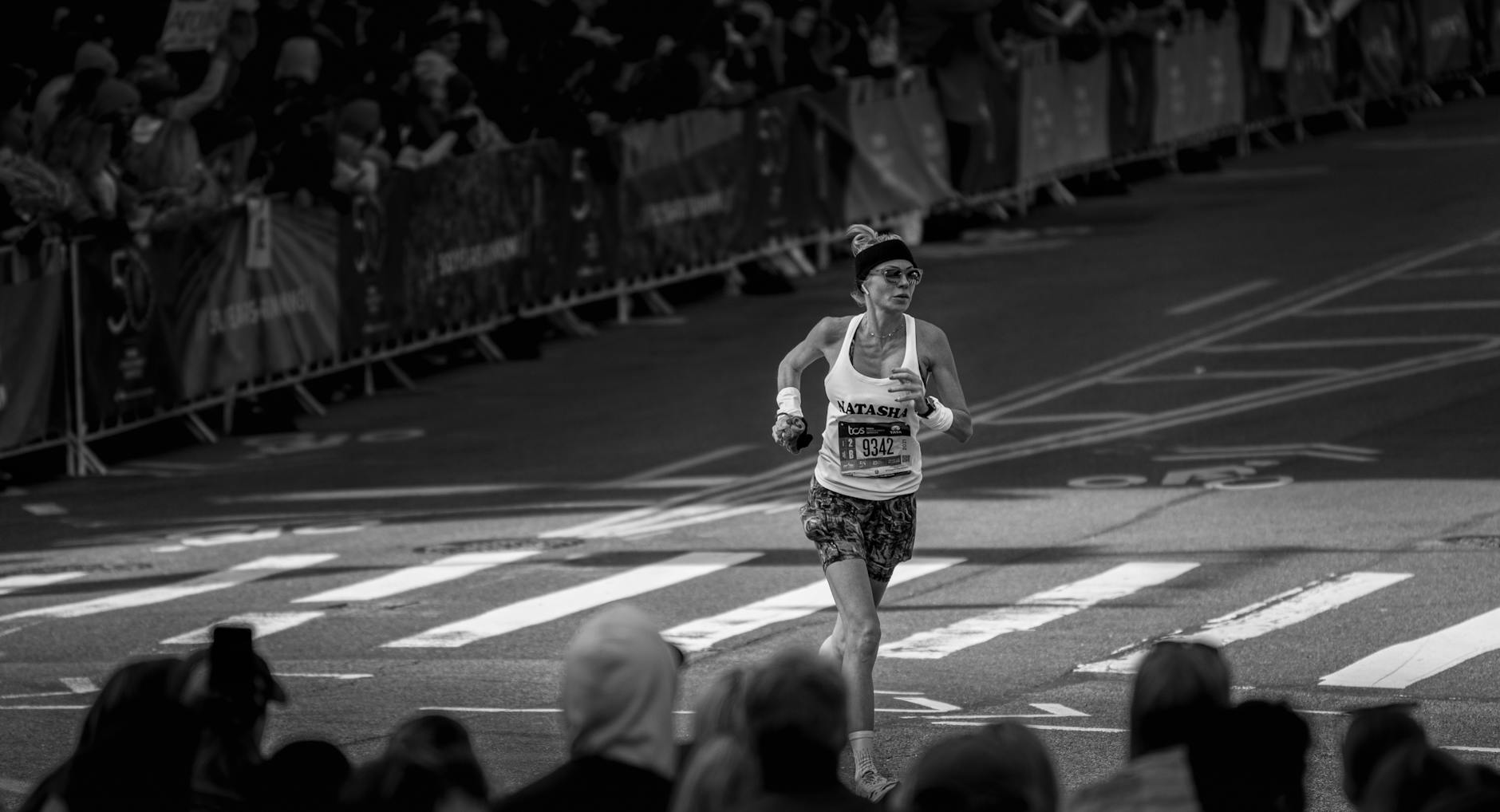
Photo by Derek French
Why runner pace matters more than the printed start time
Most spectators rely on the official race start time, but this can lead to missed connections. The marathon uses a staggered start with four distinct waves. Your runner’s start time depends on their assigned wave and bib number, which effectively determines when they cross the start line on the Verrazzano-Narrows Bridge. Instead of watching the clock, use your runner’s estimated pace to calculate when they will pass your chosen viewing spot.
Consider a runner aiming for a four-hour marathon. Their pace might change based on the grueling climb over the Queensboro Bridge, headwind exposure, or typical late-race fatigue. If your athlete maintains a steady 9:10 per mile, do not assume they arrive at mile 15 exactly when the math suggests.
Trains, crowded station platforms, and restricted sidewalk access often add twenty to thirty minutes of travel time for you. Arriving at your viewing spot at least forty-five minutes early is standard practice for a smooth experience. By staying ahead of the clock, you ensure you are in position when your athlete appears, rather than watching the back of a spectator’s head as your runner sprints past.
The Best New York Marathon Spectator Spots, From Brooklyn to Central Park
Choosing the right location to cheer for your runner is as important as the training they put in all year. Because the course covers five boroughs, you face a logistical puzzle that requires a clear plan. Focus on spots that offer both high energy and logical subway connections to ensure you catch your runner without burning yourself out.
Brooklyn brings the biggest neighborhood energy
Brooklyn is the heart of the race for many spectators. The stretch along Fourth Avenue is legendary for its noise and community spirit. In neighborhoods like Bay Ridge, Sunset Park, and Park Slope, the energy is palpable. You will find bands playing on corners, locals handing out orange slices, and a steady stream of signs cheering on the massive field of runners.
This is an ideal choice if you want to soak in the atmosphere during the early miles. Runners are still fresh and full of adrenaline here, so they often look strong and focused. Keep in mind that the pack is thick, so you should avoid narrow sidewalk areas where movement becomes impossible.
Instead, identify a wide corner near a subway station so you can quickly depart once your runner passes. While you might not have time for a long conversation, a loud shout or a high-five goes a long way in boosting their confidence for the miles ahead.
First Avenue offers a powerful midrace welcome
When runners exit the quiet, industrial stretch of the Queensboro Bridge, they hit the wall of noise that is First Avenue. This section in Manhattan is a rite of passage. The crowd density here is intense, and the sound creates a wall of support that lifts runners when they need it most. If you want to see the sheer power of the race, this is your location.
You must treat this spot with caution. The sidewalks become incredibly crowded near the bridge exit around mile 16, and once you claim a spot, you are often stuck there for the duration of that wave. Arrive at least an hour before your runner is due to pass. Choose a visible landmark so your runner can pick you out of the sea of people. If you find the massive crowds overwhelming, consider finding a spot further north on First Avenue where the crushing density thins out slightly.
The Bronx gives spectators a later-mile view
By the time runners reach the Bronx, the initial excitement has faded into a test of mental fortitude. The route near the Willis Avenue Bridge and the Grand Concourse provides a raw, authentic experience. Seeing your runner here shows them that you are still in their corner, even as the finish line remains several miles away. It is often less chaotic than the prime Manhattan stretches, allowing for a more personal moment of encouragement.
While this area is further from the final miles, the payoff is worth the extra transit planning. Use the subway to reach the Bronx early, and remember to keep your message short and legible. Since the runner is battling fatigue, they need to process your support instantly. Hold your sign high and keep your cheering focused. It is a quiet, meaningful part of the course that often gets overlooked by spectators chasing the fame of the finish line.
Central Park is special, but it is not always the easiest choice
Central Park is the crown jewel of the marathon, but it is a complex place to navigate on race day. The final miles, including the rolling hills of the park, are packed with thousands of spectators hoping to catch a glimpse of the finish. Access is heavily restricted for safety reasons, and you should never assume you can wander freely near the finish line.
Check the official map and security guidelines before you head to the park. The finish area is a controlled zone, and you will likely be steered toward designated viewing areas rather than the actual tape.
For families, finding a spot near the park entrance or along the final stretch of Fifth Avenue is often a smarter play. Make sure you and your runner have a clear reunion plan that avoids the immediate finish-line congestion. By following the official New York City Marathon spectator guidance, you can avoid common pitfalls and find the best way to celebrate after their hard-earned accomplishment.
How to Move Around New York on Marathon Sunday
Moving through the five boroughs on race day requires as much preparation as the runners themselves perform. Because the city effectively splits into disconnected zones when the roads close, you cannot rely on traditional vehicle transport.
Rideshares and taxis often face impossible gridlock, surging prices, and massive drop-off limitations that leave you stranded blocks away from your target. Public transit is your most reliable ally for following this new york marathon spectator guide. By sticking to the subway, you bypass surface-level chaos entirely, but you must still account for the reality of navigating a city that is partially closed off.
Use the subway, but plan around bridges and closures
The subway system is the only way to effectively hop from borough to borough during the race. However, stations near the course often reach capacity or face temporary closures for crowd control. Check the official MTA service alerts the moment you wake up to identify any planned maintenance or station changes. You should also download offline maps because cell service fluctuates inside crowded underground terminals.
Keep in mind that the course acts as a physical barrier. The Verrazzano-Narrows, Queensboro, Willis Avenue, and Madison Avenue Bridges are completely off-limits to pedestrians and vehicles during the race. You cannot simply walk across these spans to get to the other side of the route.
If your runner is on the Manhattan side and you are in Queens, you must find a transit path that loops around the closed bridge zones. Always carry a portable charger, as the constant search for signals and navigation apps will drain your phone battery long before the leaders reach the finish.
Create a simple two-location schedule
Many spectators fail because they attempt to see their athlete at three or four different spots. This goal is overly ambitious and usually leads to frustration when train delays or crowd density push you behind schedule. A safer approach is to choose one early spot and one later spot. For example, you might cheer near a station in Brooklyn for the early miles, then take a direct subway line into Manhattan for a final push near the 20-mile mark.
Moving across the city takes more time than a map suggests. Even if your destination appears only a few miles away, you must account for walking to the station, waiting for the train, and navigating through heavy crowds once you exit. Plan for at least 60 to 90 minutes of transit time between locations. If you are not intimately familiar with the city grid, stick to a single-borough plan or two locations served by the same subway line to minimize switching trains.
Know when walking is safer and faster than a vehicle
Walking is often the fastest way to cover the final few blocks after you exit a station. While taxis and rideshares might promise a faster route, they usually encounter street closures that force you to get out far from the actual race route. If you choose to walk, wear comfortable shoes and prepare for long stretches on cold pavement.
Always designate a specific meeting landmark with your runner in case your phones fail or you lose connectivity. If you cannot reach your primary viewing spot due to unexpected crowds, have a backup plan ready. Knowing the local streets or having a printed map of the area helps you reposition quickly without wasting time. The goal is to minimize stress, so choose a viewing area that offers easy access to a subway station exit for your post-race departure.
How to Track Your Runner and Avoid Missing Them
Successfully spotting your runner during the race requires more than just luck. Because the sheer volume of athletes creates a sea of motion, you need a precise strategy to find them. Relying solely on official tracking apps often leads to frustration because high cell traffic can delay updates in dense areas. Instead, build a comprehensive plan that combines digital tools with old-school preparation to keep your eyes on the road.
Save the details that make a runner easy to spot
Before race morning, sit down and compile a cheat sheet. Include the runner’s bib number, their assigned start wave, and their expected finish time. Record exactly what they are wearing, including hats, sunglasses, and bright shoes. These visual markers are your best tools when the crowd is five people deep.
Agree on a specific, non-negotiable sign or phrase to use if you do manage to make eye contact. Keep any physical sign small; a poster board with their name in bold lettering is far easier to spot than a long, heartfelt message. If your runner carries a phone, agree on a communication cadence. Sending a text every mile is distracting and likely to go unnoticed. Instead, set specific check-in points where they will send a quick update, allowing you to focus on the course until that specific moment arrives.
Use projected pace, not just the live map
Official tracking maps estimate where a runner should be, but they rarely account for the physical reality of the course. A runner might slow down for a water station, navigate around a group of slower participants, or hit a mental wall on a bridge. Use their average pace to calculate a arrival window rather than a single minute.
If your runner maintains an eight-minute mile, a three-minute buffer on either side of the projected arrival time is essential.
Bridges and steep inclines often force runners to adjust their effort, shifting their schedule significantly. Arrive at your chosen spot at least 45 minutes early. Staying through a generous window increases your chances of seeing them. If they have not arrived by the end of that window, assume they are moving slower due to fatigue and be prepared to wait a little longer.
Plan the reunion before the finish
Attempting to meet a runner at the immediate finish line is a classic mistake. The area is heavily restricted, fenced off, and packed with security and medical staff. You will likely spend your time staring at a barricade rather than celebrating with your runner.
Choose a reunion zone that is outside the official finish area but still easy to find. A specific street corner, a quiet hotel lobby, or a designated restaurant several blocks away provides a much calmer environment.
Pick a location that offers indoor access, restrooms, and food, as you might wait a while for your athlete to clear the post-finish logistics. Confirm this meeting spot with your runner days in advance so there is no confusion when the post-race exhaustion sets in. Having a solid plan creates a smooth finish for both you and your athlete.
What to Bring for a Comfortable Marathon Spectator Day
Preparing for race day involves more than just picking a spot to stand. You will spend several hours outdoors in late autumn, which means conditions can shift from crisp and sunny to windy and damp without warning. Successful spectators prioritize gear that adapts to these changes while keeping their load light enough to move through crowded subways and city blocks.
Dress for waiting, wind, and sudden weather changes
The secret to staying comfortable is layering. Start with a moisture-wicking base layer, add a fleece or wool sweater, and finish with a windproof and water-resistant jacket. You will appreciate these layers most when standing on open avenues or exposed bridges where the wind chill feels significantly colder than in sheltered neighborhood streets.
Wear comfortable, supportive shoes. You will likely walk a few miles between train stations and your chosen viewing point. Keep your hands and head warm with a pair of gloves and a knit hat. Even on sunny days, these small accessories prevent the bite of November air from ruining your experience.
If you want your runner to spot you in the crowd, wear a bright neon jacket or a hat with a unique shape or color. This simple choice makes you a landmark rather than just another face in the blur. While you might consider bringing a portable seat, keep in mind that sidewalks in popular areas are often packed tight. You will rarely have the space to unfold a chair, and moving it through a subway turnstile becomes a burden. Leave the extra gear at home so you can navigate the city with ease.
Pack food, water, and phone power
Your day is a marathon in its own right. Businesses near the course often see massive lines or choose to close their doors entirely to manage the foot traffic. Do not assume you can grab a sandwich or a coffee at a nearby cafe when the urge strikes. Pack a reusable water bottle and enough snacks to keep you fueled for a long afternoon.
Your phone is your lifeline. Use it to track your athlete, check for subway service changes, and coordinate your post-race meeting. Because you will be constantly refreshing apps and searching for signals, your battery will drain faster than usual.
Bring a portable power bank and a charging cable. A small amount of cash is also wise to keep in your pocket, as card readers can occasionally fail during the high-traffic surges of race day. Pack a few tissues and travel-sized hand sanitizer to keep things simple and clean throughout the day.

Photo by Eric Feng
Keep children, older adults, and groups safe
Crowds shift quickly, and it is easy to become separated in the chaos of a major city event. If you are traveling with children, tuck a card with your name and a contact number into their pocket or pinned to their jacket. Agree on a clear meeting spot the moment you arrive at any location. Teach children that they must stay within arm’s reach of an adult at all times.
Avoid the most popular, high-density sections if anyone in your group has mobility issues, uses a wheelchair, or tires easily. The pressure of thousands of people moving toward a barrier is uncomfortable and potentially dangerous for those who cannot stand for long periods. Instead, look for wider stretches of the course where there is room to breathe.
Always check official transit accessibility updates before choosing your viewing spots to ensure you can reach them without navigating long flights of stairs. Map out your route in advance, confirm where the accessible stations are, and schedule regular breaks in quieter areas. A well-planned, accessible spot allows you to enjoy the energy of the event without the stress of managing a difficult environment.
Spectator Etiquette, Accessibility, and Smart Race-Day Choices
The energy of the marathon relies on the thousands of people lining the streets. While your goal is to support your runner, remember that you are part of a massive, temporary community. Respecting the space of runners, residents, and the volunteers who keep the race moving is the best way to ensure the day remains safe and fun for everyone involved.
Cheer in a way runners can actually hear
Your voice matters, but fatigue often dims a runner’s focus during the later miles. Keep your messages short and punchy so they break through the noise. Using the runner’s first name works best because it cuts through the general roar of the crowd. Remind them to keep moving, point out the next landmark, or simply offer a brief word of encouragement.
If you choose to hold a sign, keep it above your head to maximize visibility without obscuring the view of the people behind you. Keep the text large and bold so it is readable from a distance. Above all, understand that your runner might not stop, wave, or even look in your direction. They are managing a massive physical demand and their focus is usually inward. Do not take this as a slight against your presence; their inability to respond is a normal part of the racing experience.
Respect barriers, volunteers, residents, and emergency routes
The race course is a high-stakes environment for athletes, and safety is the top priority for everyone. You should never step into the lane or duck under barricades to reach a better vantage point. These barriers exist to protect runners from collisions and keep emergency vehicles moving along the course. If a volunteer or police officer directs you to stay back, follow their instructions without argument.
Keep sidewalks clear for other pedestrians and runners who may be exiting the course. Aid stations are vital for the health of participants, so avoid blocking these areas or lingering near water tables. Dispose of your trash in designated bins to keep the streets clean for the thousands of runners coming behind the leaders. Treating the neighborhood like your own living room helps everyone stay safe, comfortable, and focused on the race.
Avoid the mistakes that ruin an otherwise great day
A smooth spectator experience requires planning for the city’s unique geography. Many people choose a spot without verifying subway access, only to realize the station is closed or overcrowded. Do not underestimate travel time; moving between boroughs often takes longer than the race itself. Avoid relying solely on one tracking app, as cellular signals can drop in dense crowds.
Do not attempt to drive across the city, as you will inevitably get stuck in gridlock. Remember to bring warm layers even if the morning feels mild, and never plan a meeting spot right at the finish line. Most importantly, check the list of prohibited items for spectator zones, as security will confiscate restricted objects at checkpoints. Use this checklist the night before to keep your race-day logistics simple:
- Confirm your runner’s bib number and start wave.
- Charge your phone and bring a portable battery bank.
- Verify subway stops near your chosen viewing locations.
- Pack light with only essentials like water, snacks, and layers.
- Confirm a clear, accessible meeting point away from the finish line.
Conclusion
Success as a marathon spectator depends on your ability to simplify your day. Choose one reliable location early or midway through the route, and perhaps add one realistic late-race spot if your travel logistics allow. Keep your focus on visibility and consistency rather than trying to track your runner at every turn. Use a reliable tracking app as a guide, but always maintain a backup plan in case mobile signals fail in dense crowds.
Setting a reunion point well away from the frantic finish-line barriers is the most important step for a peaceful end to the day. The most rewarding experience is not about seeing every mile; it is about being visible, encouraging, prepared, and patient while your athlete navigates the course.
Imagine the final miles as your runner enters Central Park. You know exactly where to stand, how to arrive there efficiently, and precisely where to meet them once they finish.
This preparation transforms the day into a shared celebration of their effort. Before heading out, confirm the official New York City Marathon course maps, transit updates, security protocols, accessibility features, and visitor information for the current race year to ensure your plan aligns with the latest requirements.


