

Napa Valley Marathon review
Running the race means trading city streets for quiet country roads, vineyard views, and the wide-open scenery of California’s wine country. The setting looks gentle, but a marathon still demands smart pacing, steady preparation, and a clear plan for the miles ahead.
This review examines the course, hills, race-day organization, crowd support, weather, travel logistics, and overall cost. It also considers who will get the most from the event, including first-timer marathoners, runners chasing a Boston qualifying time, and experienced athletes seeking a well-run race with a memorable backdrop. Course character matters here, especially when elevation, weather, and limited crowd support can shape your finish.
Race details can change between editions, including the date, entry fee, start time, transportation arrangements, aid-station setup, and cutoff rules. Check the latest registration information and shuttles details with the official event organizer before booking travel or building your race plan. First, let’s look at what the course is like mile by mile. Remember, make sure to book your Napa Valley Marathon hotels early to save on costs.
Key Takeaways
- The Napa Valley Marathon pairs quiet vineyard roads with rolling terrain, so runners should pace by effort rather than chase early splits.
- Race-day planning matters, especially for shuttles, porta potties, start-line access, weather changes, and limited crowd support along rural sections.
- Official event information lists 12 aid stations on the full marathon course, helping runners plan hydration and fueling around the available water stations.
- First-timer marathoners can enjoy the scenery, while volunteers and disciplined pacing can help Boston hopefuls prepare for the course.
- Check the official race weekend information before booking travel, since schedules, fees, shuttles, and course details can change.
Napa Valley Marathon Review: What the Race Is Really Like
This destination road race travels through California wine country, with rural roads, vineyards, and a point-to-point course. The quiet setting feels more personal than a major city marathon, but the peaceful views don’t reduce the demands of 26.2 miles.
Build Your Complete Race-Day Setup
The right shoe helps, but faster racing comes from better training, pacing, recovery, fueling, and execution.
More Guides for This Shoe
| Category | Practical impression |
|---|---|
| Scenery | Excellent vineyard views and wine-country scenery |
| Course difficulty | Manageable for prepared runners, but pacing still matters |
| Organization | Generally structured around a point-to-point course |
| Crowd support | More limited spectator support than at a large urban marathon |
| Logistics | Requires planning for shuttles, transportation, and race-morning access |
| Value | Strong for runners who value scenery and a destination weekend |
The race is typically associated with the late-winter or early-spring racing season. However, the exact course, schedule, race offerings, transportation plan, and entry details can change each year. Review the official race weekend information before completing registration or making travel arrangements.
Who Will Enjoy This Napa Valley Race Most?
This event suits runners who want a memorable weekend rather than a massive expo and nonstop roadside noise. Vineyard views, a smaller-field atmosphere, and time in Napa make it appealing as a destination race. It also fits runners who prefer a calmer start while settling into marathon pace.
Boston hopefuls may find the event attractive because the official site describes it as a Boston Qualifying Race. A qualifying attempt still requires more than a certified course. You need realistic pacing, strong fueling, and discipline through quiet stretches without constant crowd energy.
A first-timer can enjoy the setting, especially with careful preparation for logistics and pacing. The event’s official site describes a fast, net downhill course, but runners should confirm the current edition’s details before planning around a personal best. An experienced runner may also appreciate the straightforward focus on running.
A large urban marathon may suit you better if you want dense crowds, frequent entertainment, extensive on-course activities, and easy public transit. Those races often make race morning simpler, especially for travelers without a car. Napa offers a quieter experience, but a first-timer must handle more independent planning.
The Setting Adds Beauty, but It Doesn’t Make the Marathon Easy
Vineyards and open roads can make the early miles feel effortless. Later, long quiet stretches may test your concentration. Rural sections can also bring limited shade, wind exposure, uneven pacing groups, and fewer distractions than a city course.
Scenic doesn’t automatically mean flat or fast. Even a net downhill profile can challenge your legs, particularly if you attack the opening miles or lack downhill conditioning. Treat the views as part of the experience, not as a substitute for a controlled race plan. Check the current course map and pace by effort when terrain or wind changes your splits.
How the Napa Valley Marathon Course Feels From Start to Finish
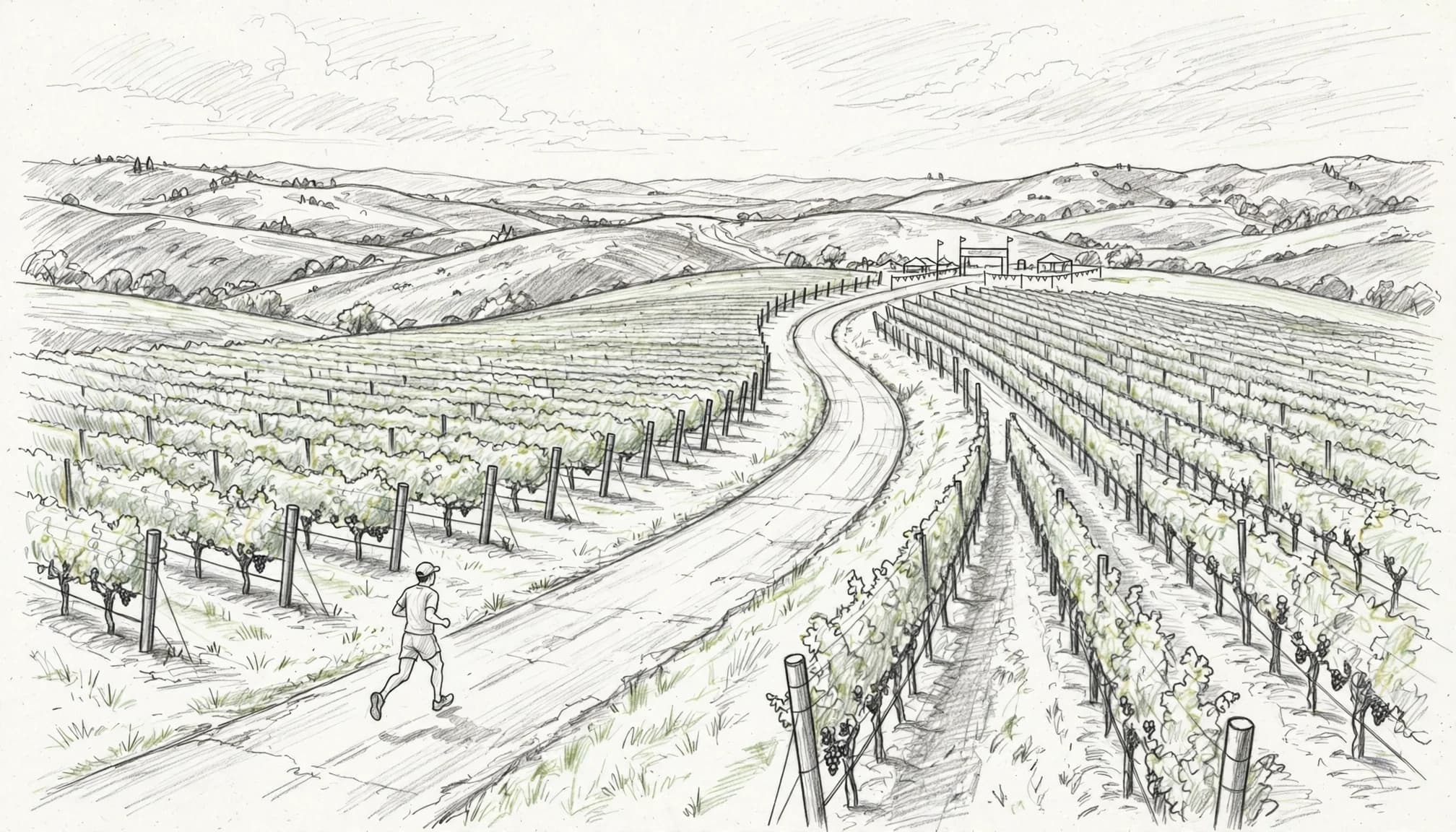
The Napa Valley Marathon feels scenic and open, with long rural-road stretches, vineyard views, and fewer distractions than a major city race. Sections of Silverado Trail add to the rural setting and keep the scenery engaging. Its point-to-point layout and net downhill profile can help your pace, but the course still rewards patience. The official race information lists a 303-foot net elevation drop, while the current map and race details should guide your final preparation.
Is the Napa Valley Course Flat Enough for a Personal Best?
The course is generally runnable, but that doesn’t mean it’s truly flat. A runnable course lets you maintain a steady rhythm despite gradual rises, dips, and changing road grades. A flat course gives you fewer elevation changes to manage. Those differences matter when your legs reach mile 20.
The net downhill profile and early rolling sections can make the opening miles feel unusually easy. You may look at your watch and see faster splits without much extra effort. However, that early speed can quietly spend the strength you need later. For a first-timer, the biggest caution is not mistaking early downhill speed for an easy course.
Before race morning, review the official course information and elevation details, then compare them with recent runner reports. Pay attention to where the course rises, where it opens into exposed roads, and whether turns interrupt your rhythm. The course can support a fast time, but only when your pacing matches the terrain.
Where the Course Tests Your Pacing and Strength
The first pressure point is often excitement. Vineyard scenery and a downhill feel can pull you into a pace that looks promising but costs too much. Start with controlled effort, even if nearby runners move faster. Your goal is to reach the halfway point feeling composed, not victorious.
Rolling hills may create less dramatic fatigue than a long climb, yet they still affect your rhythm. Turns can also break momentum, especially when you approach them late in the race with tired legs. On exposed roads, wind and direct sun may add stress that your watch cannot show.
For a time goal, use effort-based pacing rather than forcing one exact split across every mile. Hold back slightly on early descents, settle into a sustainable rhythm through the middle miles, and save enough strength for the final 10K. The net downhill course won’t feel identical for every runner, since experience, fitness, conditions, and goal time all change the right effort.
What Runners Should Know About Weather and Road Exposure
Cool morning temperatures can make the start feel comfortable, but race-day weather may change as the race progresses. Sun, wind, and limited shade can turn a manageable pace into a demanding one, especially on open rural roads. Check the forecast for race morning instead of relying on seasonal averages.
Wear light layers you can remove or discard safely if temperatures rise. Sunglasses can reduce glare, while sunscreen protects exposed skin during long stretches without shade. Hydration needs also depend on the weather, wind, sweat rate, and how long you expect to be on the course.
Weather may affect your goal pace more than the scenery does. If the day becomes warm or windy, adjust effort early rather than waiting for fatigue to force the decision. The Napa Valley Marathon rewards runners who treat conditions as part of the course, not as an afterthought.
Race-Day Logistics, Aid Stations, and Runner Support
The Napa Valley Marathon rewards runners who treat race day as part of the race itself. Transportation, bathroom timing, fueling, and the finish area plan can shape your experience as much as the course does.
The Point-to-Point Start Requires a Better Morning Plan
A point-to-point course from Calistoga requires careful planning before sunrise. Confirm the current rules for shuttles, pickup locations, parking limits, arrival deadlines, and bag drop. The organizer’s transportation and parking information should be your starting point, since routes and departure times can change between editions.
Shuttles to the start may follow a strict schedule, so check the latest departure details before race day. If you miss the shuttles, you may need another approved ride or lose access to a specific parking area. Some parking options may also depend on using the event shuttles. Don’t assume a rideshare or personal vehicle can reach the starting area once roads close.
Pack a simple warm layer for the wait, such as an old sweatshirt or lightweight jacket. Leave enough time for porta potties, last-minute fueling, and locating your assigned start area. Rushing through those steps can raise your stress before the first mile begins.
Before leaving for the start, confirm your porta potties route, gear bag instructions, and final transportation details. A few minutes of preparation can keep small problems from affecting your morning.
Choose Your Distance, Duration and Goal Time
Make three quick selections and open the exact plan built for your race target.
Looking for a Fully Personalized Training Plan?
The training plans above are an excellent choice if they match your goal. However, if you’d rather train with a plan built specifically around your current fitness, goal race, preferred training days, weekly mileage, and target finish time, our RDA Custom Training Plans provide a personalized solution. We also have running courses available for runners seeking to run faster from the mile to the marathon.
Why Choose a Custom Training Plan?
| Standard Training Plan | RDA Custom Training Plan |
|---|---|
| Follows a fixed schedule | Built around your schedule |
| Standard weekly mileage | Peak mileage customized for you |
| Fixed workout days | Train on the days you choose |
| Same structure for everyone | Designed around your current fitness |
| Static plan | Updated as your fitness improves |
| One-time purchase | Ongoing personalized coaching and support |
What You’ll Receive
- A training plan built specifically for your goal
- Personalized training paces
- Long runs, tempo runs, threshold workouts, interval sessions, recovery runs, and easy runs
- Peak weekly mileage matched to your experience level
- Flexible training schedule that fits your life
- Ongoing plan adjustments as your fitness improves
Ready to Train Smarter?
Stop guessing and start following a plan built specifically for you, your schedule, and your racing goals.
What to Expect From Aid Stations and Course Support
Study the official chart for aid stations before race day. Check which locations have water stations, sports drink, gels, or other nutrition, then build your fueling plan around that information. The current race weekend details should take priority over older race reports or advice from previous participants.
Carry familiar fuel rather than depending on an untested product on race morning. Use water stations as part of your hydration plan, but don’t expect them to replace the nutrition you have practiced. Aid stations can support your plan, but they shouldn’t be the only part of it.
Course markings, volunteers, and medical support are also worth confirming in the current runner instructions. Volunteers at aid stations can help direct you, although their exact setup may vary. Rural races often feel calmer than major city marathons, with fewer spectators and less noise along the road. That quiet can help you focus, although it may provide less emotional lift when fatigue arrives. Keep your pacing cues, split plan, and fueling reminders ready so you can stay engaged without a constant wall of cheering.
If you rely on frequent hydration, note the spacing between water stations and plan accordingly. Carry familiar fuel when needed, especially if your preferred products aren’t listed at the aid stations.
The Finish Area and Post-Race Experience
The final miles may feel sparse and solitary, then the finish line brings a sharp change in sound and energy. Confirm how the event handles medals, food, recovery space, gear bag retrieval, and medical assistance before race day. Volunteers in the finish area can help you know where to go when fatigue makes simple decisions harder.
All races finish at Vintage High School according to the current race information, but runners should still arrange a clear meeting point with family. Choose a location away from the finish line, since crowds can make phone calls and visual searches difficult. The organizer’s transportation packet also identifies post-race shuttles, and those shuttles can help you avoid an unnecessary walk after 26.2 miles.
Reserve or plan your post-race meal before the race. Choose a nearby option with easy access, allow extra time for a slow walk, and avoid relying on a restaurant that may fill quickly. A small recovery plan, including dry clothes, fluids, a retrieved gear bag, and a known ride, makes the transition from finish-line effort to the rest of your Napa weekend far easier.
Can You Run a Fast Time at the Napa Valley Marathon?
Yes, the Napa Valley Marathon can support a fast performance, but the course doesn’t hand out personal records. Its net downhill profile, rural roads, weather exposure, and quieter atmosphere reward runners who control effort from the opening mile. A fast race here comes from patience, preparation, and clean execution rather than aggressive early splits.
A Smart Pacing Plan for a Scenic Marathon
The net downhill opening can make your watch look generous. Resist the urge to bank time. Running several miles faster than planned may feel free at first, but the extra load can appear later as sore quads, poor form, or a fading stride.
Use a simple framework:
- Start controlled, even if the field surges around you.
- Settle into goal effort once the early excitement fades.
- Fuel early and regularly, before fatigue becomes obvious.
- Reassess after 20 miles, then race the final 10K with the strength you have left.
Wind, changing temperatures, and course exposure can make perfect splits unrealistic. Pace by effort when the weather interferes, then return to your target rhythm when the road allows. If the race offers pacing groups, use them as a reference rather than forcing yourself to stay attached through every rise or exposed stretch.
Base your goal on recent workouts, long runs, and a marathon pace you can hold without straining. A first-timer may benefit from setting an effort-based goal instead of chasing an aggressive finish time. Boston qualifying can be reasonable when your training supports it, but confirm the current course certification and Boston Athletic Association rules before counting on a qualifying result. The official Napa Valley Marathon information identifies the course as USATF certified and a Boston qualifier, while race details can change between editions.
Fueling and Hydration for a Rural Road Race
Practice the exact gels, chews, sports drinks, and timing you plan to use. At aid stations, volunteers can help you collect fuel and fluids, but crowded tables may slow your rhythm. Some aid stations may carry products you haven’t tested, so a familiar option from your own race plan is safer.
Plan around the water stations rather than waiting until thirst becomes urgent. The net downhill profile can make early miles feel easy, so take fuel and fluids before fatigue appears. Use the second water stations opportunity to check your effort and hydration, not to drink beyond your needs.
Your hydration needs depend on temperature, body size, pace, sweat rate, and personal tolerance. Follow the plan you tested in training, and avoid drinking beyond your needs simply because a water station is available. Small, consistent decisions usually work better than waiting until you feel depleted.
Training Adjustments for the Course and Conditions
Build long runs on paved roads and include controlled rolling hills. Steady efforts can teach you to hold form when the course changes grade, while marathon-pace segments help you recognize sustainable effort without chasing every split.
Strength work should support the muscles that absorb downhill load and stabilize your stride. Include exercises for your calves, glutes, and hips, then practice running with relaxed posture as fatigue builds. Test race-day shoes and layers during long runs, especially if the weather may shift between morning and afternoon.
Use the official elevation profile to guide your final choices. The net downhill demands can include an early descent and a rolling middle section, so prepare without turning your training into a full hill program. Your strongest advantage will come from arriving ready to run evenly when the scenery, field, and weather tempt you to change pace.
The Pros, Cons, and Overall Value of This Destination Marathon
The race offers a clear trade-off: you pay for a destination experience, not just a measured 26.2 miles. Vineyard scenery, rural roads, and a calmer field create a memorable weekend, but travel, transportation, and family expenses can quickly outweigh the registration fee.
Why Runners May Love the Napa Valley Marathon
The scenery is the race’s strongest feature. Long stretches of vineyards, open farmland, and distant hills replace grandstands and dense city blocks. That setting can make the miles feel more personal, especially for runners who prefer steady concentration over constant noise.
A smaller race atmosphere also gives you more room to settle into your pace. Spectator support is thinner than at a major city marathon, yet quiet stretches can help experienced runners stay focused. The course is USATF certified and listed as a Boston qualifier, with a reported 303-foot net downhill profile in the official race weekend information. That profile may appeal to runners pursuing a personal best, provided they manage the early downhill sections carefully.
The destination setting adds value for groups. Friends or family can turn race weekend into a shared trip with meals, winery visits, and time away from normal routines. A marathon with fewer spectators may feel less electric, but crossing the finish line in a place everyone explored together can carry more meaning than a crowded stadium finish.
The Drawbacks to Consider Before You Register
Travel planning is the biggest concern. Napa Valley has limited public transportation for race-morning access, and a point-to-point course means you must understand race-day shuttles, parking, start-line arrival times, and post-race transportation. A first-timer should review the current transportation and parking details before booking a hotel.
Prepare for the following challenges:
- Travel costs can rise quickly. Book lodging early, compare locations, and decide whether sharing a room makes sense.
- Early-morning logistics require precision. Confirm the morning shuttles, pack breakfast, and allow extra time for bathroom lines and road closures.
- Fewer spectators mean less outside energy. Bring a pacing plan, watch alerts, and familiar fuel for quiet miles.
- Changing weather can alter the race. Pack layers, check the forecast, and prepare for sun, wind, or cool conditions.
- Scenic does not mean easy. Practice controlled downhill running and rolling terrain instead of assuming the views guarantee fast splits.
Is the Race Worth the Total Weekend Cost?
Calculate more than the registration fee. Your budget may include lodging, gas or airfare, rental transportation, meals, parking, race-day transfers, recovery supplies, and sightseeing. Bringing family adds more hotel nights, restaurant meals, and activity costs, even when they make the weekend more rewarding.
For a time-focused runner, the net downhill profile may help justify the trip, but a local community marathon offers simpler logistics. A large city marathon usually provides stronger crowd support, more public transportation, and a larger expo. Depending on the current edition, the event may offer only a modest expo compared with a major city race. The event makes more sense when you want the race, scenery, and shared travel experience to matter together. Its value comes from the complete weekend, not from the entry price alone.
Who Should Run It, and How to Plan a Better Race Weekend
This race is best for runners who value scenery, personal focus, and a destination weekend more than a loud, crowded event. Your training base matters more than your experience level, especially for the full marathon. A first-timer with consistent long runs may be better prepared than an experienced runner arriving undertrained.
Best Reasons to Choose This Race
Choose this race if vineyard roads, open views, and a quieter atmosphere appeal to you. The course gives runners room to settle into a rhythm, but its net downhill profile and rolling hills reward disciplined pacing. Scenic miles can tempt you to start too quickly, so controlled effort remains essential.
A first-timer can enjoy the event with a reliable endurance base and practiced fueling. Experienced runners may appreciate the calmer setting and the chance to pursue a Boston qualifying time without major-city congestion. However, confirm the current certification and race details through the official Napa Valley Marathon information.
Half marathon participants have more flexibility because the shorter distance reduces training and recovery demands. Couples and families may also enjoy Napa as a shared trip, with the weekend combining meals, sightseeing, or time among the vineyards. Runners traveling from outside California should treat transportation and lodging as part of the race plan.
When Another Marathon May Be a Better Choice
A different marathon may suit you better if you need packed spectator support, frequent entertainment, or extensive pace groups. Large city races often provide simpler transit, larger expos, and more obvious support when fatigue arrives.
You may also prefer another event if your budget is tight. A local marathon can eliminate hotel nights, rental cars, restaurant costs, and race-weekend travel. Likewise, runners who want a highly predictable flat course should compare elevation profiles carefully instead of assuming Napa’s downhill reputation guarantees an easy personal best.
A Simple Napa Valley Marathon Planning Checklist
Use this checklist before committing your travel plans:
- Confirm the current registration date, course, cutoff, policies, qualifying standards, and deferral rules.
- Check policies for transfers, cancellations, refunds, and bib changes.
- Reserve lodging early, especially if traveling from outside California.
- Study the course map and elevation profile, then plan effort around hills, descents, and exposed roads.
- Confirm start transportation, shuttles, parking rules, road closures, and nearby porta potties.
- If using shuttles, arrive early and identify additional porta potties near the start area.
- Review aid stations and water stations, then test every gel, drink, shoe, and breakfast choice during long training runs.
- Check the weather forecast and pack warm layers for the start, plus clothing for recovery.
- Follow course instructions from volunteers and prepare a simple race day execution plan.
- Set an effort-based goal with a backup plan if the weather brings heat, wind, or fatigue.
- Arrange a post-race meal, meeting point, dry clothes, fluids, and a low-stress recovery schedule.
A well-prepared runner can enjoy Napa without chasing perfect conditions. Build the weekend around your actual goal, whether you’re a first-timer, running for a Boston qualifying time, or sharing a memorable trip with family.
Frequently Asked Questions
A few practical questions remain after reviewing the course, pacing demands, and race-day logistics. Because the organizer can change details between editions, check the current race weekend information before finalizing your plans.
Does the Napa Valley Marathon offer a half marathon?
Yes, the event typically includes both a full marathon and a half marathon. The shorter race lets travelers and newer runners experience Napa’s vineyard roads without the training and recovery demands of 26.2 miles. It can also suit a first-timer who wants a destination race with a more manageable distance.
However, the two races may use different start locations, shuttles, cutoff times, and course details. Review the current race information before choosing a hotel or planning transportation.
Can spectators follow runners along the course?
Spectators can support runners, but rural roads and traffic restrictions may limit where they can safely stop. The course doesn’t offer the same easy access as a city marathon with multiple subway stations and viewing areas.
Families should choose one or two practical meeting points instead of trying to chase the race. Confirm road closures and spectator guidance before race morning, then arrange a clear meeting location near the finish line, away from the busiest part of the chute.
What should runners wear for the Napa Valley Marathon?
Dress for a cool start that may become warmer and sunnier later. Lightweight layers work well because you can adjust after the early miles, while a cap and sunglasses can help on exposed roads.
Choose shoes and clothing you’ve already tested during long runs. Since vineyard roads offer limited shade in some sections, check the weather and prepare for wind, sun, or an unusually warm race day rather than relying on seasonal expectations.
Is there enough time to enjoy Napa after the race?
Yes, but your post-race plans should match your recovery needs. A relaxed meal, fluids, and time off your feet usually make a better first stop than a packed schedule of activities.
Wine tasting may be part of the destination appeal, yet alcohol can worsen dehydration after a marathon. Plan a flexible afternoon, reserve dinner early, and keep the day after the race open if you expect significant soreness.
What happens if race details change before race day?
Treat older race reports as background, not as final instructions. Start locations, shuttle schedules, parking rules, aid-station offerings, entry policies, and cutoff times can change between editions.
Check the organizer’s latest emails and race-week instructions during the final days before the event. Confirm registration requirements, transportation plans, and shuttles before traveling. Review where porta potties are located, then note any updated guidance about porta potties near the start area. Course support can also change, including water stations, aid stations, and volunteers in rural sections. Save key information on your phone, but also keep the address and transportation plan available offline in case cell service is unreliable.
Conclusion
The Napa Valley Marathon is a strong choice for runners who want vineyard scenery, open roads, and a quieter atmosphere than a major city event. Its point-to-point course and net downhill profile can support a fast performance, while the surrounding wine country creates a memorable destination weekend with family or friends. The setting is appealing, but the race still demands serious preparation.
The trade-offs are clear. Shuttles, parking, lodging, and post-race transportation require advance planning, while travel costs can quickly exceed the entry fee. Weather may bring sun, wind, or changing temperatures, and limited spectator support can make the later miles feel more solitary. Runners should confirm the current course, certification, and entry policies, along with transportation details and how aid stations and volunteers support the event.
The race is best for prepared first-timer runners, experienced athletes seeking a Boston qualifying opportunity, and those who value scenery over a large-race atmosphere. The vineyards may provide the backdrop, but smart pacing, practiced fueling, and steady preparation determine who reaches the finish line.


