

Napa Valley Marathon Course Guide:
Picture yourself running beneath a cool morning sky as rows of Napa Valley vines stretch across the roadside, their leaves catching the first light. The setting is beautiful, but the Napa Valley Marathon course still demands disciplined pacing, steady focus, and a smart race plan.
That balance attracts runners with different goals. You might be chasing a Boston qualifying time, lining up for your first marathon, or looking for a destination race with scenery you’ll remember long after the finish. Because the route is point-to-point, your preparation should account for more than mile splits. Terrain changes, elevation, weather, aid station spacing, transportation, and the late-race push can all shape your result.
This guide breaks down the point-to-point route, terrain, elevation profile, pacing strategy, aid stations, weather, logistics, and race-day execution. You’ll see how to approach each part of the course so you can conserve energy early and finish with control.
Race details can change, including the course, start times, road closures, and aid station locations, so confirm the latest information with the official race organizer before race weekend. First, let’s examine how the route unfolds and where runners need to manage their effort most carefully.
Build Your Running Performance System
Move from research to action with training, recovery, nutrition, pacing, and performance tools built for runners.
More Guides for This Runner Goal
Looking for where to stay for the Napa Valley Marathon? Make sure to reserve early and save money on higher prices later.
Key Takeaways
- The Napa Valley Marathon course is point-to-point, so plan transportation, warm-up timing, and post-race pickup before race morning.
- Expect a net elevation drop of about 303 feet, but avoid chasing fast splits on every downhill.
- The route’s vineyard scenery rewards patience, while the flatter closing miles provide room to increase effort.
- Use the official race information to confirm course maps, cutoff times, road closures, and aid station details.
- Start conservatively, fuel early, and save your strongest effort for the final miles.
Napa Valley Marathon Course: Route, Start, Finish, and Overall Feel
The Napa Valley Marathon course follows a traditional point-to-point route from the Calistoga area toward the City of Napa. Runners travel through vineyard country on rural roads before reaching the finish area near Vintage High School. Exact start and finish locations, road closures, cutoff times, and operating plans can change by race year, so review the official race weekend information before traveling.
What the Vineyard Setting Feels Like at Marathon Pace
The Silverado Trail gives the race its defining character. Rows of vines line the road, hills sit in the distance, and the quieter surroundings make it easier to settle into a steady rhythm. Early in the race, that rural setting can feel almost meditative. Your breathing evens out, your stride finds a pattern, and the miles begin to pass without the noise of a dense city course.
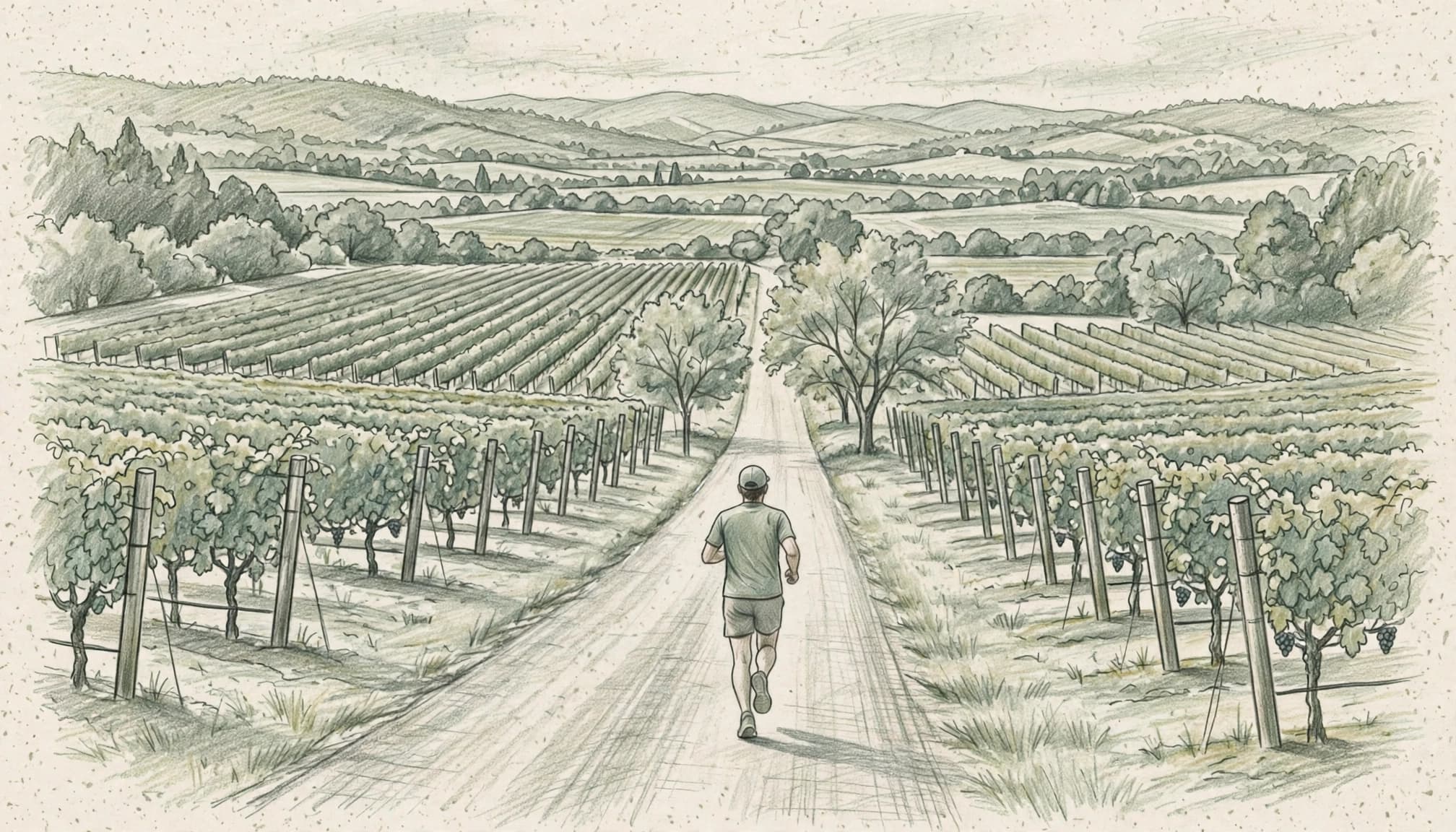
However, open scenery demands mental discipline once fatigue arrives. Long stretches may offer limited shade, especially when the sun rises higher, and the road can feel exposed during the middle miles. Keep your attention on effort, hydration, and split consistency rather than treating the vineyards as a sightseeing route.
The course is both scenic and potentially fast. Its net downhill profile can support strong times, and the race advertises the marathon as a Boston qualifier. Still, a downhill opening can punish runners who chase an aggressive pace too early. Let the terrain assist your stride without allowing it to dictate your effort.
How a Point-to-Point Marathon Changes Race Morning
Point-to-point racing changes the logistics before and after the run. You generally won’t park near the starting line, finish the marathon, and walk back to your car. Instead, plan around shuttle buses, restricted parking, early arrival, and transportation windows.
Read the race weekend instructions before leaving home. Confirm:
- Where you should park and which shuttle location serves you.
- When buses begin loading and when bib or gear checks close.
- Whether you need a drop bag and where you must leave it.
- Where post-race shuttles load and which destinations they serve.
The race’s transportation information states that buses are for runners, while the transportation map places post-race shuttle loading about 200 yards west of the finish at Vintage High School. Check the current transportation and parking details because these arrangements may change.
Allow more time than you think you need. A last-minute rideshare, improvised parking plan, or missed shuttle can create stress before the starting gun. Identify your post-race meeting area and return transportation before race morning, then arrive early enough to handle bib checks, gear drops, and the walk to the start without rushing.
How the Napa Valley Marathon Course Changes From Start to Finish
The Napa Valley Marathon course rewards runners who adjust their effort as the route unfolds. The opening feels quick, the vineyard stretch demands patience, and the final miles test your ability to hold form under fatigue. Check the official course map before race day because turns, closures, aid stations, and support points can change.
The Opening Miles: Resist the Easy-Speed Trap
The early section can feel faster than it should. A downhill sensation, race-day excitement, and crowded starting conditions often pull runners beyond their planned marathon pace. If you chase every opening split, you may spend energy that the later miles will demand.
Run by controlled effort, not adrenaline. Let the terrain help your stride, but keep your breathing calm and your cadence natural. Avoid weaving around groups unless you need clear space for safety. Constant surging wastes energy and makes it harder to settle.
Use the first miles to establish your routine. Check your breathing, relax your shoulders, confirm your cadence, and begin fueling before fatigue appears. The goal is to feel patient and capable, with enough room to respond when the course becomes more demanding.
The Middle Miles: Find Rhythm Along the Vineyards
The vineyard stretch is where steady marathon effort matters most. Repetitive scenery can make the miles blur together, while wind exposure and road camber may place extra strain on one side of your body. Rather than reacting to every small pace change, keep your effort smooth and relaxed.
Use landmarks to divide the route into manageable sections. A bend, vineyard entrance, aid station, or distant hill can give your attention a short-term target. Check your watch at sensible points, then return your focus to posture, breathing, and footstrike instead of chasing every split.
If the wind rises, protect effort rather than forcing pace. Likewise, adjust slightly if the road’s slope or camber changes your stride. The official race news page is useful for checking current event updates before you finalize your course plan.
The Closing Miles: Manage Fatigue Before the Napa Finish
By the late-course approach, accumulated fatigue changes how the route feels. Familiar scenery may give way to more turns, different surroundings, or increased spectator activity near the finish. Those changes can lift your mood, but they can also tempt you to surge too early.
Break the final miles into short targets. Take fluids when needed, keep your torso tall, and shorten your stride slightly if your legs feel heavy. A strong arm swing can help maintain rhythm without forcing your pace.
Increase effort only when the finish is close and you still have control. If your breathing has become ragged or your form is collapsing, hold your current effort first. The best finish comes from spending your remaining energy with purpose, not from making an early move you cannot sustain.
Elevation, Hills, and Road Conditions Runners Should Expect
The Napa Valley Marathon course has a net elevation drop of about 303 feet, but downhill does not automatically mean fast or easy. The official course materials show changing elevations, smaller rises, rolling sections, and extended paved-road exposure. Your best strategy is to manage effort rather than chase every favorable split.
Why Small Climbs Matter More Than the Elevation Total
A short rise may barely register early in the race. Later, however, the same incline can raise your breathing, shorten your stride, and expose tired calves. False flats can have a similar effect because the road looks level while your effort gradually increases.
Run hills by effort, not forced pace. Relax your shoulders, keep your torso tall, shorten your steps, and let your cadence stay active as the road tilts upward. Losing a few seconds on a rise costs less than turning the climb into a hard surge.
Downhills require restraint, too. A downhill course is not automatically a fast course. Overstriding to recover every lost second increases braking forces and can damage your quadriceps before the final miles. Let the slope lengthen your stride naturally, then return to goal effort once the road levels.
A small climb late in the marathon can cost more energy than a larger climb during the opening miles.
Use strength training to prepare for this demand. Step-ups, split squats, calf raises, and controlled single-leg exercises can help you handle repeated changes in slope. Include rolling routes in training, then practice settling back into marathon pace after each rise.
Choose Your Distance, Duration and Goal Time
Make three quick selections and open the exact plan built for your race target.
Looking for a Fully Personalized Training Plan?
The training plans above are an excellent choice if they match your goal. However, if you’d rather train with a plan built specifically around your current fitness, goal race, preferred training days, weekly mileage, and target finish time, our RDA Custom Training Plans provide a personalized solution. We also have running courses available for runners seeking to run faster from the mile to the marathon.
Why Choose a Custom Training Plan?
| Standard Training Plan | RDA Custom Training Plan |
|---|---|
| Follows a fixed schedule | Built around your schedule |
| Standard weekly mileage | Peak mileage customized for you |
| Fixed workout days | Train on the days you choose |
| Same structure for everyone | Designed around your current fitness |
| Static plan | Updated as your fitness improves |
| One-time purchase | Ongoing personalized coaching and support |
What You’ll Receive
- A training plan built specifically for your goal
- Personalized training paces
- Long runs, tempo runs, threshold workouts, interval sessions, recovery runs, and easy runs
- Peak weekly mileage matched to your experience level
- Flexible training schedule that fits your life
- Ongoing plan adjustments as your fitness improves
Ready to Train Smarter?
Stop guessing and start following a plan built specifically for you, your schedule, and your racing goals.
Prepare for Pavement, Camber, and Weather Exposure
Several hours on paved roads create repetitive loading, especially when the surface has cracks, patches, uneven edges, or a noticeable crown. A sloped road can also stress one side of your hips and legs more than the other. Rotate training routes when possible, and include long runs on pavement similar to the race surface.
Test your race shoes during long efforts before race day. Choose a pair that feels stable on descents and comfortable across changing surfaces, rather than selecting the lightest option by weight alone. Socks, lacing, and blister prevention deserve the same trial period.
Napa mornings may begin cool before temperatures rise under open sunlight. Wind can also change the effort across exposed vineyard roads. Check the forecast and the official race information during race week, then follow organizer updates instead of relying on seasonal averages. Dress for the start without ignoring the conditions you will face several hours later.
A Smart Pacing and Fueling Plan for Napa Valley
The Napa Valley Marathon course rewards runners who protect their energy early. Build your plan around effort, practiced fueling, and flexible adjustments rather than one rigid pace target.
Choose a Pace That Leaves You Options After Mile Twenty
Start at a pace that feels almost too controlled. Beginners should focus on relaxed breathing and a pace they can sustain for several hours. Experienced runners can use a pace band, while Boston-qualifying athletes should treat that band as a guide rather than a command.
Use this simple effort scale:
- Early miles: You should hold a controlled conversation and finish each mile feeling patient.
- Middle miles: Conversation becomes shorter, but your breathing remains steady and your stride stays relaxed.
- Late miles: After mile twenty, increase to a purposeful effort only if your form and fueling remain under control.
Check both lap pace and average pace, but don’t react to every GPS fluctuation. Turns, tree cover, crowds, and temporary signal errors can make one split look unusually fast or slow. Give your watch several minutes to settle, then judge the broader trend. A slightly conservative opening creates options later, while an aggressive first hour can turn the final miles into damage control.
Fuel Early, Then Follow a Schedule You Have Practiced
Waiting for hunger usually means you’ve already delayed your plan. Begin taking carbohydrates early, then repeat the intake at intervals you have practiced during long runs. Many runners use gels every 30 to 40 minutes, but your exact amount should match your training history and tolerance.
Carry backup fuel in case you miss an aid station or drop a gel. At each station, move toward the side you need, slow slightly, and keep moving instead of stopping abruptly. Drink according to thirst and your race plan, and include electrolytes if you have tested them successfully.
Before race week, check which gels, sports drinks, and water the current course provides. Match your training nutrition to those products when possible, or carry personal alternatives. Sports nutrition research supports planned carbohydrate intake during long endurance efforts, but you should follow the amounts your stomach has already handled, not copy a plan blindly. Marathon nutrition research offers useful background for building that approach.
Adjust the Plan for Heat, Wind, or a Tougher-Than-Expected Day
Poor conditions require an effort adjustment, not panic. If the morning turns warm or windy, slow slightly, use available shade, and keep drinking according to thirst and your practiced plan. A single slow split near a turn or exposed stretch doesn’t predict your finish.
Beginners should prioritize steady movement. Experienced runners can protect their average effort by easing briefly into wind or on an unexpected rise. Qualifying-time runners may need to accept a small early loss rather than force pace and lose several minutes late.
A modest adjustment in the opening miles can protect your legs for the finish. Keep your shoulders loose, shorten your stride on climbs, and return to your planned effort once the road levels. Your strongest race may come from surrendering a little speed early and keeping control after mile twenty.
Race-Day Logistics, Aid Stations, and Course Safety
A smooth race morning begins before you reach the start line. Because the Napa Valley Marathon course is point-to-point, confirm every transportation detail, course policy, and support location before race weekend. Use the official race information and current athlete guide for exact locations, times, cutoff rules, and event policies.
Build a Race-Morning Timeline Before You Leave Your Hotel
Work backward from your required shuttle departure or start-area arrival time. Napa Valley lodging can be spread across several towns, so your drive may take longer than expected. Confirm parking, shuttle locations, road closures, and traffic conditions the day before.
Your timeline should include enough time for:
- Eating a familiar breakfast and drinking your normal pre-race fluids.
- Using the bathroom without rushing.
- Pinning your bib to the front of your shirt or securing it to your race belt.
- Checking shoes, watch, fuel, layers, and any required gear.
- Making a final clothing decision based on the morning temperature and forecast.
- Completing a short warm-up, especially if you start in a cooler area.
- Reaching your wave or corral before it closes.
- Adding a buffer for traffic, parking lines, shuttle delays, and the walk to the start.
Keep your essentials together the night before. After you arrive, follow signs and volunteer instructions rather than improvising a shortcut. If you plan to use gear check, confirm the bag label, drop location, and pickup process before leaving your hotel.
Use Aid Stations Without Losing Your Rhythm
Review the current athlete guide to learn aid station spacing, available fluids, fueling products, and medical support points. Carry enough familiar fuel to cover longer gaps, because a missed table or changed station location can disrupt your plan.
Scan ahead for tables before you reach them. Move toward the side you need while you still have space, then slow gradually instead of stopping in the middle of the road. Signal with a hand or brief verbal cue before moving across another runner’s path. After taking a drink, continue forward before discarding the cup in the designated area.
Thank volunteers when you can, but keep watching the runners around you. Never try an unfamiliar gel, sports drink, or electrolyte product for the first time during the marathon. Use only nutrition and hydration strategies you have tested during long runs.
Know the Rules That Keep a Scenic Course Safe
Stay inside marked lanes and obey traffic-control signs, cones, barricades, and course marshals. Narrow vineyard roads leave little room for sudden moves, so hold your line and pass only when you have clear space. Follow volunteer directions even when the route looks familiar.
Headphones that block surrounding sounds may be prohibited or restricted. Keep enough awareness to hear vehicles, instructions, cyclists, and runners approaching from behind. Road conditions, vehicle access, weather, and emergency needs can force course changes after the published map appears.
Before race morning, confirm:
- Registration deadlines and packet-pickup requirements.
- Shuttle departure times, parking locations, and road closures.
- Wave, corral, restroom, and gear-check procedures.
- Medical aid locations and how to request help.
- Cutoff times and emergency instructions.
- Spectator access, meeting points, and the finish-area exit plan.
If you feel injured, confused, overheated, or unsafe, alert a marshal or medical volunteer immediately. A fast response starts with a clear signal, so don’t wait until a minor problem becomes a race-ending emergency.
How to Train for This Napa Valley Marathon Route
Training for the Napa Valley marathon course should mirror its main demands: rolling roads, extended downhills, open vineyard stretches, and a late-race push. Build your preparation around long runs, controlled marathon-pace work, moderate hills, downhill conditioning, strength training, and recovery.
Practice Marathon Pace on Rolling or Open Roads
Include sustained marathon-pace blocks on roads that resemble the course. Start with 2 to 3 miles at marathon pace during a long run, then progress toward 6 to 10 miles as your fitness improves. A controlled finish, such as the final 20 to 30 minutes at steady effort, also rehearses the shift from comfortable running to focused late-race work.
Keep effort steady when pace changes slightly. Ease into rises instead of forcing your target split, then allow pace to return naturally on the other side. In wind, turns, or exposed sections, protect breathing and posture rather than chasing every GPS fluctuation. First-time marathoners should prioritize relaxed control. Experienced runners can add progression finishes or longer pace blocks after recovery weeks.
Strengthen the Muscles That Absorb Downhills
Downhill running places repeated stress on the quadriceps, calves, hamstrings, and stabilizing muscles. Twice weekly, use controlled split squats, step-downs, calf raises, hamstring bridges or curls, and core exercises such as dead bugs or side planks. Strength training can support running economy, and research reviewed in strength training studies for distance runners supports its place in a well-planned program.
Keep these sessions short enough to support your running. Avoid heavy lifting or high-volume leg work before a long run or marathon-pace workout. Add gentle downhill running gradually, beginning with a few relaxed slopes before attempting longer descents. A sudden increase in steep downhill volume can leave your legs sore for days.
Rehearse the Mental Game for Long Vineyard Stretches
Quiet roads can feel longer when fatigue arrives. Divide the course into sections, then focus only on the next landmark, mile marker, or aid station. Use process cues such as “tall posture,” “quick feet,” and “relaxed hands” whenever your concentration slips.
During long runs, practice the same shoes, clothing, fueling, and morning routine you plan to use on race day. When an emotional dip appears late, return attention to the next aid station and complete one practical task: drink, fuel, check posture, and settle your breathing. A simple progression might include a moderate hill long run, a marathon-pace workout on rolling roads, then a controlled-finish long run after adequate recovery. Adjust the sequence to your experience, schedule, and coaching guidance.
Common Mistakes That Can Ruin a Strong Napa Valley Marathon
The Napa Valley marathon course rewards preparation more than last-minute ambition. Small decisions during race week can protect your legs, while rushed choices can turn a promising race into damage control.
Mistakes to Avoid in the Final Week
Don’t cram extra mileage into the final week. Added distance cannot build meaningful fitness before race day, but it can leave your muscles tired or sore. Keep your taper familiar, with light runs, easy movement, and enough recovery.
Avoid testing new workouts, shoes, gels, or supplements. A hard session may disrupt your legs, while unfamiliar gear can cause blisters or stomach trouble. Use the same products and routine you trusted during training.
Your meals should stay normal, too. Radically changing your diet, overeating carbohydrates, or trying unfamiliar restaurant food can upset digestion. Eat familiar meals, drink normally, and prioritize consistent sleep.
Long sightseeing walks create another hidden problem. Napa Valley invites exploration, but hours on your feet can drain your legs before the starting line. Choose short, easy movement instead, then prepare your race essentials early.
Before bedtime, place your bib, tested shoes, socks, clothing, fuel, watch, and transportation details together. Confirm the official race weekend information because schedules and policies can change.
A Quick Checklist for a Calm Start and Strong Finish
Use this short checklist during the final 24 to 48 hours:
- Confirm the current course map, start location, shuttle plan, and parking instructions.
- Check the weather, then choose layers that match the forecast and your normal race routine.
- Review cutoff rules, especially the published six-hour marathon limit.
- Verify aid station supplies, including available fluids and sports drink.
- Write down your fueling schedule and carry enough familiar nutrition.
- Pack your bib, shoes, clothing, fuel, phone, and any required gear.
- Plan post-race transportation before leaving for the start.
A few common errors deserve special attention. Starting too quickly or treating the downhill opening as free speed can overload your legs early. Hold controlled effort instead. Skipping early fuel can leave you chasing energy later, so begin with the schedule practiced in training.
Untested shoes may cause blisters, while ignoring heat or wind can push effort beyond plan. Wear proven footwear and adjust pace for conditions. Arriving late for transportation adds stress or may leave you stranded, so build a time buffer. Finally, GPS watches can misread turns and open roads. Use them as a guide, not as the sole authority over effort.
Calm preparation leaves more attention for the vineyards, your breathing, and the goal ahead. When race morning feels organized, you can enjoy the scenery without losing sight of a strong finish.
Frequently Asked Questions
The Napa Valley Marathon course looks straightforward on paper, but race-day details still matter. Use these answers to refine your plan, then confirm all final information in the official race weekend guide, since course layouts, transportation, and policies can change.
Is the Napa Valley Marathon course flat?
The current official elevation profile shows a generally runnable route with a net downhill, not a perfectly flat course. You should still expect changes in grade, smaller rises, rolling sections, and downhill stretches that can affect your legs and pace.
Review the latest course map and elevation profile before race day. Treat the Napa Valley marathon course as a route with favorable elevation overall, then pace each section by effort instead of assuming every mile will produce an even split.
Where does the Napa Valley Marathon start and finish?
The race typically follows a point-to-point route from the Calistoga area toward Napa, with the finish near Vintage High School. However, runners should confirm the current start and finish locations through the official race materials for their race year.
Because you won’t necessarily finish where you parked, transportation needs attention. Check shuttle times, parking instructions, post-race pickup points, and any road closures before race morning.
Is this course a good choice for a first marathon?
It can be an excellent first marathon for a runner who has completed consistent long-run training and feels comfortable on open roads. The scenic vineyard setting and runnable profile create a welcoming backdrop, while the point-to-point format adds practical planning demands.
First-time marathoners should prepare for cool early weather, possible temperature changes, and the mental challenge of holding pace late in the race. If you can manage transportation and stay patient through the opening miles, the course offers a reasonable setting for a strong debut.
What should runners wear for a Napa Valley spring race?
Early temperatures can feel cool, especially before the race begins, but conditions may warm as you move through exposed vineyard roads. Wear removable layers such as arm sleeves, gloves, or a lightweight outer layer, and use shoes and socks tested during long runs.
Check the current forecast during race week rather than relying on seasonal averages. Wind, sunshine, rain, and unusual warmth can change the best clothing choice.
Can runners qualify for Boston on this course?
A runner may pursue a Boston qualifying time if the course is officially certified for the relevant race year. The official race information identifies the marathon as a Boston qualifier, but qualification still depends on your age group, the current Boston standard, and your verified finish time.
Confirm the course certification and current Boston qualifying standards before making Napa your only qualification attempt. Build a pacing plan that protects your late-race strength, not just your opening splits.
How early should runners arrive on race morning?
Your arrival time depends on shuttle schedules, parking, packet pickup rules, bag drop, bathroom lines, and the start procedure. Follow the current athlete guide and allow a generous buffer rather than arriving just before the gun.
Point-to-point races leave less room for improvisation. Have your breakfast, bib, clothing, fuel, and transportation plan ready the night before, then arrive early enough to handle delays without rushing.
Conclusion
The Napa Valley Marathon course rewards runners who respect its pacing demands. Its net downhill profile can help, but only when you control the opening miles, protect your legs through the vineyard roads, and save energy for the finish. A successful race also depends on preparing for a point-to-point morning, practicing your fueling plan, and adjusting to changes in weather, wind, and terrain.
Use the current official course map and race guide as your final authority for transportation, aid stations, cutoffs, and course details. Then train with a clear plan and a realistic goal that matches your experience. With steady effort, familiar nutrition, and patient pacing, you can move through the vineyards with confidence and reach the Napa finish knowing you managed the course rather than letting it manage you.


