

MPH to Pace Calculator: Convert Speed to Running Pace
So, you’re looking at your treadmill speed and wondering what that means for your outdoor runs, or maybe you’ve got a race goal and need to figure out what pace to aim for. That’s where a good mph to pace calculator comes in handy. It takes the guesswork out of converting between different ways of measuring how fast you’re going. Whether you’re training indoors or planning your strategy for race day, these tools can be super helpful for making sure your efforts line up.
Key Takeaways
- A pace calculator helps you convert between speed (like mph) and pace (minutes per mile or kilometer), which is useful for both treadmill running and outdoor race planning.
- These calculators can also predict finish times for various distances based on your target pace or recent performances.
- Estimating your target pace often involves using past race results and formulas like the Riegel formula to predict performance over longer distances.
- Remember that external factors like weather, terrain, altitude, hydration, and even course crowding can significantly affect your actual running pace on race day.
- Use a mph to pace calculator as a guide to set realistic goals and plan your strategy, but always be prepared to adjust your pace based on how you feel and the conditions you encounter.
Understanding Pace Calculators
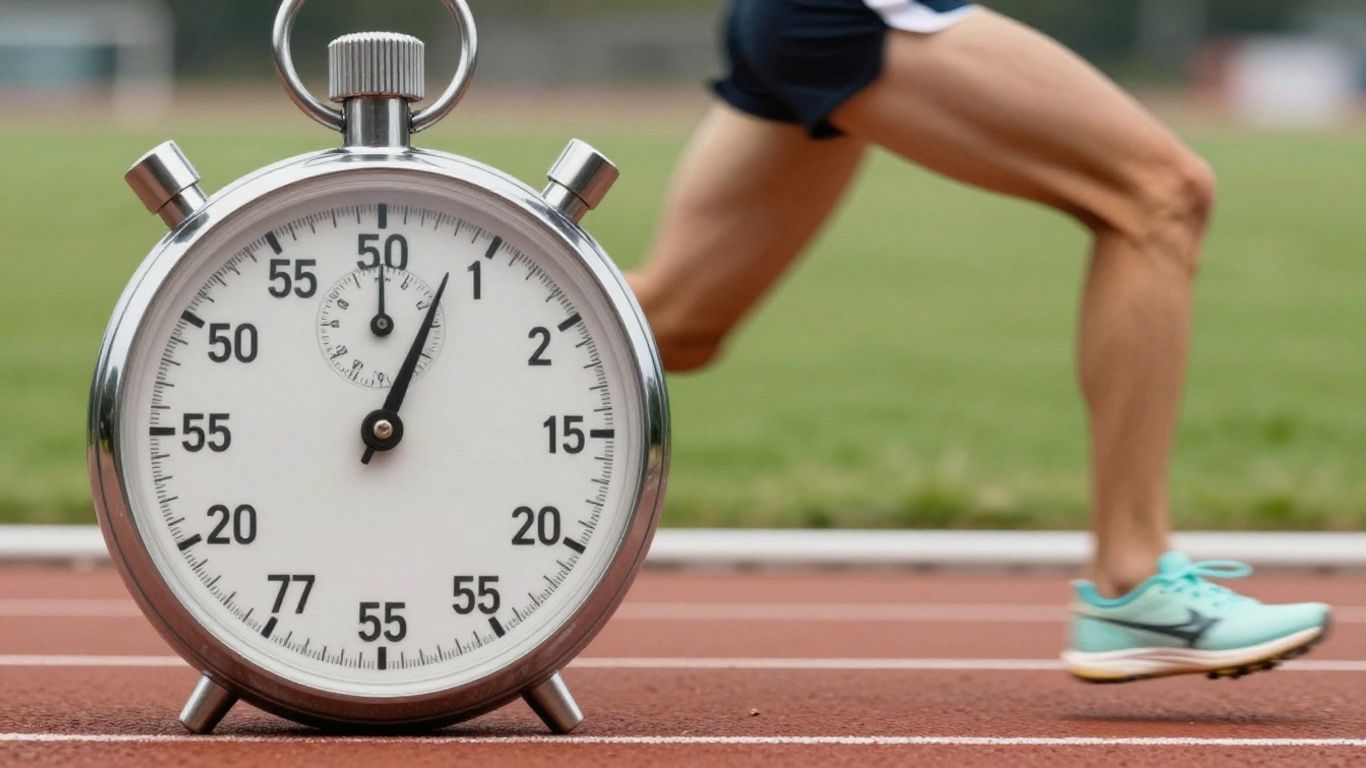
So, what exactly is a pace calculator and why should you even bother with one? Think of it as your running buddy who’s really good at math. It’s a tool that helps you figure out how fast you need to run to hit a specific finish time over a certain distance. It takes the guesswork out of your training and race day strategy.
What a Pace Calculator Does
At its core, a pace calculator connects three key things: speed, time, and distance. You plug in two, and it spits out the third. For example, you can tell it you want to run a 10K in 50 minutes, and it will tell you that you need to hold a pace of 5:00 per kilometer (or about 8:03 per mile). Or, you can input your current fitness level, like being able to run a mile in 7 minutes, and it can estimate your finish time for a marathon. It’s super handy for planning out your training runs and setting realistic goals.
Build Your Running Performance System
Move from research to action with training, recovery, nutrition, pacing, and performance tools built for runners.
More Guides for This Runner Goal
Converting Speed to Pace
This is where things can get a little confusing if you’re not used to it. Most runners think in terms of pace – how many minutes it takes to cover a mile or a kilometer. But sometimes, especially on treadmills or in certain training plans, you might see speed expressed in kilometers per hour (km/h) or miles per hour (mph). A pace calculator bridges this gap. It can take a speed, like 12 km/h, and tell you that’s equivalent to a 5:00 min/km pace. This conversion is important because a small difference in speed, when multiplied over many miles or kilometers, can add up to a big difference in your finish time.
The Role of Pace Calculators in Training
Using a pace calculator isn’t just for race day planning. It plays a big part in your training too. It helps you:
- Set specific training paces: Instead of just running ‘hard’ or ‘easy’, you can aim for a precise pace for tempo runs or interval sessions.
- Gauge your fitness: By seeing what pace you can sustain for different distances, you get a clear picture of your current running fitness.
- Plan long runs: You can figure out what pace to aim for on your long, slow runs to build endurance without burning yourself out.
- Track progress: As you get fitter, you can use the calculator to see how your target paces for various distances get faster over time.
Remember, a pace calculator is a tool, not a magic wand. It gives you the numbers, but you still have to do the work to hit those paces. It also doesn’t account for things like hills, weather, or how you feel on the day, so always use it as a guide and be prepared to adjust.
Here’s a quick look at how pace and speed relate:
| Pace (min/km) | Speed (km/h) |
|---|---|
| 4:00 | 15.0 |
| 5:00 | 12.0 |
| 6:00 | 10.0 |
| 7:00 | 8.57 |
| 8:00 | 7.5 |
Key Features of Pace Calculators
Pace calculators are pretty neat tools for runners, whether you’re just starting out or you’ve been hitting the pavement for years. They take the guesswork out of planning your runs and races. Let’s look at what makes them so handy.
Instant Pace and Speed Conversion
This is probably the most basic, yet most important, function. You punch in a speed, like "I want to run 6 miles per hour," and bam, it tells you that’s a 10:00 minute per mile pace. Or, you can go the other way: "I’m aiming for a 9:00 minute per mile pace," and it’ll show you the equivalent speed in miles per hour or kilometers per hour. This is super useful for setting your treadmill speed or just understanding what a certain pace actually feels like.
Setting Target Times and Paces
Most calculators let you set a specific goal. You can either input a target finish time for a certain distance (like "I want to run a half marathon in under 2 hours") or a target pace you want to maintain (like "I want to run every mile at 9:30"). The calculator then does the math for you, showing you what pace you need to hit that time, or what your finish time will be if you hold that pace. It’s like having a coach in your pocket, telling you exactly what you need to do.
Viewing Finish Times Across Distances
This feature is great for seeing the bigger picture. You can input a pace or speed, and the calculator will show you what your estimated finish times would be for a whole range of common race distances. Think 5Ks, 10Ks, half marathons, marathons, and even longer stuff like 50-milers or 100-milers. It helps you get a feel for how different paces translate across various race lengths.
Split Planning and Strategy
For longer races, just knowing your overall goal pace isn’t always enough. This is where split planning comes in. A good calculator can break down your race into smaller segments (like mile splits or kilometer splits) and tell you what pace to aim for in each one. Some even let you plan different types of splits, like:
- Even Splits: Aiming for the same pace for every segment.
- Negative Splits: Running the second half of the race faster than the first.
- Positive Splits: Running the first half faster than the second (usually not ideal, but sometimes happens!).
This helps you strategize and avoid going out too fast or too slow. It’s a really practical way to think about race execution.
While calculators are fantastic for planning, remember they’re based on ideal conditions. Factors like hills, weather, and how you feel on the day can and will affect your actual pace. Use the calculator as a guide, not a rigid rulebook.
Estimating Your Target Pace
So, you’ve got a race on the horizon, or maybe you’re just trying to get a better handle on your training runs. Figuring out what pace to aim for can feel a bit like guesswork sometimes, right? It doesn’t have to be. Your target pace should be rooted in your actual running history, not just wishful thinking. Let’s break down how to get a realistic number.
Using Recent Race Performances
If you’ve run a race recently, especially a shorter one like a 5K or 10K, that’s your best starting point. Think about how those runs felt. Did you push hard? Did you feel like you could have gone a little longer? Your performance in these shorter, often faster, events gives us a solid clue about your current fitness. Even a well-executed tempo run or a long, steady run where you held a consistent effort can provide valuable data.
The Riegel Formula Explained
Ever wonder how race predictors on websites seem to know what you might run for a marathon based on your 5K time? Often, they’re using something called the Riegel formula. This isn’t some magic spell; it’s a mathematical model that takes into account how running performance naturally drops off as the distance gets longer. It understands that you can’t just double your 5K pace for a 10K, and certainly not for a half-marathon. It helps predict a realistic pace for longer distances based on your shorter, faster efforts.
Here’s a simplified look at how it works conceptually:
- Shorter Distance Performance: Your time for a 5K or 10K.
- Distance Factor: The formula applies a multiplier that increases with distance.
- Predicted Pace: This results in a slower, more sustainable pace for longer races.
Essentially, it acknowledges that fatigue is a real thing and your body can only handle so much for so long. It’s a smart way to set a goal that’s challenging but achievable.
Realistic Goal Setting
Once you have an idea of what pace the numbers suggest, it’s time to get real with yourself. Look at that projected pace and think about your training. Does it feel right? Can you sustain that effort for the duration of your race? It’s easy to get excited and aim for something super fast, but if your training hasn’t supported it, you’ll likely hit a wall. Use a pace calculator or chart to see what your goal time looks like at that pace. Adjust your expectations based on what you know you can do today, not what you hope you can do on race day. It’s better to start a little conservatively and finish strong than to go out too fast and fade dramatically.
Factors Influencing Running Pace
Even with the best-laid pacing plans, a lot of things can throw a wrench in your carefully calculated splits. It’s not just about the numbers on your watch; the world around you and how your body feels play a huge role.
Weather Conditions
Weather is probably the biggest wildcard. Hot and humid conditions can make you feel like you’re running through molasses, even if you’re holding the same pace. Your body has to work harder to cool itself down, which saps energy. Wind is another big one – running into a headwind feels like a constant battle, while a tailwind can give you a nice boost, but you can’t always count on it. Rain can make things slippery and just generally unpleasant, affecting your stride and focus.
Terrain and Altitude
Where you run matters too. Hills are the obvious culprit for slowing you down. Uphill sections demand more effort, and even downhill stretches can be tricky. It’s easy to pick up too much speed downhill, which can be hard on your joints and might not even save you time if you have to brake or adjust your form. If you’re used to perfectly flat roads, a hilly course will feel significantly harder at the same pace. Altitude is another factor. The higher you go, the less oxygen is available. This means your muscles don’t get as much O2, and your usual paces will feel tougher. It’s totally normal to run a bit slower at elevation if you haven’t had time to adjust.
Hydration and Fueling
Don’t underestimate the power of what you put into your body. Dehydration is a sneaky pace killer. Even being a little bit thirsty can increase your heart rate and make the effort feel harder. Running out of energy, or ‘bonking,’ is also a major reason why paces fade, especially in longer races. Your body needs fuel to keep going. Making sure you’re drinking enough water and taking in some carbs (like gels or chews) during your run can make a big difference in maintaining your speed.
Course Layout and Crowding
Sometimes, the course itself can mess with your pace, especially at the start. If the starting line is super crowded, or there are a lot of sharp turns and narrow sections, you’ll inevitably have to slow down or weave around people. This costs energy and breaks your rhythm. While these early delays often sort themselves out as the course opens up, it’s important not to try and make up that lost time by sprinting ahead. Staying calm and sticking to your planned effort is key, even if your watch shows you’re ‘behind’ for the first few miles.
The key takeaway is that your pace calculator is a fantastic tool for planning, but race day is a dynamic event. Be prepared to adjust based on how you feel and the conditions you encounter. Trying to stick rigidly to a pace when everything else is screaming ‘slow down!’ is a recipe for disaster. Listen to your body and the environment.
Measuring and Understanding Pace
So, you’ve got your target time, maybe you’ve even used a calculator to figure out the pace you need. But what does that pace actually mean? It’s not just a number; it’s how fast you’re moving, and understanding the different ways it’s measured is pretty important, especially when you’re trying to compare your outdoor runs to that treadmill session.
Minutes Per Mile vs. Minutes Per Kilometer
This is probably the most common point of confusion for runners, especially if you switch between different training environments or follow plans from different regions. In the US and other places that use the imperial system, pace is usually talked about in minutes per mile (min/mile). Over in Europe and many other parts of the world, it’s minutes per kilometer (min/km). Because a mile is longer than a kilometer, your pace number will always look slower when expressed in min/mile compared to min/km for the same speed. For example, running a 5:00 min/km pace is pretty quick, right? That’s the same as about an 8:03 min/mile pace. See? The number jumps up.
Here’s a quick look at how they stack up:
| Pace (min/km) | Pace (min/mile) |
|---|---|
| 4:00 | 6:26 |
| 5:00 | 8:03 |
| 6:00 | 9:39 |
| 7:00 | 11:16 |
Speed in Kilometers Per Hour
Sometimes, especially on treadmills or in certain training plans, you’ll see speed measured in kilometers per hour (km/h) or miles per hour (mph). This is the inverse of pace. Instead of asking ‘how long does it take to cover a distance?’, it asks ‘how far can you cover in an hour?’. So, a faster pace means a higher km/h or mph number. Most pace calculators can easily convert between these speed units and your preferred pace units, which is super handy for keeping your indoor and outdoor training consistent.
The Compounding Effect of Pace Errors
This is where things can get a bit tricky if you’re not careful. Even small differences in your pace can add up significantly over the course of a run, especially a longer one. Think about it: losing just 10 seconds per kilometer on a 10K race means you’re 100 seconds (almost two minutes!) slower than planned. Over a marathon, those seconds become minutes, and those minutes can mean the difference between hitting your goal and feeling completely spent. It’s why starting too fast, even by a little bit, is such a common mistake. That initial burst of speed feels great, but the cost later on can be huge.
The key takeaway here is that consistency is king. While it’s tempting to go out hard, especially at the start of a race, understanding how pace accumulates helps you appreciate the value of a steady effort. Small, controlled adjustments are almost always better than big, reactive surges.
It’s easy to get caught up in the numbers, but remember that these are just tools. Your body’s feedback is just as important, if not more so, when it comes to managing your pace on race day.
Utilizing Pace Calculators Effectively
So you’ve got your target time, you’ve figured out the pace needed, and you’ve even looked at the weather forecast. Now what? A pace calculator is a great tool, but it’s not a magic wand. It gives you the numbers, but you still have to run the race. Think of it as your GPS for running – it shows you the route and the speed limit, but you’re the one driving.
Adjusting Pace on Race Day
Race day is rarely exactly like your training runs. That calculator gave you a nice, steady pace, right? Well, sometimes you have to be flexible. If the weather is hotter than you expected, or if the course has more hills than you remembered, you might need to ease up a bit. Don’t be afraid to deviate from the calculated pace if your body or the conditions tell you to. It’s better to finish a little slower than to blow up halfway through because you were too stubborn to adjust.
- Listen to your body: Are you feeling unusually tired? Is your heart rate higher than it should be for this effort? Back off slightly.
- Observe the conditions: Is it windy? Is it raining? Is the course unexpectedly crowded?
- Check your watch: Are your splits consistently faster or slower than planned? Make small, conscious adjustments.
Internal Cues for Pace Management
While your watch is helpful, relying solely on it can be a mistake. You need to develop a feel for your pace. This comes with practice. Try to notice how different paces feel. What does your breathing sound like? How heavy are your legs? Over time, you’ll get better at knowing if you’re running too fast or too slow without even looking at your watch.
Using Calculators as a Guide, Not a Rule
Ultimately, that pace calculator is a guide. It’s a fantastic tool for setting goals and understanding the effort required. It helps you break down a big race into manageable chunks. But remember, it’s based on averages and ideal conditions. Your actual race will have its own unique challenges and triumphs. Use the numbers to inform your strategy, but be prepared to adapt based on how you feel and what the race day throws at you. It’s about finding that sweet spot between sticking to your plan and being smart enough to change it when needed.
Wrapping It Up
So, after looking at these pace calculators, it’s pretty clear they’re handy tools for runners. Whether you’re trying to figure out treadmill speeds or just want to know what pace you need for that upcoming race, these apps and charts take a lot of the guesswork out. They help turn big goals into manageable steps, giving you a target to aim for mile after mile. Just remember, these are guides, not gospel. Things like weather or how you’re feeling on the day can change things, so it’s always good to have a bit of flexibility built into your plan. But for getting a solid idea of what you need to do, these calculators are definitely worth checking out.
Frequently Asked Questions
What exactly does a pace calculator do for runners?
A pace calculator is like a helpful tool that connects speed, time, and distance for runners. It helps you figure out how fast you need to run each mile or kilometer to reach your race goal. You can use it to see what pace you need for a certain finish time, or to convert the speed you see on a treadmill into a pace you can use outdoors. It takes the guesswork out of planning your runs and races.
How can I figure out what pace to aim for in a race?
To estimate your target pace, look at your recent running performances. If you’ve done well in shorter races like a 5K or 10K, or had strong tempo runs, those times can give you a good idea. Many calculators use a formula (like the Riegel formula) that predicts how your pace might change for longer distances. It’s about setting a realistic goal based on what you’ve already achieved.
What’s the difference between minutes per mile and minutes per kilometer?
These are just two different ways to measure how fast you’re running. Minutes per mile (min/mile) is common in places like the US and uses miles, which are longer than kilometers. So, the numbers for min/mile pace will look slower. Minutes per kilometer (min/km) is used more in Europe and other parts of the world. It measures how many minutes it takes to run one kilometer. Calculators can easily switch between these for you.
Can weather or hills really change my running pace that much?
Yes, definitely! Things like hot weather, strong winds, or running uphill can all make you slow down without you even trying. Hills naturally make you go slower, and heat can make you feel more tired. Even crowded starting lines or rough trails can affect your speed. A good pace calculator helps you plan, but you also need to be ready to adjust on race day based on how things feel and the conditions.
Why is it important to break down my race into smaller parts (splits)?
Breaking your race into smaller parts, called splits, helps you stay on track. Instead of just thinking about the whole race, you focus on hitting certain times at specific distances. This makes a long race feel more manageable. It’s like having mini-goals along the way. If you fall a little behind, you know you can try to pick it up gently later, rather than trying to make up a lot of time all at once, which can lead to burning out.
Are the finish times calculators give me always exact?
The finish times you get from a calculator are really good estimates, but they aren’t guarantees. They work best when the race distance is similar to distances you’ve trained for. Real-world things like unexpected heat, a tough hill you didn’t expect, or feeling more tired than usual can all affect your actual finish time. So, use the calculator as a smart guide, but always be prepared to listen to your body on race day.


