

Montreal Marathon Start Time: Wave Times, Corrals & When to Arrive
When does the Montreal Marathon start, and how early should you arrive? The answer depends on the race distance, event year, assigned wave, and the official instructions sent to runners. For the Beneva Montreal Marathon, the published schedule is the authority, so don’t rely on last year’s start time or a social media post when planning your morning.
A smooth race morning takes more than knowing when the gun goes off. You also need enough time to reach the venue, find your corral, check your gear, warm up, and account for transportation delays, restroom lines, and bag-drop crowds. Arriving late can place you behind your assigned wave or leave you rushing through the final steps before the start.
This guide explains where to confirm the current Montreal Marathon start time, how wave schedules work, and which race-morning timing mistakes can disrupt your pacing plan. It begins with the official schedule, then builds a practical plan for getting to the start line ready to run. Remember, reserve your Montreal Marathon hotels in advance so you save money.
Key Takeaways
- The Montreal Marathon start time depends on the race distance, event year, and assigned wave, so check the current official weekend program.
- For the 2027 edition, the marathon and half marathon were scheduled to start at 7:45 a.m., but organizers noted that times could change.
- Plan to arrive early enough to reach your corral, use the restroom, check gear, and warm up without rushing.
- Build extra time into your morning for traffic, transit delays, bag drop, and crowded entrances.
- Treat your race email and official event updates as the final authority before leaving for the start.
Montreal Marathon Start Time: When Does the Race Begin?
The clearest answer is that the Montreal Marathon start time depends on the event year and your race distance. The official 2026 runner guide listed the marathon and half marathon at 7:45 a.m., while the 2027 event is scheduled for October 9 to 11, but its final race-morning times still need confirmation.
| Event | Published start time | Wave or corral details | Source date |
|---|---|---|---|
| Marathon | 7:45 a.m. | Assigned waves or corrals may release runners in stages | 2026 runner guide |
| Half marathon | 7:45 a.m. | Follow the corral listed in your runner materials | 2027 runner guide |
| 10K, 5K, and other events | Not confirmed here | Separate start times and corrals may apply | Confirm the current year |
Check the official Montreal Marathon website and the current Montreal Marathon runner’s guide before making travel plans. Your registration email, bib pickup materials, and official event updates should settle any remaining questions.
Why Start Times Can Change From One Montreal Marathon to the Next
Race organizers build the schedule around more than the starting line. Road closures must give runners a safe course while allowing Montreal streets to reopen on time. Sunrise affects visibility and setup, while weather can influence medical coverage, hydration stations, and other race operations.
Police and transit agencies also need a workable plan for intersections, buses, metro access, and crowd movement. A larger field may require more corrals or staggered releases. Separate distances create additional timing decisions, especially when marathoners, half marathoners, 10K runners, and shorter races share parts of the event village or course.
Elite runners may receive an earlier or separate start so they can race without congestion. Organizers can also move corrals, bag drop, meeting points, or the event village from one edition to the next. Those changes affect when you should arrive, even if the advertised gun time stays the same.
An older blog post may describe a previous course layout. A social media comment may refer to one runner’s wave, while a search snippet may show outdated information. For 2026, the event dates are published, but don’t treat a historical 7:45 a.m. listing as final until the current guide confirms it.
Use the runner guide for your specific edition as the final authority, especially during race week.
The Difference Between Gun Time, Chip Time, and Wave Start Time
Gun time is the official clock time when the race begins. If the first marathon wave starts at 7:45 a.m., the race clock starts then, even if you cross the line later.
Chip time, also called net time, measures your actual elapsed time from when you cross the timing mat to when you finish. This time usually gives you the fairest measure of personal pacing when the starting area is crowded.
Your wave start time is the planned release time for your assigned group. You may stand in the corral several minutes after the first wave begins, then cross the start mat once your wave moves forward.
That difference matters when you plan a pace, meet family, or compare results. For personal goals, use chip time to judge your race. For official records, awards, or qualifying standards, check the event’s rules because some categories use gun time. The Montreal FAQ also lists time limits tied to road reopening, so confirm those limits before race morning through the official race FAQ.
How to Plan Your Montreal Marathon Morning Around the Start
Your Montreal Marathon start time is only one point on the morning timeline. Work backward from your assigned wave, then allow enough time for transportation, walking, bag drop, bathroom lines, and corral entry. The goal is to reach your corral calm and ready, not simply arrive at the event village before the advertised gun time.
How Early Should You Arrive at the Start Line?
For a first-time runner, arriving 90 to 120 minutes before the assigned wave gives you useful breathing room. Experienced runners staying near the venue may need less, while anyone checking a bag, taking unfamiliar transit, or traveling from outside central Montreal should allow more.
Your deadline is corral entry, not arrival at the event village. Check the current runner guide for your assigned corral and cutoff, then plan to be inside it before that time. A crowded entrance, delayed train, long restroom line, or slow walk from transportation can consume 20 minutes quickly.
Build your schedule backward like this:
- Set your corral entry time as the fixed point.
- Add 15 to 25 minutes for walking from the metro, hotel shuttle, parking area, or drop-off point.
- Add time for bag check, restroom use, bib adjustments, and a short warm-up.
- Work backward again for breakfast, hydration, dressing, and your wake-up routine.
- Add a final 15 to 30-minute buffer for delays.
For example, if your wave begins at 7:45 a.m. and organizers require you in the corral by 7:25, you might reach the start area around 6:35. Wake at 5:15, eat by 5:30, drink gradually, and leave your hotel around 6:05. A runner in a later wave may shift this schedule, but should still protect time for crowded facilities and changing access routes.
During the final 30 minutes, keep the routine simple:
- Use the restroom one last time, even if the line takes patience.
- Drop your bag according to the event’s instructions and keep only approved essentials.
- Check your bib, shoes, watch, fuel, and clothing before entering the corral.
- Jog lightly or perform dynamic movements if space allows.
- Reach your assigned corral before its cutoff, then settle into your wave.
What to Eat, Drink, and Wear Before the Gun Goes Off
Eat the breakfast you practiced during long training runs. A familiar meal with easy-to-digest carbohydrates, such as oatmeal, toast, a banana, or a plain bagel, usually works better than a large restaurant breakfast before an early start. Finish it about two to three hours before your wave, then use a small carbohydrate snack if hunger returns while you wait.
Your body needs fluids, but flooding your stomach creates bathroom problems and can leave you uncomfortable in the corral. Sip moderately after waking and follow the hydration routine you tested in training. Marathon nutrition guidance also emphasizes planning fluid intake before the race rather than drinking randomly at the last minute.
Wear clothing for the temperature you will experience while waiting, not only for the warmer conditions later in the race. Choose removable layers, a hat, and sunscreen when the forecast calls for them. Store extra clothing or discard it only where event rules allow; never leave garments across the course or inside a corral.
Avoid new gels, supplements, heavy meals, and large amounts of water on race morning. Your best Montreal Marathon preparation should feel familiar, measured, and boring enough to trust.
Getting to the Montreal Marathon Start Line Without Missing Your Wave
Race morning in Montreal depends on more than the published Montreal Marathon start time. Your hotel, transportation route, bag-check location, and assigned corral all affect when you need to leave. A route that looks simple at midnight can become slow once streets close and thousands of runners reach the same stations.
Check the current Montreal Marathon plan-your-visit information close to race day. Transit routes, station access, road closures, and start-area instructions can change between editions.
What to Check Before Choosing a Hotel or Parking Plan
Before booking a room, locate the start line, gear-check area, and runner entrance on the current event map. A hotel may appear close on a map, yet closed streets can force you onto a long detour. Barricades, police-controlled intersections, construction, and restricted bridge or downtown access can turn a short walk into a 30-minute trip.
Breakfast access matters, too. Ask whether the hotel opens its dining room early enough, offers grab-and-go food, or allows you to store a simple breakfast in your room. Then check the first available metro or bus service, the walk from the station, and your transportation option after the finish. You may finish far from your hotel, and tired legs make a long return journey feel much longer.
Public transit is often easier than driving into a race zone, but crowded stations can slow even a reliable route. Add extra time for platform queues, packed trains, station exits, and the walk around barriers. Save the route on your phone, download an offline map, and carry your bib details and registration confirmation in case staff need to direct you.
Race-morning parking deserves caution. Don’t assume a downtown garage will be open or reachable because it operates normally on other days. Use a car only if the event specifically confirms available lots, entrance roads, opening times, and post-race access. Otherwise, choose transit, a permitted drop-off point, or a hotel with a practical backup route.
Finding Your Bib Pickup, Gear Check, and Starting Corral
The usual sequence is simple: pick up your bib at the expo, confirm your race details, prepare your bag tag, then arrive at the start area early enough to check gear and reach your corral. Exact expo, gear-check, and start locations belong to the current Montreal Marathon runner’s guide, not to an older course map.
Your bib number identifies your registration and may determine where you collect your race materials. Your pace estimate can place you in a particular corral letter or wave. At the start, timing mats record when you cross the line, so entering the correct corral helps keep the field organized and protects your pacing plan.
Attach the bag tag exactly as instructed, and confirm which items the event accepts. Some races restrict loose bags or require a clear bag. If your bib, corral letter, gear-check location, or bag-tag process raises a question, ask at the expo or help desk. Solving it there is far easier than searching for answers in a crowded start area minutes before your wave.
What Happens After the Montreal Marathon Starts? Waves, Pacing, and Course Timing
The Montreal Marathon start is often less dramatic than runners expect. Your wave may move forward gradually, and the opening miles can feel more like controlled crowd management than an open-road time trial. Use the first kilometers to settle your breathing, protect your legs, and let the course widen before you chase pace.
Marathoners and runners in other distances may share parts of the event facilities or city streets without starting at the same time. Follow your assigned corral and wave rather than assuming another race’s schedule applies to you. Your bib, runner guide, and official race updates determine where you belong.
How to Pace the First Miles When the Course Is Crowded
A small delay early in the race usually costs less than starting too fast. Stay relaxed, accept a few crowded minutes, and avoid weaving through runners to gain every lost second. Sudden accelerations raise your effort and waste energy before the marathon has properly begun.
Run by effort first, especially during the opening miles. Your breathing should feel controlled, your stride should remain smooth, and your pace should gradually settle near your planned marathon effort. If you have a time goal, use a pace band and watch alerts as references, but don’t force the exact number while runners are still packed together.
Course markers can confirm your progress when your watch becomes unreliable. Tall buildings, turns, bridges, and groups of runners can cause GPS devices to record extra distance or fluctuate in pace. GPS errors can increase measured race distance, so compare your watch with official kilometer or mile markers instead of reacting to every instant reading.
Chip time gives you a fair personal reference if you cross the start after the first wave. Don’t chase the first visible clock unless you know whether it shows gun time, elapsed race time, or a split. First-time marathoners should focus on steady effort, while experienced runners targeting a qualifying standard should protect their planned pace without making up seconds through aggressive surges.
How Start Time Affects Weather, Fueling, and Your Finish
Your assigned start hour shapes the conditions you face later. An earlier wave may begin in cool air and low light, while a later wave could encounter more sun, rising temperatures, or increased humidity. Montreal’s fall weather can change quickly, so prepare for a range of conditions without treating any forecast as guaranteed.
Those differences affect fluid needs and fueling. A later start may shift your breakfast timing, and warmer conditions may increase how often you drink at aid stations. Follow the intake plan you practiced during long runs, taking gels or other carbohydrates at planned intervals rather than waiting until fatigue appears.
Before race morning, identify which aid stations fit your strategy and carry enough fuel to cover any gap between them. Take fluids in manageable amounts, especially when the weather feels cool and thirst stays muted. Your finish depends more on consistent effort and regular fueling than on gaining a few seconds in the first mile.
Common Montreal Marathon Start-Time Mistakes and How to Avoid Them
A correct Montreal Marathon start time helps only when the rest of your morning supports it. Small oversights, such as missing a bib or misreading your wave, can create stress before the race begins. Use the current official Runner’s Guide before bed, then follow a simple plan that protects your time and energy.
A Simple Night-Before Checklist for Every Distance
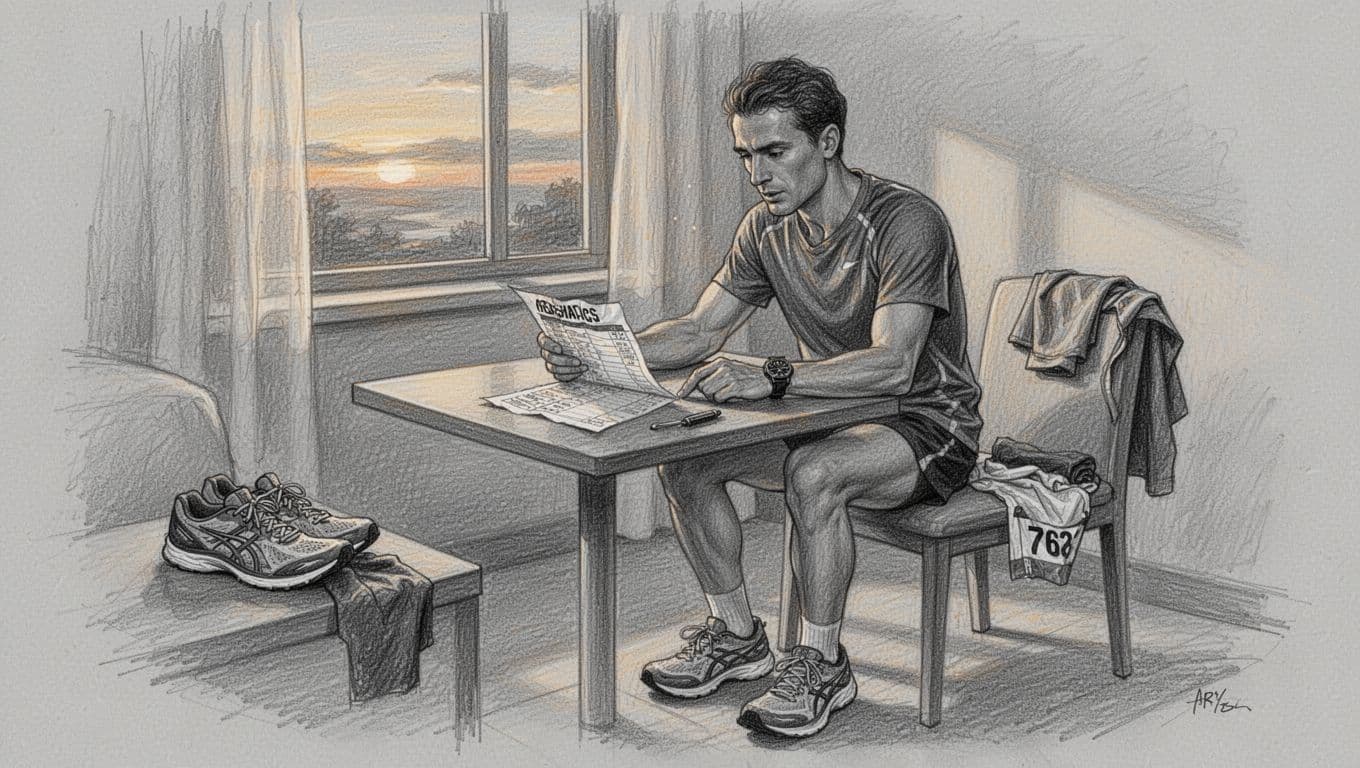
Relying on last year’s schedule is an easy mistake. Start times, corrals, bag-drop rules, and transit instructions can change, so review the official schedule and your runner email before you go to sleep. Then place everything in one visible location, preferably beside the hotel door.
Use this night-before list:
- Put your bib and pins together, and confirm that the bib matches your registered distance.
- Pack identification, registration details, and any required documents.
- Set out your tested shoes, race socks, and clothing for the forecast.
- Add weather layers, such as a light jacket, gloves, hat, or throwaway layer.
- Prepare your fuel, including gels or chews you have already used in training.
- Pack a water bottle only if the event rules allow it.
- Charge your watch and phone, then place both beside your gear.
- Check your transit plan, walking route, station access, and backup option.
- Confirm your hotel breakfast plan. Store familiar food in your room if breakfast service starts too late.
- Set at least one alarm, then place your phone where you must stand up to turn it off.
Leaving breakfast until the last minute can force you to choose between eating properly and reaching your corral. Give yourself enough time for a familiar meal, bathroom use, and travel without rushing.
What to Do If You Are Running Late
Arriving at the event village is not the same as reaching your assigned corral. Road closures, crowded entrances, bag-check lines, and a long walk can use your remaining minutes quickly. Ignoring the closure plan or starting your watch at the wrong moment only adds confusion.
If you’re late, stay calm and take these steps:
- Contact event staff or a clearly marked information point as soon as possible.
- Follow the official entry instructions for your distance and assigned corral.
- Ask whether you can join a later approved wave if you missed yours.
- Enter a closed corral or course only with permission from race officials.
- Start your watch when you cross the official timing mat, not when the first gun sounds.
Only race officials can decide whether a late runner may move to another wave. Don’t chase gun time when chip time is the relevant measure for your personal result. The event’s official FAQ also lists course time limits, so review those rules before race morning.
Safety and event procedures come before saving a few minutes. A controlled late start is far better than an unsafe rush through traffic, barricades, or a crowded starting area.
Race-morning checklist: bib, ID, shoes, socks, clothing, layers, fuel, approved water bottle, watch, phone, breakfast, alarms, transit plan, correct corral, and official schedule.
Choose Your Distance, Duration and Goal Time
Make three quick selections and open the exact plan built for your race target.
Looking for a Fully Personalized Training Plan?
The training plans above are an excellent choice if they match your goal. However, if you’d rather train with a plan built specifically around your current fitness, goal race, preferred training days, weekly mileage, and target finish time, our RDA Custom Training Plans provide a personalized solution. We also have running courses available for runners seeking to run faster from the mile to the marathon.
Why Choose a Custom Training Plan?
| Standard Training Plan | RDA Custom Training Plan |
|---|---|
| Follows a fixed schedule | Built around your schedule |
| Standard weekly mileage | Peak mileage customized for you |
| Fixed workout days | Train on the days you choose |
| Same structure for everyone | Designed around your current fitness |
| Static plan | Updated as your fitness improves |
| One-time purchase | Ongoing personalized coaching and support |
What You’ll Receive
- A training plan built specifically for your goal
- Personalized training paces
- Long runs, tempo runs, threshold workouts, interval sessions, recovery runs, and easy runs
- Peak weekly mileage matched to your experience level
- Flexible training schedule that fits your life
- Ongoing plan adjustments as your fitness improves
Ready to Train Smarter?
Stop guessing and start following a plan built specifically for you, your schedule, and your racing goals.
Frequently Asked Questions
Race morning becomes easier when you separate the published gun time from your personal schedule. Use the official information for your edition, then build enough room for travel, restroom lines, gear check, and corral entry.
What time does the Montreal Marathon start?
The published Montreal Marathon start time depends on the specific edition and distance. Organizers can adjust the schedule, so don’t treat a previous year’s time as current. Check the official Montreal Marathon runner’s guide and weekend schedule for the confirmed start time before planning your trip.
Does the Montreal Marathon use staggered starts?
Large road races often release runners in waves or corrals to reduce congestion at the starting line. As a result, the first gun time may not match the moment you cross the start mat. Follow the wave printed on your bib or shown in your registration information, even if another runner receives a different start assignment.
What time should I arrive at the Montreal Marathon?
Arrive early enough to handle transportation, restroom lines, gear check, warm-up, and entry into your corral before your assigned wave closes. Your target should be reaching the correct corral with time to spare, not merely reaching the event village before the first gun. First-time runners and anyone traveling from outside central Montreal should add more time for unfamiliar routes, crowded transit, and walking around road closures.
Where can I find the official Montreal Marathon start time?
Use the sources closest to the event, in this order:
- The official marathon website and current weekend schedule.
- The latest runner guide for your registered distance.
- Your registration email and race-week updates.
- Bib pickup materials and instructions from the expo.
- Verified announcements from the event’s official channels.
The Montreal Marathon weekend program can show the current event timetable, while third-party race calendars may carry outdated information. Check again during race week because organizers can update access points, corrals, or start procedures.
Is the half marathon start time the same as the full marathon?
Don’t assume the half marathon and full marathon begin together. Different distances often have separate start times, corrals, or routes, even when runners share part of the event village. The schedule can change each year, so confirm the time attached to your own registration and distance.
What happens if I miss my assigned start wave?
Speak with race staff as soon as you reach the start area, then follow the event’s official late-arrival or wave-change policy. Staff may direct you to another approved corral, ask you to wait, or explain that no alternative is available. Never enter a different wave without permission, because crowd-control and safety rules can limit where late runners go.
Conclusion
The Montreal Marathon start time depends on the official schedule for your race year, distance, and assigned wave. Verify those details through the runner’s guide, registration email, and official updates shortly before race day. A historical 7:45 a.m. start may offer context, but it should never replace the current event information.
Plan backward from your corral cutoff, allowing time for transportation, walking, restroom lines, gear check, and a calm warm-up. Prepare your bib, clothing, shoes, fuel, and breakfast the night before, then use a controlled pace through the opening miles. A smooth start isn’t about sprinting to the line, it gives your training plan room to work when the marathon gets difficult.


