

Montreal Marathon Road Closures: Closed Roads, Times & Transit Options
On marathon morning, Montreal’s streets take on a different rhythm: runners fill major avenues, volunteers line the course, and traffic must give way to the race. For drivers, residents, visitors, runners, and spectators, a familiar trip can take much longer once barricades and detours spread across the city.
The details behind Montreal marathon road closures change with the race year and course. Closure times, affected streets, parking restrictions, bus routes, and metro connections may differ, so check the latest official race and city information before leaving home. A route that looks open on an older map may be restricted on race day, while transit service may run on modified schedules.
This guide will help you plan a practical way through Montreal, whether you need to cross the course, reach the starting area, meet a runner, or arrive at the finish. First, review how the course affects traffic and when the main road closures are expected. Remember, make sure to book your Montreal marathon hotels early to save.
Key Takeaways
- Montreal marathon road closures can affect major streets, bridges, parking, and neighborhood access for several hours.
- Check the current race map and closure schedule before leaving, since routes and reopening times change each year.
- Public transit is usually more practical than driving across the course; review the official visitor transit guidance in advance.
- Leave extra time for detours around Saint-Laurent Boulevard, Saint-Joseph Boulevard, Sherbrooke Street, and Parc Maisonneuve.
- Expect traffic delays even beyond barricades, especially during peak race activity, as local coverage of marathon closures shows.
Montreal Marathon Road Closures: What Drivers and Runners Need to Know
Montreal marathon road closures can affect more than the lanes used by runners. Barricades, police controls, parking restrictions, blocked intersections, and detours may change how entire neighborhoods connect on race day. The exact course and schedule can also change each year, so an older route or social media post may no longer be accurate.
Which parts of Montreal are usually affected?
Impacts often appear along downtown streets, waterfront roads, the Old Port, major parkways, bridges, and neighborhoods linked to the course. Streets near the start and finish areas may close before the first runners arrive, while other roads become restricted as the race moves through the city.
Connected intersections can create delays several blocks away. A road may remain open for local traffic but still become difficult to use because drivers cannot cross the marathon route. Parking restrictions can also begin before race morning, especially near the course, aid stations, staging areas, and finish zone.
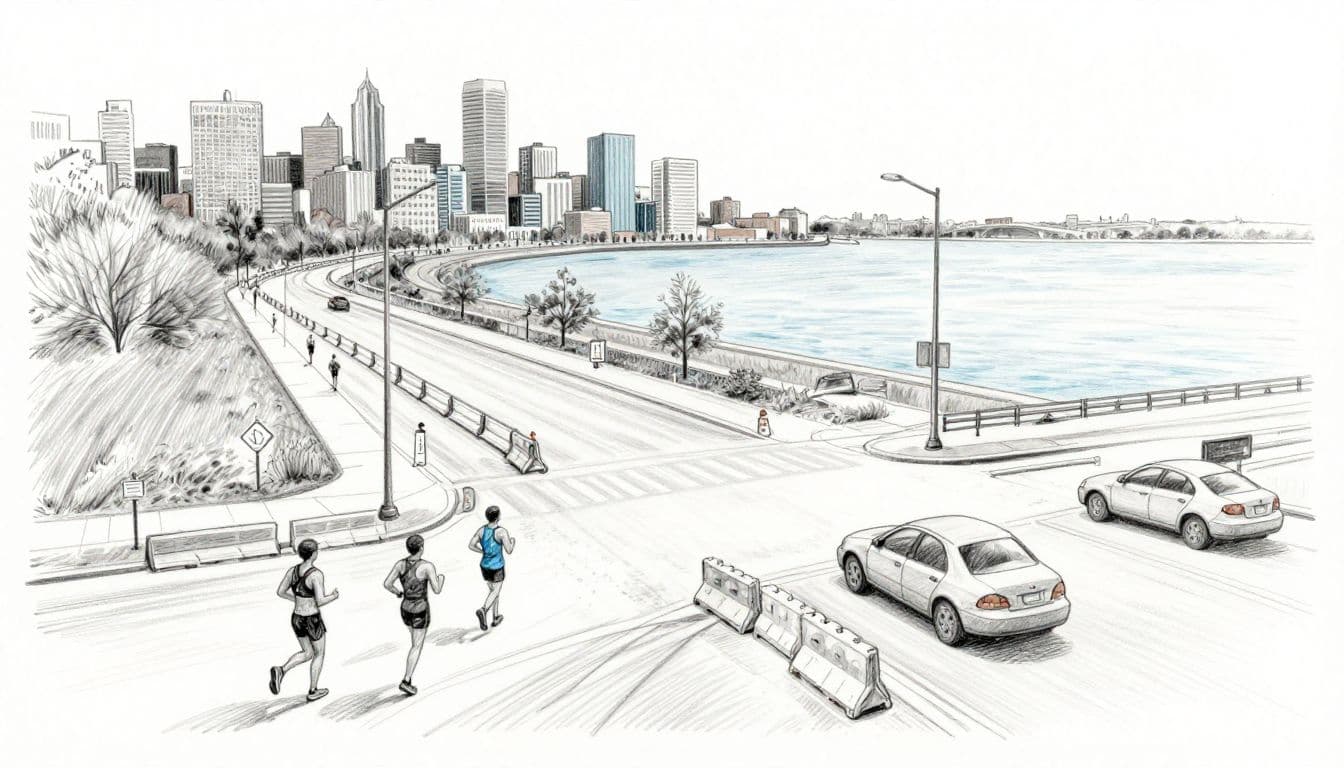
Use the current year’s official route map to confirm named streets, start and finish locations, and closure windows. The race website should be your first stop, followed by updates from the City of Montreal, Mobilité Montréal, SPVM, and STM.
Full closures, rolling closures, and local access
A full closure blocks vehicles from entering a street or crossing an intersection. These restrictions protect runners and volunteers before the race begins and during the busiest sections.
A rolling closure moves with the race. Police officers, course marshals, and race staff restrict traffic as runners approach, then reopen streets after the final participants and support vehicles pass. Reopening may happen in stages, rather than all at once.
Local access means residents, deliveries, or emergency vehicles may receive limited entry under staff direction. That permission can change quickly if runners reach the area, so drivers should follow police instructions instead of relying on a familiar shortcut.
A street can be technically open yet practically unusable when nearby intersections are blocked.
For drivers, the safest plan is to avoid crossing the course whenever possible. For runners and spectators, check the map close to race day and allow extra time for roads that reopen gradually. Current notices matter more than last year’s route, especially when you need to reach the start, meet a runner, or leave the finish area.
The Montreal Marathon Closure Schedule Changes Throughout Race Day
Montreal marathon road closures begin before the first runner reaches the starting line and end after the final course equipment leaves the street. Setup crews, safety teams, runners, aid stations, and cleanup vehicles all need room to work, so published closure times are planning windows, not guarantees.
The official Marathon Beneva runner’s guide includes the current event details, including start information and links to the street closure schedule. Check it close to race day, then build extra time into every trip.
What happens before the race starts?
Several hours before the start, crews may place barricades, cones, fencing, signs, timing equipment, and aid-station supplies along the route. Road sweeping can also happen before runners arrive, which explains why a street may close while it still looks empty.
No-parking restrictions often begin earlier than vehicle closures. Move your car before the posted deadline, because enforcement crews may need a clear curb for barriers, emergency access, race vehicles, or runner support. A delivery truck that normally stops outside a business may also face restricted access during setup.
Security checks add another layer. Police and event staff control access around the start area, while volunteers direct runners into staging zones and race waves. Even if you aren’t running, expect slower access near the start because officials must keep pedestrians, vehicles, and participants separated.
A useful race-day timeline looks like this:
- Before dawn: crews sweep roads, install barriers, and clear no-parking areas.
- Early morning: runners arrive, security controls increase, and start-area streets become harder to cross.
- Race start: closures expand or move as each wave enters the course.
- Mid-race: aid stations, medical points, and support vehicles can keep sections restricted.
- After the last participants: crews remove equipment and reopen streets in stages.
When do roads reopen?
Reopening usually follows the course rather than one citywide switch. A section may reopen after the final runner passes, while another remains closed for slower participants, police controls, aid-station removal, or timing equipment.
Cleanup can also delay access. Staff must collect cups, fencing, cones, signs, and other materials without placing workers in moving traffic. As a result, the scheduled finish time doesn’t tell you exactly when every street will be usable.
Treat every published reopening time as a target window. Safety and cleanup needs can extend the closure.
Before driving, review the latest Montreal marathon visit information and any live updates from the race organizer, City of Montreal, SPVM, or STM. If you must cross the route, allow a generous buffer and avoid assuming that one reopened intersection means the whole corridor is clear.
How Road Closures Affect Drivers, Residents, and Visitors
Montreal marathon road closures can disrupt ordinary trips well beyond the marked race route. Parking bans, blocked intersections, crowded detours, and changing access points affect anyone who lives, works, stays, or travels near the course.
Parking bans and cars left on the route
Temporary no-parking signs may appear several days before the marathon. Read every sign on your block, including the posted hours, affected dates, towing instructions, and any changes to loading zones. A familiar curb may become unavailable for race equipment, emergency access, aid stations, or cleanup crews.
Move your vehicle before the posted deadline, not when the street closure begins. Cars left on the route can be ticketed or towed, and nearby streets may have limited space once other residents begin moving their vehicles. Businesses should also check whether regular loading areas remain available.
Parking rules depend on the exact location and sign. Review the City’s Montreal street parking rules, then use current city information for towing locations and temporary restrictions. Never rely on an old photo, last year’s race map, or a neighbor’s assumption.
Best ways to cross the city by car
Plan a route around the marathon zone, rather than trying to drive through it. Use this process before race morning:
- Mark the race corridor, start area, and finish area on your map.
- Check bridge access, highway connections, and major detour routes.
- Identify neighborhood entry points on both sides of the course.
- Save a backup route that avoids the same crossings and intersections.
- Leave early, then allow extra time for congestion beyond the barricades.
Bridges and highway ramps can carry heavier traffic when central streets close. Neighborhood entrances may also become crowded, especially when drivers search for the first available crossing. No detour is guaranteed unless current City of Montreal or police information confirms it.
Keep your navigation app updated, but treat its directions as a guide rather than an instruction. GPS data can lag behind moving barricades, temporary one-way changes, and police-controlled intersections. Follow traffic-control staff and police officers, even when an app recommends another turn.
If you need to reach a hospital, medical appointment, airport connection, or other time-sensitive destination, leave a much larger buffer and confirm the best access point in advance. Contact the facility when necessary, since its usual entrance may sit inside the closure area.
Advice for hotels, businesses, and deliveries
Hotels should tell guests about closure windows before arrival and provide walking directions from the nearest open transit stop. Staff should know which entrances remain accessible and where taxis or rideshare vehicles can safely pick up passengers.
Businesses can reduce confusion by sharing closure details with employees, customers, couriers, and suppliers. Move deliveries outside the busiest race period, confirm alternate loading points, and avoid promising curb access that city restrictions may remove.
Taxis and rideshare users should choose a pickup location outside the race corridor when possible. A short walk to an open street can save more time than waiting beside a barricade. Meanwhile, couriers should call ahead, follow staff directions, and expect delays even after the runners have passed.
Public Transit, Walking, and Biking During the Montreal Marathon
Public transit, walking, and biking can make race-day travel easier than driving, but none is completely separate from the Montreal marathon road closures. Buses may detour, metro stations may become crowded, and a short walk can turn into a slow trip around barricades. Check the full route before leaving, including how you will reach the first stop and finish the journey at the other end.
Using the Metro when surface streets are closed
The metro may be more reliable than a bus for some cross-city trips because trains avoid street-level closures, blocked intersections, and traffic congestion. If the marathon cuts across your usual bus route, STM vehicles may take detours, skip temporary stops, or arrive later than scheduled. A metro trip can provide a steadier central connection, especially when you need to travel across several neighborhoods.
Still, the metro isn’t automatically unaffected. A station entrance may close near the course, and a transfer station may become crowded as more people leave their cars behind. Once you exit, barricades can force a longer walk or prevent you from crossing the street where you normally would.
Use the STM trip-planning and mobile app tools to check the entire journey on race day. Review service alerts, planned bus changes, station access, transfer points, and the walking route at both ends. The best route on the transit map may be difficult once you reach a fenced-off intersection.
Walking and biking across the course
Walking often works well for short trips near the marathon, but expect delays even when your destination is only a few blocks away. Race staff may hold pedestrians while runners pass, and police or course marshals may direct people toward a different crossing point.
Use marked pedestrian crossings and follow marshal instructions. Never step onto the race course, even when there appears to be a gap between runners. A lead vehicle, cyclist, medical team, or later runner may arrive quickly.
Cyclists should also check for temporary bike-lane restrictions. Barricades, fencing, aid stations, and crowds can narrow routes or require you to walk your bike. Choose a crossing away from the busiest race areas, lock your bicycle in a legal location, and allow more time than the distance suggests.
Accessibility and family travel
A route that looks simple on a map can become difficult for wheelchair users, people with limited mobility, families with strollers, or travelers carrying luggage. Before departure, confirm elevator access, accessible station entrances, curb conditions, crossing locations, and alternative drop-off points. The STM bus service updates can help you check current changes before heading out.
Crowds may block curb cuts, while barriers can create narrow turns or uneven detours. Families should plan extra time for children, strollers, bathroom stops, and noise near the course. If you use rideshare, arrange pickup outside the closure zone and confirm a location with enough space to enter and exit safely.
A Smarter Race-Day Plan for Runners and Spectators
Race morning rewards simple decisions. Runners need a calm route to the start, while supporters need a meeting plan that still works when Montreal marathon road closures divide familiar streets.
How runners can reach the start before access changes
Read the latest Marathon Beneva Runner’s Guide before race weekend. Confirm your start wave, corral entrance, bib pickup deadline, bag-check rules, warm-up areas, and transportation instructions. Your bib determines your corral, so keep it accessible and check that your assigned wave matches the race schedule.
Arrive early enough to handle bathroom lines, security checks, bag drop, and a gradual warm-up. Reaching the area before access tightens gives you time to settle your breathing instead of spending your first race miles recovering from a rushed arrival.
Use the metro or walk from a stop outside the busiest closure zone when possible. Avoid a last-minute rideshare drop-off beside the start. Drivers may face barricades, one-way changes, or police-controlled intersections, and the closest legal drop-off point may still leave you with a long walk.
Pack only what you need. A practical race-morning kit usually includes:
- Your bib, timing device, race shoes, and any familiar nutrition.
- A light layer for the wait before the start, especially in cool or wet weather.
- A small bag for approved gear check, if you plan to use it.
- A phone, identification, payment method, and a simple route home.
Save a backup route before leaving home. If one station entrance, bus stop, or street crossing closes, you should already know your next option.
Where spectators should meet runners after the finish
The finish chute can be crowded, fenced, and difficult to enter or leave. Runners may need medical support, food, water, bag pickup, or space to walk before they can meet anyone. Instead of waiting beside the finish line, choose a precise location outside restricted zones, such as a nearby metro entrance, public square, or clearly identified cafe.
Share the meeting point before the race, along with both phone numbers. Cell service may weaken in dense crowds, and a runner’s battery may die after tracking the course. Set a fallback time and location if messages stop arriving.
Spectators should choose viewing spots reachable by transit or on foot. Chasing the race by car often means circling barricades, missing the runner, and adding congestion to already crowded streets. After the finish, bring water, familiar food, warm clothing, and a straightforward route home. A runner who has spent their final miles protecting pace needs recovery support, not another complicated trip.
How to Check Live Montreal Marathon Traffic and Closure Updates
Montreal marathon road closures can change while you are already on the way. Build a simple source-checking routine before race day, then repeat it before every important trip.
The official sources to trust first
Start with the Marathon Beneva organizer for the current course map, runner instructions, start areas, participant access, and race-day procedures. Compare the map with your home address, workplace, hotel, or appointment. Look for streets you must cross, nearby parking restrictions, and the closest open transit entrance.
Next, check the City of Montreal for temporary parking bans, towing information, detours, and municipal road notices. Mobilité Montréal can add broader traffic information, including congestion, construction, and major detour conditions around the course.
The SPVM is the best source for police-controlled intersections, safety restrictions, and urgent traffic changes. Follow its current updates when conditions change, particularly around busy crossings, bridges, and start or finish areas.
For buses, metro access, service alerts, and station conditions, check STM shortly before departure. A metro line may continue operating while a bus route detours or a station entrance closes near the race.
Save each relevant page to your phone. Turn on alerts where the platform allows them, and keep notifications enabled through race morning. The organizer’s Montreal visit and transportation information can help you connect the event map with your travel plan.
Check information at three points:
- Several days before the event, review the course, closure windows, parking rules, and transit plan.
- The night before, check for revised schedules, weather-related changes, and new police or city notices.
- Before leaving, refresh every source and compare the route with live conditions.
What to do when information conflicts
Favor the most recent official update, not the most detailed-looking map. Check the publication date, update time, and event year before trusting any notice. An old article may describe last year’s course, while a user comment may reflect a temporary condition that has already changed.
If the race website lists one reopening time but police direct traffic elsewhere, follow the police or course marshal. Live conditions can override an earlier schedule when weather, crowd movement, medical incidents, or safety concerns affect the route.
Treat every closure time as a planning estimate. On-site officials have authority over the road in front of you.
User comments, screenshots, and unverified navigation maps can help you spot a concern, but they shouldn’t decide your route. Confirm the information through the organizer, city, SPVM, Mobilité Montréal, or STM before moving.
Choose Your Distance, Duration and Goal Time
Make three quick selections and open the exact plan built for your race target.
Looking for a Fully Personalized Training Plan?
The training plans above are an excellent choice if they match your goal. However, if you’d rather train with a plan built specifically around your current fitness, goal race, preferred training days, weekly mileage, and target finish time, our RDA Custom Training Plans provide a personalized solution. We also have running courses available for runners seeking to run faster from the mile to the marathon.
Why Choose a Custom Training Plan?
| Standard Training Plan | RDA Custom Training Plan |
|---|---|
| Follows a fixed schedule | Built around your schedule |
| Standard weekly mileage | Peak mileage customized for you |
| Fixed workout days | Train on the days you choose |
| Same structure for everyone | Designed around your current fitness |
| Static plan | Updated as your fitness improves |
| One-time purchase | Ongoing personalized coaching and support |
What You’ll Receive
- A training plan built specifically for your goal
- Personalized training paces
- Long runs, tempo runs, threshold workouts, interval sessions, recovery runs, and easy runs
- Peak weekly mileage matched to your experience level
- Flexible training schedule that fits your life
- Ongoing plan adjustments as your fitness improves
Ready to Train Smarter?
Stop guessing and start following a plan built specifically for you, your schedule, and your racing goals.
Common Mistakes That Make Marathon Traffic Worse
Most race-day problems come from rushed decisions. Check the current course map, closure schedule, and transit updates before you leave, then give yourself enough time to follow the legal route. Montreal marathon road closures can extend beyond the race lane, especially near Saint-Laurent Boulevard, Saint-Joseph Boulevard, and Parc Maisonneuve, as local marathon closure coverage illustrates.
Mistakes drivers should avoid
A last-minute trip through the course can turn a short drive into a dangerous standoff with barricades, runners, and police officers. Avoid these common errors:
- Don’t assume your familiar route is open. Check the current race map before starting, even if you use the same street every day.
- Never make an illegal U-turn when a closure blocks your lane. Continue to the next legal turn or follow the marked detour.
- Don’t block an intersection while waiting for traffic to move. Keep crossings clear for pedestrians, emergency vehicles, and race staff.
- Avoid stopping in bus lanes, bike lanes, or loading areas. These spaces may carry diverted transit or provide access for emergency crews.
- Never move, drive around, or ignore a barricade. A gap in the barrier doesn’t mean officials have opened the road.
- Don’t drive close to the finish line unless current event instructions confirm vehicle access. Crowds, fencing, and post-race activity can make the area nearly impassable.
Patience protects everyone on the street. Follow police directions over GPS instructions, reduce your speed near crowds, and accept that a longer detour is safer than a risky maneuver.
Mistakes runners and spectators should avoid
Arriving late creates pressure before the race even begins. Runners should allow time for transit delays, security checks, bag drop, bathroom lines, and the walk to the correct corral. Spectators also need time to reach a viewing spot without crossing restricted streets.
Choose a meeting place that is easy to identify and outside the finish chute. A specific metro entrance, public square, or street corner works better than “near the finish.” Carry only necessary gear, since large bags become tiring and awkward in dense crowds.
Before leaving, save a backup transit route and a second meeting point. Also, never cross the course wherever a gap appears. Use marked crossings and wait for marshals to signal that it is safe.
Use this quick check the evening before and again that morning:
- Confirm the current course map, closure times, and transit alerts.
- Move any car affected by temporary parking signs.
- Charge your phone and save your route offline.
- Pack weather-appropriate clothing, identification, payment, and essential race gear.
- Set a clear post-race meeting point and route home.
A calm trip home is part of race-day preparation. Plan it before the starting gun, not after fatigue and crowds have narrowed your options.
Frequently Asked Questions
Montreal marathon road closures can raise practical questions even after you’ve checked the course map. These answers cover the details that often affect race-day plans.
Can I leave my neighborhood during the marathon?
Usually, yes, but your normal exit may not be available. Police officers and course marshals may restrict traffic at nearby intersections, even when your street itself remains open. Check your departure route before race morning and leave extra time for a legal exit.
If you live inside the closure zone, keep your car parked until restrictions end whenever possible. Walking to an open street or transit stop may be faster than trying to drive through the surrounding detours.
Will marathon closures affect airport travel?
They can, especially if your route uses downtown streets, major bridges, or roads near the race corridor. Airport travelers should plan to leave much earlier than usual and check current traffic conditions before departing.
Ask your hotel or transportation provider about the best pickup point. A rideshare or taxi may need to meet you several blocks away from the usual entrance. For current visitor transportation details, review the Marathon Beneva travel guidance before booking your trip.
Can emergency vehicles get through closed streets?
Emergency vehicles can access restricted areas, but drivers and pedestrians must never follow them through barricades. Keep intersections clear, obey police directions, and avoid stopping in narrow lanes or near course equipment.
If you need medical care, call emergency services rather than attempting to drive across the course yourself. Tell the dispatcher your exact location and mention any nearby barricades or blocked streets.
Are marathon road closures the same every year?
No. The course, start area, finish area, closure times, and affected streets can change between race editions. Construction, event operations, and safety planning may also alter access around familiar roads.
Use the current race map and closure notice instead of relying on an old article or saved navigation route. Recent coverage has identified affected areas such as Saint-Laurent and Saint-Joseph boulevards, but those streets aren’t guaranteed to appear in the same way every year.
What should I do if I arrive at an unexpected barricade?
Don’t move the barrier, make a sudden turn, or stop in active traffic. Pull over only where parking is legal, then check the latest official update and choose the next marked detour.
If you’re walking, ask a course marshal where the nearest permitted crossing is. A few extra minutes on foot is safer than entering the race route or forcing a vehicle through a controlled intersection.


