

Montreal Marathon Registration: How to Enter, Entry Fees & Deadlines
Race morning in Montreal starts before the gun goes off. City streets fill with thousands of runners, volunteers, and spectators as the crowd moves toward the start line, each person carrying a different goal, whether it’s finishing a first marathon or chasing a faster time.
Your Montreal marathon registration is only the first step. You still need to choose the event that fits your goal, review entry fees and deadlines, confirm bib pickup and race-day details, and build a training plan that prepares your body for the distance. A rushed registration can leave important decisions until the last minute, while a clear plan gives you time to train, recover, and arrive ready.
Race names, prices, deadlines, and course details can change, so check the official race website before you register and again as race day approaches. Next, we’ll look at the available events and the registration details you need to confirm before committing. Remember, book early for your Montreal marathon hotels and save money.
Key Takeaways
- Register early through the official Marathon Beneva de Montréal site, since entry fees, deadlines, and race details can change.
- Compare the marathon with shorter event options before choosing your distance and target.
- Budget for the entry fee, service charges, taxes, travel, lodging, and race-day extras.
- Build your training plan around your current fitness, with gradual mileage increases, recovery days, and regular long runs.
- Confirm bib pickup, course updates, weather plans, and final instructions before race weekend.
What to Know Before Montreal Marathon Registration Opens
Before paying for a bib, confirm that the event fits your fitness, schedule, and race goals. Check the organizer, marathon date, start and finish areas, race-weekend schedule, course distance, time limits, and age rules on the official Marathon Beneva de Montréal website. Avoid unverified third-party sellers, especially when a popular distance starts to fill.
Which Montreal race distance matches your goal?
The full marathon demands the greatest investment. Choose it when you have enough months to build consistent weekly mileage, complete long runs, and practice race-day fueling. First-time marathoners can succeed, but they need a patient training plan and enough recovery between harder sessions. Experienced runners may select the full distance when they want to target a personal best and can support that goal with structured workouts, strength training, and reliable sleep.
The half marathon offers a strong middle ground. At 21.1 kilometers, it requires serious preparation but usually creates less fatigue than the full marathon. A runner returning from injury may use it to rebuild confidence without taking on marathon-level recovery demands. It also suits athletes who want to race hard, test pacing, or fit training around work and family commitments. Review the official Montreal half marathon details before choosing your event.
Shorter races, such as a 10K, 5K, or family run, can be the smarter choice for beginners building toward a first major race. They require less weekly mileage, reduce recovery time, and give you a clear way to practice pacing and race logistics. A shorter event also makes sense when injury symptoms remain, your training has been inconsistent, or finishing comfortably matters more than distance.
Your decision should match your main goal:
- Choose the marathon for a long-term endurance challenge or personal-best attempt.
- Choose the half marathon for a demanding race with more manageable training and recovery.
- Choose a 10K or 5K to gain race experience, rebuild fitness, or start a gradual progression.
How early should you register for the Montreal Marathon?
Register as soon as you have confirmed your distance, training window, and travel plans. Organizers often use early-bird pricing, then raise fees through later registration tiers. Popular races can also reach capacity, leaving you with a higher price or no access to your preferred distance, start group, or pace corral.
There may not be one fixed deadline that tells you when to act. Instead, check the official Montreal race weekend program and sign up for organizer email alerts. These updates can include schedule changes, registration openings, course information, and sold-out notices.
Before completing your Montreal marathon registration, prepare:
- Your full legal name, date of birth, email address, and emergency contact.
- Relevant medical information and your expected finish time.
- A working payment method and enough time to review the confirmation details.
- The refund, bib-transfer, deferral, and race-cancellation policies.
Also confirm the start and finish locations, bib pickup schedule, age requirements, time limits, and available 21.1K, 10K, 5K, or family events. These details can affect travel, training, and race-day planning, so verify them before you click pay.
Montreal Marathon Registration: A Simple Step-by-Step Guide
Once you’ve chosen your distance and checked the current deadlines, the online form should take only a few focused minutes. Move through it carefully rather than rushing toward the payment screen, because small errors can affect your bib, race category, or event-day instructions.
What information and documents will you need?
Open the official Marathon Beneva de Montréal website and follow its current registration link. Select the correct race first, whether that’s the marathon, half marathon, 10K, 5K, or another event. Then prepare the following details before you begin:
- Your legal name, date of birth, gender information if requested, and home address.
- An email address you check often, since organizers may send race updates, bib instructions, schedule changes, and weather notices there.
- Your phone number and an emergency contact’s name, relationship, and telephone number.
- Your estimated finish time, usually selected from a pace or time bracket.
- Your running club, charity, or fundraising information when the form requests it.
- Proof for a special category, such as age-based pricing, an adaptive division, a military category, or a qualifying entry.
Enter your expected finish time honestly. Organizers may use it to assign corrals, and an unrealistic estimate can place you in the wrong starting group. Before submitting, check the spelling of your name, date of birth, race distance, shirt size, emergency details, and qualifying information.
If you’re traveling from outside Canada, check passport requirements, entry rules, and the time needed to reach Montreal before race weekend. Also review the payment total in your own currency, foreign transaction fees, and any extra waiver or insurance information the event may request. A small registration charge can look different after currency conversion and card fees.
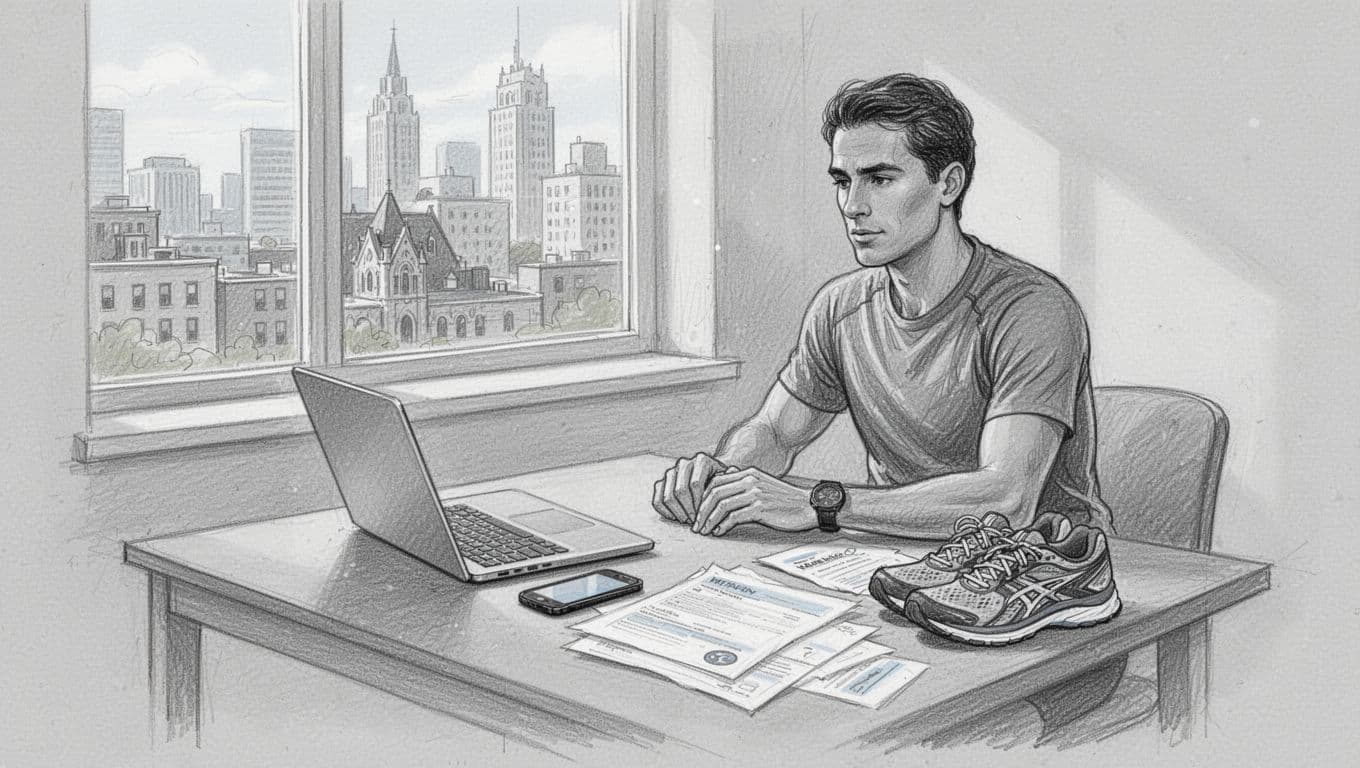
Review optional add-ons before you pay. These may include race merchandise, insurance, donations, transportation, or photo packages. Keep only the items you want, then read the required waivers and accept them after understanding the rules.
What happens after you pay for your entry?
After checkout, look for a confirmation page and email showing your registration number, selected event, participant name, payment amount, and any add-ons. Save the email, take a screenshot, and download the receipt or participant document. If the message doesn’t arrive, check your spam and promotions folders, then use the organizer’s registration lookup or contact form.
Registration lookup can confirm whether your payment created an entry. However, online registration doesn’t always equal bib pickup or race-day check-in. For example, the official half marathon information states that bib pickup isn’t available on race day and requires valid identification plus the emailed QR code. Read the current Montreal runner’s guide for pickup dates, locations, required documents, transportation details, and race-week procedures.
Race-week emails may include your bib number, corral assignment, QR code, course map, start time, bag-drop instructions, and weather notices. Download these materials before traveling, and keep offline copies on your phone in case cellular service is poor at the expo.
Need to correct a name or change your entry? Contact the organizer as soon as possible. Transfer requests, deferrals, refunds, and name corrections often have deadlines, fees, or restrictions. The official Montreal marathon FAQ lists event-specific transfer rules, but policies can change between race editions. Never assume you can transfer a bib privately or collect it without the required identification.
How Much Does the Montreal Marathon Cost?
The Montreal marathon registration fee is only one part of your race budget. The final cost can include taxes, checkout charges, travel, lodging, meals, training equipment, and recovery supplies. Before you commit, treat the event like a small trip budget rather than a single online purchase.
Registration usually follows tiered pricing. Early entries tend to cost less, while later tiers may increase as race day approaches. A low opening price can become less attractive if you also need a hotel, race shoes, or last-minute transportation.
Which registration fees are easy to overlook?
The checkout screen may show more than the advertised entry price. Before paying, review every line item and remove anything you don’t want. Common additions include:
- Processing or platform fees added at checkout.
- Canadian sales taxes applied to the entry or selected products.
- Optional race shirts, medal upgrades, photos, insurance, or other merchandise.
- Donation prompts or charity fundraising commitments.
- Transportation add-ons, such as shuttle service or special race-day transfers.
- Hotel deposits, which may be charged separately when you reserve an event package.
- Currency conversion charges or foreign transaction fees if your card is issued outside Canada.
- Late-registration pricing when you wait until the final entry period.
A charity entry can also carry a fundraising minimum. Read those terms before choosing it, since failing to meet the commitment may leave you responsible for the remaining amount.
Build a simple estimate in Canadian dollars, then convert it using your card issuer’s rate:
| Budget item | Planning range or example |
|---|---|
| Race entry and checkout charges | Current organizer price plus taxes and fees |
| Travel | $100 to $600 or more |
| Hotel | $150 to $500 per night |
| Meals and local transportation | $75 to $250 |
| Shoes, clothing, and training gear | $100 to $500 |
| Sports nutrition and recovery supplies | $40 to $150 |
These are planning ranges, not official Montreal Marathon prices. Check the current Marathon Beneva registration FAQ and your booking confirmations before finalizing the budget. Early registration can reduce the entry cost, but reserving lodging and transportation early may save even more.
Can you get a refund, transfer your bib, or defer your entry?
A refund returns some or all of your entry payment under the organizer’s rules. A deferral moves your registration to a later race year, while a transfer changes the registered runner or, when allowed, moves you to another distance. These options are different, and each may have its own deadline, fee, approval process, and restrictions.
The race organizer controls the policy. Some editions may allow a refund or next-year deferral, while transfers can require an administrative charge and close before race weekend. Registration insurance may offer extra protection if the event provides it, but read the covered reasons, exclusions, claim deadline, and reimbursement limits before buying it.
Never sell or hand over your bib privately. The registered name, waiver, emergency contact, medical details, and timing record may no longer match the person wearing it. Use only the official transfer process, even when a friend offers to take your place.
Before deciding whether the race fits your budget, ask what you value most: the Montreal course experience, reliable organization, a personal goal, or the chance to combine racing with a trip. For a well-prepared runner, those benefits may justify the cost. The decision becomes easier when you calculate the full trip total before registration opens.
Build a Training Plan After You Register
Registering for the Montreal Marathon gives you a date, not a finished training plan. Count backward from race day, then choose a schedule that fits your current mileage, running history, injury status, and target time. Your plan should build fitness gradually while leaving enough room for recovery, missed runs, and real life.
Most weeks should feel controlled. Easy running builds your aerobic base without draining you before the long run or quality session. Increasing distance too quickly can create soreness, injury, or fatigue that damages the entire race plan. Research on marathon preparation also connects higher training volume and longer endurance runs with stronger race performance, but only when your body can handle that workload.
How many weeks do you need to prepare for a marathon?
A first-time marathoner often needs 20 to 32 weeks, especially when they have limited running history or a low current weekly mileage. The first part of that period may focus on consistent easy runs, strength work, and gradually extending the long run before formal marathon workouts begin.
A healthy, experienced runner with steady mileage and recent long runs may use a focused 12 to 18-week block. That shorter schedule can work when the runner already has an aerobic base and wants to sharpen marathon pace rather than build basic endurance. A runner returning from injury needs more time, even if past race results look strong.
Start with your actual numbers, not an ideal plan found online. Review your current weekly mileage, longest recent run, number of running days, and how well you recover. Runners with many months before Montreal can spend extra time building consistency. Those with only a short runway should consider the half marathon or a completion-focused marathon goal rather than forcing weeks of training into a few days.
What should you practice before race day?
Long runs are your rehearsal space. Practice marathon pace in controlled sections, then test the fueling intervals, fluids, gels, sports drink, shoes, socks, anti-chafing products, and clothing you may use in Montreal. A marathon training guide on fueling and recovery can help you organize these details.
Use long runs to learn how your stomach responds to carbohydrates and how much fluid you need. Weather may bring heat, humidity, rain, or cool conditions, so try some training sessions in different temperatures. Avoid copying another runner’s gel schedule, nutrition choices, or pace unless your own body has handled them successfully.
Keep the race plan simple:
- Run most early miles at a controlled effort.
- Take carbohydrates and fluids at planned intervals before fatigue becomes severe.
- Wear tested gear rather than brand-new shoes or clothing.
- Adjust pace when heat, humidity, rain, or poor sleep changes the effort.
Strength training, rest days, and a gradual taper belong in the plan too. The final weeks should reduce fatigue while preserving your running rhythm.
Choose Your Distance, Duration and Goal Time
Make three quick selections and open the exact plan built for your race target.
Looking for a Fully Personalized Training Plan?
The training plans above are an excellent choice if they match your goal. However, if you’d rather train with a plan built specifically around your current fitness, goal race, preferred training days, weekly mileage, and target finish time, our RDA Custom Training Plans provide a personalized solution. We also have running courses available for runners seeking to run faster from the mile to the marathon.
Why Choose a Custom Training Plan?
| Standard Training Plan | RDA Custom Training Plan |
|---|---|
| Follows a fixed schedule | Built around your schedule |
| Standard weekly mileage | Peak mileage customized for you |
| Fixed workout days | Train on the days you choose |
| Same structure for everyone | Designed around your current fitness |
| Static plan | Updated as your fitness improves |
| One-time purchase | Ongoing personalized coaching and support |
What You’ll Receive
- A training plan built specifically for your goal
- Personalized training paces
- Long runs, tempo runs, threshold workouts, interval sessions, recovery runs, and easy runs
- Peak weekly mileage matched to your experience level
- Flexible training schedule that fits your life
- Ongoing plan adjustments as your fitness improves
Ready to Train Smarter?
Stop guessing and start following a plan built specifically for you, your schedule, and your racing goals.
How can you choose a realistic goal time?
Set three goals: a completion goal, a performance goal, and a stretch goal. Your completion goal protects the experience if conditions or fatigue disrupt the day. The performance goal should match recent race results, consistent training, comfortable long runs, and your ability to hold controlled paces. A stretch goal belongs only within reach of your preparation.
Begin with a conservative pacing plan. Hold back during the opening miles, assess your breathing and legs, then adjust later if you feel strong. Chasing an aggressive split from the start can turn manageable fatigue into a major slowdown. Use your training data as the guide, and let race-day conditions influence the final decision.
Plan Your Montreal Race Weekend and Race-Day Strategy
After Montreal marathon registration, race weekend needs the same discipline as training. Review the official participant guide for the expo location, bib pickup dates, bag-drop rules, start corrals, wave times, course map, aid stations, toilets, time limits, and transportation instructions. The official Montreal runner’s guide shows why these details matter, including the possibility that organizers may not offer race-day bib pickup.
What should you expect at bib pickup and the race expo?
Bib pickup usually involves showing your registration confirmation, QR code, and photo identification, although requirements can vary by race and year. Bring the confirmation email on your phone, then keep an offline screenshot in case the expo has weak service. Some events may also ask for a waiver, proof of registration, or another participant detail.
At pickup, confirm that the bib number matches your name and selected distance. Check the corral or wave assignment before leaving the expo, then review the printed instructions for timing chips, bag drop, and the start area. If a friend or family member may collect your bib, verify that option in the current rules first. Some races require written permission, a copy of your identification, or the confirmation email.
Avoid waiting until the final possible pickup window. An unexpected transit delay, long line, missing document, or registration error can create a stressful problem before the race even begins. Pick up your bib early enough to ask questions, inspect the expo without rushing, and return to your hotel with your race gear organized.
How do you prepare for Montreal weather and course conditions?
Check the forecast several times during race week, then make your final clothing decision close to the start. Breathable layers work well in mild conditions, while a lightweight rain shell can help when showers threaten. Pack both options instead of trusting a forecast made too early.
Protect your skin before the race with the anti-chafing product you already tested in training. Apply it anywhere seams, socks, or damp fabric create friction. Your shoes, socks, fuel, and clothing should all be familiar; race morning is a poor time for experiments.
Pace by effort when heat, humidity, wind, hills, sharp turns, or dense crowds increase the cost of each mile. Hold back early, especially when the starting energy makes a conservative pace feel too slow. Follow official safety notices, and let health outrank your goal time. Dizziness, chest pain, severe weakness, or an injury that changes your stride requires stopping and seeking help.
What are the biggest mistakes runners make after registering?
Small oversights can turn a prepared runner into a rushed runner. Prevent them with simple rules:
- Read every confirmation email and save the latest participant guide.
- Check transfer, deferral, and refund rules before an injury forces a decision.
- Increase mileage gradually instead of trying to recover missed training in one week.
- Keep easy runs easy, because racing every workout leaves too little energy for key sessions.
- Test shoes, fuel, layers, and hydration during training, never for the first time in Montreal.
- Arrive early enough for parking, transit, bathroom lines, warm-up, and the walk to your corral.
- Start slower than your goal pace, then adjust after your body settles.
- Keep a weather backup plan with extra layers, rain protection, and a revised pace.
- Check metro or transit schedules and road closures, even when your hotel sits near a convenient route.
Pack your confirmation email, photo ID if required, bib, pins, tested shoes and fuel, weather layers, phone, and post-race clothing. If you feel sick or injured before the start, skipping the race or stopping early can be the smart athletic decision. A finish time never matters more than protecting your health.
Frequently Asked Questions
Even after registration, a few practical questions can remain unanswered. These details can affect your pacing plan, spectator arrangements, and decisions on race morning.
Is the Montreal Marathon course officially certified?
Yes, the Marathon Beneva de Montréal lists its marathon and other race routes as certified courses. That matters if you’re pursuing a qualifying standard or want your result measured on a recognized distance. Still, confirm the current course map and certification details in the official Montreal marathon FAQ before race weekend, since organizers can revise routes.
What is the Montreal Marathon time limit?
The marathon time limit is listed as six hours, while the half marathon has a four-hour limit. That gives marathon runners an average pace of about 8:32 per kilometer, but you shouldn’t plan to use every available minute. Bathroom stops, aid stations, crowded early miles, and brief walking breaks can reduce your margin.
Your training pace should account for the course and your current fitness. If a six-hour finish requires a pace you haven’t practiced, consider the half marathon or a completion-focused plan with more preparation time.
Can family and friends track runners during the race?
Race organizers typically use timing mats along the course to record intermediate splits and provide runner-tracking information. Your supporters should check the current Marathon Beneva runner’s guide for the tracking process, available updates, and any instructions for sharing your bib information.
Give your supporters a simple plan before the start. Share your bib number, estimated split times, meeting point, and a backup location. Cell service can become unreliable around dense crowds, so don’t depend on a last-minute text to find each other.
What medical support is available on the course?
The official event information includes emergency medical assistance for participants. Aid stations and medical locations can change by race edition, so review the latest course information and runner instructions before you travel.
You should also carry details that help volunteers respond quickly, including emergency contact information and relevant medical conditions. Stop and ask for help if you experience chest pain, faintness, confusion, severe shortness of breath, or an injury that changes your stride. Finishing the race is never more important than getting prompt care.
Can runners with adaptive needs participate?
The event welcomes wheelchair users and independent runners with assistance through its adaptive sports program. Eligibility, equipment, assistance rules, and medical documentation requirements may vary, so contact the organizer before registering rather than relying on standard race instructions.
Read the current adaptive sports program information and describe your needs early. That gives the race team time to explain course access, support options, start procedures, and any safety restrictions.
What should I do if I can’t race after registering?
Check the transfer, refund, and deferral policy before making travel arrangements or giving your bib to someone else. These options may close before race weekend, carry fees, or depend on the reason for your request.
If illness or injury interrupts your training, contact the organizer through its official channels and ask about the current process. Never run under another person’s registration, because the name, emergency information, timing record, and waiver would be incorrect.


