

Mizuno Wave Mujin 11 Review: Trail Shoe for Rough Miles
Technical trail shoes have to do more than look tough, and the Mizuno Wave Mujin 11 has a clear job: handle rocky climbs, loose descents, and long miles without getting sketchy underfoot. If you run rough trails, you already know that grip, protection, and stability matter more than flashy specs.
This review focuses on how the shoe performs where it counts, not just what the spec sheet says. That means real-world traction, ride feel, fit, and how well it holds up when the terrain turns uneven, muddy, or sharp. If you want a broader look at how Mizuno has shaped this model over time, this Mizuno Wave Mujin detailed review adds useful context before we get into the details.
What stands out the moment you see the Wave Mujin 11
The Mizuno Wave Mujin 11 does not try to look fast and sleek. It looks ready for work. The shape is tall, sturdy, and built with the kind of presence you usually expect from a shoe meant for hard trail days, not smooth park loops.
Right away, you can tell this model is aimed at runners who spend time on rough ground. It looks like a shoe for rocky climbs, root-covered paths, and long days where protection matters more than a light feel. If you want something that feels like a race flat, this is not that shoe.
Built for rough trails, not smooth paths
The first impression is all about purpose. The Wave Mujin 11 has the look of a technical trail shoe with a high level of protection, which fits its job on uneven terrain. It seems made for runners who deal with loose dirt, sharp rock, and changing surfaces that punish softer shoes.
That focus shows in the overall build. The shoe appears substantial underfoot, with a thicker stack and a more guarded profile than a lightweight trail racer. In other words, it looks like it wants to absorb trail abuse over long miles, not just fly through short, fast efforts.
If you run mostly on smooth dirt or paved paths, this shoe will feel like too much shoe. On rough trails, that extra build makes sense fast.
For runners who value confidence over speed, that first look matters. It tells you the Wave Mujin 11 is built to keep you moving when the trail gets messy. For a broader look at the trail category it fits into, the best trail running shoes for beginners guide is a useful comparison point.
How the upper and outsole show its job right away
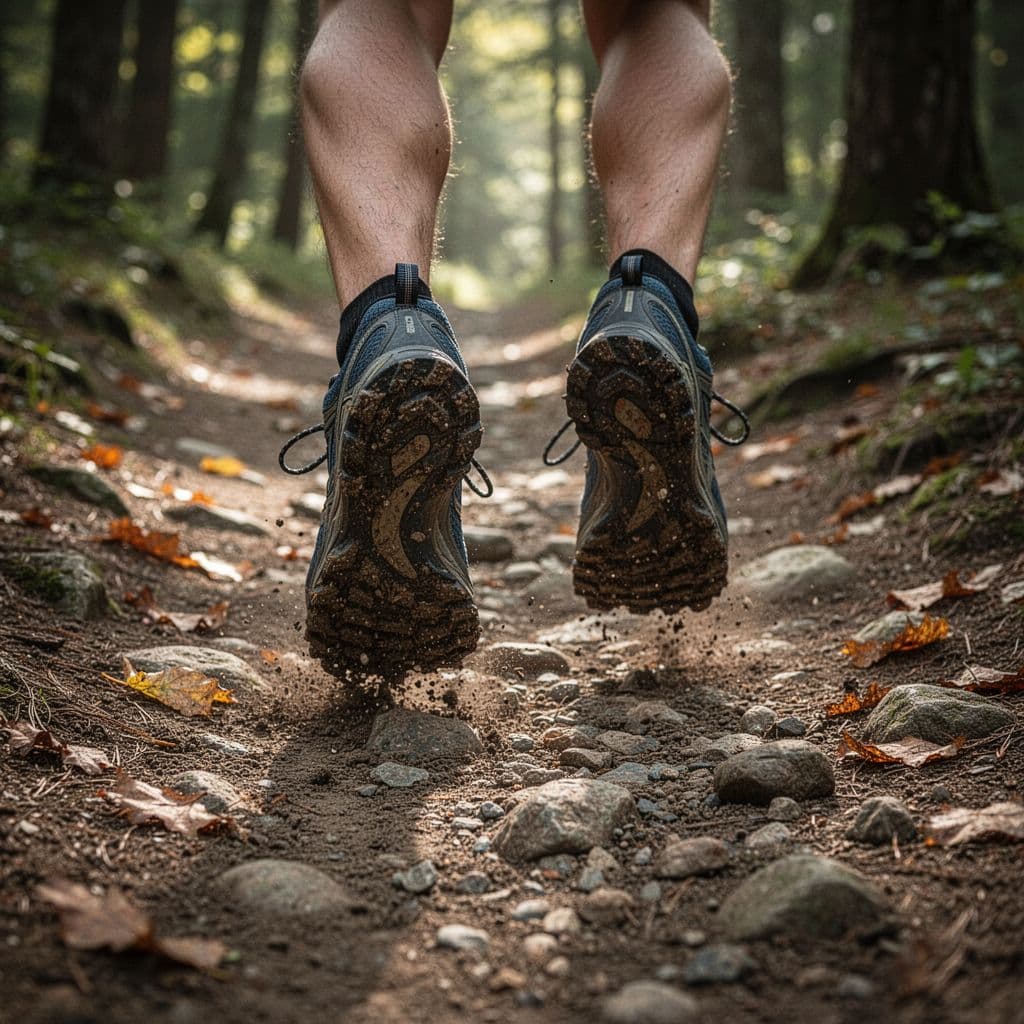
The upper looks built for support and wear resistance, not lightness. It has a structured, protective feel that hints at durability on brushy, rocky routes. The outsole is just as direct, with aggressive lugs that promise grip you can see before you ever hit the trail.
That visual message is clear. This is a shoe for runners who want traction, protection, and stability in one package. Mizuno’s own product details for the Wave Mujin 11 also point to that same mission, with trail-focused grip and support built into the design.
How the Mizuno Wave Mujin 11 fits and feels on foot
The Mizuno Wave Mujin 11 has a fit that feels built for control first. On the trail, that matters more than a roomy, loose ride. The shoe settles the foot well, so you get a planted feel when the ground shifts under you.
It does have a more structured fit than some softer trail shoes. That helps on rough miles, but it also means runners who like a lot of wiggle room may want to pay attention to size and lacing. If you already know you need a careful fit, these running shoe sizing tips are a smart place to start.
Fit through the midfoot and heel
The midfoot feels secure without being harsh. That gives the shoe a steady, locked-in shape when you move across rocks, roots, and off-camber sections. On uneven ground, that kind of hold cuts down on foot slide, which makes the shoe feel more dependable step after step.
The heel hold is one of the stronger parts of the fit. It stays in place well on climbs, and it also resists lift on steeper descents. That keeps the shoe from feeling sloppy when your stride changes fast.
For runners who want a stable trail shoe that feels controlled on technical terrain, that locked-in shape is a big plus. In contrast, if you prefer a softer, more relaxed upper, the Mujin 11 may feel snug at first.
The fit favors security over freedom, which is exactly what many rough-trail runners want.
If you run long, uneven routes often, that secure midfoot and heel can feel like an anchor. It keeps the shoe calm when the trail gets messy.
Toe box space and long-run comfort
The toe box gives enough room for natural toe splay, but it doesn’t feel oversized. That balance works well for long runs, since feet swell and spread a bit over time. Your toes have space to move, yet the front of the shoe still feels controlled.
For some runners, that is the sweet spot. You get comfort without the loose, sloppy sensation that can make technical descents feel less precise. For others, especially those with wider forefeet, the fit may feel a touch more exact than ideal after a few hours.
That tradeoff matters most on long outings. A more generous toe box can feel great early, but a precise front end often feels better when the trail gets steep or rocky. The Mujin 11 leans toward precision, so it suits runners who want the front of the shoe to stay quiet and stable.
If you usually size up for long trail days, this is a shoe where that choice may make sense. The extra space can help with swelling and reduce pressure during late-run fatigue. For a broader look at trail fit options, best trail shoes for beginners is useful for comparing roomier alternatives.
Lacing and lockdown when the trail gets tricky
The lacing system helps the shoe hold its shape when the trail turns awkward. Once you dial it in, the upper wraps well across the top of the foot, so the shoe feels stable on side hills and rocky steps. That kind of lockdown matters when each landing point is different from the last.
Small lace adjustments can make a real difference here. Tighten the midfoot for more control on technical climbs, or ease it slightly if you want a bit more comfort on steady miles. The shoe responds well to those changes, which helps you tune the fit for the day.
For runners who face steep grades and uneven descents often, that stability is a strong advantage. The shoe does a good job of keeping the foot centered, so you spend less time fighting movement inside the upper and more time focusing on the trail ahead.
The Mizuno Wave Mujin 11 fits best for runners who want a secure, protective feel with enough toe room for long days. If you like a firm hold, steady heel lock, and a fit that stays composed on rough ground, it makes a strong case.
What the cushioning does well on long, rough miles
The cushioning in the Mizuno Wave Mujin 11 is built for runners who spend serious time on hard, uneven ground. It gives you a protective ride that takes the edge off repeated impact, yet it still feels grounded enough for technical trails.
That balance matters most when the miles pile up. You want enough softness to keep your legs fresh, but not so much foam that the shoe starts to feel vague. The Mujin 11 keeps that line in a sensible place
A protective ride without feeling too bulky
The cushioning does a good job of softening sharp trail hits. Rocky stretches, packed dirt, and roots do not come through harshly, so your feet stay better protected over time. That protection shows up most on long runs, where small impacts add up fast.
Even with that extra shield, the shoe does not feel like a thick mattress underfoot. You still get enough trail feedback to place your feet with confidence. That matters on rough descents and off-camber sections, where you need to feel what is happening beneath you.
The ride sits in a useful middle ground. It feels cushioned, but not detached. For technical trail runners, that is usually the sweet spot, because you want comfort without losing control.
The best part is the way the cushioning absorbs punishment without wiping out ground awareness.
Energy return, bounce, and steady pacing
The Mujin 11 is not a springy shoe that pushes you to run fast turnover. It feels more controlled and steady than lively, which fits its purpose. On rough terrain, that makes sense, because stability usually matters more than a snappy toe-off.
There is some bounce in the ride, but it stays measured. You will feel a bit of rebound, especially on smoother dirt, yet the shoe clearly favors long-distance stability over quick, aggressive pacing. If you are chasing speed on flowy trails, this is not the most energetic option.
Instead, the cushioning supports a calm rhythm. That can help you settle into a pace and keep it there, even when the trail keeps changing underfoot. For runners who prefer a confident, planted feel, that is a strong tradeoff.
For more context on how the model is designed for rough ground, Mizuno Wave Mujin 11 trail analysis offers a useful breakdown of its protection and stability focus.
How it handles fatigue on marathon-length trail runs
Over marathon-length efforts, cushioning is not just about comfort. It also affects how well your legs hold up when form starts to fade. The Wave Mujin 11 helps here by reducing the pounding that usually builds in the calves, quads, and feet.
Late in a run, that protective feel can make a real difference. The midsole helps smooth out the worst of the repetitive impact, so the shoe stays more manageable when you are tired. That can help you keep your stride from getting too harsh or sloppy.
The shoe also gives you a stable platform when your legs start to wobble. That matters near the end of long trail races or back-to-back training days. A softer shoe can sometimes feel unstable when you are fatigued, but the Mujin 11 stays composed.
For runners who want one main takeaway, it is this: the cushioning is there to help you keep moving well, not to make the shoe feel plush and lazy. It supports tired legs, protects against trail abuse, and keeps the ride consistent when you need that most.
Traction and grip on the terrain that matters most
The Mizuno Wave Mujin 11 is built for runners who care about footing before anything else. On rough trails, grip is not a bonus. It is the thing that keeps you moving with confidence when the ground changes every few steps.
This shoe’s traction setup feels aimed at steep climbs, loose dirt, rocky descents, and mixed terrain where you never get the same surface twice. It gives you a lot of bite without feeling overly picky about perfect trail conditions.
Climbing steep grades with confidence
On climbs, the outsole feels like it wants to grab and keep working. The lugs dig into dry dirt well, and they also hold their shape when the surface gets loose. That matters most when you are driving uphill and your foot lands on shifting gravel or broken trail debris.
The shoe does a good job of preventing that washed-out feeling that can happen on steep grades. Instead of skittering forward, the outsole gives you a steadier push-off point. You still need good form, of course, but the shoe helps you keep traction when the hill starts to bite back.
Loose dirt is where this design earns trust fast. The lugs bite hard enough to create a secure feel, and that helps reduce slipping when you are climbing with a tired stride. For runners who spend time on mountain switchbacks or fire roads with unstable footing, that extra hold is a real advantage.
The best fit here is a runner who faces varied, technical climbs and wants a shoe that feels sure-footed without being overly stiff. If your routes include long grades, rocky ascents, and dirt that breaks apart under pressure, the Mujin 11 feels at home.
Descending on rocks, roots, and off-camber ground
Downhill, the shoe feels stable and controlled rather than twitchy. That makes a big difference when you are moving fast on rocks, roots, or slanted trail edges. The outsole gives you enough braking grip to slow down with confidence, even when your feet are landing on uneven ground.
On rocky descents, the shoe holds well and helps you stay planted. Roots can still be tricky, as they are in almost any trail shoe, but the traction pattern gives you a better shot at controlling your step instead of sliding off it. Off-camber sections are handled with the same steady feel, which helps when one foot lands higher than the other.
That control matters on careful descents and fast ones. If you are picking your way down a technical ridge, the shoe feels dependable. If you are pushing pace on a runnable downhill, it still keeps enough grip to brake hard without feeling nervous.
For runners who want more context on how this kind of grip stacks up in a performance trail shoe, this Mizuno Wave Mujin 11 review gives a useful look at its traction on both dry and wet terrain.
The shoe is strongest when the trail is uneven, steep, and unpredictable. That is where the outsole makes the most sense.
Wet trail grip and real-world limitations
Wet ground is always the real test, and the Wave Mujin 11 handles it better than many trail shoes with softer, less aggressive outsoles. On damp soil and packed wet dirt, it keeps a solid feel underfoot. That gives you a more confident stride when the trail is moist but still firm enough to run.
Slick stone is a tougher story, as it is with most trail shoes. The outsole can hold better than expected on wet rock, but it still needs good foot placement. Mud also has its limits. In shallow mud and soft, wet soil, the lugs keep working, but deeper, stickier mud can reduce the shoe’s bite and slow the clean release you want.
Packed wet soil is one of its better conditions. The shoe settles in well there and keeps a dependable connection to the ground. That makes it a strong choice for runners in forested regions, mountain trails, and mixed routes where moisture shows up often but the terrain is not pure mud.
Still, this is not a mud specialist. It is a technical trail shoe with broad traction strength, not a deep-winter bog shoe. If your runs are mostly on rough dirt, gravel, stone, roots, and steep climbs, the grip setup fits that job well. If your local trails are usually slick, flat, and soaked, you may want a more mud-focused option.
Protection and stability for technical terrain
The Mizuno Wave Mujin 11 is at its best when the trail gets sharp, narrow, and uneven. It does not just cushion the run, it helps keep your foot protected and centered when the ground keeps changing under you. That mix matters on rocky climbs, root-heavy paths, and sidehill sections where a shaky shoe can throw off your whole stride.
Rock protection under the forefoot
Sharp rocks and buried roots can punish the front of a trail shoe fast, but the Mujin 11 handles that abuse well. The forefoot feels guarded, so when you land a little off line, the trail does not come through as harshly. That extra shield helps on long climbs, where repeated toe strikes and forefoot pressure can wear you down.
The shoe also keeps its composure when the terrain is uneven. Instead of folding or feeling thin under sharp hits, it gives you a more secure, buffered step. If you run routes with loose stone, hard-packed ruts, or root webs, that protection makes each landing feel less risky.
On technical trails, forefoot protection is not just about comfort. It also helps you keep moving with less hesitation.
Mizuno’s own Wave Mujin 11 trail details point to the same goal, with support and grip built for rough terrain. That lines up with how the shoe feels underfoot on rockier routes.
Staying stable on uneven ground
The Mujin 11 keeps its platform secure, which helps a lot when the trail tilts, narrows, or shifts without warning. You feel that security through the midfoot and heel, where the shoe resists side-to-side wobble better than many softer trail models. As a result, foot placement feels more deliberate, even when the surface below you is not.
Lateral support is one of the shoe’s strongest traits. When you land on a slanted rock or a root that rolls slightly, the upper and midsole work together to keep your foot from drifting around. That steadier base is a big deal on off-camber trails, where a small slip can turn into a bad step.
If you like to compare trail shoes by support and platform feel, the Mizuno running shoe lineup gives useful context for where the Mujin 11 fits in the brand’s wider range.
A few parts of the shoe stand out here:
- Stable base: It feels planted, not tippy, on uneven ground.
- Secure hold: The upper helps keep the foot in place on narrow trails.
- Controlled landings: It reduces that loose, floating feeling on quick foot placements.
For technical routes, that kind of stability can matter more than a lively ride. The shoe helps you stay balanced when every step demands attention.
When protection matters more than speed
The Mizuno Wave Mujin 11 makes the most sense for runners who want confidence on rough trails, not a light race feel. If you spend time on rocky mountain paths, rugged forest trails, or narrow routes with frequent hazards, this shoe gives you the kind of steady support that pays off late in the run.
It fits best for:
- Trail runners who want more underfoot protection than a minimalist shoe can offer.
- Long-run runners who need a stable platform after fatigue sets in.
- Hikers and runners who move through rocky, uneven terrain often.
- Anyone who values footing security more than quick turnover.
Mizuno’s Wave Mujin 11 support and grip specs also back up that focus, especially for long days on technical ground. If speed is the main goal, a lighter shoe may feel better. If the trail is rough and the margin for error is small, this one makes a stronger case.
Who should buy the Mizuno Wave Mujin 11, and who should skip it
The Mizuno Wave Mujin 11 makes a clear promise, it gives you protection, grip, and stability for rough terrain. That makes the buying decision simple once you know your terrain and pace. If your runs often include rocks, steep climbs, loose dirt, and long hours on trail, this shoe belongs on your short list. If you want a lighter, snappier feel, it probably doesn’t.
Best for long technical runs and mountain days
This shoe fits the runner who treats the trail like a real job. If you spend time on rocky mountain routes, long ridge runs, or technical ultras, the Mizuno Wave Mujin 11 gives you the kind of underfoot security that helps late in the day. The cushioning protects your legs, and the stable platform helps when form starts to fade.
It also makes sense for runners who care more about confidence than speed. On rough ground, that tradeoff is easy to justify. You want a shoe that stays calm on roots, loose gravel, and off-camber terrain, and this one does that well.
It is a strong match for:
- Long trail runs where protection matters most
- Mountain days with lots of climbing and descending
- Rocky, root-filled routes that punish softer shoes
- Runners who want a stable, planted ride over long miles
If that sounds like your kind of trail day, the Mujin 11 lines up well with the use case described by Mizuno’s own Wave Mujin 11 trail shoe details. It is built for people who want to keep moving when the ground gets messy.
Probably not the best pick for fast or short trail sessions
Runners who want a light, quick, flexible shoe may feel held back here. The Wave Mujin 11 has more structure and more shoe underfoot than a short-session trail runner usually needs. That can feel like extra bulk when you are chasing pace on smooth dirt or rolling singletrack.
It also asks for a little more effort on fast workouts. If you like quick turnover, sharp ground feel, and a free-moving ride, this model may feel stiff and heavy. For hill repeats, fartleks, or short local loops, you may prefer something leaner.
You might want to skip it if you want:
- A light trail racer for speed work
- A flexible shoe for short runs
- A low-profile feel close to the ground
- A shoe that disappears on easy dirt paths
For runners who train on more forgiving surfaces, the extra protection can feel unnecessary. A more nimble option may suit you better on those days.
How it compares to other trail shoes in spirit, not just specs
The easiest way to judge the Mizuno Wave Mujin 11 is by its mission. It sits on the max protection side of the trail shoe spectrum, while many other shoes lean toward nimble speed or a more natural feel. That does not make it better or worse, just different.
If your priority is stability first, then traction, then comfort over long miles, this shoe fits. If your priority is quick footwork and a lower, livelier ride, it may feel like too much shoe. For a broader look at that tradeoff, the trail running gear essentials guide helps frame what matters most on rough ground.
A simple way to think about it is this: choose the Wave Mujin 11 when the trail is the challenge. Skip it when speed and flexibility are the goal.
For runners dealing with wet, sloppy terrain often, a more specialized option may also fit better, like the best trail shoes for muddy conditions. The Mujin 11 can handle mixed conditions, but it is happiest when the route is rocky, rugged, and demanding.
Conclusion
The Mizuno Wave Mujin 11 is a strong choice for runners who spend most of their time on rough, technical ground. Its best traits are easy to see, solid traction, dependable protection, and a stable ride that stays calm when the trail gets messy.
It does ask for a tradeoff. The shoe feels more substantial than nimble, so runners who want a light, fast, flexible option may want to look elsewhere. But for long mountain runs, rocky routes, and days when confidence matters more than speed, that added structure makes sense. If you want to compare it with other Mizuno options, the Mizuno Wave Horizon 7 stability trainer shows how the brand handles support on the road side.
If your trails are tough and your priority is staying upright, protected, and steady, this shoe fits the job well.


