

MIMARU Tokyo Shinjuku West Review: Tokyo Marathon
Shinjuku is already wide awake when Tokyo Marathon weekend begins, with commuters, travelers, and runners filling the streets around the station. For a marathoner, staying in Tokyo Marathon hotels in the busy part of Tokyo can make race week exciting, but it also raises practical concerns about sleep, meals, transportation, and getting to the start line on time.
This MIMARU TOKYO SHINJUKU WEST review looks at the property from a runner’s point of view, not simply as a general hotel stay. Are the location and nearby transport options practical? Do the apartment-style rooms work well for runners and families? How manageable is race morning, and does the price make sense when you consider the space and convenience?
Hotel details, room availability, prices, and Tokyo Marathon rules can change, so confirm the latest information before booking. First, let’s look at the hotel’s location and what it means for your marathon-weekend routine.
Key Takeaways
- MIMARU TOKYO SHINJUKU WEST offers apartment-style rooms that can suit runners, families, and longer Tokyo Marathon stays.
- Its Shinjuku location keeps restaurants, convenience stores, and train connections close, but the area can feel busy during race weekend.
- A kitchenette gives you more control over breakfast, snacks, hydration, and familiar pre-race foods.
- Plan race-morning transportation early, then confirm start-gate directions in the official Tokyo Marathon runner information.
- Room rates, availability, and marathon procedures can change, so verify current details before booking.
MIMARU TOKYO SHINJUKU WEST Review for the Tokyo Marathon
MIMARU TOKYO SHINJUKU WEST is a strong choice for runners who value space, food flexibility, and a calmer room setup over a traditional hotel experience. Its apartment-style rooms are especially practical for families and small groups, while solo runners and couples may find the extra space useful during a longer race-week stay.
The main tradeoff is location. Shinjuku gives you excellent access to restaurants and transportation, but reaching the Tokyo Marathon start area still requires planning. If race-morning simplicity matters more than room size, a hotel closer to Tokyo Station or the official start-area access points may suit you better.
What works well for marathon runners
The biggest advantage is the room layout. MIMARU Tokyo Shinjuku West offers rooms for groups of up to six guests, and every room includes a kitchen and dining area, according to the official hotel information. That setup gives you room to spread out race clothes, shoes, bottles, nutrition, and recovery gear without turning the bed into your only workspace.
A kitchen also gives you more control over pre-race meals. You can prepare familiar oatmeal, toast, rice, fruit, or coffee instead of searching for an open restaurant before sunrise. That matters when your stomach is sensitive before a marathon or when your race plan depends on a specific breakfast.
Sleeping flexibility helps too. Families can separate bedtime routines more easily, and a small group doesn’t need to book several standard hotel rooms. Solo runners may not need all that space, but the extra room can still make a four- or five-night stay feel less cramped.
The drawbacks to consider
Shinjuku is convenient, yet it is busy, large, and easy to underestimate. Walking to the station, finding the correct entrance, and transferring trains can add stress when you are carrying race gear or protecting tired legs after the event. Check your route before race day and leave extra time for crowds.
Cost is another question. Apartment-style rooms can offer better value for a family or small group, but a solo runner may pay more than necessary for the available space. The property also feels different from a full-service hotel, so travelers expecting extensive restaurant, concierge, or room-service options should adjust their expectations.
| Category | Practical verdict |
|---|---|
| Solo runner | Convenient, but potentially more space and cost than needed |
| Couple | Comfortable for a longer stay, especially with self-catering |
| Family | One of the strongest fits because of room capacity and kitchen access |
| Small group | Useful when sharing costs and coordinating meals |
| Race-morning access | Manageable with planning, but not the simplest location |
Book MIMARU TOKYO SHINJUKU WEST if your priority is apartment-style comfort, flexible meals, and shared space. Choose a more race-centered hotel if minimizing transportation decisions on marathon morning matters most.
Why the Shinjuku West Location Works for Marathon Week
MIMARU TOKYO SHINJUKU WEST gives you a practical base for the entire Tokyo Marathon weekend, not just race morning. The neighborhood combines major transport links with restaurants, convenience stores, shopping, and quieter residential streets, so you can handle errands without crossing the city for every meal or supply.
Shinjuku West also offers a useful balance. The main roads and station area stay busy, while side streets provide a calmer setting for an easy walk, stretching, or an earlier night before the race.
A convenient base for arrival and bib pickup
When you arrive in Tokyo, nearby rail connections make it easier to reach the hotel with luggage. You can settle in, organize your race kit, and visit a convenience store before dealing with marathon errands. Large shopping areas also give you access to toiletries, snacks, chargers, and replacement clothing if something went missing during your flight.
Bib pickup requires more planning because the location and procedures depend on the specific race edition. Check the official Tokyo Marathon race outline before booking trains or building your schedule. The event may also assign pickup times, identification requirements, or other entry procedures.
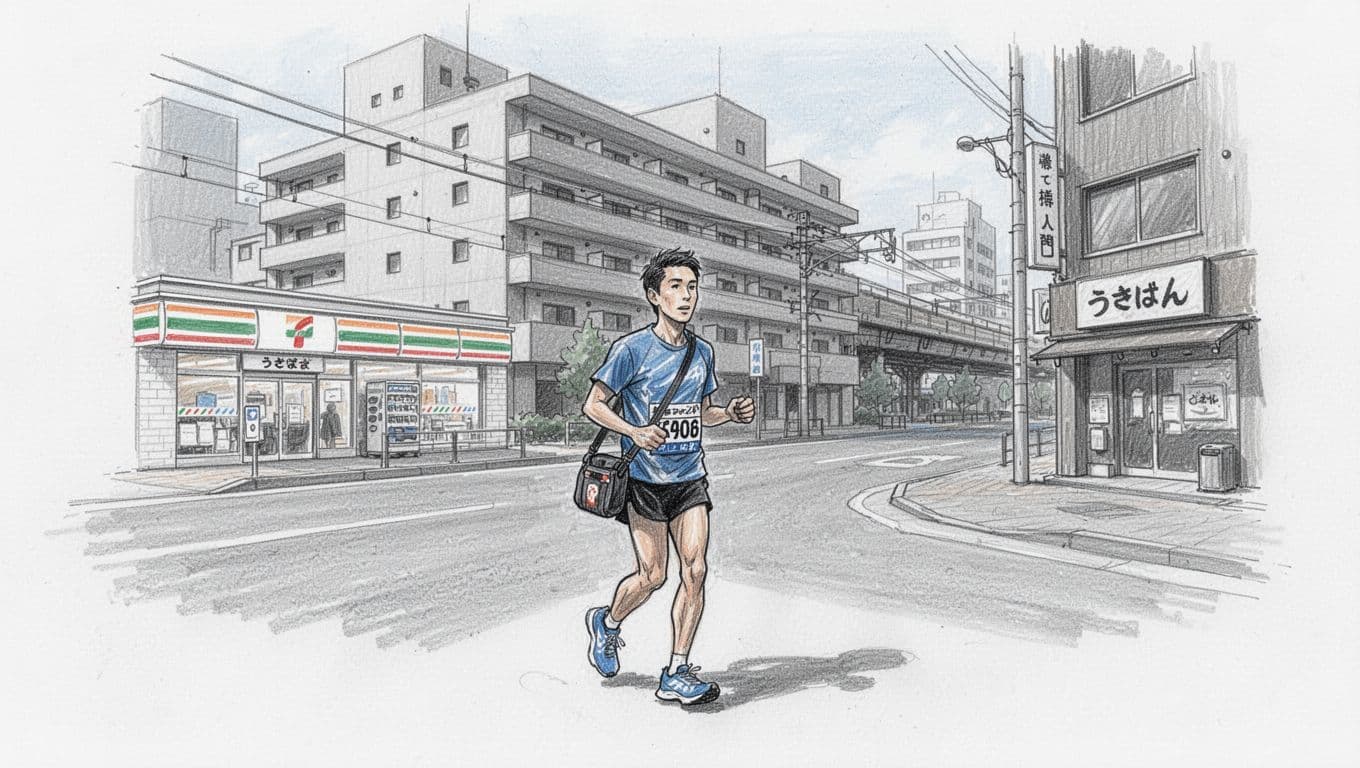
Food, supplies, and recovery are close by
Race week becomes easier when familiar food is within reach. Shinjuku has casual restaurants, cafes, supermarkets, and convenience stores, giving you options when you want a full meal or a quick snack. The MIMARU kitchenette adds another layer of control, especially if you prefer oatmeal, rice, fruit, toast, or coffee prepared to your usual routine.
After bib pickup, a short neighborhood walk can help you stay loose without turning sightseeing into another workout. Choose flat, easy routes and keep your mileage modest. On the day after the race, restaurants and shops nearby reduce the need for a long journey on sore legs.
Plan race transportation separately
The hotel is practical, but it isn’t at the start gate. Before race morning, distinguish walking time to your chosen station from the train journey itself. Station size, transfers, crowds, security checks, and restricted streets can all affect the real departure time.
Tokyo Marathon transport plans may change, so use the current runner handbook and packet pickup information for start-gate directions and race-day instructions. Leave early enough to absorb delays, then return to MIMARU Tokyo Shinjuku West after the finish without adding unnecessary decisions to an already demanding day.
What the Apartment-Style Rooms Are Like for Runners
The apartment-style layout at MIMARU TOKYO SHINJUKU WEST changes how you use the room during marathon week. Instead of keeping race shoes beside the bed and meals on a suitcase, you have separate areas for sleeping, eating, and organizing your gear.
That extra breathing room matters when you stay several nights. A marathon kit can spread across a room quickly, especially when you add recovery clothes, nutrition, chargers, laundry, and travel bags.
Space for race preparation
The table and shared living area give you a useful place to arrange your race essentials. Lay out your bib, pins, watch, clothing, socks, gels, and shoes the night before, then check everything without digging through luggage before sunrise.
Compared with a standard hotel room, this setup can feel less crowded. You can leave your race clothes ready on the table while keeping suitcases out of the main walking area. That small separation reduces last-minute searching, which is useful when your focus should stay on pacing and race execution.
Storage still requires discipline. Apartment-style does not always mean spacious storage throughout the room. Keep bags closed, use one area for race equipment, and avoid placing shoes or bottles where someone could trip during the night.
Sleeping arrangements for families and groups
The room categories are designed for different group sizes, but the sleeping setup can vary by room type. Some arrangements may include beds alongside other sleeping surfaces, so confirm the exact occupancy, bed count, and layout before booking.
That detail matters for runners with strong sleep preferences. A runner who needs a firm mattress, more personal space, or a completely quiet room may not sleep as well when sharing a compact layout. Families should also consider whether children can settle down without disturbing the runner’s bedtime routine.
For a couple or small group, shared accommodation can lower the cost per person and make race-week logistics easier. Everyone can keep meals, transport plans, and wake-up times in one place. However, more guests also mean more noise, luggage, and movement, so the room works best when everyone agrees on quiet hours before race day.
A kitchen for familiar pre-race meals
The kitchen area is one of the clearest advantages for runners. You can prepare foods you already tolerate, such as oatmeal, toast, rice, fruit, or coffee, instead of relying on unfamiliar restaurant meals.
Bring or buy only what you need, then keep breakfast simple. The kitchen doesn’t replace a full grocery setup, and available cookware or utensils may differ by property policy or room category. Check the current room details before assuming a particular appliance or cooking item is included.
Housekeeping expectations may also differ from a conventional hotel stay. Keep food contained, wash or organize used items as required, and ask the front desk about cleaning schedules. For runners who value space and meal control, MIMARU TOKYO SHINJUKU WEST is most useful when they confirm the room details and plan to use the apartment thoughtfully.
Tokyo Marathon Race-Day Logistics from the Hotel
MIMARU TOKYO SHINJUKU WEST gives you space and meal flexibility, but the hotel does not remove the need for a precise race-morning plan. Tokyo Marathon logistics involve more than reaching a nearby station. You must account for bib pickup, start waves, security, baggage, restricted streets, and the walk from the station to your assigned gate.
Build your race-week timeline
On arrival in Tokyo, settle into the room before chasing marathon errands. Organize your race clothes, confirm your transport route, and buy familiar breakfast foods while you still have energy. If bib pickup or an expo visit is required, schedule it early enough to avoid a rushed return to the hotel.
Race procedures can change between editions. Use the official Tokyo Marathon runner guidelines to confirm required documents, pickup instructions, start locations, wave details, security rules, and baggage procedures. The official race information also provides current course and event details.
The night before, lay everything out in one place:
- Race bib and required identification should stay together.
- Shoes, socks, clothing, watch, and nutrition should be ready to wear or carry.
- Your phone, charger, transit card, and hotel key should remain easy to reach.
- Breakfast should require little preparation and match foods you have already tested.
Avoid turning the final evening into a sightseeing mission. A short walk is fine, but protect your sleep and keep your feet fresh.
Choose Your Distance, Duration and Goal Time
Make three quick selections and open the exact plan built for your race target.
Looking for a Fully Personalized Training Plan?
The training plans above are an excellent choice if they match your goal. However, if you’d rather train with a plan built specifically around your current fitness, goal race, preferred training days, weekly mileage, and target finish time, our RDA Custom Training Plans provide a personalized solution. We also have running courses available for runners seeking to run faster from the mile to the marathon.
Why Choose a Custom Training Plan?
| Standard Training Plan | RDA Custom Training Plan |
|---|---|
| Follows a fixed schedule | Built around your schedule |
| Standard weekly mileage | Peak mileage customized for you |
| Fixed workout days | Train on the days you choose |
| Same structure for everyone | Designed around your current fitness |
| Static plan | Updated as your fitness improves |
| One-time purchase | Ongoing personalized coaching and support |
What You’ll Receive
- A training plan built specifically for your goal
- Personalized training paces
- Long runs, tempo runs, threshold workouts, interval sessions, recovery runs, and easy runs
- Peak weekly mileage matched to your experience level
- Flexible training schedule that fits your life
- Ongoing plan adjustments as your fitness improves
Ready to Train Smarter?
Stop guessing and start following a plan built specifically for you, your schedule, and your racing goals.
Breakfast and departure from MIMARU
Use the kitchenette to prepare a familiar meal at a predictable time. Oatmeal, toast, rice, fruit, and coffee can work well when they match your normal training routine. Don’t experiment with a new Japanese breakfast on marathon morning, even if the restaurant looks tempting.
Set an alarm with enough time for eating, dressing, bathroom use, and a final gear check. Then add time for the walk through the hotel area, station navigation, transfers, and the route from your destination station to the assigned start gate.
Shinjuku’s stations are large, so the train ride is only part of the journey. Follow the current Tokyo Marathon runner handbook and packet information, then save the relevant details offline in case mobile service becomes slow.
Plan your bag and start-area routine
Check the current bag policy before packing. If you use baggage check, confirm the permitted bag, fee, drop-off location, and deadline. Otherwise, keep your hotel key, phone, and valuables within the event’s rules, and ask the hotel about post-race luggage storage.
Leave MIMARU Tokyo Shinjuku West with only what you need. Extra layers can become a burden once you reach the start area, where security checks and corrals may take longer than expected.
A convenient hotel helps only after you convert its location into a timed plan with fixed departure and arrival targets.
Recovery after the finish
After the race, follow the official exit and baggage instructions rather than choosing a route on instinct. Tokyo streets may remain restricted, and sore legs make unnecessary transfers feel longer. Drink, eat a familiar recovery meal, and return to the hotel at a comfortable pace.
The apartment-style room gives you space to shower, change, elevate your legs, and rest without immediately leaving for another meal. Plan the next day around recovery, not a packed sightseeing schedule.
Price, Booking Value, and Better Alternatives for Your Trip
The best way to judge MIMARU TOKYO SHINJUKU WEST is to calculate the total cost of your marathon stay, not just the nightly rate. A larger room may look expensive at first, yet shared accommodation, self-catered meals, and fewer restaurant trips can improve its value.
Tokyo Marathon weekend can push demand and prices sharply higher. Avoid quoting a fixed room price unless you have checked it for the reader’s exact dates, guest count, room type, and booking conditions. Current event updates and entry details belong on the official Tokyo Marathon participant page, while hotel pricing must come from the booking page for your selected stay.
What to include in the real cost
Start with the complete reservation total, including the room price, taxes, service charges, and any additional fees. Then check whether the quoted amount covers the entire stay or only shows a partial rate.
Your calculation should also include:
- Transportation between the hotel, airport, expo, start area, and other planned destinations.
- Groceries for breakfast, snacks, drinks, and recovery food.
- Restaurant meals when you don’t want to cook.
- Laundry, especially during a four- or five-night stay.
- Cleaning charges, if the booking platform lists them separately.
- Cancellation or change penalties if your race entry or travel plans are uncertain.
- The value of extra beds, a dining table, and room to organize race gear.
The kitchenette can reduce food costs, but only if you actually plan to shop and prepare simple meals. Likewise, a room for several guests may offer strong value when friends or family divide the bill. For one runner, the same room can cost more than a compact hotel room with fewer amenities.
When MIMARU is worth the price
MIMARU TOKYO SHINJUKU WEST makes the most financial sense for families, couples staying several nights, and small groups sharing one apartment-style room. Extra space also has practical value before a marathon. You can separate sleeping areas, prepare familiar food, dry clothing, and keep race equipment organized.
Compare the hotel with alternatives using the same dates and occupancy. A business hotel near a convenient station may reduce the room bill, while a hotel closer to the start area may lower transportation costs and race-morning stress. A vacation rental could provide more space, but it may add cleaning fees, stricter cancellation terms, and less predictable support.
A lower nightly rate can lose its advantage when it adds long transfers, expensive meals, or several separate rooms.
Why booking early matters
Book early when your marathon entry and travel dates are firm. Popular room types can disappear first, and remaining inventory may carry higher rates or less flexible cancellation terms. Before paying, confirm the exact bed arrangement, kitchen equipment, guest capacity, check-in rules, luggage storage, cancellation deadline, taxes, and any marathon-week restrictions.
Finally, compare the refundable total with the nonrefundable discount. Paying slightly more for flexibility can protect your budget if your entry, flights, or health change before race day.
Pros, Cons, and the Final Booking Decision
MIMARU TOKYO SHINJUKU WEST is a strong marathon base when you want room to breathe, control over meals, and a practical neighborhood for several days. It becomes less attractive when your only goal is the shortest, simplest trip to the start area.
The final choice depends on how you travel and what helps you sleep well before a major race.
The strongest advantages
The apartment-style rooms give you more usable space than a typical business hotel. You can lay out your bib, shoes, race clothes, gels, and recovery gear without covering the bed or blocking the floor.
Flexible sleeping arrangements also help couples, families, and small groups. Different bed areas can make early bedtimes easier, although you should confirm the exact room layout before paying.
The kitchenette is another major benefit. Familiar foods such as oatmeal, toast, rice, fruit, and coffee are easier to prepare when restaurants are closed or your stomach feels unsettled. You also have a dining area for meals, race planning, and post-race recovery.
Shinjuku adds everyday convenience. Restaurants, convenience stores, shopping, and train connections are close enough to support your entire stay, not just race morning.
The main disadvantages
The room can cost more than a standard hotel room, especially for a solo runner. Shared occupancy improves the value, but couples should still compare the total rate against smaller rooms in other neighborhoods.
Shinjuku’s transport network is useful but complicated. Large stations, long walks, transfers, crowds, and race-day restrictions can turn a simple journey into a stressful one. Confirm the latest Tokyo Marathon runner guidelines before relying on any route or baggage plan.
Room categories also vary. Sleeping surfaces, capacity, kitchen equipment, and available space may differ, so never book based only on photographs or the hotel name. Finally, MIMARU offers a more independent stay than a traditional full-service hotel. You may have fewer restaurant, room-service, and concierge conveniences.
Who should book it?
- First-time Tokyo Marathon runners should book MIMARU if they value a comfortable room and can plan transportation the day before.
- Experienced solo runners may prefer a smaller, less expensive hotel unless they want several nights of self-catering and extra space.
- Couples are a good fit when both runners or travelers appreciate separate sleeping areas and easy meal preparation.
- Families will likely gain the most value from the room capacity, kitchen, and shared living space.
- Groups can reduce the per-person cost while keeping race plans, food, and gear in one apartment.
Choose MIMARU TOKYO SHINJUKU WEST when space and food control matter more than being closest to the start. Choose another hotel when minimizing race-morning decisions is your top priority.
Frequently Asked Questions
A few practical questions remain after comparing the rooms, location, price, and Tokyo Marathon logistics. These answers can help you decide whether MIMARU TOKYO SHINJUKU WEST fits your travel style and race-week routine.
Can I store luggage before check-in or after checkout?
Luggage storage can make arrival and departure much easier, especially when your flight schedule does not match the hotel’s check-in time. However, storage rules, availability, and deadlines can change, so ask the property directly before relying on it for race-day bags or post-checkout plans.
Keep your race bib, passport, medication, and other essential items with you. Never place irreplaceable race documents in luggage that you may not access immediately.
Does MIMARU TOKYO SHINJUKU WEST offer breakfast?
The apartment-style setup is designed around self-catering rather than a traditional hotel breakfast routine. You should plan to buy breakfast supplies nearby or bring familiar foods you know you can tolerate before a marathon.
That arrangement can work well for runners who prefer oatmeal, toast, rice, fruit, or coffee at a specific time. Confirm the room’s current kitchen equipment before assuming you can prepare a particular meal.
Is there laundry access for a longer marathon stay?
Laundry access is an important question if you plan to stay several nights or pack lightly. Ask the hotel about current laundry facilities, operating hours, payment methods, and whether the property provides drying space.
Pack enough running clothes to avoid creating a recovery-weekend chore. If you do wash clothes, keep your race kit separate and avoid testing unfamiliar detergents shortly before the event.
Is the hotel suitable for someone traveling with a non-running partner?
Yes, the location can work well when one guest races and another explores Tokyo, rests, or handles race-week errands. Apartment-style rooms give both travelers more room than a compact business hotel, while Shinjuku offers restaurants, shopping, and transit options nearby.
Set expectations before booking, especially around wake-up times and shared space. A runner leaving before sunrise may need a quiet room arrangement and a prepared bag to avoid disturbing a sleeping partner.
Should I stay at MIMARU for the night after the marathon?
Staying the night after the race can make recovery easier because you won’t need to travel immediately with sore legs. The room provides a place to shower, change, eat, and rest before dealing with your next train or flight.
Plan checkout around your departure rather than assuming you can extend the room. If you need extra recovery time, ask about late checkout when you make the reservation.
What should I confirm before booking?
Review the exact room category, sleeping surfaces, guest capacity, kitchen equipment, cancellation terms, and luggage policy. Also check current Tokyo Marathon instructions separately because start-gate access, baggage rules, and race procedures may change.
The official MIMARU Tokyo Shinjuku West details are the best place to verify the property’s current facilities before you pay. Personal preferences matter too: choose MIMARU when space and meal control support your race plan, not simply because the neighborhood sounds convenient.
Conclusion
MIMARU TOKYO SHINJUKU WEST can be a strong Tokyo Marathon base for runners who want apartment-style space, familiar meals, and a comfortable setup for several nights. The kitchenette and flexible room layouts are especially useful for families, couples, and groups sharing race-week costs. Shinjuku also keeps daily essentials close, so you can manage meals and errands without crossing Tokyo each time.
The tradeoff is race-morning planning. Shinjuku’s size, crowded stations, transfers, and changing event restrictions mean you must map the route and allow extra time before leaving the hotel. Runners who want more hotel services or the simplest possible journey to the start may prefer a traditional hotel in a more race-centered location.
Before booking, check the exact MIMARU Tokyo Shinjuku West room layout, current rate, kitchen facilities, cancellation policy, and guest capacity. Then confirm the latest official Tokyo Marathon instructions for start-gate access, baggage, and transportation. For the right travel group, this hotel turns a busy Shinjuku stay into a practical race-week base.


