

Milwaukee Lakefront Marathon Hotels: Where to Stay
Before sunrise on Milwaukee Lakefront Marathon weekend, hotel hallways are often quiet, the lights are low, and the air near Lake Michigan feels cool and still. You’re awake early, checking your gear and watching the clock, so where you stay can shape the entire morning.
The right hotel can reduce travel stress, protect your sleep, and make breakfast easier before the gun goes off. It can also simplify packet pickup, shuttle access, and post-race recovery when your legs are tired and every extra step matters. The best Milwaukee Lakefront Marathon hotels aren’t always the closest properties, so you’ll need to weigh location, transportation, room amenities, and your race-day routine.
This guide compares hotel options and nearby neighborhoods, explains transportation questions to ask, and shares booking advice for runners who need practical details such as breakfast timing, parking, elevators, and late checkout. Because the official start and finish locations, packet pickup site, shuttle plan, and road closures can change, confirm the latest information with the Milwaukee Lakefront Marathon before booking. Next, we’ll look at the areas that make race morning easier.
Key Takeaways
- Choose Milwaukee Lakefront Marathon hotels based on race transportation, sleep quality, parking, and access to breakfast, not proximity alone.
- Confirm the official start, finish, packet pickup, shuttle, and road closure details before booking through the Milwaukee Lakefront Marathon.
- Ask whether your hotel offers early breakfast, late checkout, elevators, luggage storage, and a quiet room away from busy hallways.
- Race-day transportation matters after 26.2 miles, especially because the full marathon information lists shuttle service between the finish area and host hotels.
- Book early, compare total costs, and choose the room that best protects your sleep and morning routine.
Best Milwaukee Lakefront Marathon hotels for race weekend
Your best Milwaukee Lakefront Marathon hotel depends on how you want race weekend to feel. Downtown properties prioritize services and dining, lakefront hotels offer a calmer setting, and extended-stay rooms give families or training partners more control over meals and recovery.
Plan Your Complete Marathon Weekend
Choosing the right hotel can reduce race-day stress, shorten travel time, improve sleep, and make your entire marathon weekend smoother.
More Milwaukee Lakefront Marathon Hotel Guides
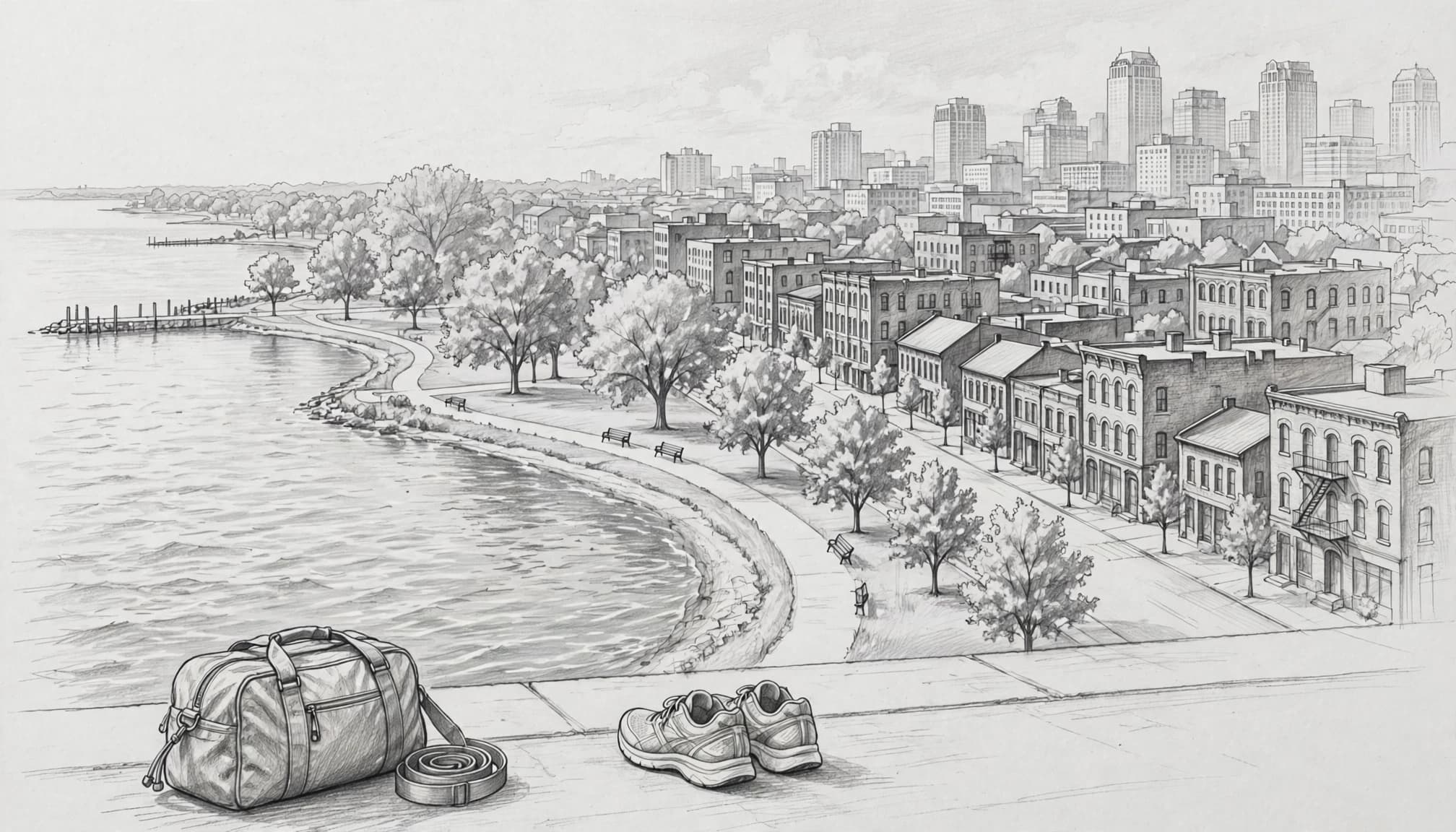
Best downtown Milwaukee stays for easy dining and race-weekend convenience
Downtown Milwaukee works well when you want restaurants, coffee shops, attractions, and indoor options within an easy walk. Full-service hotels often provide larger lobbies, elevators, meeting space, luggage storage, fitness centers, and front desks that can answer race-weekend questions. Luxury properties may offer a quieter room experience, while boutique hotels can put you near independent restaurants and cafes.
The area also gives you more transportation choices. You may find easier access to buses, rideshare pickup areas, parking garages, and hotel shuttles. That convenience matters when rain, cold temperatures, or post-race soreness makes walking less appealing.
However, a downtown address doesn’t automatically mean a short trip to the starting line. Compare the hotel’s exact street address with the race details and course maps, then confirm shuttle locations, pickup times, and road closures. A hotel that looks close on a neighborhood map may still require an early rideshare or bus connection.
Where you stay for the Milwaukee Lakefront Marathon can shape your whole race weekend. Whether you want an easy walk to the start line, a convenient spot near the finish for family to cheer you on, a budget-friendly stay, or a touch of luxury to celebrate after 26.2 miles, our hotel guides help you find the right fit close to the lakefront action.
Beyond accommodations, our race guides cover everything else you need, course details, road closures, and start times, so you can plan your trip with confidence and focus on running your best race.
Milwaukee Lakefront Marathon Hotels and Accommodation Guides
- Best Luxury Hotels Near the Milwaukee Lakefront Marathon
- Best Cheap Hotels Near the Milwaukee Lakefront Marathon
- Best Milwaukee Lakefront Marathon Hotels Near the Start Line
- Best Milwaukee Lakefront Marathon Hotels Near the Finish Line
Milwaukee Lakefront Marathon Race Guides
Lakefront and Historic Third Ward hotels for a calmer race atmosphere
Hotels near the lakefront or Historic Third Ward can make race weekend feel less hectic. You may wake to open water, park paths, and brick-lined streets instead of heavy downtown traffic. Boutique properties in the Third Ward often sit near walkable restaurants, galleries, and cafes, while nearby lakefront hotels may offer better views and a gentle route for stretching your legs.
Keep that pre-race walk easy. A short stroll for coffee or fresh air can help you settle your nerves, but sightseeing on foot can quietly add fatigue before the starting line.
These areas can have fewer late-night food choices, especially after restaurant kitchens close. Weekend rates may also rise because of demand, and you may need to arrange transportation if the race starts elsewhere. Check parking costs, breakfast hours, and the return plan after the finish before choosing the view over convenience.
Extended-stay hotels for families, training partners, and longer visits
An extended-stay room can simplify race preparation when you need familiar food and extra space. A refrigerator helps store breakfast items, while a microwave or small kitchen lets you prepare oatmeal, rice, soup, or recovery meals without relying on restaurant hours. Separate sleeping areas can also help when family members keep different schedules.
For groups, compare sofa beds, parking fees, elevator access, cancellation rules, and posted quiet hours. Ask whether the room truly includes the features you need. Extended-stay properties don’t all offer the same kitchen equipment, bed configuration, or sound insulation, and hotel inventory, amenities, and rates can change before a major race weekend.
Which Milwaukee neighborhoods make race morning easier?
Your best choice among Milwaukee Lakefront Marathon hotels depends on how you want race morning to work. Downtown, the Historic Third Ward, the lakefront, the East Side, and airport-area corridors each create a different balance of walking, parking, traffic, and recovery time.
Downtown usually offers the widest hotel selection, restaurants, coffee shops, public transit, and rideshare access. The Historic Third Ward adds a walkable dining scene and attractive streets, while lakefront properties provide a calmer setting and an easier recovery walk. East Side hotels may offer restaurants and neighborhood convenience, but your route to the start or finish can depend heavily on road closures.
A hotel that looks close on a map may take much longer to reach when streets close for the race. Check the official marathon map, then confirm the current shuttle, parking, start, finish, and closure plans before booking.
Choose Your Distance, Duration and Goal Time
Make three quick selections and open the exact plan built for your race target.
Looking for a Fully Personalized Training Plan?
The training plans above are an excellent choice if they match your goal. However, if you’d rather train with a plan built specifically around your current fitness, goal race, preferred training days, weekly mileage, and target finish time, our RDA Custom Training Plans provide a personalized solution. We also have running courses available for runners seeking to run faster from the mile to the marathon.
Why Choose a Custom Training Plan?
| Standard Training Plan | RDA Custom Training Plan |
|---|---|
| Follows a fixed schedule | Built around your schedule |
| Standard weekly mileage | Peak mileage customized for you |
| Fixed workout days | Train on the days you choose |
| Same structure for everyone | Designed around your current fitness |
| Static plan | Updated as your fitness improves |
| One-time purchase | Ongoing personalized coaching and support |
What You’ll Receive
- A training plan built specifically for your goal
- Personalized training paces
- Long runs, tempo runs, threshold workouts, interval sessions, recovery runs, and easy runs
- Peak weekly mileage matched to your experience level
- Flexible training schedule that fits your life
- Ongoing plan adjustments as your fitness improves
Ready to Train Smarter?
Stop guessing and start following a plan built specifically for you, your schedule, and your racing goals.
Downtown versus the lakefront: the tradeoff runners should understand
Downtown is often the practical choice when you want services close by. You can find more restaurants, convenience stores, pharmacies, indoor spaces, and hotel staff who handle race-weekend questions. Public transit and rideshare pickup may also be easier to arrange, although traffic and closed streets can complicate a short trip.
The lakefront offers a different rhythm. A quieter room, open views, and a gentle post-race walk can help you settle before the start and loosen up afterward. However, fewer nearby restaurants may limit late-night meal choices, and the hotel may sit farther from shuttle loading or participant parking.
Transportation can change the decision completely. If the race provides runner shuttles, staying near a designated pickup point may matter more than staying closest to the course. The event’s current shuttle and parking information should guide your choice, rather than a previous year’s schedule.
When an airport or suburban hotel is worth considering
An airport or suburban hotel can make sense when it includes free parking, costs less, accommodates your family, or supports an early departure after the race. Rental-car travelers may also prefer a property with simple access to major roads, especially if they need to leave Milwaukee soon after finishing.
The tradeoff is time and dependence on a car. A longer drive can add stress before the start, while race traffic and closures may slow the return trip. You may also find fewer race-weekend restaurants, less public transit, and limited rideshare availability.
Calculate the full price before choosing the lower room rate. Include parking, gas, tolls if applicable, rental-car costs, and race-day transportation. A simple guide can help:
- Choose downtown or the Third Ward if walking, dining, and services matter most.
- Choose the lakefront if you value a quieter room and an easy recovery stroll.
- Choose the East Side if neighborhood restaurants and central access fit your route.
- Choose an airport or suburban hotel if free parking, a lower rate, or a fast post-race exit outweighs extra driving.
How to choose a Milwaukee marathon hotel that supports your race plan
The best Milwaukee Lakefront Marathon hotels support your race plan before you ever reach the starting line. Before confirming a room, compare the hotel’s exact address with the current start area, finish area, shuttle stops, and road closure plan. The official full marathon information notes shuttle service from the finish area to host hotels, but schedules and pickup details can change.
The race-morning hotel checklist
Before you pay, confirm each detail with the property and the race organizer:
- Check the hotel’s exact street address, then calculate the drive and walk time to the current start area.
- Identify your transportation plan, including shuttle access, rideshare pickup, public transit, or driving.
- Ask about parking access, overnight rates, in-and-out privileges, and whether race-day closures could affect your vehicle.
- Confirm breakfast hours and nearby food options, but pack your own familiar breakfast and hydration backup. Don’t depend on hotel service opening on time.
- Request a quiet room away from elevators, stairwells, ice machines, bars, and busy entrances.
- Verify the checkout time, cancellation deadline, and any nonrefundable rate conditions.
- Ask about post-race showers, luggage storage, and whether you can change before leaving.
A familiar, quiet room often helps more than a luxury feature you won’t use. If the hotel promises early breakfast, late checkout, or luggage storage, ask for those details in writing.
Questions to ask before booking a room
Call the hotel directly and ask whether runners can leave early without disturbing others, whether elevators operate before dawn, and whether rooms include a refrigerator or microwave. Confirm late checkout fees, luggage storage limits, parking charges, shuttle availability, and the distance to a grocery store or restaurant that serves food on your schedule.
A third-party booking page may list standard amenities, but it may not show race-weekend exceptions, temporary construction, sold-out parking, or a changed breakfast schedule. A representative can check the current operating plan and record a request for a quiet room. Still, a request is not a guarantee, so confirm the arrangement again a few days before arrival.
The Milwaukee Lakefront Marathon travel information describes complimentary Sunday shuttle service from the finish line to host hotels. Use that information as a starting point, then verify whether your specific property participates and where you should board. Save the hotel’s phone number, your reservation details, and the latest race transportation instructions offline before race weekend.
Race-weekend costs, booking timing, and hotel deals
Marathon weekend can change hotel pricing fast. Room rates may rise as inventory shrinks, while some properties add minimum-stay rules, one-night deposits, or stricter cancellation terms. Compare the full reservation before choosing the lowest advertised rate.
How to compare hotel rates without losing flexibility
A refundable rate usually lets you cancel by a stated deadline without losing the room charge. A prepaid rate often costs less, but the payment may be nonrefundable or subject to a limited credit policy. Read the exact terms before booking, including the cancellation date, cancellation time, and whether the hotel charges a one-night deposit.
Compare the same room type across the hotel’s website and trusted booking platforms. A king room with free cancellation isn’t equivalent to a prepaid double room with no changes allowed. Check each offer for:
- Room taxes and other mandatory fees.
- Overnight parking and in-and-out privileges.
- Breakfast charges or early breakfast availability.
- Resort, destination, or facility fees.
- Wi-Fi, shuttle, and fitness center access.
- The final payment schedule and cancellation deadline.
The cheaper room rate may become more expensive after parking, breakfast, and transportation. Add rideshare costs, rental-car fees, fuel, and a possible extra night for recovery before making your decision. An extra night can be worthwhile if it prevents a rushed departure after the marathon or gives you time to shower, eat, and walk normally again.
A slightly higher flexible rate can protect your plans if an injury, flight delay, family issue, or race schedule change affects the trip. That protection has real value, especially when a nonrefundable reservation could cost more than the original savings.
When to book for the best balance of price and choice
Book as soon as the race date and your travel plans are firm, especially if you want a downtown or lakefront property. Popular Milwaukee Lakefront Marathon hotels may lose their best room types first, leaving you with higher rates, inconvenient locations, or limited cancellation options.
Check whether the race offers an official hotel block or local group rate before booking elsewhere. The official Milwaukee Lakefront Marathon website may direct runners to a housing system or participating hotels. A group rate can include useful benefits, but compare its cancellation policy and total cost with direct hotel offers.
A flexible reservation lets you keep monitoring prices after booking. If a better deal appears, confirm the replacement reservation first, then cancel the original room within its allowed window. Never cancel the first booking while the new reservation is still pending.
Before finalizing your plans, review the race’s current date, start location, finish area, shuttle schedule, and official hotel information. Race logistics can change, and a low room rate loses its value if the property leaves you far from race transportation or forces an exhausting early-morning drive.
Getting to the Milwaukee Lakefront Marathon start, finish, and post-race recovery
Your hotel choice matters again once race morning begins. A room that looks close to the start may still require extra time because streets close, crowds gather, and vehicles lose access to familiar routes. After the finish, simple comforts such as food, water, a shower, and somewhere quiet to sit can make the difference between a manageable afternoon and a miserable one.
Why the shortest route is not always the fastest race-morning plan
A map may show a ten-minute drive, but race morning follows different rules. Road closures, one-way streets, security restrictions, limited parking, and large crowds can turn a short trip into a slow circuit. Rideshare drivers may also need to use a designated pickup or drop-off area instead of stopping directly outside the start.
Build a generous time buffer, then check the official Milwaukee Lakefront Marathon race information shortly before your trip. Save the current race map, street-closure details, parking instructions, and transportation plan offline in case cell service becomes unreliable.
Before race morning, complete a low-stress route check. Walk the first part of the route, identify the legal rideshare pickup location, and ask the hotel where a driver can safely stop. If you’re driving, confirm which entrance remains open and whether you can leave the lot after the race.
A simple plan should include:
- Your hotel departure time, with extra minutes for elevators and lobby traffic.
- A backup route if the primary street closes.
- The exact shuttle or rideshare pickup area, if those services apply.
- A meeting point for family members that isn’t directly beside a crowded finish exit.
What runners need from a hotel after 26.2 miles
Post-race comfort deserves attention before you book. Nearby food, working elevators, reliable water, ice, and a quiet room can matter more than an impressive lobby after several hours on your feet. Family members also need a comfortable place to wait, especially if they arrive before you finish.
Late checkout gives you time to shower, change, eat, and let your heart rate settle before traveling. Ask whether the hotel offers it free, charges a fee, or limits availability on a busy race weekend. If checkout remains fixed, arrange luggage storage and pack clean clothes in an accessible bag.
When available, a day-use room gives you a private place to shower and recover without paying for another full night. Otherwise, confirm access to a fitness-center shower or another approved changing area. A hotel that handles bags but offers no post-race shower may still leave you searching for basic comfort when your legs are already spent.
Common hotel mistakes Milwaukee marathon runners should avoid
A hotel can look perfect online and still make race weekend harder. Avoid judging Milwaukee Lakefront Marathon hotels by appearance or a map pin alone. Your room needs to support early sleep, familiar food, simple transportation, and recovery after 26.2 miles.
Why a beautiful hotel can still be a poor marathon choice
A lake view, stylish lobby, or luxury bathtub won’t help if the room faces a busy street or sits beside an elevator. Before booking, ask whether you can request a quiet room away from hallways, bars, ice machines, and entrances. Check for a refrigerator or microwave if you plan to store breakfast or recovery food.
Location can also mislead you. The race start may not sit near the finish, and a short distance on a map can become a long drive after road closures. Confirm the current start, finish, shuttle, and parking details through the official full marathon information, then plan both directions.
A low room rate can become expensive after parking, breakfast, rideshare costs, and extra fees. Likewise, a nonrefundable booking may cost more than its savings if an injury or travel delay changes your plans. Compare the full price and cancellation terms before you reserve.
The best hotel is the one that protects your race routine, not necessarily the one with the most impressive photos.
The final checks to make before race weekend
During the week before travel, review your reservation and save the confirmation number on your phone. Check the cancellation deadline, room type, arrival date, parking arrangement, and any special requests.
Then open the latest official race email. Verify the start and finish locations, shuttle times, road closures, packet pickup details, and transportation instructions. Don’t assume last year’s plan still applies.
Call the hotel if you need early breakfast, late checkout, luggage storage, a refrigerator, a quiet room, or an early-morning elevator. Pack familiar breakfast items and hydration because hotel kitchens may open too late or sell out of convenient options.
Finally, plan the trip back after the finish. Confirm where shuttles, rideshares, or your car will be located, and save an offline map. A few minutes of preparation can prevent a painful, confusing walk when your legs are exhausted.
Frequently Asked Questions
Choosing Milwaukee Lakefront Marathon hotels involves more than finding the lowest rate or the closest map pin. These answers cover practical details that can affect your sleep, race-morning routine, and recovery after the finish.
What area is best for staying during the Milwaukee Lakefront Marathon?
Downtown, the Historic Third Ward, and lakefront areas are common choices because they offer different mixes of dining, walkability, quiet, and transportation. The best area depends on the official start location, your transportation plan, your budget, and how much you value a peaceful room versus nearby services.
Before booking, compare the current race map with the hotel’s exact street address. A property that looks close to the course may sit far from a shuttle pickup, controlled staging area, or accessible race-day route.
How far in advance should I book a Milwaukee marathon hotel?
Reserve your room once your travel plans are firm, especially if you want a downtown or lakefront property. Popular room types can disappear quickly, and rates may rise as race weekend approaches.
When possible, choose a flexible cancellation policy. That gives you time to keep monitoring hotel options without creating a gap in lodging if your first choice changes.
Do Milwaukee hotels offer breakfast early enough for marathon runners?
Breakfast hours vary, and many hotel dining areas may open later than an early marathon schedule requires. Ask the property about opening times, grab-and-go options, coffee service, and refrigerator access before you arrive.
Bring familiar food as a backup, particularly if nutrition timing is part of your race plan. Race morning is a poor time to test an unfamiliar breakfast simply because the hotel offers it.
Can I walk from my Milwaukee hotel to the race start?
Walkability depends on the current start location, road closures, weather, darkness, and your comfort with standing or walking before 26.2 miles. A route that appears short may become impractical if the event uses a remote staging area or controlled roads.
Check the official shuttle and parking information before deciding to walk. Even a manageable distance can feel longer when you’re carrying gear, waiting outside, or trying to protect your legs before the start.
Should I stay near the finish line instead of the start line?
Staying near the start makes the pre-race trip simpler, while a finish-area hotel can shorten the journey back when your legs are tired. Base the decision on the official transportation plan and whether you value an easy morning commute, a quick recovery return, or a convenient location for family and supporters.
What should I bring if my hotel does not cater to runners?
Pack familiar breakfast foods, hydration supplies, race clothing, basic recovery items, chargers, and any required medication. Include food you already tolerate well, since a hotel breakfast or nearby restaurant may open too late or run out of convenient options.
Don’t try unfamiliar food, supplements, or recovery products before the marathon just because they’re available at the hotel. Your room should support the routine you’ve practiced, not introduce surprises on race morning.
Conclusion
The best Milwaukee Lakefront Marathon hotel isn’t always the most expensive property or the one closest to the course on a map. It is the place that protects your sleep, supports your nutrition and transportation plan, and makes the hours after the finish easier. Downtown, the Historic Third Ward, lakefront areas, and airport corridors each offer different tradeoffs, so choose the neighborhood that fits your race routine.
Before booking, confirm the current start and finish locations, shuttle routes, parking instructions, road closures, and packet pickup details through the official race website. Then compare the full cost, including parking, breakfast, transportation, taxes, and any extra night. A flexible cancellation policy can also protect your plans if an injury, delay, or race update changes your trip.
Finally, consider what your body will need after 26.2 miles. Late checkout, luggage storage, nearby food, elevator access, and a quiet room can matter more than luxury features. Confirm the latest race details, book a room that fits your plan, and let your hotel remove avoidable stress so you can focus on the miles ahead.


