

Best Milwaukee Lakefront Marathon Hotels Near the Finish Line
Finding a comfortable hotel near the Milwaukee Lakefront Marathon finish area can make race morning easier, especially when you need a short walk, reliable transportation, and a quiet place to recover afterward. The best choice depends on more than location, so consider walking distance, shuttle access, parking, breakfast hours, room rates, and post-race comfort before you book.
The official course and finish location can change, so confirm the latest race details before choosing a hotel. This guide compares nearby hotel areas and property types, then covers transportation options and booking tips to help you choose a stay that fits your race plan and budget.
Make sure to reserve your Milwaukee Lakefront Marathon hotels in advance to save on costs.
Key Takeaways
- Choose Milwaukee Lakefront Marathon hotels near the finish line based on walking distance, shuttle access, parking, breakfast hours, and recovery comfort.
- Confirm the current course and finish location through the official full marathon details before booking.
- Hotels farther from the lakefront may offer better rates, parking, and room availability, especially when race-weekend demand rises.
- Book early, then verify transportation schedules, late checkout policies, cancellation terms, and whether the hotel supports runners on race morning.
Milwaukee Lakefront Marathon Hotels Near the Finish Line
Choosing Milwaukee Lakefront Marathon hotels near the finish line starts with confirming where runners actually finish. The event setup can change, so a hotel that looks close on a booking map may still leave you facing a long walk, a bus ride, or a rideshare after the race.
Plan Your Complete Marathon Weekend
Choosing the right hotel can reduce race-day stress, shorten travel time, improve sleep, and make your entire marathon weekend smoother.
More Milwaukee Lakefront Marathon Hotel Guides
Confirm the Finish Venue Before Booking
The finish area may be near Veterans Park or another lakefront location, depending on the current race setup. Treat that location as temporary until you check the latest full marathon course map and event updates.
Look for these details before reserving a room:
- The exact start and finish addresses.
- The distance between the hotel entrance and the race area.
- Parking restrictions and road closures on race morning.
- Shuttle pickup points, operating hours, and post-race service.
- Any changes to the course, finish zone, or spectator access.
The difference between a hotel listed as “downtown Milwaukee” and a hotel beside the finish area can be significant. Downtown properties may sit several blocks inland, while the lakefront stretches across parks, roads, pedestrian paths, and busy intersections. A map may show a short straight-line distance, but the actual walking route could take much longer.
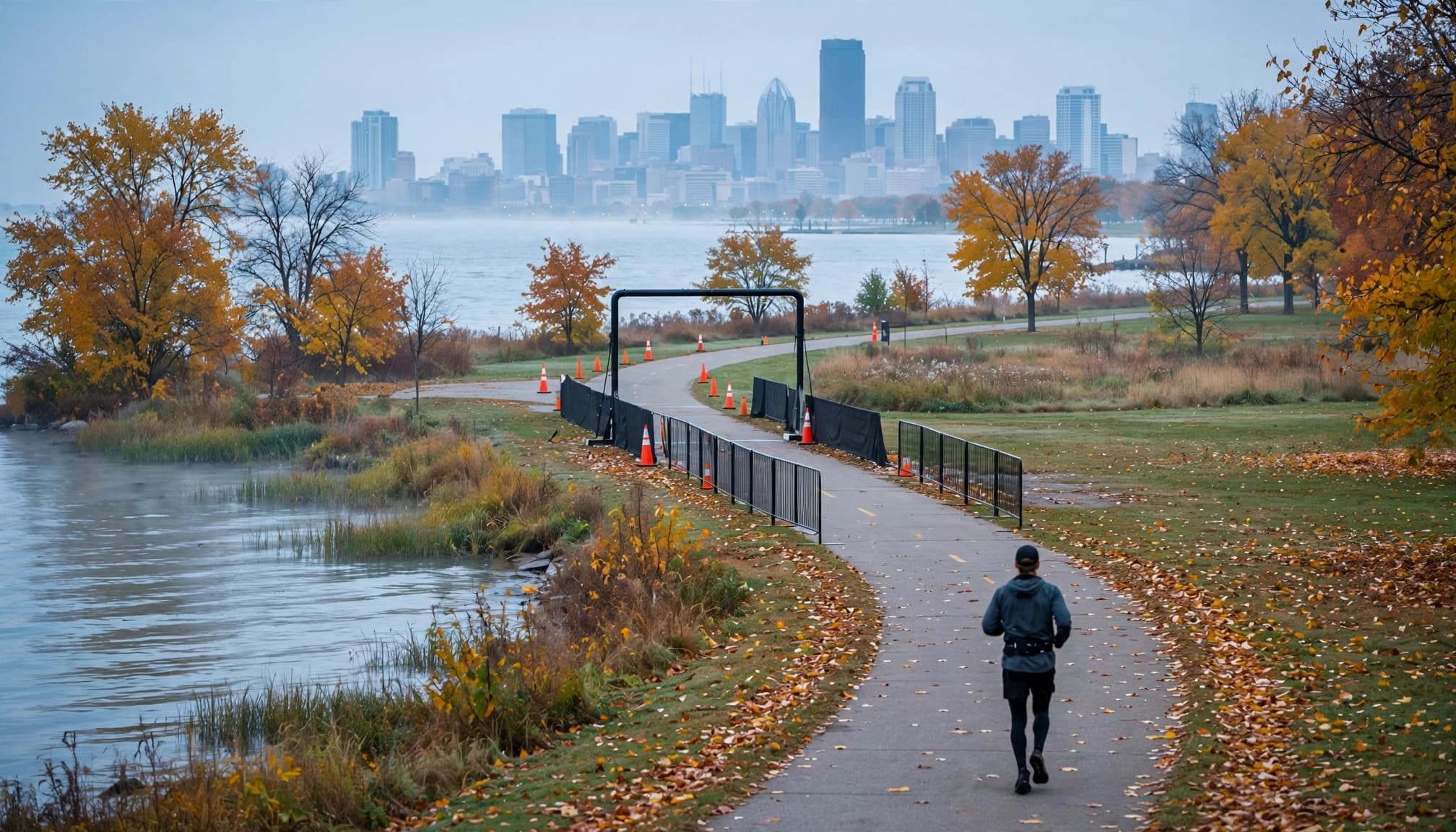
Measure the Real Walk, Not Just the Map Distance
Before you call a hotel walkable, trace the route from its front entrance to the race area. Check sidewalks, lakefront paths, hills, construction zones, closed streets, and places where runners may need to cross traffic. After a marathon, even an extra half-mile can feel much longer.
A truly convenient hotel should offer a simple route that you can follow before sunrise and after the finish. If that route depends on a road that may close, a shuttle with limited departures, or a rideshare pickup zone near race traffic, the property is not a guaranteed finish-line hotel.
The official Milwaukee Lakefront Marathon site publishes race updates, travel information, street-closure details, and shuttle or parking guidance. Review those details again during race week because transportation plans can affect both your arrival and your trip back to the hotel.
A downtown address does not automatically mean a short walk to the lakefront finish.
For many runners, the best choice is the hotel with the most predictable race-morning plan, not the one with the lowest listed distance. A nearby room with late checkout, secure parking, breakfast options, and a clear walking route can make recovery much easier.
The Best Milwaukee Neighborhoods for a Race Weekend Hotel
The best Milwaukee Lakefront Marathon hotels near the finish line depend on your priorities after the race. Lakefront properties shorten the trip, downtown offers more services, and nearby districts may provide better dining or parking.
East Side and Lakefront Hotels for the Shortest Post-Race Trip
Hotels on Milwaukee’s East Side or near Lake Michigan can make race weekend feel much easier. You spend less time in traffic, start closer to the finish area, and return to a shower or bed sooner after several hours on the course. That shorter recovery trip matters when your legs are tired and your only goal is to get comfortable.
Staying nearby can also simplify race morning. You may be able to walk rather than depend on a shuttle or rideshare, and you can return to the hotel without crossing the entire city. However, a nearby address doesn’t guarantee a direct entrance to the race area. Barriers, closed streets, restricted roads, and separated pedestrian routes can force you to take a longer path.
Check the route from the hotel’s actual entrance, not just the property pin on a map. Review the latest Milwaukee Lakefront Marathon information for course updates and race-day access details.
Downtown Milwaukee Hotels With More Services and Dining
Downtown is often the most balanced choice for out-of-town runners. Full-service properties usually offer larger rooms, front desks open around the clock, elevators, restaurants, room service, and parking garages. Those features help when you arrive late, need food outside normal breakfast hours, or want to avoid driving after the race.
Downtown also offers more public transportation choices and a wider range of restaurants. Compare options such as Hyatt Regency Milwaukee, Hilton Milwaukee City Center, Saint Kate The Arts Hotel, The Pfister Hotel, and Milwaukee Marriott Downtown. Check each property’s current location, price, parking fees, breakfast hours, cancellation terms, and race-weekend policies before booking.
The tradeoff is distance. Downtown may be close enough for a practical walk, but the route can pass through intersections affected by race traffic or street closures. A hotel with strong services is useful only if you also have a clear plan for reaching the finish.
Historic Third Ward and Other Nearby Alternatives
The Historic Third Ward works well for groups that want restaurants, shops, galleries, and sightseeing during a longer Milwaukee visit. Nearby districts can also offer attractive rooms and a more active evening setting. The neighborhood’s visitor information and local attractions can help you plan activities beyond race day.
Still, a hotel that is excellent for sightseeing may be less convenient on marathon morning. The route to the lakefront can involve bridges, busy roads, or race-related restrictions. Bay View and farther suburbs may offer lower rates or easier parking, but they often require a car or rideshare.
Compare the complete walking route, transportation plan, and road-closure information before choosing based on a neighborhood name alone.
Hotel Options Runners Should Compare Before Booking
Milwaukee Lakefront Marathon hotels near the finish line vary widely in price, comfort, and race-day convenience. Compare the full stay, not just the nightly rate, because parking fees, breakfast hours, and recovery space can change the value.
Full-Service Hotels for Breakfast, Elevators, and Easy Recovery
A full-service downtown hotel can make the hours after a marathon much easier. Properties such as the Pfister Hotel, Milwaukee Marriott Downtown, and Hilton Milwaukee City Center may offer front-desk support, elevators, on-site dining, luggage storage, and larger public areas. Nearby restaurants also give you a backup when standing in line or driving for food sounds miserable.
Ask these questions before booking:
- Can the hotel provide coffee or an early breakfast before the race?
- Is late checkout available, and what fee applies?
- Can staff store your luggage after checkout?
- Does the building have reliable elevators?
- Is room service available during your expected return time?
Hyatt Place Milwaukee Downtown, for example, lists valet parking as its parking option, so review the property’s current parking and hotel FAQs before assuming the fee or service fits your budget. A quiet room away from elevators, bars, and busy streets can matter just as much as the lobby amenities.
Boutique and Historic Hotels for a More Memorable Stay
Boutique and historic properties offer more personality than a standard chain hotel. The Plaza Hotel Milwaukee, County Clare Irish Inn and Pub, Kimpton Journeyman Hotel, and The Iron Horse Hotel each appeal to travelers who want distinctive design, walkable dining, or a more personal stay.
That character can come with tradeoffs. Older buildings may have smaller rooms, limited parking, narrower elevators, or more street noise. Some properties also have fewer race-focused services, such as early breakfast or flexible checkout. Check the room’s bed configuration, refrigerator access, elevator details, and cancellation deadline before paying a premium.
Budget, Extended-Stay, and Vacation Rental Choices
Limited-service hotels, suites, and vacation rentals often make more sense for families or groups sharing costs. A suite or rental may provide multiple beds, a refrigerator, a microwave, and room for race shoes, fuel, clothing, and recovery supplies. Hampton Inn & Suites Milwaukee Downtown and similar extended-stay-style options can suit runners who want practical amenities without a full-service price.
However, compare the less obvious terms. Confirm parking charges, cleaning rules, deposit requirements, check-in hours, and cancellation policies. Vacation rentals also require a legal listing, an exact address, and a realistic route to the race area. Before booking, compare each option by:
- Distance and race-day transportation
- Total room price, parking, and fees
- Breakfast or kitchen access
- Bed comfort and sleeping capacity
- Cancellation flexibility
- Space for luggage and race gear
A cheaper room loses its advantage if it requires an expensive rideshare, early checkout, or a long post-race trip.
How to Choose a Hotel That Works on Marathon Morning
The cheapest room is rarely the best value on marathon weekend. Rank each hotel by proximity, official race transportation, parking, breakfast access, quiet hours, cancellation flexibility, and recovery comfort before comparing nightly rates.
Also separate your start-line plan from your finish-line plan. In a point-to-point race, a hotel near the start may simplify your morning but leave you facing a long shuttle or drive after the finish. A property near the finish can make recovery easier, although you still need a reliable way to reach the starting area.
Walking Distance Is Useful, but Only if the Route Is Open
Measure the walk from the hotel’s main entrance to the actual race access point, not from the property pin to a finish marker. Use the current race map, then check whether sidewalks, lakefront paths, intersections, and roads remain open during your travel time.
Barricades, fencing, construction, hills, cold rain, and crowded pedestrian routes can turn a short map distance into a tiring detour. Road closures may also affect hotel access and rideshare pickup. Recent Milwaukee marathon coverage, for example, reported extended closures affecting major routes, including I-794 and the Hoan Bridge, so review current race-week information rather than relying on last year’s route.
After 26.2 miles, reaching the hotel entrance matters as much as reaching the neighborhood. Look for a simple route with minimal crossings, clear access, and a practical backup if weather or race fencing changes the plan.
Check Breakfast, Checkout, Parking, and Recovery Policies
Contact the hotel before booking, and request important answers in writing. Race-weekend policies can differ from the standard information shown on a booking page.
Ask these questions:
- Can runners get coffee, breakfast, or a grab-and-go meal before the race?
- Is late checkout available, and what fee applies?
- Will staff store luggage after checkout?
- Is parking included, valet-only, or charged separately?
- Does the room include a refrigerator, and are bathtubs available?
- Can you request a quiet room or an accessible room?
- Will the hotel provide race transportation, and where does it leave?
The official Milwaukee Lakefront Marathon website should be your reference for current transportation and finish-area details. Compare those arrangements with the hotel’s own shuttle schedule, since a hotel shuttle may serve the finish but not the start.
Choose the Right Room for Sleep and Post-Race Comfort
A quiet room can justify a slightly higher rate before an early race. Request a location away from bars, busy roads, elevators, ice machines, event crowds, and high-traffic lobby areas. A higher floor may reduce street noise, but a nearby elevator can still create disturbances throughout the night.
Check the bed setup carefully if you share the room. Confirm the air conditioning works, ask about blackout curtains, and make sure there is enough floor or closet space for wet jackets, muddy shoes, and post-race clothing. Families may need extra beds and a refrigerator, while couples may value a quiet room and late checkout more.
Before paying, rank your priorities in this order:
- A dependable route to the start and finish.
- Official race transportation or secure parking.
- Sleep quality and a comfortable recovery space.
- Breakfast, luggage storage, and late checkout.
- Cancellation flexibility and the total price.
A solo runner may prioritize a simple shuttle and luggage storage. Couples can split parking and choose a quieter room, while families should confirm beds, breakfast, and refrigerator space. Relay teams and training groups need multiple-room cancellation terms, shared transportation, and enough storage for race gear.
Race-Day Transportation, Parking, and Hotel Logistics
Your hotel, starting line, and finish line may sit in different parts of the Milwaukee metro area. Build the entire trip before race weekend, including the route to the start, the trip back to your hotel, and a backup if roads or transit change.
Using the Official Shuttle and Public Transportation
If the Milwaukee Lakefront Marathon offers an official race shuttle, follow the current event instructions, not an old blog post or a previous-year schedule. Save the official race map and shuttle page to your phone before leaving the hotel, since race-morning service details may differ from normal transit.
Confirm these points before race day:
- The exact shuttle pickup location and nearby parking area.
- First and final departure times, including recommended arrival time.
- Whether runners need a bib, ticket, or other proof to board.
- Bag rules, especially whether personal items can travel on the shuttle.
- Whether spectators, family members, and mobility devices can ride.
Public transportation can provide a useful backup, but don’t assume it offers a direct route to the start or finish. Check Milwaukee County Transit System routes for the complete trip, transfer points, walking distances, and first-service times. Then review the MCTS route alerts before departure. Allow extra time for crowded buses, detours, and walking around race barriers.
Arrive early enough to use your backup plan without rushing. Runners with mobility needs should confirm accessible shuttle boarding, sidewalk conditions, and elevator access in advance, then ask the event about accessible drop-off points.
Driving, Hotel Parking, and Rideshare Pickup Plans
Driving can work when you reserve a hotel parking space or identify a nearby garage before race weekend. Ask whether the overnight rate is guaranteed, whether you can leave and return during the stay, and whether the garage has vehicle height limits. In-and-out privileges may not apply to discounted event or overnight rates.
Lakefront streets can close or restrict traffic during the race, so don’t plan to drive directly to the finish-area curb. A hotel garage may remain open while the most convenient approach roads become inaccessible. Check the latest race notices, allow time to park, and carry your room key, identification, phone, and recovery supplies in a small bag.
Rideshare drivers may have to stop well away from the finish zone. Choose a meeting point on an open street, such as a nearby hotel entrance or designated parking area, and expect to walk after the race. Share the location with your group before the start because tired runners may struggle to find one another in a crowded finish area.
Planning for Family Members and Spectators
Spectators should use the official spectator map to choose viewing areas without blocking shuttle lanes, runner access, or emergency routes. A hotel near public transit can make it easier for family members to reach more than one point on the course, but they should still check walking connections and service alerts before leaving.
Choose a hotel with a comfortable lobby, restaurant or nearby food, luggage storage, and more than one activity within easy reach. Those features help non-racing guests stay comfortable if weather, street closures, or a delayed finish changes the day’s schedule.
Runners and spectators should agree on one meeting point away from the finish crowd. Save the hotel address, shuttle details, and backup transportation plan offline so everyone can return safely when phone service becomes unreliable.
When to Book and How to Control the Total Cost
Booking early can protect your location, but the cheapest-looking room may not be the cheapest stay. Compare the complete race-weekend cost and keep your reservation flexible until the course, finish area, and travel plans are confirmed.
Build a Race Weekend Hotel Budget
Before comparing Milwaukee Lakefront Marathon hotels near the finish line, write down every likely expense:
- Room rate for each night, including taxes.
- Parking, valet charges, destination fees, and facility fees.
- Meals, breakfast, coffee, and post-race food.
- Transportation to the start, finish, or hotel.
- Pet fees, if you are traveling with an animal.
- An extra night if race-day checkout feels rushed or unavailable.
A hotel farther from the lakefront may advertise a lower nightly rate, yet parking and two rideshares can erase the savings. Check the race’s current travel and shuttle information, since complimentary transportation or participant parking can change the value of different locations.
Sharing a larger room or suite can lower the per-person cost when the bed setup works for everyone. Four runners splitting one suite may spend less each than two people booking separate rooms, especially when the suite includes a refrigerator or kitchen. Confirm the number of beds, sleeping arrangements, parking limits, and cancellation terms before booking for a group.
Use Flexible Reservations Without Losing the Best Location
For a popular Milwaukee race weekend, reserve a cancellable room early if the rate fits your budget. Rates may rise as race day approaches, and nearby rooms can sell out before the course or finish details become final. You can protect your preferred location now, then check the hotel’s direct website, reputable booking sites, race-partner offers, and nearby properties at different distances.
Track prices every few weeks, but don’t cancel a secure reservation until the replacement is confirmed. A lower rate is useful only if the room still provides practical parking, breakfast hours, transportation, and recovery access.
Read the terms before confirming. Check the exact cancellation deadline and time zone, payment schedule, deposit rules, minimum-stay requirement, and no-show policy. Some rates charge the full amount immediately, while others place a hold on your card or require payment at arrival. Keep screenshots or confirmation emails so you can verify the terms later.
Common Hotel Booking Mistakes to Avoid
Several small mistakes can create a costly race weekend:
- Confusing the starting area with the finish area when judging hotel distance.
- Trusting an old race map or last year’s shuttle schedule.
- Booking by neighborhood name alone without tracing the actual walking route.
- Overlooking parking, resort-style, facility, or pet fees.
- Assuming breakfast opens early enough for runners.
- Choosing a nonrefundable rate before your plans are certain.
- Forgetting how you will return to the hotel after the race.
Plan the return trip before you book. Confirm whether the hotel shuttle serves the finish, where rideshares can stop, and whether road closures affect the route. The best hotel choice gives you a workable plan before the race and a comfortable way home afterward.
Frequently Asked Questions
Choosing among Milwaukee Lakefront Marathon hotels near the finish line often comes down to details that booking sites don’t explain. These answers cover common race-weekend concerns, including recovery time, hotel rules, and spectator logistics.
Should I book an extra night after the marathon?
An extra night can make sense if you have a long drive or flight home. It gives you time to shower, eat, sleep, and move around before traveling, which may be more comfortable than checking out soon after finishing.
Ask about a late checkout if you only need the room for several additional hours. Compare that fee with the cost of another night, and confirm whether the hotel allows late checkout during a busy race weekend.
Can I request a room that supports race-day recovery?
Yes, although hotels may not guarantee every request. Ask for a quiet room away from elevators, street noise, bars, and event spaces. A bathtub, refrigerator, blackout curtains, reliable air conditioning, and an easy-to-reach elevator can improve your stay after the race.
Contact the property before arrival rather than relying only on the booking notes. Explain that you’re staying for the marathon and ask which room features are available.
What should I do if my hotel does not allow early check-in?
Plan to arrive with your race gear organized in a small, accessible bag. Many hotels can hold luggage before check-in, but confirm the policy and ask whether the front desk operates around the clock.
If your room won’t be ready before the race, arrange clothing, fuel, and transportation the night before. You should also confirm where you can shower after returning, since luggage storage does not include access to a room.
Where should spectators meet runners after the finish?
Choose a meeting point away from the finish chute, medical areas, shuttle lanes, and the largest crowd. The official spectator information identifies the finish area and nearby parking references, but conditions can change on race morning.
Pick one landmark that everyone can recognize, then share a backup location near the hotel. Save the plan in a group message before the race because tired runners may have difficulty finding one another through crowded streets.
Are Milwaukee hotels near the marathon finish usually pet-friendly?
Some properties accept pets, but policies vary by room type, weight limit, deposit, and nightly fee. Confirm that the hotel allows pets during your dates and ask whether your animal can remain alone in the room.
A pet-friendly property may also have limited room locations or specific outdoor relief areas. Review those rules before booking, especially if race-day street closures make nearby walking routes less convenient.
Conclusion
The best Milwaukee Lakefront Marathon hotel near the finish line isn’t always the property with the shortest map distance. Choose the hotel that matches the current finish location, offers a dependable transportation plan, fits your budget, and gives you the sleep and recovery features you need after 26.2 miles.
Before booking, verify the official race map, shuttle details, road closures, and finish-area access. Then compare the full cost, including parking, breakfast, transportation, extra fees, and late checkout. A flexible reservation gives you more room to adjust if race-day details or travel plans change.
Once a hotel passes your checklist, book early. Confirm the walking route and return plan again during race week so your stay supports the entire race weekend, not just the finish-line photo.


