

Mesa Marathon Route Guide: How Tough Is It
Before sunrise, Mesa is cool and quiet as runners gather near the start, headlamps glowing against the desert sky. The Mesa Marathon route then carries you west toward the city, where open mountain views give way to neighborhoods, cheering spectators, and a downtown finish. That point-to-point design and downhill profile can create strong conditions for a fast race, but they also demand thoughtful preparation.
Reviewing the course before you sign up helps you decide whether its elevation changes match your goals and training background. It also gives you a clearer plan for pacing, fueling, and handling the warmer conditions that may develop later in the morning. You’ll want to understand the major course areas, aid station locations, transportation options, start logistics, and where the downhill sections could tempt you to run too fast.
The official race map and runner guide should always be your final source because streets, aid stations, start areas, and other course details can change. With that in mind, let’s examine the route, elevation profile, weather, pacing demands, and race-day preparation that can help you arrive ready to run well. Looking for the best hotels near the Mesa Marathon? Make sure to reserve your rooms early.
Key Takeaways
- The Mesa Marathon route starts near Usery Mountain and travels west toward a downtown Mesa finish on a mostly downhill course.
- Review the official marathon course details for current roads, aid stations, start logistics, and course updates.
- Use the descent carefully: hold back early, protect your legs, and settle into goal pace before the final miles.
- Train for changing conditions, including cool early temperatures, sun exposure, hydration needs, and warmer weather near the finish.
- Plan transportation, fueling, pacing, and recovery before race morning so your effort stays controlled from start to finish.
How the Mesa Marathon Route Unfolds From the Start to Downtown
The Mesa Marathon is a point-to-point race through the East Valley. It begins in northeast Mesa and carries runners toward a finish in or near downtown Mesa, so your race plan must cover more than pacing. Transportation, clothing, family viewing, and post-race movement all depend on the route’s one-way design.
Build Your Running Performance System
Move from research to action with training, recovery, nutrition, pacing, and performance tools built for runners.
More Guides for This Runner Goal
The exact start line, street closures, finish location, and certification details can change. Before race weekend, compare your plans with the official Mesa Marathon information and the current runner guide.
What the opening miles feel like
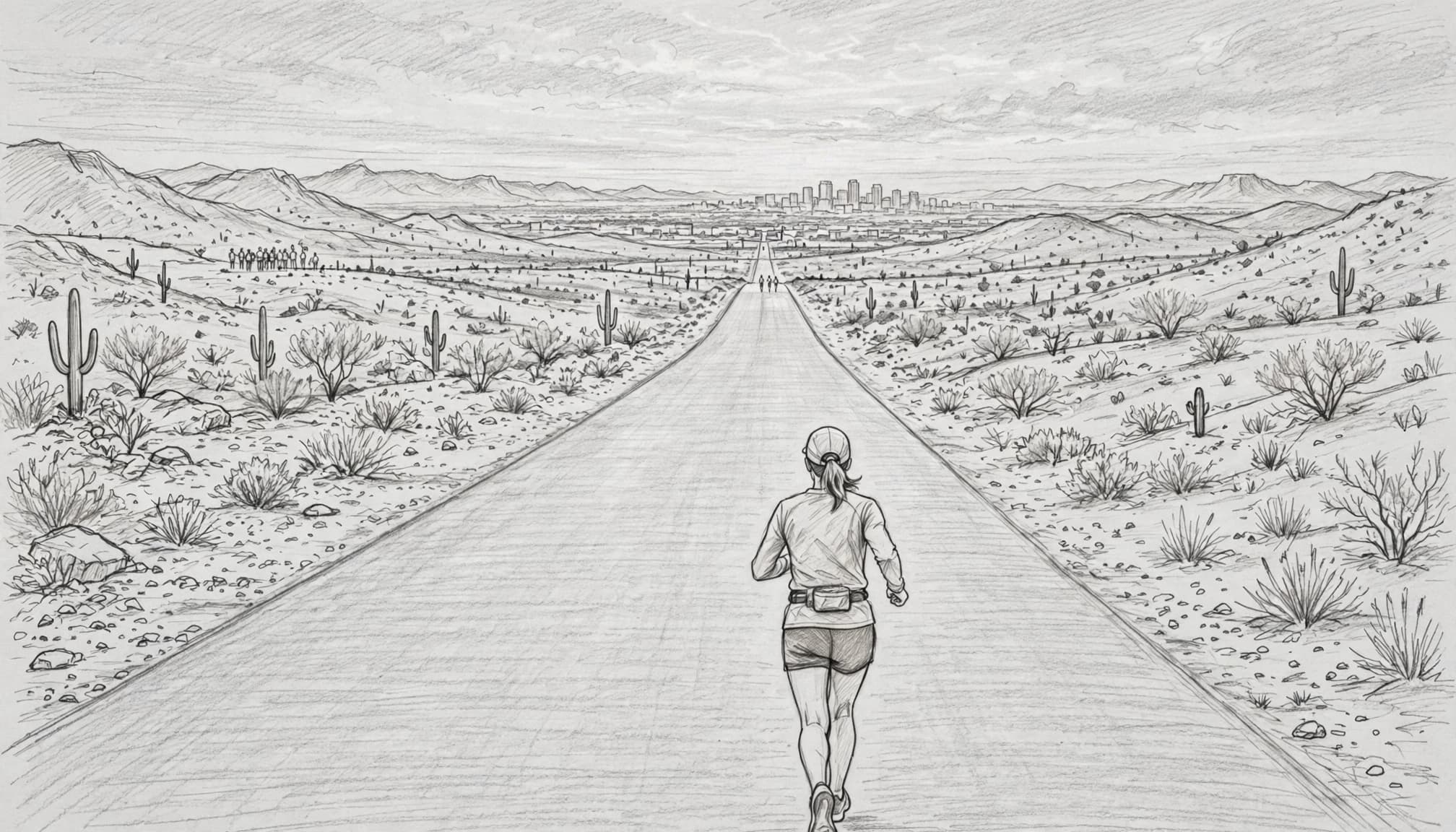
Race morning begins before full daylight. The start area can feel cool, dark, and quiet beneath the desert sky, while headlamps and small pockets of conversation build anticipation. Runners may wait for a shuttle, stand in bathroom lines, remove extra layers, and spend a long time in the corral before the gun.
Because the start sits farther east and at a higher elevation than downtown, it may feel cooler than the finish area. Bring clothing you can discard safely or donate according to race instructions. Pack patience, too, because the waiting period can test your nerves before the race even begins.
Once the course opens, resist the urge to chase the downhill feeling. The early descent can make goal pace feel unusually easy, and the starting pack may pull you into a surge. Hold a relaxed effort instead. Your first miles should feel controlled enough that you could speak in short phrases.
The middle miles through Mesa neighborhoods
As daylight strengthens, the scenery shifts from open desert edges toward Mesa neighborhoods, wider roads, and longer straight sections. The course may feel less dramatic here, but this middle portion often determines whether your race remains steady. Use each aid station to check hydration, fueling, posture, and effort.
Turns can interrupt your rhythm, while quiet stretches may make small pace errors difficult to notice. Use broad landmarks, changes in scenery, and aid stations as mental checkpoints rather than depending on one business or intersection that could change.
Keep your shoulders loose and your stride compact, especially while the downhill grade continues. Check your watch at planned points, but let breathing and effort guide you between those checks. The full marathon course is separate from related half marathon and race weekend events, so confirm that your map matches the marathon before memorizing landmarks.
The final approach and downtown finish
Near the city center, fatigue changes the way you read the course. Roads may feel more urban, spectators can become more visible, and every remaining stretch may seem longer than it looks. Break the final miles into small targets, such as reaching the next aid station, completing one turn, or running steadily to the next visible crowd.
Save a controlled push for late in the race rather than spending it during the opening descent. Before race weekend, review the current finish map so you know where the finish chute, recovery area, gear check, and family meeting points are located. Since your vehicle may remain near the start, arrange a shuttle, ride, or meeting plan before race morning.
Elevation, Downhills, and the Parts of the Mesa Marathon Route That Test Your Legs
The Mesa Marathon route has a broad downhill character, but runners should not assume every mile points downhill. Check the current official marathon course details before race day, then study the elevation chart alongside a street-level route preview. Turns, slight rises, exposed roads, uneven pavement, and any bridges or overpasses on the current map can all change how the course feels.
A net descent may help your finish time, yet downhill running still loads the quads, calves, and hips with every landing. The road can give your watch a fast pace while quietly taking strength from your legs.
How to handle the early descent without burning your legs
Open with a controlled effort, even if the first miles feel effortless. Let the downhill improve your pace naturally instead of forcing a number that feels too quick. Keep your cadence quick but relaxed, land softly beneath your body, and stay tall through your hips.
Avoid leaning back, overstriding, or braking hard with each step. Leaning back can increase braking forces, while a long stride can turn the descent into repeated quad stress. Instead, keep your arms loose and allow a compact stride to match the road.
Use a simple effort check: during the opening miles, you should be able to speak a short sentence without gasping. Experienced runners can compare that feeling with marathon effort, while newer runners can use breathing as their main guide. If your watch shows goal pace but your effort feels suspiciously easy, hold back slightly. Early pace is information, not a command.
Why downhill training belongs in your marathon plan
Your legs need practice absorbing downhill impact before race morning. Add gradual downhill repeats on a safe road, then build toward rolling long runs that include both descents and small rises. Race-pace running on similar roads can also teach you how quickly pace changes without extra effort.
Strength work matters because downhill running creates eccentric muscle stress, especially in the quadriceps. Include controlled exercises such as split squats, step-downs, calf raises, and single-leg work. Flat-course runners may need extra exposure because their regular routes rarely train this braking demand.
Increase downhill volume slowly. Don’t introduce steep descents during a hard training week, and avoid demanding downhill workouts when you’re already tired. The goal is to prepare your legs, not to create soreness that disrupts the rest of your marathon plan.
How elevation affects pacing and race goals
A downhill course doesn’t guarantee a personal best. Weather, wind, road conditions, turns, small climbs, pacing errors, and accumulated quad fatigue can erase the benefit of a net descent. The published elevation information can provide useful context, but the official race source should guide your final plan if details differ.
Set three outcomes before the race:
- Your A goal should require favorable weather and disciplined pacing.
- Your realistic goal should match recent long runs and race-pace workouts.
- Your backup plan should focus on steady effort, fueling, and strong execution rather than a finish time.
Review the forecast, current course changes, training results, and prior marathon experience before choosing your targets. Let effort control the opening descent, then use pace as a tool once your legs settle.
Choose Your Distance, Duration and Goal Time
Make three quick selections and open the exact plan built for your race target.
Looking for a Fully Personalized Training Plan?
The training plans above are an excellent choice if they match your goal. However, if you’d rather train with a plan built specifically around your current fitness, goal race, preferred training days, weekly mileage, and target finish time, our RDA Custom Training Plans provide a personalized solution. We also have running courses available for runners seeking to run faster from the mile to the marathon.
Why Choose a Custom Training Plan?
| Standard Training Plan | RDA Custom Training Plan |
|---|---|
| Follows a fixed schedule | Built around your schedule |
| Standard weekly mileage | Peak mileage customized for you |
| Fixed workout days | Train on the days you choose |
| Same structure for everyone | Designed around your current fitness |
| Static plan | Updated as your fitness improves |
| One-time purchase | Ongoing personalized coaching and support |
What You’ll Receive
- A training plan built specifically for your goal
- Personalized training paces
- Long runs, tempo runs, threshold workouts, interval sessions, recovery runs, and easy runs
- Peak weekly mileage matched to your experience level
- Flexible training schedule that fits your life
- Ongoing plan adjustments as your fitness improves
Ready to Train Smarter?
Stop guessing and start following a plan built specifically for you, your schedule, and your racing goals.
Aid Stations, Weather, and Race-Day Details to Check Before Running Mesa
The Mesa Marathon route is only one part of race-day preparation. Because this is a point-to-point race, transportation, weather, aid stations, and the finish-area plan can shape your experience as much as the elevation profile.
What to confirm in the official race guide
Download or save the final runner guide before traveling. Old blog posts, previous-year maps, and screenshots from past races may show details that no longer apply. Use the official Mesa Marathon FAQ to confirm the latest instructions, then check the guide for:
- The exact start location, shuttle boarding site, departure times, and arrival deadline.
- Parking restrictions near the start, available lots, road closures, and detour information. The Mesa Marathon traffic restrictions map can help families plan around closed roads.
- Bib pickup dates, identification requirements, race expo hours, and whether race-day pickup is allowed.
- The course time limit, cutoff locations, timing mats, and any pace requirements.
- Aid station locations, water, sports drink, gels, medical tents, and restroom locations.
- Bag check rules, gear tags, prohibited items, pacer policies, and live-tracking options.
- The finish chute, recovery area, family access, shuttle pickup, and meeting points.
For a point-to-point marathon, parking at the finish may not solve your transportation problem. Know where your car will remain, how you will reach the start, and how you will return after the race. Arrive early enough to handle shuttle lines, bathroom stops, and gear check without rushing.
How to dress for a cool start and a warmer finish
Early-season Mesa conditions can include a cool start, dry air, bright sun, wind, and a warmer finish. Those conditions are possibilities, not guarantees, so check the forecast for both the start and finish areas. Dressing for only the pre-dawn temperature can leave you overheated later.
A simple layering plan works well. Wear your normal racing kit beneath a lightweight long-sleeve layer, jacket, or sweatshirt that you can remove before the start. Runners often use inexpensive throwaway clothing, but place discarded items only where race organizers permit. Thin gloves can protect cold-sensitive hands, while sunscreen and sunglasses become more useful once the sun rises.
If cold affects your breathing or muscles, keep your core covered until the final minutes. If heat bothers you, choose light, breathable fabric and avoid overdressing during the shuttle wait. Wind and dry air can increase discomfort even when temperatures look mild, so test your clothing choices during long runs.
Hydration and fueling on the course
Carry a familiar gel or drink plan instead of relying on an untested race product. Begin fueling before you feel depleted, often within the first 30 to 40 minutes, then space carbohydrates according to the plan you practiced during long runs. Your pace, body size, sweat rate, thirst, and weather should shape how much you drink.
Before race day, verify the exact sports drink brand, gel policy, cup setup, and aid-station offerings in the official guide. Never assume a station will carry a product you haven’t confirmed. Take small, regular drinks when needed, use your own familiar fuel, and adjust intake if the morning becomes hotter or windier than expected.
A Smart Pacing Plan for the Mesa Marathon Route
The Mesa Marathon route rewards runners who control the early descent and keep enough strength for downtown. Use pace as a reference, but let effort, breathing, form, weather, and fueling guide your decisions. A downhill course can make one exact watch pace misleading, especially when GPS readings jump near turns, trees, tall buildings, or imperfect satellite coverage.
The first miles: patience matters more than speed
Treat the opening miles as a controlled warmup, even if the road slopes down and the crowd moves quickly. Check your breathing, cadence, and muscle tension instead of celebrating a fast split. Your shoulders should stay loose, your stride should remain compact, and your breathing should feel calm enough for short phrases.
When the pace feels effortless but suspiciously quick, hold back. That simple rule protects your quadriceps from absorbing too much downhill stress before the race settles. A beginner may run by comfortable effort, while a Boston hopeful or personal-best runner can stay slightly slower than goal pace until the legs have adjusted.
Use elapsed time and course mile markers when your GPS pace becomes erratic. A short split may reflect a satellite error rather than a sudden improvement in fitness.
The middle miles: settle into repeatable work
The middle of the Mesa Marathon route is where you protect rhythm. After the conservative opening, settle into an effort you can repeat through several aid stations without forcing the watch to show one exact number. Check your posture, relaxed shoulders, cadence, fuel, and effort at regular intervals.
Break this portion into short blocks between aid stations, turns, or familiar landmarks. For example, you might focus on reaching the next station while maintaining steady breathing, then use that stop to drink and take fuel. However, don’t follow a rigid plan when heat, wind, early fatigue, or missed fluids changes the effort required.
A beginner should prioritize an even, sustainable effort. A Boston hopeful can compare effort with the pace needed for qualification, but should still protect the early miles. Someone chasing a personal best can gradually move toward goal effort once fueling and form feel secure.
The closing miles: respond instead of panic
During the final miles, normal marathon discomfort includes heavy legs, rising effort, and manageable muscle fatigue. Keep your form compact, take fluids as needed, and use practiced self-talk such as, “Relax, refuel, and reach the next marker.” Wait until the final few miles before racing competitors or chasing a time.
Slow down and seek medical help for dizziness, confusion, chest pain, severe cramping, faintness, or unusual weakness. The CDC’s heat illness guidance explains why symptoms such as dizziness and weakness require attention, especially as temperatures rise.
If breathing remains controlled and your form holds, increase effort gradually. If your stride falls apart, fueling has failed, or the heat feels overwhelming, protect your health and finish sensibly. A smart Mesa Marathon race plan responds to the conditions in front of you rather than obeying a number your watch may not measure accurately.
How to Train for This Mesa Marathon Course Without Overdoing the Downhills
Training for the Mesa Marathon route doesn’t require copying every mile of the course. Instead, build enough aerobic endurance, downhill tolerance, and pacing control to handle the opening descent without damaging your legs. A gradual progression gives your muscles time to adapt while keeping recovery on track.
Build long runs around time on your feet and controlled descents
Use long runs to rehearse the full race experience, not just the distance. Practice your planned fueling, hydration, clothing, shoes, and sustained effort on roads that resemble the Mesa course. A long run should teach you how to keep moving when fatigue builds, while also showing which choices cause stomach, blister, or overheating problems.
After you’ve built a solid aerobic base, add gentle downhill sections in small doses. You might include several relaxed descents during a long run, then return to level ground before fatigue changes your form. Keep your stride compact, land beneath your body, and avoid braking with stiff legs.
Downhill stress often appears after the run rather than during it. Quadriceps soreness can last longer than expected, especially when you add hills too quickly. Let recovery guide your next workout. If stairs hurt, your stride feels altered, or soreness remains several days later, replace the next hard session with easy running or rest.
Strength work can improve your ability to absorb each landing. Once or twice weekly, use controlled split squats, step-downs, calf raises, and single-leg exercises. Prioritize stable knees, level hips, and smooth movement over heavy resistance. Newer runners can begin with body weight, while experienced runners can add load only when their form stays consistent.
Practice marathon pace when the road is not perfectly flat
Rolling routes are better than a perfectly flat loop for practicing marathon effort on a downhill course. Rather than forcing identical splits, keep your breathing, posture, and effort steady as the road changes. A faster split on a descent doesn’t automatically mean you’re running too hard, and a slower split on a rise doesn’t mean you’ve lost fitness.
During a long run, try 2 miles at marathon effort after an easy opening, then return to relaxed running. Later, progress to 3 or 4-mile blocks separated by easy miles. You can also finish a race-specific long run with 20 to 30 minutes at controlled marathon effort on gently rolling roads.
This practice teaches you to stay calm when your watch shows a pace faster or slower than planned. Let the road influence the number while your effort remains familiar. The goal is to reach the final miles with enough strength to respond, not to win the first downhill.
Taper, shoes, and the final week
During the final two weeks, reduce training volume while keeping a little speed and rhythm. Short marathon-pace segments, relaxed strides, and easy runs can preserve coordination without creating new fatigue. Avoid demanding downhill workouts, heavy single-leg strength sessions, and unfamiliar routes close to race day.
Race in shoes and socks you’ve already tested on long runs. The Mesa Marathon route is a poor place to discover that a new shoe rubs your heel or changes your stride. Sleep consistently, keep meals familiar, and check the forecast and official race updates again during race week. Your preparation should feel settled before the start, not like a last-minute experiment.
Common Mistakes Runners Make on the Mesa Marathon Route
A downhill marathon can feel generous early, then collect its debt during the final 10K. Small decisions in the opening miles affect your legs, fueling, hydration, and focus much later, so use the Mesa Marathon route as a pacing problem rather than a free speedway.
Mistake: treating a fast early split as free time
Downhill speed still costs muscular energy, even when your breathing feels easy. Each landing asks your quadriceps to absorb force, and that fatigue may surface after 20 miles when you need those same muscles to maintain form.
Compare your pace with effort, posture, and breathing. If several early miles come in unusually fast, relax your shoulders, shorten your stride, and return to your planned effort. Don’t follow another runner’s pace simply because it looks smooth. Their goal, fitness, and pacing plan may have nothing to do with yours.
Rely on course markers and perceived effort when GPS readings jump near turns or built-up areas. A watch can confirm your plan, but it cannot tell you how much downhill fatigue your legs have stored.
Mistake: changing the fuel or shoe plan at the last minute
Race day is not a testing lab. Use the shoes, socks, gels, drink mix, and caffeine timing you rehearsed during long runs. A new shoe can create a hot spot, an unfamiliar gel can upset your stomach, and extra caffeine can increase jitters or digestive trouble before the final 10K.
Fuel before you feel empty, because waiting until late in the race makes it harder to recover your rhythm. Carry backup fuel if the rules allow it, and check the official Mesa Marathon race-day information for current aid-station offerings. The site lists 13 marathon aid stations, but you should still confirm what each station provides.
Cool weather can reduce thirst without removing your fluid needs. Take small drinks according to your practiced plan, then adjust for sun, wind, and rising temperatures.
Mistake: forgetting the logistics of a point-to-point race
A missed shuttle or wrong meeting location can ruin months of training before the starting gun. Save the start and finish addresses, study pickup and finish maps, and set multiple alarms with enough time for bathroom lines and delays.
Before leaving, decide where you’ll meet your group and how you’ll collect personal gear after finishing. Confirm whether a shuttle returns runners to the parking area, and keep those instructions accessible offline. The official race-day page should remain your final reference for transportation and course updates.
Use this race-morning checklist:
- Pack your bib, timing device, practiced fuel, and race shoes.
- Bring tested layers for the cool start and warmer finish.
- Confirm transportation, shuttle times, and parking instructions.
- Plan bathroom timing before entering the corral.
- Write down a backup ride, meeting point, and post-race gear plan.
A few minutes of preparation can protect the final 10K when fatigue makes every decision harder.
Frequently Asked Questions
The Mesa Marathon route rewards preparation, but practical questions often remain after you study the map and pacing plan. Use these answers as a final planning guide, then confirm race-specific details in the official Mesa Marathon information before race day.
Is the Mesa Marathon route mostly downhill?
Yes, the current official elevation chart shows a notable net downhill profile, with close to 1,000 feet of elevation loss from the start toward downtown Mesa. However, the course still includes flat stretches, turns, small rises, wind exposure, heat, and late-race fatigue.
A downhill profile can support a fast time, but it doesn’t make the marathon effortless. Confirm the latest elevation chart before setting a time goal, especially if the organizers change roads or the course layout.
Where does the Mesa Marathon start and finish?
The Mesa Marathon follows a point-to-point route that generally travels from northeast Mesa toward downtown Mesa. The exact start line and finish area can change, so use the current official race map rather than an older screenshot or third-party route description.
Those locations shape nearly every race-day decision. Shuttle boarding, parking, family meeting points, bag drop, and your ride after the finish all depend on where the course begins and ends.
Is the Mesa Marathon a Boston Qualifier?
The race may be certified and is commonly used by runners pursuing Boston qualifying times. Still, verify the current course certification through the official Mesa Marathon information and confirm the applicable standards and rules with the Boston Athletic Association.
A certified course only means the course meets measurement requirements. It cannot guarantee a qualifying result, since your time still depends on pacing, weather, fitness, fueling, and race-day execution.
What should I carry while running the Mesa Marathon?
Carry only what supports your practiced plan. That may include familiar gels or chews, identification, a phone if you want it, and weather protection such as sunglasses, sunscreen, or a light layer.
Before packing a hydration vest, headphones, poles, or outside support, check the current race rules. Aid-station supplies and permitted equipment can change, and unfamiliar gear can create more problems than it solves.
How early should I arrive for the marathon?
There isn’t one arrival time that fits every runner because shuttle schedules, parking rules, and corral procedures can change. Follow the official race guide and allow extra time for transportation delays, bathroom lines, bag drop, and entry into your assigned corral.
Arrive early enough to move without rushing. A calm wait is far better than reaching the start stressed, under-fueled, or worried that a shuttle delay will cost you the opening of the race.
Can I use my GPS watch to pace the entire route?
A GPS watch is useful, but it shouldn’t control every split. Turns, buildings, trees, signal changes, and the watch’s sampling can make it overread or underread distance.
Combine watch data with official mile markers, elapsed time, perceived effort, and planned fueling points. When those sources disagree, protect your effort and rhythm instead of chasing a sudden pace change on the screen.
Conclusion
The Mesa Marathon route rewards patience more than reckless early speed. Study the downhill profile, control your effort through the opening miles, and protect your legs for the final 10K. Practiced fueling, steady hydration, and smart point-to-point logistics can matter just as much as your target pace.
During race week, review the official course map, elevation profile, runner guide, and weather forecast. Then arrive with a flexible plan built around effort, breathing, and form rather than a rigid watch number. Conditions may change, but disciplined decisions will keep your race on track.
With the right preparation, each section of the Mesa Marathon route has a clear purpose. Hold back as the road drops, settle into a sustainable rhythm through Mesa, and use your remaining strength when downtown comes into view. Mile by mile, confident execution carries you toward the finish.


