

Merrell MTL Skyfire 2 for Fast Trail 5K Racing
When a short trail race gets fast and technical, the wrong shoe can slow you down fast. The Merrell MTL Skyfire 2 5k racing setup is built for runners who want speed, grip, and a close-to-the-ground feel on packed dirt, rough turns, and short climbs.
If you race hard on lean trails and care more about quick response than max cushion, this shoe deserves a close look. For runners comparing Merrell models, best Merrell trail running shoes can help frame where the Skyfire 2 fits, while race-day fueling and hydration still matter, too, especially on hot courses, as this hydration guide makes clear.
The best way to judge it is by your course, your pace, and how much ground feel you want underfoot. Keep reading to see whether it matches your racing style.
What Makes the Merrell MTL Skyfire 2 Different from a Typical Trail Shoe?
The design philosophy behind this model deviates from the standard trail shoe you might find on a shelf. Instead of prioritizing plush landings or long-term durability, the focus here is on raw efficiency. When you look at the Merrell MTL Skyfire 2 Matryx construction, you see a tool crafted for a specific purpose rather than an all-around daily companion.
Build Your Complete Race-Day Setup
The right shoe helps, but faster racing comes from better training, pacing, recovery, fueling, and execution.
More Guides for This Shoe
A racing shoe built for speed, not long mileage
If you crave high-intensity efforts, this shoe is a partner in crime. It is not designed for the slow, methodical plod of a 50-mile ultra. Instead, it feels most at home when you need to navigate sharp turns and short, explosive climbs at top speed. In a 5K trail race, every second counts, and the minimalist build allows your feet to react instantly to the terrain.
Most cushioned trainers prioritize comfort over the course of hours, which often leads to a heavy or disconnected feel. The Skyfire 2 cuts that weight significantly, keeping you light on your toes.
Because you are not spending half a day in them, you do not need the extra bulk of heavy foam. You need a responsive, ground-hugging platform that pushes back against the trail during those critical race-day bursts.
How the upper, midsole, and outsole work together
The engineering of this shoe aims for a unified, snappy ride. Every piece serves the goal of quick turnover and confident footing on varied surfaces.
- The Upper: It uses lightweight, breathable materials that lock your foot in place without adding unnecessary volume. This security is vital when you are navigating off-camber paths or sprinting down technical descents.
- The Midsole: This area provides enough protection to handle sharp rocks but remains firm enough to deliver a quick energy return. It acts as a bridge between your foot and the ground, ensuring you feel every nuance of the trail without the jarring impact of a barefoot shoe.
- The Outsole: Deep, strategically placed lugs provide the “bite” you need on soft dirt or loose technical sections. They allow you to lean into corners with confidence, knowing the rubber will hold.
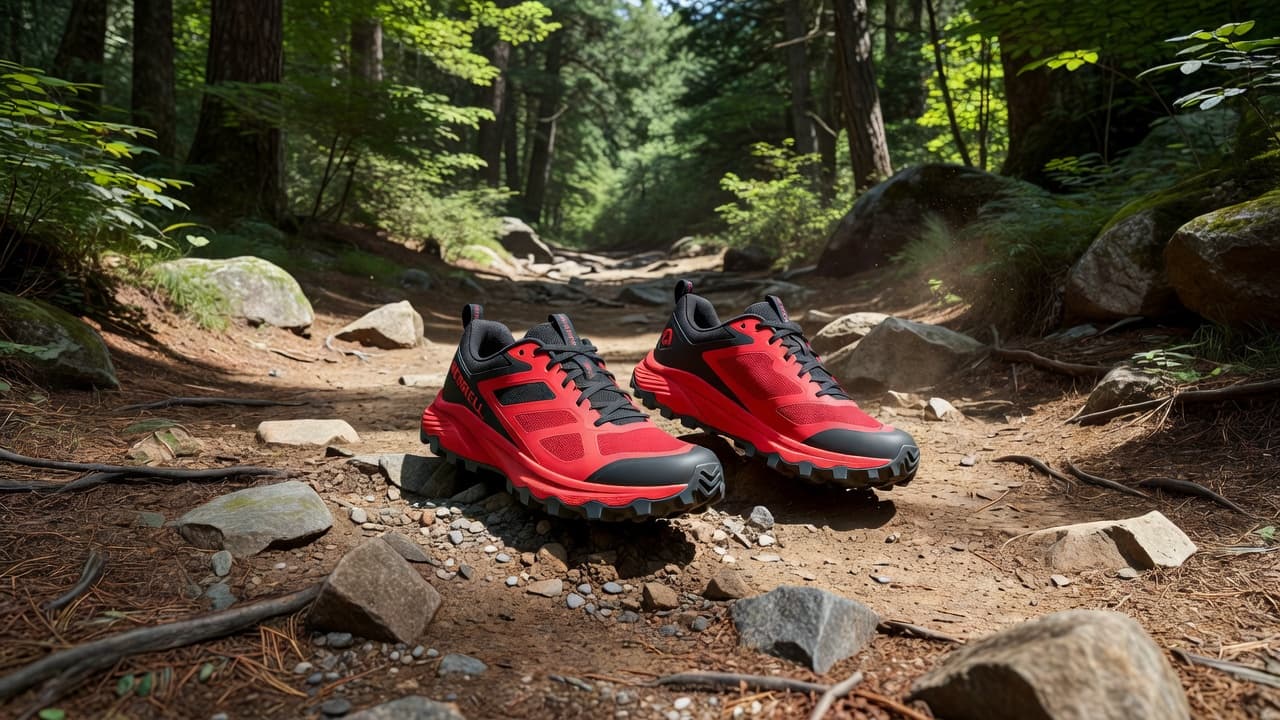
This trio of components creates a setup that feels like an extension of your own foot. If you are comparing this to other nimble trail running shoes for speed, you will notice the Skyfire 2 leans harder into that racing-first mindset.
Where it sits in the Merrell performance lineup
Merrell offers a range of options, but the Skyfire 2 occupies the aggressive end of the spectrum. While other models in their catalog focus on stability, moderate cushioning, or long-distance comfort, this shoe is a dedicated specialist. Think of it as a track spike that decided to take up mountain running.
It lacks the thick, forgiving foam stacks found in their high-mileage cruisers. If you want a shoe that keeps your feet fresh during a casual weekend hike, you should look elsewhere. However, if you are planning a focused training cycle for a 5K or 10K race, this is the machine you want under you.
When intensity is the main priority, it sits at the peak of their lineup. Staying hydrated is essential during these fast, intense efforts, and keeping your strategy tight as described in this hydration guide ensures you perform at your best.
Why the Merrell MTL Skyfire 2 Works So Well for Trail 5K Racing
Racing a 5K on trails requires a different mindset and different gear than a long-distance mountain trek. You need speed, precision, and an aggressive edge that keeps you moving forward without hesitation.
The Merrell MTL Skyfire 2 excels in these short, high-intensity efforts because it behaves more like a track racing shoe than a heavy-duty hiking boot. It strips away the unnecessary weight to ensure your feet stay quick when the course demands rapid reactions.
Fast turnover on short, technical courses
A 5K race often features unpredictable terrain. You might encounter tight switchbacks one moment and a steep, loose climb the next.
Because the Skyfire 2 is exceptionally light, it allows for a fast turnover that feels natural during these bursts of speed. You aren’t dragging heavy foam or excess material through every stride. Instead, the shoe vanishes on your foot, letting you focus entirely on your cadence and foot placement.
When you sprint through turns, you need a shoe that tracks accurately. The lightweight construction of this model provides a snappy response that helps you pivot quickly without losing momentum.
You can navigate uneven footing with confidence because the shoe moves with you, not against you. This responsiveness is vital when you are fighting for position on a narrow trail where every second matters.
Grip you can trust on dirt, rock, and light mud
Confidence on the trail starts with the connection between your outsole and the ground. During a high-effort 5K, you don’t have the luxury of cautiously picking your way across slippery surfaces. The lugs on this shoe offer a reliable bite that keeps you grounded, even when your heart rate is maxed out and your form begins to fray.
Reliable traction is a necessity for maintaining your pace on tricky technical sections. Whether you are attacking a dusty descent or powering through a patch of wet, packed dirt, the outsole provides the security you need to push harder.
If you lose traction, you lose time, and the aggressive tread pattern here minimizes that risk. It allows you to trust your footing, which is essential for runners who want to attack the course with full intensity.
Low-profile feel for runners who want more control
Some runners prefer a thick, cushioned platform to absorb impact, but that often comes at the expense of stability and ground feel. The Skyfire 2 opts for a lower profile that keeps you closer to the earth. This design choice gives you a much clearer sense of what lies beneath your feet. You get better feedback from the surface, which is helpful when you are scanning for roots, rocks, or loose gravel at race pace.
Staying low to the ground improves your overall control. You are less likely to roll an ankle on uneven terrain because the stack height isn’t working against your natural stability.
For those who prioritize agility, this direct connection to the trail is a massive advantage. It turns every section of the course into an opportunity to gain ground rather than a hurdle to overcome.
Ensuring you stay fueled and hydrated during these high-intensity sprints is just as important as your footwear choice, so you should keep your strategy tight as described in this hydration guide.
The low-profile design combined with a responsive midsole creates a platform that feels fast and nimble. It ignores the trend of maximalist cushioning to deliver a precise, grounded experience that caters to the specific demands of short-distance trail racing. You get exactly what you need to move quickly, stay in control, and finish the race on your terms.
Fit, Lockdown, and Comfort on Race Day
A high-performance trail shoe performs best when it behaves like an extension of your foot. When you wear the Merrell MTL Skyfire 2 5k racing model, you notice the design prioritizes a locked-in, secure experience over plush, generous volume. This creates a specific feel that rewards runners who want precision on technical trails.
How the snug race fit affects performance
The snug fit of this shoe is a deliberate choice for speed. When your foot stays securely in place, you waste less energy shifting around inside the upper during sharp maneuvers.
This total lockdown provides better control on uneven surfaces, as your foot acts in concert with the midsole and outsole lugs. You can corner with confidence because the shoe responds immediately to your weight shifts.
However, a performance-oriented fit comes with trade-offs. The narrow, anatomical shaping may create pressure points if you have wider feet or if your feet tend to swell during longer efforts.
For a short 5K race, this is rarely an issue for most runners, but it is something to consider if you prefer a roomier toe box. If you find your feet feel restricted, it might impact your comfort during the later stages of a race.
Heel hold, midfoot security, and toe room
In fast trail racing, three specific zones define your stability. The heel hold is the first line of defense against slippage, especially on steep, technical descents where your foot wants to slide forward. This shoe uses a firm heel counter to keep you locked back, which prevents the dreaded black toenail syndrome often seen after mountain races.
Midfoot security follows, ensuring your arch stays supported and connected to the chassis. A secure midfoot allows for a snappy energy return as you transition from landing to toe-off.
While the toe box offers enough space for natural toe splay during short bursts, it is not an ultra-wide box. It provides just enough room for comfort without sacrificing the agility needed to dart between rocks and roots.
What runners should expect if they prefer a wider fit
If your feet typically require extra width, you should approach this shoe with care. The construction leans toward a true race-snug fit, meaning it hugs the foot closely to eliminate dead space.
Runners with wide feet might find the midfoot or toe box too restrictive for their liking. If you are between sizes, it is often wise to choose the larger option to gain a few millimeters of internal volume.
Testing these in a store or during a short trial run is the best way to determine if the fit matches your needs. If you find the structure too aggressive, you might prefer more traditional trail running shoes that offer a more forgiving volume.
Remember that during high-intensity efforts, proper hydration and fueling remain critical for performance, as highlighted in this helpful hydration guide. Ultimately, the Skyfire 2 is for the runner who prioritizes ground feel and precision over a relaxed, airy fit.
How It Handles Real Trail 5K Race Conditions
Racing a 5K on trails demands gear that responds as quickly as your muscles. The Merrell MTL Skyfire 2 5k racing design is built to bridge the gap between a stripped-down track shoe and a rugged mountain performer.
When you face the chaos of a race course, this shoe manages the transition between varied surfaces with impressive speed. It prioritizes a direct ground connection, which helps you maintain focus during high-intensity efforts.
Quick climbs, fast descents, and sharp corners
This shoe thrives when the trail forces you to change your rhythm. On steep, short climbs, the low stack height and aggressive outsole work together to provide efficient energy transfer.
You aren’t wasting power compressing thick foam; instead, you feel the terrain and can adjust your foot placement instantly. The lightweight materials ensure your legs don’t feel bogged down during those final, lung-burning sprints to the finish line.
Descents are where the shoe shows its true personality. Because you stay closer to the ground, your center of gravity feels more stable, even when you move at high speeds.
The outsole pattern bites into the trail, providing confidence during rapid direction changes. When you approach a sharp corner, you can plant your foot and pivot without the shoe feeling clumsy or detached. It handles quick, technical movements as if it were a natural extension of your leg.
Packed dirt versus loose and rocky terrain
The Skyfire 2 performs best on compact surfaces where you can really push your pace. On hard-packed dirt trails or well-groomed forest paths, the lugged outsole grips the surface, allowing for a fast, responsive turnover. You will notice how the shoe feels firm and snappy, encouraging you to maintain a high cadence throughout your effort.
When you transition to loose gravel or technical, rocky sections, you need to exercise more caution. The thin midsole provides excellent ground feel, but it doesn’t offer the deep impact protection found in dedicated ultra-marathon shoes.
Sharp rocks can be felt through the sole, which might cause discomfort if you aren’t used to a minimalist racing style. It is designed to get you over these sections quickly, not to provide a cushioned ride over miles of jagged stone.
When the shoe feels best and when it may not
You will find this shoe is an exceptional partner for short-distance trail races. It hits a sweet spot for 5K to 10K events where speed is your primary goal. If you want to shave seconds off your time on courses that demand agility, this setup is difficult to beat. It provides the security and traction needed to navigate technical trails with a light, fast-moving foot.
However, the shoe may fall short on routes that are excessively muddy or filled with deep, wet debris. While the lugs offer good traction, they aren’t the longest in the industry for deep, slop-filled conditions.
Similarly, if your goal is an ultra-long, slow-paced training run, the lack of plush cushioning might leave your feet feeling fatigued.
For those longer efforts, you might look at other trail running footwear that focuses more on recovery than raw speed. Remember that even during these short, intense efforts, your physical performance relies on consistent hydration, so keeping a strategy as described in this hydration guide is essential for success.
Who Should Choose the Merrell MTL Skyfire 2 for Fast Trail 5K Racing?
Identifying if this shoe is the right fit for your racing style depends on what you value most on race day. The design of this model prioritizes specific traits that cater to high-intensity efforts over long-distance comfort. If your goal is to push your limits on short, punchy trail courses, this shoe acts as a precision tool for the job.
Best for runners chasing speed and responsiveness
This shoe is for the athlete who views a 5K race as an all-out effort. You likely prioritize a lightweight build and a firm, snappy midsole that helps you maintain a high cadence. When you need to accelerate through a tight turn or explode up a short, steep incline, you want a shoe that disappears on your foot.
Because the weight is minimal, you avoid the sluggish feeling that often comes with thicker, more cushioned alternatives.
The platform is designed to return energy with every footstrike, making it an excellent choice for runners who prefer a grounded, connected sensation. You get the most out of this model when you maintain a fast, aggressive pace, as the construction encourages quick turnover and agile footwork on technical terrain.
Good for experienced trail runners and road racers moving to dirt
If you have a background in road racing, you will appreciate how this shoe mimics the quick, nimble feel of a racing flat. It removes the bulk found in traditional trail trainers, allowing you to transition your speed-focused mechanics directly onto dirt paths. The close-to-the-ground profile improves your stability, which is vital when navigating roots or rocks at speed.
Runners with strong mechanical form or experience on technical terrain adapt quickly to the firmer ride. You do not need massive amounts of foam to stay comfortable if you have the foot strength to handle shorter, faster efforts.
The security provided by the upper ensures your foot stays locked in during rapid changes in direction. This confidence allows you to commit to corners without worrying about side-to-side movement or slippage.
Not the best match for all-day comfort or cushioned cruising
This model is a dedicated racer, not a daily driver. If you prioritize soft, plush cushioning for long recovery runs or casual weekend outings, this shoe will feel too harsh.
Its firm midsole is intended for performance, not for absorbing impact over several hours of movement. If you find your feet need extra protection from sharp rocks or you prefer a forgiving ride for long-distance efforts, look for more cushioned options.
The narrow, race-oriented fit also makes it a poor match for runners who prefer a roomy toe box or who struggle with foot swelling during long races. If you are preparing for a 50K or longer event, or if you simply enjoy a relaxed feel, prioritize a shoe built for durability and impact absorption instead.
Always keep your physical needs in mind; even when using a specialized racing shoe, consistent fueling and hydration remain critical for success, as this hydration guide shows. The Skyfire 2 is a performance specialist that rewards speed and precision, but it is not built to provide the plush, recovery-focused ride of a high-mileage cruiser.
Training, Pairing, and Race-Day Setup Tips
Your gear choice for a high-intensity trail effort matters just as much as your fitness. When you select a specialized tool like the Merrell MTL Skyfire 2 5k racing shoe, you need to ensure every part of your kit works in harmony with that aggressive, lightweight design.
A fast race requires a thoughtful approach to preparation, from your final build-up workouts to the clothing you choose for the starting line.
How to break them in before race day
You shouldn’t take a brand-new pair of racing shoes straight to the start line. While the Skyfire 2 uses advanced materials that don’t require heavy breaking in, you still need to verify the fit during a few targeted sessions. Wear them for your final speed workouts on the trail to see how they feel during higher intensities.
- Short trail intervals: Run 400-meter or 800-meter repeats on a dirt path. Focus on how the shoe feels during sharp accelerations.
- Hill strides: Perform several 20-second strides on a short, steep incline. This tests the lockdown and ensures your heel doesn’t slip when you put down maximum power.
- Race-pace efforts: Incorporate a 10-minute segment at your projected race effort on technical terrain. This helps you understand how the shoe reacts to roots, rocks, and off-camber turns before the event.
Pay close attention to any hot spots or pressure points during these sessions. If you feel any rubbing, you might need to adjust your lacing tension or switch to a different sock thickness. The goal is to finish these workouts feeling confident that your feet will remain comfortable throughout your upcoming 5K.
What to wear with a lightweight trail racing shoe
Matching your apparel to a stripped-down shoe helps you maintain that fast, nimble feeling. Heavy, baggy clothes can feel distracting when you are moving quickly on a narrow trail. Opt for a minimalist race kit that offers breathability without excess bulk.
- Socks: Choose thin, synthetic, or merino wool trail socks that provide a snug fit. Avoid thick, cotton-based options, as they hold moisture and can cause blisters during fast efforts.
- Shorts: Wear lightweight, unlined running shorts or a dedicated racing brief. These options allow for a full range of motion, which is vital when you are navigating steep climbs or technical descents.
- Race kit: A singlet or technical t-shirt made of moisture-wicking material keeps you cool. If the race is short, a singlet is often best to keep weight low and ventilation high.
Your entire setup should feel like an extension of your body. When everything is light and secure, you can focus entirely on your cadence rather than adjusting your gear.
Hydration and fueling for a hard 5K effort
Even in a 5K, performance hinges on being properly hydrated before the gun goes off. You likely won’t need to carry fluids during the race itself, so your strategy should focus on the hours leading up to your start.
Drink enough electrolytes to stay balanced, and avoid gulping large amounts of water in the final 30 minutes.
A proper warm-up routine is equally important for these short efforts. Spend time activating your muscles with dynamic stretches to ensure your legs are ready for the initial burst of speed.
If you are new to managing your intake for high-intensity efforts, you can find more advice in this helpful hydration guide. Preparing your body well allows you to attack the race with full confidence from the very first step.


