

Maui Marathon Race Review and Tips
At sunrise, Maui’s coast turns gold as runners follow the road beside the Pacific, with salt air in every breath and the island’s mountains rising inland. That setting gives this oceanfront marathon a memorable backdrop, but a beautiful course still has to match your goals, travel plans, budget, and expectations for race day.
This review examines the Maui Marathon course, weather, organization, logistics, and atmosphere, along with the training demands of running a marathon in Maui.
You’ll also find the event’s main strengths, possible drawbacks, and overall value, whether you’re chasing a personal best, planning a destination race, or looking for a rewarding first marathon. The right choice depends on more than scenery, so pacing, heat management, travel time, and recovery deserve attention too.
Race dates, registration, entry fees, packet pickup details, and event rules can change, so check the official race organizer for current information before you register or book travel. First, let’s look at the course and the conditions that may shape your race experience. Remember, make sure to book your Maui Marathon hotels well in advance.
Build Your Complete Race-Day Setup
The right shoe helps, but faster racing comes from better training, pacing, recovery, fueling, and execution.
More Guides for This Shoe
Key Takeaways
- The Maui Marathon offers a memorable oceanfront route, but coastal scenery doesn’t remove the demands of heat, humidity, wind, and sustained pavement.
- Runners should review current course details, entry fees, rules, and race updates on the official race website before booking travel.
- Early starts, smart pacing, regular hydration, and heat-adjusted training can matter more than chasing an aggressive goal time.
- Travel, lodging, transportation, meals, and recovery days can make this destination race cost more than the registration fee.
- The race suits runners who value a scenic experience and memorable finish line, while personal-best seekers should weigh weather and course conditions carefully.
Maui Marathon Review: What the Race Is Really Like
The Maui Marathon is best understood as a destination race with a vacation attached. Its appeal comes from the coastal setting, mild island atmosphere, and chance to spend several days in Maui. This Hawaii destination race offers scenery rather than a dense city-race spectacle. Your experience will depend on handling heat, travel, open roads, and long quiet stretches.
Who Will Enjoy the Maui Marathon Most?
First-time marathoners may enjoy the event because the setting gives the long miles a clear sense of purpose. Runners should still arrive with a realistic pacing plan. Ocean views can lift your mood, but they won’t erase fatigue, sun exposure, or travel stress.
The race also fits runners who want a scenic destination event. If you care about the memory of where you ran as much as your finishing time, Maui offers a stronger backdrop than most urban courses. Couples and families can build a full trip around the event, with non-runners enjoying the island while you prepare, participate, and recover.
Depending on the current edition, participants may also find a half marathon and shorter events alongside the full marathon. Those distances suit a partner who wants to participate without marathon training, a newer athlete testing the atmosphere, or a family member seeking a manageable event goal. Check the current Maui Marathon event updates before assuming every distance remains on the schedule.
Experienced runners chasing a personal best should study the course and forecast before committing to an aggressive target. Heat, wind, rolling sections, and disrupted sleep after travel can turn a goal race into a pacing exercise. A strong performance is possible, but the conditions deserve more respect than the postcard scenery suggests.
The Event’s Setting, History, and On-Course Character
A mainland city marathon often gives you dense spectator support, frequent landmarks, and reliable public transportation. Maui offers a different rhythm. The road opens toward the Pacific, mountains rise inland, and runners may spend long stretches between organized support points.
Tourism shapes the entire experience. Hotels, restaurants, airport travel, and limited island transportation can affect your budget and race morning. At the same time, the vacation atmosphere can make the event feel less pressured than a major city marathon. You may spend the afternoon before the event near the water instead of surrounded by thousands of participants at a downtown expo.
The event has a long-running place in Maui’s racing calendar, but details can change between editions. Before booking your trip, verify the current organizer, charity partners, packet pickup location, distances, schedule, and any Lahaina route or start and finish references through the official event channels. Confirm where the finish line experience takes place, and check whether course volunteers and event staff volunteers will support the current setup. Runners who prefer cooler weather, a flatter route, or louder spectator support may feel more at home in a large mainland city marathon.
How the Maui Marathon Course Tests Your Pace and Patience
The course rewards restraint. Coastal scenery can make the opening miles feel effortless, yet heat, exposed pavement, rolling terrain, and long sightlines test your discipline. Treat it as an effort-based race, not a moving photo tour.
The Start, Scenic Middle Miles, and Finish
The opening miles often feel faster than they should. Runners are fresh, the air is cooler, and the starting line creates instant excitement. Hold back anyway. Settle into a pace that feels controlled, especially if your target assumes cool, flat conditions.
Use the current official course map to identify the start, aid stations, turnarounds, and finish before race morning. If the current official route includes Lahaina, note that section as another progress marker. An aid station can become a short-term target, while a turnaround breaks the course into manageable sections. Don’t surge every time the view changes. A new stretch of coastline may lift your mood, but it doesn’t bring you closer to the finish line by itself.
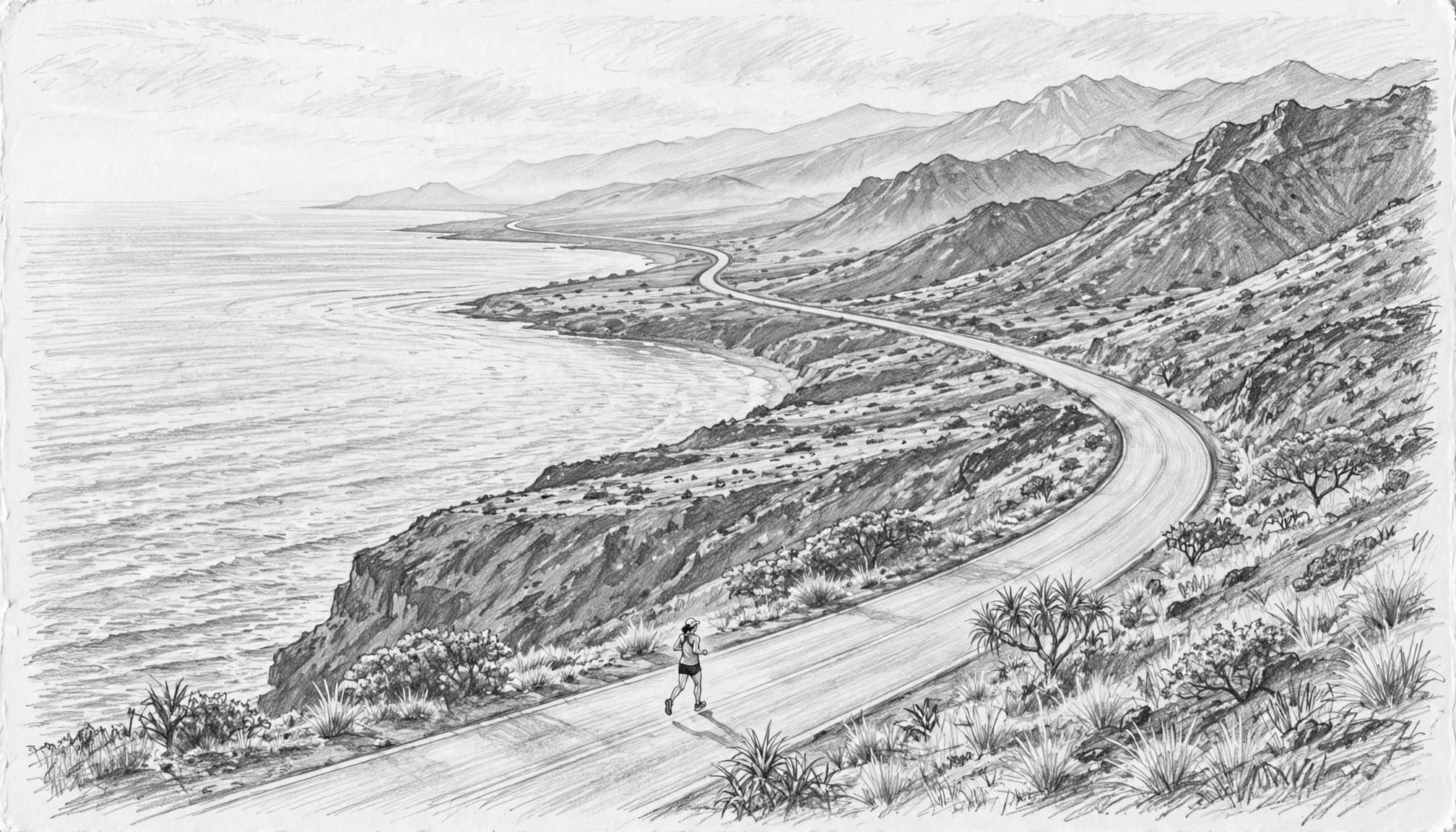
As the middle miles unfold, the Pacific and inland slopes provide memorable scenery, but open roads can expose you to sun and wind. Quieter sections may leave participants running alone, with fewer spectators and volunteers to pull them forward. Focus on relaxed form, efficient tangents, and even effort across gentle rollers. Even modest elevation change can affect your pace.
The final approach demands patience. If you manage your effort early, you can gradually increase pressure late in the race. Any Lahaina section shown on the current official route may still require restraint. If you chase every downhill or scenic stretch, the last miles can become a survival exercise instead of a strong finish.
Heat, Humidity, Wind, and Sun Exposure
The early start can provide useful relief, but conditions may still become warm as the sun rises. Heat and humidity can build quickly along exposed roads. Acclimate through regular warm-weather runs when possible, and practice drinking while moving. Apply sunscreen before the start, then consider a hat or visor for direct sun.
Your fluid plan should match your sweat rate, body size, pace, and the forecast. Higher humidity can increase discomfort even when temperatures seem manageable. Copying another participant can leave you underhydrated or uncomfortable. Use the available aid stations, drink consistently, and practice your electrolyte strategy during training rather than testing it for the first time in Maui.
Cloud cover and wind direction can change the feel of the same road from one year to the next. Check the forecast during race week, then adjust your effort if humidity or sun exposure becomes more intense than expected. Volunteers at the aid stations can help, but you still need to recognize when conditions are changing.
Is the Course Fast Enough for a Personal Best?
A personal best is possible for athletes who prepare for warmth, manage rolling sections, and pace by effort. The course may suit runners who stay patient early and fuel before fatigue becomes obvious.
A cool, flat city marathon usually offers more predictable weather conditions, denser crowd support, and fewer surprises. This course can still produce a strong performance, but sun exposure, wind, travel fatigue, and early excitement may cost time even when training is excellent.
Use goal pace as a reference, not a command. Start conservatively, protect your effort through the exposed middle miles, and reassess after halfway. If your breathing remains controlled late in the race, increase the pace gradually. That approach gives runners the best chance of reaching the finish line with both a scenic experience and a sound performance.
Choose Your Distance, Duration and Goal Time
Make three quick selections and open the exact plan built for your race target.
Looking for a Fully Personalized Training Plan?
The training plans above are an excellent choice if they match your goal. However, if you’d rather train with a plan built specifically around your current fitness, goal race, preferred training days, weekly mileage, and target finish time, our RDA Custom Training Plans provide a personalized solution. We also have running courses available for runners seeking to run faster from the mile to the marathon.
Why Choose a Custom Training Plan?
| Standard Training Plan | RDA Custom Training Plan |
|---|---|
| Follows a fixed schedule | Built around your schedule |
| Standard weekly mileage | Peak mileage customized for you |
| Fixed workout days | Train on the days you choose |
| Same structure for everyone | Designed around your current fitness |
| Static plan | Updated as your fitness improves |
| One-time purchase | Ongoing personalized coaching and support |
What You’ll Receive
- A training plan built specifically for your goal
- Personalized training paces
- Long runs, tempo runs, threshold workouts, interval sessions, recovery runs, and easy runs
- Peak weekly mileage matched to your experience level
- Flexible training schedule that fits your life
- Ongoing plan adjustments as your fitness improves
Ready to Train Smarter?
Stop guessing and start following a plan built specifically for you, your schedule, and your racing goals.
Race-Day Experience, Organization, and Runner Support
The Maui Marathon experience depends on more than the coastal scenery. Island logistics can differ sharply from a large mainland race, so read the current official Maui Marathon information and athlete guide before you travel. Confirmed details should always take priority over older reviews, personal impressions, or advice from previous editions.
What Happens Before the Starting Gun
Plan your airport arrival with enough time to recover from travel, collect luggage, buy familiar food, and reach your lodging without rushing. Roads, parking areas, and shuttle routes may be unfamiliar, while traffic can move slowly near resort districts. On race day, staying close to the start or finish may simplify your morning, but check the current shuttle service plan before choosing a hotel.
Packet pickup and the expo are often scheduled before race day, although the location and hours can change. Read the athlete guide for any packet pickup updates, then collect your bib at packet pickup when possible. Confirm your corral assignment and inspect the route map, timing instructions, and bag-check rules. Bag-handling volunteers can explain approved procedures, but don’t assume packet pickup or gear storage will operate like a major mainland marathon.
Use the night before to prepare everything you can:
- Lay out your shoes, socks, race clothing, bib, watch, sunscreen, and hat.
- Pack familiar gels or other fuel if the official course nutrition doesn’t match your training.
- Confirm packet pickup hours, your parking location, and estimated travel time.
- Set two alarms and identify nearby restrooms before arriving at the venue.
- Charge your watch and phone, then keep your packet pickup confirmation and post-race clothes in an approved bag.
Runners should arrive earlier than their normal routine requires. Leave time for parking, shuttle queues, restroom lines, bib checks, gear storage, and a short warm-up. A relaxed jog, mobility drills, and a few gentle strides are enough. Save your legs instead of turning the pre-race period into a second workout.
Aid Stations, Volunteers, and Finish-Line Recovery
Study the current course map for aid-station spacing, then note what aid stations provide. Water and sports drink may be available, but gels, fruit, and other food aren’t guaranteed. Carry the products you’ve practiced with, especially if you have allergies or a sensitive stomach.
At aid stations, volunteers can make an isolated stretch feel manageable. Medical volunteers provide support when heat, humidity, dehydration, or injury becomes serious. Use the aid stations consistently, and ask volunteers for help if something feels wrong. Medical aid isn’t a substitute for pacing and drinking consistently. Know where aid stations sit, slow down briefly if needed, and take fluids before thirst becomes intense.
After finishing, reach the finish line and spend the first 30 minutes restoring basic needs. Drink gradually, take in carbohydrates, move through a gentle cooldown, and find shade if the finish area is exposed. Change into dry clothing once you can, especially if sweat and wind leave you chilled.
Finish-area volunteers can direct you toward recovery services, while the finisher medal and refreshments may vary by edition. Confirm whether finish line services include post-race food, medals, recovery space, and family meeting areas before race morning.
The Crowd and Vacation Atmosphere
An island destination race usually feels less crowded than a major urban marathon. You may encounter quiet road sections, scattered spectators, local volunteers, fellow travelers, and occasional official music or entertainment. Course volunteers may offer encouragement along quieter stretches, so check the current athlete guide for confirmed entertainment rather than relying on older reports.
That quieter rhythm suits runners who draw energy from ocean views and open space. Other runners need constant noise, dense spectators, and frequent landmarks to maintain focus. Finishing near the Lahaina resort areas can feel rewarding, with family, vacation plans, and recovery close by. Local volunteers and the finish line can help create a welcoming arrival. Still, the finish line may feel lonely during difficult miles, so bring a pacing plan and familiar fuel to create your own structure.
Planning the Trip Without Letting Travel Hurt Your Race
This destination marathon trip should protect your performance before it becomes a vacation. Build in recovery time, confirm transportation details, and arrange familiar food before race week begins. Hawaii offers plenty to enjoy, but travel fatigue can create avoidable problems on race day.
Where to Stay and How to Reach the Start
Staying near the start offers the simplest morning. You can sleep a little longer, reduce shuttle or driving stress, and reach the starting area before roads close. Hotels near the start may provide less convenient access to beaches, restaurants, and post-race activities, though they can simplify packet pickup.
A room near the finish line can make recovery easier, especially if your family plans to meet you there. You can return to your room quickly, shower, and get off your feet. Lahaina-area lodging may offer more dining and activity options, but confirm the morning transfer. Staying along the route can provide resort amenities, while creating parking and road-closure challenges.
Before booking, check the official Maui Marathon race information and confirm:
- The exact start and finish locations, plus packet pickup hours.
- Shuttle departure times, pickup points, final departures, and whether shuttle service is included.
- Route details, parking rules, and any required race-day credentials.
- Whether your hotel can arrange early transportation.
Arrive early enough to adjust to the time zone, complete packet pickup, buy groceries, and sleep normally before the race. A rushed arrival can affect your appetite, hydration, and rest.
What to Eat Before and After the Race
Keep race-week meals familiar. Visit a grocery store soon after arrival and buy foods you already tolerate, such as oatmeal, bananas, rice, bagels, yogurt, sports drink, and simple snacks. Restaurants can work well, but choose predictable portions and avoid experimenting with rich sauces, unfamiliar seafood, or heavy alcohol.
Eat your main pre-race meal the evening before, then have a familiar breakfast two to three hours before the start. Focus on carbohydrates, add moderate sodium, and drink steadily rather than forcing large amounts of water at once. Many runners should pack gels or chews if course nutrition doesn’t match their training.
After finishing, move to shade, drink gradually, and eat carbohydrates with some protein when your stomach allows. Have a recovery meal and dry clothing ready, since a busy or hot finish area may not provide everything you need. Runners with diabetes, food allergies, gastrointestinal conditions, or other medical needs should follow guidance from a qualified professional.
The True Cost of a Destination Marathon
Registration is only one line in the trip budget. Estimate the full cost before committing, including:
- Entry fees, taxes, and optional race merchandise.
- Airfare, baggage fees, and airport transfers.
- Lodging, resort fees, and room-sharing arrangements.
- Rental cars, fuel, shuttles, parking, and rideshares.
- Groceries, restaurant meals, sports nutrition, and recovery supplies.
- Extra nights for acclimation or post-race recovery.
A lower-cost plan may use shared lodging, groceries, and event transportation. A moderate plan could combine a private room with a rental car and several restaurant meals. Higher-cost choices include resort lodging, peak travel dates, a private vehicle, extra nights, and activities for family members.
Travel dates and resort demand can change the total sharply. Price the room, transportation, meals, and race-related extras together, then leave room for one unexpected cost. That approach protects both your budget and your race. Families can also choose lodging near the finish line for easier meetings and recovery after the event.
Training for Maui: Pacing, Heat Preparation, and Race Strategy
The Maui Marathon rewards runners who prepare for conditions, not just distance. A warm, exposed course can make goal pace feel harder than expected, especially when rolling terrain, wind, travel fatigue, and limited shade combine. Build your plan around controlled effort, practiced fueling, reliable recovery, and staying calm when race day feels different from training.
How to Adjust Marathon Training for Maui Conditions
Use long runs to rehearse the demands of race day. Include stretches of steady marathon-pace effort, practice drinking while running, and carry the exact gels, sports drink, and caffeine products you expect to use. Controlled hill work can prepare your calves, hips, and core for rolling sections without turning every workout into a hard race.
Build your race-week routine around packet pickup, sleep, and easy movement. After packet pickup, protect the schedule you’ve planned instead of adding extra walking or sightseeing.
Heat acclimation should happen through safe, gradual exposure. Early-morning runs help you train consistently before the strongest sun arrives, while treadmill sessions give you a dependable option when outdoor conditions become unsafe. You don’t need to add risky midday workouts or chase pace in extreme heat. If your heart rate climbs unusually high, your form breaks down, or you feel dizzy, slow down or stop.
Beginners can add short warm-weather runs and gentle strength sessions each week. Experienced athletes may extend heat exposure gradually, but the goal remains adaptation rather than exhaustion. Protect sleep, schedule easier days after long runs, and track how pace, heart rate, and perceived effort respond to warmer conditions.
When heat makes goal pace unrealistic, effort is the better target. A slower split can still produce a stronger marathon.
A Smart Race Plan From Mile One to the Finish
Open the race slightly easier than goal effort. The early air may feel pleasant, and downhill sections can tempt you into spending energy too soon. Keep your breathing controlled, shorten your stride on descents, and let other runners move ahead if they start too aggressively.
During the middle miles, settle into a sustainable rhythm. Use effort and heart rate as backup tools when sun, wind, or humidity distort pace. Take fluids at planned aid stations, protect your cadence on rollers, and treat exposed sections as places to maintain effort rather than force speed. Treat volunteers as support, not pacing cues. Skipping fuel, ignoring the sun, or sprinting every hill can create a costly energy deficit before halfway.
Assess the final 10K before pressing. If your legs feel stable, your breathing remains controlled, and you’ve fueled consistently, gradually increase effort. Runners focused on finishing comfortably should keep the effort conversational early, walk briefly through aid stations if needed, and measure success by steady movement rather than a strict finish time.
Fueling, Hydration, and Recovery on Race Weekend
Practice the complete race routine during long runs. Test your breakfast, gel timing, sports drink, electrolyte choice, and caffeine plan well before the event. Carbohydrate needs vary by athlete, so use training to find an intake pattern your stomach accepts instead of copying another participant’s schedule.
Drink regularly, but don’t force excessive fluid. Weather, sweat rate, body size, and pace all affect hydration needs. After crossing the finish line, move to shade, replace fluids gradually, eat carbohydrates with some protein, and change into dry clothing. A short walk later can reduce stiffness, but make sightseeing easy. Choose a relaxed meal, limit extra time on your feet, and save long hikes, snorkeling trips, and packed excursions for another day.
Maui Marathon Pros, Cons, and Overall Value
The event offers a memorable weekend, but its value depends on what you want from a marathon. An oceanfront marathon with scenic views and a quieter atmosphere can feel personal and rewarding. However, travel costs, warm conditions, wind, and logistics may matter more than the scenery if you have a strict time goal.
The Best Reasons to Choose This Race
The strongest reason to choose the event is its setting. Running beside the Pacific, with volcanic slopes inland and morning light across the coast, gives ordinary marathon miles a clear sense of place.
The race also works well as the centerpiece of a longer trip. A couple can combine it with beach time and relaxed meals, while a family can plan activities for non-runners before and after the event. You may value the experience most if your goal is to finish your first marathon somewhere memorable, share a destination trip with loved ones, or test your pacing in warm coastal conditions.
Compared with a large city marathon, the event can feel less crowded and less commercial. That personal atmosphere appeals to runners who prefer open scenery over dense spectator lines and constant entertainment. The quieter course also gives you space to focus on steady effort and fueling. Volunteers help maintain that welcoming feeling, especially around the finish line.
The route’s coastal setting can also include the Lahaina area, depending on the current course layout. Check the published course map before planning sightseeing around those sections.
The Main Reasons to Think Twice
This destination is expensive compared with a local marathon. Airfare, lodging, rental cars, meals, resort fees, and extra recovery days can quickly exceed the entry fee. Vacation plans can also compete with marathon preparation. Long hikes, late dinners, and full days in the sun may leave your legs tired before the start or slow recovery afterward.
Warm temperatures, sun exposure, and wind create another variable. Goal pace can feel harder than it did during training. Quieter sections may also disappoint runners who depend on dense crowds for motivation. Transportation adds another layer, since parking, road closures, and unfamiliar routes require advance planning. Volunteers provide helpful support, but they can’t remove every logistical challenge.
These aren’t automatic flaws. They simply make the race a weaker fit for anyone seeking predictable conditions for a personal record. A local marathon may cost less and simplify logistics, while a large city event may offer cooler conditions, stronger crowd support, and more reliable pacing groups. The destination experience may still appeal to participants who value travel more than efficiency.
Final Verdict: Who Should Sign Up?
Beginners should consider the event if they can train for warmth, control their opening pace, and afford the trip without financial strain. Experienced marathoners may enjoy it as a scenic challenge, especially when they treat the forecast as part of the plan. Volunteers and the relaxed atmosphere can make the experience feel supportive from start to finish.
Traveling couples and families often receive the most overall value because the marathon becomes one part of a shared vacation. Runners focused on qualifying times or personal records should reconsider unless their preparation includes warm-weather training and flexible pacing. A strict Boston qualifier goal may be better served by a more predictable course.
Before committing, review the current Maui Marathon information, course map, registration deadline, packet pickup details, and transportation information. Also read the published refund policy, since cancellation terms can affect the financial risk. Choose this event when scenery, destination appeal, and a memorable weekend matter most. Choose another marathon when budget, cool conditions, or a precise time goal comes first.
Frequently Asked Questions
The Maui Marathon combines a demanding endurance event with the logistics of a destination trip. These answers cover practical questions that can shape your decision and event plan.
Is this a good choice for a first marathon?
It can be an excellent first marathon if you value scenery and the experience as much as your finish time. Ocean views may keep you motivated through difficult miles, but you still need preparation for warmth, travel fatigue, and rolling or exposed sections shown on the current course map.
Choose this event with a realistic pacing and fueling plan. Review the official Maui Marathon course information before registering, then train to manage effort rather than relying on a specific pace.
Is the course flat?
The course is mostly coastal and relatively flat, but “flat” doesn’t mean perfectly level or effortless. The current official elevation profile and map should guide your expectations, since small rises, bridges, turns, wind, and heat can all increase the effort required.
Train by perceived effort and practice holding your rhythm through gentle changes in terrain. A course with limited climbing can still feel difficult when the sun rises and the road offers little shade.
What month is the event held?
Dates can change, so confirm the current month and schedule on the official Maui Marathon website before booking flights or lodging. The timing affects expected weather, hotel demand, airfare, and how much time you have to prepare for warm conditions.
If you normally train in a cooler climate, build in several weeks for gradual heat acclimation. You should also compare accommodation prices early, since popular travel periods can raise the total cost of the trip.
How much does it cost to participate?
The entry fee is only one part of the budget. Check current pricing, then add airfare, baggage, lodging, transportation, meals, parking, groceries, and optional merchandise.
A shared room and event transportation may lower expenses, while resort lodging, a rental car, and extra vacation days can raise them quickly. Price the complete trip before committing, not just the entry fee.
What should I pack for the event weekend?
Bring race shoes and clothing you’ve already tested, along with sunscreen, a hat or visor, sunglasses, familiar fuel, electrolyte products, and anti-chafing supplies. Pack a light post-event layer because sweat, wind, or air conditioning can leave you uncomfortable afterward.
Keep your identification, travel documents, reservation details, and confirmation accessible. At packet pickup, ask volunteers about bag-check procedures and any last-minute instructions. Before packing your carry-on, read the current athlete guide for prohibited items and gear rules.
Can I enjoy Maui after completing the marathon?
Many participants can enjoy a relaxed Maui vacation afterward, but the first day should focus on fluids, food, shade, sleep, and easy movement. A gentle walk can help you loosen up, while a full day in the sun may worsen fatigue and dehydration.
Aid stations and volunteers can support you during the event, but recovery still starts after crossing the finish line. Schedule demanding hikes, long drives, snorkeling, and other active plans later in the recovery week. Giving your legs one quiet day protects your recovery and leaves more energy for enjoying the island.
Conclusion
The race is a strong choice for runners who want ocean views, an island atmosphere, and a weekend that feels like a meaningful destination experience. Beginners, traveling couples, and athletes who value scenery as much as finishing time are most likely to love it. The course offers memorable miles, but Maui’s warmth, sun, wind, travel fatigue, and exposed pavement demand honest preparation.
Athletes chasing a personal record may find a cooler, flatter, or less expensive marathon a better fit. For those who choose the event, the performance lesson is clear: respect the weather, pace by effort, practice fueling, and plan transportation, meals, lodging, and recovery as carefully as training. A beautiful course rewards patience, not reckless early speed.
Check the latest official event details, including the course, schedule, entry fees, and transportation plan, before booking your trip. If the coastal setting matches your goals and budget, Maui can offer far more than a finish time. Its volunteers, steady pacing, and Pacific views help create a memorable experience shaped by smart preparation.


