

Marathon Race Day Plan Checklist for Runners
My first marathon almost fell apart because I forgot one small thing I thought I could live without. I had my shoes, gels, bib, and race outfit, but I missed a simple item that threw off my whole morning, and that was enough to spike my nerves before the gun went off. Since then, I’ve learned that a solid marathon race day plan checklist turns that panic into calm, and calm matters when you’re about to run 26.2 miles.
Race day prep matters for every runner, whether you’re chasing a finish or a PR. Poor sleep, missed gear, bad timing at breakfast, or a shaky fueling plan can drain your legs before mile 10, and those mistakes happen fast when you’re rushed.
I’ve seen how much smoother the day feels when I stick to a clear plan, and I’ve also seen how much trouble comes from winging it. If you want more help with the big picture, I also recommend my complete marathon checklist guide and my marathon race day tips for a stronger overall approach.
In this post, I’m walking you through the same step-by-step routine I use now, starting the night before and carrying all the way through race morning, the finish, and recovery. I’ll keep it simple and practical, because race day works best when you don’t have to think too hard. You’ll see how I prep my gear, handle food and hydration, and avoid the little mistakes that can cost you energy later.
If you’ve ever stood at the start line feeling half-ready, this checklist will help. It can steady your nerves, protect your legs, and give you a better shot at finishing strong, with room left to push if the day goes well. Print it or save it now, because race morning goes a lot smoother when the plan is already in your pocket.
Lock In Your Night-Before Routine for Peak Performance
The night before a marathon is where I get organized, calm my head, and remove any last-minute friction. I want dinner settled, gear ready, and sleep protected so race morning feels automatic.
What to Eat and Drink the Night Before
I keep dinner simple and familiar. My best nights have usually looked like a carb-heavy plate with a little lean protein, then an early stop to eating so my stomach can settle before bed.
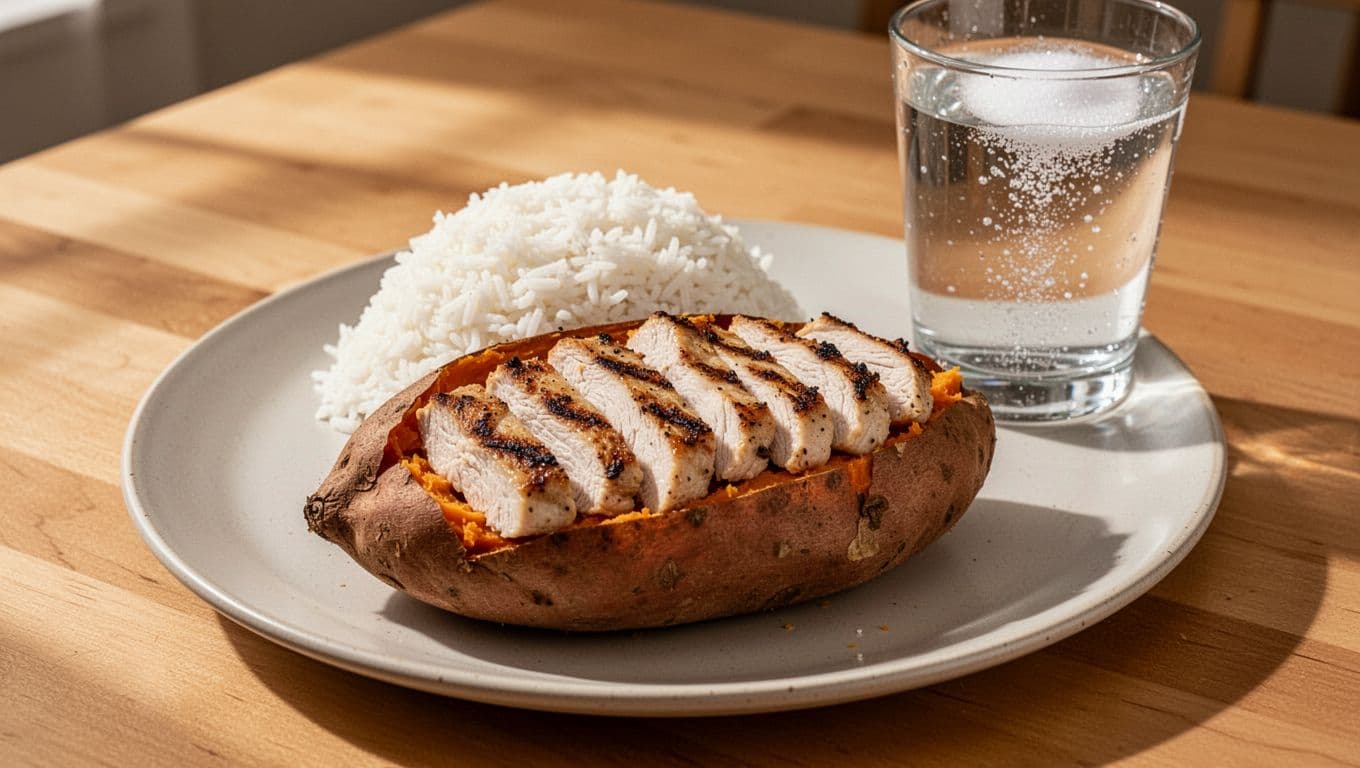
For example, I’ve done pasta with light chicken, or a baked sweet potato with grilled chicken and a small side of rice. That kind of meal gives me roughly 60 to 70 grams of carbs without feeling heavy. I eat it 3 to 4 hours before bed, and I stop there unless I need a small top-off snack later.
Hydration matters too, but I don’t go overboard. I aim for 16 to 20 oz of water with electrolytes, then I let that carry me through the night. I also avoid any new foods, spicy extras, or alcohol. Race week is no time to test a surprise meal.
I use the same logic every time, and it’s kept my stomach quiet on more than one race-eve.
- Do eat a familiar carb-focused dinner.
- Do keep the protein portion light.
- Do sip water with electrolytes.
- Do finish dinner 3 to 4 hours before bed.
- Don’t try a new restaurant meal.
- Don’t drink alcohol.
- Don’t overload on fiber or heavy sauces.
For a deeper meal breakdown, I use my night before race meal guide and my what to eat before a marathon race resource when I want to stay consistent.
Gear Check: Lay It All Out Tonight
This is where I take the stress out of the morning. I spread everything on the floor or bed, then I look at it once like a final audit before the big day.
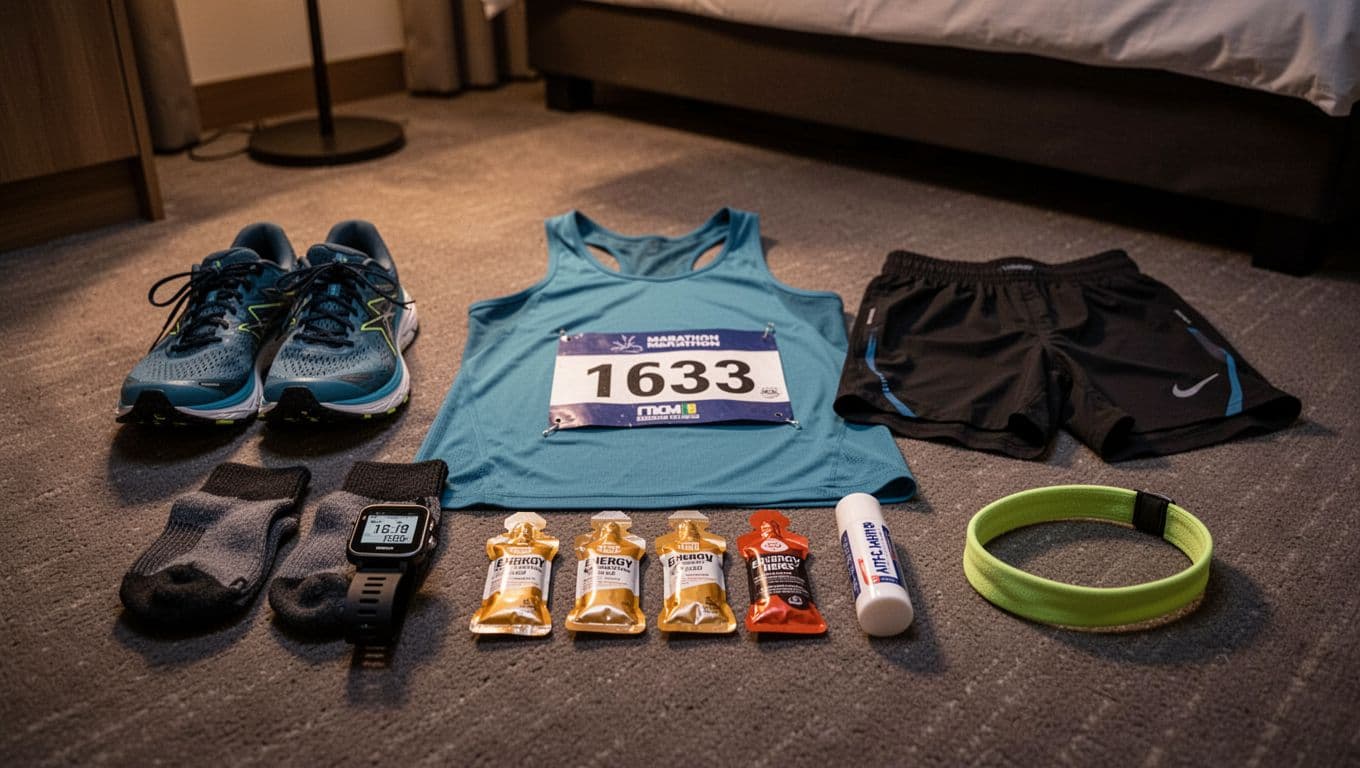
My gear check always includes the same basics:
- Bib
- Shoes
- Socks
- Outfit I tested in training
- Watch or GPS device
- Gels
- Anti-chafing stick
- Timing chip or race-specific items
I also make sure my bib is pinned on correctly and my timing chip is attached the way the race requires. That tiny detail can ruin a good morning if I ignore it. If I’m traveling, I keep my race belt, pins, and backup gear in one spot so nothing gets buried in a bag.
This setup works best when it looks obvious at a glance. If I can scan the floor and know I’m ready, I sleep better.
I also recommend my marathon fueling night before guide if you want the bigger fueling picture around race-eve prep.
Wind Down for Quality Sleep
Once my gear is set, I shift into sleep mode. I dim the lights, put my phone away, and keep the room cool and quiet. That routine tells my body it’s time to shut down, not stay alert.
I usually do a short body reset too. A few minutes of foam rolling helps my legs feel less stiff, especially after travel or a nervous day on my feet. Then I read a running book or a few calm pages of something light, which keeps my mind off race-day noise.
My sleep rules are simple:
- No screens late at night
- Room temperature around 65F
- No caffeine after noon
- Multiple alarms set before bed
- Bedtime planned 7 to 8 hours before the start
That last part matters more than people think. I’ve had races where I only slept 5 hours, and I felt flat before the gun. I’ve also had a Boston race where I got a full 8 hours because I stuck to this exact wind-down routine. The difference was clear. I woke up calmer, steadier, and more ready to run.
Before I close the day, I spend a minute visualizing the course. I picture the start, the tough middle miles, and the final stretch. That mental run-through helps me treat race day like something I’ve already handled.
Master Your Race Morning Timeline Step by Step
My best race mornings feel calm because I follow the same timeline every time. When I know what happens at each hour, I stop wasting energy on little choices and save that focus for the start line.
I treat the morning like a sequence, not a scramble. That rhythm keeps me from rushing breakfast, forgetting gear, or showing up at the venue with a tight stomach and a scattered head. A solid marathon race day plan checklist works best when the clock is already doing the thinking for me.
Wake-Up and Fuel Up Right
I like to wake up 3 to 4 hours before the start, then give myself enough space to eat, hydrate, and use the bathroom without hurrying. If the race starts early, I simply shift everything back and keep the order the same.
My breakfast stays easy to digest and lands in the 300 to 500 calorie range. I usually go with oatmeal, a banana, and coffee, or my staple, a bagel with peanut butter. If I want a broader breakdown of race-day food, I also keep my marathon fueling plan in mind.
Hydration starts early too. I drink about 16 oz of water, then I sip a little more if the air is dry or the course is warm. Salt tabs can help if I know I sweat a lot, but I only use what I’ve tested in training. I do not add anything new on race morning.
Bathroom time gets top priority. I build in extra time for that because nothing creates panic faster than standing in line while the clock keeps moving.
A simple way to stay on track is to follow this order:
- Wake up and drink water.
- Eat breakfast.
- Use the bathroom.
- Pack the final items.
- Head out with time to spare.
That order keeps me calm and keeps the morning from turning into a race before the race.
Dress and Double-Check Essentials
Once breakfast is done, I dress for the weather in layers. If it feels cold at the start, I wear pieces I can shed later. If rain is in the forecast, I plan for damp feet, wet skin, and the need to stay warm before the gun.
I avoid cotton because it holds sweat and rubs in all the wrong places. Instead, I choose moisture-wicking gear, pin my bib securely, and use Vaseline or anti-chafe balm on spots that usually get hot. If I’m using a drop bag, I pack it now so I am not sorting through loose items at the last minute.
My final mirror check is quick but important. I make sure my bib is straight, my layers make sense, and my shoes feel right.
On rainy marathon mornings, I always bring a thin extra layer and a dry top for after the race. That small habit has saved me from shivering before more than one start.
Before I leave, I do one last scan of the essentials. If I can see my watch, fuel, bib, and shoes together, I know I’m ready to go. For a few more race-day details, I also like my tips for marathon race day when I want to tighten up my pre-race routine.
Build in a travel buffer. Even 15 extra minutes can protect your whole morning if traffic, parking, or restroom lines run long.
That buffer matters because race morning gets messy fast. When I leave early, I arrive with time to breathe, settle in, and warm up without chasing the clock.
Pack the Perfect Race Day Gear Bag
I pack my race day gear bag the same way every time, because a calm start begins with a clear plan. When everything has a place, I spend less energy hunting for small items and more energy focusing on the miles ahead.
This bag works best when it’s simple, tested, and easy to grab. I use a clear plastic bag or a small drop bag so I can see what’s inside fast, and I pack it the night before. That habit cuts down on stress and helps me avoid the classic mid-race regret of wishing I had brought one more item.
Nutrition and Hydration Must-Haves
I pack fuel based on what I’ve already tested in training. For a marathon, that usually means gels every 45 minutes, plus a few backup chews in case one packet gets dropped or my stomach wants a change. If I know I sweat a lot, I add salt pills or electrolyte tabs that match my training routine.
I keep the math simple. For 26.2 miles, I want enough fuel for the full race, plus one extra gel as insurance. If I expect to race for over three hours, I plan my timing before I leave home so I don’t guess later. That keeps me steady and helps me avoid a late-race energy crash.
A few items belong in the bag every time:
- Gels I’ve already practiced with
- Chews for backup or variety
- Salt pills if they fit my sweat rate
- Small water-friendly items that pair with fueling
- Wrappers or trash space so I can keep things tidy
I never pack a brand I haven’t used on long runs. My stomach has always told me the truth, so I listen. If you want a deeper gear reference, I also keep my marathon gear checklist close when I’m building my bag.
The best marathon bag is boring in the best way. Everything inside should already feel familiar.
Clothing and Comfort Items
Weather can flip fast, so I pack for the start line and the finish line. A hat, gloves, and sunglasses usually cover the most common changes, and I can shed layers if the morning warms up. I also keep a blister kit in the bag, because one hot spot can turn into a long, slow problem if I ignore it.
My comfort extras usually include:
- Extra socks, because dry feet matter more than people think
- Anti-chafe balm or bandages
- A poncho or light throwaway layer for rain or wind
- A small towel for wet hands, sweat, or a quick cleanup
I think in weather backups, not just one outfit. If the forecast looks cool and damp, I want something dry for before the race and something dry for after. If the sun comes out, I want eye and skin protection ready. That way, I stay focused on running instead of fighting the elements.
Tech and Personal Items
I keep the tech side light and practical. A phone charger or battery pack helps if I’m traveling or waiting around for hours, and I only bring headphones if the race allows them. I also pack race number extras, such as safety pins or a bib clip, because missing one tiny piece can turn into a headache fast.
My personal items are just as important. I include photo ID, a little cash or card if I need it, and any race-specific paper or pickup info. Those basics keep the day moving when I need help, check-in, or a quick backup plan.
If I want the full setup to feel dialed in, I pair this bag with my running gear tips and my running essentials guide so nothing gets missed.
Navigate to the Start Line Stress-Free
I treat the trip to the start line like part of the race, because it sets the tone for everything that follows. When I rush parking, shuttles, or bathroom stops, my heart rate climbs before the first mile. A better plan gives me room to breathe, warm up, and settle into the day.
Travel and Parking Smart
I aim to arrive 2 to 3 hours early when the race uses shuttles, park-and-ride lots, or a busy start village. That buffer protects me from traffic, long walks, and the one surprise that always shows up when I feel pressed for time. My worst parking morning taught me that lesson the hard way, and I have never repeated it since.
Public transit often wins on race day. It removes the stress of hunting for a legal spot, and it usually drops me closer to the start than I could park on my own. If a race offers train or bus access, I compare that option with driving and pick the one that gives me the least friction.
I also use real-time apps before I leave. Google Maps, Waze, and the race’s own alerts help me spot delays, closures, or backup routes fast. When I’m running a big city race, I’ll also check the race’s logistics page and a local guide like the Cleveland Marathon public transportation page to confirm the simplest route in.
My travel checklist stays short and practical:
- Leave earlier than you think
- Keep parking money or transit fare ready
- Save the start location offline
- Check road closures before departure
- Build in time for the walk from parking or transit
If I can arrive without checking the clock every five minutes, I’m already ahead.
Bathroom and Corral Strategy
Bathroom lines can steal your calm fast, so I plan around them instead of reacting late. I sip enough water to stay comfortable, but I stop short of overdrinking. That balance matters, because too much fluid turns one line into two, and that can eat up the time I need for corrals.
I usually make one bathroom stop at home, then one more at the venue if the line is manageable. If the race has multiple portable toilets, I scan the whole row before I commit, because the first line is rarely the fastest one. Small choices like that save real time.
Corral entry matters just as much. I check y assigned wave early, then I move with purpose so I’m not squeezing in at the last second. If the race uses wave starts, I line up where I belong and follow the volunteers’ directions without trying to jump ahead.
Warm layers help here too. I wear throwaway gear, then strip it off close to the start. That keeps me warm while I wait and light when I run.
I want the start line to feel organized, not rushed. Calm legs usually come from a calm arrival.
That’s why this part of my marathon race day plan checklist stays simple, repeatable, and boring in the best way.
Warm Up and Mentally Gear Up Before the Start
I treat the final stretch before the gun like a bridge between preparation and execution. My body needs to wake up, and my mind needs to settle down. If I rush this part, I feel stiff and scattered. When I handle it well, I step to the line calm, loose, and ready to race.
Body Warm-Up Drills That Work
My warm-up stays short, usually 20 to 30 minutes, and I keep it moving. I start with an easy jog, then I add dynamic drills that wake up my hips, glutes, calves, and knees. That means leg swings, high knees, and 2 to 3 short strides. I skip static stretches because they can leave me feeling flat before the race begins.
I like to think of this as turning the key in the ignition. I am not trying to tire myself out, I am just getting the engine ready. A few controlled movements do more for me than a long, slow stretch session ever has.
My order stays simple:
- Easy jog for 5 to 10 minutes.
- Leg swings, front to back and side to side.
- High knees with relaxed arms.
- Two or three short strides, smooth and quick.
- Easy walking or light jogging until the start.
I keep the strides fast but controlled, and I finish feeling sharp, not drained. For a deeper look at drills like these, I also use my running drills for runners guide and my what are strides in running guide. If I want a quick refresher on warm-up flow, I also like this marathon warm-up routine.
Mindset Hacks to Crush Pre-Race Jitters
Once my body feels ready, I turn to my head. I use positive self-talk before I ever reach the corral, because my thoughts can either calm me or spin me up. I keep my words simple: steady, smooth, strong, easy first miles. Those cues work better for me than forcing fake hype.
I also focus on the first three miles and tell myself to hold back early. That keeps me from chasing adrenaline at the start. If I picture the first stretch at an easy rhythm, I usually settle in much faster once the race begins.
Breathing helps too. I take slow, even breaths, then match them to the pace I want. On race day, I like to pair that with a short mental picture of my splits. I imagine hitting the first few miles right on target, staying relaxed, and building from there.
My best starts happen when I stop fighting the nerves and give them a job.
A short playlist or one or two mantras can help lock that in. I use them like a quiet cue, not a distraction. For more mental tools, I also rely on visualization techniques for marathon runners and race day mental tricks for success.
Execute the Race with a Mid-Run Checklist
Once I’m past the opening miles, I stop thinking about the whole marathon and start running the next checkpoint. That keeps me honest. A mid-run checklist gives me a simple way to reset my pacing, fuel on time, and make small fixes before they turn into big problems.
I use this section of my marathon race day plan checklist to stay in control from mile 1 to the finish. The goal is steady effort early, smart fueling in the middle, and a clean push when the race gets hard.
Pacing and Aid Station Mastery
My pacing rule is simple, I aim for even splits or a slight negative split. I do not chase the crowd in the first 10K, because the race always asks for that effort later. If my watch starts creeping faster than planned, I back off before I pay for it.
At aid stations, I keep my routine automatic. I glance at my watch, grab what I need, then keep moving. I usually take a few sips, and if I need a reset, I walk for a few seconds while I drink. That short walk can help me control breathing, settle my stomach, and avoid wasting energy by gulping too hard.
Here’s the mid-run check I use:
- Miles 1 to 10: Stay patient, keep effort light, and protect my heart rate.
- Miles 11 to 20: Lock into rhythm, use aid stations well, and keep form smooth.
- Miles 21 to finish: Run by effort, not panic, and stay tall when fatigue builds.
A smart split plan matters here because the marathon punishes early mistakes. I like the pacing guidance in how to pace a marathon properly when I want to compare my race-day rhythm with a more detailed approach. For a broader view of race setup, the best marathon race strategy also fits this stage well.
If my breathing gets ragged before mile 10, I’m probably racing the wrong pace.
Fueling Rhythm to Avoid the Wall
I treat fueling like clockwork. Every 5K, I check whether it’s time for my next gel, and I take it before I feel flat. That habit keeps energy steadier and lowers my risk of bonking late.
I also rotate flavors when I can. Sweet gels can get old fast, so I like to alternate between citrus, vanilla, and berry if my stomach agrees. Small changes like that keep my mouth from feeling coated and help me stay willing to fuel when the miles drag.
My simple fueling rhythm looks like this:
- Take a gel on schedule.
- Drink water right after.
- Keep moving for a few minutes.
- Repeat before hunger shows up.
That approach helped me run under 3:30 because I never let the tank run dry. I matched my gel timing to the course and stayed ahead of the wall instead of chasing it. If you want a deeper look at timing, how many gels during marathon breaks down the numbers in a useful way.
Handle Race-Day Curveballs
Weather can change the plan fast. If it gets warm, I ease my pace a touch and drink more at aid stations. If it’s cold and windy, I keep my effort steady and avoid burning matches early.
GI issues need a calm response too. I slow down, sip water, and skip the next gel if my stomach feels off. Motivation dips happen later in the race, so I use short cues like “smooth” and “forward” to keep my head from spiraling.
When things go sideways, I keep the fix small. One smart adjustment is usually enough to get me back on track.
Recover Smart Right After Finishing
The finish line feels huge, but my recovery starts before the celebration ends. The first minutes set the tone for the next day, so I keep moving, keep sipping, and keep things simple. When I follow that plan, I feel better faster and cut down on the post-race crash.
First 30 Minutes Post-Finish Essentials
Right after I finish, I keep walking for a few minutes instead of dropping straight to the ground. That short walk helps my blood flow settle and keeps my legs from locking up too fast. I use that time to grab water, get my medal photo, and find my family or friends before I do anything else.
Then I focus on the basics. I sip fluids first, usually water or an electrolyte drink, and I start eating within 30 minutes. A bottle of chocolate milk works well for me because it gives me carbs and protein in one easy step. If I want more options, I keep a banana, a bagel, or another simple snack close by. For a fuller guide, I also like my post-marathon nutrition guide when I want to plan this part ahead of time.
I also throw on a mylar blanket right away if the weather is cool or windy. It traps heat fast, and that matters when I stop running and my body starts to cool down. After that, I keep the hugs short and the sitting time brief. A few minutes of easy movement is better than collapsing into a chair too soon.
The first 30 minutes are for recovery, not celebration chaos. I can celebrate, but I do it while I keep my body moving forward.
A few things stay non-negotiable for me:
- Hydrate first
- Eat within 30 minutes
- Get the medal photo
- Use the mylar blanket
- Meet family or friends
- Keep walking before sitting
That simple routine helps me reset without wasting energy. It also makes the rest of the day feel more manageable, which is why it stays in my marathon race day plan checklist every time.
Next-Day Recovery Boosters
The next day is where I protect the work I just did. I keep the day light, because my body needs time to repair muscle damage and calm inflammation. A short walk, some good food, and real rest do more for me than trying to “shake it off” too soon.
If my legs feel beat up, I use an ice bath or cold soak for a short period. I don’t stay in long, and I keep it simple. Cold water can help with soreness, especially after a hard marathon, but I use it as one tool, not a cure-all. For a deeper look at cold recovery, this guide on ice baths for marathon recovery gives a useful overview.
Nutrition stays front and center too. I aim for protein at every meal, plus carbs to refill what I burned on race day. Eggs, Greek yogurt, chicken, rice, potatoes, and fruit all fit that job well. I don’t need anything fancy, I just need enough fuel to support repair and keep my energy steady.
Rest matters just as much. I take easy walks, keep my steps light, and skip hard exercise. If I feel stiff, I stretch gently and elevate my legs for a bit to help me relax. That small habit can make a long day feel less swollen and heavy.
I also use the next 24 to 48 hours to celebrate in a way that doesn’t wreck recovery. A good meal, a photo with my medal, and a quiet evening work better than overdoing it right after the finish. The win still feels big, and my legs get the break they need.
Conclusion
My marathon race day plan checklist works because it keeps me calm when the pressure rises. The real win is not having a perfect morning, it is having a familiar routine that protects my energy, my stomach, and my focus when the miles get hard.
I always get the best results when I customize this plan, test it on long runs, and keep what my body already knows. That matters even more in the taper, so I pay attention to marathon tapering mistakes to avoid and stay honest with my pacing using a marathon pace chart guide. Every great marathon starts long before race day, with steady prep that I can trust.


