

Best Luxury Hotels Near the Los Angeles Marathon
Before sunrise, the streets near Dodger Stadium feel almost still, with runners gathering under bright lights and volunteers preparing for the Los Angeles Marathon. Hours later, the course reaches Santa Monica, where the quiet focus of the start gives way to cheering crowds and the Pacific air at the finish.
Your hotel choice can shape the entire race experience. A comfortable room supports quality sleep, while convenient early transportation, a reliable breakfast, and space to stretch or recover can help you arrive prepared and feel better after 26.2 miles. The best luxury hotels near the Los Angeles Marathon depend on which part of the day matters most to you.
Downtown Los Angeles puts you close to the start, Beverly Hills and Century City offer access near the middle of the course, and Santa Monica keeps you near the finish and post-race comfort. Since the route, race date, road closures, and official transportation details can change, confirm current information with the Los Angeles Marathon before booking. Start by comparing the advantages of each hotel area and be sure to book your Los Angeles Marathon hotels in advance.
Key Takeaways
- Downtown Los Angeles is the practical choice for runners who want shorter access to the Dodger Stadium start and easier race-morning preparation.
- Beverly Hills and Century City offer a central location, balancing access to the course with upscale dining, shopping, and quieter recovery.
- Santa Monica keeps you closest to the finish, ocean air, post-race meals, and a comfortable return to your room.
- Compare sleep quality, breakfast hours, recovery amenities, and transportation before choosing among luxury hotels near the Los Angeles Marathon.
- Review the official marathon transportation guidance because shuttles, closures, and arrival times can affect your plan.
Luxury Hotels Near the Los Angeles Marathon: Start, Finish, or Somewhere in Between?
The Los Angeles Marathon is a point-to-point race, traditionally beginning at Dodger Stadium and finishing near Ocean Avenue in Santa Monica. That setup creates a hotel decision many runners overlook: the room that helps you reach the start may not be the room that makes recovery easiest afterward.
Staying Near the Start in Downtown Los Angeles
A luxury hotel in Downtown Los Angeles is often the simplest choice for race morning. You stay closer to Dodger Stadium, reduce the risk of a long pre-dawn drive, and can return to a familiar room after packet pickup or dinner the night before.
Downtown also works well if your priority is sleep before the race. You can prepare your clothes, nutrition, and gear without worrying about a cross-city commute at 3 or 4 a.m. Many runners also like having restaurants, coffee shops, and attractions within reach during marathon weekend.
The drawback arrives after you finish. Santa Monica is several miles away, and road closures can make the trip back feel much longer than expected. Family members who watch you finish may also need a separate transportation plan. Review the official marathon transportation guidance before booking, since shuttle locations and operating times can change.
Choosing Santa Monica for the Finish
A hotel near the finish is best for runners who want a short walk to a shower and bed. After 26.2 miles, that convenience can matter more than a panoramic view or a larger room. You can finish near Ocean Avenue, collect your belongings, and reach your hotel without adding a complicated transfer.
Santa Monica also gives families an easier meeting point. Spectators can enjoy the beach, restaurants, and shopping while waiting for the race to end. Once you finish, everyone can reunite nearby instead of searching for one another across Los Angeles.
The tradeoff is race morning. You will need to travel to Dodger Stadium before sunrise, so confirm the current start-line shuttle and arrival instructions. The Los Angeles Marathon course and closure guide can help you understand the route’s timing and road restrictions.
Using a Central Hotel as a Compromise
Beverly Hills, Century City, and nearby central areas split the difference. These locations offer upscale dining, quieter rooms, and convenient sightseeing before or after the race. They can suit couples or families who want a refined Los Angeles trip rather than a hotel chosen only for race logistics.
However, central doesn’t mean equally convenient in both directions. Race-morning transportation still requires planning, while the trip back from Santa Monica may remain slow after the finish. Choose this option when your group values restaurants, shopping, and a balanced itinerary more than the shortest possible race transfer.
The Best Luxury Hotels Near the Los Angeles Marathon by Location
Location shapes your marathon weekend more than a room category does. Downtown reduces the early transfer to Dodger Stadium, Santa Monica simplifies recovery, and Beverly Hills offers a polished base between race events. Exact travel times still depend on road closures, traffic, and official race instructions, so review the LA Marathon transportation and shuttle guidance before finalizing your hotel.
Downtown Los Angeles hotels for easy access to the marathon start
Downtown is the strongest choice for runners who value sleep and a shorter race-morning transfer. The Omni Los Angeles Hotel is among the closest luxury options to Dodger Stadium, while Conrad Los Angeles and The Ritz-Carlton Los Angeles sit farther south but offer high-end rooms and strong dining access. JW Marriott Los Angeles L.A. LIVE is especially convenient for restaurants, sports, and entertainment. InterContinental Los Angeles Downtown adds sweeping city views, a central location, and a quieter retreat above the busiest streets.
None of these hotels should be assumed to provide official marathon transportation. Arrange your transfer through the race organizer, hotel transportation desk, or a pre-booked rideshare plan. Leave extra time because closures near Elysian Park and downtown can change the normal route. The Los Angeles Department of Transportation marathon page provides current route and closure information.
Before booking, ask practical questions that can affect race morning:
- Can the hotel arrange an elevator-accessible room near a lower floor?
- Will lobby noise, nightlife, or event traffic disturb your sleep?
- Is overnight parking available, and can you enter or leave during closures?
- Does the kitchen offer early breakfast, coffee, or in-room dining?
Santa Monica hotels for a comfortable finish-line recovery
Santa Monica is ideal when your priority is reaching a shower, meal, and bed after the finish. Shutters on the Beach and Hotel Casa del Mar place you near the water and finish-area activity. Viceroy Santa Monica, Oceana Santa Monica, and The Georgian offer refined alternatives with distinctive room styles and access to restaurants, beach walks, and family meeting spots.
Ask about late checkout, room service hours, spa treatments, and luggage storage before race day. Families can meet more easily here, but popular finish-line hotels often sell out early. Weekend rates may rise, and some properties may require a minimum stay.
Beverly Hills and Century City hotels for a polished central stay
The Beverly Hills Hotel, Waldorf Astoria Beverly Hills, The Peninsula Beverly Hills, and Four Seasons Hotel Los Angeles at Beverly Hills suit travelers who want quiet rooms, luxury dining, shopping, and attentive service. They provide a more refined home base than downtown and feel less race-focused than Santa Monica.
However, these hotels sit beside neither the Dodger Stadium start nor the Santa Monica finish. Plan both transfers in advance, allow for closures, and confirm parking or car-service options. Choose this area when comfort and dining matter as much as direct course access.
What Runners Should Look for in a Luxury Marathon Hotel
A five-star rating tells you about service and design, but it doesn’t guarantee a smooth race weekend. When comparing luxury hotels near the Los Angeles Marathon, judge each property by how well it supports sleep, fueling, transportation, and recovery.
A practical pre-booking checklist should include:
- A quiet room away from elevators, bars, event spaces, and street noise.
- Blackout curtains, a comfortable bed, and enough space to follow your normal sleep routine.
- Reliable Wi-Fi, a nearby elevator, and luggage storage for early arrivals or late departures.
- A refrigerator with usable space for personal food, plus a strong shower or bathtub.
- Parking, accessibility features, and clear information about race-morning transportation.
Luxury touches can make a room pleasant, but race-weekend amenities must reduce friction. A rooftop bar may look impressive, while a quiet room with blackout curtains may help you perform better.
Pre-race food, hydration, and breakfast access
Confirm breakfast hours and menu options before booking. Never assume the hotel restaurant will open early enough for a pre-dawn marathon start. Ask whether the kitchen offers early dining, takeaway meals, or in-room dining, and check the room service cutoff time so you aren’t left without food after placing an order too late.
Keep race morning familiar. A bagel, oatmeal, banana, toast, or another meal you’ve already tested in training is usually a better choice than an elaborate dish. Dietitian-backed marathon nutrition guidance can help you match your breakfast timing and portions to your own training.
Ask the hotel to provide a mini-fridge, or confirm whether you can store personal food safely. A nearby grocery store or convenience market gives you a backup for bananas, sports drinks, oatmeal cups, and other simple foods. Also ask how the property handles bottled water, ice, and refill stations. Some hotels charge for bottled water or remove it from the room, so plan ahead.
The night before the race is the wrong time to test the chef’s richest creation. Cream sauces, heavy desserts, unfamiliar spices, or large portions may disturb your sleep or stomach. Choose a meal that resembles what you eat before long runs, even when the hotel restaurant offers more tempting options.
Recovery features that matter after 26.2 miles
After the finish, convenience becomes part of recovery. Ask about late checkout, room service hours, spa treatments, massage appointments, pool access, steam rooms, laundry, and luggage storage. Massage slots and late checkout are often limited or cost extra, so reserve them early and request the total price.
Elevator access matters when stairs feel difficult. Families also need a comfortable place to wait, such as a lobby lounge, shaded patio, or nearby seating area. If checkout occurs before the race ends, confirm whether you can use a shower, fitness-center changing area, or day-use room afterward. Finally, ask about accessible entrances, elevators, bathrooms, and shower features before arrival, especially if you have an injury or mobility concern.
Choose Your Distance, Duration and Goal Time
Make three quick selections and open the exact plan built for your race target.
Looking for a Fully Personalized Training Plan?
The training plans above are an excellent choice if they match your goal. However, if you’d rather train with a plan built specifically around your current fitness, goal race, preferred training days, weekly mileage, and target finish time, our RDA Custom Training Plans provide a personalized solution. We also have running courses available for runners seeking to run faster from the mile to the marathon.
Why Choose a Custom Training Plan?
| Standard Training Plan | RDA Custom Training Plan |
|---|---|
| Follows a fixed schedule | Built around your schedule |
| Standard weekly mileage | Peak mileage customized for you |
| Fixed workout days | Train on the days you choose |
| Same structure for everyone | Designed around your current fitness |
| Static plan | Updated as your fitness improves |
| One-time purchase | Ongoing personalized coaching and support |
What You’ll Receive
- A training plan built specifically for your goal
- Personalized training paces
- Long runs, tempo runs, threshold workouts, interval sessions, recovery runs, and easy runs
- Peak weekly mileage matched to your experience level
- Flexible training schedule that fits your life
- Ongoing plan adjustments as your fitness improves
Ready to Train Smarter?
Stop guessing and start following a plan built specifically for you, your schedule, and your racing goals.
Race-Day Transportation From Luxury Hotels in Los Angeles
Your hotel zone determines whether transportation feels simple or stressful on race morning. Staying near Dodger Stadium shortens the trip before the start, while Santa Monica makes the return easier after the finish. Central hotels require a plan for both directions.
Getting to Dodger Stadium before the start
A short map distance doesn’t guarantee a short race-morning trip. Road closures, restricted access around Elysian Park, shuttle queues, security, and heavy runner traffic can turn a normal drive into a slow crawl. Ordinary rideshare estimates often exclude those race-day delays.
Before race morning, review the official marathon transportation instructions for current shuttle locations, arrival windows, parking rules, bag-drop details, and prohibited drop-off areas. The organizer’s plan takes priority over hotel advice, map apps, and last year’s race information.
Downtown guests should ask the concierge to confirm the best route and whether the hotel offers a race-related car service. A hotel car, taxi, or prearranged rideshare may work when permitted, but drivers must use designated access points. Don’t assume a vehicle can stop beside the start line.
Leave extra time for the parts of race morning that happen after you arrive:
- Security screening can create lines before runners enter the staging area.
- Bathrooms may be busy, especially near shuttle arrival points.
- Gear check requires time to label, organize, and submit your bag.
- Corrals may close or become difficult to reach once the starting area fills.
Guests in Santa Monica or central Los Angeles should depart even earlier. Metro may help for some parts of the trip, but service hours, station access, transfers, and race restrictions require checking before relying on it. Keep a backup plan, such as a taxi company number or a second pickup option, in case rideshare demand spikes.
Getting back to Santa Monica after the finish
The finish area can feel more confusing than the start. Runners, spectators, volunteers, closed streets, and waiting vehicles crowd the same few blocks. Arrange a family meeting point before race morning, away from the finish chute, and choose a backup location in case police or event staff restrict access.
Use a hotel shuttle only when the property officially offers one for that race weekend. Otherwise, follow the event’s designated rideshare and taxi pickup zones. Drivers may need to meet you several blocks away, so confirm the location rather than requesting a car directly outside the finish area. Public transit can be practical for some trips, while walking may be easiest for hotels within reach of Ocean Avenue.
A nearby Santa Monica room gives a tired runner faster access to water, food, luggage storage, a shower, and a bed. If you stay downtown or in Beverly Hills, prearrange pickup and confirm where your luggage will remain after checkout. Making transportation decisions with depleted legs and a dead phone battery is avoidable. Charge your phone, share the meeting point, and carry a backup contact method.
How Much Does a Luxury Marathon Weekend in Los Angeles Cost?
A luxury marathon weekend in Los Angeles costs more than the advertised nightly room rate. Race-weekend demand can push rates higher, especially at finish-line hotels in Santa Monica and larger rooms that accommodate families. Your real budget should cover the entire stay, not just the room.
Compare the total for Downtown Los Angeles, Beverly Hills, and Santa Monica. Downtown may offer better value for race-morning access, while Santa Monica can justify a higher rate by reducing post-race transportation and recovery time. Beverly Hills often costs more for service, dining, and a quieter setting, but it may require transportation in both directions.
When to book and which hotel policies to check
Book as soon as your race plans are firm. Finish-line properties and family-sized suites can disappear early, leaving fewer room types and less flexible rates. Check both refundable and prepaid options before choosing. A prepaid rate may look attractive, but the savings may not justify losing the full booking amount if your plans change.
Read the full rate details for:
- Taxes and destination or resort fees added at checkout.
- Valet and self-parking charges, including whether parking includes in-and-out privileges.
- Breakfast, minibar, spa, and room-service costs that can increase the final bill.
- Late-checkout fees, early-arrival charges, and luggage-storage policies.
- Deposits, incidental holds, and the payment method required at check-in.
- Minimum-stay rules that require two or more nights around race weekend.
- Pet policies, accessibility features, and room occupancy limits for children or additional adults.
Room occupancy rules deserve extra attention. A standard room may sleep two adults comfortably but cost more when you add children, a rollaway bed, or a second connecting room. Families should also ask whether breakfast benefits apply to every guest or only the registered room occupants.
Cancellation deadlines can fall several days or weeks before arrival. Mark that date on your calendar, then compare it with the marathon’s current schedule and transportation information. The official LA Marathon shuttle guidance can affect whether a cheaper central or finish-area room still fits your plan.
Call the hotel directly and ask how it handles marathon weekend. Confirm early breakfast, race-day transportation, luggage storage, late checkout, and quiet-room requests. After the call, request written confirmation by email and save the property’s response with your reservation. A spoken promise is helpful, but the written booking terms should control your budget.
Choosing the Right Hotel for Your Marathon Weekend Goals
The best luxury hotel near the Los Angeles Marathon depends on what you need most before and after the race. Your decision may center on sleep, recovery, family logistics, dining, or keeping transportation costs under control.
Use this simple framework:
- First-time marathoners should favor Downtown Los Angeles because shorter access to the Dodger Stadium start can reduce race-morning stress.
- Personal-best seekers should prioritize a quiet room, reliable breakfast, easy transportation, and a predictable sleep schedule. Downtown usually offers the strongest start-line setup.
- Couples may prefer Beverly Hills for polished dining, comfortable rooms, and a broader weekend experience without staying directly beside the race activity.
- Families often benefit from Santa Monica, where spectators can enjoy nearby attractions and meet the runner after the finish.
- Relay or spectator groups should choose the area that matches their main viewing plans, then confirm transportation and family access through the official marathon FAQs.
- Runners extending the trip into a Los Angeles vacation may find Beverly Hills the best balance of luxury, restaurants, shopping, and access to multiple parts of the city.
Santa Monica offers the easiest post-race recovery because your shower, food, and bed are close to the finish. Downtown favors early access and lower race-morning friction. Beverly Hills provides a more balanced luxury stay, although you must plan transportation in both directions. Before booking, compare the current marathon transportation instructions, since official arrival times and routes take priority over ordinary map estimates.
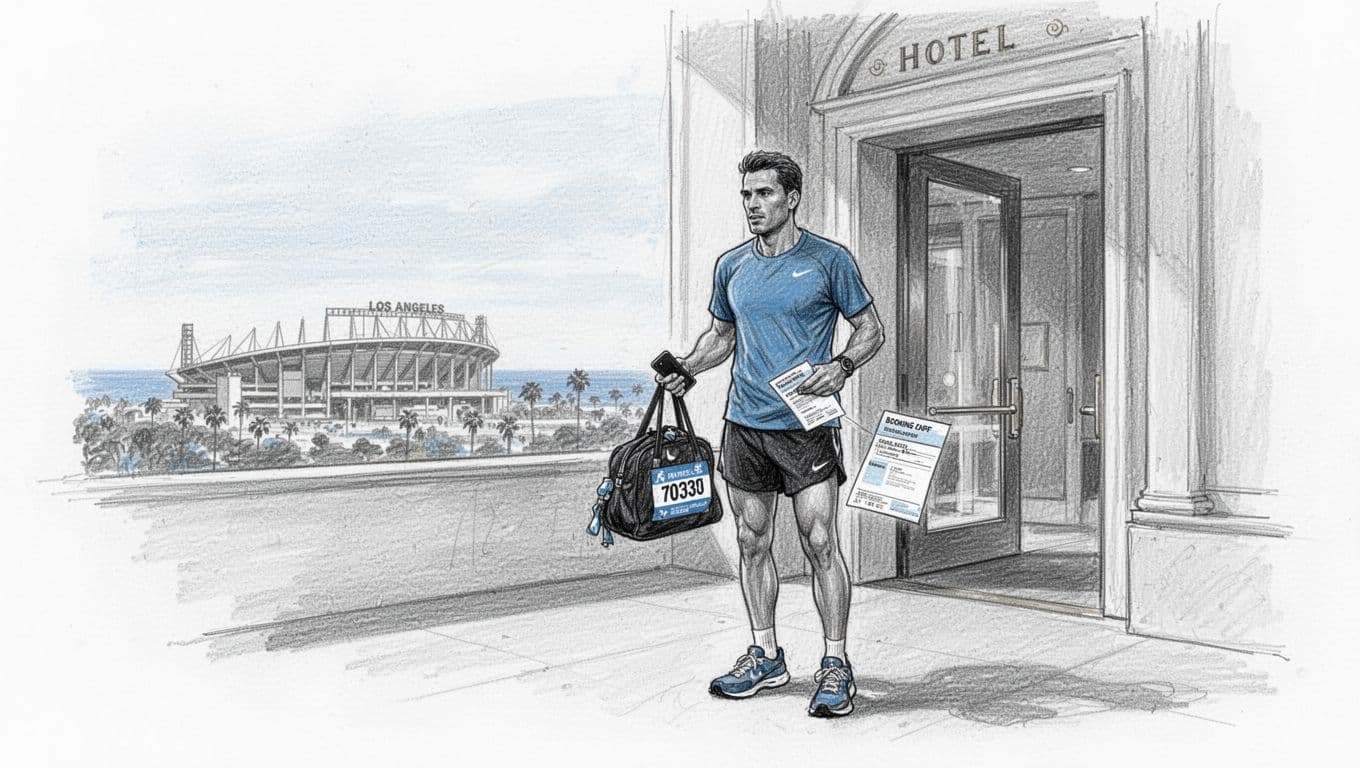
A simple booking checklist before you pay
Before entering your payment details, confirm each item against your race plan:
- Measure the distance to your intended meeting point, start shuttle, finish area, or family rendezvous location.
- Decide whether you’ll use an official shuttle, taxi, rideshare, hotel car, public transit, or a personal vehicle.
- Confirm breakfast hours, takeaway options, room service availability, and access to a refrigerator.
- Request a quiet room away from elevators, bars, event spaces, and busy streets.
- Check whether the bathroom has the shower or tub you prefer, especially if you expect sore legs after the race.
- Verify checkout time, late-checkout fees, post-race shower access, and luggage storage.
- Add valet or self-parking, destination fees, taxes, breakfast, and transportation to the advertised room rate.
- Read the cancellation deadline, prepaid restrictions, minimum-stay rules, and deposit requirements.
- Set a family meeting point away from the finish chute, plus a backup location if access changes.
Save your hotel confirmation, race instructions, transportation details, and emergency contacts offline. A charged phone helps, but an offline copy still works when service is slow, battery power is low, or crowded streets separate your group.
Frequently Asked Questions
Choosing among luxury hotels near the Los Angeles Marathon involves more than comparing room rates. These answers cover the practical details that can affect your sleep, race morning, and recovery after the finish.
Should I book the night before the marathon or stay two nights?
A two-night stay usually gives you more control over the weekend. You can arrive early, settle into the room, prepare your gear, and avoid traveling on race morning.
One night may work if you live nearby and can reach the hotel well before dinner. Still, check the cancellation policy and arrival time before choosing the shorter stay.
Can I leave my luggage at the hotel after checkout?
Many luxury hotels offer luggage storage, but policies vary by property and room rate. Ask whether the hotel can hold your bags until after the race and whether you can use a fitness-center shower while waiting.
If you stay near Santa Monica, confirm how the hotel handles bags during finish-line congestion. A written answer from the front desk gives you a clearer plan than a general assumption.
What should spectators know about meeting me after the race?
Spectators should avoid planning to meet you inside the finish chute. Crowds, barriers, medical areas, and restricted streets can make that location difficult to reach.
Choose a visible meeting point several blocks away, such as a hotel lobby or a public area your group can identify easily. Share the plan before the race, and save it on everyone’s phone in case cellular service becomes unreliable.
Do luxury hotels accommodate runners with disabilities?
Some do, but you should confirm the exact features you need before booking. Ask about step-free entrances, elevator access, accessible parking, bathroom layout, shower seating, and the distance between your room and common areas.
The Los Angeles Marathon also publishes official athlete disability rules. Review those requirements alongside the hotel’s accessibility information, especially if you use a mobility device or request race accommodations.
Should I request a late checkout before booking?
Yes, especially if you plan to return to the room after finishing. Ask whether late checkout is guaranteed, how much it costs, and what happens if the hotel cannot extend your room.
Some properties offer day-use rooms or access to a changing area instead. Reserve those options early because post-race demand can exceed available space.
How early should I leave the hotel for the start?
Follow the race’s final instructions rather than relying on an ordinary map estimate. The organizer advises runners to reach the start line at least 90 minutes before their assigned start time, and official transportation guidance lists the current routes and arrival details.
Build in time for security, bathrooms, gear check, and shuttle lines. An earlier departure is easier to manage than a rushed trip through closed streets.


