

Best Los Angeles Marathon Hotels Near the Start Line
Race morning at Dodger Stadium can test your preparation before the starting gun, especially when traffic, parking, and long walks threaten your energy and focus. Choosing Los Angeles Marathon hotels near the start line gives you a better chance to wake up calm, eat on schedule, and arrive ready to race.
Few traditional hotels sit directly beside the stadium, so Downtown Los Angeles and Chinatown often offer the most practical nearby stays. The right property should pair a manageable distance with dependable race-day transportation, a quiet room, and amenities that support recovery.
This guide compares the best neighborhoods and hotel options, along with shuttle access, runner-friendly features, pricing factors, and booking advice. First, we’ll look at where each area fits into your race-morning plan. Remember, make sure to book your Los Angeles Marathon hotels early and save.
Key Takeaways
- Downtown Los Angeles and Chinatown offer the most practical hotel choices near the Dodger Stadium start line.
- Choose a room with reliable transportation, quiet overnight conditions, and enough space for race-day meals and gear.
- Book early because marathon weekend demand can raise rates and reduce nearby availability.
- Plan your route before race morning, then follow the official LA Marathon transportation guidance and arrive at least 90 minutes before your start time.
- Union Station shuttle access can simplify arrival, especially when road closures make driving unpredictable.
Los Angeles Marathon Hotels Near the Start Line: Best Areas to Stay
Dodger Stadium sits north of Downtown Los Angeles, above the central city streets. That location makes Chinatown, Elysian Park, and Downtown the most practical areas for runners who want to limit race-morning travel. Still, nearby on a map does not always mean an easy walk to the starting corral.
Chinatown and Elysian Park Offer the Closest Feel to the Start
Chinatown and Elysian Park sit closest to Dodger Stadium, so these neighborhoods appeal to runners who want fewer miles in a car before the marathon begins. You may find a short rideshare trip, a quick drop-off, or a location that feels connected to the stadium rather than buried in the city center.
Hotel inventory is limited, however. Options such as Hotel Royal and Best Western Plus Dragon Gate Inn can put you near Chinatown’s restaurants, bakeries, and casual takeout. That makes it easier to find an early meal or pick up forgotten supplies. Availability, rates, and race-day transportation can change, so check current details before booking.
The terrain also matters. Elysian Park is hilly, and the streets around the stadium include slopes, ramps, and busy access roads. A route that looks simple on Google Maps may involve stairs, an isolated stretch, a blocked entrance, or a road reserved for race operations. The stadium has several entrances, but your permitted race-day access may differ from the closest pedestrian route.
A short map distance does not guarantee a safe or permitted walk to the start line.
Check the exact entrance, shuttle instructions, and road closures in your final race information. Recent event guidance has warned runners to arrive at least 90 minutes before their start time, while local transportation updates have listed early Union Station shuttle departures and major restrictions around Dodger Stadium. For race-day changes, review the latest LA Marathon traffic and closure guide before leaving your room.
Downtown Los Angeles Gives Runners More Hotel Choices
Downtown Los Angeles usually provides a wider range of full-service and boutique hotels, even though it can be farther from the start than the map suggests. Bunker Hill, Little Tokyo, and the Arts District offer different atmospheres, but each gives you more choices for room type, dining, parking, and last-minute necessities.
Examples include Omni Los Angeles Hotel, The Westin Bonaventure Hotel & Suites, citizenM Los Angeles Downtown, Miyako Hotel Los Angeles, and Conrad Los Angeles. These properties vary in price, room size, breakfast options, parking fees, and overnight noise. Some may suit runners who want a spacious room and full-service amenities, while others work better for solo athletes who prefer a compact, efficient stay.
Downtown also offers convenience stores, coffee shops, restaurants, and access to Metro connections. Little Tokyo is useful for Japanese dining and quick meals, while the Arts District has a broader mix of cafes and restaurants. Bunker Hill feels more polished and hotel-focused, although its hills can make walking with race gear tiring.
Choose Downtown when booking flexibility matters as much as raw proximity. You will still need a race-morning transportation plan, and no listed hotel should be assumed to provide a direct marathon shuttle unless the property confirms it for your race year.
How to Choose Hotels Near the Los Angeles Marathon Start
The best Los Angeles Marathon hotel is not always the one with the lowest nightly rate or shortest map distance. Compare each property against your race-day priority: a fast transfer, better sleep, extra room for family, or a kitchen that makes meals easier.
Check Race-Day Transportation Before Booking
A hotel near Dodger Stadium can still be inconvenient if race traffic blocks the normal route. Street closures may affect hotel exits, rideshare access, parking entrances, and walking paths. The Stadium Way exits from CA-110, for example, can close on race day, so a standard driving route may not work that morning.
Check the official LA Marathon transportation information for the current race year before you reserve a room. Shuttle pickup locations, departure times, parking reservations, drop-off rules, and access restrictions can change. A property that appears close on a regular map may sit on the wrong side of a closed road.
Before booking, confirm these details:
- The walking route from the hotel to the approved pickup point or stadium entrance.
- The earliest shuttle departure and the time you need to reach the boarding area.
- Whether rideshare vehicles can reach the hotel and where they can drop you.
- Whether parking requires an advance reservation, and how early the lot opens.
- How you will return to the hotel, collect luggage, or meet family after finishing in Santa Monica.
Your return plan matters as much as your arrival plan. After 26.2 miles, walking several blocks with a suitcase can turn a manageable booking into a painful mistake. Ask whether the hotel offers luggage storage after checkout and whether supporters can reach the finish area without using the same restricted roads.
Look for Runner-Friendly Room Features
Sleep and dependable transportation should come before luxury amenities. A quiet room away from elevators, ice machines, and busy streets can protect the night that matters most. Blackout curtains also help when nerves, jet lag, or an unfamiliar room make it difficult to sleep.
Room features become more useful when you plan your own meals. A mini fridge stores breakfast items, drinks, and recovery food, while a microwave or kitchenette lets you warm oatmeal, rice, or another familiar meal. A coffee maker helps if you already know caffeine belongs in your pre-race routine. A strong shower or bathtub can help you relax, although it cannot replace a good mattress.
Ask the hotel about early breakfast hours, late checkout, and luggage storage before paying. A grocery store or pharmacy nearby can save a stressful trip when you need bananas, electrolytes, blister care, or toiletries.
Use this simple match-up:
- Solo runners often benefit from a quiet, compact room near reliable transportation.
- First-time marathoners should prioritize clear shuttle instructions, early breakfast, and easy staff support.
- Traveling families may prefer a larger room, refrigerator, kitchen access, and a location with restaurants.
- Runners chasing a personal best should choose sleep quality and the shortest reliable transfer over free parking or decorative extras.
The right hotel removes decisions from race morning. Reserve the property that protects your routine, not merely the one that looks closest online.
What Marathon Weekend Costs Near Dodger Stadium
The room rate is only the first line on your Los Angeles Marathon hotel bill. Marathon weekend can add higher demand, limited availability, parking charges, rideshare surges, taxes, destination fees, deposits, and even an extra recovery night.
Build your budget around the total stay cost, not the advertised nightly rate. A simple spreadsheet can show whether a cheaper room actually saves money after transportation and race-day needs.
Balance a Lower Room Rate Against Race-Morning Stress
Downtown Los Angeles and nearby neighborhoods offer different hotel categories, but rates change sharply by booking date, room type, weekend demand, and remaining inventory.
| Hotel category | What you may get | Costs to examine |
|---|---|---|
| Budget | Basic room, limited amenities, fewer on-site services | Parking, breakfast, rideshare, and distance |
| Mid-range | Better location, breakfast options, refrigerator, and flexible room choices | Destination fees, parking, and minimum stays |
| Luxury | Larger rooms, stronger service, recovery amenities, and central locations | Premium rates, valet parking, taxes, and incidental holds |
These categories are broad, typical comparisons rather than fixed price promises. A budget room booked early may cost less than expected, while a luxury property can become far more expensive during a high-demand race weekend.
A hotel farther from Dodger Stadium can make sense when it offers a clear official shuttle connection, free parking, or a room share that lowers the per-person cost. It may also work well if a support vehicle can handle your bags, meals, and race-morning transfer. Check the official LA Marathon parking and shuttle information before relying on any route.
Choose Your Distance, Duration and Goal Time
Make three quick selections and open the exact plan built for your race target.
Looking for a Fully Personalized Training Plan?
The training plans above are an excellent choice if they match your goal. However, if you’d rather train with a plan built specifically around your current fitness, goal race, preferred training days, weekly mileage, and target finish time, our RDA Custom Training Plans provide a personalized solution. We also have running courses available for runners seeking to run faster from the mile to the marathon.
Why Choose a Custom Training Plan?
| Standard Training Plan | RDA Custom Training Plan |
|---|---|
| Follows a fixed schedule | Built around your schedule |
| Standard weekly mileage | Peak mileage customized for you |
| Fixed workout days | Train on the days you choose |
| Same structure for everyone | Designed around your current fitness |
| Static plan | Updated as your fitness improves |
| One-time purchase | Ongoing personalized coaching and support |
What You’ll Receive
- A training plan built specifically for your goal
- Personalized training paces
- Long runs, tempo runs, threshold workouts, interval sessions, recovery runs, and easy runs
- Peak weekly mileage matched to your experience level
- Flexible training schedule that fits your life
- Ongoing plan adjustments as your fitness improves
Ready to Train Smarter?
Stop guessing and start following a plan built specifically for you, your schedule, and your racing goals.
A lower rate becomes less attractive when it requires a long rideshare trip before dawn, paid parking at the stadium, or an unreliable transfer. Surge pricing can arrive when thousands of runners request cars at the same time. Add breakfast, transit fares, and the mental cost of watching the clock, then compare that figure with a more convenient hotel.
Calculate both dollars and mental energy. A room that saves $40 can cost more when it threatens your sleep, breakfast routine, or start-line arrival.
Know Which Hotel Policies Matter Most
Marathon weekend policies may differ from a hotel’s normal terms. Before paying, confirm the following details in writing:
- The cancellation deadline and any nonrefundable deposit.
- The full parking cost, including valet fees and in-and-out restrictions.
- The incidental deposit or preauthorization hold on your card.
- Any destination, resort, or facility fee added to the room rate.
- Minimum-stay rules that require Friday, Saturday, or Sunday nights.
- Breakfast hours and whether an early grab-and-go option is available.
- Late checkout fees and the hotel’s luggage-storage policy after checkout.
Also ask whether the hotel offers a member rate, race-partner rate, government rate, or discount for booking directly. Sharing a room can reduce the nightly cost, but confirm bed sizes and occupancy limits before you reserve.
Book a refundable room early when possible, then recheck the total price as the race approaches. Save the confirmation email, policy details, and parking terms. Direct questions now are easier than disputing a charge after the marathon.
Build a Calm Race-Morning Plan From Your Hotel
A hotel near the Los Angeles Marathon start line should do more than shorten your drive. It should help you protect sleep, keep meals familiar, and remove small decisions before an early start at Dodger Stadium. Treat the evening before as a controlled handoff from travel mode to race mode.
Prepare Everything the Night Before
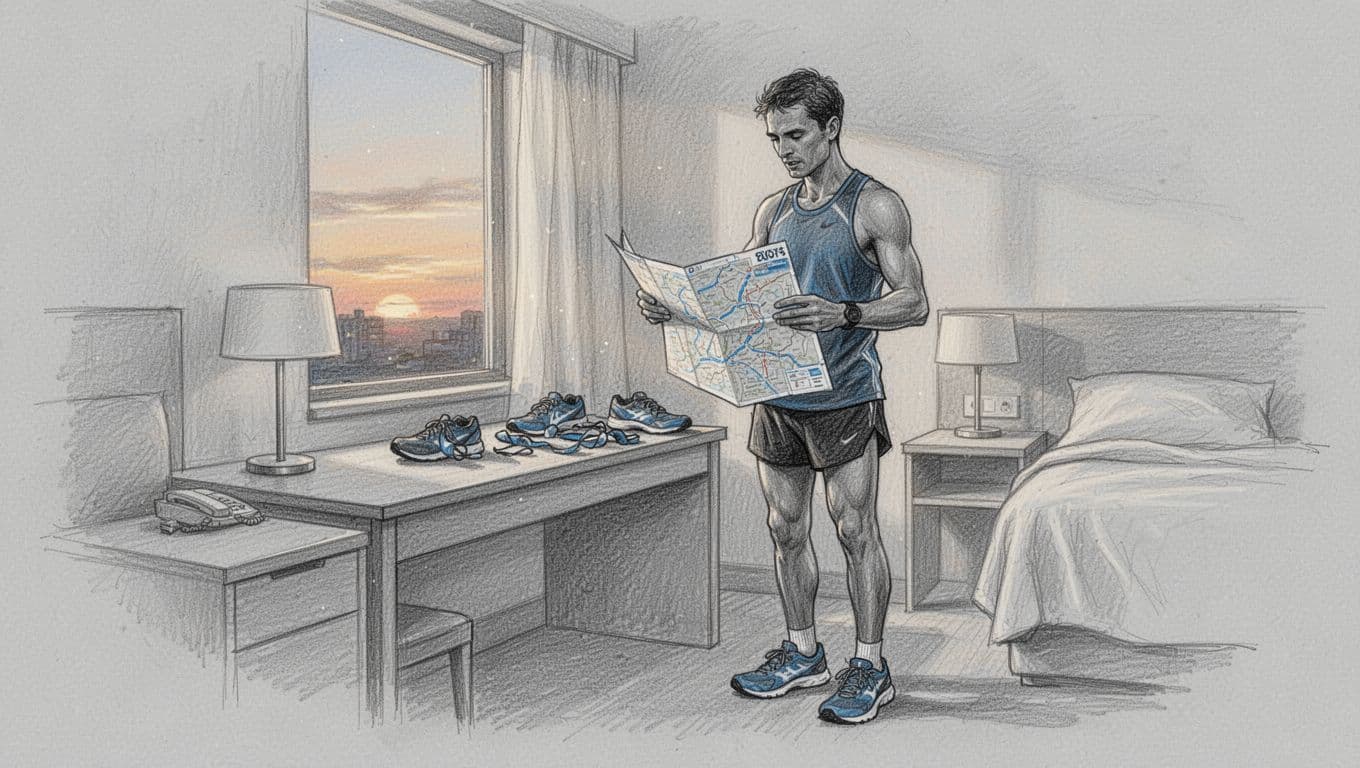
After packet pickup, return to your room and organize your race kit before dinner. Lay out your shoes, race clothes, bib, pins, watch, nutrition, identification, phone, charger, and post-race clothing in one visible place. Keep anything you must carry together in a small bag, and place your shoes beside the door.
Check the weather, then adjust layers, hydration, and sun protection. Read the current LA Marathon transportation guidance instead of relying on last year’s plan. Confirm your shuttle reservation, parking location, or rideshare meeting point, and note how long it takes to reach the starting corral.
Before settling in, ask the front desk about wake-up calls, early coffee, breakfast boxes, and the hotel’s quietest available room. Set two alarms if you tend to sleep through one. A few minutes of preparation at night can prevent a frantic search for pins or a missing phone charger at 4 a.m.
Protect Sleep, Fueling, and Bathroom Time
Race morning rewards routine. Eat the breakfast you practiced during training, drink steadily without forcing extra fluids, and leave enough time for bathroom stops before departure. If the hotel cannot serve food early, bring familiar items such as oatmeal, a bagel, bananas, or another breakfast you know your stomach handles well.
Don’t test a new supplement, energy product, restaurant meal, or oversized dinner during marathon weekend. Even a meal that sounds healthy can create trouble when combined with nerves, travel, and a pre-dawn alarm. Time-zone changes can also disrupt hunger and sleep, so shift toward local bedtime gradually and keep your evening simple.
A quiet room matters more than a view of Los Angeles. Request a room away from elevators, ice machines, street noise, and late-night gathering areas. Skip sightseeing, long walks, and a late dinner. Your legs have enough work ahead without adding several extra miles before the starting gun.
The best hotel amenity on marathon weekend is a predictable routine you can repeat without thinking.
Plan the Trip Home After the Finish in Santa Monica
The Los Angeles Marathon is point-to-point: you start at Dodger Stadium and finish in Santa Monica. Therefore, your return plan needs attention before race morning, not after 26.2 miles.
Decide where supporters will meet you, where your luggage will stay, and how you’ll reach your hotel or airport. Staying near the start simplifies the morning but creates a longer trip home. Staying near Santa Monica makes recovery easier after the finish, yet requires a dependable early transfer to Dodger Stadium.
Arrange a ride, confirm who has the car keys, or use official post-race transportation if the event offers it. Current transportation information may state that no shuttle returns runners to Dodger Stadium, so don’t assume the morning shuttle works in reverse.
Allow extra time for crowds, soreness, road closures, and delayed pickups. Your sample plan might include breakfast at 4:00 a.m., departure at 4:45, arrival near the stadium by 5:30, bathroom time, and entry into the corral with room to spare. Treat those times as planning estimates, then follow the current race instructions for transportation, security, and corral access.
Book the Right Los Angeles Marathon Hotel With Confidence
The best Los Angeles Marathon hotel removes uncertainty before race morning. Before you reserve, compare each option against the same practical details, then choose the property that protects your sleep, schedule, and recovery.
Use a Final Hotel Comparison Checklist
Copy these criteria into a note or spreadsheet for every hotel you are considering:
- Confirm the official race date and check the hotel’s address against the current Dodger Stadium start location.
- Measure the complete route to the approved shuttle pickup point, drop-off area, or permitted walking entrance. A short hotel-to-stadium distance means little if road closures block access.
- Review the official LA Marathon transportation and shuttle details, including pickup locations, departure times, parking rules, and participant transportation.
- Write down your target departure time, expected arrival time, bathroom window, and time needed to reach your corral.
- Calculate the total cost, including taxes, destination fees, parking, breakfast, rideshare fares, deposits, and extra nights.
- Check whether the room is quiet and ask about elevators, street noise, adjoining rooms, blackout curtains, and the hotel’s quietest floors.
- Confirm breakfast hours and whether the hotel can provide early coffee, a breakfast box, or access to a refrigerator and microwave.
- Price parking separately, then check whether you can enter and leave the garage during marathon-related closures.
- Read the cancellation deadline, deposit rules, minimum-stay terms, and late-checkout policy before choosing a rate.
- Verify room features that support your routine, such as bed configuration, mini fridge, bathtub, workspace, and luggage storage.
- Create a plan for returning from Santa Monica after the finish. Confirm where your bags will stay, how supporters will reach you, and how you will get back to the hotel or airport. Current race coverage states that runners should not assume a return shuttle to Dodger Stadium exists after the race, so review updated finish-line transportation information.
Compare two hotels side by side using identical columns. Score each item from one to five, or record the exact cost and time. Then total the results only after filling every row. This method prevents a low room rate from hiding expensive parking, poor sleep conditions, or a difficult post-race trip.
For performance, choose the closest practical hotel with dependable race-day access. Downtown is the better choice when you need more hotel selection, dining, and supplies. Consider Santa Monica when finish-line access or family plans matter more than a short trip to the start.
Reserve Early and Recheck the Details
Reserve as soon as your race plans become firm, especially if you want a nearby room, two beds, parking, or a refundable rate. A flexible booking gives you room to adjust when race logistics, travel plans, or hotel prices change.
As the event approaches, recheck the official race date, start location, shuttle schedule, road closures, parking instructions, and participant access rules. Hotel websites may show normal driving routes that won’t work on marathon morning.
Contact the hotel shortly before arrival and confirm:
- Early breakfast, coffee, or grab-and-go food.
- Luggage storage before check-in or after checkout.
- A quiet-room request away from elevators and busy streets.
- Parking access during marathon-related closures.
- Rideshare pickup rules and any restrictions around the property.
Save the hotel’s reply with your reservation. On race weekend, those small confirmations can keep your plan steady when the streets around Los Angeles start moving before sunrise.
Frequently Asked Questions
Choosing among Los Angeles Marathon hotels near the start line raises practical questions that maps and booking sites cannot answer. These details can shape your sleep, transportation, and recovery plan, especially when the race starts before sunrise.
Can I walk from my hotel to the Dodger Stadium start line?
Walking distance depends on the approved entrance, not only the hotel’s address. Hills, restricted roads, stadium security, and closed access points can make a short route unusable on race morning.
Review the official LA Marathon shuttle and parking guidance before planning to walk. Unless the race instructions clearly permit your route, use an approved shuttle, drop-off location, or other official transportation option.
Should I stay near the start or near the Santa Monica finish?
Stay near Dodger Stadium when your main goal is a simpler morning and more sleep before the race. A Santa Monica hotel makes the post-race period easier, particularly if your family plans to meet you there or you fly home from the west side.
Your choice depends on which part of the day deserves the least friction. Many runners stay near the start the night before, then arrange a separate ride to Santa Monica or book a second hotel near the finish.
Is Union Station a good base for marathon weekend?
Union Station can work well for runners who want access to official transportation and Downtown hotels. It also gives you a clear reference point when road closures make ordinary driving routes unreliable.
However, don’t assume every nearby hotel connects directly to the race shuttle. Confirm the exact pickup location, boarding time, and walking route before booking, then allow extra time for security and crowds.
How early should I book a hotel for the Los Angeles Marathon?
Book as soon as your race entry and travel dates are firm. Nearby rooms with two beds, parking, refrigerators, or refundable terms often disappear before the cheapest standard rooms.
A practical approach is to reserve a refundable option early, then compare prices and policies later. Recheck the cancellation deadline before changing anything, since a lower rate may carry stricter terms.
Do hotels near the marathon offer early breakfast?
Some hotels can provide early coffee, a breakfast box, or limited grab-and-go food, but you should never assume those services operate before a marathon start. Restaurant hours may change for race weekend, and regular breakfast often begins too late for runners leaving before dawn.
Ask the property for exact service times before arrival. Bring familiar food that matches your training routine, such as a bagel, oatmeal, banana, or sports drink, so your breakfast doesn’t depend on an open dining room.
Where can I keep my luggage after checkout?
Ask about luggage storage before reserving, especially if you plan to check out on race morning. Hotels may store bags after checkout, but policies can differ by property, room type, and availability.
If you stay near the start, confirm how you’ll retrieve your luggage after finishing in Santa Monica. The Los Angeles Marathon weekend guide can help you review the point-to-point course and transportation considerations before race weekend.
Conclusion
The best Los Angeles Marathon hotel protects your race plan well before you reach Dodger Stadium. Staying in Chinatown or Elysian Park keeps you closest to the start, while Downtown offers more choices for dining, supplies, and transportation. If your priority is an easier recovery and family meetup, a hotel near the Santa Monica finish may be the better fit.
Before booking, verify the current official race instructions, shuttle details, road closures, and access rules. Compare the full cost of each stay, including parking, meals, transportation, fees, and any extra nights. Then reserve a flexible option early, especially if you need two beds, a refrigerator, or luggage storage.
Your hotel should support the work you’ve already put into training. Choose the room that protects sleep, simplifies the trip to Dodger Stadium, and gives you a practical plan after 26.2 miles. A calm morning leaves more energy for the race itself.


