

Long Beach Marathon Route Guide
Before sunrise on race morning, cool Pacific air drifts across Long Beach as runners gather near the busy waterfront start. The energy is hard to miss, but knowing what lies ahead on the course can help you settle in and run with a plan.
This guide breaks down the Long Beach Marathon route, including its landmarks, race-day logistics, and pacing considerations. Course details can change from year to year, so confirm the latest map and official race notices before you travel. Looking for the best hotels near the Long Beach Marathon? Make sure to reserve early and save money.
Key Takeaways
- The Long Beach Marathon route covers 26.2 miles of urban coastline, passing landmarks such as the Queen Mary and Belmont Shore.
- The course is USATF-certified and Boston-qualifying; check the official marathon course details for the current map and race updates.
- Start at a controlled pace, especially early on, and follow your practiced race plan rather than matching the crowd.
- Review course turns, aid stations, and race-day logistics before you arrive, then adjust your pacing plan to the latest route information.
Long Beach Marathon Route: What to Know Before Race Day
The Long Beach Marathon covers 26.2 miles, but the route is more than a line between the start and finish. It shapes your pacing, where you meet your support crew, and how you prepare for race morning. Because organizers can change course details from year to year, use the latest official information rather than relying on a map saved from a previous race.
Find the start, finish, and official course map
Begin with the official Long Beach Marathon page, then check the current race guide and event updates as race day approaches. Use the latest map to confirm the start and finish locations, course direction, turns, and mile markers. Those details help you plan your warm-up, meet-up point, and pacing cues without guessing from older information.
Build Your Running Performance System
Move from research to action with training, recovery, nutrition, pacing, and performance tools built for runners.
More Guides for This Runner Goal
Review the guide for check-in instructions and any notes about packet pickup or race-morning access. Then locate aid stations and check what the event says they will provide. If you use a specific drink, gel, or other fuel, compare your plan with the posted station details so you know what to carry.
The route map is also a planning tool for friends and family. Check road closures and access information on the event’s community updates page, especially if someone plans to watch at more than one spot. Road access can affect both spectators and runners, so build in extra time and follow current event guidance.
Course changes may affect more than a turn. The start and finish setup, aid-station locations, and nearby road access can all differ by event year. Third-party maps and race reports can offer background, but they may not match the current course. Treat the official map as your source for exact turns and mile markers.
Know how the marathon course differs from shorter races
Long Beach hosts multiple race distances during the same weekend. The marathon shares the event setting with shorter races, including the half marathon, but a section of coastline or city streets appearing on both maps does not mean the courses follow the same full route. The official half marathon page describes a separate 13.1-mile event.
Before you study landmarks or set split targets, confirm that you have the marathon-specific map and the matching event schedule. Check the race name and distance on every map or guide you download. This small step can prevent a major planning error, especially when races share a start area, finish area, or portion of the route.
For pacing, mark the marathon’s own mile markers and aid stations on your copy of the current map. Then build your plan around those points, not around a shorter race’s turns or timing. Once you know which route applies to your event, you can prepare for the full 26.2 miles with fewer surprises.
How the Course Unfolds From the Waterfront Start to the Finish
The Long Beach Marathon route blends urban streets with coastal scenery, but the exact sequence matters for pacing. Use the current official course map to confirm each segment, turn, mile marker, and aid station before race day. The official Long Beach race overview describes a course that combines city views, landmarks, and ocean scenery.
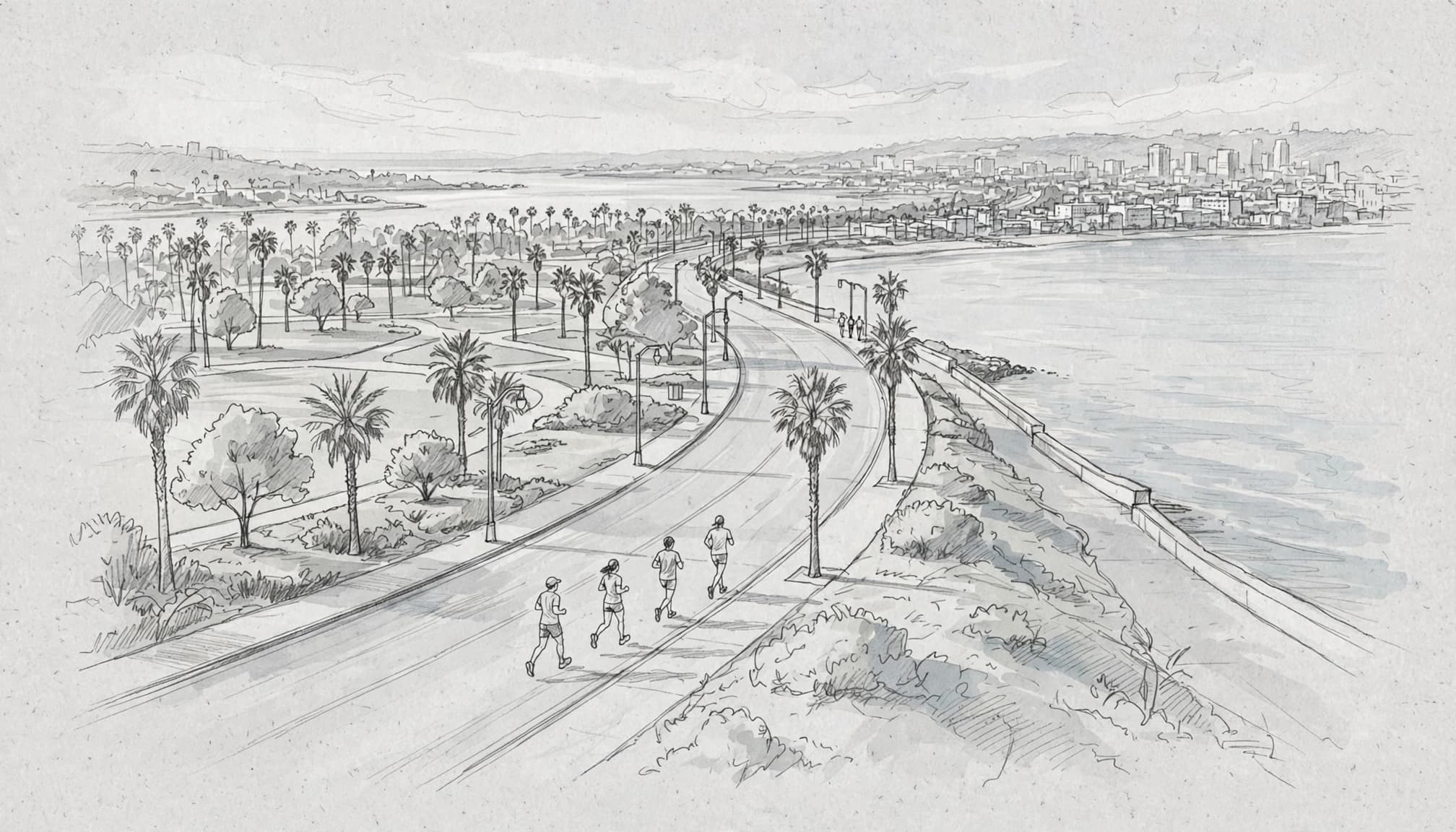
Settle in during the opening miles
The waterfront start brings plenty of energy, and runners may find the early pack crowded as everyone settles into the course. Resist the urge to weave through people or chase a faster runner. Instead, begin at a controlled effort and let your pace build only after you have room to run comfortably.
Before race morning, study the opening section of the current map and note its turns and mile markers. The official marathon page identifies the Queen Mary and Belmont Shore among the route landmarks, but use the map to confirm where they fall on this year’s course. Keep your attention on your effort, not on reaching a landmark ahead of schedule.
Stay steady through the middle miles
Once the start excitement fades, return to the pace you practiced. Check your effort at mile markers, especially if crowds, turns, or changing scenery make your pace feel different. A steady rhythm leaves more energy for the later miles than repeated surges.
Hydration and fueling also need a plan. Review the current map and race information for aid-station locations and available supplies; stations can change between years. If you carry your own fuel, use the schedule you practiced in training rather than waiting until fatigue or thirst disrupts your routine. Meanwhile, stay alert to turns and course markers instead of assuming a familiar stretch follows last year’s route.
Save focus for the final miles
Late in the race, tired legs can make every mile feel longer, while spectators and other runners may lift the energy around you. Keep your effort measured, check the remaining distance against mile markers, and focus on reaching the next course point with good form. If you still feel strong later, increase your pace gradually.
Study the finish approach on the current official map so you know which streets and turns lead to the line. Avoid surging as soon as the finish feels close; a hard push too early can cost you before the final stretch. Save your strongest effort for the route shown on the map, then pick up the pace when you can see the finish ahead.
Choose Your Distance, Duration and Goal Time
Make three quick selections and open the exact plan built for your race target.
Looking for a Fully Personalized Training Plan?
The training plans above are an excellent choice if they match your goal. However, if you’d rather train with a plan built specifically around your current fitness, goal race, preferred training days, weekly mileage, and target finish time, our RDA Custom Training Plans provide a personalized solution. We also have running courses available for runners seeking to run faster from the mile to the marathon.
Why Choose a Custom Training Plan?
| Standard Training Plan | RDA Custom Training Plan |
|---|---|
| Follows a fixed schedule | Built around your schedule |
| Standard weekly mileage | Peak mileage customized for you |
| Fixed workout days | Train on the days you choose |
| Same structure for everyone | Designed around your current fitness |
| Static plan | Updated as your fitness improves |
| One-time purchase | Ongoing personalized coaching and support |
What You’ll Receive
- A training plan built specifically for your goal
- Personalized training paces
- Long runs, tempo runs, threshold workouts, interval sessions, recovery runs, and easy runs
- Peak weekly mileage matched to your experience level
- Flexible training schedule that fits your life
- Ongoing plan adjustments as your fitness improves
Ready to Train Smarter?
Stop guessing and start following a plan built specifically for you, your schedule, and your racing goals.
Coastal Views, Course Surfaces, and Conditions to Expect
The Long Beach Marathon route pairs coastal scenery with city streets, giving runners plenty to look at across 26.2 miles. The view can lift your spirits, but your race-day decisions should come from the current course map, mile markers, and pacing plan.
Use landmarks to stay engaged, not to judge your pace
The official Long Beach Marathon course details identify the Queen Mary and Belmont Shore as route landmarks. These familiar sights can give the miles a human scale: focus on reaching the next confirmed landmark, then reset your attention to the road ahead.
However, a landmark is a motivation cue, not a reliable distance marker. Its position may feel closer or farther than expected, especially when you’re tired or the course bends through city streets. Check the current marathon map to confirm the route and landmark locations, then use mile markers and your planned splits to judge pace. If your watch pace jumps while you pass a turn or a crowded section, stay with your effort and reassess at the next mile marker.
Plan for sun, wind, and changing race-day weather
Coastal conditions can feel different from inland weather, and they may shift over the course of a morning. Sun exposure or wind may affect how comfortable a stretch feels, but conditions vary. Don’t build your race plan around assumptions about usual temperatures or wind direction.
Check the forecast close to race day, then choose clothing you’ve already tested during training. A shirt, shorts, hat, or light layer can feel different after several miles, so avoid debuting new gear at the start line. If the morning looks cool, remember that your body will warm as you run; dress for sustained effort, not just the wait before the start.
Surface and elevation also deserve a careful look. The route includes urban and coastal settings, but that alone doesn’t confirm whether every mile uses the same pavement or whether any section has a noticeable grade. Before race day, review the current official map and event information for surface notes, the elevation profile, and exposed sections. If the course includes long open stretches, wind or direct sun could shape how they feel; use the posted details and forecast to prepare rather than guessing.
Finally, make your pacing plan flexible enough to account for conditions. Hold your target effort through the opening miles, and adjust if weather or footing makes that effort harder to maintain. Landmarks can keep your mind moving forward, while the map and mile markers keep your decisions grounded.
Race-Day Access, Road Closures, and Spectator Plans
A smooth race morning starts before you leave home. The Long Beach Marathon route affects how runners reach the start and where supporters can cross or gather, so build your plan around current event information rather than last year’s arrangements.
Arrive with a plan for parking and transportation
Before race day, review the event’s current parking and travel instructions. Check which parking options are available, whether you need to reserve a space, and what restrictions apply. If you’re taking public transportation, confirm routes and schedules directly with the transit provider. Service can differ on weekends, and race-day road closures may affect your usual trip.
Next, check the official road-closure and community updates. Note which streets will be closed, when access may change, and whether your planned route crosses the course. Don’t rely on a familiar drive or an old race-day post; details can change each year.
Give yourself a backup option in case traffic, a full lot, or a transit delay disrupts your first plan. Identify another approved parking location or a second way to reach the area, and share the plan with anyone traveling with you. Most importantly, leave enough time to park, collect your gear, and walk to the start area. A nearby parking spot can still mean a longer walk through event crowds, so avoid timing your arrival to the last few minutes.
Choose easy-to-reach spots to cheer
Spectators should review the event’s current viewing guidance and road-closure information before choosing where to watch. A spot that looks close on a map may be difficult to reach once streets close or runners fill the course. Check access details first, then pick one or two locations near roads or transit stops that remain accessible.
Trying to follow a runner along the entire Long Beach Marathon route can turn into a stressful race against traffic. Instead, choose a small number of viewing points and agree on where and when you’ll meet. Share a clear description of the spot, such as a nearby public landmark, and decide what to do if you can’t find each other. Keep the plan simple enough to follow without relying on a last-minute phone call in a crowded area.
Runners can help by sharing expected splits and the race bib number with their support crew. Those details make it easier for spectators to estimate arrival times and identify the right runner. Still, leave room for pace changes and delays, and follow event staff directions around the course. A well-chosen cheering spot gives supporters a better chance to see the race and lets runners stay focused on the miles ahead.
Pacing and Training Tips for the Long Beach Marathon Route
A strong race plan turns the Long Beach Marathon route into manageable decisions: control the opening effort, fuel before fatigue sets in, and stay focused on the next course marker. Whether you’re chasing a personal best or finishing your first marathon, build the plan around your training, not someone else’s pace.
Start by effort and settle into goal pace
The start can feel crowded and charged with excitement. Begin conservatively, resist weaving around other runners, and let the pack spread before you settle into your planned rhythm. An easy-to-moderate effort should feel controlled, with breathing steady enough for a short conversation.
Use perceived effort alongside your practiced pace plan. GPS pace can jump around near buildings, turns, or crowded sections, so don’t react to every watch alert. Check your effort and the course mile markers, then make small adjustments only when your pace stays off plan. Once the opening miles feel settled, ease toward goal pace rather than forcing it early.
Practice race fueling and hydration before the event
Use long runs to rehearse when and how you’ll take fuel and fluids. Practice with the products you tolerate well, and test your timing at marathon effort. A plan that works during training gives you a routine to follow when fatigue makes decisions harder.
Check the official Long Beach Marathon aid-station details before race day. The listed 2026 course information includes Gatorade at several stations, but offerings and locations can change. Match your plan to the current event details, and carry familiar fuel if you need products or timing the course won’t provide. Don’t try a new gel, drink, or supplement on race morning.
Train for the terrain and build a mental plan
Study the current course map and elevation profile, then prepare for the surfaces and changes in effort they show. Coastal scenery doesn’t prove every mile is flat, and small grades or turns can affect rhythm. Include long runs on similar pavement and add controlled hills or gentle rolling sections if the profile calls for them. Practice returning to pace after turns and changes in terrain.
Late in the race, narrow your focus. Instead of thinking about the remaining 10 miles, aim for the next mile marker or aid station. At each checkpoint, relax your shoulders, assess your effort, and take the planned fuel or fluids. If fatigue rises, keep your stride compact and choose one clear task for the next stretch. That simple routine helps newer runners stay composed and gives experienced marathoners a way to protect their pace without promising a particular finish time.
Frequently Asked Questions
The Long Beach Marathon route is designed for a fast, scenic race, but details that affect your plan can change each year. Use the 2026 race information as your reference, then check event updates again before race weekend.
Where does the Long Beach Marathon start and finish?
The 2026 marathon starts in downtown Long Beach, according to the official marathon information. Check the current race guide for the precise start and finish locations, entrance points, and runner access instructions; the nearby streets and event setup matter as much as the general location. Confirm those details before race weekend so you can plan your arrival and post-race meetup.
Is the Long Beach Marathon route flat?
The 2026 event page describes the course as fast, flat, and at sea level, with very few hills. Still, a flat course can feel demanding when coastal wind, turns, or a sustained pace disrupt your rhythm. Review the official elevation profile when available, then prepare for the course shown rather than assuming every mile will feel effortless.
Can spectators watch runners along the course?
Spectators can watch from approved areas, but access depends on the event’s current viewing guidance and road closures. Check the official Long Beach Marathon website for current spectator information, then choose viewing spots that fit the day’s access rules. If your group plans to see runners at multiple locations, allow time to travel between them and avoid assuming a short distance on the map means a quick trip.
Where can I find the current course map?
Get the current marathon map from the official race website or the race guide for the event year. Confirm that the map is for the full marathon, since other race distances may share sections of the course. Older maps and third-party route files can help you understand past layouts, but they may not show this year’s turns, aid stations, or start and finish arrangements.
What should I do if the course changes?
Read event emails and official updates as race day approaches, then replace any saved map or notes that no longer match. Recheck your pacing cues, turns, and aid-station expectations against the latest route, and update your spectators’ meeting points and travel plan. If a change affects your fueling schedule or a familiar landmark, adjust your plan before race morning rather than improvising mid-race.
Conclusion
The Long Beach Marathon route rewards runners who prepare with care before the starting horn. Check the latest official course map and race updates, then confirm your mile markers, aid stations, and travel plans so race-day logistics don’t pull focus from your effort.
On race morning, pace patiently and follow the fueling and hydration routine you practiced in training. The oceanfront views and familiar landmarks can help break up the miles, but steady effort matters more than chasing the crowd or reacting to every watch reading.
A strong Long Beach Marathon begins with knowing the current route and executing a practiced plan. Trust your preparation, stay composed through the early miles, and give yourself the best chance to finish with purpose.


