

Is Running on a Treadmill Easier Than Outside?
Is running on a treadmill easier than outside? That’s a question almost every runner has asked at some point. Some people swear by the treadmill, loving the steady pace and the chance to avoid bad weather. Others can’t stand the thought of running indoors and crave the open road.
Honestly, both options have their perks and drawbacks, and it often comes down to what you’re looking for in your workout, your goals, and even the weather outside.
Is Running on a Treadmill Easier Than Outside Post Takeaways
- Running on a treadmill feels easier for many because the belt assists with leg turnover, but it doesn’t fully mimic outdoor conditions.
- Outdoor running works more muscles and builds stronger bones due to uneven terrain and harder surfaces.
- Treadmills offer a controlled environment, making it easier to manage pace, incline, and avoid bad weather or unsafe conditions.
- Mental and physical effort can feel different—outdoor runs boost mood and energy, while treadmill runs can be more monotonous but safer for joints.
- Mixing both treadmill and outdoor runs can help prevent injury, keep training fresh, and prepare you for different race conditions.
Back to Treadmill Running Questions
Understanding the Treadmill vs. Outdoor Running Debate
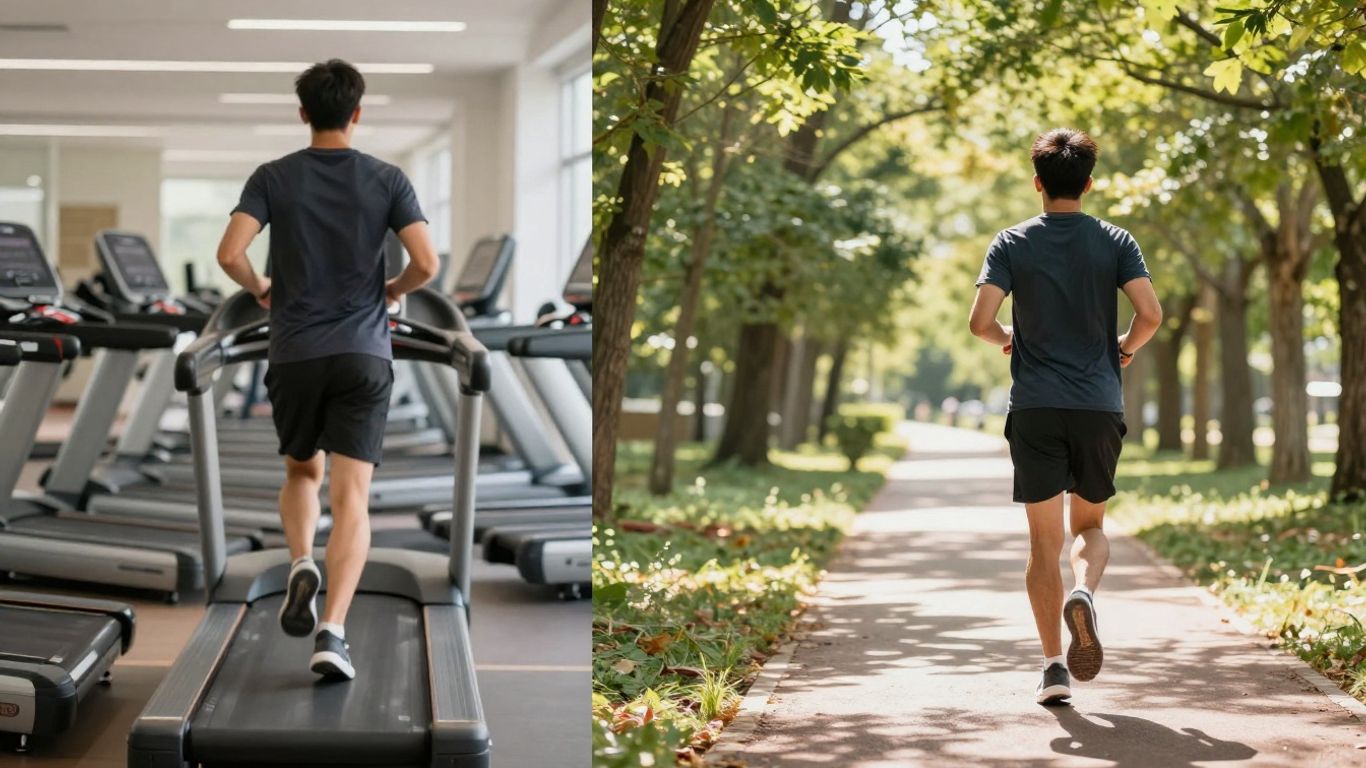
So, the big question: is running on a treadmill easier than hitting the pavement outside? It’s a topic that gets runners talking, and honestly, there’s no simple yes or no answer. Both have their own unique perks and drawbacks, and what works best often depends on what you’re trying to achieve and even just your mood on any given day. Let’s break down what makes each option tick.
Build Your Running Performance System
Move from research to action with training, recovery, nutrition, pacing, and performance tools built for runners.
More Guides for This Runner Goal
The Allure of the Open Road
There’s something special about lacing up your shoes and heading out the door, right? The fresh air, the changing scenery, the feeling of freedom, it’s hard to beat. Running outside means you’re constantly adapting to your surroundings. Your feet have to work a bit harder to push off the ground, and you’re naturally engaging more muscles to navigate uneven surfaces, dodge obstacles, or even just deal with a bit of wind.
This kind of varied movement can feel more natural and might even lead to better overall muscle activation compared to the repetitive motion of a treadmill. Plus, the mental boost from being outdoors, soaking up some sun, and just experiencing the world around you is a huge plus for many.
The Controlled Environment of the Treadmill
On the flip side, the treadmill offers a level of control that’s pretty hard to match. You can set your pace, incline, and intervals with precision, which is fantastic for structured workouts. If you need to hit specific speeds or practice hill repeats, the treadmill makes it straightforward.
It takes away some of the guesswork and external variables, allowing you to focus purely on your effort. This can be a real game-changer, especially when the weather outside is less than ideal or when you need to guarantee a certain training stimulus. For some, this predictability is exactly what they need to push themselves and stick to a plan, making it a valuable tool for improving your running.
Mental and Physical Benefits of Each
When you run outside, you’re not just getting a physical workout; you’re also getting a mental one. The exposure to nature and the break from screens can reduce stress and improve your mood. Physically, the varied terrain and the need for self-propulsion can lead to greater muscle engagement and potentially stronger bones due to the higher impact forces.
However, this increased impact can also mean a higher risk of injury if you’re not careful or strong enough. The treadmill, while sometimes criticized for being monotonous, offers a joint-friendlier experience thanks to its cushioned belt.
It’s also a safe haven when outdoor conditions are dangerous, like during icy spells or when it’s dark. The controlled environment allows for consistent training, which can be beneficial for building endurance and speed without the unpredictable elements of the outdoors.
Physiological Differences in Running Modalities
Muscle Activation and Engagement
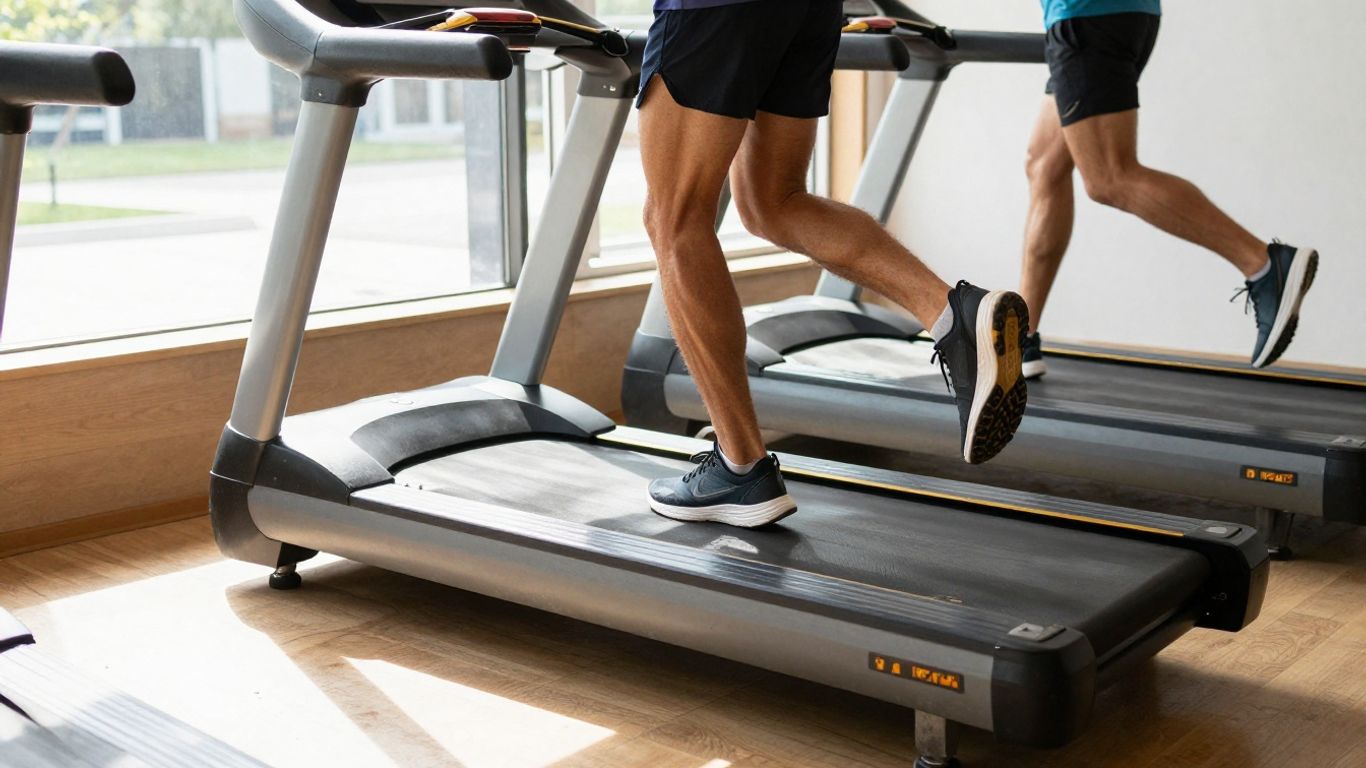
When you run outside, your body has to work a bit harder to propel itself forward. Your feet need to actively grip the ground with each step, which engages more muscles in your legs and feet. Think about it: you’re constantly adjusting to the surface beneath you, whether it’s pavement, dirt, or grass.
This natural interaction means more muscles are firing to keep you stable and moving. On a treadmill, the moving belt does some of that work for you. It pulls your foot backward, so you don’t have to push off quite as forcefully. This can lead to less activation in certain leg muscles over time.
- Outdoor running: Requires more active muscle engagement for propulsion and stability.
- Treadmill running: The belt assists with propulsion, potentially reducing activation in some muscles.
Impact on Bone Strength
Running outdoors, especially on harder surfaces like asphalt or concrete, creates more ground reaction forces. These forces are actually beneficial for bone health. They act as a stimulus, encouraging your bones to become stronger and denser over time.
It’s a bit like how lifting weights builds muscle, the impact of running helps reinforce your skeletal structure. Treadmills, on the other hand, are designed with cushioning to absorb some of that impact. While this is great for saving your joints, it means you’re not getting the same bone-strengthening benefits.
While treadmills offer a softer landing, the increased impact from outdoor running on varied surfaces can contribute positively to bone density. It’s a trade-off between joint protection and bone reinforcement.
Simulating Outdoor Conditions on a Treadmill
It’s tough to perfectly replicate the outdoor running experience indoors. While treadmills offer controls for speed and incline, they can’t quite mimic the real world.
For instance, running into a headwind outside is a challenge you just don’t face on a treadmill. To get closer, setting the treadmill to a 1% incline is often recommended. This small incline helps to compensate for the lack of air resistance and the fact that the belt is moving under you.
It makes the effort feel more similar to running on a flat surface outside. However, the subtle variations in terrain, the need to react to uneven surfaces, and the natural changes in pace that occur when you’re truly outdoors are hard to replicate perfectly on a machine.
- Incline: A 1% incline on a treadmill is a common suggestion to better simulate outdoor running.
- Terrain: Treadmills offer a consistent, flat surface, unlike the varied terrain encountered outdoors.
- Air Resistance: This factor is absent on a treadmill, making outdoor running generally more demanding at the same pace.
Factors Influencing Perceived Effort
The Role of Air Resistance and Terrain
Ever notice how running outside can feel different depending on the day? That’s because a few things are at play that a treadmill just can’t replicate. For starters, there’s air resistance. When you run outdoors, you’re pushing through the air, and that takes effort.
On a treadmill, the belt is moving under you, and there’s no real wind to fight against, unless you set up a fan. This lack of air resistance can make the treadmill feel easier, even if your heart rate is the same. Some research suggests setting a treadmill to a 1% incline can help mimic the effort of running outside by adding a bit of resistance.
Then there’s the terrain. Outside, you’re dealing with hills, bumps, and uneven surfaces. Your body has to constantly adjust, engaging different muscles to keep you upright and moving forward. You might have to dodge a pedestrian or hop over a crack in the sidewalk. This variability means more muscle activation and a more dynamic workout. A treadmill, on the other hand, offers a flat, predictable surface.
While this can be good for consistency, it means your muscles aren’t working as hard to adapt to changing conditions. This difference in terrain and the need to overcome air resistance are big reasons why running outside often feels more challenging, even at the same pace.
Stride Length and Gait Cycle Variations
When you’re out on the road or trail, your stride tends to be a bit longer and more natural. Your feet are doing the work to propel you forward, and you’re not limited by the speed of a moving belt.
This allows for a more natural gait cycle. On a treadmill, however, things can change. Many runners find their stride shortens. This is partly because the belt is pulling your feet backward, so you don’t need to push off as forcefully. It’s also possible that the consistent, flat surface encourages a shorter, quicker cadence.
Think about it: on a treadmill, you’re essentially running in place while the belt moves. This can lead to a slightly different biomechanical pattern compared to the push-off and landing you do when running on solid ground.
Some people even report that their treadmill pace feels significantly slower than their outdoor pace, even when their heart rate is similar. This discrepancy can be attributed to these changes in stride length and gait. It’s like your body is taking a bit of a shortcut because the machine is doing some of the work for you.
Environmental Influences on Pace
Outdoor running is a full-sensory experience, and the environment plays a huge role in how hard you feel like you’re working. Think about running on a windy day. If you’re running into a headwind, it’s going to feel much tougher, and your pace will likely slow down. Conversely, a tailwind can make you feel like a superhero, speeding you along. You just can’t get that kind of variable resistance on a treadmill.
Temperature and humidity also make a difference. On a hot, sticky day, your body has to work harder to cool itself down, which can make even an easy run feel like a slog. Good ventilation is key for indoor runs; without it, CO2 levels can rise, making it harder to breathe and increasing perceived effort.
The simple act of breathing in fresh air versus recycled air can impact your energy levels and overall feeling during a run. Outdoor running offers a dynamic environment that constantly challenges your body in ways a controlled indoor setting cannot fully replicate.
Here’s a quick look at how these factors can stack up:
| Factor | Treadmill Effect | Outdoor Effect |
|---|---|---|
| Air Resistance | Minimal (unless a fan is used) | Significant, varies with wind speed and direction |
| Terrain | Flat, consistent, predictable | Varied, uneven, includes inclines/declines |
| Muscle Engagement | Less varied, more repetitive | More varied, greater adaptation required |
| Perceived Effort | Often feels easier due to lack of resistance | Often feels harder due to environmental challenges |
Ultimately, while a treadmill offers control, the unpredictable nature of the outdoors often leads to a higher perceived effort, even if the physiological demands are similar. For many, this added challenge is part of the appeal of running outside.
When to Choose Treadmill or Outdoor Running
Deciding between hitting the pavement or hopping on the treadmill often comes down to your goals, the weather, and even your personal preferences. Neither is inherently ‘better’ than the other; they just serve different purposes and offer unique advantages.
Training for Races and Specific Conditions
If you’re training for a specific race, especially one with varied terrain or known weather challenges, outdoor running is usually the way to go. You can’t perfectly replicate the feel of wind resistance, uneven ground, or the subtle changes in gradient that outdoor courses present. Trying to mimic race-day conditions as closely as possible will prepare your body and mind more effectively.
- Simulate Race Day: Running outdoors on similar surfaces and inclines prepares your body for the actual demands of the race.
- Adapt to Environment: Experience wind, rain, or sun to build resilience and test your gear.
- Terrain Variety: Trails, hills, and roads all engage different muscles and require different pacing strategies.
However, treadmills can be fantastic for structured speed work. If your plan calls for precise intervals at specific paces or inclines, a treadmill offers unparalleled control. Setting the treadmill to a 1% incline is often recommended to better simulate the effort of running outside due to the lack of air resistance.
Safety Considerations and Weather
This is where the treadmill often shines. When the weather outside turns nasty, or when daylight is scarce, the treadmill becomes a safe haven. Think about icy sidewalks, heavy rain, or running in the dark – these situations can pose real risks.
- Inclement Weather: Snow, ice, heavy rain, or strong winds make outdoor running unsafe or unpleasant.
- Darkness: Running early in the morning or late in the evening can be dangerous due to poor visibility.
- Unfamiliar Areas: If you’re in a new place and unsure of the safety or terrain, a treadmill offers a predictable environment.
Safety should always be your top priority. If running outside feels risky due to conditions or location, the treadmill is a smart alternative to keep your training consistent.
Injury Prevention and Rehabilitation
For runners recovering from an injury or those prone to impact-related issues, the treadmill can be a gentler option. The cushioned belt absorbs some of the shock, reducing the stress on your joints compared to harder outdoor surfaces like concrete or asphalt. This controlled impact can be beneficial when gradually reintroducing running after a layoff.
- Reduced Impact: The treadmill belt offers more cushioning, which can be easier on joints.
- Controlled Progression: Allows for gradual increases in duration and intensity without the unpredictable forces of outdoor running.
- Consistent Surface: Avoids hazards like potholes or uneven ground that could re-injure a sensitive area.
However, it’s important to remember that over-reliance on treadmills without sufficient outdoor running can lead to de-conditioned muscles that aren’t prepared for the demands of the road. A balanced approach, incorporating both, is often the most effective strategy for long-term running health.
Optimizing Your Running Experience
Incorporating Both Treadmill and Outdoor Runs
Look, nobody’s saying you have to pick a side. The truth is, mixing it up is probably the best way to go. If you’re training for a race, especially one with hills or unpredictable weather, getting outside is a must. You need to feel how the ground changes under your feet and how the wind affects your pace.
But let’s be real, sometimes the weather outside is just plain awful, or maybe it’s just not safe. That’s where the treadmill shines. It lets you keep up your mileage and hit specific paces without worrying about ice or traffic. Think of it as having two great tools in your running toolbox.
Here’s a quick way to think about when to lean one way or the other:
- Outdoor Runs: Best for race-specific training, getting fresh air and mental boosts, and building bone strength through varied impact.
- Treadmill Runs: Ideal for controlled interval workouts, bad weather days, and when you need to guarantee a specific pace or incline.
Ventilation and Comfort During Indoor Runs
Running inside can sometimes feel a bit stuffy, right? If you’re stuck on the treadmill, make sure the room you’re in has good airflow. I’ve noticed that when the air gets a bit thick, it feels harder to breathe, and that can really mess with your workout.
Setting up a fan to blow directly on you can make a huge difference. It helps keep you cooler and makes the whole experience feel less like you’re running in a sauna. Seriously, good ventilation is key to making those indoor miles more bearable and effective.
Don’t underestimate the power of a good breeze when you’re indoors. It’s not just about comfort; it can genuinely impact how hard you perceive the effort to be and how well your body performs.
Using Heart Rate to Gauge Effort
When you’re running outside, things like wind, hills, and even just the uneven ground can make your heart rate jump around. It’s natural. On a treadmill, though, you have a lot more control. This is where using a heart rate monitor can be super helpful.
You can set target heart rate zones for different types of runs, like an easy recovery pace or a harder interval session. This way, you’re not just relying on how you feel, which can be tricky to judge consistently, especially when switching between indoor and outdoor environments. It gives you a more objective measure of your effort, helping you train smarter whether you’re on the belt or on the street.
So, Which is Better?
Look, there’s no single right answer to whether running on a treadmill is easier than hitting the pavement. Both have their good points and their not-so-good points. Is running on a treadmill easier than outside?
Running outside can feel more natural and might give you a bigger mental boost, plus it works your body in slightly different ways. But treadmills? They offer a super controlled workout, which is great for hitting specific paces or when the weather outside is just plain awful. Honestly, the best approach is probably to mix it up. Use the treadmill when you need to, and get outside whenever you can. Your body and mind will likely thank you for it.
Frequently Asked Questions
Is running on a treadmill actually easier than running outside?
Not always! While a treadmill can feel easier because it moves the belt for you and lacks wind resistance, some people find it harder. This can happen because your body works differently on a treadmill, sometimes leading to shorter strides. Plus, the lack of changing scenery and the predictable motion can make it feel tougher mentally.
What are the main differences between treadmill and outdoor running?
When you run outside, you use more muscles because you have to push off the ground yourself and deal with uneven surfaces, wind, and inclines. A treadmill does some of the work for you with the moving belt and offers a flat, controlled surface. Running outside also gives you fresh air and sunshine, which can boost your mood more.
Can a treadmill help me get stronger?
Yes, a treadmill is great for building cardiovascular fitness. You can precisely control your speed and incline for structured workouts. However, running outside is generally better for strengthening your bones because of the impact, and it helps your body adapt to different terrains and conditions you might face in races.
Are there any benefits to running on a treadmill?
Definitely! Treadmills offer a safe and controlled environment, perfect for when the weather is bad or it’s dark outside. You can easily set specific paces and inclines for targeted training, which can be harder to do consistently outdoors. It’s also easier on your joints because the belt absorbs some of the impact.
Should I run both inside and outside?
For most runners, mixing both treadmill and outdoor runs is the best approach. You get the benefits of fresh air and varied terrain outside, plus the controlled workout and safety of the treadmill. This helps you become a more well-rounded and adaptable runner.
How can I make treadmill running feel more like running outside?
To make it more realistic, try setting the treadmill to a 1% incline. This helps make up for the lack of air resistance. Also, focus on maintaining good posture and a natural stride, even though the belt is moving. Using a fan can also help with airflow, making the indoor experience more comfortable.
Back to Treadmill Running Questions


